
 by
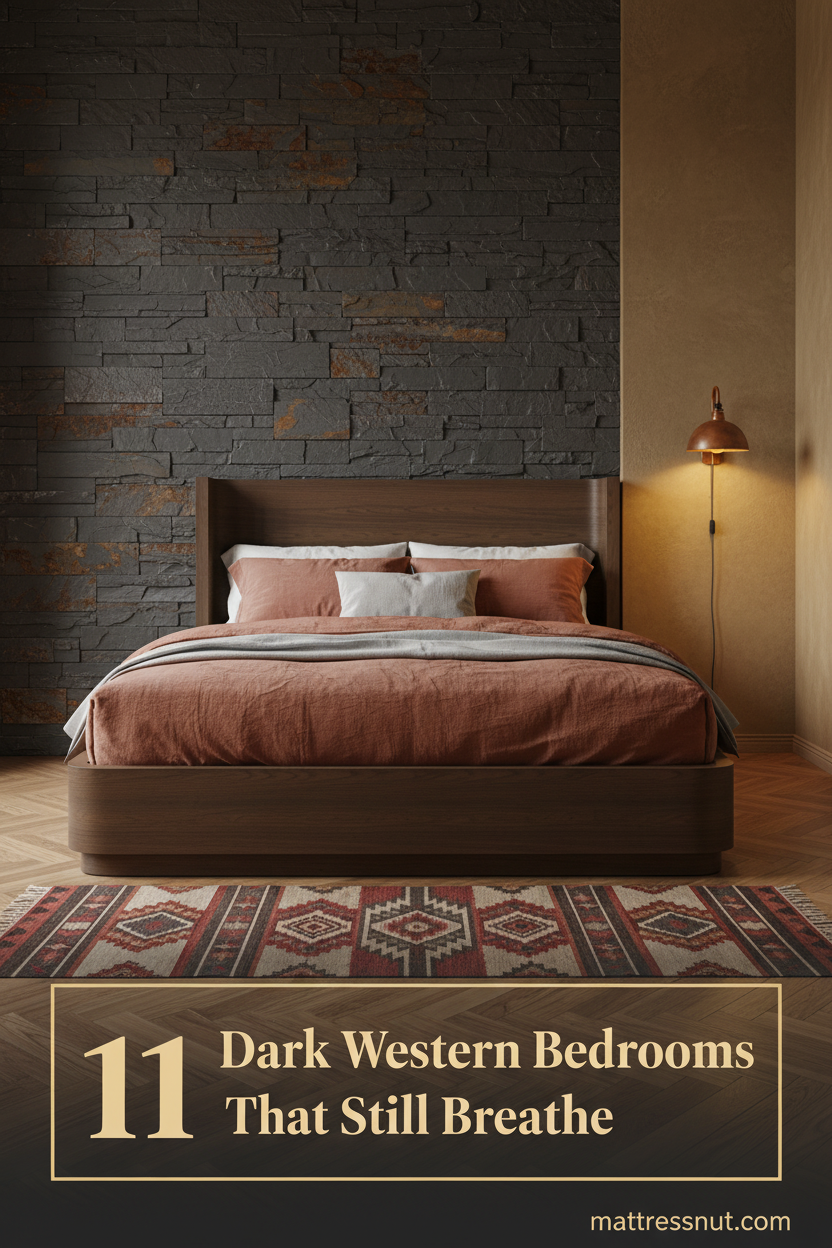
by The first thing you notice in a great moody western bedroom is that the darkness doesn't close in. It breathes. These rooms carry weight, raw materials, frontier bones, and somehow still feel like somewhere you'd actually want to sleep.
If you've been saving dark rustic bedrooms and wondering why yours never lands the same way, it's usually one thing: the texture. Here's what's actually doing the work.
Board-and-Batten That Earns Its Weight
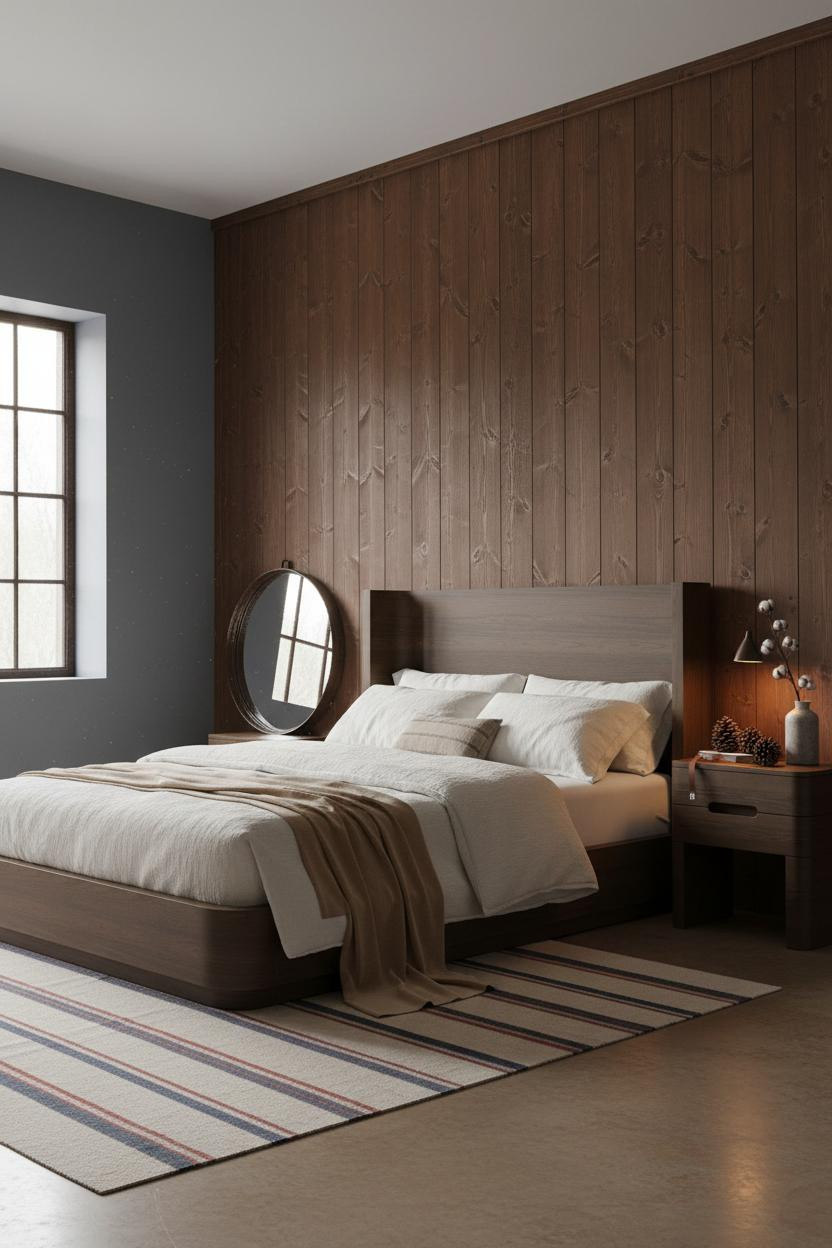


I keep coming back to board-and-batten rooms. There's something about vertical lines that makes a dark wall feel tall instead of oppressive.
Why it holds together: The tobacco-stained pine battens create hairline shadow grooves that give the wall depth at every hour of the day, not just when light hits it directly.
Steal this move: Pair it with polished concrete and a flat-weave kilim to keep the rawness from tipping into a full cabin.
A Stone Chimney Changes the Whole Equation
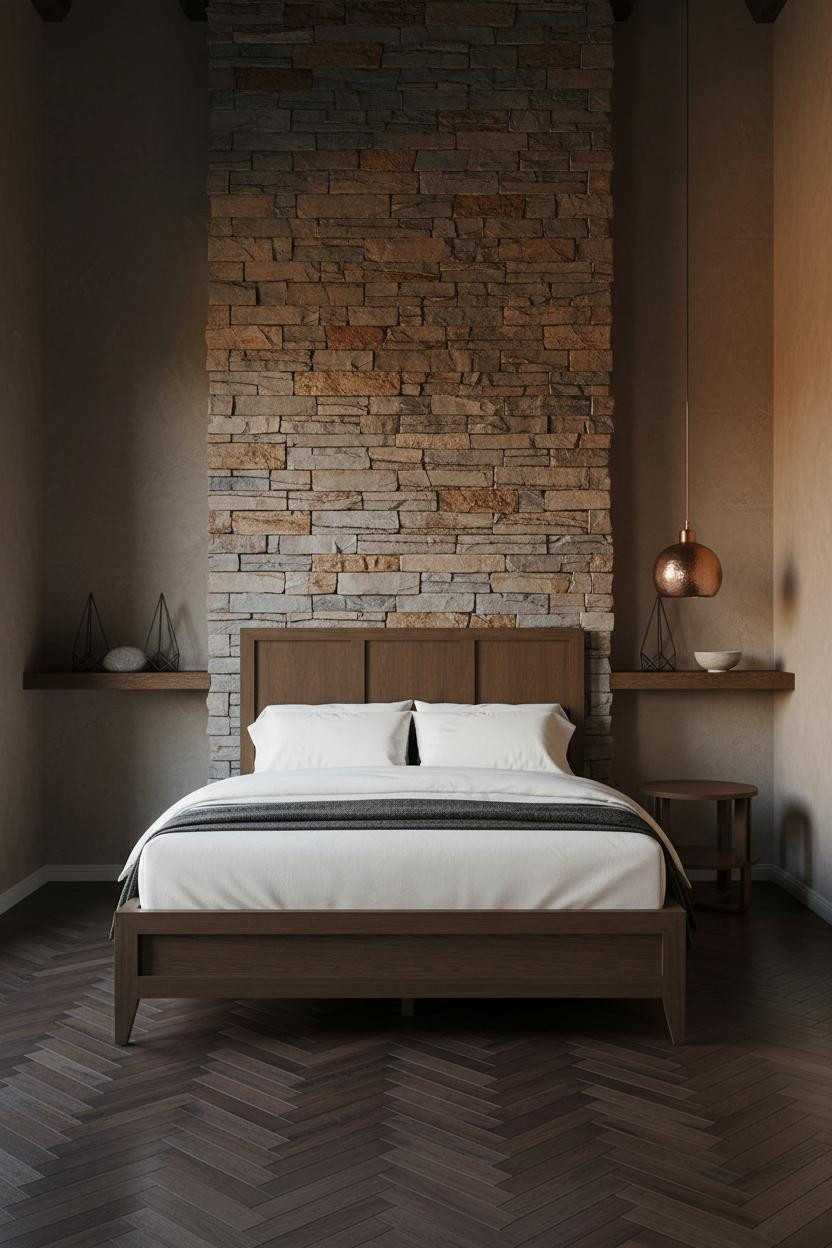


This one is divisive. Not everyone wants a floor-to-ceiling chimney in their bedroom. But honestly, the ones who commit to it never want to undo it.
The stacked sandstone chimney breast does what no paint color ever could: it holds cold and warmth at the same time, which is exactly the tension a dark luxury bedroom needs to feel alive rather than just dim.
What to copy first: Keep the flanking walls in hand-troweled clay plaster, warm but matte, so the stone reads as the event and everything else stays quiet.
When Iron Windows Do More Than Let Light In
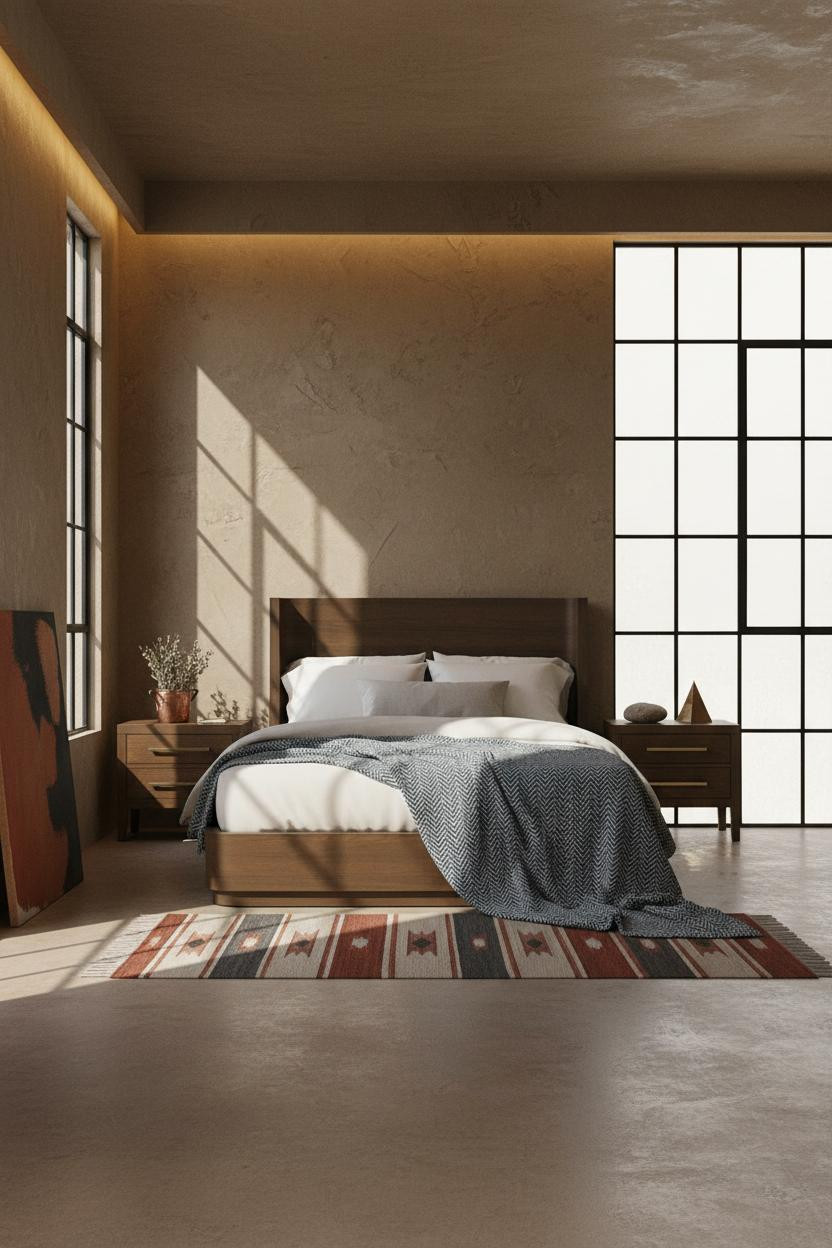

A full Crittall-style iron window wall sounds industrial. In a western gothic room, it reads as something older and stranger than that.
What gives it presence: The black steel grid casts hard geometric shadow ladders across the stone floor, so the architecture becomes a moving texture throughout the day.
Layer a Navajo-inspired runner in rust and charcoal beneath the bed. It bridges the cold grid overhead with the warm plaster walls, in a way that feels grounded rather than forced.
Exposed Timber Posts That Actually Earn Their Drama
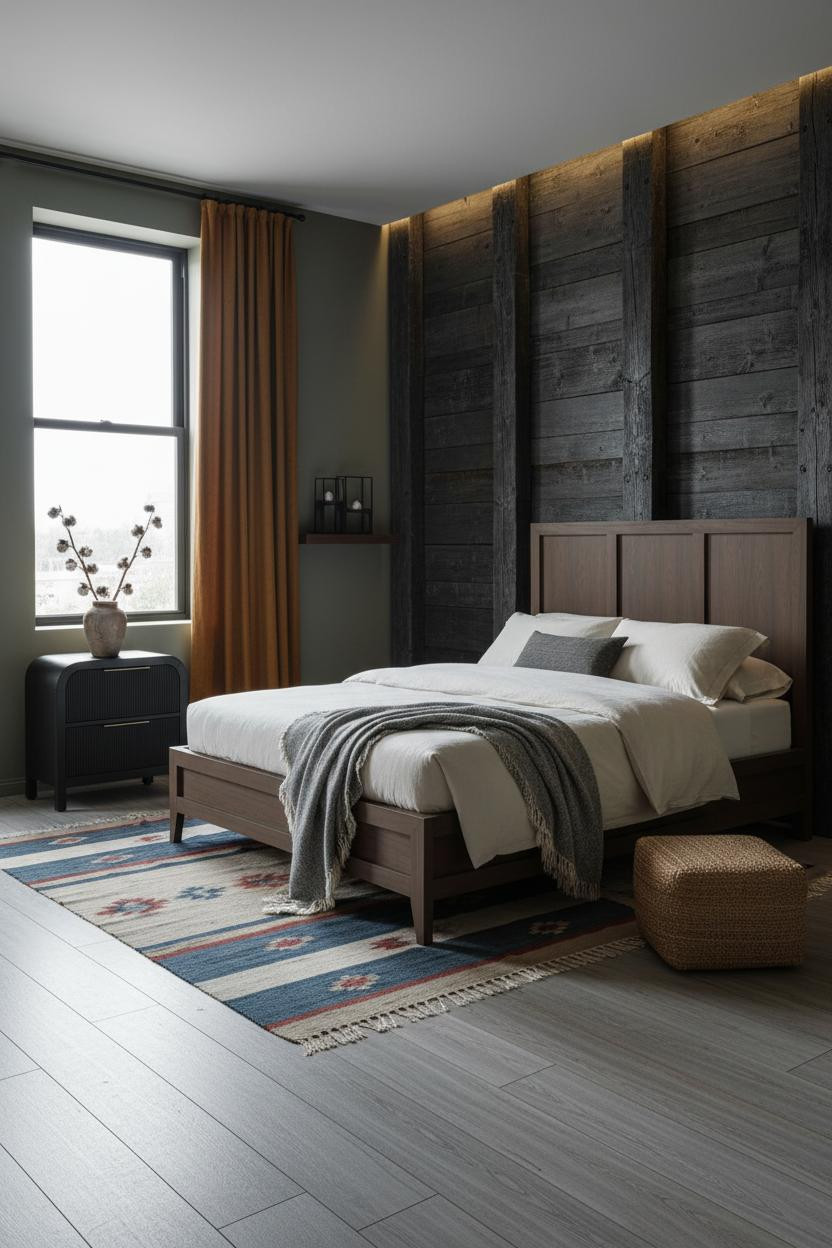

Nothing fancy. That's the whole point.
But the hand-adzed charcoal-black timber posts pressing into a low ceiling do something a feature wall can't: they frame the bed like a territory, which makes the room feel chosen rather than just decorated.
The practical move: Use moss-green matte plaster on the flanking walls. It keeps the dark posts from reading as too heavy while still feeling earthy.
Limestone Behind the Bed Is a Commitment Worth Making
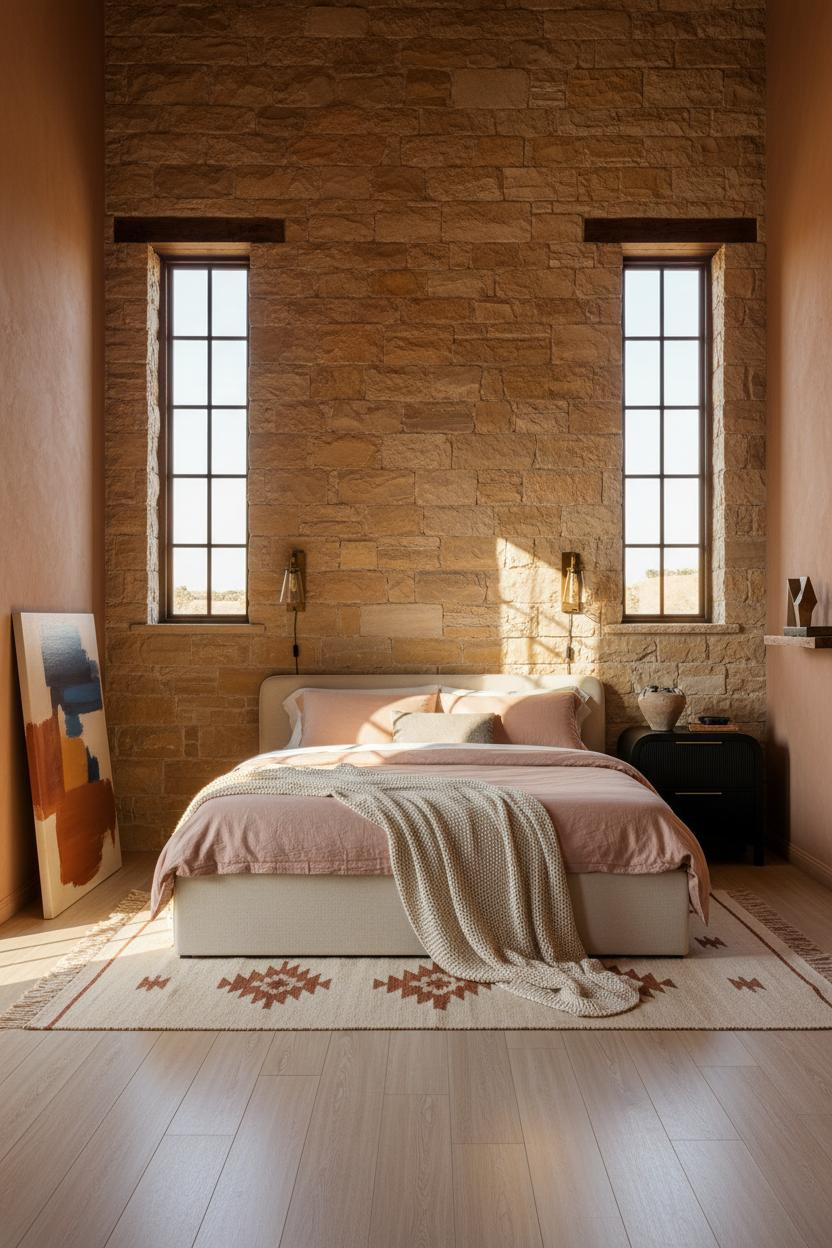

I'll admit this one surprised me. Most stone walls trend cold, but honey-gold limestone in morning light tips the whole room toward warmth without losing any of its geological mass.
Why the palette works: The warm stone pulls the muted terracotta flanking walls into the same family, so the room feels cohesive rather than like a feature wall competing with everything else.
Don't fight the stone with busy bedding. A dusty pink linen duvet and a cream knit throw let the wall carry the visual weight, which is what it was built to do. (This is also the approach most dark earthy bedrooms get right.)
Deep Adobe Walls That Make Amber Light Feel Like an Ingredient
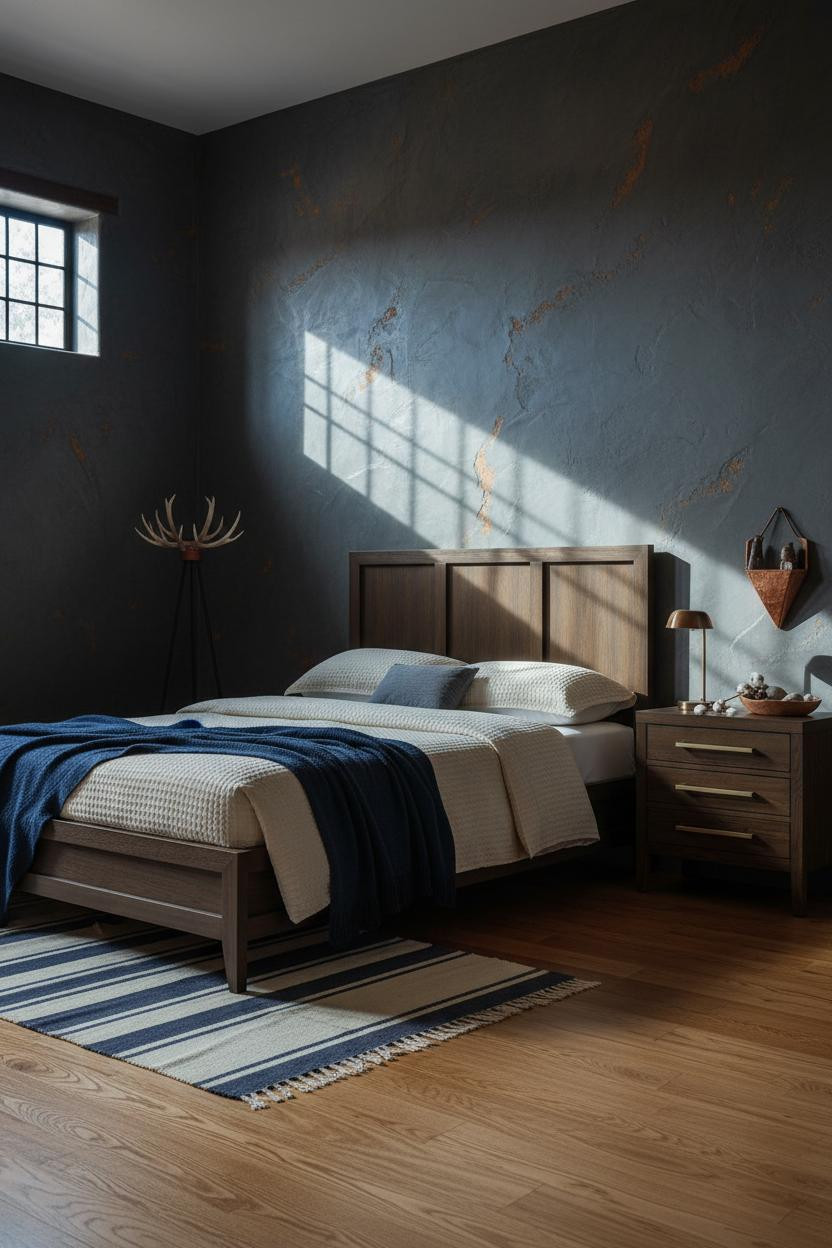
This room works because of a single decision: keeping the bedside lamp as the only warm source in a room built from iron-grey and rust mineral tones.
The real strength: Hand-plastered iron-grey adobe with ochre striations catches warm light differently across its uneven surface, so the wall reads as alive even when nothing else is moving. The room feels like it breathes on its own schedule.
Pro move: A sculptural antler-and-iron floor lamp in the far corner adds a second warm point without competing with the wall.
Salvaged Brick Plus Indigo Walls Is a Bolder Combo Than It Sounds
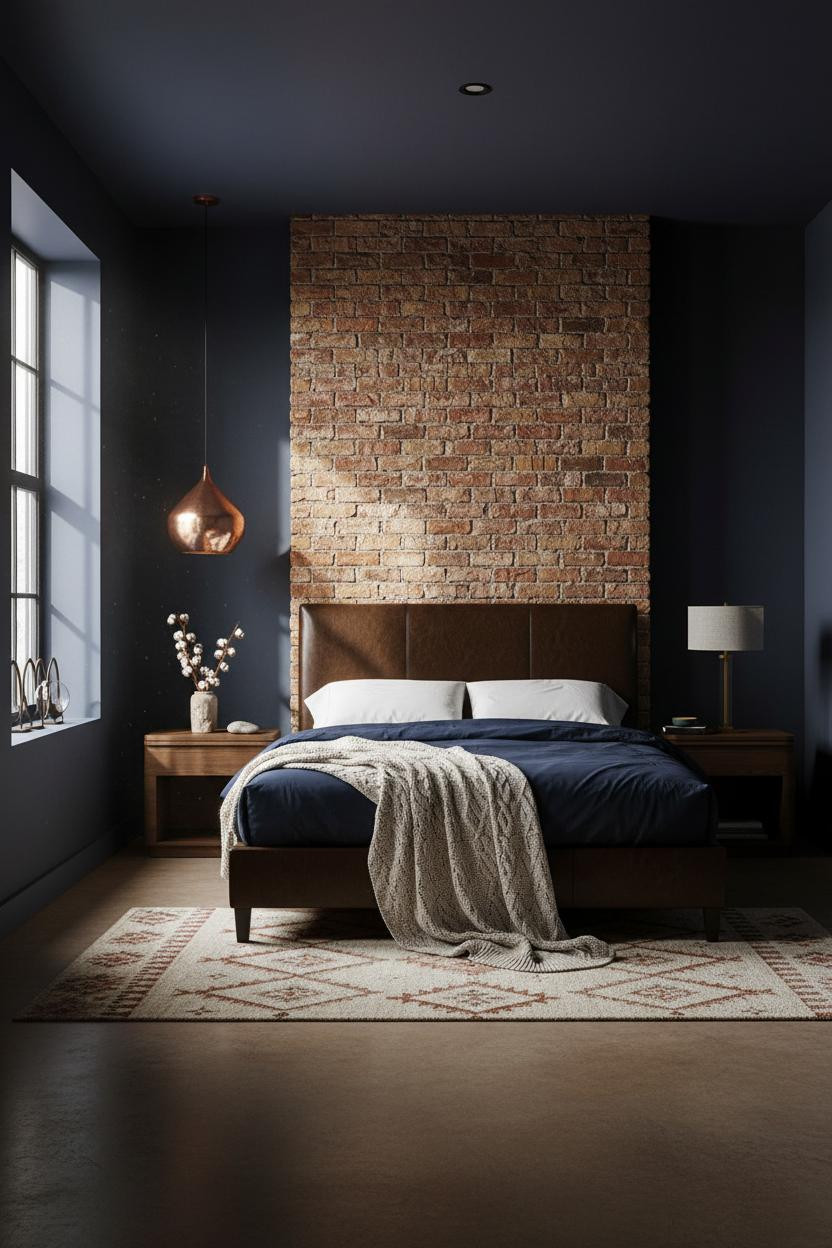


It shouldn't work. Salvaged brick and deep indigo plaster is a lot. But the reason it holds together is that the brick is warm-toned and the indigo is matte, so neither surface is competing for attention on the same axis.
What makes this one different: The rust-iron brick patina has enough warmth to bridge the cool indigo walls, which keeps the room from feeling like a cellar. Just enough tension to feel lively, while still feeling like a place you'd sleep well.
Avoid this mistake: Don't bring in cool-toned bedding here. Navy sateen duvet works. Grey linen does not.
Rough-Hewn Beams at Dusk Hit Different
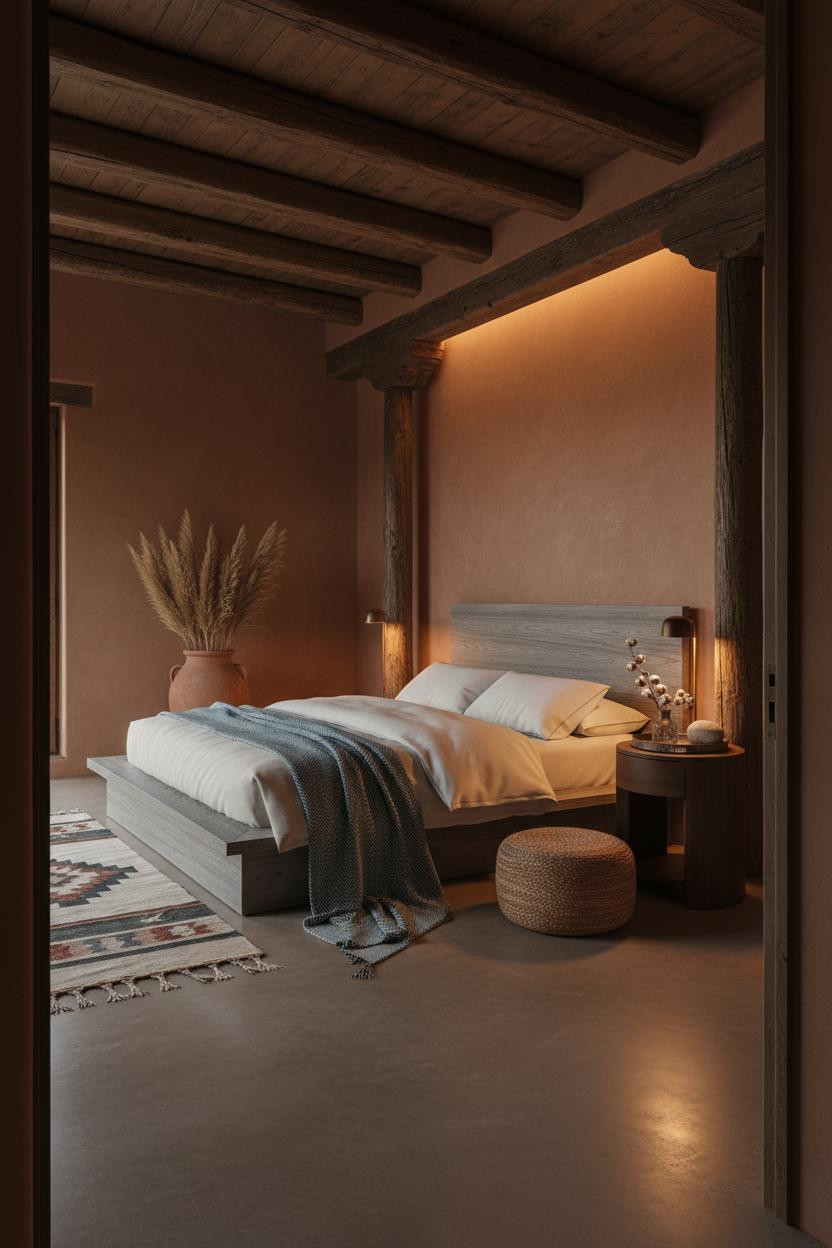

I almost scrolled past this one. Glad I didn't.
At dusk, the hand-adzed timber ceiling drinks the last light and holds it. The room feels warm without being heavy, which is honestly the hardest thing to pull off in a dark western aesthetic bedroom.
Where to start: Ground the floor with a geometric Navajo runner in cream and rust beside the bed. It echoes the beam grain above and keeps the concrete from feeling too cold.
What not to do: Skip the matching bedside lamps. One warm floor lamp near the bed foot creates a much more atmospheric light pool than symmetrical sconces here.
Stacked Slate Is the Dark Western Move I Recommend Most
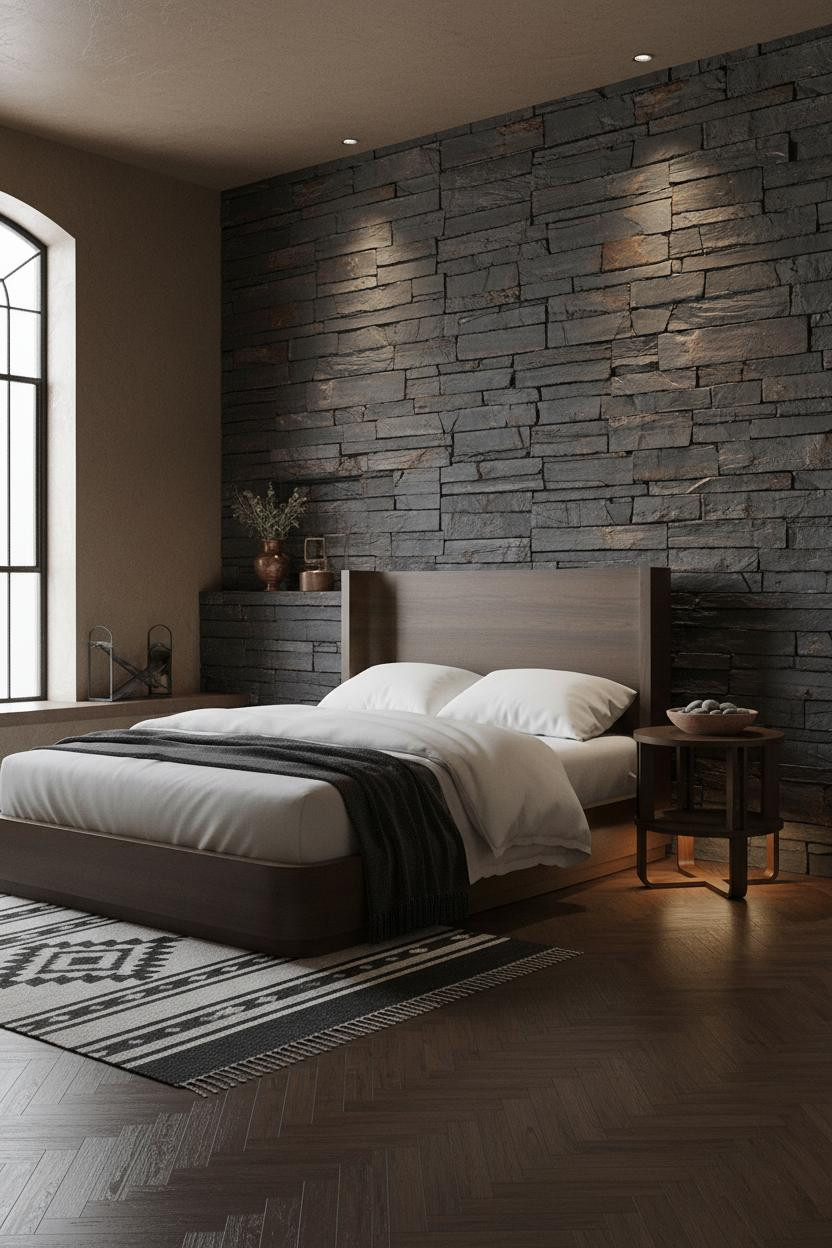
Slate reads darker than limestone and cooler than sandstone, which makes it the easiest stone to pair with warm-toned floors without the room tipping into monochrome.
Why it looks custom: The charcoal and rust-veined slate courses catch overcast light in a way that changes the wall's color throughout the day. It's a quiet nod to geological age that no paint finish can replicate. And the dark cozy bedroom quality comes almost automatically once the floor and stone are in the same warm family.
The easy win: Lay dark tobacco herringbone parquet underfoot. The angled grain echoes the irregular slate courses above, which ties the vertical and horizontal planes together without anything matching.
Canyon Stone Behind the Bed in Pre-Dawn Light
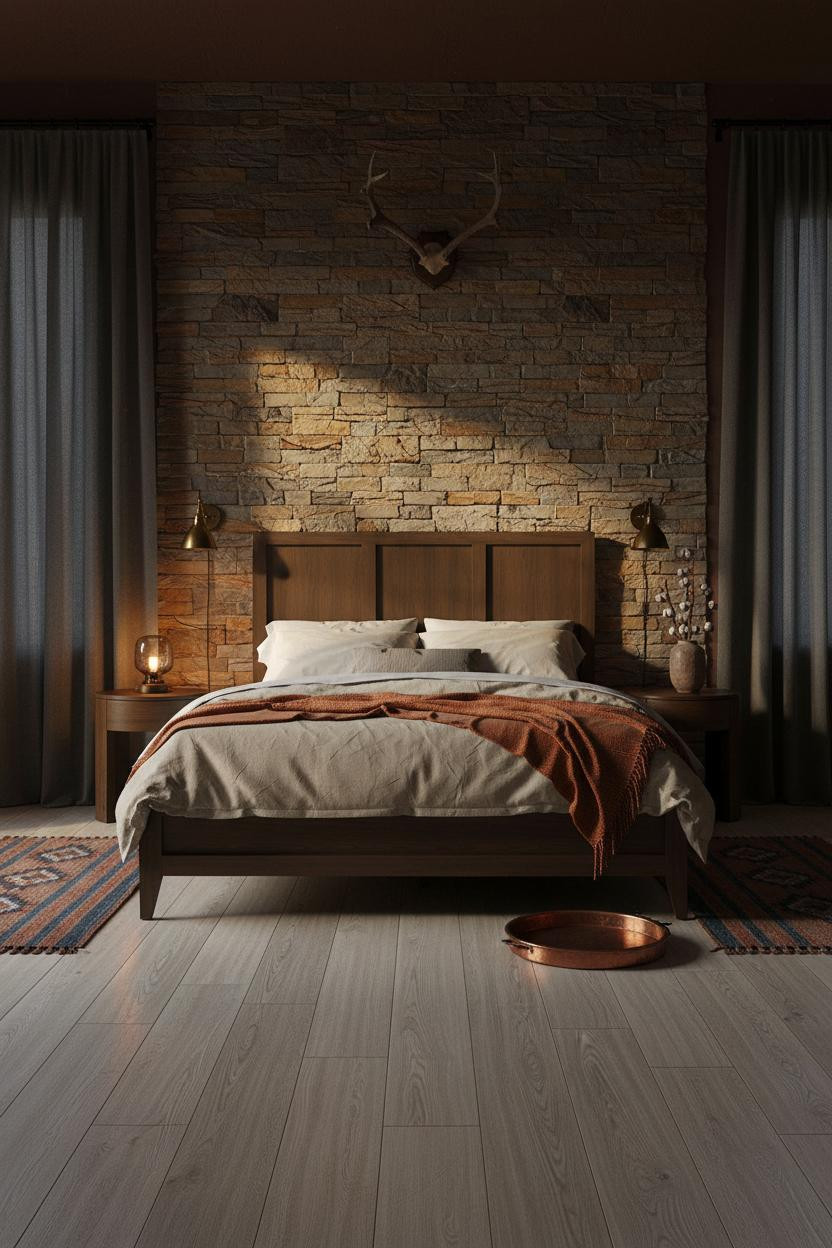
The room feels lived-in and intimate here in a way that surprises you. It's the pre-dawn light hitting ochre and iron-grey sandstone at a low angle that does it.
In a scheme this dark, the smarter choice is pairing the stone with bleached wire-brushed oak flooring rather than dark wood. The pale grain bounces just enough light upward to keep the stone from swallowing the room.
One smart swap: Hang floor-to-ceiling charcoal linen curtains from a wrought iron rod. The fabric softens the geological hardness without lightening the mood. (Good moody bedding choices matter here too.)
Reclaimed Wood, Leather, and Charcoal Plaster as a Full Commitment
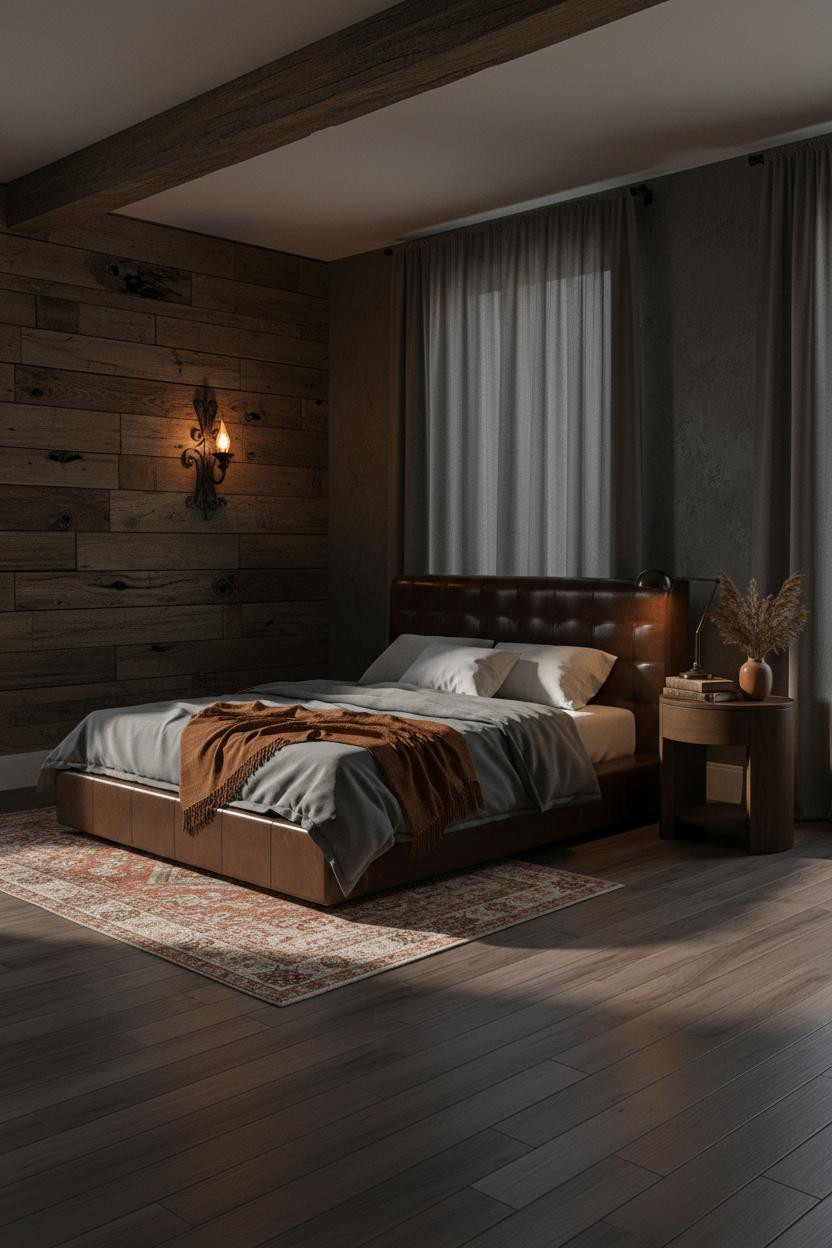

This is what a western gothic bedroom looks like when someone stops hedging. Deep reclaimed wood planks, charcoal plaster, espresso leather. Nothing softened, nothing apologized for.
Design logic: The weathered reclaimed wood wall with exposed knots and grain grooves catches amber lamp light the same way stone does. Every surface becomes its own texture event. The room feels collected rather than decorated.
Worth copying: Keep the rug faded. A worn rust-and-cream Persian runner under dark walnut floors reads as age, not neglect, and it's the detail that makes the whole scheme feel like it arrived over time rather than on a single shopping trip.

Our #1 Pick
Saatva Classic Mattress
America's best-selling online luxury innerspring. 365-night trial, lifetime warranty, free white glove delivery.
Shop Saatva Classic
Why Luxury Bedrooms Always Feel Better
Walls get repainted. Stone gets repointed. The mattress stays. And in a room built to last, what you sleep on matters as much as what surrounds you.
The Saatva Classic fits a moody western bedroom the way good bones fit a well-built room: quietly, without needing to announce itself. Dual-coil support that holds its structure over years, breathable organic cotton that doesn't trap heat on warm desert nights, and a Euro pillow top that's soft without losing its shape by morning.
Good design ages well because it's made well. Start there.
