
 by
by GhostBed and Tempur-Pedic both make all-foam mattresses, but they target different buyers. GhostBed offers a firmer, cooler-sleeping foam for back sleepers at a far lower price (queen from around $649). Tempur-Pedic delivers deeper body contouring and strong pressure relief for side sleepers, but queen prices start above $1,600. Neither is a bad mattress; the choice comes down to feel preference and budget. If you want a premium option with a coil-on-coil build, a longer trial, and better purchase protections than either brand offers, the Saatva Classic is our top recommendation for most sleepers.
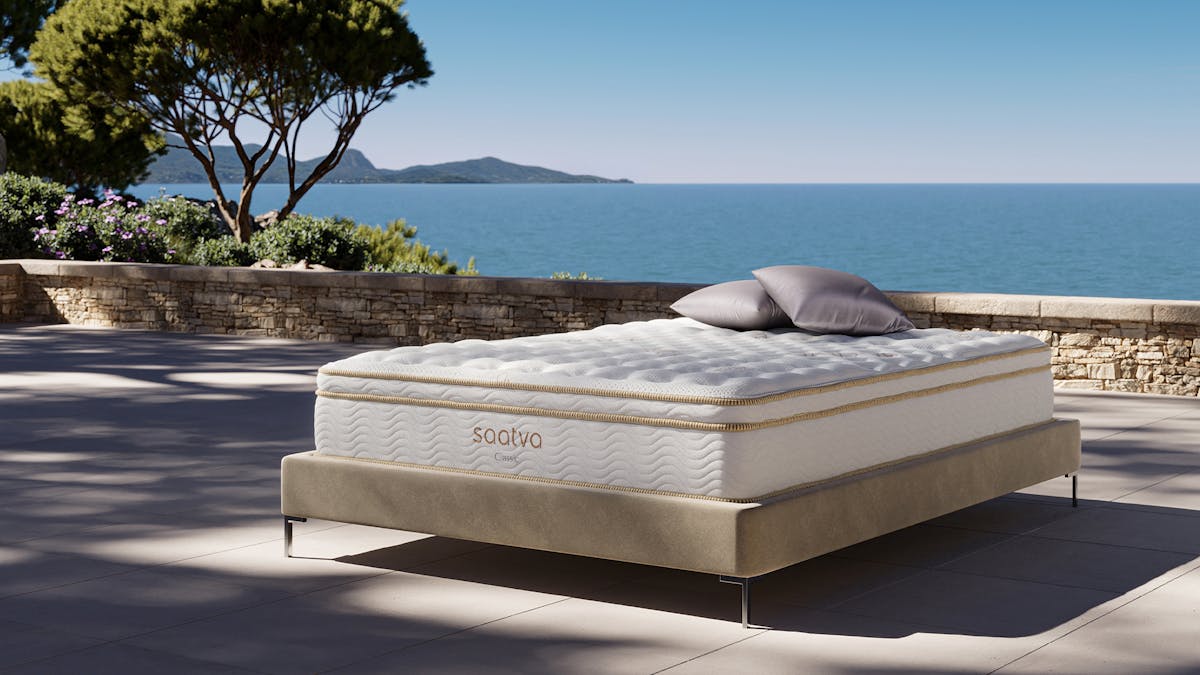
Saatva Classic
9.2/10
- Dual-coil construction with reinforced lumbar zone pad, excellent for back pain
- 3 firmness options cover every sleep style (Plush Soft, Luxury Firm, Firm)
- Free white-glove delivery, in-room setup, and old mattress removal
- 365-night home trial and lifetime warranty, the longest protections in this category
- Ships flat, not compressed in a box, so delivery coordination is required
- $99 fee if you return during the trial period
Where GhostBed and Tempur-Pedic both limit you to 90-101 nights, Saatva gives you a full year. The coil-on-coil structure breathes better than either all-foam option, and at around $1,395 queen it sits comfortably between the two brands on price while outperforming both on purchase protections.
GhostBed vs Tempur-Pedic: the key differences
These two brands share an all-foam construction but little else. GhostBed was built around making cooling-focused foam accessible at a reasonable price. Tempur-Pedic built its reputation on a single proprietary material, the TEMPUR foam, originally developed for aerospace pressure relief. The result is two very different sleeping experiences at very different price points.
Head-to-head specs
| Feature | GhostBed Classic | Tempur-Pedic TEMPUR-Cloud |
|---|---|---|
| Construction | Gel memory foam + latex-like bounce layer + HD support foam | Proprietary TEMPUR comfort + TEMPUR support layers |
| Firmness | Medium-firm ~6.5-7/10 | Medium ~5-6/10 |
| Queen price | ~$649 | ~$1,699 |
| Trial period | 101 nights | 90 nights |
| Warranty | 20 years | 10 years |
| Best for | Back sleepers, hot sleepers, value buyers | Side sleepers, pressure-point pain, brand loyalists |
| Returns | Free during trial | Exchange only, no free returns |
Who GhostBed works for
The GhostBed Classic is a firmer all-foam mattress. Its top layers combine gel memory foam with Ghost Bounce foam, a latex-like responsive material that gives more springback than typical slow-sink memory foam. The result is a mattress that sleeps cooler and more supportive than most beds at this price point.
Back sleepers tend to get the best results here. The firmer profile, around 6.5-7 out of 10, keeps the hips from sinking too deep, which helps maintain lumbar alignment. The gel infusion and cooling fiber cover help manage heat, which is a meaningful advantage over standard memory foam beds.
Value buyers will find GhostBed hard to beat at roughly $649 queen. The 20-year warranty and free returns during the 101-night trial are protections that cost considerably more at competing brands.
GhostBed is less ideal for strict side sleepers who need deep shoulder and hip contouring. The firmer feel limits how much the material wraps around pressure points, and lighter sleepers under 130 lb may find it uncomfortably firm.
Who Tempur-Pedic works for
Tempur-Pedic built its market position on one thing: the proprietary TEMPUR material. It is denser and more precisely body-conforming than standard memory foam or the GhostBed gel layers. The result is exceptional pressure relief at the shoulders and hips and some of the strongest motion isolation in the mattress category.
Side sleepers with shoulder or hip pain are the clearest fit. The slow-response TEMPUR material distributes contact pressure across body curves in a way that generic foam cannot fully replicate. Couples sharing a bed also benefit from the near-total motion dampening.
The real limitations are heat and cost. Tempur-Pedic mattresses sleep warm. The dense foam traps body heat, and only the ProBreeze and LuxeBreeze models address this with active cooling at over $3,000. The trial is also the shortest of any major brand at 90 nights, and Tempur-Pedic does not offer free returns, only exchanges for a different model. For buyers who do not need the specific TEMPUR feel, the price premium is hard to justify.
Construction layer by layer
GhostBed Classic
The GhostBed Classic runs 11 inches total. The cover is a knit fabric infused with cooling gel fibers, noticeably cool to the touch. Below that sits 1.5 inches of gel memory foam, then 2 inches of Ghost Bounce foam, a latex-like responsive layer that keeps you from sinking too deep. The base is 7.5 inches of high-density support foam. This stack prioritizes cooling and responsiveness over the deep slow-sink contouring that defines memory foam mattresses.
Tempur-Pedic TEMPUR-Cloud
The TEMPUR-Cloud runs about 11 inches. A thin breathable cover sits over 2 inches of TEMPUR comfort material, slow-response and precisely body-conforming. Below that is 2 inches of TEMPUR support material, then a 7-inch adaptive base layer. The feel is deeper, slower, and more enveloping than the GhostBed, with stronger pressure contouring and heavier motion dampening throughout.
Firmness and feel
GhostBed rates as medium-firm, closer to 6.5-7 on a 10-point scale. You get initial sinkage from the gel layers on top, but the Ghost Bounce foam beneath keeps you from going deep. The overall sensation is more "on the mattress" than "in the mattress."
Tempur-Pedic TEMPUR-Cloud rates medium, around 5-6 out of 10. The TEMPUR material produces a slow, precise contouring sensation. You sink gradually, the foam conforms around your shape, and there is very little springback. Heavier sleepers or those who sleep warm may find the classic Tempur feel problematic over time.
Temperature regulation
GhostBed wins this category. The gel memory foam, cooling fiber cover, and Ghost Bounce layer all help dissipate heat. It does not sleep as cool as a coil hybrid with open airflow, but among all-foam mattresses it performs meaningfully above average.
Tempur-Pedic is the opposite. The dense TEMPUR material retains body heat effectively, and most models in the lineup do not include active cooling. The brand acknowledges this with its premium cooling models, but those start above $3,000. For hot sleepers on any reasonable budget, GhostBed is the better choice in this matchup.
Motion isolation and edge support
Both mattresses absorb motion well, which is standard for all-foam construction. Tempur-Pedic has the stronger isolation of the two; the slow-response TEMPUR material means movement on one side of the bed barely registers on the other. GhostBed performs well but the Ghost Bounce layer adds a small amount of responsiveness that slightly reduces isolation. Both are solid choices for couples.
Edge support is a shared weakness. All-foam mattresses compress at the perimeter under sustained pressure, and neither the GhostBed nor Tempur-Pedic feel as stable at the edges as a hybrid with a reinforced perimeter coil system. Sleepers who tend to sit or sleep near the edge will notice this on both.
Price by size
| Size | GhostBed Classic | Tempur-Pedic TEMPUR-Cloud |
|---|---|---|
| Twin | ~$499 | ~$1,199 |
| Twin XL | ~$549 | ~$1,399 |
| Full | ~$599 | ~$1,599 |
| Queen | ~$649 | ~$1,699 |
| King | ~$899 | ~$2,199 |
| Cal King | ~$899 | ~$2,199 |
The price gap is significant. GhostBed at roughly $649 queen is about a third the cost of Tempur-Pedic's entry-level TEMPUR-Cloud. Higher-end Tempur-Pedic tiers can reach four to five times the GhostBed price. GhostBed also offers more generous purchase protections: 101-night trial versus 90, 20-year warranty versus 10, and free returns versus exchange-only.
Verdict: which one should you buy?
Choose GhostBed if you are a back sleeper, tend to sleep hot, or want a well-built all-foam mattress without spending over $700. The firmer feel, better cooling, longer warranty, and free returns make it the stronger value of the two.
Choose Tempur-Pedic if you are a side sleeper with persistent pressure-point pain who wants the specific slow-contouring feel that only TEMPUR material provides. Factor in the heat retention, shorter trial, and no-free-return policy before committing.
For most buyers, the Saatva Classic offers the better middle path: coil-on-coil construction that breathes better than any all-foam option, a 365-night home trial, a lifetime warranty, and free white-glove delivery at around $1,395 queen.
Saatva Classic
9.2/10
Longer trial than both GhostBed and Tempur-Pedic, better airflow than either all-foam option, and free white-glove delivery that neither brand provides at this price.
You don’t have to choose between cheap-and-cool and deep-and-dear
The gap this page keeps circling is brutal: GhostBed’s firmer, cooler foam at an accessible price, against Tempur-Pedic’s dense, heat-hugging contour at more than double the money. Most readers walk away feeling they must either underspend or overspend.
There’s a third lane. The Saatva Classic sleeps cooler than either — coils breathe in a way no foam block can — wraps it in a plush euro top, and lands between these two on positioning while arriving white-glove. Before you accept the foam dilemma, check what the Classic costs today.
Frequently asked questions
Is GhostBed better than Tempur-Pedic?
GhostBed is better for back sleepers, hot sleepers, and buyers who want strong purchase protections at a lower price. Tempur-Pedic is better for side sleepers who want deep TEMPUR contouring and can afford the premium. There is no universal winner; it depends on your sleep position and budget.
Does Tempur-Pedic sleep hot?
Yes, most Tempur-Pedic models sleep warm. The dense proprietary TEMPUR material retains body heat. The brand addresses this in its ProBreeze and LuxeBreeze models, but those start above $3,000. For hot sleepers, GhostBed is the better option in this comparison.
What is GhostBed's trial period compared to Tempur-Pedic?
GhostBed offers a 101-night trial with free returns. Tempur-Pedic offers a 90-night trial but only exchanges, not free returns. GhostBed's purchase protections are meaningfully stronger on both points.
Which mattress lasts longer?
Tempur-Pedic typically holds up longer in practice, with most owners reporting 10-15 years of useful life. GhostBed is decent but may develop body impressions sooner, particularly for heavier sleepers. Ironically, GhostBed offers the longer warranty at 20 years versus Tempur-Pedic's 10, though warranty length and real-world durability do not always align.
Is there a better option than both GhostBed and Tempur-Pedic?
For most sleepers, the Saatva Classic is worth considering. Its coil-on-coil hybrid construction breathes better than either all-foam brand, the 365-night home trial is far longer than both, and the lifetime warranty with free white-glove delivery represents better overall protections. At around $1,395 queen, it sits between the two on price while delivering hybrid-quality support and airflow.