
 by
by DreamCloud edges out GhostBed in most head-to-head metrics: its hybrid coil construction, longer 365-night trial, and lifetime warranty give it more overall value than the GhostBed Classic's all-foam design. GhostBed wins on motion isolation and works better for strict back and stomach sleepers who want a firmer foam feel. Neither brand is our top pick at MattressNut; see the Saatva Classic below for the best all-round coil hybrid in this category.
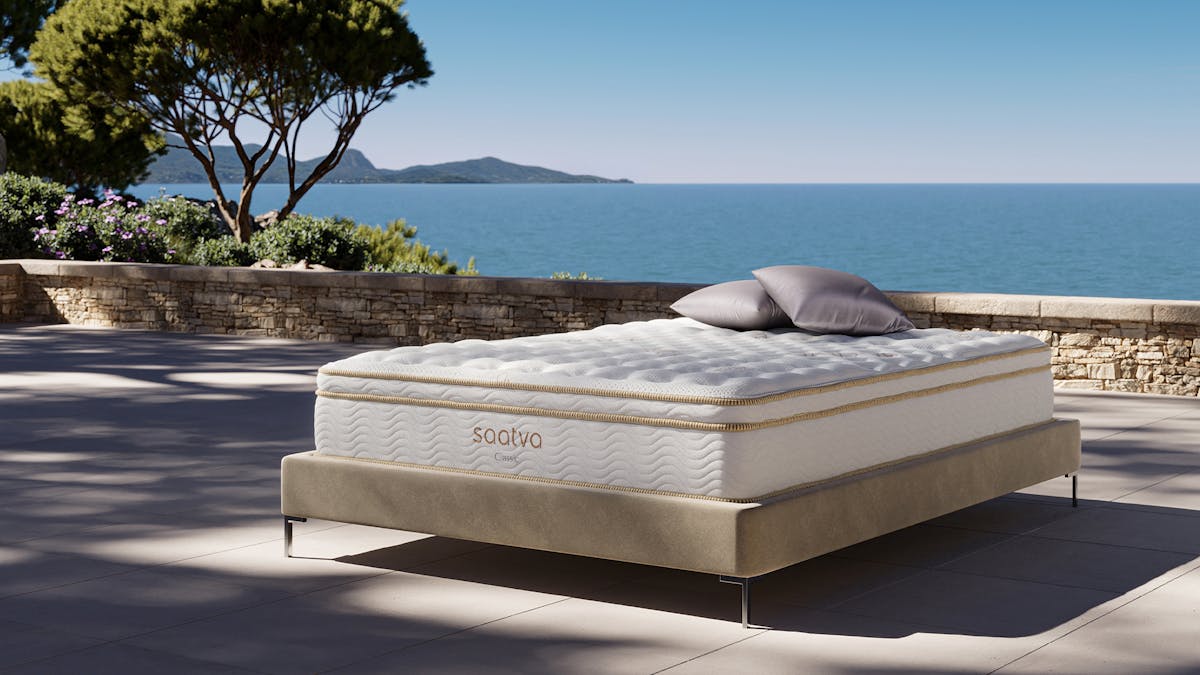
Saatva Classic
9.2/10
- Dual-coil build with a reinforced lumbar zone pad outperforms both GhostBed and DreamCloud on back support
- Three firmness options (Plush Soft, Luxury Firm, Firm) versus a single-firmness approach from DreamCloud
- Free white-glove delivery with in-room setup and old-mattress removal
- Lifetime warranty and one of the longest 365-night trials in the industry
- Ships flat rather than compressed in a box; heavier to maneuver
- $99 return fee applies during the trial period
If you are comparing GhostBed and DreamCloud, the Saatva Classic belongs in that conversation. Its dual-coil construction, zoned lumbar support, white-glove delivery, and lifetime warranty put it a clear tier above both. It costs more, but the trial and delivery terms remove the usual risk of buying a premium mattress.
GhostBed vs DreamCloud: the key differences
GhostBed and DreamCloud are both online-direct mattress brands aiming at the value-to-mid-premium segment, but they are built very differently and serve somewhat different sleepers. Here is where they actually diverge.
Specs at a glance
| GhostBed Classic | DreamCloud Hybrid | |
|---|---|---|
| Construction | All-foam (gel memory + aerated latex) | Hybrid (memory foam + pocketed coils) |
| Firmness | Medium-firm 7/10 | Medium-firm 6.5/10 |
| Height | 11 in | 14 in |
| Trial period | 101 nights | 365 nights |
| Warranty | 20 years | Lifetime |
| Twin price | ~$945 | ~$1,273 |
| Queen price | ~$1,295 | ~$1,473 |
| King price | ~$1,695 | ~$2,098 |
| Best for | Back, stomach, firmer-feel preference | Side, back, hybrid lovers, couples |
Construction and feel
GhostBed Classic
The GhostBed Classic is a three-layer all-foam mattress. Below the knit cover sits two inches of gel memory foam, then two inches of aerated synthetic latex, and finally a high-density polyfoam support core. The aerated latex does real work: it creates a springier, more responsive surface than straight memory foam and lets heat escape more easily. The result is a mattress that feels firm and supportive without the heavy sink-in sensation many people associate with memory foam.
GhostBed makes several other models, including the GhostBed Flex (a hybrid) and the GhostBed Luxe (designed for hot sleepers with a phase-change cover). But the Classic remains the brand's flagship all-foam option, and it is the one most commonly compared to DreamCloud.
DreamCloud Hybrid
DreamCloud builds only hybrid mattresses. The original DreamCloud sits on a pocketed coil system topped with several layers of memory foam and finished with a cashmere-blend Euro top. That coil layer does what coils do well: it creates airflow throughout the mattress, provides zoned support that responds to different body zones independently, and pushes back with a springier feel than foam alone.
The cashmere Euro top makes the DreamCloud feel plush at first contact despite its medium-firm overall rating of 6.5 out of 10. Sleepers who dislike the "stuck in the mattress" sensation common with all-foam beds tend to find DreamCloud's hybrid bounce more appealing.
Who each mattress works best for
GhostBed Classic: best for
- Back sleepers of average weight who want firm, consistent support without much sink
- Stomach sleepers who need the mattress to prevent hip sag and maintain spinal extension
- Hot sleepers on a budget who want foam but with better airflow than traditional memory foam offers
- Motion-sensitive partners because the all-foam construction absorbs movement well
GhostBed Classic: not ideal for
- Side sleepers, particularly lighter-framed ones, who may feel the firmness jamming their shoulders and hips rather than cradling them
- Heavier sleepers (over 230 lb) who may compress through the comfort layers faster than average
DreamCloud Hybrid: best for
- Side and back sleepers of average weight who want a plush surface with underlying coil support
- Couples who want both bounce and decent motion isolation
- Anyone wanting a longer safety net because the 365-night trial is among the longest offered by any brand
- Hybrid lovers who find all-foam beds too airless or sinking
DreamCloud Hybrid: not ideal for
- Heavy sleepers who may compress through the foam comfort layers and land directly on the coils
- Strict stomach sleepers because the Euro-top plushness can let the hips sink too far
Firmness comparison
GhostBed Classic rates around 7 to 7.5 out of 10, making it noticeably firmer than the DreamCloud. DreamCloud sits closer to 6.5 out of 10, or medium-firm, which covers a wider range of body types. If you have never slept on a foam mattress and are unsure where you land, the DreamCloud's softer entry point and longer trial give you more room to experiment. If you already know you prefer a firm feel, the GhostBed Classic delivers that more consistently.
Temperature and cooling
Both mattresses address heat retention, but through different means. GhostBed's aerated latex layer punches holes through the foam to create passive airflow, and the gel-infused memory foam conducts heat away from the body surface faster than standard foam. The result is a genuinely cooler-sleeping all-foam bed than you would normally expect.
DreamCloud's hybrid coil system creates open airflow throughout the mattress by design: air moves between the coils freely, which is why hybrids almost always sleep cooler than all-foam beds. DreamCloud also uses a gel-infused memory foam layer and a breathable cashmere top. For sleepers who run hot, DreamCloud edges ahead on temperature regulation.
Motion isolation
All-foam mattresses almost always outperform hybrids on motion isolation, and the GhostBed Classic is no exception. The foam absorbs movement rather than transmitting it across the surface. Our Sleep Lab scores confirm this: GhostBed Classic scored 87/100 on motion isolation versus 82/100 for DreamCloud. The difference is noticeable if your partner tosses and turns frequently.
Edge support
DreamCloud's pocketed coil perimeter provides substantially better edge support than GhostBed's foam base. Our Sleep Lab scores: DreamCloud 82/100, GhostBed 66/100. That gap matters in practice if you tend to sit or sleep near the edge of the mattress, or if you share a bed and use the full width regularly.
Trial period and warranty
DreamCloud offers a 365-night trial, one of the longest in the industry, versus GhostBed's 101-night trial. Both are adequate for evaluating a mattress, but the DreamCloud trial gives you enough time to sleep through all four seasons before committing. On warranty, DreamCloud's lifetime warranty beats GhostBed's 20-year limited warranty, though both are strong by industry standards.
Price
GhostBed is generally less expensive. The queen lists around $1,295, while DreamCloud comes in near $1,473. Both brands run sales that can reduce these prices by 20 to 40 percent, so checking current promotions before buying is worthwhile. Neither brand includes white-glove delivery at standard pricing; you set up both mattresses yourself.
Verdict: which one should you buy?
DreamCloud wins on overall value for most sleepers. The combination of pocketed coils, a 365-night trial, and a lifetime warranty at a price only modestly higher than GhostBed makes it the stronger all-around choice. The one clear area where GhostBed comes out ahead is motion isolation, which matters for light-sleeping couples.
That said, neither mattress represents the ceiling in this price category. The Saatva Classic, at a higher price point, brings dual-coil construction with a zoned lumbar pad, free white-glove delivery with setup and old-mattress removal, a 365-night trial, and a lifetime warranty. The delivery and setup alone offset a significant portion of the price difference for anyone who has ever tried to get a mattress into a bedroom alone.
Between the two, DreamCloud wins on overall value, trial period, and edge support. GhostBed wins on motion isolation and suits firmer-feel preferences. For the best coil hybrid in this category, the Saatva Classic benchmarks ahead of both on construction quality, delivery terms, and long-term protection.
The Saatva Classic — the pick we promised you above
We said at the top that neither of these is our best all-rounder, and everything since has shown why: DreamCloud carries the head-to-head on coils, trial and warranty, GhostBed keeps the motion-isolation and firm-foam crowd — and each one leaves something on the table.
The Saatva Classic is the bed we meant. Coil-on-coil construction that goes a step beyond DreamCloud’s single coil layer, a plush euro top GhostBed’s foam can’t imitate, and white-glove delivery neither offers. If the head-to-head above didn’t crown a winner for you, this is where the comparison was always heading — check its current price and trial.
Frequently asked questions
Is GhostBed or DreamCloud better for back pain?
Both are medium-firm mattresses that work reasonably well for back pain. GhostBed's slightly firmer feel suits back sleepers who want consistent support without sink; DreamCloud's hybrid coils provide zoned response that adapts to the lumbar curve. For dedicated lumbar support engineering, the Saatva Classic with its reinforced lumbar zone pad outperforms both.
Does DreamCloud sleep cooler than GhostBed?
Generally yes. DreamCloud's pocketed coil layer creates open airflow that all-foam mattresses cannot replicate. GhostBed's aerated latex narrows the gap significantly compared to standard memory foam, but DreamCloud edges ahead for sleepers who run very hot.
Which mattress is better for couples?
It depends on what you prioritize. GhostBed has better motion isolation, which matters more if one partner is a light sleeper. DreamCloud has better edge support and more surface bounce, which couples who want more usable mattress width tend to prefer.
Can you try GhostBed and DreamCloud before buying?
Both brands are online-direct, so there is no showroom to test them in. GhostBed offers a 101-night home trial; DreamCloud offers 365 nights. Use the trial periods and return only if the mattress genuinely does not work after 30 to 60 nights of adjustment.
Is DreamCloud worth the higher price over GhostBed?
For most sleepers, yes. The hybrid construction, longer trial, and lifetime warranty justify the modest price premium. The exception is buyers who strongly prefer an all-foam feel or who are particularly sensitive to motion transfer.
Saatva Classic
9.2/10
Dual-coil innerspring with a zoned lumbar pad, three firmness options, free white-glove delivery and old-mattress removal, 365-night trial, and lifetime warranty. The strongest coil hybrid in this category, and the mattress we recommend most often when readers are deciding between mid-range brands like GhostBed and DreamCloud.