
 by
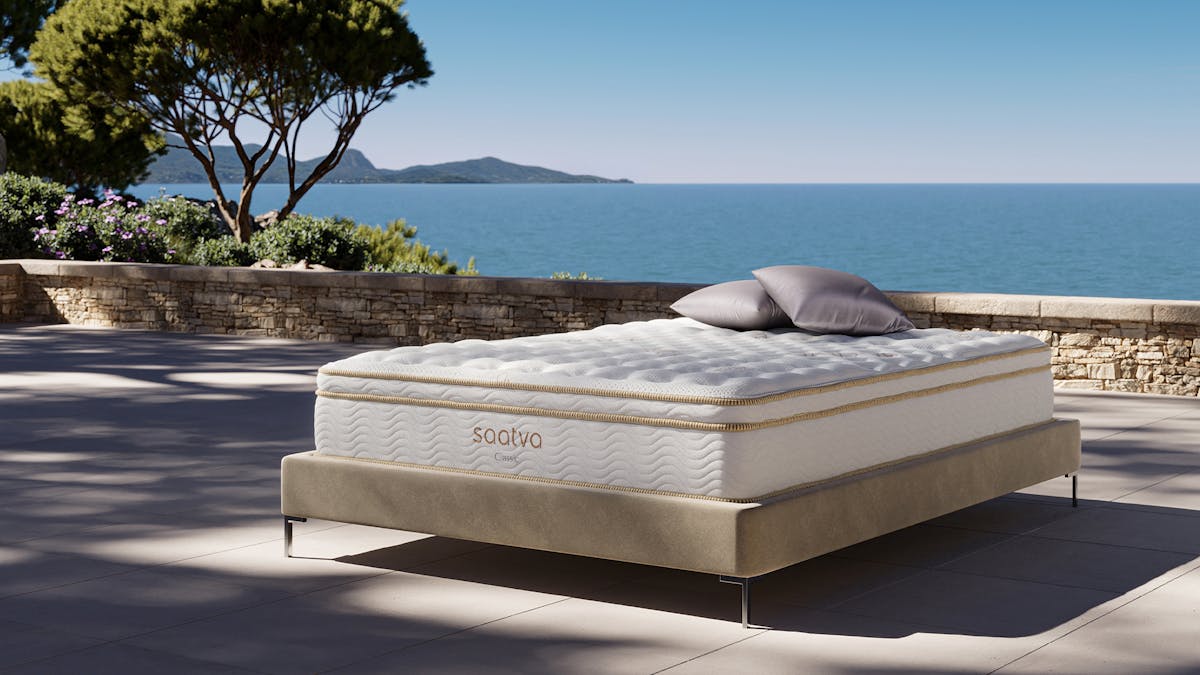
by Stomach sleepers need a firm mattress that keeps the hips elevated and prevents lumbar hyperextension. Our top pick is the Saatva Classic in Firm (8/10): its dual-coil construction with a reinforced lumbar zone delivers real push-back that resists hip sinkage, and the 365-night trial gives ample time to confirm the fit. The Amerisleep AS3 is the best all-foam alternative for combination stomach-side-back sleepers who prefer a slightly softer feel.
Saatva Classic
9.3/10
- Dual-coil construction with a reinforced lumbar zone resists hip sinkage for all body weights
- Firm option (8/10) is one of the best available for dedicated stomach sleepers
- Outstanding cooling: breathable open coil construction keeps sleep surface consistently cool
- Free white-glove delivery, setup, and old-mattress removal included
- 365-night trial, lifetime warranty
- Ships flat (not compressed in a box), heavier than roll-pack mattresses
- $99 return fee applies during the trial period
For dedicated stomach sleepers, the Saatva Classic in Firm is the most mechanically sound choice. The coil-on-coil construction provides the deep, consistent push-back that prevents hip sinkage, while the zoned lumbar foam reinforcement targets the area where stomach sleeping causes the most spinal stress. The 365-night trial is long enough to confirm whether firm is truly the right call for your body weight and sleeping style.
Why firmness matters for stomach sleepers
Stomach sleeping is mechanically demanding on the lumbar spine. When you lie face-down, your hips and pelvis carry more weight than your chest and shoulders. On a mattress that is too soft, those heavier zones sink below the rest of your body, pushing the lower back into lumbar hyperextension, an exaggerated inward arch that compresses facet joints and intervertebral discs.
The goal of any mattress for stomach sleeping is hip elevation: keeping the pelvis level with the shoulders so the spine sits in its natural neutral curve. This requires a firmer sleep surface than back or side sleeping, and a support system that resists hip sinkage specifically. Both the zoned coils on the Saatva Classic and the HIVE zones on Amerisleep models are engineered around this principle.
A 2015 study in Sleep Health (Jacobson et al.) confirmed that firmer surfaces consistently outperform soft ones for reducing mechanical spinal stress during sleep, which is directly applicable to stomach sleepers who require hip elevation throughout the night.
Stomach sleeper picks compared
| Mattress | Type | Firmness | Best for | Trial | Queen price |
|---|---|---|---|---|---|
| Saatva Classic | Coil-on-coil hybrid | Firm 8/10 | Strict stomach sleepers, all body weights | 365 nights | ~$1,395 |
| Amerisleep AS3 | All-foam (Bio-Pur) | Medium 5/10 | Combination stomach-side-back sleepers | 100 nights | From $1,049 |
| PlushBeds Botanical Bliss | Natural latex | Medium-Firm ~7/10 | Hot stomach sleepers who prefer latex | 100 nights | ~$1,800 |
| Puffy Original | All-foam | Medium-firm ~6-7/10 | Combination sleepers, lighter builds | 101 nights | ~$1,499 |
| Sweetnight CoolNest | Hybrid (gel foam + coils) | Medium-firm ~6-7/10 | Budget-conscious stomach sleepers | ~100 nights | Sub-$600 |
Best mattresses for stomach sleepers: our picks
Amerisleep AS3
8.7/10
- HIVE 5-zone layer firms under the hips and lumbar (zones 3-4 of 5), resisting the sinkage that strains the lower spine
- Plant-based Bio-Pur foam stays cooler than standard memory foam, useful for stomach sleepers pressing full torso against the surface
- CertiPUR-US certified, made in the USA, free shipping
- Handles combination stomach-side-back sleeping better than extra-firm models
- Medium firmness (5/10): strict stomach sleepers over 200 lb may want a firmer option
- Softer edges than a coil hybrid
The AS3 is the best pick for stomach sleepers who also spend time on their back or side during the night. The HIVE hip zone resists sinkage in stomach position while remaining comfortable for other positions, and the 100-night trial gives enough time to assess fit across your full range of sleep positions.
PlushBeds Botanical Bliss
8.4/10
- Naturally buoyant latex resists hip sinkage without the stuck feel of memory foam
- Outstanding cooling: latex dissipates heat far better than foam, critical for stomach sleepers pressing full torso into the surface
- GOLS-certified organic latex, GOTS-certified cotton cover
- Highly durable: 25-year warranty reflects latex longevity advantage over foam
- More expensive than most foam options
- Buoyant feel (less contouring) may not suit sleepers who prefer deep pressure relief
If sleeping hot is your main complaint alongside stomach sleeping, the PlushBeds Botanical Bliss solves both problems. Natural latex runs significantly cooler than foam and provides the buoyant push-back that keeps hips elevated, which is exactly what strict stomach sleepers need without the heat trap.
Puffy Original
8.1/10
- Medium-firm feel provides reasonable hip support for lighter-to-average stomach sleepers
- Good pressure relief across the torso and chest contact points
- Lifetime warranty with 101-night trial
- Can run warm for some sleepers given foam construction
- Heavier stomach sleepers (over 200 lb) will likely need a firmer option
The Puffy Original sits at a useful mid-point for combination sleepers who include stomach sleeping in their rotation but are not pure prone sleepers. The medium-firm feel handles hip support adequately for lighter builds while staying comfortable across other positions.
Sweetnight CoolNest
7.8/10
- Hybrid coil core provides meaningful hip support at a fraction of the price of premium models
- Gel-infused foam comfort layer addresses the cooling demands of stomach sleeping
- Accessible price point for guest rooms or first-time mattress buyers
- Durability and edge support are below premium brands
- Not ideal as a daily driver for heavier builds long-term
The Sweetnight CoolNest earns its place for budget-conscious stomach sleepers who want a hybrid core without the premium price. The coil base provides real hip support, and the gel-infused foam layer handles the cooling demands that come with stomach sleeping. A strong value play for the right buyer.
The spinal mechanics of stomach sleeping
The human spine has a natural S-curve: a gentle inward curve in the lumbar region, a gentle outward curve in the thoracic region, and another inward curve at the neck. In all sleeping positions, the goal is to maintain this S-curve without exaggerating any component.
When you sleep prone on a mattress that is too soft, three problems compound:
- Lumbar hyperextension: Hips sink below shoulders, forcing the lower back into an exaggerated arch. This compresses the posterior facet joints and spinous processes while stretching the anterior ligaments.
- Cervical rotation: Because you cannot breathe face-down, you turn your head to one side. On a thick pillow this also forces the neck upward. The combination of rotation and extension is the most mechanically unfavorable position for the cervical spine.
- Shoulder compression: With an arm tucked or extended overhead, the rotator cuff tendons can become compressed, leading to morning shoulder soreness over time.
A firm or medium-firm mattress with active hip-zone support addresses the first problem directly. The other two are managed through pillow choice and arm positioning.
Firmness by body weight
The right firmness level for a stomach sleeper depends on body weight. Heavier builds compress a mattress more, so the same mattress that feels appropriately firm at 140 lb may feel soft and unsupportive at 230 lb.
- Under 130 lb: Medium-firm (5 to 6/10) is typically sufficient. An extra-firm model may feel uncomfortably hard at this weight.
- 130 to 200 lb: Firm (6.5 to 8/10) is the target. The Saatva Classic in Luxury Firm or Firm handles this range well.
- Over 200 lb: Firm to extra-firm (7.5 to 9/10). The Saatva Classic in Firm, with its dual-coil construction and reinforced lumbar zone, is the strongest choice at this weight range.
Mattress type comparison for stomach sleepers
Coil hybrid: The best option for most stomach sleepers, particularly at heavier body weights. The coil system gives real resistance to hip sinkage, while a modest foam comfort layer prevents hard pressure points at the chest and ribs. The Saatva Classic is the benchmark.
All-foam: Consistent, even support across the surface without pressure points. Must be rated medium-firm or firmer. The Amerisleep HIVE zoning system adds targeted hip and lumbar support within an all-foam design, making it the best foam choice for combination stomach sleepers.
Latex: Naturally buoyant and more responsive than memory foam. Excellent for stomach sleepers who sleep hot, since latex dissipates heat far better than foam. The PlushBeds Botanical Bliss is the top latex pick for this purpose.
Innerspring: Traditional innerspring mattresses can work for stomach sleepers, but inconsistent surface pressure between coils can create localized sinkage. A coil hybrid with a thin foam layer is generally a better choice.
Pillow and positioning tips
Head pillow: thinner is better
As a stomach sleeper your face turns to one side. A thick pillow forces the neck into extension on top of the lateral rotation already required, which is the most mechanically stressful configuration for the cervical spine. Use a flat or very thin pillow (2 to 3 inches compressed) or no pillow at all under the head.
Pelvic pillow: an underrated strategy
Placing a thin, flat pillow under the lower abdomen and pelvis does two things: it elevates the hips slightly, reducing pelvic sinkage, and it flattens the lumbar curve, reducing hyperextension. This technique is especially useful during the first few weeks on a new mattress while your body adjusts. Many people find they no longer need the pelvic pillow once the mattress provides sufficient hip elevation on its own.
Arm position
Avoid tucking one arm directly under your body for extended periods. A neutral position with both arms down by the sides, or one arm extended slightly at a comfortable angle, reduces shoulder compression during sleep.
Frequently asked questions
What firmness is best for stomach sleepers?
Most stomach sleepers need firm to extra-firm (7 to 9 on a 10-point scale). The right level depends on body weight: lighter sleepers can use a medium-firm (6/10) with good hip-zone support, while heavier sleepers need 8 or higher to prevent hip sinkage. A mattress that is too soft allows the pelvis to drop below the shoulders, creating the reverse arch that causes chronic lower back pain.
Can a stomach sleeper use a memory foam mattress?
Yes, but only if the memory foam is firm enough to prevent hip sinkage. Soft or medium memory foam will allow the pelvis to sink too deeply. Look for firm or medium-firm options with a strong support core, or models with targeted hip-zone firming like the Amerisleep HIVE system.
What pillow should a stomach sleeper use?
A very thin, flat pillow or no pillow at all under the head. A thick pillow forces the neck to hyperextend, misaligning the cervical spine. Many stomach sleepers find it more useful to place a thin pillow under the pelvis instead, which reduces lumbar hyperextension more directly than any head pillow adjustment.
Are hybrid mattresses good for stomach sleepers?
Firm hybrid mattresses work well for stomach sleepers, particularly at heavier body weights. The coil system provides strong push-back to resist hip sinkage, while a modest foam comfort layer prevents hard pressure at the chest and ribs. The Saatva Classic in Firm is the benchmark example.
Is stomach sleeping bad for your back?
Stomach sleeping is the most mechanically demanding position for the lumbar spine because it naturally pushes the lower back toward hyperextension. With the right mattress firmness and a thin or no pillow, stomach sleepers can significantly reduce this stress. The position does require more precision from the mattress than back or side sleeping.
How do I stop my hips from sinking as a stomach sleeper?
Choose a mattress rated 7 or higher, with a strong support core and, ideally, targeted hip-zone firmness. A thin pelvic pillow can also help redistribute weight during adjustment. Avoid soft mattress toppers, which will counteract the mattress firmness and allow renewed sinkage.
For dedicated stomach sleepers, the Saatva Classic in Firm is our top pick: dual-coil construction, reinforced lumbar zone, and a 365-night trial. Combination sleepers who also side or back sleep should consider the Amerisleep AS3, which handles position-switching better while still providing meaningful hip-zone support.