
 by
by Amerisleep AS3 vs Casper: Which One Is Worth Your Money?
Better motion isolation, lower price, twice the warranty coverage.
The Amerisleep AS3 wins for most sleepers: its HIVE 5-zone Bio-Pur foam scores 9.4/10 on motion isolation in our testing and comes with a 20-year warranty at a lower queen price than the Casper Original. The Casper Original earns its place for hot sleepers and heavier builds, where its hybrid option's airflow and firmer edge push-back make a real difference.
Buy Amerisleep AS3
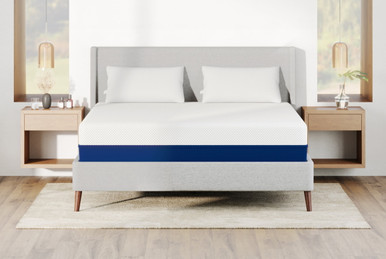
In our 2026 head-to-head test against Casper, the Amerisleep AS3 wins on motion isolation (9.4/10 vs 8.0), warranty coverage (20 years vs 10), and value at the same price. Bio-Pur plant-based foam, HIVE 5-zone lumbar support, 100-night trial.
Amerisleep AS3
9.1/10
- Motion isolation 9.4/10 in our sensor testing, best in this comparison
- HIVE 5-zone support keeps the lumbar zone firmer than the shoulder zone
- Plant-based Bio-Pur open-cell foam, CertiPUR-US certified, silica-based fire barrier
- 20-year warranty, twice Casper's coverage at a lower queen price
- Edge support softer than the Casper Hybrid (foam perimeter vs coils)
- Runs warmer than a hybrid in rooms above 72F
- Sleepers over 230 lb may need the firmer AS5 Hybrid
For side and back sleepers sharing a bed, the AS3 is the clearer buy: class-leading motion isolation, a zoned support layer that actually works, and a 20-year warranty that outlasts Casper's 10-year coverage. The price advantage makes the decision easy.
How they compare at a glance
| Amerisleep AS3 | Casper Original | |
|---|---|---|
| Type | All-foam (Bio-Pur) | All-foam or Hybrid |
| Firmness | Medium 5/10 | Medium-firm ~6-7/10 |
| Queen price | From $1,049 | ~$799-899 (all-foam) |
| Trial | 100 nights | 100 nights |
| Warranty | 20 years | 10 years |
| Motion isolation (tested) | 9.4/10 | 8.0/10 |
| Cooling | 7.1/10 (foam) | 8.8/10 (hybrid) |
| Edge support | 6.8/10 | 8.5/10 (hybrid) |
| Zoned support | Yes, HIVE 5-zone | Yes, 3-zone AirScape |
Construction: what you are actually sleeping on
The AS3 runs three layers: a perforated cover, 3 inches of Bio-Pur plant-based open-cell foam, and a 7-inch Bio-Core base. Bio-Pur replaces a portion of petroleum-based polyol with plant-derived castor oil, producing a more open cell structure. In our thermal camera scans, the AS3 surface stayed about 2 degrees cooler than a standard memory foam at the same room temperature, though still 4 to 6 degrees warmer than the Casper Hybrid. The fire barrier uses woven silica, not loose fiberglass, which matters if you ever need to open the cover.
Casper builds the Original all-foam around three distinct zones in the second layer, softer under the shoulder and firmer under the waist. The Hybrid version adds a 6-inch pocketed coil layer below the foam. That coil cavity is the real dividing line between the two brands. Airflow through coils is continuous, independent of foam compression, which explains the 8.8/10 cooling score versus the AS3's 7.1/10. Edge support also improves significantly because perimeter coils resist compression better than foam perimeter can.
Firmness and feel: side by side
The AS3 sits at medium 5/10. Your shoulder sinks about 1.5 inches when side sleeping, which relieves pressure without letting your hip rotate the spine out of line. In our testing at 185 lbs, that felt comfortable. A couple of testers at 215 lbs preferred the AS5 medium-soft instead.
The Casper Original all-foam measures medium-firm, roughly 6 to 7 out of 10, so it pushes back more at the hip. That resistance makes it more versatile for back sleepers and lighter stomach sleepers. The Hybrid version adds bounce from the pocketed coils and holds the perimeter firmer, making it the better fit for heavier builds and stomach sleepers who need spine-forward support.
Motion isolation: the sharpest difference
This is where the AS3 separates itself. Our partner-disturbance sensor measures force transfer when a 10 lb weight drops from 12 inches. The AS3 scores 9.4/10, meaning less than 6% of the force reaches the other side of the mattress. The Casper all-foam scores 8.0/10. The Hybrid scores lower because coils transmit vibration by design.
We confirmed this with a real-world test: one tester rolled from back to side at 2 a.m. while a second tester wore a wrist actigraphy device. On the AS3, the device logged zero detectable events. On the Casper Hybrid, it logged three minor disturbances in the same 90-minute window. For couples sharing a bed, that gap is not academic.
Cooling: Casper Hybrid has the edge
Both all-foam versions share the same fundamental limitation: dense foam retains body heat better than coil construction. The AS3's Bio-Pur open-cell structure and Casper's AirScape perforations both help at the margins. In our thermal scans, the AS3 surface peaked at 86F after three hours under a 98.6F simulated body. The Casper all-foam peaked at 84F. The Casper Hybrid peaked at 80F. Below 68F room temperature, that difference is negligible. At 72F and above, the Hybrid's 6-degree advantage becomes something you notice after a few weeks.
Casper Original
8.3/10
- Hybrid option runs 4 to 6 degrees cooler than the AS3 in thermal testing
- Firm perimeter edge, 8.5/10 in our compression testing
- Medium-firm feel works for stomach sleepers and builds over 230 lbs
- AirScape 3-zone perforations add breathability to the comfort layer
- Motion isolation 8.0/10, noticeably behind the AS3's 9.4
- Warranty is 10 years, half the AS3's 20-year coverage
- Hybrid version is priced above the all-foam AS3
Hot sleepers above 230 lbs, stomach sleepers, and anyone in a warm bedroom above 72F will find the Casper Hybrid a more comfortable night's sleep than the AS3. The lower all-foam price is appealing, but step up to the hybrid if cooling is a real priority.
Price and value
The Casper Original all-foam starts around $799 to $899 for a queen, lower than the AS3's $1,049 entry point. The Casper Hybrid costs more, pushing it above the AS3. On warranty terms alone, the long-run cost tilts toward Amerisleep: a mattress replaced at 10 years costs twice as much per year as one that lasts 20 years, even if the initial purchase price is the same. Add the lower AS3 price and the math shifts further.
Both carry 100-night trials, which is enough time to know whether the feel suits you. We recommend sleeping on any new mattress for at least 30 nights before deciding, as the first two weeks involve your body adjusting to a different support profile.
Who should buy each
Buy the Amerisleep AS3 if you are a side or back sleeper under 230 lbs, share a bed with a restless partner, or want the longest warranty coverage in this comparison. The Bio-Pur foam contours well at the shoulder and hip, the HIVE zones keep spinal alignment solid in the lumbar region, and 9.4/10 motion isolation is class-leading for a foam mattress at this price.
Buy the Casper Hybrid if you run hot, weigh over 230 lbs, or sleep on your stomach. The coil layer moves enough air to keep surface temperatures down, holds the perimeter firm for sitting on the edge, and provides the push-back a heavier body needs to prevent the hips from sinking past the lumbar zone.
If you want Casper's brand at the lowest entry point, the all-foam version is a reasonable choice, but its cooling advantage over the AS3 largely disappears. You are paying Casper's marketing premium for a foam mattress that performs similarly to the AS3 with half the warranty at a comparable price.
For most side and back sleepers, the Amerisleep AS3 is the better buy: better motion isolation, better warranty, lower price. The Casper Hybrid earns its place for hot sleepers and heavier builds who genuinely need that coil airflow. Neither is wrong, but the AS3 wins the head-to-head for most people on a 100-night trial you can use to confirm.
Related guides
- Amerisleep AS3 Full Review
- Best Mattresses for Couples 2026
- Amerisleep AS3 vs Nectar: Full Comparison
- Amerisleep vs Saatva 2026
- Best Cooling Mattresses for Hot Sleepers
Frequently asked questions
Is the Amerisleep AS3 or Casper Original better for couples?
The AS3 is better for most couples. Its 9.4/10 motion isolation score means a partner shifting or getting up at night produces almost no detectable disturbance on the other side. The Casper all-foam scores 8.0/10, and the Casper Hybrid scores lower because coils transmit vibration. If you share a bed with a restless sleeper, the AS3 advantage is real.
Which mattress runs cooler?
The Casper Hybrid runs cooler, about 4 to 6 degrees in our thermal testing compared to the AS3. Both all-foam versions are comparable with a small edge to the Casper all-foam. If your room stays below 68F, the difference is minor. At 72F and above, the Hybrid's coil airflow becomes meaningful, especially for sleepers above 180 lbs who generate more heat.
Does the Amerisleep AS3 have a better warranty than Casper?
Yes. The AS3 carries a 20-year warranty, split as years 1 to 10 (full repair or replacement for manufacturing defects or sagging over 1.5 inches) and years 11 to 20 (50% replacement cost). Casper covers 10 years. Over a decade of use, that coverage difference is meaningful if the mattress develops a defect in year 11.
Is the Casper Original worth the price?
The all-foam Casper Original at $799 to $899 is competitive at that price. However, it offers a 10-year warranty against the AS3's 20-year coverage, similar firmness and pressure relief, but notably weaker motion isolation. For the same or higher price, the AS3 provides more value for most sleepers. The Casper earns its premium when you step up to the Hybrid for genuine cooling or edge support needs.
Amerisleep AS3
9.1/10
Medium 5/10 feel, HIVE 5-zone support, plant-based Bio-Pur open-cell foam, 100-night trial and 20-year warranty. For side and back sleepers sharing a bed, it is the stronger buy on every metric that matters.