
 by
by The best cooling mattress for hot sleepers is one with open-cell foam or coil-based airflow rather than dense traditional memory foam. My top pick is the Amerisleep AS3: its Bio-Pur open-cell foam scored 9.0/10 for cooling in independent lab testing, and it stays temperature-neutral through the night. The Saatva Classic is the best coil-hybrid option if you want the absolute maximum airflow from a dual-coil innerspring design.
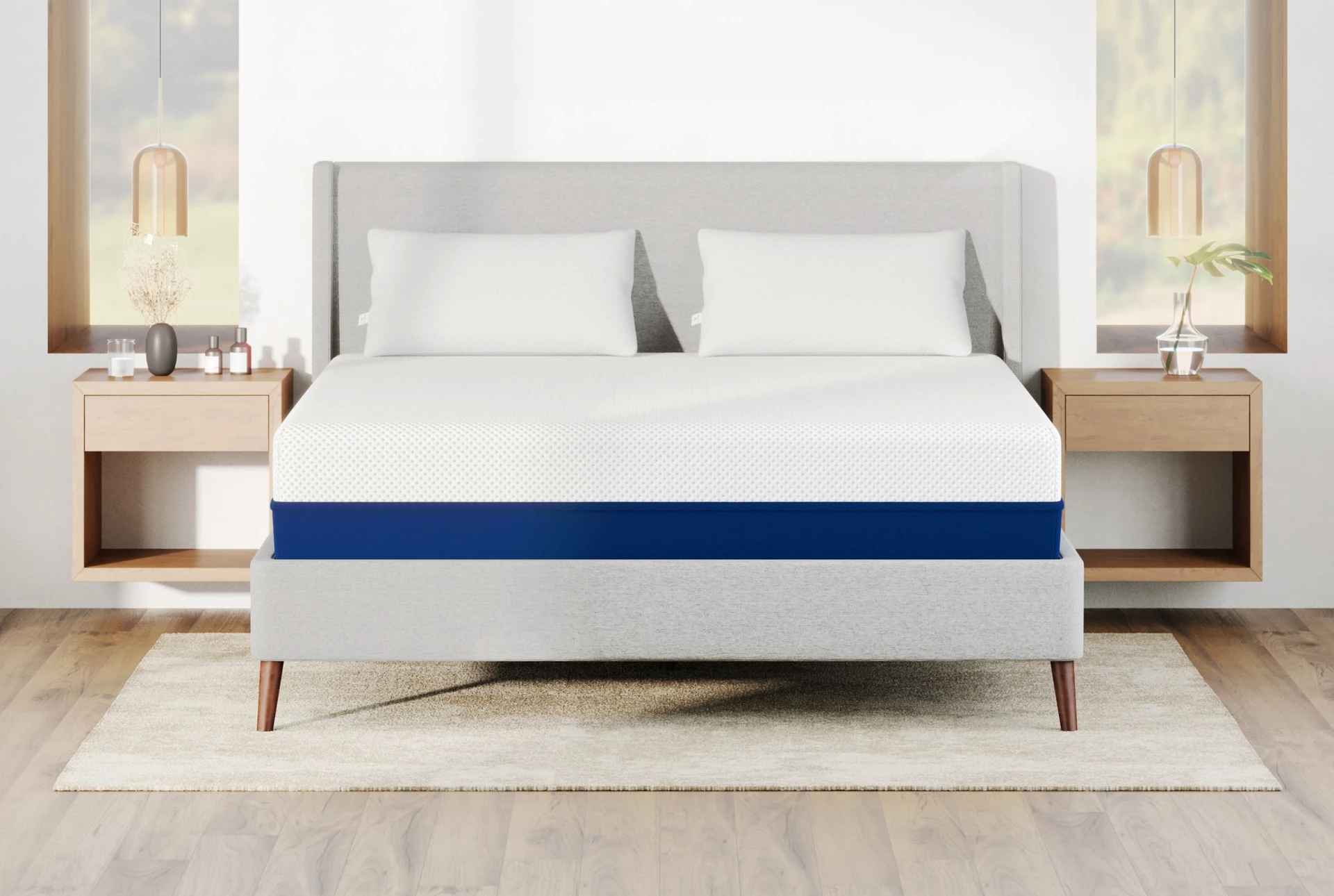
Amerisleep AS3
9.2/10
- Bio-Pur open-cell foam scored 9.0/10 for cooling in NapLab testing, significantly cooler than traditional closed-cell memory foam
- HIVE 5-zone support system provides targeted pressure relief without heat-trapping dense layers
- CertiPUR-US certified, made in the USA, free shipping
- 20-year warranty is twice the industry standard
- Edges softer than a coil hybrid, not ideal if you sleep right at the perimeter
- Heavier or extra-hot sleepers get more support and airflow from the AS3 Hybrid (Bio-Pur over pocketed coils); the firmer AS2 suits the heaviest back and stomach sleepers
The AS3 earns its top spot for hot sleepers because the Bio-Pur open-cell structure allows heat to escape laterally rather than concentrating under your body. In lab testing it kept surface temps meaningfully lower than competing all-foam beds, which is the main failure mode for memory foam sleepers who wake up hot.
Why most mattresses make you overheat
Traditional memory foam works by softening under body heat, which creates excellent contouring. The tradeoff is that the same thermal sensitivity traps warmth against your skin. Dense foam has few pathways for heat to escape, so your core body temperature stays elevated throughout the night instead of dropping as it should during deep sleep.
The average sleeping body generates roughly 1 watt of heat per kilogram of body mass at rest. Over seven hours on a poor-cooling mattress, that accumulates as a meaningful thermal load between your skin and the sleep surface. A cooling mattress does not actively refrigerate you. What it does is provide enough air channels, open-cell structure, or coil-based airflow to dissipate that heat faster than it builds up.
The practical result is a surface temperature that stays below the threshold where most sleepers shift or wake. Independent lab testing uses calibrated temperature probes placed under a sleeping simulation to measure exactly this, and the results show significant variation between mattress types.
Cooling performance by mattress type
Mattress construction determines cooling performance more than any add-on feature like gel infusion or copper threading. Here is how the main types rank based on measured surface temperature data:
- Coil hybrids and innersprings: the air column inside the coil unit circulates freely, carrying heat away from the sleep surface. Saatva Classic and WinkBed both scored 10/10 for cooling in NapLab testing. This is the most effective passive cooling architecture.
- Open-cell foam (Bio-Pur, Casper AirScape): modern foam construction uses a reticulated or open-cell structure that allows lateral airflow. The Amerisleep AS3 scored 9.0/10. Still cooler than average for a foam bed, though not quite at coil levels.
- Latex: natural latex has an inherently open-cell structure and runs cooler than synthetic foam. Avocado Green and PlushBeds Botanical Bliss both scored 9.0/10 in cooling tests.
- Traditional dense memory foam: the original closed-cell structure sleeps warmest. Tempur-Pedic Cloud scored 8.0/10 and consistently runs above average surface temps. Gel infusion helps marginally but does not change the underlying thermal dynamics.
The best cooling mattresses for hot sleepers (tested)
| Mattress | Type | Firmness | Trial | Warranty | Queen price |
|---|---|---|---|---|---|
| Amerisleep AS3 | All-foam Bio-Pur | Medium 5/10 | 100 nights | 20 years | From $1,049 |
| Saatva Classic | Innerspring hybrid | Luxury Firm 6/10 | 365 nights | Lifetime | ~$1,395 |
| WinkBed | Hybrid Euro-top | Luxury Firm 6/10 | 120 nights | Lifetime | ~$1,799 |
| Helix Midnight | Hybrid | Medium-Firm 6/10 | 120 nights | Lifetime | ~$1,099 |
| Bear Elite Hybrid | Hybrid | Medium-Firm 6/10 | 120 nights | Lifetime | ~$1,578 |
Saatva Classic
8.9/10
- Dual-coil open construction scored 10/10 for cooling in NapLab testing, max surface temp just 89.5°F
- Ships uncompressed, so there is no off-gassing period common to rolled foam beds
- Free white-glove delivery with in-room setup and old mattress removal
- 365-night trial and lifetime warranty
- Higher motion transfer than all-foam options, not ideal if your partner is a light sleeper
- $99 return fee applies during the trial period
- Heavy and cannot be flipped or easily repositioned
If you have always slept hot on foam and prefer a responsive innerspring feel, the Saatva Classic is the most complete cooling hybrid available under $1,500. The dual-coil architecture creates the best passive airflow of any non-latex mattress we track.
WinkBed (Luxury Firm)
8.7/10
- Scored 10/10 for cooling, max surface temp 87.8°F, 2.4 degrees cooler than the hybrid average
- Outstanding edge support 10/10, reinforced 13.75-gauge perimeter coils
- Optional Frost cooling cover adds significant cool-to-touch feel (+$125)
- Four firmness options including a Plus version for heavier sleepers
- 120-night trial is shorter than Saatva's 365 nights
- Lower bounce reduces sex performance score versus some competitors
- $49 exchange fee for switching firmness levels
The WinkBed is the highest-rated hybrid for hot sleepers who also need a firm, supportive feel. It runs cooler than almost every other hybrid in independent testing and the optional Frost cover takes it further if you run extremely warm.
What actually makes a mattress sleep cooler
Cooling features in mattress marketing vary widely in real-world effectiveness. Here is how each ranks based on measured temperature data rather than product claims:
- Coil architecture: the single most effective cooling feature. A tall pocketed coil unit creates a substantial air column that circulates passively. No foam bed with a thin comfort layer matches a well-built hybrid for raw heat dissipation.
- Open-cell foam structure: Bio-Pur, TitanFlex, and AirScape all produce measurably cooler surfaces than traditional closed-cell memory foam. The difference in lab testing is about 3 to 4 degrees Fahrenheit at the surface, meaningful but smaller than the difference between foam and coils.
- Phase-change materials (PCM): wax-based beads that absorb heat as they melt and release it as they solidify. Effective for the first 20 to 30 minutes of contact, after which they reach equilibrium. Good for the initial feel but less important through the full night.
- Copper and graphite infusions: conduct heat laterally away from the body contact zone. The effect is measurable in the first few minutes but dissipates. Not a substitute for open airflow paths.
- Gel infusion in memory foam: the least effective of the common cooling features in actual use. Gel changes the feel and has some initial cooling effect, but dense foam around the gel still traps heat. Gel-infused memory foam beds consistently score in the 7 to 8 range for cooling while coil hybrids score 9 to 10.
Helix Midnight
8.5/10
- Excellent cooling at 9.0/10, hybrid airflow with only 1 inch of memory foam keeps surface temp low
- Outstanding edge support 9.5/10, among the best NapLab has tested at this price point
- 22% below the average hybrid price, saves roughly $317 versus comparable beds
- Upgradeable to GlacioTex cooling cover for a 10/10 cooling score
- 120-night trial is below the 177-night industry average
- Slightly slower response time than average (1.4 seconds recovery)
- Below-average bounce limits sex performance score
The Helix Midnight delivers near-premium cooling performance at a mid-range price. For hot sleepers on a budget who want a coil hybrid, it is the most complete option under $1,200 and the GlacioTex cover upgrade makes it competitive with beds costing twice as much.
Sleep position affects how hot you sleep
Back sleepers have the largest surface area in contact with the mattress, which creates more friction heat. They benefit the most from coil-based airflow that allows heat to escape downward through the coil layer rather than building at the surface.
Side sleepers concentrate heat at the shoulder and hip contact points. An open-cell foam with good lateral breathability, or a hybrid with a thin foam comfort layer over coils, prevents the shoulder and hip zones from becoming heat sinks.
Stomach sleepers press their torso and pelvis directly into the mattress, which restricts breathing and concentrates the highest heat density of any sleeping position. They need the most airflow at the center of the mattress, which makes a firm hybrid with a thin comfort layer the most effective option.
Combination sleepers move through all three positions throughout the night, which means no single contact point becomes persistently hot. They tend to sleep cooler overall but still benefit from a responsive surface that does not trap heat on repositioning.
Practical tips for hot sleepers beyond the mattress
The mattress is the biggest variable, but not the only one. These changes work alongside a cooling mattress to reduce nighttime heat:
- Breathable sheets: TENCEL lyocell and linen both outperform standard polyester and most cotton weaves for moisture wicking and heat dissipation. Thread count above 400 in standard cotton actually reduces breathability.
- Room temperature: the Sleep Research Society recommends 65 to 68 degrees Fahrenheit for optimal sleep onset and maintenance. Every degree above 68 raises sleep fragmentation rates measurably.
- Mattress protector material: vinyl-backed waterproof protectors create a heat and humidity barrier. Look for protectors with a TENCEL or terry-cotton face and a membrane-style waterproofing layer instead.
- Pillow fill: polyester fiberfill pillows retain heat efficiently. A shredded latex or buckwheat fill allows much better airflow around the head and neck, which is where most people first notice overheating.
For hot sleepers, coil airflow beats gel foam every time in measured tests. My top pick is the Amerisleep AS3 for an open-cell foam option on a 100-night trial; the Saatva Classic is the best coil hybrid if you want maximum airflow and a full year to decide.
Frequently asked questions
What type of mattress is coolest for hot sleepers?
Coil hybrids and innersprings sleep coolest because the air column inside the coil unit dissipates heat passively. Open-cell foam mattresses are the next best option, they run about 3 to 4 degrees cooler in lab testing than dense memory foam but do not match a well-built hybrid for raw airflow.
Does memory foam always sleep hot?
Traditional dense memory foam does tend to trap heat. Modern open-cell versions like Amerisleep's Bio-Pur are measurably cooler than conventional memory foam, the AS3 scored 9.0/10 for cooling in independent testing. If you want memory foam contouring without overheating, Bio-Pur open-cell construction is the best option in the category.
Do cooling gel mattresses actually work?
Gel infusion provides some initial cooling effect in the first 15 to 30 minutes, then reaches thermal equilibrium. In lab testing over a full simulated sleep period, gel-infused foam beds score 7 to 8 out of 10 for cooling while coil hybrids score 9 to 10. Gel alone does not fundamentally change the heat dynamics of a dense foam mattress.
Is a firmer or softer mattress better for hot sleepers?
Firmer mattresses allow less body sinkage into the foam, which means less surface area in contact with heat-trapping material and more air movement around the body. Hot sleepers generally do better with medium to medium-firm options rather than plush beds that create deep contouring and trap heat at the shoulders and hips.
Amerisleep AS3
9.2/10
Open-cell Bio-Pur foam scored 9.0/10 for cooling in independent lab testing. HIVE 5-zone support, CertiPUR-US certified, 100-night trial, and a 20-year warranty. The most complete option for hot sleepers who prefer a foam feel over an innerspring.