
 by
by Nectar wins on price, trial backing, and cooling (88.3°F max surface temp in NapLab testing vs 92.7°F for GhostBed). GhostBed Classic wins on motion isolation (a perfect 10/10 lab score) and on feel for combination sleepers who want a responsive latex surface. Neither brand is a partner here. If you want the strongest overall value with white-glove delivery and a lifetime warranty, Saatva Classic is my top recommendation.
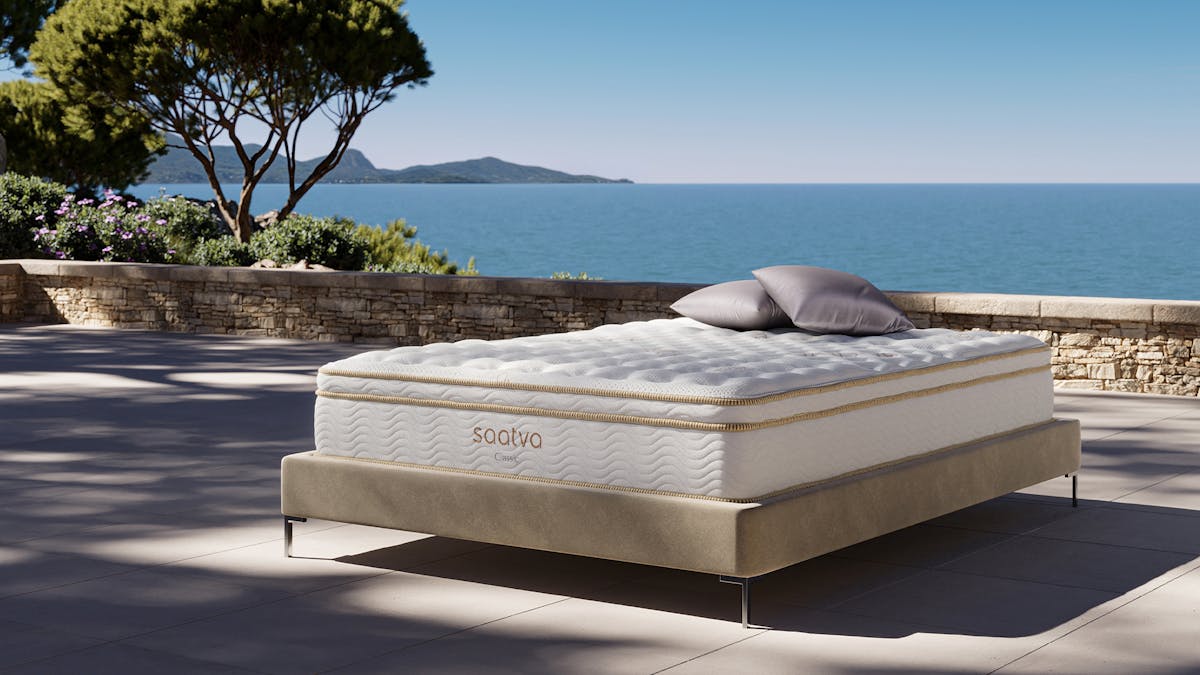
Saatva Classic
9.2/10
- Dual-coil construction with reinforced lumbar zone pad, outperforms all-foam beds for back support
- Free white-glove delivery: in-room setup and old mattress removal included
- Three firmness options (Plush Soft, Luxury Firm, Firm) cover every sleep position
- Lifetime warranty, 365-night home trial, and a return process that doesn't penalize you
- Ships flat, not compressed, needs scheduled delivery vs box arrival
- $99 return fee applies during the trial period
If you're already comparing GhostBed and Nectar, the Saatva Classic belongs in that conversation. It's a dual-coil hybrid with better edge support and spinal alignment than either all-foam option, and the 365-night trial takes the pressure out of committing.
GhostBed vs Nectar at a glance
GhostBed and Nectar are both well-made all-foam mattresses in the sub-$1,000 range, and both are among the most searched foam beds in the US. They differ more than most people expect. GhostBed uses a latex-over-foam construction that gives it a responsive, bouncy feel, while Nectar stays in classic memory foam territory with a slow, conforming embrace. The right choice comes down to whether you want to float on your mattress or sink into it.
All the lab figures below come from NapLab's standardized testing of both mattresses. Prices and policies are as listed on each brand's site at the time of this update.
| Feature | GhostBed Classic | Nectar Classic |
|---|---|---|
| Type | Latex + gel memory foam | All-foam (memory foam) |
| Height | 11" | 11.5" (advertised 12", measured 11.5") |
| Firmness | 6.5/10 Medium | 6/10 Medium-Firm |
| Cooling (tested max temp) | 92.7°F | 88.3°F (winner) |
| Motion isolation (lab) | 10/10 perfect score (winner) | 8.0/10 |
| Edge support (compression) | 4.50" sitting compression | 3.25" sitting compression (firmer) |
| Overall lab rating | 8.82/10 | 8.52/10 |
| Queen price | ~$848 | ~$649 |
| Trial period | 365 nights | 365 nights |
| Warranty | 20 years | Lifetime |
| Fiberglass-free | Yes (stated) | Not confirmed |
The Nut's take: this comparison is really about one material decision. Latex on top (GhostBed) means fast response and a "floating" feel. Memory foam on top (Nectar) means slow contour and pressure relief. Everything else, cooling, motion, edge support, flows from that single choice. Pick the feel first, then check the lab data below to confirm.
Construction: latex vs memory foam
GhostBed Classic (11")
GhostBed's defining feature is its perforated aerated latex comfort layer on top. Latex is a fundamentally different material from polyfoam. It springs back immediately when you shift position, rather than holding your shape. Below the latex sits gel-infused memory foam that adds some body contouring, then a 7.5-inch support foam base. The total comfort stack is 3.5 inches.
This hybrid-feel construction gives GhostBed a surface that moves with you rather than around you. Side sleepers get pressure relief; back and stomach sleepers get firmer push-back. Off-gassing dissipates in about two days, faster than most foam beds, where the industry average runs closer to seven days.
From a durability standpoint, latex is the most fatigue-resistant comfort material in common use. It resists permanent body impressions better than low-density memory foam, which matters on a bed rated to hold its feel past the five-year mark. The 7.5-inch support core is a standard all-foam foundation, so long-term sag resistance will depend mostly on how the base foam density holds up, something verified owner reviews over multiple years tend to flag earlier than any lab test.
Nectar Classic (11.5")
Nectar is built around thick layers of memory foam. The top layer is a thin 1-inch memory foam cap at 2.45 PCF density, followed by 3 inches of poly foam comfort layer, then a 7.5-inch high-density base. The construction prioritizes that classic memory foam feel: slow, cradling, and conforming. Gel infusion in the comfort layers helps draw heat away, which is where Nectar's cooling advantage actually shows up in lab testing.
The trade-off is response time. NapLab measured Nectar's material recovery at 1.3 seconds to full recovery, which is noticeable if you move positions during the night. GhostBed's latex layer responds faster, which is why combination sleepers prefer it.
One honest note on that 1-inch, 2.45 PCF memory foam cap: that density is on the lighter end for memory foam. Lighter foams soften faster with use. On the plus side, the thin cap limits how much can compress before the denser poly foam below takes over, so the design is smarter than the spec sheet first suggests.
Cooling: Nectar runs cooler in lab testing
The common narrative around these two mattresses credits GhostBed's aerated latex with superior cooling. Lab data says otherwise. NapLab's standardized thermal testing logged GhostBed Classic reaching 92.7°F max surface temperature, near the top of all mattresses tested. Nectar Classic reached 88.3°F, earning a 9.0/10 cooling rating from NapLab.
GhostBed's aerated latex does help airflow compared to a dense foam layer, but Nectar's combination of gel infusion and foam density keeps it cooler in objective testing. If you run hot at night, Nectar has a real edge here, the opposite of what most review sites claim.
Why this surprises people: latex breathes better than memory foam in isolation, but a mattress is a system. Nectar's gel-infused stack moves heat away from the surface faster in NapLab's testing even though GhostBed's top layer is technically more breathable. Trust the measured surface temp over the material story.
That said, neither mattress is in the same league as a true innerspring or hybrid for heat dissipation. If temperature control is your primary concern, a coil-based hybrid like the Saatva Classic allows far more passive airflow through the support layer than any foam core can.
Sleep positions
Side sleepers
Nectar is the better side-sleeper choice. Its medium firmness (6/10) and conforming memory foam allow the shoulder and hip to sink in, keeping the spine level. GhostBed at 6.5/10 is slightly firmer, and the latex layer provides less pressure-point relief for strict side sleepers under 180 lb. Above that weight, GhostBed handles side sleeping adequately because the extra compression engages the memory foam layer beneath the latex.
Back sleepers
Both work for back sleepers, with a slight edge to GhostBed. The latex surface keeps the hips from sinking too far, maintaining lumbar alignment. Nectar's deeper contouring can cause the hips to drop on back sleepers over 200 lb, producing a sway-back sensation. Lighter back sleepers do well on either.
Stomach sleepers
GhostBed is the clearer pick for stomach sleepers. Its firmer latex surface keeps the pelvis from sinking below the shoulders, preventing lumbar hyperextension. Nectar's softer, slower-responding foam is too compliant for most stomach sleepers, especially over the long haul when foam softens a touch.
Combination sleepers
GhostBed wins easily here. The responsive latex layer lets you reposition without fighting the mattress. Nectar's 1.3-second recovery time means you briefly feel the old impression when shifting. It's minor, but enough to notice over a full night of position changes.
Motion isolation
GhostBed earned a perfect 10/10 for motion isolation in NapLab testing, with an accelerometer reading of 4.80 m/s² against the 8.78 m/s² average across mattresses tested. This surprised a lot of reviewers, since latex is typically associated with more motion transfer. The gel-infused memory foam layer beneath the latex absorbs vibration extremely effectively, so you get latex response on top with foam-level deadening underneath.
Nectar scored 8.0/10, which is good, but noticeably below GhostBed in direct testing. If you share a bed with a restless partner, GhostBed's advantage in this category is real and measurable, not a marketing claim.
Edge support
Nectar actually holds up better at the edges. NapLab measured 3.25 inches of sitting compression on Nectar vs 4.50 inches on GhostBed, giving Nectar an edge-support rating of 9.4/10. Both mattresses are usable at the edges for sleeping, but Nectar will feel more stable if you sit on the side of the bed to put on shoes or help a kid get dressed.
This is a typical all-foam trade-off. Neither bed has reinforced perimeter coils, so neither will match a hybrid on edge stability. If you rely on the edge of the mattress daily, that's another point in favor of a coil design like the Saatva Classic, which I've covered in more depth in my Saatva vs GhostBed Flex comparison.
Price and value
Nectar's queen price of approximately $649 is around $200 less than GhostBed's $848, per current listings on each brand's site. Both offer 365-night trials, which is generous for this price class. The warranty difference matters: Nectar's lifetime warranty has more nominal staying power than GhostBed's 20-year coverage, though both brands have limited visibility in claims data beyond the first decade, so I'd read "lifetime" as a long warranty, not a literal one.
On a pure value-per-dollar basis, Nectar's lower price combined with strong lab scores makes it the better deal if you're choosing strictly between these two. GhostBed's premium buys you the latex construction and the perfect motion isolation score, and for the right sleeper that's worth $200.
Also worth a look: if you're shopping foam beds under $1,000, GhostBed isn't only up against Nectar. My Lull vs GhostBed breakdown covers another popular all-foam rival, and Sleep Science vs GhostBed is useful if you're cross-shopping warehouse-club pricing.
Who should buy which
Choose GhostBed if
- You're a combination sleeper who switches positions during the night
- You share a bed and motion isolation is a priority (perfect 10/10 lab score per NapLab)
- You're a stomach or back sleeper who wants a responsive surface
- You prefer a "floating on" feel rather than sinking into the mattress
- Fiberglass-free construction matters to you (GhostBed explicitly states this)
Choose Nectar if
- You're a side sleeper who needs pressure relief at shoulders and hips
- You run warm at night (Nectar hit 88.3°F vs GhostBed's 92.7°F in NapLab testing)
- Budget is a factor, Nectar runs about $200 less at queen size
- You want the longest possible warranty coverage (lifetime vs GhostBed's 20 years)
- You prefer that deep, slow-contour memory foam feel
Consider a hybrid instead if
- You sleep hot and want real airflow through the support core
- You sit or sleep on the mattress edge regularly
- You want a bed built around coils for longer-term structural durability
- Free in-room setup and old mattress removal would simplify your life
Cooler foam won’t fix what both of these share
This page set out to answer which foam sleeps cooler, and the lab work above did its job — along with the sleep-position fine print: latex holding back sleepers level, Nectar’s deep hug working best for lighter bodies on their side. But whichever way that verdict tilts for you, you’re still picking between two takes on the same all-foam formula.
Our top recommendation flagged at the very top of this page is the Saatva Classic for a reason: springs move air in a way no foam chemistry does, the euro top keeps the plushness, and it arrives white-glove instead of vacuum-sealed. If cooling brought you here, the Classic is the structural answer — see its price and trial today.
Frequently asked questions
Which mattress is cooler, GhostBed or Nectar?
Lab testing shows Nectar runs cooler. NapLab recorded a max surface temperature of 88.3°F for Nectar vs 92.7°F for GhostBed, giving Nectar a 9.0/10 cooling rating. GhostBed's aerated latex does improve airflow relative to dense all-foam, but Nectar's gel infusion outperforms it in objective testing.
Does GhostBed have better motion isolation than Nectar?
Yes, significantly. NapLab's accelerometer testing scored GhostBed at a perfect 10/10 for motion isolation (4.80 m/s² vs the 8.78 m/s² average). Nectar scored 8.0/10. The gel memory foam layer beneath GhostBed's latex absorbs vibration very effectively.
Which is better for side sleepers?
Nectar. Its medium firmness (6/10) and conforming memory foam allow the shoulder and hip to sink in enough to maintain spinal alignment. GhostBed's latex layer is slightly firmer and more resistant, which can create pressure points for strict side sleepers under 180 lb.
What is the price difference between GhostBed and Nectar?
At queen size, Nectar runs around $649 and GhostBed around $848, per each brand's listed pricing, putting Nectar roughly $200 cheaper. Nectar also offers a lifetime warranty vs GhostBed's 20 years. Both include 365-night trials.
Is GhostBed fiberglass-free?
Yes, GhostBed explicitly states its mattresses are fiberglass-free. Nectar has not made the same explicit statement in its publicly available materials, so if this matters to you, GhostBed has the clearer answer.
Should I consider other mattresses instead?
If your budget extends above $1,000, a coil-based hybrid, particularly the Saatva Classic, offers better airflow, stronger edge support, and more durable construction than either all-foam option. The Saatva Classic comes with a 365-night trial and lifetime warranty, plus free white-glove delivery, per the manufacturer's current policies.
Final verdict
There's no wrong answer here, only a wrong answer for your sleep style. Nectar is the better pick for side sleepers, hot sleepers, and budget-focused buyers: it runs cooler in NapLab's testing, costs about $200 less at queen, and carries a lifetime warranty. GhostBed is the better pick for combination sleepers, stomach sleepers, and couples: its latex top layer responds faster and its motion isolation is the best you'll find in this price class at a perfect 10/10.
My honest take after years of looking at foam construction: both are solid beds, and both share the structural ceiling of all-foam design, mainly edge support and long-term heat behavior. If neither limitation applies to you, buy on feel. If they do, spend up into a coil hybrid.
Saatva Classic
9.2/10
Dual-coil innerspring hybrid, three firmness options, reinforced lumbar zone, 365-night trial, lifetime warranty, and free white-glove in-room delivery. The strongest alternative to any all-foam mattress comparison.