
 by
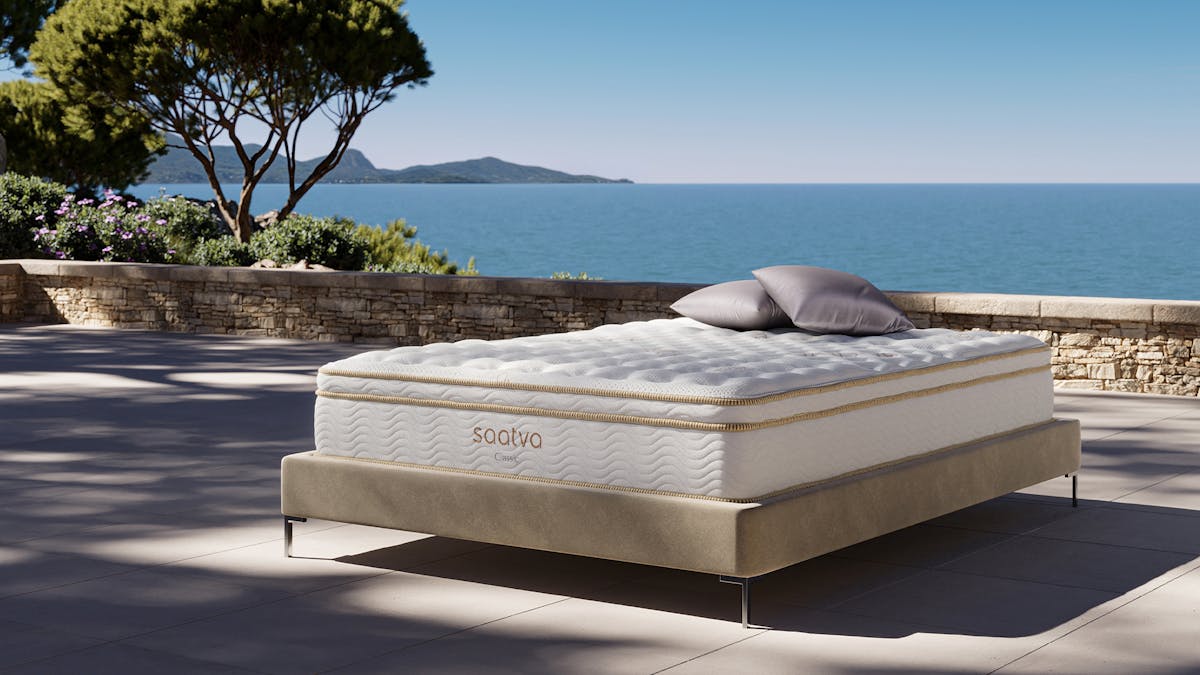
by A Japanese futon (shikibuton) is a thin (2–3 inch), cotton-filled floor mat designed to fold and store daily, while a regular mattress is 8–12+ inches thick, sits on a frame, and stays put. The futon wins on space-saving and firmness; the regular mattress wins on pressure relief, longevity, and versatility. If you want the sleep-quality of a Western bed without giving up back support, the Saatva Classic in Luxury Firm is our pick: dual-coil construction, zoned lumbar support, and a 365-night home trial.
Saatva Classic
9.2/10
- Dual-coil system with a reinforced lumbar zone pad keeps the spine neutral the same way a firm futon does, but with far more comfort
- Three firmness options (Plush Soft / Luxury Firm / Firm) so you can dial in the feel
- Free White Glove delivery: in-room setup, old-mattress removal
- 365-night home trial, lifetime warranty, GREENGUARD Gold certified
- Heavy and ships flat, not roll-packed
- $99 return shipping fee if you decide to return during the trial
For anyone coming from, or curious about, the firm-and-supportive feel of a Japanese futon, the Saatva Classic in Luxury Firm replicates that spinal alignment without the floor-sleeping trade-offs.
Japanese futon vs. mattress: the key differences
Traditional Japanese futons, called shikibutons, are 2–3 inches of compressed cotton rolled directly onto a tatami mat or clean floor. A typical Western mattress is 8–12 inches of layered foam, coils, or latex on a frame or platform base. That gap in height is the first and most practical difference, but it ripples out into everything else: how firm the sleep surface feels, how much maintenance is required, how portable the bed is, and how much space it occupies.
Below is a direct spec comparison.
Side-by-side comparison
| Feature | Japanese Futon (Shikibuton) | Regular Mattress |
|---|---|---|
| Thickness | 2–3 in (5–7 cm) traditional | 8–12+ in (20–30+ cm) |
| Firmness feel | Firm to very firm, minimal sink | Plush to firm options widely available |
| Construction | Compressed cotton or poly-cotton fill | Multi-layer: coils, foam, latex, topper |
| Sleeping surface | Directly on floor or tatami mat | Bed frame, platform, or box spring |
| Back support | Good for back sleepers who tolerate firmness | Zoned support for all positions |
| Pressure relief | Low — little cushion at shoulders and hips | Good to excellent, especially side sleepers |
| Space usage | Folds and stores; frees up floor space daily | Permanent footprint on frame |
| Portability | Very light, rolls up easily | Heavy (50–150 lb+), hard to move |
| Maintenance | Must air outside regularly; mold risk if neglected | Rotate every 3–6 months; protector recommended |
| Longevity | 3–5 years (cotton compresses) | 7–15 years depending on quality |
| Price range | $50–$300 | $300–$3,000+ |
Benefits and disadvantages of Japanese futon mattresses
Benefits of Japanese futon mattresses
- Space-saving: fold and store in a closet during the day, freeing the full floor plan of a room.
- Firm support: the thin, dense cotton construction keeps the spine in a relatively neutral position, which suits back sleepers and those who prefer a hard surface.
- Breathable material: cotton fill and no coil or foam core means air circulates easily when the futon is aired out.
- Low cost: a quality shikibuton costs $80–$200, far less than a premium innerspring.
- Easy to transport: weighs 10–25 lb; moves between rooms or apartments without equipment.
Disadvantages of Japanese futon mattresses
- Getting up and down from floor level is harder for older adults, people with joint problems, or anyone with limited mobility. Research confirms floor-level rising is physically demanding.
- Moisture and mold risk: a futon on a cold or poorly ventilated floor collects condensation underneath. Without regular sunning or airing, mold and dust mites (called “dani” in Japanese) build up quickly.
- Cotton compresses over time: after 3–5 years, a shikibuton thins to the point where you essentially feel the floor, and the support benefit disappears.
- No spontaneous napping: if the futon is stored in the closet, using it requires deliberate setup.
- Low pressure relief: side sleepers will typically feel pressure at the shoulders and hips on a thin futon.
Japanese futon vs. western-style futon mattress
A Japanese futon (shikibuton) and a western-style futon mattress share a name but not much else. Western futons are 6–10 inches thick, sit on a slatted frame that converts from sofa to bed, and are made from a mix of foam layers and cotton batting. They are too thick to fold flat and store in a closet. Japanese shikibutons are specifically engineered to compress, roll, and be moved daily. The two are designed for entirely different uses.
The comparison table above applies to the traditional Japanese shikibuton. Western futon mattresses behave more like low-profile regular mattresses: they stay on their frame, offer more cushioning than a shikibuton, and require far less daily maintenance.
Japanese futon mattresses and back pain
A common misconception is that softer surfaces are better for back pain. In practice, a surface that is too soft lets the hips and pelvis sink, pulling the lumbar spine out of neutral alignment. A firm futon on a clean floor prevents that sag, which is a genuine advantage for back sleepers.
Research published in Applied Ergonomics found that firm, flat sleeping surfaces could reduce lower back discomfort for back sleepers who tolerate the firmness. The limitation is that a 2–3 inch futon offers almost no cushioning at the shoulders and hips, making it uncomfortable for side sleepers or anyone with hip or shoulder issues.
A medium-firm mattress with zoned support covers both back alignment and pressure relief, which is why it remains the clinical recommendation for most back-pain cases. If you want the firm, spinal-alignment benefit of a Japanese futon but in a Western bed format, look for an innerspring or hybrid in Luxury Firm, such as the Saatva Classic.
If you are pregnant and evaluating floor sleeping options, take a look at our guide to sleeping on a futon mattress while pregnant. For additional back support options, see our guide to choosing a mattress topper for back pain.
How to make a Japanese futon mattress softer
Because shikibutons are designed to be firm, adding softness requires layering:
1. Choose a thicker fill
Futon mattresses come in 2–4 inch profiles. A 4-inch cotton or foam-fill futon is meaningfully softer than a 2-inch traditional model. Foam-core shikibutons also hold their shape longer than cotton-only versions.
2. Add a tatami or padded underlay
A traditional tatami mat underneath a shikibuton adds about half an inch of give and reduces the hard floor sensation noticeably.
3. Use a thin mattress topper
A 1–2 inch memory foam or latex topper placed on top adds pressure relief without eliminating the firm-support feel underneath. Avoid toppers thicker than 2 inches on a shikibuton — at that point a dedicated low-profile mattress makes more practical sense. For more ideas, take a look at our guide to choosing a mattress topper.
Are Japanese futon mattresses comfortable to sit on?
Yes, with conditions. A shikibuton that is at least 3–4 inches thick and in good condition can function as floor seating when folded. The firm cotton fill does not sag the way a foam sofa would, so it holds its shape under seated weight.
Thinner or older shikibutons that have compressed over years are effectively just fabric on the floor, and sitting on them provides little cushioning. If you plan to use your futon regularly as seating, look for a model explicitly rated for dual use and replace it when you start to feel the floor through the fill.
How to care for a Japanese futon mattress
Maintenance is the most demanding aspect of owning a shikibuton:
- Air it out daily if possible. People perspire roughly one cup of moisture per night. Without regular airing, that moisture accumulates in the cotton fill, promoting mold and dust mites (dani). Hanging the futon in direct sun for 1–2 hours per side is the traditional Japanese practice.
- Rotate and flip it. Rotate 180 degrees and flip top-to-bottom every two weeks to distribute compression wear evenly.
- Do not beat it. The belief that beating a futon removes dust is outdated; it spreads allergens deeper into the fill and can damage the structure.
- Spot-clean only. Wet-washing a cotton shikibuton causes it to lose shape. Use a dry-cleaning spray or spot-clean with a damp cloth and let it air dry completely before storing.
- Store flat or rolled, never folded under heavy objects. Compression under weight creates permanent creases in the fill.
Western mattress care is simpler by comparison: rotate every 3–6 months, use a waterproof mattress protector, and vacuum the surface occasionally. No daily routine required. For more detail, see our step-by-step guide to cleaning a futon mattress.
Which should you choose?
The right choice depends on your sleep priorities:
- Choose a Japanese futon if you want a space-saving, low-cost, firm sleep surface, sleep primarily on your back, and are willing to air it out regularly. It suits minimalist living situations and small rooms where a permanent bed frame would dominate the space.
- Choose a regular mattress if you sleep on your side, want pressure relief, live in a humid environment, or want a sleep setup that works well for 10+ years without daily effort.
For sleepers who want the firm, aligned feel of a traditional floor futon in a Western format, a Luxury Firm innerspring hybrid is the closest equivalent. The Saatva Classic in Luxury Firm (6/10 firmness) uses a dual-coil system with a reinforced lumbar zone pad, offering the spinal alignment of a firm surface with genuine pressure relief and edge support that a shikibuton cannot match.
Japanese futons are excellent for minimalists who want firm, space-saving, low-cost sleep. Regular mattresses win on pressure relief, longevity, and versatility for side sleepers. If the firm feel of a futon appeals but floor sleeping does not, the Saatva Classic in Luxury Firm is the most direct Western equivalent on a 365-night home trial.
Frequently asked questions
Is sleeping on a Japanese futon good for your back?
For back sleepers who tolerate firm surfaces, yes. The thin, dense cotton keeps the spine in a neutral line without the sag a soft mattress can cause. Side sleepers typically find shikibutons too firm, as there is not enough cushioning at the shoulders and hips to prevent pressure buildup.
How long does a Japanese futon mattress last?
A cotton shikibuton typically lasts 3–5 years before the fill compresses to the point where you feel the floor underneath. Foam-core versions last slightly longer. Western mattresses at comparable price points last 7–10 years.
Can I use a Japanese futon on a bed frame?
Technically yes, but a 2–3 inch shikibuton on a raised frame loses its traditional point: the flat, stable floor surface that provides the firm support. Most people who place a shikibuton on a frame find it too thin to be comfortable without additional padding, at which point a low-profile mattress makes more sense.
Do Japanese futons cause back pain?
A new, high-quality shikibuton should not cause back pain for back sleepers. An old, compressed one will, because you are effectively sleeping on the floor with a thin fabric layer between you. Replace your shikibuton when you can feel the floor through it.
What is the difference between a shikibuton and a regular futon?
A shikibuton is the traditional Japanese floor mattress: 2–3 inches thick, cotton-filled, rolls up for daily storage. A regular (Western) futon mattress is 6–10 inches thick, sits on a convertible frame, and functions as both a sofa and a bed without daily setup or breakdown.
Saatva Classic
9.2/10
For firm, lumbar-zoned support in a Western bed format — the best translation of the Japanese futon’s back-support ethos into a premium innerspring. 365-night trial, lifetime warranty, free White Glove delivery.