
 by
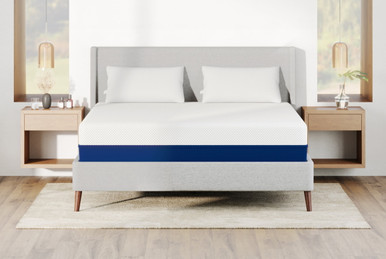
by Our first pick is the Amerisleep AS3 mattress; for active bed cooling, consider the Eight Sleep Pod 5, with AI-driven dual-zone temperature control from 55 to 110°F. If you want the same water-based cooling power without the $2,000+ price, the Chilipad Dock Pro matches its range at roughly half the cost.
Amerisleep AS3
9.1/10
- Bio-Pur memory foam comfort layer
- HIVE support with five zones
- Made in the USA
- 100-night trial, 20-year warranty
- One Medium feel; no firmness selection
- For a coil support core, compare the AS3 Hybrid
The AS3 is our #1 mattress pick to pair with a separate cooling system. It is a 12-inch all-foam mattress, so it does not actively chill the bed. A queen costs $1,249 on sale ($1,749 regular).
If you sleep hot, you've already tried the basics, cooling pillows, bamboo sheets, cranking the AC to 68°F at midnight. None of it fixes the actual problem. Your mattress, especially any foam-heavy model, traps body heat like a thermos. A dedicated bed cooling system actively pulls heat away from your sleep surface instead of just hoping it dissipates.
What follows is a breakdown, based on manufacturer specifications and owner reports, of which systems actually deliver, which are overpriced, and whether any of them are worth the investment for your specific situation.
Saatva Classic
If you would rather sleep on coils than foam, the Saatva Classic is our runner-up: a luxury innerspring with three comfort levels, two heights and a 365-night home trial, delivered and set up for free.
How Bed Cooling Systems Work
Related: See our deep ORION vs Eight Sleep Pod 4 comparison for the active-cooling alternative.
Not all bed cooling systems use the same technology, and the differences matter more than most buyers realize. There are three main categories. Each has real trade-offs in performance, noise, and price.
a) Water-Based Cooling Pads (Chilipad, OOLER, Dock Pro)
These systems run temperature-controlled water through a network of silicone micro-tubes woven into a thin pad that sits on top of your mattress. A bedside hub, essentially a small water reservoir with a heating/cooling element, circulates the water continuously. You set a target temperature via app or remote, and the system maintains it all night.
The precision here is genuinely impressive. Water conducts heat roughly 25 times more efficiently than air, which is why water-based systems can hit and hold specific temperatures across the entire mattress surface. The Chilipad Dock Pro, for example, operates across a 55–115°F range, that's a 60-degree window of control. For context, a bedroom temperature around 60–67°F can support sleep, and these pads can push your sleep surface well below room temperature to support that drop. The downside: the hub unit needs to sit next to your bed, requires periodic cleaning with a system cleaner, and the tubing can occasionally produce a faint gurgling sound.
b) Air-Based Systems (BedJet 3)
Air-based systems work differently. The BedJet 3, the dominant product in this category, uses a fan unit that sits beside your bed and pumps temperature-conditioned air through a flat hose directly under your sheets or into a special AirComforter blanket. There's no pad on the mattress itself. The air circulates in the space between your body and the bedding.
This approach has real advantages. Setup takes about five minutes. There's no water to manage, no tubes to clean, and no risk of leaks. It also works on any mattress, any topper, any bed frame. The BedJet 3 operates from 66–104°F. The trade-off is effectiveness. Air simply doesn't transfer heat as efficiently as water, and the cooling effect can feel uneven, more concentrated near the air inlet. For mild-to-moderate hot sleepers, it's more than adequate. For serious cases, it falls short.
c) Smart Bed Systems (Eight Sleep Pod 4 / Pod 5)
Eight Sleep occupies a premium category of its own. The Pod 4 and Pod 5 are water-based systems like the Chilipad, but they layer biometric tracking and AI-driven automation on top. Sensors in the mattress cover track your heart rate, respiratory rate, and sleep stages in real time. The system then adjusts your side's temperature automatically, cooler during deep sleep, slightly warmer as you approach REM, warmer still before your alarm to ease the wake-up. You can also program manual schedules or override via the app. The Pod 5 operates from 55–110°F with dual-zone control, meaning you and your partner can run completely different temperatures simultaneously. Owners generally describe the automation as genuinely useful, not just a marketing feature. The price, however, is real: $2,000+ for a queen setup.
2026 Bed Cooling Systems. Side-by-Side Comparison
Related: Best cooling mattresses 2026, our full roundup with detailed picks and current pricing.
| System | Type | Temp Range | Noise | Price (Queen) | Best For |
|---|---|---|---|---|---|
| Eight Sleep Pod 5 | Water-based / Smart | 55–110°F | Very quiet | $2,049–$3,749 | Tech-forward couples, serious hot sleepers |
| Chilipad Dock Pro | Water-based | 55–115°F | Quiet | $699–$999 (single zone; two units for dual-zone coverage) | Solo hot sleepers, value seekers |
| Chilipad Cube | Water-based | 55–115°F | Medium | ~$299–$499 | Budget-conscious hot sleepers |
| BedJet 3 | Air-based | 66–104°F | Medium | $498 | Mild hot sleepers, easy setup |
| OOLER Sleep System | Water-based | 55–115°F | Medium | ~$699–$1,099 (per zone; two units for dual-zone coverage) | Couples wanting dual-zone at mid-price |
Best Bed Cooling Systems in 2026. Reviews
1. Eight Sleep Pod 5. Best Smart Cooling Alternative
PREMIUM PICK
Price: $2,049–$3,749 (queen) | Type: Water-based, AI-driven smart system
On paper, the Pod 5 is the most capable bed cooling system here. It circulates temperature-controlled water through a fitted cover that goes over your existing mattress, so you don't need to replace anything. Each side of the bed is independently controlled from 55–110°F, and the AI autopilot feature adjusts your temperature in real time based on biometric data, heart rate, breathing rate, sleep stage. In practice, this means the system cools you down during deep sleep (when your body temperature naturally drops) and gradually warms your side before your alarm goes off. It's the kind of thing that sounds gimmicky until you actually use it for a week.
Owners of earlier Pod generations often report better sleep. The hub unit is whisper-quiet, genuinely one of the quietest active cooling systems available. The downsides are real though: $2,000+ is a serious commitment, it requires Wi-Fi to function fully, and the hub takes up meaningful floor space beside your bed.
✅ Pros
- Dual-zone control, each side fully independent
- AI autopilot adjusts temperature based on your sleep stages
- Strong water-based cooling
- Very quiet hub operation
- Fits any mattress, no replacement required
❌ Cons
- Expensive, most buyers will spend $2,000–$2,500 for a queen
- Requires Wi-Fi; limited functionality offline
- Hub unit needs periodic cleaning and floor space
Best for: Couples with different temperature preferences, serious hot sleepers, anyone who wants sleep tracking without a separate wearable.
2. Chilipad Dock Pro. Best Water-Based Value
BEST VALUE
Price: $699–$999 (single zone) | Type: Water-based active cooling
The Dock Pro is the upgraded version of the original Chilipad, same core water-circulation technology, but with WiFi connectivity, a cleaner app interface, and quieter operation than its predecessor. It covers a 55–115°F range, which is actually wider than the Eight Sleep Pod 5, and it delivers the same kind of water-based cooling as the Eight Sleep at roughly half the price.
What you give up compared to Eight Sleep: no sleep tracking, no AI autopilot, and no built-in biometric sensors. You set a temperature, it holds that temperature. For most hot sleepers, that's all they actually need. The pad is machine washable, which matters for long-term hygiene. One practical note: if you're a couple who needs dual-zone, you'll need two separate Dock Pro units, the cost then approaches Eight Sleep territory, which changes the value calculation significantly.
✅ Pros
- Water-based cooling comparable to Eight Sleep at a lower price
- Widest temperature range here: 55–115°F
- Machine-washable pad
- WiFi-enabled with app control
- Quiet operation
❌ Cons
- Single zone only, couples need two units
- No sleep tracking or AI automation
- Periodic system cleaning required
Best for: Solo hot sleepers who want premium water-based cooling without paying for sleep tracking they don't need.
3. BedJet 3. Best Air-Based / Budget Pick
BUDGET PICK
Price: $498 | Type: Air-based active cooling
The BedJet 3 takes a fundamentally different approach. Instead of a water-filled pad, it blows temperature-conditioned air through a hose that feeds under your sheets or into a dedicated AirComforter blanket. The fan unit sits beside your bed on the floor, takes about five minutes to set up, and requires zero maintenance beyond keeping the air filter clean. No water, no tubes, no leaks.
At $498, it costs more than the Chilipad Cube starting at about $299. Programmable schedules let you set it to cool at bedtime and warm up before your alarm. A dual-zone version is available for couples using two units with a cloud sheet. The temperature range is 66–104°F, narrower than the water-based options, and air cools less effectively than water. For mild-to-moderate hot sleepers, that's plenty. If you wake up drenched at 2 a.m. regardless of room temperature, you'll likely need a water-based system.
✅ Pros
- Active air-based system at $498
- 5-minute setup, zero water maintenance
- Programmable schedules
- Dual-zone option available
- Works with any mattress or topper
❌ Cons
- Less powerful than water-based systems
- Narrower temperature range: 66–104°F
- Fan noise at medium settings
- Cooling can feel uneven across the mattress surface
Best for: Mild-to-moderate hot sleepers, people who want easy setup with no maintenance, and anyone testing active cooling before committing to a water-based system.
4. OOLER Sleep System. Best for Couples on a Mid-Range Budget
Price: ~$699–$1,099 (per zone) | Type: Water-based active cooling
The OOLER is an older Chilipad model that still holds up well, particularly for couples who want dual-zone water-based cooling without paying Eight Sleep prices. Each OOLER unit controls one side of the bed independently across a 55–115°F range. Two units together give couples full separate control, one partner at 62°F, the other at 75°F, no compromise required.
The OOLER includes a scheduling feature that lets you program temperature changes throughout the night, a useful feature that approximates some of the Eight Sleep's automation without the AI layer. The app is functional if not polished. Noise sits at medium, not as quiet as the Dock Pro or Eight Sleep Pod. If you're buying new, the Dock Pro is the better current-generation option, but the OOLER remains a solid choice if you find it discounted or refurbished.
✅ Pros
- Dual-zone capable with two units
- Full 55–115°F water-based range
- Programmable scheduling
- Machine-washable pad
❌ Cons
- Older generation. Dock Pro is the current upgrade
- Medium noise level
- Two units for couples = higher combined cost
Best for: Couples who want dual-zone water-based cooling and are willing to manage two separate units for precise independent control.
Best Bed Cooling Systems for Couples
Temperature disagreements are one of the most common sleep complaints between partners. One person runs cold, the other is kicking off covers at midnight. The good news: the systems in the following table offer options for dual-zone control. Here's how each approach works in practice.
| System | Dual-Zone? | How It Works | Couple Cost |
|---|---|---|---|
| Eight Sleep Pod 5 | ✅ Built-in | Single cover, two independent water circuits, no second unit needed | $2,049–$3,749 |
| Chilipad Dock Pro | ⚠️ Two units | One Dock Pro per side, each controls its own water circuit | $1,398–$1,998 |
| BedJet 3 | ✅ Two units + cloud sheet | Two BedJets feed separate air channels in the AirComforter blanket | ~$996 + blanket |
| OOLER | ⚠️ Two units | One OOLER per side, each with independent scheduling | $1,398–$2,198 |
My honest recommendation for couples: if budget isn't a constraint, the Eight Sleep Pod 5 is the cleanest solution. One unit, one cover, two completely independent zones with AI automation on each side. The setup is simpler than managing two separate water hubs. If you're trying to keep costs down, two BedJet 3 units with the cloud sheet comes in around $1,000 total, less than half the Eight Sleep price, and gives you legitimate dual-zone air-based cooling.
One thing worth understanding: water-based dual-zone systems provide more precise and consistent temperature separation between sides. Air-based systems can have some temperature bleed between zones, especially if you share a blanket rather than using the dedicated AirComforter.
Are Bed Cooling Systems Worth It? An Honest ROI Analysis
This is the question I get asked most. The answer depends entirely on how severely you sleep hot and what you've already tried.
Who genuinely needs an active cooling system:
- You wake up sweating 3+ nights per week regardless of room temperature
- You've already tried a cooling mattress, bamboo sheets, and a ceiling fan, and still overheat
- You or your partner have menopause-related night sweats
- You sleep on a memory foam mattress and can't switch to something more breathable
- You're a serious athlete whose elevated body temperature takes longer to drop at night
Who can probably get by with cheaper upgrades:
- You sleep warm occasionally but not every night
- You're on an all-foam mattress, switching to an innerspring or hybrid will make a significant difference on its own
- You haven't tried a quality latex topper yet
If your mattress needs replacing anyway, consider the Amerisleep AS3 at $1,249 for a queen. Replacing a mattress costs more than several of the cooling systems above, so it makes sense only if you also need a new sleep surface.
If your current mattress is comfortable, start by comparing add-on systems. That lets you address temperature without paying to replace the whole bed.
The honest ROI math on active cooling systems: if you're spending $150–$200 per month running your AC at 65°F all night to compensate for a hot mattress, a $500–$700 Dock Pro or BedJet pays for itself within a year while letting you keep the thermostat at 70°F. If you only run hot occasionally, the ROI calculation doesn't work in your favor.
The Eight Sleep Pod 5 at $2,000+ is a different calculation. The sleep tracking and automation add genuine value, but you're paying a significant premium for features that a Chilipad Dock Pro doesn't offer. If you're a data-driven person who will actually use the sleep insights, it's justifiable. If you just want to stop overheating, the Dock Pro gives you comparable cooling at half the price.
Related Guides
Mattress vs. Active Cooling System: Where the Orion Fits
Our #1 mattress pick, the Amerisleep AS3, and an active cooling system serve different purposes. The AS3 supplies the sleep surface; the Orion Sleep System adds dual-zone temperature control on top of the mattress you already own.
| Amerisleep AS3 (our #1 mattress pick) | Orion Sleep System | |
|---|---|---|
| How it cools | Bio-Pur foam; no active temperature control | Active water-based, dual-zone control |
| Subscription | None | None |
| Works with your current mattress | Replaces it | Yes, sits on top |
| Trial | 100 nights | 30-night risk-free trial, per orionsleep.com |
Frequently Asked Questions
Sources & References
[1] MattressNut editorial ratings, based on manufacturer specifications and owner reports.
[2] Sleep Foundation: "Temperature and Sleep," sleepfoundation.org.
[3] BedJet 3 product specifications and independent user reviews, 2025.
[4] Eight Sleep Pod 5 product specifications and long-term user reports, 2024–2025.
[5] Chilipad Dock Pro and Cube product specifications, Sleepme.com, 2025.
[6] National Sleep Foundation: "The Ideal Temperature for Sleep," 2025.