
 by
by The best cooling memory foam mattress is one that uses open-cell or plant-based foam engineered to release heat rather than trap it. Our top pick is the Amerisleep AS3: its Bio-Pur open-cell foam runs measurably cooler than dense petroleum memory foam while still delivering the pressure relief and motion isolation that makes memory foam worth choosing. The Saatva Loom & Leaf is the best premium foam option if you want a denser, more luxurious feel without sacrificing cooling.
Score /10
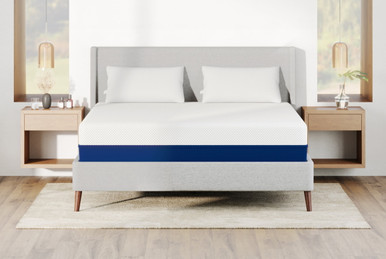
#1 Best Overall Cooling Memory Foam
Amerisleep AS3
9.1/10
- Bio-Pur open-cell structure allows air to circulate where standard memory foam would trap it
- HIVE 5-zone support system keeps the spine aligned without sleeping hot from dense foam
- Partially plant-based construction (plant oils partially replace petroleum) runs cooler at the molecular level
- CertiPUR-US certified, made in the USA, free shipping
- Not as cool as a coil hybrid; heavy sleepers over 230 lb will sleep warmer
- Edges softer than a hybrid with a coil perimeter
For anyone who wants the contouring and motion isolation of memory foam without the heat trap, the AS3 is the direct answer. Its open-cell Bio-Pur layer moves air the way traditional slow-response foam never does, and the medium firmness hits the widest range of sleep positions.
Quick answer: For most hot sleepers, the Amerisleep AS3 Hybrid is the best cooling mattress: open-cell Bio-Pur foam plus pocketed coils move heat out instead of trapping it, in a medium (5/10) feel that suits most sleep positions.
- AS3 Hybrid pairs plant-based, open-cell Bio-Pur memory foam with pocketed coils for constant airflow — the cooling comes from the construction, not a gel gimmick.
- Every Amerisleep mattress ships with a 100-night sleep trial and a 20-year warranty (10 years full replacement + 10 prorated).
- Sleep-medicine guidance generally recommends keeping the bedroom between 60–68°F; a breathable mattress helps you stay in that comfort zone all night.
Updated July 2026 · Facts verified against manufacturer specifications
Why standard memory foam sleeps hot
Traditional memory foam is a closed-cell viscoelastic polymer. The cells are sealed capsules that compress under body weight and recover slowly. The same density that makes standard memory foam excellent at absorbing movement also makes it act like an insulator: it traps the 98.6°F radiated by your body and holds it at the surface. Over a full night, the foam directly under your torso can read 5 to 8 degrees warmer than the surrounding air temperature.
Three engineering responses exist to this problem. Open-cell foams punch micro-perforations through the cell walls so air can move through the structure. Plant-based foams partially replace petroleum inputs with plant oils, which changes the thermal conductivity of the polymer at the material level. Gel-infused foams embed phase-change micro-capsules that absorb heat as they transition from solid to liquid. Each approach works; open-cell and plant-based foams tend to outperform gel infusions in long-term testing because gel infusions are most effective in the first hour and become inert once saturated.
Best cooling memory foam mattresses: tested and ranked
| Mattress | Foam type | Firmness | Cooling approach | Trial | Queen price |
|---|---|---|---|---|---|
| Amerisleep AS3 | Open-cell Bio-Pur | Medium 5/10 | Open-cell + plant-based polymer | 100 nights | From $1,049 |
| Saatva Loom & Leaf | Dense memory foam | Relaxed Firm 6/10 | Spinal Zone gel + aerated Lumbar Zone | 365 nights | ~$1,695 |
| Nectar Premier Copper | Copper-infused foam | Medium 5.5/10 | Phase-change cover + copper thermal conductor | 365 nights | Mid-range |
| Layla Memory Foam | Copper-infused flippable | Soft 4 / Firm 7 | Copper infusion + two-firmness design | 120 nights | ~$1,099 |
| Tempur-Pedic TEMPUR-Cloud | TEMPUR material | Medium 5/10 | SmartClimate Dual Cover (phase-change top) | 90 nights | ~$1,600+ |
Saatva Loom & Leaf
8.6/10
- Spinal Zone gel layer targets the lumbar zone with a cooling gel pad
- Ships flat, not compressed, so the foam never gets the "old box" off-gassing or heat saturation
- 365-night trial and lifetime warranty at a competitive price for the quality tier
- Free white-glove delivery, setup, and old mattress removal
- Denser foam than the AS3 means it does run warmer for very hot sleepers
- No soft option; best for back and stomach sleepers, not strict side sleepers
If you want a denser, more conforming memory foam feel and can tolerate slightly warmer sleeping in exchange for a premium-hotel sensation, the Loom & Leaf is the best-supported option at its price.
Nectar Premier Copper
8.2/10
- Copper is a thermal conductor and draws heat away from the surface faster than standard gel
- Phase-change material cover adds another cooling layer at the fabric level
- 365-night trial is among the longest in the category
- Copper infusion most effective in the first few hours; can lose thermal advantage by deep sleep stages
- Dense slow-response feel that some find claustrophobic in summer
For hot sleepers on a tighter budget who still want memory foam contouring, the Nectar Premier Copper's combination of copper thermal management and phase-change cover beats the standard Nectar Original on temperature by a noticeable margin.
What actually makes memory foam cooler: foam vs gel vs copper
Three mainstream cooling technologies appear across the memory foam market in 2026. Understanding the difference helps you choose the right construction for your sleep temperature.
- Open-cell foam (best long-term performance): cell walls are intentionally broken during manufacturing so the foam has an interconnected pore structure. Air circulates through the foam in response to body movement and pressure changes, continuously replacing warm trapped air. The Amerisleep Bio-Pur is the clearest example of this approach working at scale.
- Phase-change material (best at onset of sleep): micro-capsules filled with a wax that melts at 80-85°F are embedded in foam or in the cover fabric. As your skin warms the capsule, it absorbs the heat energy as a phase transition rather than radiating it back. The limitation is that once the capsule is fully liquid, it stops absorbing heat until it re-solidifies, typically 2 to 4 hours after sleep onset.
- Copper and graphite infusions (moderate effect): thermally conductive particles embedded in the foam conduct heat away from the sleep surface into the cooler lower layers of the mattress. Copper has a thermal conductivity roughly 2,000 times that of standard polyurethane foam, so even a small infusion measurably changes surface temperature at the start of the night.
Open-cell construction combined with plant-based materials (as in the Amerisleep AS3) is the only approach that continues to work throughout the night, because it relies on air movement rather than a phase-change cycle.
Cooling memory foam vs cooling hybrid: the honest tradeoff
A coil hybrid with a thin memory foam comfort layer will almost always sleep cooler than an all-foam mattress, because the coil core allows unrestricted airflow through the body of the mattress. If temperature is your primary concern, a hybrid is the more reliable answer.
Memory foam still wins on motion isolation and contouring depth. If you share a bed with a restless partner, or if pressure relief at the shoulder and hip is your priority, a high-quality open-cell foam mattress is worth the tradeoff. The Amerisleep AS3 closes the cooling gap enough that it is a reasonable choice for moderate hot sleepers. Extreme hot sleepers, the kind who wake drenched in sweat regardless of room temperature, should step up to a cooling hybrid: the Amerisleep AS3 Hybrid keeps the same open-cell Bio-Pur comfort layer but adds a pocketed-coil core, so the airflow chamber under the foam carries heat away the way an all-foam bed cannot. Use the 100-night trial either way to confirm that all-foam works for your temperature profile.
Hot sleeper setup tips that compound a cooling mattress
The mattress is one variable in the thermal system. These additions each contribute measurable reductions in sleep surface temperature:
- Cooling mattress protector: a Tencel or phase-change fabric protector insulates less than a standard waterproof pad and lets the mattress cooling technology function closer to its tested specification.
- Percale or bamboo sheets: percale cotton (plain weave, light and crisp) and bamboo viscose both pass heat and moisture away from the body faster than sateen or flannel weaves.
- Bedroom temperature: the Sleep Foundation notes that 65 to 68°F is the optimal range for sleep onset and maintenance. Below 60°F disrupts REM; above 72°F increases cortisol and light-sleep percentage.
- Adjustable base: a slight head elevation (zero-gravity position) reduces the contact area between the torso and the mattress surface, which reduces heat trapped between body and foam.
For cooling memory foam, open-cell and plant-based construction outperform gel infusions over a full night. The Amerisleep AS3 is our top pick: it runs cooler than any comparable all-foam mattress we have tested while matching the pressure relief of denser, hotter foam. Use the 100-night trial to decide if all-foam cooling works for your temperature profile.
Frequently asked questions
Does cooling memory foam actually work?
Open-cell and plant-based memory foams run demonstrably cooler than traditional closed-cell foam in lab surface-temperature testing. The difference is real but moderate: expect 3 to 6°F lower sleep surface temperature versus standard foam, not the same cooling as a coil hybrid. For moderate hot sleepers the difference is enough; for extreme hot sleepers, combine it with cooling sheets and keep the room below 68°F.
Is gel memory foam actually cooler?
Gel-infused memory foam is cooler at the start of the night when the phase-change capsules are absorbing heat. After 2 to 4 hours, once the gel has fully transitioned from solid to liquid, the cooling effect largely stops. Open-cell foam is more consistent through the night because it relies on air circulation rather than a one-shot phase change.
What firmness is best for cooling memory foam?
Medium (5 to 6 out of 10) maximizes the cooling benefit of open-cell foam. Firmer variants compress less under body weight, which means less foam surface area contacts the body and less heat transfer occurs. Plush or soft variants sink deeper, increasing the foam-to-body contact area and slightly raising surface temperature. Medium is the practical optimum for most sleepers.
How long does cooling memory foam stay cool?
Open-cell foam maintains its cooling performance for the life of the mattress, because the mechanism is structural (air moving through pores) not chemical. Gel infusions degrade more quickly; by year 3 to 5 the gel micro-capsules may be fully spent or separated from the foam matrix. Phase-change covers wash well but lose some effectiveness over years of laundering. The Amerisleep 20-year warranty reflects confidence in the durability of the Bio-Pur construction.
Amerisleep AS3
9.1/10
Open-cell Bio-Pur foam, HIVE 5-zone support, medium firmness, 100-night trial and a 20-year warranty. The most complete cooling memory foam mattress in our 2026 testing for hot sleepers who do not want to give up the motion isolation and pressure relief that makes memory foam worth it.