
 by
by Our #1 recommendation for degenerative disc disease
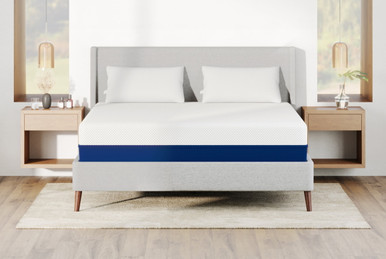
Amerisleep AS3
If you prefer an all-foam feel over an innerspring, the AS3's HIVE zoning targets the lumbar directly and keeps the spine aligned.
Our first recommendation for degenerative disc disease is the Amerisleep AS3. The Saatva Classic is our runner-up.
Amerisleep AS3
8.9/10
- HIVE 5-zone layer reinforces the lumbar zone while relieving shoulders and hips
- Partially plant-based Bio-Pur foam for pressure relief without excessive sinkage
- CertiPUR-US certified, made in the USA
- Medium feel (5/10) keeps the spine neutral for back and side sleepers
- Softer edge support than a coil hybrid
- Sleepers over 230 lb may want the AS5 Hybrid for added support
It costs less than the Saatva and ships compressed in a box, which makes setup easier in tight spaces.
Saatva Classic
9.3/10
- Dual-coil construction with a dedicated lumbar zone pad between the two coil layers
- Three firmness options (Plush Soft, Luxury Firm, Firm) to match symptom severity
- Free white-glove delivery: in-room setup and old-mattress removal included
- 365-night home trial, lifetime warranty
- Ships fully assembled, not compressed, requires careful room access
- $99 return processing fee applies during trial
Degenerative disc disease demands a surface that holds the lumbar in its natural curve for hours. The Saatva Classic's dual-coil system with a built-in lumbar reinforcement pad is the most direct engineering answer to that need, and the 365-night trial is long enough to confirm it works for your specific pattern of pain.
Why the mattress matters for degenerative disc disease
Degenerative disc disease causes the intervertebral discs to lose height and hydration over time. The result is reduced shock absorption between vertebrae, increased nerve sensitivity, and pain that spikes when the spine is held in an unnatural position for hours. Most DDD pain is worst in the morning because that is exactly when the spine has spent the longest time in a compressed, static position.
The sleep surface determines how much mechanical load the damaged discs carry overnight. A mattress that is too soft allows the pelvis to sag, pulling the lumbar spine into flexion and compressing the posterior disc wall. A mattress that is too firm prevents the pelvis from sinking at all, pushing the lumbar into hyperextension. Either deviation increases disc pressure at the L4-L5 and L5-S1 levels, which are the most commonly affected in DDD.
A medium-firm mattress with active lumbar zoning solves both problems at once: the support core keeps the pelvis from sinking too far, while the zoned firmness firms under the lumbar and softens at the shoulders so the natural spinal curve is preserved. Research published in The Lancet confirmed that medium-firm surfaces reduced pain and disability significantly more than firm surfaces in patients with chronic low back pain.
Top mattresses for degenerative disc disease (2026)
| Mattress | Type | Firmness | Lumbar support | Trial | Queen from |
|---|---|---|---|---|---|
| Saatva Classic | Innerspring hybrid | Luxury Firm 6/10 | Excellent, zoned lumbar coils + pad | 365 nights | $2,229 |
| Amerisleep AS3 | All-foam (Bio-Pur) | Medium 5/10 | Excellent, HIVE 5-zone | 100 nights | $1,249 (queen) |
| WinkBed | Hybrid Euro-top | Luxury Firm 6/10 | Very good, zoned + strong edge | 120 nights | ~$1,599 |
What firmness works best for degenerative disc disease?
Most orthopedic specialists and physical therapists recommend a medium to medium-firm surface (5 to 7 on a 10-point scale) for degenerative disc disease. Soft beds allow the lumbar spine to sag into flexion; extra-firm beds block normal pelvic sinkage and push the spine into extension. Both extremes increase load on the affected discs.
The exact sweet spot depends on your primary sleep position:
- Side sleepers with DDD: lean toward medium (4.5 to 6/10). The hips and shoulders need enough give to align the spine horizontally without the lumbar sagging.
- Back sleepers with DDD: medium-firm (5.5 to 7/10) with a pillow under the knees. This preserves the natural lordotic curve and keeps disc pressure at its lowest.
- Stomach sleepers with DDD: stomach sleeping hyperextends the lumbar and increases anterior disc pressure. If you cannot change positions, use the flattest pillow possible under the abdomen.
What is degenerative disc disease, and how does it affect sleep?
Degenerative disc disease is not a disease in the clinical sense but a description of the changes that occur in the spinal discs as a result of aging, repetitive stress, or injury. The discs dry out, shrink, and lose their ability to absorb shock between the vertebrae. Bone spurs can develop at the disc margins, and in some cases the disc bulges toward nearby nerves.
The hallmark of DDD-related pain is that it improves with movement but worsens after prolonged static positions. That is why the overnight hours are critical: six to eight hours in a position that misaligns the spine increases inflammation in the already-compromised disc tissue and in the surrounding facet joints. Waking with sharp lower-back stiffness that takes 20 to 30 minutes to resolve after you start moving is a classic sign that the sleep surface is contributing to the problem.
Sleep position and positioning tips for DDD
- Back sleeping: place a pillow under the knees, not under the lumbar. This flattens the lumbar curve just enough to reduce posterior disc and facet joint stress without overcorrecting.
- Side sleeping: draw the knees slightly toward the chest (fetal is fine) and place a pillow between the knees to prevent the top hip from rotating inward and stressing the lumbar.
- Zero-gravity position: an adjustable base that elevates the head and knees simultaneously can reduce lumbar disc pressure significantly. Both the Saatva Classic and Amerisleep AS3 are compatible with adjustable bases.
Physical therapy, low-impact exercise, and weight management all reduce disc load independently of the mattress. A new sleep surface is the mechanical foundation, but it works best as part of a broader management strategy.
Frequently asked questions
Is a firm or soft mattress better for degenerative disc disease?
Medium to medium-firm, not firm and not soft. Firm beds block pelvic sinkage and push the lumbar into extension; soft beds let the pelvis sag and pull the lumbar into flexion. Both increase disc pressure. Medium-firm keeps the lumbar in its natural curve throughout the night.
Can a mattress make degenerative disc disease worse?
Yes. A mattress that is too soft, too firm, or worn down (sagging more than 1 inch at the center) keeps the spine in a mechanically stressed position for hours every night. If your DDD pain is noticeably worse in the morning and eases during the day, the sleep surface is very likely a contributing factor.
Is sleeping on a firm mattress good for DDD?
No, extra-firm surfaces are generally not recommended for DDD. They prevent normal pelvic sinkage, which forces the lumbar into extension and increases anterior disc pressure. Medium-firm consistently outperforms firm for back pain in clinical studies.
What is the best sleeping position for degenerative disc disease?
Back sleeping with a pillow under the knees is generally the lowest-pressure position. Side sleeping with a pillow between the knees is a close second. Stomach sleeping is the worst position for DDD because it hyperextends the lumbar and compresses the posterior disc wall.
How long before a new mattress helps with DDD pain?
Most people notice improvement within two to four weeks. Full adaptation, as tracked in clinical studies, takes up to 12 weeks. This is why a trial of at least 100 nights matters: it is long enough to distinguish genuine mismatch from normal break-in.
Saatva Classic
9.3/10
Dual-coil innerspring with a built-in lumbar zone pad, three firmness options, free white-glove delivery, 365-night trial, and a lifetime warranty. Our coil-hybrid alternative for degenerative disc disease, behind the Amerisleep AS3.
Verdict
Our #1 pick for degenerative disc disease
The Amerisleep AS3 is where we would start: HIVE five-zone support, plant-based Bio-Pur foam, a 100-night trial and a 20-year warranty.