
 by
by The 30-Minute Pillow Test: How to Evaluate Before You Commit
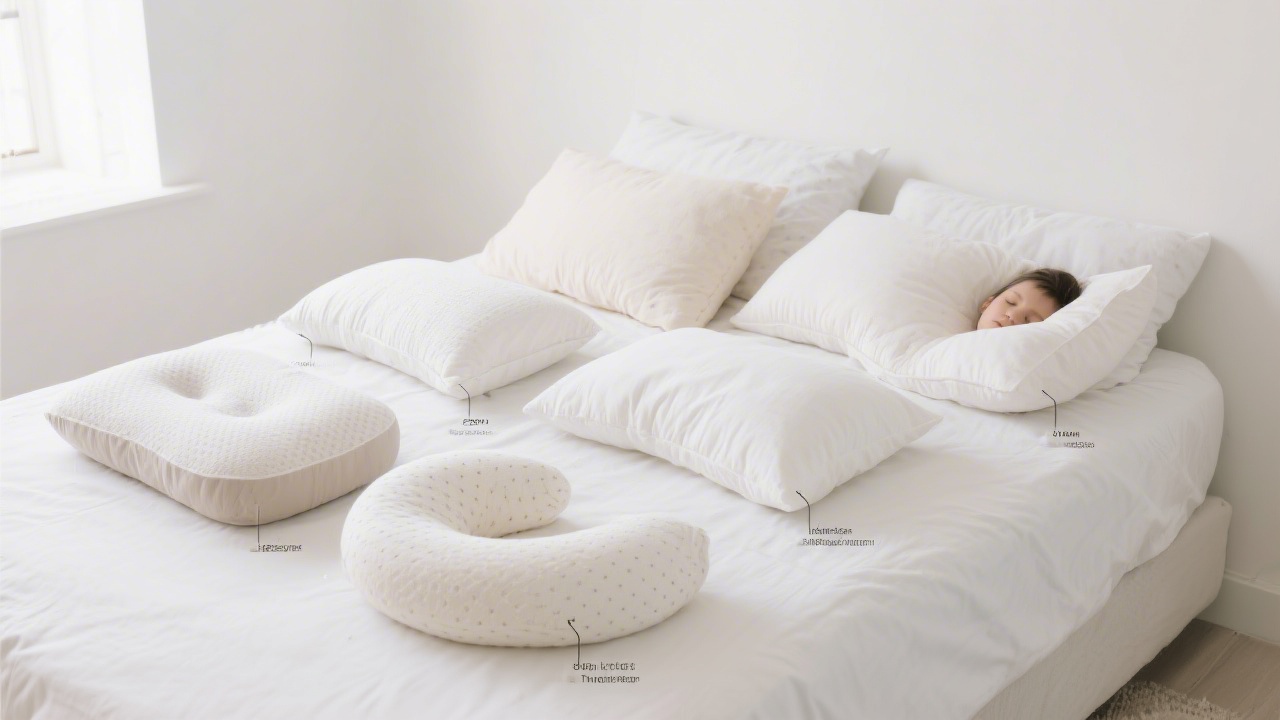
Most people choose pillows based on showroom "hand feel" — squeezing the pillow for 10 seconds in a store. This method is misleading because pillow performance changes under sustained body heat and pressure. A pillow that feels perfect in the store may collapse or overheat within an hour of actual sleep. Sleep experts recommend a "30-minute settle test": lie in your typical sleep position on the pillow for at least 30 minutes (many mattress retailers have nap rooms for this purpose) and observe how the pillow behaves over time.
Key questions to ask during the test: Does your head sink over time, losing support? Does the pillow create pressure on your ears or jaw? Do you feel heat building up? Is your neck aligned with your spine, or is it bending forward, backward, or sideways? For side sleepers, have a friend or store associate check whether your neck forms a straight line with your spine — the ear should align with the shoulder, not drop toward the mattress.
Online shoppers should prioritize brands with sleep trials of at least 30 nights. It takes 2–3 weeks for the body to adapt to a new pillow, and some materials (particularly latex and high-density memory foam) have a break-in period. A 30-night minimum allows you to evaluate true performance across multiple sleep cycles. Avoid brands that charge restocking fees or require original packaging for returns.
Not sure which pillow is right for you? The Saatva Pillow eliminates guesswork with an adjustable shredded-latex core that lets you customize loft and firmness at home. If it's not perfect after 45 nights, return it free.
Common Pillow-Buying Mistakes to Avoid
Even informed shoppers make predictable errors. The most common mistake is buying a pillow based on sleep position alone, without considering mattress firmness. A firm mattress reduces shoulder sink-in for side sleepers, effectively increasing the head-to-mattress gap and requiring a higher-loft pillow than the same sleeper would need on a soft mattress. Conversely, a plush mattress lets the shoulder sink deeply, reducing the required loft.
Another frequent error is choosing fill based on marketing rather than physiology. "Cooling gel" memory foam sounds appealing but typically reduces surface temperature by only 1–2°C — marginal for hot sleepers. Natural latex sleeps significantly cooler and maintains support longer. Down and down alternative feel luxurious but provide minimal structural support for side sleepers and compress faster than foam or latex.
Finally, many shoppers underestimate the importance of pillow size. A standard pillow (20 x 26 inches) on a king bed leaves gaps that cause head roll-off for active sleepers. A king pillow (20 x 36 inches) on a full bed crowds the mattress surface. Match pillow size to both bed dimensions and body frame — broader-shouldered sleepers benefit from queen or king sizes even on smaller beds.
Choose by Sleep Position (The Core Rule)
| Sleep Position | Loft Needed | Firmness | Why |
|---|---|---|---|
| Side sleeper | High (4–6 inches) | Firm to medium-firm | Fill the gap between shoulder and head; maintain spinal alignment |
| Back sleeper | Medium (3–4 inches) | Medium | Support cervical curve without pushing head too far forward |
| Stomach sleeper | Low (1–3 inches) | Soft to flat | Prevent neck hyperextension; some stomach sleepers prefer no pillow |
| Combination sleeper | Adjustable (3–5 inches) | Medium | Shredded fill allows reshaping as you shift positions |
5 Questions to Find Your Pillow
- What is your primary sleep position? (Side / Back / Stomach / Combination) - Use the table above as your starting point.
- Do you sleep hot? If yes, avoid memory foam (traps heat). Choose latex, buckwheat, or cooling gel-infused options instead.
- Do you have allergies? If yes, avoid down and feather fills. Choose hypoallergenic polyester fiberfill or latex.
- What are your shoulders like? Broader shoulders = need more loft when side-sleeping. Narrow shoulders = less loft required.
- Do you want adjustability? Shredded memory foam and shredded latex pillows let you add or remove fill to dial in loft - ideal if you're between positions or not sure what works for you.
Pillow Fill Types Compared
| Fill Type | Loft | Support | Cooling | Price Range | Best For |
|---|---|---|---|---|---|
| Down | Adjustable | Soft | Good | $$–$$$ | Stomach/back sleepers; luxury feel |
| Down Alternative | Medium | Soft–Medium | Good | $–$$ | Allergy sufferers; value-conscious |
| Memory Foam (solid) | Fixed | Firm | Poor | $$ | Side/back sleepers needing consistent support |
| Shredded Memory Foam | Adjustable | Medium–Firm | Better than solid | $$ | Combination sleepers; adjustable needs |
| Latex | Medium–High | Firm | Good | $$$ | Side sleepers; hot sleepers; durability |
| Buckwheat | Adjustable | Firm | Excellent | $$–$$$ | Hot sleepers; neck pain sufferers |
| Polyester Fiberfill | Medium | Soft | Fair | $ | Budget option; guest rooms |
How to Tell If Your Pillow Is Wrong
Signs your current pillow isn't right for you:
- Waking up with neck stiffness or pain that resolves within an hour
- Folding or doubling up your pillow during the night
- Sleeping with your arm under the pillow (often means loft is too low for a side sleeper)
- Flat spot that doesn't recover after fluffing (pillow is past its lifespan)
- Pillow is more than 1–2 years old for synthetics (3–5 years for latex or down)
How Often to Replace a Pillow
- Polyester fiberfill: Every 1–2 years
- Down / down alternative: Every 2–3 years
- Memory foam (solid): Every 2–3 years
- Latex: Every 3–5 years
- Buckwheat: Refillable; hull replacement every 3+ years
The fold test: Fold your pillow in half. If it stays folded and doesn't spring back, replace it.
View on Saatva →
Frequently Asked Questions
Frequently asked questions about pillows
Our top pillow pick
The Saatva Pillow
Shredded Talalay latex core, removable fill, 45-night trial — the most adaptable pillow for multi-position sleepers. From $165.
How often should you replace your pillow?
Every 18–36 months depending on fill. Latex pillows last 5–7 years; solid memory foam 2–3; down 2–5 with fluffing. The fold test tells you: fold the pillow in half, let go — if it doesn't spring back, it's done. Saatva's pillow range covers all major fill types.
What's the best pillow loft by sleep position?
Side sleepers: 5"–7". Back sleepers: 3"–5". Stomach sleepers: 1"–3". Combination sleepers: 4"–5" adjustable-fill.
Are expensive pillows actually worth it?
Cost-per-year, yes — a $150 latex pillow over 6 years ($25/year) beats a $30 polyester pillow over 1 year ($30/year), plus you get better neck support the whole time.
What pillow firmness is best for side sleepers?
Medium-firm to firm. Side sleepers need a pillow that doesn't compress under the weight of the head - a soft pillow allows the head to sink, creating lateral neck strain. High loft (4–6 inches) combined with firm support keeps the spine aligned from ear to hip.
Is memory foam good for back sleepers?
Solid memory foam works well for back sleepers who need consistent medium support. The key is loft - memory foam pillows for back sleepers should be lower profile (3–4 inches) than those for side sleepers. Shredded memory foam is more adaptable and often preferred.
How do I know what loft height I need?
A simple test: Lie on your side on your mattress with no pillow. Have someone look at your spine from behind. The distance from your shoulder to the side of your head is approximately the loft you need. For most adults on standard mattresses, this is 4–6 inches for side sleeping.
Are expensive pillows worth it?
Often yes, up to a point. A $60–$150 pillow with the right fill for your sleep position will typically outperform a $20 synthetic pillow in both support and durability. Above $200, the incremental benefit diminishes for most sleepers. The right fit matters more than the price.
Can a bad pillow cause shoulder pain?
Yes. A pillow that's too low for a side sleeper causes the head to drop, compressing the shoulder and neck. Over time this can cause shoulder and neck pain, numbness in the arm, or tension headaches. The fix is usually increasing pillow loft, not changing the mattress.
Related Reading
- Pillow Sizes Guide - Every Standard Size Explained
- Best Pillows Reviewed for Every Sleep Type
- How to Wash a Down Comforter Without Ruining It
- Polyester vs Cotton - Which Bedding Fabric Is Better?
★ #1 RATED MATTRESS 2026
Need a Better Pillow? The Saatva Pillow Is Our Top Pick
✓ 365-Night Trial · ✓ Free White Glove Delivery · ✓ Lifetime Warranty