
 by
by Moving a mattress is one of those tasks that seems straightforward until you are sideways in a stairwell with a queen memory foam that weighs 130 lbs and will not stop bending. This guide covers the right equipment, the safest techniques by mattress type, and when it is more efficient to pay for professional delivery rather than manage the move yourself.
Our Top Pick
White-glove delivery - they bring it in, set it up, and remove your old mattress.
Equipment You Need
- Mattress bag: Thick plastic cover (4-6 mil minimum). Protects against moisture, bed bugs, and tearing. Available at hardware stores and on Amazon for $10-25. Non-negotiable for any move involving outdoor exposure or a moving truck.
- Moving straps: Shoulder/forearm straps reduce the effective weight you carry by shifting it to the stronger muscle groups. Standard straps work for two-person carries. For solo moves, a single strap system allows you to maneuver the mattress upright against your body.
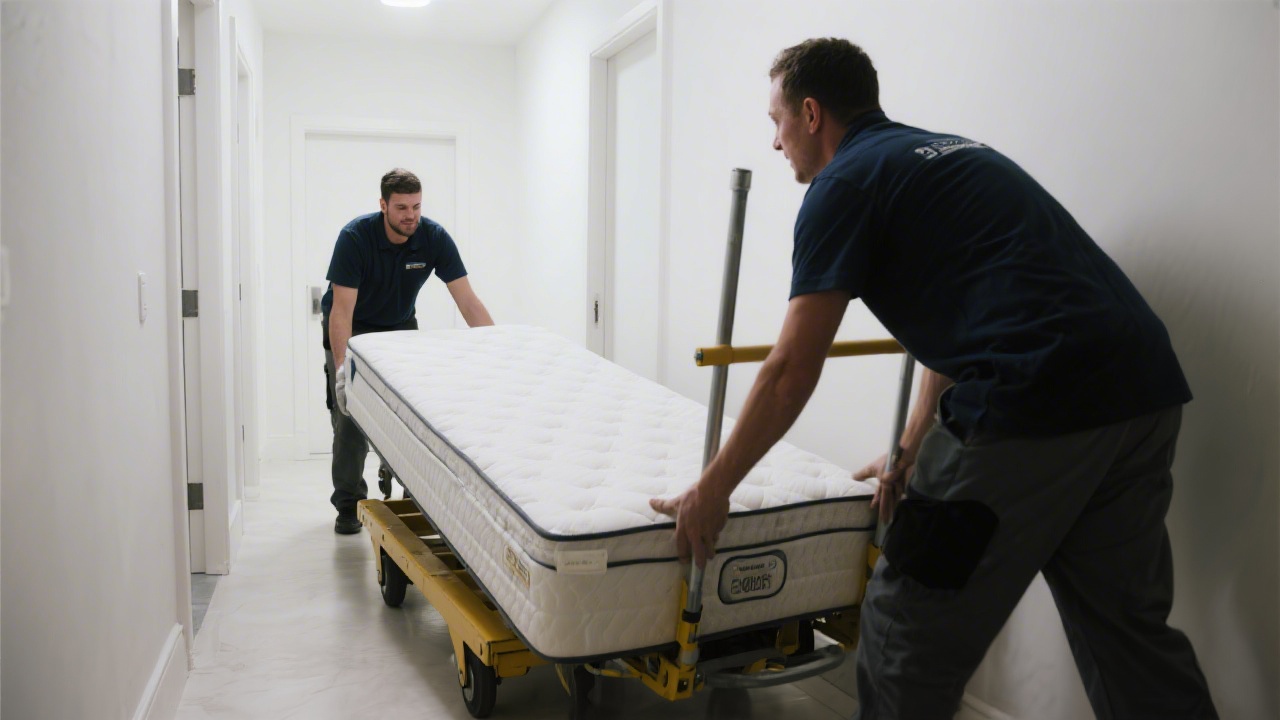
- Mattress dolly: For long carries (loading dock to apartment, large house), a platform dolly under the mattress reduces fatigue. Not practical for stairs.
- Rope or ratchet straps: For securing the mattress to a truck or roof rack. Never transport a mattress on a car roof without straps - it becomes a wind sail at highway speeds.
Step-by-Step Moving Process
Step 1: Bag the Mattress
Slide the mattress bag over the mattress while it is still on the bed frame. Seal the open end with the included tape or with packing tape. This is easier with two people - one holds the bag while the other guides the mattress in.
Step 2: Clear the Path
Measure doorways (standard interior door is 32-36 inches wide; mattress may need to travel on its side at 9-13 inches wide). Identify the narrowest point on your route. Remove any obstructions, furniture, and door stops. Decide in advance whether the mattress will go through standard doors flat, at a tilt, or on its side.
Step 3: Move the Mattress (with a Partner)
Stand the mattress on its long edge. One person takes the leading end, one takes the trailing end. Use the forearm straps if available. Handle doorways by angling the mattress diagonally at a 30-45 degree tilt - this uses the diagonal of the doorframe, which is 2-4 inches wider than the vertical dimension. For stairs, take one step at a time, communicating clearly about direction changes.
Folding and Rolling Rules by Mattress Type
Memory foam: Can be safely rolled or gently folded for short durations (ideally under 30 minutes, maximum a few hours). The foam will fully recover within 24 hours. Do not store a folded memory foam mattress long-term - it causes permanent deformation in the compressed area.
Latex: Natural latex is resilient and can be rolled for short moves. Dunlop latex (denser) should be handled more carefully than Talalay latex. Avoid sharp bends.
Hybrid/Innerspring: Do not fold under any circumstances. The pocket coils in hybrids can kink when bent, permanently damaging the coil structure. Move hybrids and innersprings flat on their side only. This is why many hybrids are shipped as white-glove deliveries rather than roll-pack - they cannot be compressed for shipping.
Transporting the Mattress
In a moving truck: lay the mattress flat on a clean surface, or stand it on its side against the truck wall and strap it securely. Never stack heavy items on top of a mattress - even a mattress bag does not protect against compression from boxes.
On a vehicle roof: use a mattress bag, two ratchet straps through the vehicle interior (over the mattress, through windows), and drive under 45 mph. This method is risky and illegal in some jurisdictions if the mattress is improperly secured. It is only practical for moves under 5 miles.
When to Use White-Glove Delivery Instead
If you are buying a new mattress, white-glove delivery services remove the entire problem. Saatva's service includes delivery to your room of choice, full setup, and removal of your old mattress. The cost is included in the purchase price for most Saatva products. When you factor in truck rental, equipment, and the physical risk of a two-person mattress move, professional delivery is usually the rational economic choice for mattresses over $800.
Internal Links
Related guides: Saatva Classic Review, When to Replace a Mattress, How to Break In a New Mattress, Best Mattresses of 2026.
Our Top Pick
White-glove delivery included. Setup and old mattress removal at no charge.
Frequently Asked Questions
Can I move a mattress by myself?
A queen mattress typically weighs 100-150 lbs and is 60 inches wide. Moving it solo through doorways and up stairs is possible but risks dropping, back strain, and mattress damage. At minimum, use a mattress bag and moving straps. Two people is strongly recommended for anything queen-size or larger.
Can you fold a mattress to move it?
It depends on the mattress type. Memory foam and latex mattresses can be carefully rolled or folded for short periods (under a few hours) without permanent damage. Innerspring and hybrid mattresses should never be folded - the coils can kink or lose temper when bent. Always check manufacturer guidance before folding.
Do I need a mattress bag when moving?
Yes. A mattress bag (also called a mattress storage bag) is a thick plastic cover that protects against moisture, dirt, and tearing during the move. They cost $10-25 and can prevent the kind of staining that voids a mattress warranty. Use one even for short moves.
How do I get a mattress through a narrow doorway?
Stand the mattress on its side and angle it diagonally through the doorway frame - this is called the 'tilt method.' If it still does not fit, try removing the door from its hinges (adds 1-2 inches of clearance). For extremely tight staircases, measure first: most queen mattresses are 80 inches long and will not clear tight stairwell corners on their side.
Is it worth paying for white-glove mattress delivery?
For most people, yes. White-glove delivery services (like Saatva's) include in-room setup, removal of the old mattress, and positioning. The labor cost is often comparable to renting a truck and buying equipment. More importantly, it protects the warranty - many manufacturers void warranties if the mattress is damaged during owner transport.