
 by
by Hybrid mattresses beat traditional innersprings for most adult sleepers. The comfort-layer depth (3 to 6 inches of foam or latex) is what separates the two: hybrids deliver real pressure relief while keeping the bounce and airflow coils are known for. If you want the best hybrid build available, the Saatva Classic is our top pick, with a dual-coil system, zoned lumbar pad, and a 365-night trial.
Saatva Classic
9.5/10
- Dual-coil construction: Bonnell base coils topped by pocketed micro-coils for layered support
- Zoned lumbar foam pad reinforces the lower back specifically
- Outstanding cooling, surface temp 89.5 F in NapLab testing
- Exceptional edge support (only 2.25" sitting sinkage)
- Free White Glove delivery: in-room setup and old mattress removal
- Higher motion transfer than a pure-foam mattress, not ideal for very light-sleeping partners
- $99 return fee applies during the trial
- Heavier than compressed bed-in-a-box options
The Saatva Classic is the definitive answer to "what does a well-built hybrid look like?" The dual-coil system gives you genuine coil responsiveness and airflow while the comfort layers provide pressure relief that no traditional innerspring can match at any price.
Why the confusion exists
Both hybrid and traditional innerspring mattresses use steel coils as their support core, which is where the surface-level similarity ends. Marketing language around both types often obscures what is a dramatic difference in construction, feel, and long-term performance. This guide explains exactly what separates them.
Traditional innerspring construction
A traditional innerspring mattress has three functional components: a base foundation, a coil system, and a comfort layer. The comfort layer is the critical variable. In entry-level and mid-range innersprings, this layer is typically 1 to 2 inches of fiber fill, basic polyfoam, or quilted fabric. It provides minimal pressure relief, and you feel the coils relatively directly.
Coil types in traditional innersprings include Bonnell coils (hourglass shaped, interconnected, responsive but motion-transferring), offset coils (connected with hinges for reduced motion transfer), and continuous coils (single wire forming the entire unit). Most traditional innersprings in the $300 to $800 price range use interconnected systems that transfer motion freely across the surface.
Hybrid mattress construction
A hybrid mattress uses an individually pocketed coil base topped by substantial comfort layers, typically 3 to 6 inches of memory foam, latex, polyfoam, or a combination. The individually pocketed coils (sometimes called "wrapped" or "encased" coils) move independently, which reduces motion transfer significantly compared to interconnected coil systems.
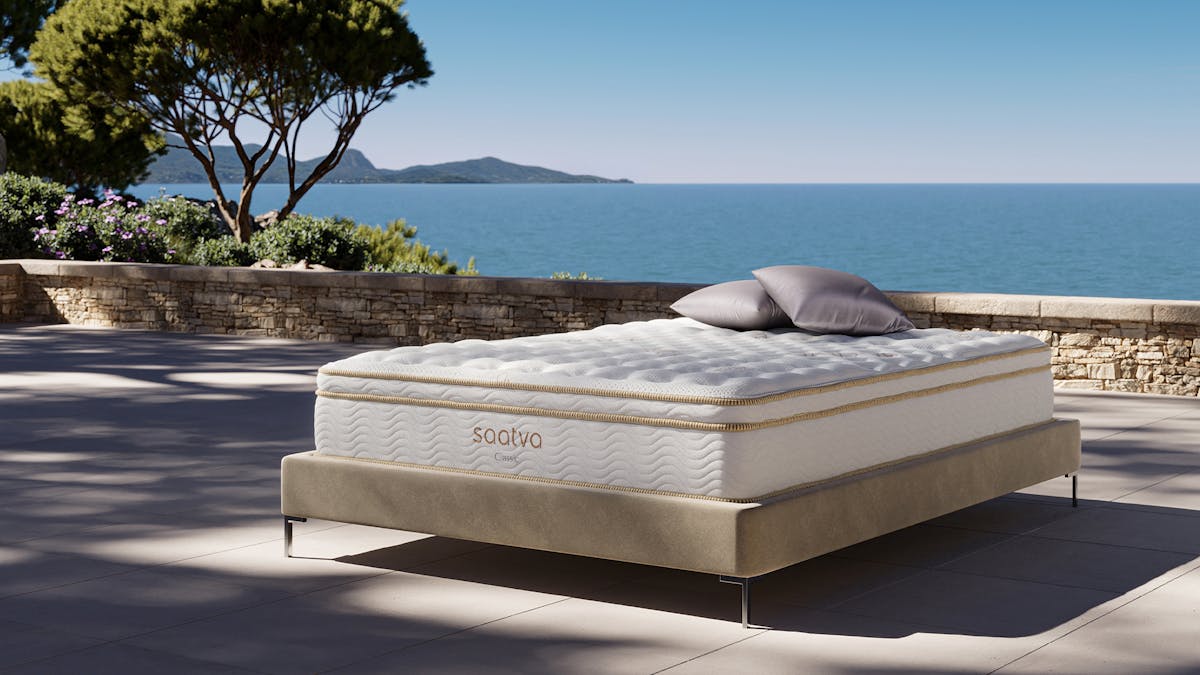
The Saatva Classic is the clearest illustration of what a premium hybrid actually delivers: a Bonnell coil base for foundational support, a layer of individually wrapped micro-coils above it, then an organic cotton Euro pillow top with memory foam on top of that. The result is a sleep surface that is responsive, pressure-relieving, and cooler than all-foam alternatives.
How the two constructions compare
| Feature | Traditional Innerspring | Hybrid |
|---|---|---|
| Comfort layer depth | 1 to 2 inches (fiber/polyfoam) | 3 to 6 inches (foam/latex/micro-coil) |
| Coil type | Bonnell, continuous, or offset (interconnected) | Individually pocketed coils |
| Pressure relief | Minimal | Excellent |
| Motion isolation | Poor to fair | Good |
| Edge support | Variable, often weak | Good to excellent |
| Cooling | Very good (minimal foam) | Very good (coil airflow) |
| Bounce/responsiveness | High, springy feel | High, moderated by foam |
| Typical queen price | $300 to $800 | $900 to $2,500+ |
| Lifespan | 5 to 7 years | 8 to 15 years |
The feel difference in practice
If you have ever slept on an older hotel mattress and felt the springs through the surface, that was a traditional innerspring with degraded padding. The coils were doing most of the work. A well-constructed hybrid feels completely different: the foam and micro-coil layers absorb your body weight before it ever reaches the primary coil system. You get the bounce and responsiveness of coils without the direct-contact feeling.
- Pressure relief: Hybrid wins by a significant margin. The foam layers conform to shoulders, hips, and the natural curve of your spine.
- Motion isolation: Hybrid wins. Pocketed coils and foam layers together absorb movement. Traditional interconnected coils transmit it.
- Edge support: Quality hybrids with reinforced perimeter coils provide solid edge support. Traditional innersprings vary widely, and cheaper models have weak edges.
- Bounce and responsiveness: Both feel responsive, but hybrids moderate the bounce with foam, making it feel intentional rather than springy.
- Cooling: Both sleep cooler than all-foam mattresses. Traditional innersprings have slightly better airflow due to minimal foam, but the difference from a quality hybrid is small.
Who should choose a traditional innerspring
Traditional innersprings are not without merit. They make sense for: very lightweight sleepers who find foam too enveloping, those who prefer a firm, minimal surface feel, bunk beds and children's mattresses where longevity-per-dollar matters more than pressure relief, and strict budget situations where any coil mattress beats a cheap foam alternative.
Who should choose a hybrid
Hybrids suit the vast majority of adult sleepers, particularly anyone over 130 lb, combination sleepers who change positions through the night, back pain sufferers who need both support and pressure relief, couples where motion isolation matters, and anyone who has found all-foam too hot or too slow to respond.
Price and value
Entry-level innersprings start around $200 to $400 for a queen. Quality hybrids typically start at $900 to $1,000 and run to $2,500 or more for premium models. The price gap reflects the cost of meaningful comfort layers and individually wrapped coil systems, not markup. The Saatva Classic at $1,795 (queen) represents strong value in the premium hybrid category: dual-coil construction, organic materials, White Glove delivery, a 365-night trial, and a lifetime warranty are difficult to match at a lower price point.
For most adult sleepers, a hybrid is the right choice. The comfort-layer depth makes a real difference in pressure relief and long-term durability. The Saatva Classic is our top pick: dual-coil construction, zoned lumbar support, and a 365-night trial to confirm the fit.
Frequently asked questions
What is the main difference between a hybrid and an innerspring mattress?
The key difference is comfort-layer depth. A hybrid adds 3 to 6 inches of foam, latex, or micro-coil comfort layers on top of a pocketed coil base. Traditional innersprings use only 1 to 2 inches of fiber or basic polyfoam. That depth gap is what makes hybrids far more pressure-relieving while retaining coil responsiveness.
Are hybrid mattresses worth the extra cost over innersprings?
For most adult sleepers, yes. The additional comfort layers significantly improve pressure relief, especially for side sleepers and combination sleepers. The premium is typically $300 to $700 over a comparable innerspring, and the sleep-quality difference is dramatic once the comfort layers degrade on the cheaper option after five or six years.
How long does a hybrid mattress last compared to a traditional innerspring?
A quality hybrid lasts 10 to 15 years. Traditional innersprings with minimal padding show wear, sagging, and reduced support in 5 to 7 years. The foam layers in a hybrid provide a buffer that protects the coil system and maintains comfort longer.
Is a hybrid or innerspring better for hot sleepers?
Both sleep cooler than all-foam mattresses because the coil system allows airflow through the mattress. Traditional innersprings have a slight edge due to minimal foam, but a quality hybrid with an open-coil design (like the Saatva Classic) closes most of that gap. Either option significantly outperforms memory foam for cooling.
Can a traditional innerspring cause back pain?
An old or worn innerspring can contribute to back pain when the thin comfort layers fail, leaving you sleeping directly on the coil system. Quality hybrids with proper lumbar support zones consistently outperform entry-level innersprings for back pain, because the deeper comfort layers relieve pressure while the zoned coils support the lumbar.
What is the minimum comfort layer that defines a true hybrid?
There is no official standard, but the industry consensus is at least 2 inches of quality foam or latex above a pocketed coil base. Most reputable hybrids use 3 to 4 inches. Beds marketed as "hybrid" with only 1 inch of foam above interconnected Bonnell coils are effectively traditional innersprings with better branding.