
 by
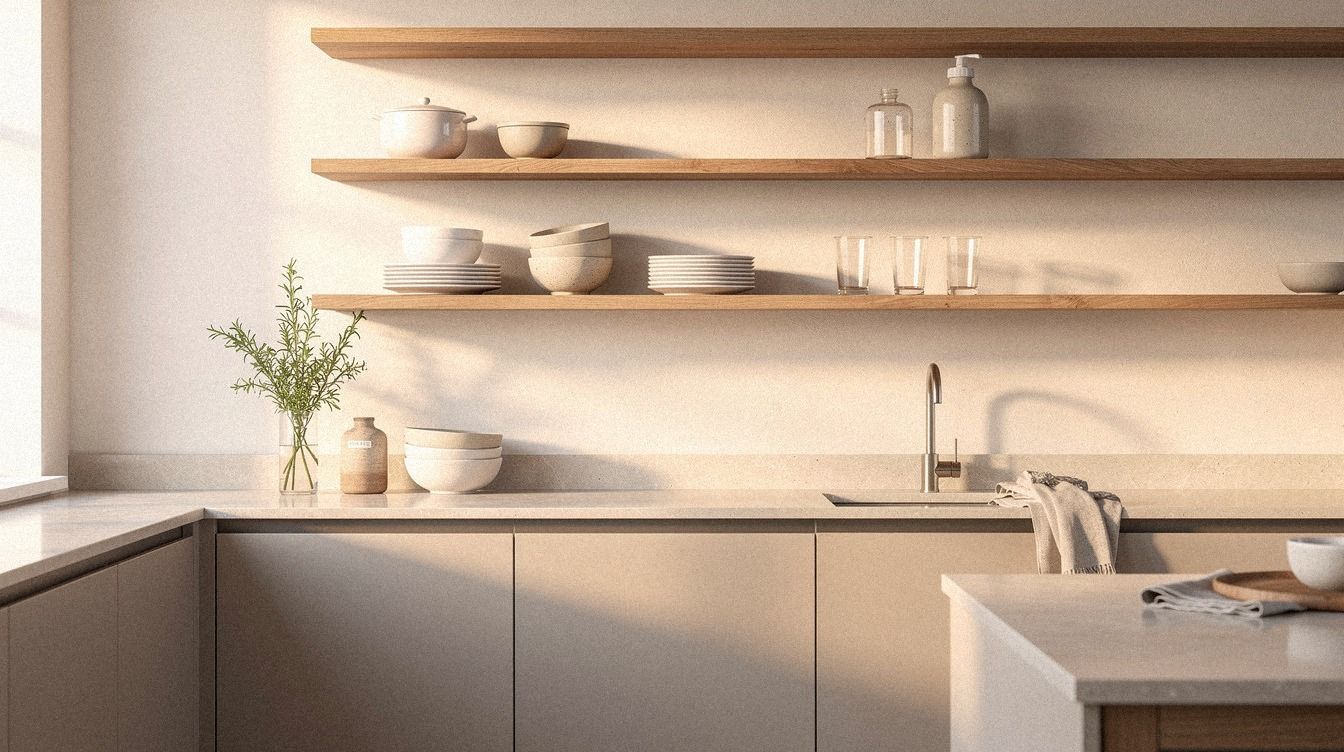
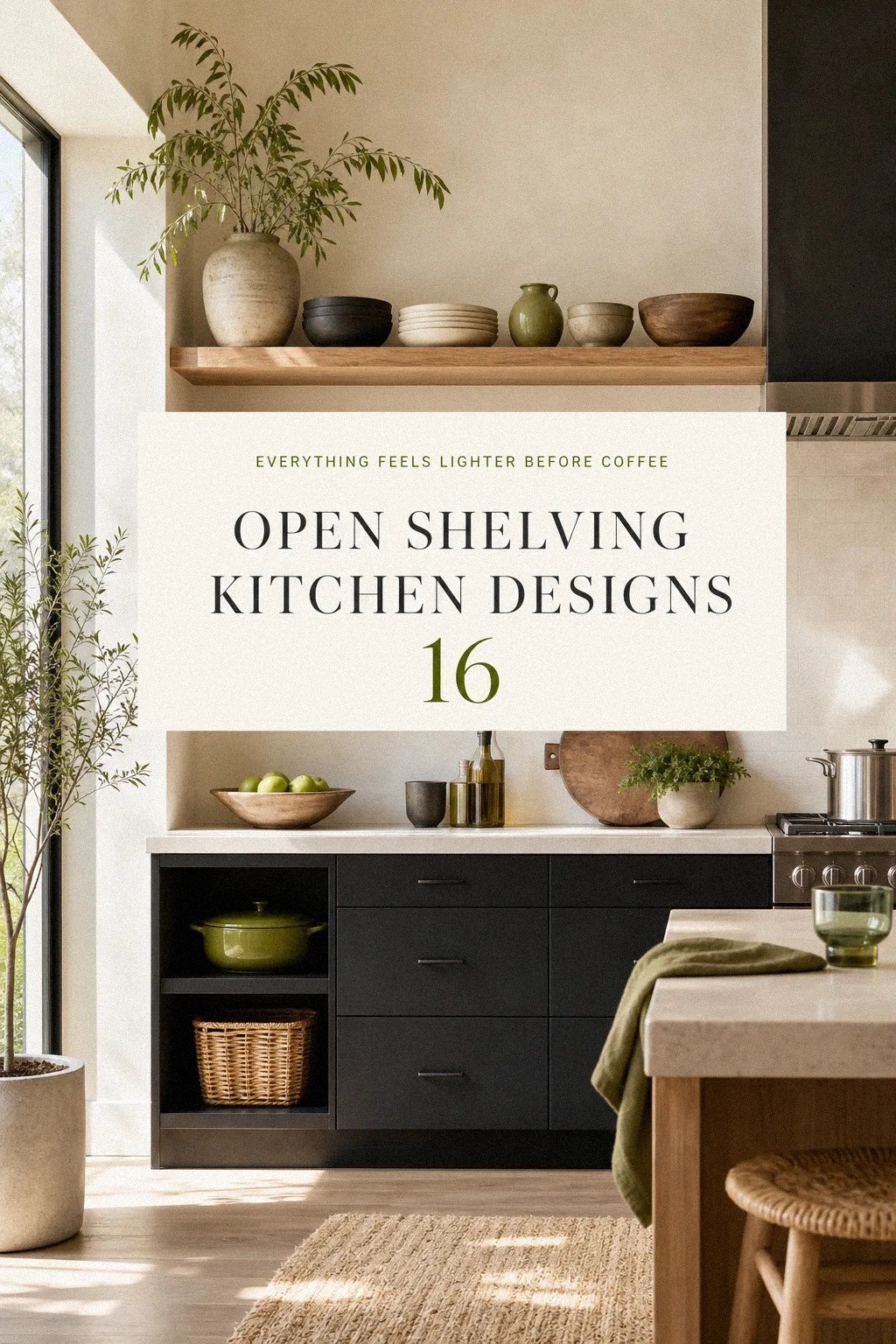
by Open shelving kitchen ideas without upper cabinets work best when you treat them like a daily-use system, not a styling stunt. I learned that after stacking pretty things on a shelf and then reaching over them every single morning. Your kitchen gets easier when the right dishes stay visible, the heavy storage stays low, and the wall still has room to breathe.
- Start with one clear everyday dish shelf
- Anchor open shelves beside the range hood
- Run corner shelves around the backsplash
- Replace one upper cabinet with oak shelves
- Layer plates behind glass storage jars
- Hang brass rails under the lowest shelf
- Build a coffee shelf above the mugs
- Group inside-cabinet baskets on open shelves
- Frame the sink window with slim shelves
- Stack cutting boards behind white bowls
- Add closed cabinets below open shelving
- Repeat cabinet hardware on shelf brackets
- Style one shelf with cookbooks and crocks
- Leave breathing room between shelf clusters
- Could IKEA KALLAX cubes replace your uppers in a rental?
- Why does a brass rail quietly outperform every other hook?
1Start with one clear everyday dish shelf
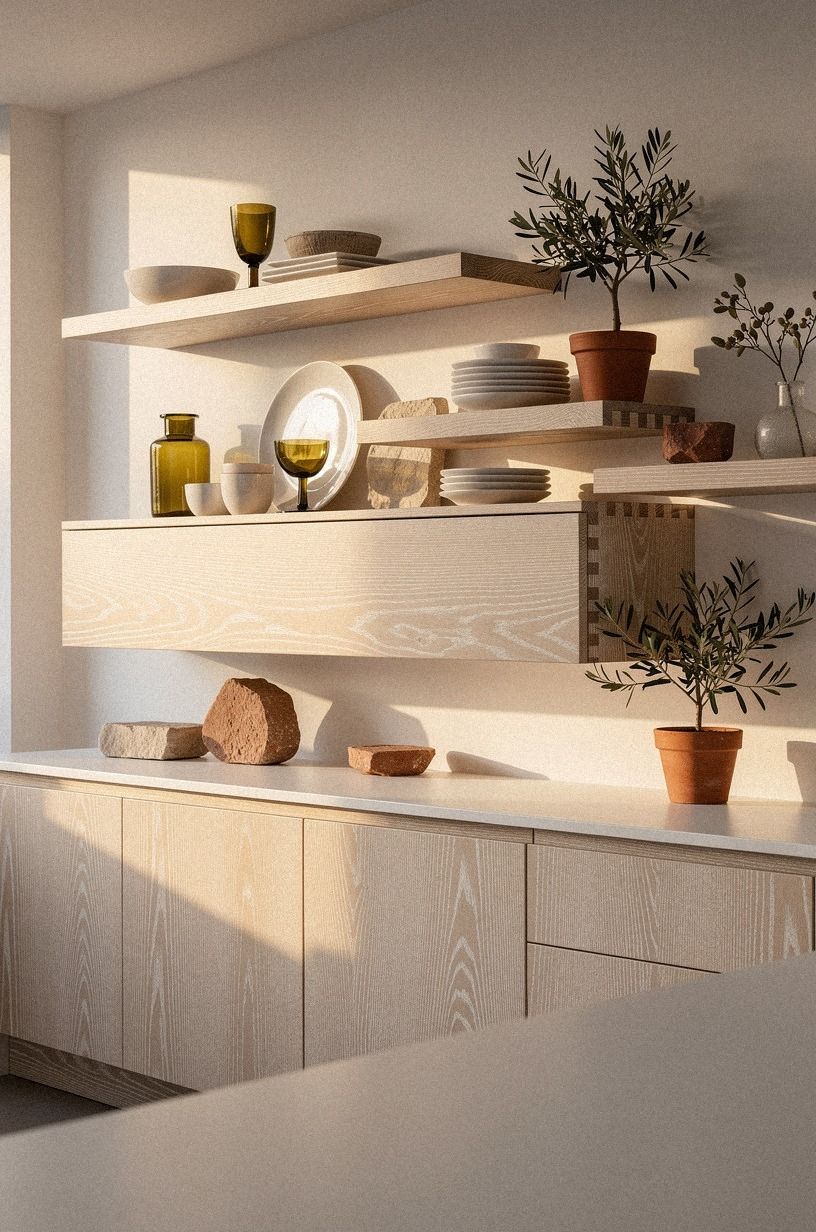
Start with the shelf you touch before coffee, not the shelf you want to photograph first. If you use the same four bowls, six plates, and two mugs every day, give those pieces the center spot on cerused white oak and stop there. You need one obvious landing zone before you need a full wall plan.
Skip the styling fantasy. The pretty shelf that does nothing will get dusty and resentful by week two.
Keep that first shelf at a height that feels natural from a 36 in standard counter height base, so your arm isn't lifting and twisting all day. I made the mistake of setting an early shelf too high once, and my shoulders told me by day three. You want reach, rinse, put back.
That's the rhythm. And you'll feel the difference fast!
Honestly, the lower I went, the more I used it.
But visual calm matters too. A centered run of white dishes against lower cabinets in Benjamin Moore White Dove OC-17 reads clean from across the room.
If you like systems that age well, the same replace-before-chaos mindset shows up in when to replace your mattress. Quiet shelves work the same way.
Edit early, edit often, keep what earns the wall.
2Anchor open shelves beside the range hood
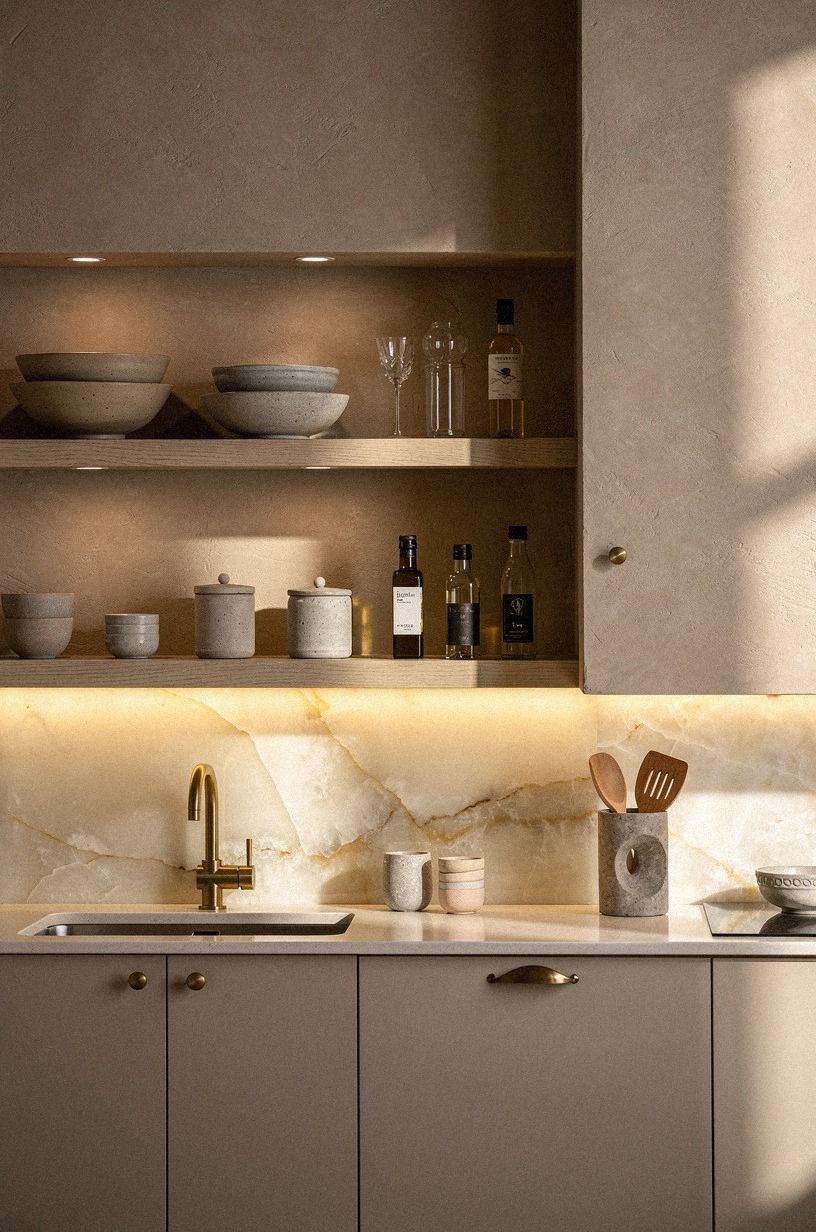
Anchor the shelves to the range hood so the wall gets a calm, grounded center of gravity, not a floating afterthought.
3Run corner shelves around the backsplash
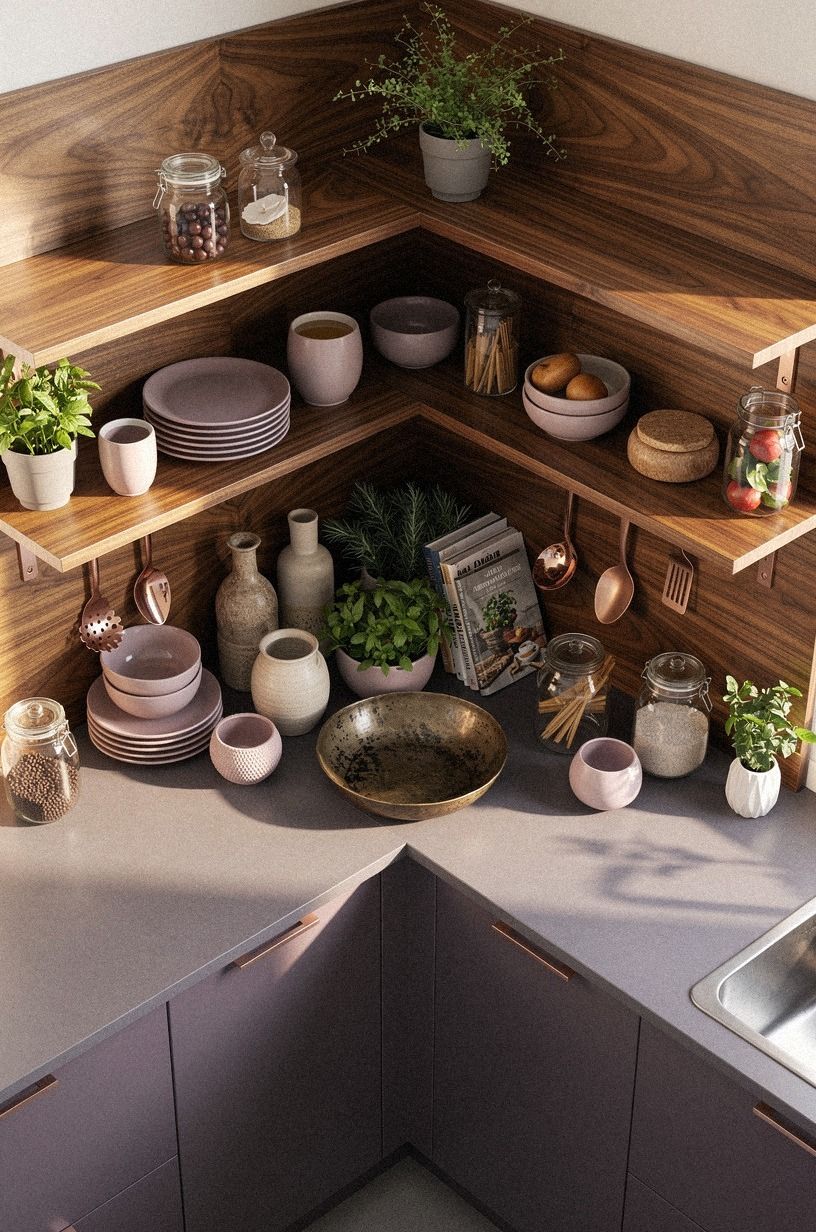
Run corner shelves only if the backsplash is worth following around the bend. In a kitchen corner open shelf setup, the material has to carry the turn, and book-matched walnut or richly veined stone does that far better than a flat white board. Your eye reads one continuous move instead of two unrelated leftovers.
Keep the shelf line respectful of the usual 18 in gap between counter and uppers. That spacing matters even when the uppers are gone, because your mixer, kettle, and toaster still need air.
I wouldn't jam a thick corner shelf down into the splash zone just to squeeze in one more row of mugs. You won't like wiping it.
A corner works when you let the objects step down in scale. Taller crock at the far end.
Lower bowls near the turn. One folded towel in Belgian flax linen where the angle softens. If you're someone who likes visible rules more than visible clutter, you'll probably appreciate the same clarity in when to stop using old mattress.
Quiet corners are built the same way. With restraint, not volume.
4Replace one upper cabinet with oak shelves
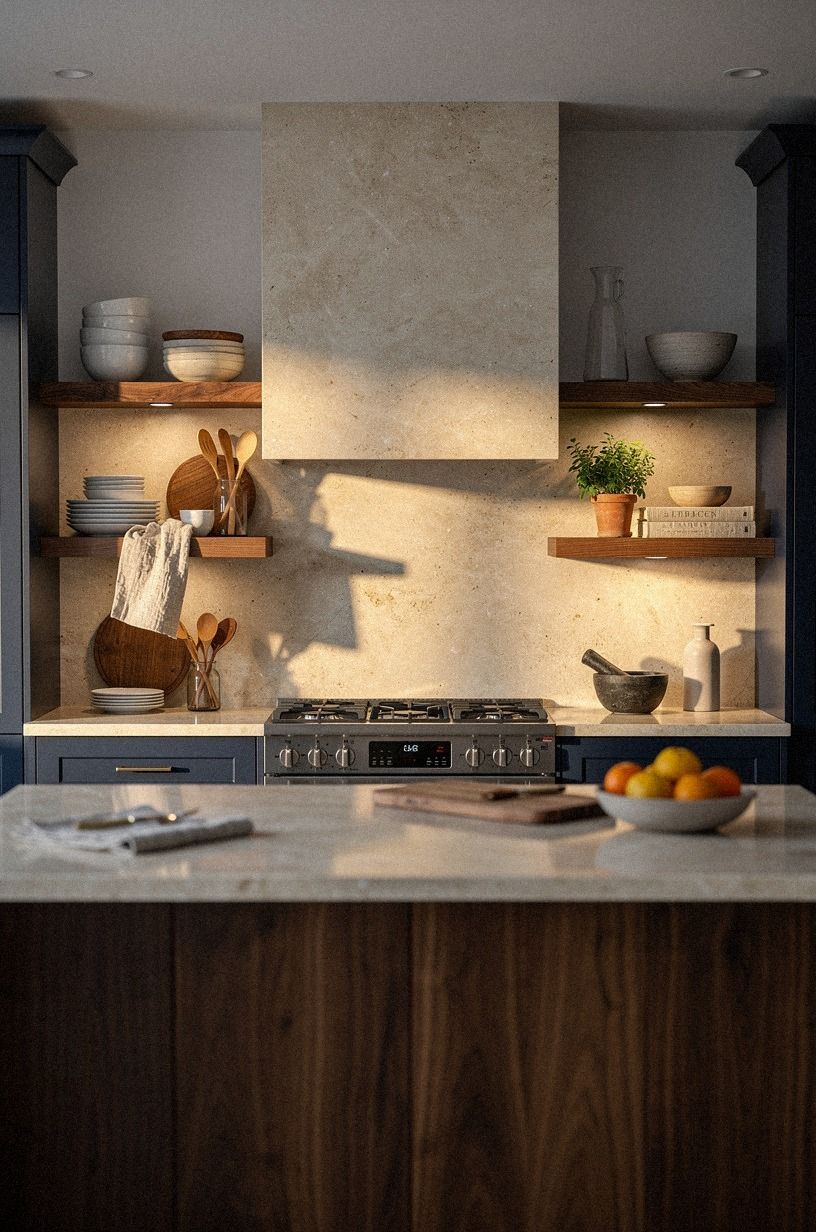
Replace one upper cabinet first, not the whole run, and you give yourself a test wall instead of a full commitment. That's the move I'd recommend to anyone nervous about kitchen wall cabinets ideas. A single bank of white oak shelves can tell you fast whether you like living open.
Pick the cabinet nearest the prep zone, not the one hiding holiday platters. You want the new shelf to hold things that earn the exposure: weekday bowls, olive oil, salt cellar, your best everyday glasses. But leave the heavy stockpot behind a door, because open storage gets annoying fast.
It's a graceful move that almost always reads as intentional.
Against a warm travertine backsplash, oak shelves feel grounded rather than floaty. And if your kitchen already has lower Shaker fronts, the swap reads intentional instead of improvised. I think of this as the room version of upgrading the part you use most first, the same logic behind when replace mattress 2026.
One honest shelf beats three decorative ones every time of day.
5Layer plates behind glass storage jars
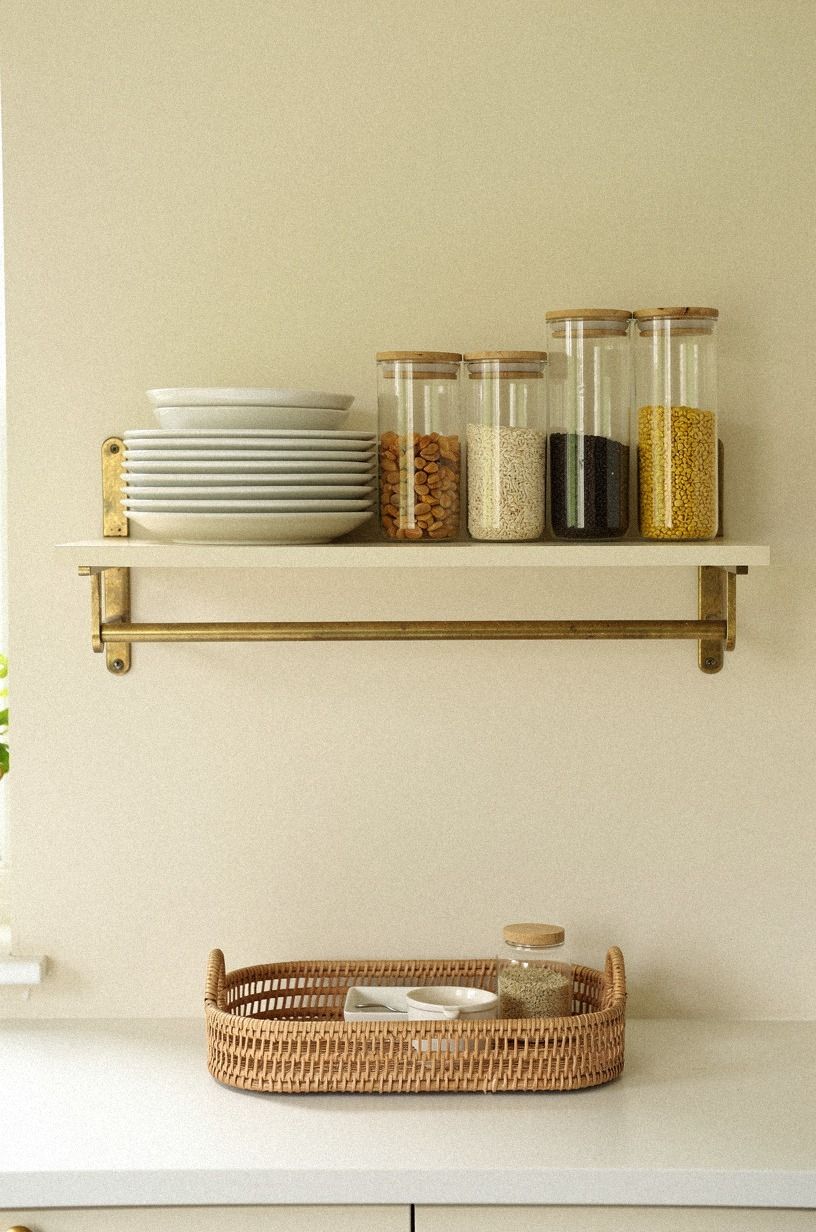
Layer plates behind jars when the shelf needs depth, not more inventory. A row of clear canisters with pasta, oats, or tea in front of standing dishes gives you function and a soft backdrop at once. On a cream wall, emerald glass jars add just enough color to keep the shelf from washing out into boring territory.
Here's the part people miss. You don't want every jar at the same height.
Let one tall vessel overlap a plate rim, then drop the next object lower so the line feels relaxed. I tried the strict marching-band version once, and it looked tidy in a bad way, like nobody in that kitchen had ever cooked a real dinner.
If your plates are warm white and the wall is quiet, a touch of Farrow & Ball Studio Green No.93 nearby, maybe on trim or a pantry door, keeps the shelf from turning sweet. You need that darker note. For a similarly practical, everyday-use way of thinking, I like the timing logic in when to replace pillows.
Layered shelves work best when the dark accent balances all the soft cream.
6Hang brass rails under the lowest shelf
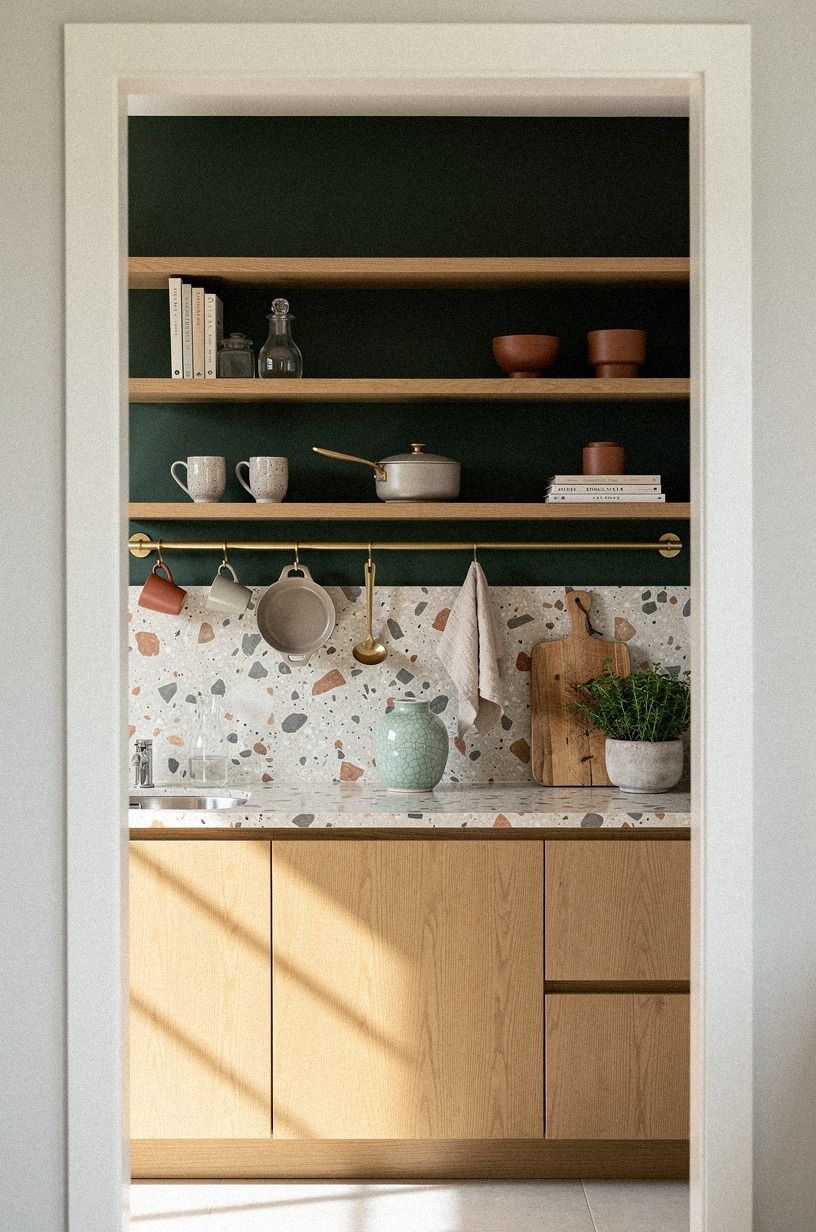
Hang a rail under the lowest shelf when your drawers are already packed and your wall can do one more job. Hooks for towels, a spoon rest, or a small pan make sense there, especially in a kitchen that leans forest green, rust, and oak. Aged brass is the finish I'd choose every time because it warms as the light shifts and forgives a hundred wipe-downs a week.
Keep the shelf itself edited if the rail is busy. One crock. A short stack of bowls.
Maybe a pepper mill. But don't pair a crowded rail with a crowded shelf unless you want visual noise right at eye level.
You should be able to step through the doorway and understand the setup in one calm glance. Restraint is what makes brass feel expensive.
This move works best when the lower cabinets echo the same hardware, even if the shapes aren't identical. You get rhythm without that fake matched-set feeling.
And yes, it matters more in a small kitchen than people think! The whole room feels more useful when vertical storage stays readable. If you're drawn to readable support systems, why arms numb when sleep oddly makes the same point about alignment.
7Build a coffee shelf above the mugs
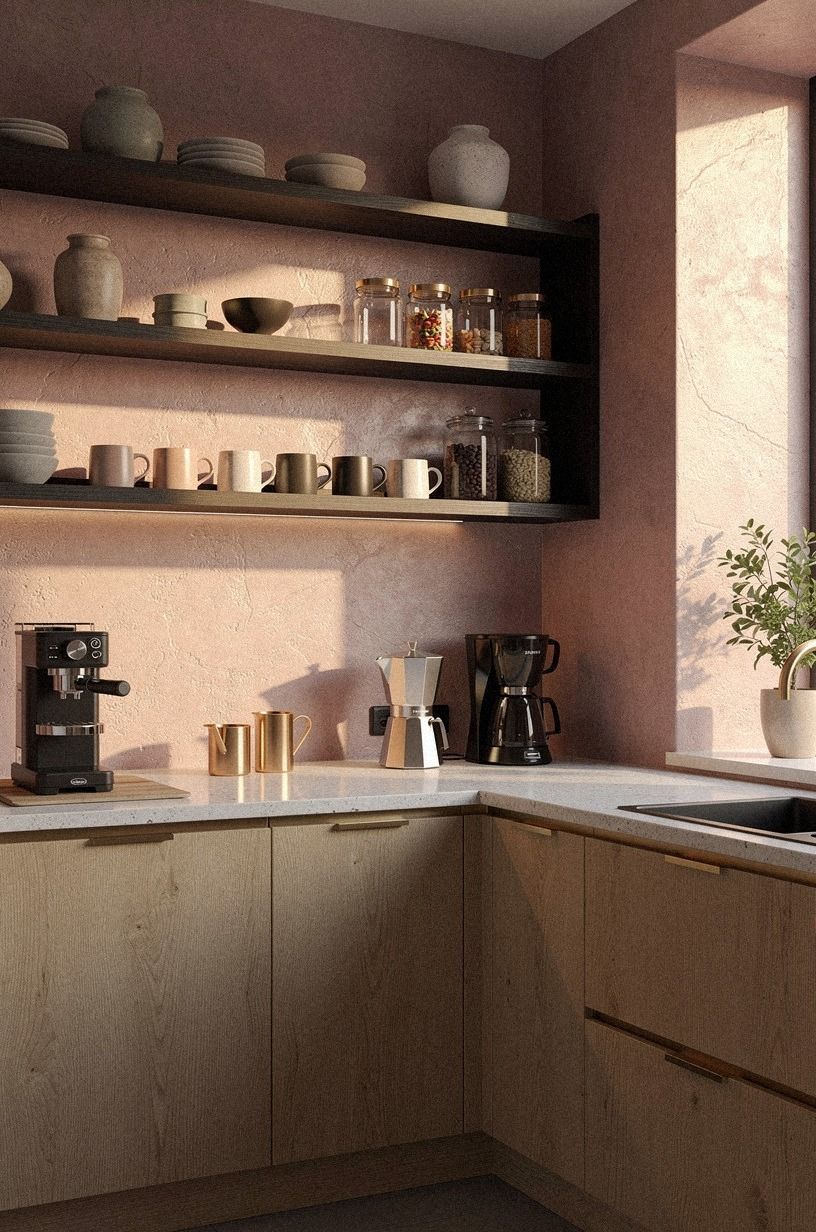
Build the coffee shelf directly above the mugs and your morning zone starts making sense on its own. You want the beans, dripper, grinder, and favorite cups living in one corner, not scattered across three cabinets. A beverage station with hand-applied limewash nearby looks softer than glossy paint and forgives the little marks real use leaves behind.
Set the shelf line so the mug handles still clear your hand comfortably. This is not the place to cram in decor for decor's sake.
I keep one sugar bowl, one stack of saucers, and one canister, then stop. Why make coffee half awake with your shoulder reaching around dead weight?
The morning corner is sacred. Treat it that way.
If you need extra texture, add one basket below or one small framed print, not both. A West Elm matte stone canister and a plain wooden grinder already give you enough material contrast. The zone should feel useful first, charming second.
For another example of fixing the daily touchpoint before the rest, see why hands numb when sleep. Mornings reward small, intentional systems.
8Group inside-cabinet baskets on open shelves
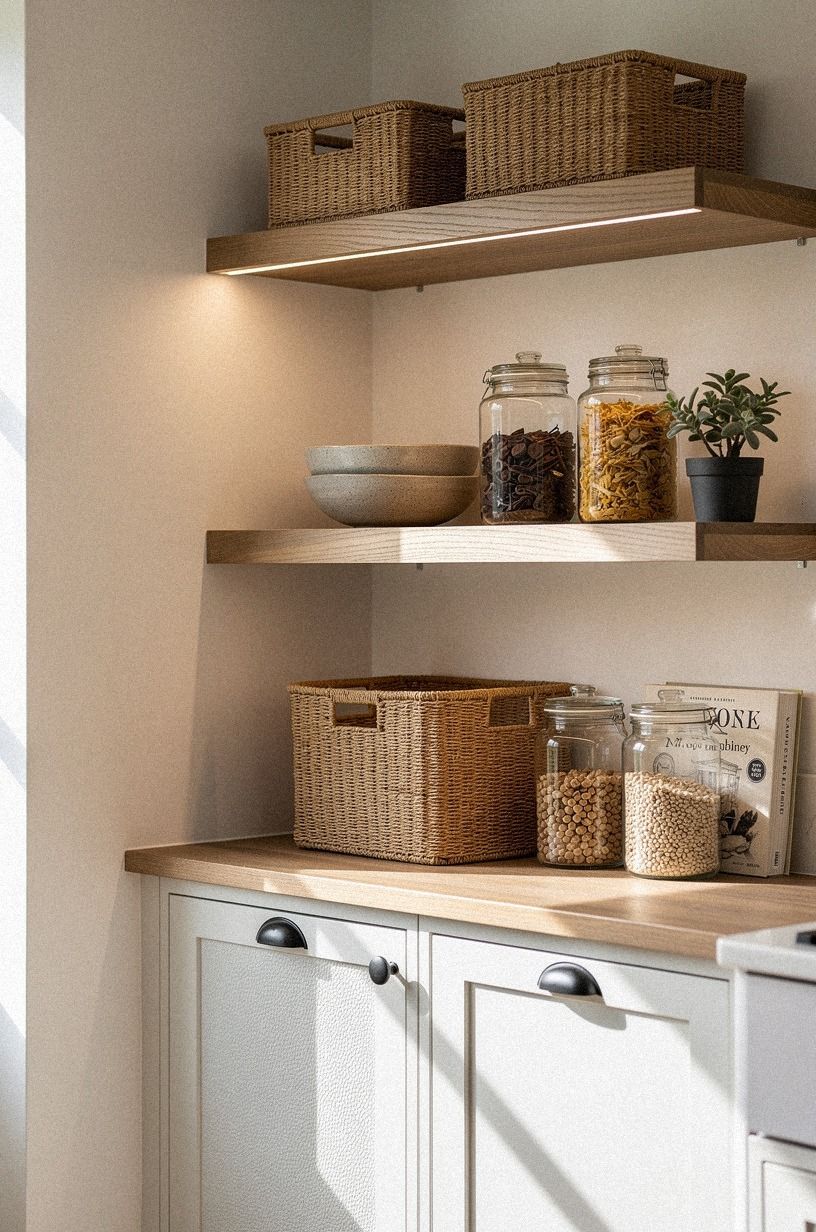
Group the baskets you already use inside kitchen cabinets and move them onto the shelf as a matched team.
9Frame the sink window with slim shelves
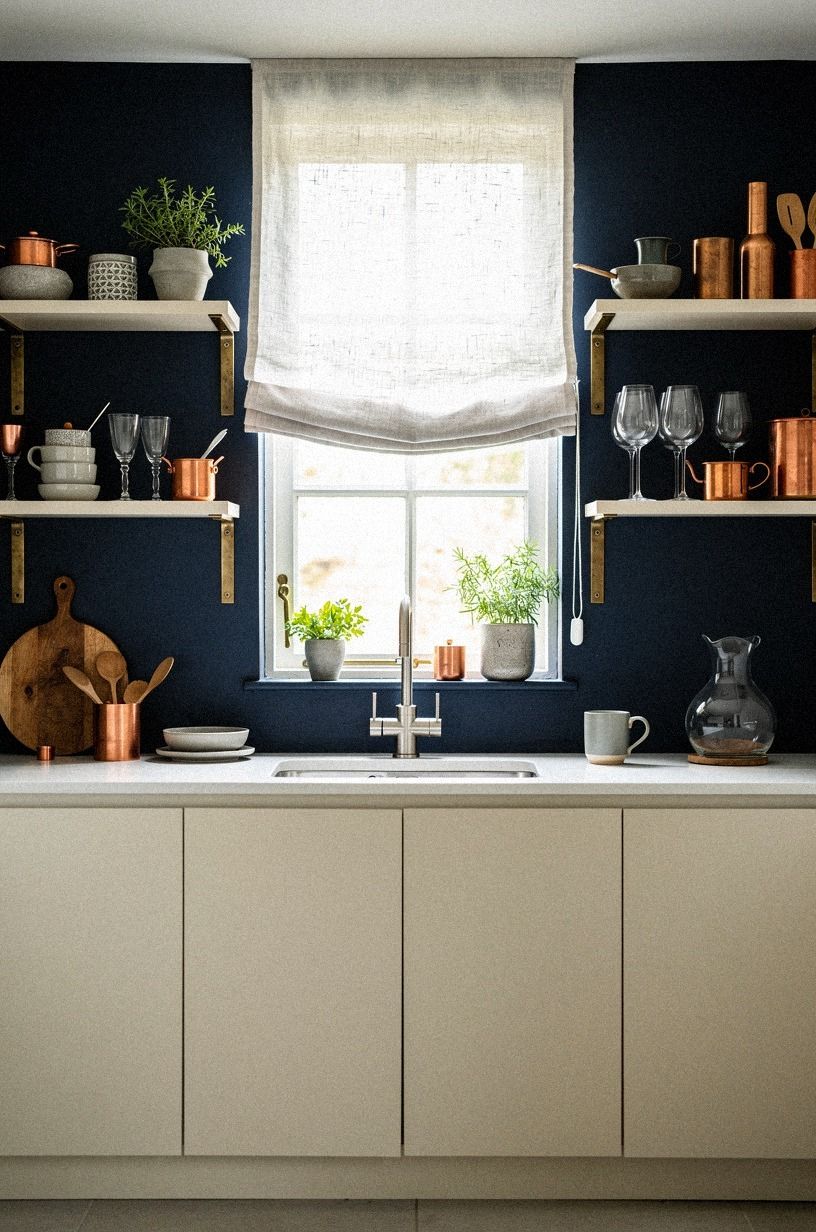
Frame the window with slim shelves only if the view deserves a softer edge, not a blocked one. Around a centered sink, narrow ledges let you keep soap, a glass, and a tiny stack of bowls nearby while the light still owns the wall. Ivory painted lowers and a bright window can carry that balance easily, especially with a calm Carrara marble counter to anchor it.
This is one place where thinner is better. I wouldn't choose a chunky board here unless the room is very rustic, because bulky shelves can make the whole sink wall feel top-heavy from a low angle. You want daylight, faucet, shelf, then sky.
In that order. The whole point is to keep the view breathable and the eye moving.
A little repetition helps. One brass cup on each side. One small plant if you can keep it alive.
One folded cloth in Turkish cotton. That's enough.
Your sink zone should rinse clean visually before it rinses clean physically. For another reminder that support and spacing matter more than bulk, I keep coming back to why do i drool when i sleep.
The same calm rhythm applies in every room you live in.
10Stack cutting boards behind white bowls
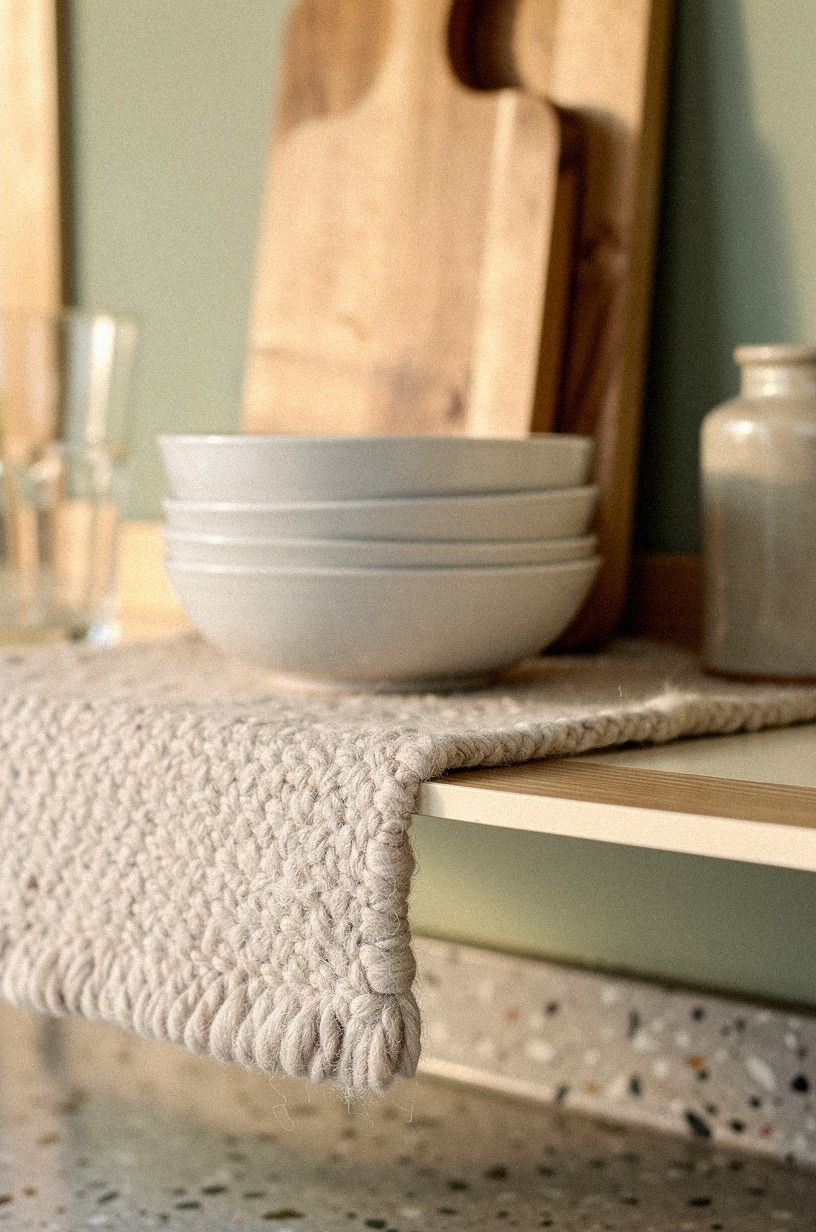
Stack the cutting boards behind the bowls so the shelf gets height without looking staged.
11Add closed cabinets below open shelving
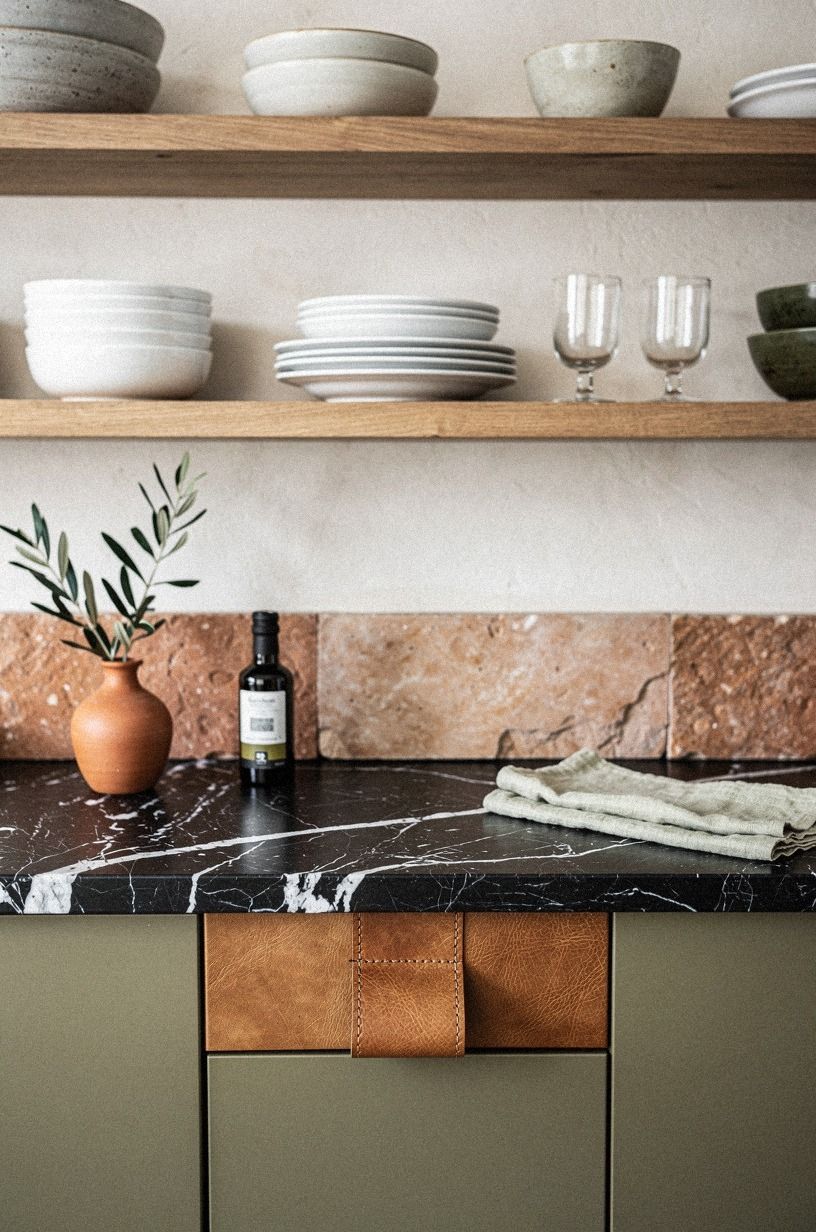
Add closed cabinets below open shelving if you want the wall open but your life hidden. That is the combination I trust most, because the lowers swallow bulk and the shelf carries the pretty daily layer. Over a dark Nero Marquina counter with white veining, the contrast looks rich and still highly usable, the kind of mix that photographs like a magazine but cleans like a normal kitchen.
This is also the moment to be honest about budget. Open shelves can be the cosmetic end of a kitchen refresh, and the numbers matter more than trends do. If you're only changing paint, hardware, and backsplash, you're in the lighter range.
If you're redoing fronts, lighting, and tops, the math climbs fast.
I think this split is worth respecting because open shelving isn't the expensive part, the rest of the kitchen is. If you want another blunt reminder that visible wear changes how something feels over time, when to stop using old mattress is built on the same truth.
The shelf is decoration. The bones are the budget.
12Repeat cabinet hardware on shelf brackets
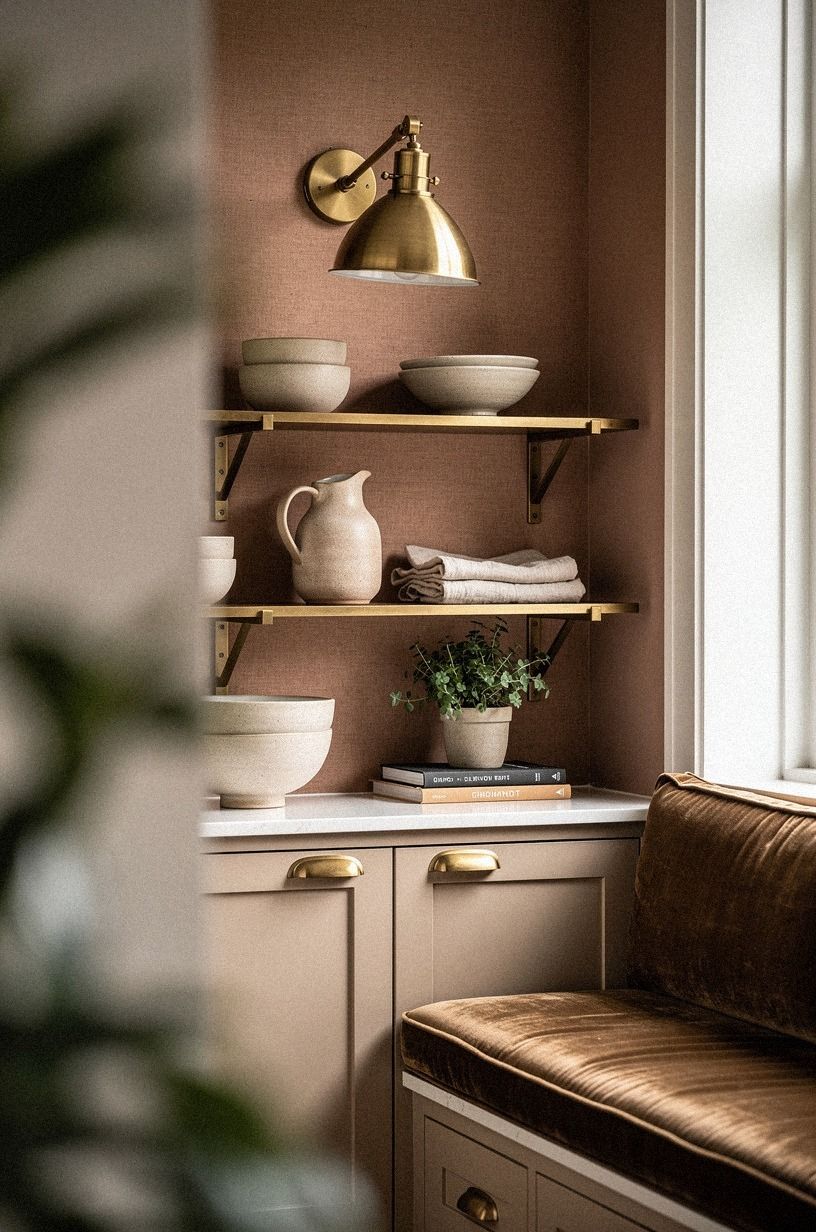
Repeat the cabinet hardware finish on the brackets and the whole kitchen looks calmer right away.
13Style one shelf with cookbooks and crocks
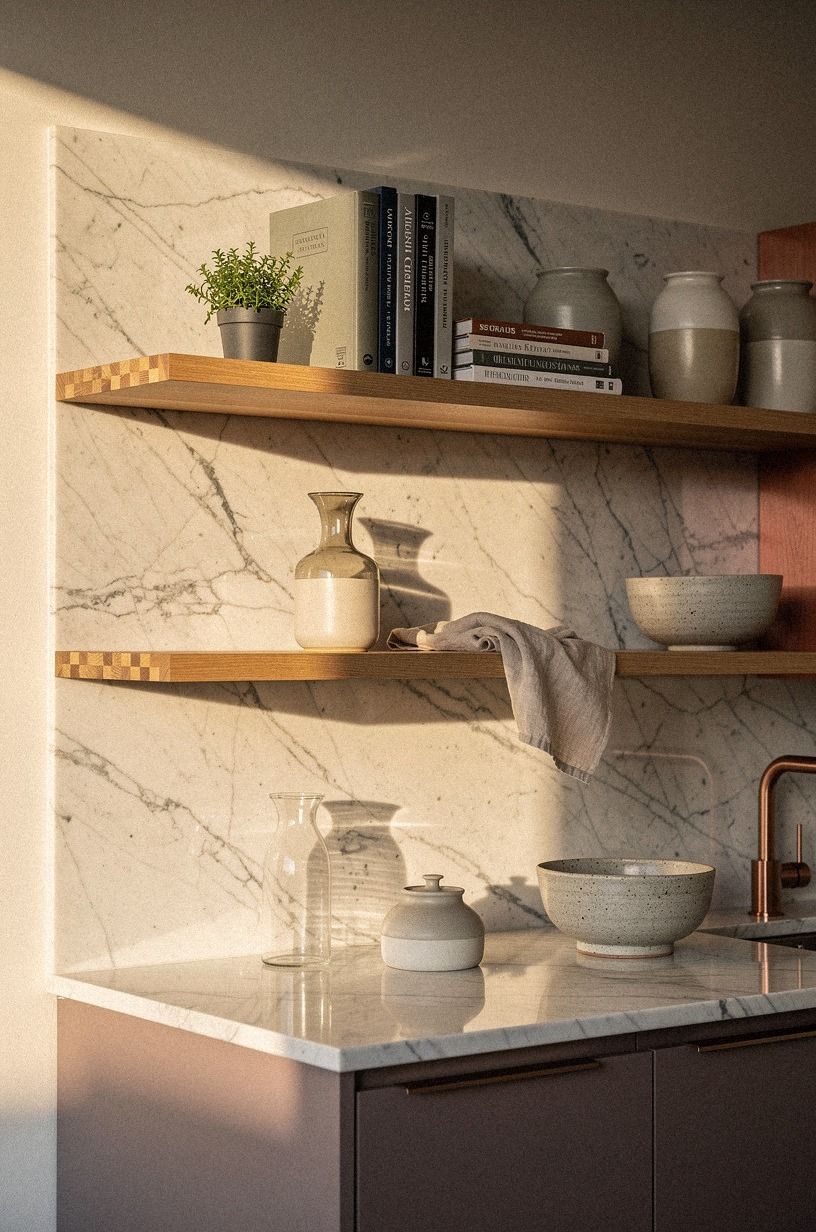
Style one shelf, just one, with cookbooks and crocks so the kitchen keeps some biography. The shelf should tell you who cooks there without turning into a library annex.
On a wall with Carrara marble, a few linen-spined books and a stoneware crock feel softer than rows of jars from edge to edge. One shelf, well styled, beats five shelves of filler.
Go for books you truly use, not color-coded spines bought for filler. I keep the greasy favorites close because that wear is part of the charm.
But I skip giant art books in the kitchen, since they swallow the shelf and make everyday bowls look accidental instead of invited. The shelf is for cooking, not for design school.
A crock is great when it earns its footprint. Wooden spoons.
A whisk. Maybe kitchen scissors. That's enough.
You don't need twelve tools visible to prove you cook. If you like the idea of useful things aging into character, when replace mattress 2026 makes the same argument from the comfort side. Worn and loved beats new and unused every time.
14Leave breathing room between shelf clusters
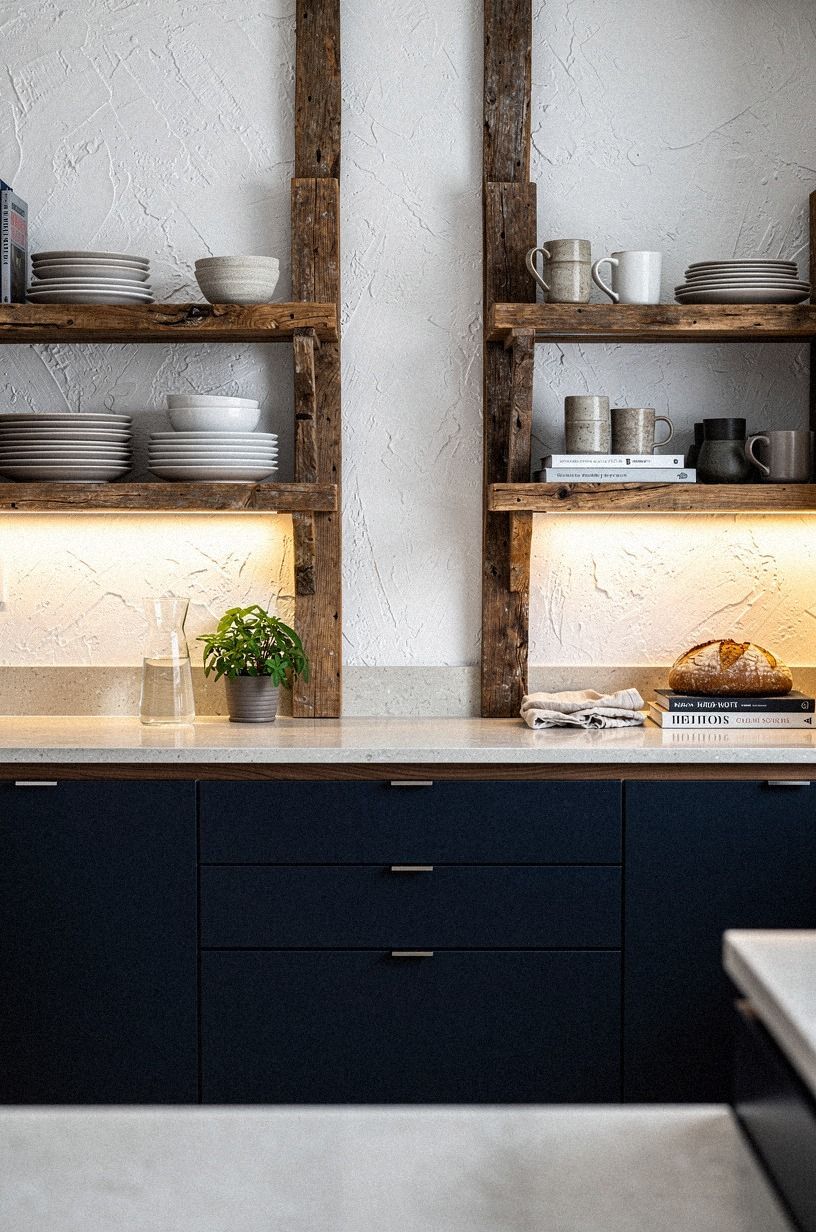
Leave space between clusters and the whole kitchen exhales.
15Could IKEA KALLAX cubes replace your uppers in a rental?
Yes, and this is the move I'd quietly recommend for renters. A short run of IKEA KALLAX birch-effect cubes, mounted at standard upper-cabinet height with a slim white oak cap on top, gives you 80% of the open-shelf look with zero drilling into plaster walls.
You get the airy feel, the daily display, and the bracket stays removable when you move out. It's the dream renter setup!
The catch is depth. KALLAX runs deep at about 15 in, so you'll lose the back row unless you face everything forward.
I'd use the front row for the everyday dishes and the back row for one tidy stack of bowls in a single color family. Benjamin Moore White Dove OC-17 on the wall behind reads quietly through the grid.
For a similar "keep the bones, swap the look" logic that translates across rooms, when to replace your pillow makes the same point. Small, intentional swaps beat full renovations, especially when reversibility matters.
16Why does a brass rail quietly outperform every other hook?
Because warm metal forgives a busy kitchen in a way chrome never does. A simple aged brass rail under the lowest shelf softens the wall, ties the shelf to the brass hardware below, and lets you hang a damp Turkish cotton towel without the whole setup looking like a utility closet. It's the one finish I'd never skip.
A wooden hook bar is quieter, but it stains if you hang anything damp. A matte black bar feels modern, but it fights warm oak and cream walls.
Aged brass is the one finish that gets better as it patinas, so the rail actually rewards you for using the kitchen. Six months in, the brass will look like a piece of the room, not an accessory you added.
For a similar case study in materials that reward daily use, best mattress for back pain reads the same way. The right material, chosen once and used hard, beats the prettier option that breaks down. Brass is the mattress of kitchen metals.
Why open shelving works best when you edit harder than you shop
Open shelving is having a bigger moment now because people are tired of kitchens that feel sealed off and overfinished. You can feel it in the materials. More oak with visible grain.
More limewash. More painted cabinets that look touched by a hand instead of sprayed into anonymity.
But the version worth copying is not the version where every bowl you own goes on display. It's the version where the shelf shows what your day really looks like.
That's the entire difference between a kitchen that feels warm and one that feels staged.
I've made both mistakes. First I tried the sparse designer version, where the shelf looked nice and did almost nothing. Then I swung too far the other way and loaded it with every pretty dish I had, which meant I was dusting more and cooking less.
The middle is where it gets good. You keep the things you reach for in plain view, you let heavier storage stay below, and you stop asking the wall to prove how much taste you have.
The shelf isn't a gallery. It's a pantry with a view.
But I don't think open shelves should replace every upper cabinet in most homes. If you have a family kitchen, backup storage matters. If you rent, flexibility matters.
If you cook hard, wipe-down ease matters. A shelf can warm the room, yes, but it shouldn't turn normal life into a maintenance hobby. I'd rather see one honest shelf loaded with daily plates and a good crock than four perfect shelves no one wants to touch.
The honest shelf is the only one that actually earns its place on the wall.
The payoff is less about style than about rhythm. You wake up, reach for the mug, grab the bowl, wipe the counter, put everything back without opening and closing six doors.
That's what people mean when they say a kitchen feels lighter. It isn't magic.
It's access. And once you've lived with a shelf that truly fits your routine, you start noticing how many closed kitchens hide the best parts of daily life instead of supporting them.
The Questions Worth Answering First
What is the best Open Shelving Kitchen Ideas (When to Skip Upper Cabinets) for a small kitchen?
The best move in a small kitchen is one narrow dish shelf plus slim shelves around the sink window. Visible daily storage keeps the room lighter than full uppers, and an IKEA KALLAX birch-effect cube run or a slim CB2 Primitivo bouclé-toned shelf won't overwhelm the wall if you keep the grouping tight.
Where can I buy Open Shelving Kitchen Ideas (When to Skip Upper Cabinets) pieces on a budget?
Start with IKEA, Target Threshold, and basic Wayfair shelf hardware, then check Facebook Marketplace for solid wood boards or crocks. Lower-cost layering usually comes from mixing one new item with one secondhand piece, not buying a whole shelf story in one trip. If you like replace-it-when-it-counts logic, when to replace your mattress follows the same mindset.
How much does a Open Shelving Kitchen Ideas (When to Skip Upper Cabinets) makeover cost?
A light open-shelving refresh usually lands around $300 to $1,500, while a fuller kitchen refresh can reach $3,000 to $12,000. Budget control comes from keeping your cabinets, changing the visible wall, and saving the big money for counters or appliances only if you truly need them.
Can I create a Open Shelving Kitchen Ideas (When to Skip Upper Cabinets) on a budget?
Yes, and you can do a lot with paint, bracket swaps, and a single open run. Low-cost change looks like reusing your dishes, moving baskets from inside kitchen cabinets onto one shelf, and painting lowers in Benjamin Moore White Dove OC-17 before you buy anything major.
Is a Open Shelving Kitchen Ideas (When to Skip Upper Cabinets) worth it in a small space?
Yes, open shelving is worth it in a small kitchen when your storage below is strong and your shelf plan is narrow. Better sightlines make the room feel less boxed in, especially if you keep shelf clusters short and leave daylight open around the sink window. The same support-first logic appears in why arms numb when sleep.
Is Open Shelving Kitchen Ideas (When to Skip Upper Cabinets) a good idea for a rental?
Yes, if you keep the changes reversible. Rental-friendly warmth looks like removable brackets where allowed, peel-and-stick backsplash, baskets on existing shelves, and styling moves that lift the room without tearing out storage. I would keep one closed cabinet bank no matter what, especially if turnover is part of your plan.
Where I'd Start First
If I had to pick one step, I'd start with the everyday dish shelf. You feel that upgrade every morning, and a bad version shows itself fast, which saves you from removing more upper cabinets than your routine can support. Pin that move first and live with it a week.