
 by
by Disclosure: MattressNut earns a commission from affiliate links on this page at no extra cost to you. We only recommend products we have independently researched. Full disclosure.
Pain Between Shoulder Blades from Sleep 2026: Causes & Mattress Fix
- Poor mattress support (especially sagging beds 8+ years old) is the leading sleep-related cause of upper-back pain between the shoulder blades.
- Side sleepers using a pillow that is too thick force their cervical spine into lateral flexion, loading the rhomboid and trapezius muscles through the night.
- Stomach sleeping creates sustained cervical rotation that propagates strain to the inter-scapular region — the worst position for this pain pattern.
- A medium-firm mattress (5–6.5 on a 10-point scale) reduces inter-scapular pressure for most adult weight ranges compared to soft or very firm surfaces.
- Most sleep-related inter-scapular pain resolves within 2–4 weeks after correcting mattress support, pillow height, and sleeping position.
Quick Verdict
If you wake up with aching or stiffness between your shoulder blades that loosens within 30–60 minutes of getting out of bed, the evidence points strongly toward a sleep-surface or posture problem rather than a structural spinal condition. The inter-scapular region — the zone bounded by the medial borders of both scapulae, roughly between T2 and T7 — is mechanically vulnerable during recumbent sleep because the thoracic spine has limited natural curve compared to the lumbar or cervical spine. When a mattress fails to provide adequate zoned support, or when pillow height throws cervical alignment off axis, the muscles that anchor and retract the scapulae must work isometrically through hours of reduced-movement sleep. The result is cumulative muscular fatigue that presents as dull ache, stiffness, or sharp pain on waking.
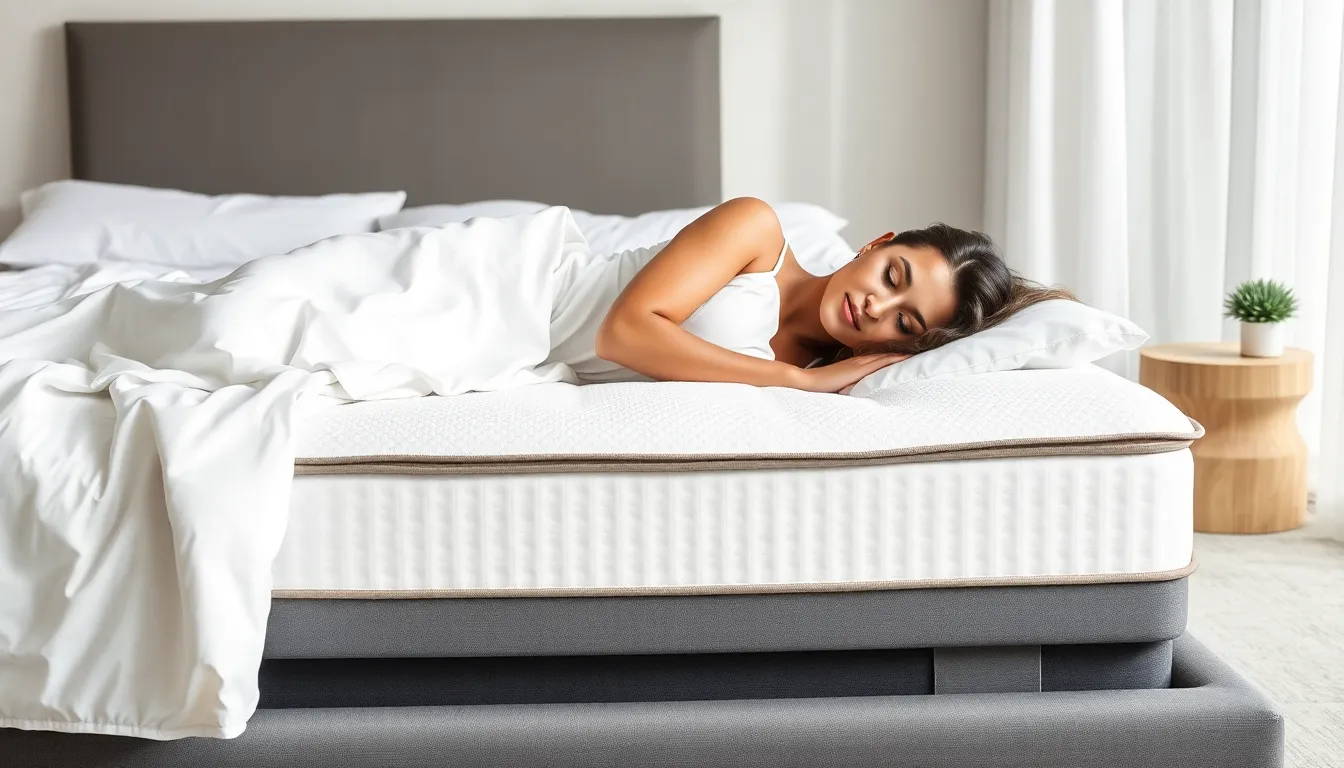
The Saatva Classic in Luxury Firm delivers the support profile most aligned with resolving this pattern: a dual steel coil system (individually wrapped 4-inch coils over an 8-inch tempered base layer), a lumbar zone enhancement, and a Euro pillow top that buffers shoulder pressure without allowing excessive sinkage. It is the mattress we recommend first for adults experiencing sleep-related inter-scapular pain.
Anatomy: Rhomboids, Trapezius, and Why Sleep Loads Them
The pain between the shoulder blades almost always originates in one of three muscle groups or their associated fascial attachments. Understanding the anatomy helps clarify why sleep position and surface matter so much.
Rhomboid Major and Minor
The rhomboids originate on the spinous processes of C7–T5 and insert on the medial border of the scapula. Their primary action is scapular retraction and downward rotation. During side-sleeping on a mattress that is too soft, the scapula on the lower side is pushed into protraction by the shoulder sinking into the surface. The rhomboid on that side must maintain eccentric tension for hours — a loading pattern that produces localized ischemic fatigue. The American Osteopathic Association (AOA) identifies rhomboid strain as one of the most common presentations of upper-back musculoskeletal complaints in adults under 60.
Trapezius (Middle Fibers)
The middle trapezius runs from T1–T5 spinous processes to the spine of the scapula. It works synergistically with the rhomboids to stabilize the scapula during arm movements. When cervical alignment is disrupted by an ill-fitting pillow — forcing the head too high or too low — the trapezius must compensate by altering scapular tilt, generating sustained muscular tension throughout the night.
Thoracic Erector Spinae
The iliocostalis and longissimus thoracis portions of the erector spinae run lateral to the spinous processes through the thoracic region. On a sagging mattress that creates a hammock shape, the thoracic spine is pulled into slight flexion beyond its natural kyphotic curve, stretching these muscles under load for 6–9 hours. Research published in the European Journal of Physical and Rehabilitation Medicine found that sleeping surface firmness significantly influences spinal muscle activity during the night — stiffer, well-supported surfaces correlated with lower paraspinal EMG activity in healthy adults.
Why the Inter-Scapular Zone Is Especially Vulnerable
Unlike the lumbar spine, which has substantial natural lordosis and multiple well-studied mattress pressure studies (NIH PubMed records over 40 peer-reviewed studies on lumbar mattress interaction), the thoracic region is relatively rigid. This rigidity means the surrounding soft tissue — rather than the spine itself — absorbs most of the compensatory loading from a poor sleep surface. The thoracic facet joints are also oriented to resist rotation, so any torsional stress from stomach sleeping is transmitted directly into the paraspinal and inter-scapular musculature.
Top 5 Sleep-Related Causes of Inter-Scapular Pain
1. Sagging or Worn-Out Mattress
A mattress that has exceeded its serviceable life — typically 7–10 years for innerspring, 8–12 years for quality foam — develops body impressions of 1 inch or greater in the main sleep zone. The Consumer Product Safety Commission does not set a mandatory replacement timeline, but the National Sleep Foundation recommends evaluation at 7 years. An impression of even 0.75 inches is sufficient to push the thoracic spine into a sustained non-neutral curve. If you press your hand flat across your mattress surface and feel a dip where you sleep, the mattress is a likely contributor.
Testing for sag: lay a broom handle or straight edge across the sleep zone. Any gap between the handle and the mattress surface greater than 1 inch in the torso region is diagnostic of functional sag, even if the mattress does not look visually deformed.
2. Stomach Sleeping
Stomach (prone) sleeping requires the cervical spine to be rotated 60–90 degrees to one side for the entire sleep duration. This rotation — particularly pronounced when combined with a high pillow — creates a mechanical torque that loads the ipsilateral rhomboid and contralateral levator scapulae. Over multiple consecutive nights, the accumulated strain typically presents as inter-scapular pain that is worse on one side. The Mayo Clinic describes prone sleeping as the most mechanically stressful common sleep position for the neck and upper back.
3. Pillow Height Mismatch (Side Sleepers)
Side sleepers need a pillow thick enough to fill the gap between the ear and the mattress surface — typically 4–6 inches depending on shoulder width and mattress softness. A pillow that is too thick pushes the head into lateral flexion toward the pillow side, shortening the trapezius and scalenes on one side while stretching the contralateral inter-scapular muscles. A pillow that is too thin drops the head down, creating the reverse loading pattern. Both generate sustained inter-scapular tension.
Shoulder width is the key variable: broader-shouldered individuals (typically males) need a taller pillow when side-sleeping because the shoulder creates a larger gap between the head and mattress. This is why a single "universal" pillow often fails for inter-scapular pain resolution.
4. Mattress Too Soft for Body Weight
A very soft mattress — below ILD 14 for foam, or an innerspring with a coil gauge above 15 — allows the hips and shoulders to sink significantly, creating a lateral spinal curve in the thoracic region during side sleeping. The heavier the sleeper, the more pronounced this sinkage. For adults over 230 lbs, most consumer-grade "plush" or "ultra-plush" mattresses generate spinal misalignment in the thoracic zone by simply lacking the load-bearing capacity to maintain neutral alignment.
5. No Pillow Between Knees (Side Sleepers)
This is frequently overlooked in upper-back pain discussions, but pelvic alignment during side sleeping directly influences thoracic loading. Without a pillow between the knees, the top hip drops forward into internal rotation, creating a torsional stress that propagates up the thoracic spine via the thoracolumbar fascia. Adding a standard pillow between the knees (or a dedicated body pillow) neutralizes this rotational component and often reduces inter-scapular symptoms even before changing the mattress.
Best Sleep Positions for Upper-Back Pain
Side Sleeping: Preferred, With Modifications
Side sleeping is generally the most spine-neutral position for inter-scapular pain when executed correctly. The key modifications:
- Pillow between the knees: Maintains pelvic neutrality and reduces thoracolumbar torsion. Use a standard pillow folded once, or a purpose-made knee pillow (3–5 inch loft).
- Shoulder-appropriate pillow height: The head should rest level, neither dropped nor elevated. If you cannot find a comfortable position, the pillow is the wrong loft for your shoulder width.
- Arm position: Avoid tucking the lower arm under the pillow or body — this loads the anterior shoulder and rotator cuff, which reflexively increases rhomboid tension. Keep the lower arm extended forward or resting alongside the torso.
- Left-side preference: For individuals with gastroesophageal reflux, left-side sleeping reduces reflux episodes that can cause referred inter-scapular discomfort (a common mimicker of musculoskeletal pain).
Back Sleeping: Effective for Many, Requires Lumbar Support
Supine (back) sleeping distributes body weight across the entire posterior surface, minimizing point pressure on any single muscle group. For inter-scapular pain specifically, back sleeping eliminates the lateral flexion and torsion loading that side sleeping can create when poorly executed. The critical requirement is that the mattress supports the lumbar region without allowing the lower back to sag — a well-supported lumbar zone prevents compensatory thoracic flattening. Using a thin pillow or no pillow can help for back sleepers with inter-scapular pain, since a thick pillow pushes the cervicothoracic junction into flexion.
Stomach Sleeping: Avoid if Possible
If you are a habitual stomach sleeper, transitioning away from this position is the single highest-impact behavioral change for inter-scapular pain. The cervical rotation required makes prolonged prone sleeping biomechanically incompatible with pain-free upper backs for most adults. Practical transition strategies include placing a body pillow on one side of your body (reducing the "roll space" available for prone positioning) and starting each night deliberately on your side.
Mattress Firmness That Helps Inter-Scapular Pain
The firmness science for inter-scapular pain mirrors the broader back-pain mattress literature, which is anchored by a well-cited 2003 study in The Lancet showing medium-firm mattresses produced significantly better pain and disability outcomes than firm mattresses over 90 days. A 2015 systematic review in Sleep Medicine Reviews reinforced this, finding medium-firm surfaces correlated with lower overnight muscle activity in the paraspinal region across multiple body weight ranges.
By Sleeping Position
| Position | Recommended Firmness | Reason |
|---|---|---|
| Side sleeper <130 lbs | Medium (5–6 / 10) | Needs shoulder relief without excess sinkage |
| Side sleeper 130–230 lbs | Medium Firm (5.5–6.5 / 10) | Balance of pressure relief and support |
| Side sleeper >230 lbs | Firm (7–8 / 10) | Extra weight compresses soft layers; needs firmer base |
| Back sleeper <230 lbs | Medium Firm (6–6.5 / 10) | Supports lumbar while allowing natural thoracic curve |
| Back sleeper >230 lbs | Firm (7+ / 10) | Prevents hip sinkage that curves thoracic spine |
| Combination sleeper | Medium Firm (6 / 10) | Compromise that works across positions |
Coil vs. Foam for Upper Back
For inter-scapular pain specifically, individually wrapped (pocketed) coil systems have a functional advantage over all-foam beds: they provide zoned resistance without the "quicksand" feel of dense foam that can trap the shoulder on the lower side during side sleeping. Coils also dissipate body heat more efficiently, reducing overnight thermal discomfort that causes position-shifting and secondary muscle fatigue. All-foam beds — including high-quality memory foam — can work well for back sleepers, but side sleepers with inter-scapular pain often report better outcomes on hybrid or innerspring surfaces.
Saatva Models Matched to Upper-Back Pain
| Model | Firmness Options | Support Layer | Lumbar Pad | Queen Price | Best For |
|---|---|---|---|---|---|
| Saatva Classic | Plush Soft / Luxury Firm / Firm | Dual-coil (4" pocketed + 8" tempered base) | Yes (center-third reinforcement) | $1,295 | Side + back sleepers, 130–250 lbs |
| Loom & Leaf | Relaxed Firm / Firm | 5 lb density memory foam + spinal zone gel | Yes (spinal zone gel pad) | $1,795 | Back sleepers who prefer foam feel |
| Saatva Rx | Medium (one option) | Micro-coil comfort + zoned support base | Yes (medical-grade lumbar pad) | $3,295 | Chronic upper-back pain, physician-recommended support |
Saatva Classic — Primary Recommendation
The Saatva Classic is the only consumer mattress in its price class to combine a dual-coil architecture with a dedicated lumbar zone reinforcement pad. The dual-coil system — 884 pocketed comfort coils over 416 tempered steel base coils in a queen — creates a support profile that is consistent across the entire surface. The Euro pillow top (1.25 inches) provides enough cushioning for side sleepers to relieve direct shoulder pressure without allowing meaningful sinkage of the thoracic region.
The Luxury Firm option (rated 5–7/10 depending on body weight) is the correct choice for most adults with inter-scapular pain. The Plush Soft variant allows too much thoracic sinkage for most adults over 150 lbs; the Firm variant may create excessive pressure on the posterior shoulder for dedicated side sleepers under 180 lbs.
Check Saatva Classic Price + Current Sale →
Loom & Leaf — For Back Sleepers Who Prefer Foam
The Loom & Leaf uses 5 lb per cubic foot high-density memory foam — a density reserved for premium therapeutic applications. The spinal zone gel pad embedded in the comfort layer provides targeted firmness reinforcement along the spine's centerline, which translates directly to thoracic spinal support for back sleepers. At 13 inches total height, the support core is substantial. This mattress works best for back sleepers and lighter-weight combination sleepers (under 180 lbs); heavier side sleepers may find it generates too much shoulder pressure compared to the Classic's coil-based pressure relief.
Saatva Rx — Medical-Grade Option for Chronic Pain
The Saatva Rx is positioned as a doctor-recommended option for individuals with diagnosed back or spinal conditions. It uses a micro-coil comfort system over a reinforced support base, with a medical-grade lumbar pad that provides more aggressive zoned support than either the Classic or Loom & Leaf. At $3,295 for a queen, it is a significant investment. For individuals with structural thoracic conditions (kyphosis, Scheuermann's disease, T-spine arthritis) contributing to inter-scapular pain, the Rx's enhanced support profile justifies the price premium. For garden-variety muscular inter-scapular pain from sleep posture, the Classic usually suffices.
Pillow and Cervical Alignment
Pillow choice has an outsized effect on inter-scapular pain that is frequently underestimated. A 2014 study in the Journal of Pain Research found that pillow intervention alone reduced neck and shoulder pain scores by 40% in a cohort of side-sleeping adults over 8 weeks — without any mattress change. The key variables are loft (height), fill material, and cervical neutral maintenance throughout the night.
Loft Guidelines by Position and Shoulder Width
- Side sleeper, narrow shoulders (<17 inches): 3–4 inch compressed loft
- Side sleeper, average shoulders (17–20 inches): 4–5 inch compressed loft
- Side sleeper, broad shoulders (>20 inches): 5–6 inch compressed loft
- Back sleeper: 2–3 inch compressed loft (thin pillow keeps cervicothoracic junction neutral)
- Stomach sleeper transitioning away from prone: Very thin pillow or no pillow to reduce cervical extension loading
The Saatva Latex Pillow
The Saatva Latex Pillow uses shredded natural Talalay latex fill with an organic cotton cover. Talalay latex has a faster response time than memory foam — it does not retain the impression of previous positions, which means it returns to neutral loft every time you change position during the night. For inter-scapular pain specifically, this responsiveness matters because partial position changes (shoulder rolls, arm repositioning) throughout the night do not result in accumulated pillow compression. The pillow is adjustable via fill removal, allowing personalization of loft to match shoulder width. The Saatva Latex Pillow retails at approximately $165 queen-size.
Pillow Between the Knees
As noted above in the sleep positions section, a knee pillow is the most underutilized inter-scapular pain intervention. A standard pillow folded in half works adequately. Dedicated knee pillows with contoured shapes maintain position better through the night. The target is approximately 4–6 inches of separation between the knees at the medial femoral condyle — enough to bring the pelvis into neutral without over-abducting the hips.
Cervical Pillow vs. Standard Pillow
Cervical-contour pillows (with raised edges and a central depression) are designed for back sleepers and show reasonable evidence for neck pain reduction. For inter-scapular pain in side sleepers, standard adjustable-loft pillows generally outperform cervical-contour designs, because the side-sleeping geometry does not match the contour's intended orientation. Back sleepers with inter-scapular pain who have a concurrent neck component may benefit from the cervical design.
When to See a Doctor: Red Flags
Medical disclaimer: The information on this page is educational and is not a substitute for professional medical advice, diagnosis, or treatment. Consult a licensed physician if your pain is severe, worsening, or accompanied by any of the symptoms below.
Most inter-scapular pain that is clearly morning-dominant and improves within an hour of waking is mechanical and sleep-related. The following signs indicate a different etiology that requires medical evaluation:
- Pain constant through the day and night — does not improve after rising; may indicate inflammatory spinal arthritis (ankylosing spondylitis) or visceral referred pain.
- Pain radiating around the chest or into one arm — could indicate a thoracic disc herniation with nerve root compression, or (urgently) aortic or cardiac referral. Seek immediate evaluation if accompanied by shortness of breath, sweating, or jaw pain.
- Fever, chills, or unexplained weight loss — systemic symptoms alongside back pain require exclusion of infectious or neoplastic causes.
- Neurological symptoms — numbness, tingling, or weakness in the hands, arms, or lower extremities suggests cord or nerve root involvement and requires imaging.
- History of cancer — thoracic back pain in a patient with known malignancy is metastatic disease until proven otherwise.
- Trauma — any significant mechanism of injury (fall, motor vehicle accident) preceding the onset of inter-scapular pain warrants radiological evaluation.
- No improvement after 4–6 weeks of conservative management (mattress correction, position change, NSAIDs) — physical therapy evaluation is appropriate.
The National Institute of Neurological Disorders and Stroke (NINDS) classifies back pain lasting more than 12 weeks as chronic back pain, which typically benefits from multimodal management including physical therapy, pharmacological options, and in some cases interventional procedures.
Verdict
Sleep-related inter-scapular pain is one of the more tractable musculoskeletal complaints when the root cause is correctly identified. The evidence-based hierarchy of interventions is: (1) eliminate stomach sleeping; (2) assess mattress for sag and age; (3) optimize pillow loft for shoulder width; (4) add a knee pillow for side-sleeping alignment. A mattress upgrade addresses multiple variables simultaneously — surface sag, firmness calibration, and pressure distribution — which is why it often produces the most dramatic symptom improvement of any single intervention.
The Saatva Classic in Luxury Firm remains our primary recommendation for adults with inter-scapular sleep pain across most body weights and preferred sleep positions. Its dual-coil architecture, dedicated lumbar zone reinforcement, and Euro pillow top create the support-pressure balance that most directly addresses the mechanical causes of rhomboid and trapezius fatigue during sleep. The 365-night trial provides sufficient time to assess symptom response — most individuals with sleep-related inter-scapular pain notice measurable improvement within 3–4 weeks on a properly supportive surface.
Related Mattress Nut guides
FAQ
What morning stretches help pain between the shoulder blades?
Three stretches are particularly effective for inter-scapular morning stiffness: (1) Cross-body shoulder stretch — pull one arm across the chest, hold 30 seconds each side; this lengthens the posterior capsule and rhomboids. (2) Thoracic extension over a rolled towel — place a tightly rolled bath towel across the bed at thoracic level (approximately bra-strap height), lie back over it, and allow gentle extension for 1–2 minutes; this reverses the flexion loading of sleep. (3) Cat-cow — on hands and knees, alternate thoracic flexion and extension through 10 repetitions. Perform these before getting out of bed if possible — while the muscles are still warm from overnight temperature.
Will a mattress topper fix inter-scapular pain?
A mattress topper addresses surface comfort but not structural sag. If your mattress is sagging (body impressions exceeding 1 inch), a topper placed over the depression merely conforms to the same dip. Toppers are effective for mattresses that are functionally sound but slightly too firm — adding 2–3 inches of medium-density foam or latex can reduce shoulder pressure adequately. The Saatva Latex Topper (natural Talalay, 1.5 inches, queen $345) is a reasonable trial if your mattress is less than 6 years old and not visually sagging.
Is it better to sleep on your side or back for inter-scapular pain?
Both positions can work well with proper support. Back sleeping distributes weight more evenly and eliminates lateral spinal loading; it is often preferred by physical therapists for acute inter-scapular pain flares. Side sleeping is the most common position and is sustainable long-term when executed with proper pillow height and a knee pillow. The key is eliminating stomach sleeping, which is mechanically incompatible with pain-free upper backs in most adults. If both back and side sleeping are uncomfortable, a mattress evaluation is warranted — proper pain-free positioning should be achievable on a correctly supportive surface.
What is the optimal pillow height for shoulder blade pain?
For side sleepers, the optimal compressed pillow loft equals the distance from the outer shoulder (acromion process) to the side of the neck — typically 4–6 inches depending on shoulder width. A practical field test: lie on your side on your mattress and have someone check whether your head is level (parallel to the mattress). If your head drops down, the pillow is too thin. If your head tilts up, the pillow is too thick. This level-head test should be performed on your actual mattress, not on a showroom bed, since mattress softness affects how much the shoulder sinks and thus the gap that needs to be filled.
When should I see a doctor for pain between my shoulder blades?
Seek same-day evaluation for inter-scapular pain accompanied by chest tightness, arm pain, shortness of breath, sweating, or nausea — these combinations can indicate cardiac or aortic pathology. For non-urgent presentations, schedule a physician visit if: pain is present throughout the day and night without morning dominance; pain has not improved after 4–6 weeks of conservative management; neurological symptoms (numbness, tingling, weakness) are present; or you have a history of cancer, osteoporosis, or recent trauma. A GP or physiatrist can order targeted imaging (thoracic spine X-ray, MRI) if structural pathology is suspected.
What is Saatva's return policy if the mattress does not relieve my pain?
Saatva offers a 365-night home trial on all mattresses. Returns initiated after a mandatory 30-night break-in period result in a full refund minus a $99 processing fee. Saatva sends a team to collect the mattress — you do not need to arrange shipping. For inter-scapular pain specifically, most individuals notice meaningful improvement within 3–4 weeks on the correct mattress; the full 365-day window provides substantial time to assess therapeutic benefit. If the pain does not improve within 8–10 weeks and other causes have been ruled out, the mattress may not be the primary driver, and medical evaluation is appropriate regardless.