
 by
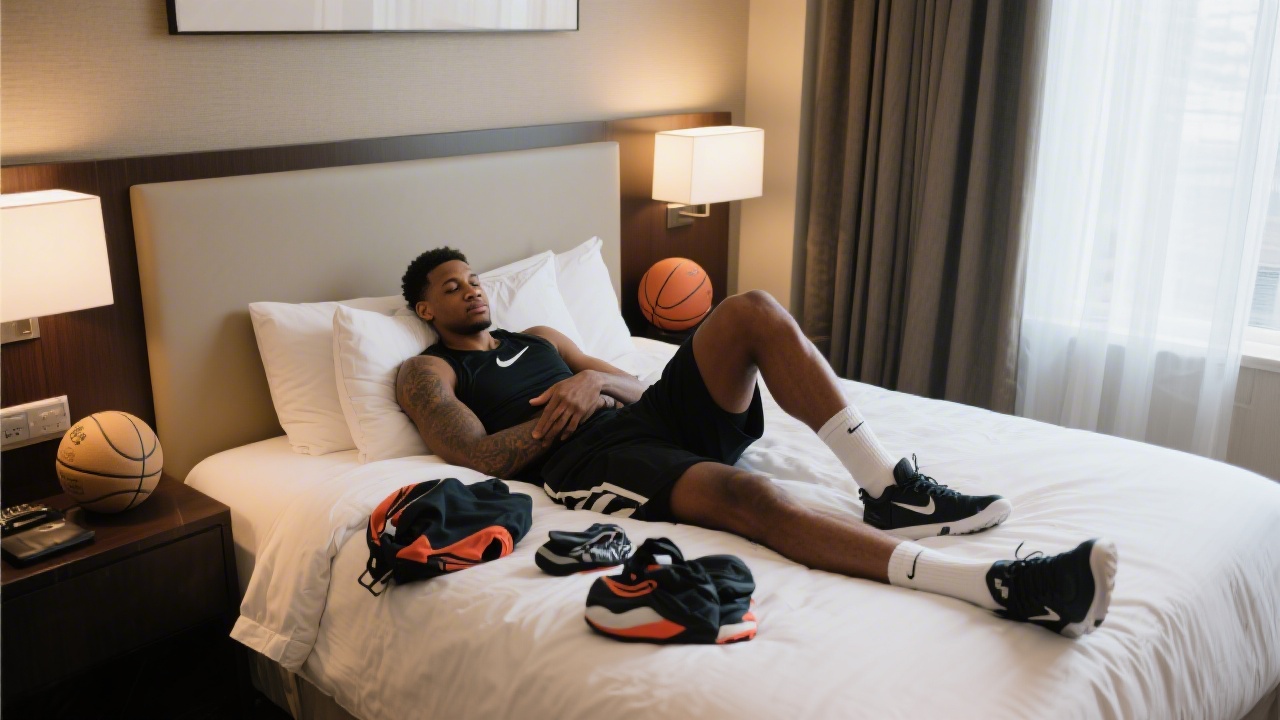
by In 2019, the Golden State Warriors hired a sleep coach. The Philadelphia Eagles have had a formal sleep program since 2017. AC Milan's sports science department integrated sleep monitoring into its player recovery protocols over a decade ago.
Professional team sport has reached a consensus that sleep is a performance variable - not a wellness nicety - and is investing accordingly. The research that drove those decisions is now accessible to every recreational athlete who wants to perform better.
The Research Base: What Studies Actually Show
The most significant body of team sport sleep research comes from the NBA, where Cheri Mah's work at Stanford provided the first rigorous data connecting sleep extension with performance metrics in team athletes.
Key findings from Mah's basketball sleep extension study (5-7 weeks of extended sleep to 10 hours per night):
- Sprint time improved by 0.7 seconds on a 282-foot court shuttle drill
- Free throw percentage improved by 9%
- Three-point percentage improved by 9.2%
- Daytime sleepiness decreased; vigor and mood scores improved significantly
- No change in training volume - sleep alone was the variable
These are not marginal improvements. A 9% improvement in three-point shooting would represent the difference between an average three-point shooter and an elite one.
Reaction Time and Decision-Making Under Fatigue
Team sports do not just require physical performance - they require high-frequency decision-making under physical fatigue. This is where sleep deprivation is particularly damaging.
Physical performance degrades significantly but more slowly. A sleep-deprived athlete might run 3-5% slower, jump 2-4% lower, and generate 8-10% less peak power - all meaningful, but somewhat compensable through effort and adrenaline in competition.
Cognitive performance degrades faster and is less compensable by effort or adrenaline. Sleep-deprived athletes make worse reads in real time - they recognize plays later, anticipate incorrectly more often, and fail to execute practiced movement patterns at game speed. These failures often look like mental errors when they are actually neurological fatigue.
A 2021 study in the British Journal of Sports Medicine showed that professional soccer players who slept less than 7 hours before a match had a 1.7x higher injury rate than those who slept 8+ hours - even after controlling for training load.
Travel, Circadian Rhythm, and Away Game Performance
One of the most striking datasets in team sport sleep science comes from an analysis of 46,000 NBA games over 25 seasons:
- Teams playing on the second night of a back-to-back underperformed by a statistically significant margin
- Teams traveling eastward underperformed relative to prediction more than westward travelers
- Late-night games (starting 10 PM local time) produced measurably worse shooting percentages in the second half
What Professional Teams Are Actually Implementing
NBA: Multiple teams have moved morning shootarounds later to allow players additional sleep. The league has reduced back-to-back game scheduling in response to documented performance and injury evidence.
NFL: Teams including the Eagles, Patriots, and Seahawks have implemented formal sleep tracking programs, with HRV and sleep staging data incorporated into weekly training load decisions.
Soccer: Premier League and Champions League clubs including Manchester City, Liverpool, and Real Madrid employ dedicated recovery specialists who manage sleep protocols during congested fixture schedules.
Injury Prevention: The Sleep Safety Connection
The injury prevention data on sleep is among the most compelling in sports medicine. Youth athletes sleeping less than 8 hours per night were 1.7x more likely to experience a sports injury than those sleeping 8+ hours (Milewski et al., Journal of Pediatric Orthopaedics).
The mechanisms are multiple: sleep-deprived athletes react more slowly to injury-producing situations, have reduced proprioception, and experience impaired coordination. Additionally, the tissue repair processes that maintain connective tissue integrity are sleep-dependent. See our Saatva for back pain guide for how mattress support affects musculoskeletal recovery overnight.
FAQs
How much sleep do professional athletes get?
Elite professional athletes increasingly target 9-10 hours per night, with formal sleep monitoring programs. LeBron James has attributed 8-9 hours of sleep plus 3-hour naps as central to his career longevity.
How does sleep affect reaction time in team sports?
After 17 hours of continuous wakefulness, reaction time degrades to the equivalent of 0.05% blood alcohol concentration - a significant competitive disadvantage in sports where milliseconds determine outcomes.
Which team sports benefit most from sleep optimization?
Sports with high decision-making frequency benefit most - basketball, soccer, and American football. Fatigue-related decision quality degrades faster than physical performance - players make worse reads before they feel physically slower.
How do travel schedules affect team sport sleep?
Research shows NBA teams playing eastward travel games significantly underperform relative to prediction, suggesting circadian desynchronization in performance-relevant ways.
What do professional teams do to optimize player sleep?
Leading teams employ sleep specialists, provide premium mattresses during away trips, use light therapy to manage circadian rhythm, track player HRV, and have implemented team-wide sleep education programs.
★ LUXURY INNERSPRING PICK
Your Mattress Might Be the Problem. Try a Saatva for 365 Nights
✓ 365-Night Trial · ✓ Free White Glove Delivery · ✓ Lifetime Warranty