
 by
by Saatva -- For chronic insomniacs, the sleep surface matters. Discomfort becomes a hyperarousal trigger. Saatva is worth evaluating.
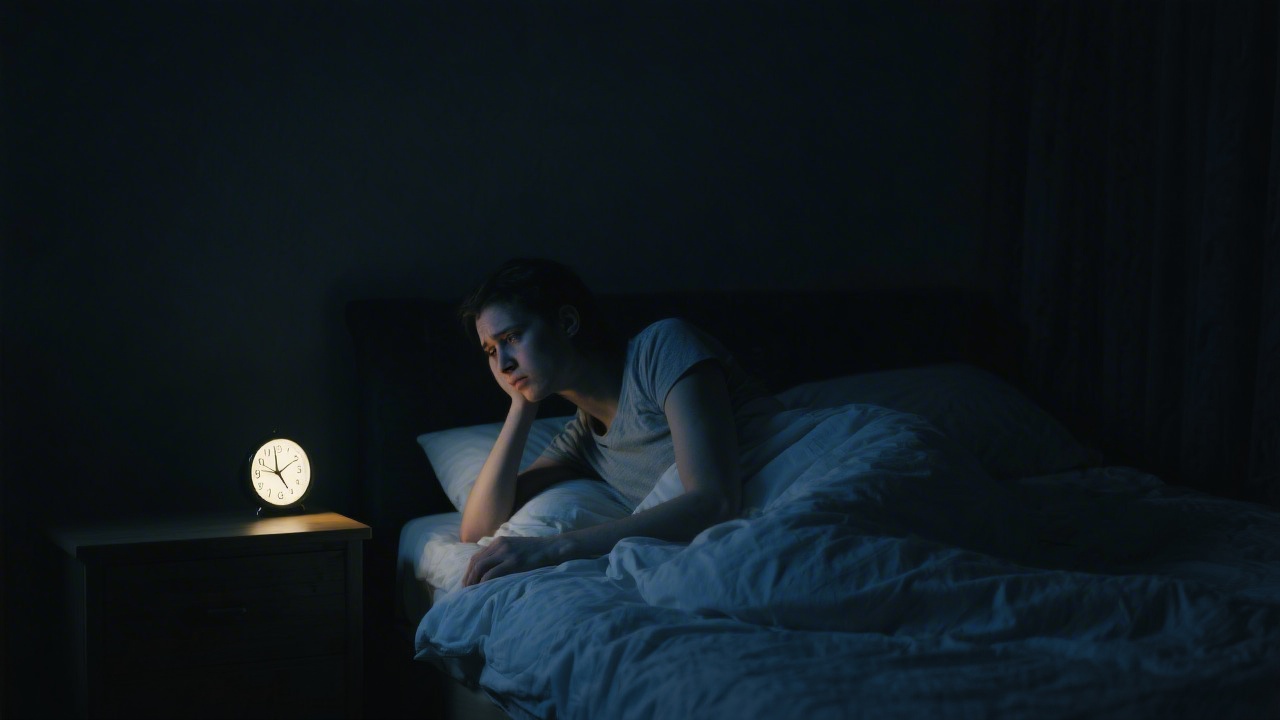
Most sleep tips are written for good sleepers who have a bad week. They are not written for people who have been lying awake for months or years, who have tried every obvious intervention already, and who feel increasingly anxious every time they approach bedtime.
This guide focuses exclusively on interventions with clinical evidence behind them for chronic insomnia disorder -- not general sleep hygiene. For a full review of insomnia causes, see our insomnia causes guide. For the full range of home remedies, see insomnia remedies.
Why Sleep Hygiene Alone Does Not Work for Chronic Insomnia
Sleep hygiene -- no caffeine after 2pm, consistent wake times, dark cool room -- is sound advice for maintaining good sleep. But it was never designed to treat chronic insomnia, and it consistently fails when used alone.
Why: chronic insomnia is not primarily a sleep hygiene problem. It is a learned arousal problem. Over weeks and months of difficulty sleeping, the bed, the bedroom, and the bedtime routine become conditioned stimuli for wakefulness and anxiety. The brain has learned to be alert in the sleep context. No amount of blue-light blocking glasses overrides a deeply conditioned arousal response.
NooCube Sleep Upgrade
A melatonin-free sleep supplement that works with your body instead of replacing hormones. Clinical testing (DBEM) showed 35% faster sleep onset and 28% higher sleep score on Oura/Whoop over 30 nights.
- Lemon balm 600mg + lavender extract for calm
- Magnesium citrate + calcium + vitamin D3 for sleep architecture
- No habit-forming ingredients, no morning grogginess
- 60-day money-back guarantee, GMP-certified USA manufacturing
Affiliate disclosure: we may earn a commission from this link at no extra cost to you.
CBT-I: The Evidence-Based Foundation
Grounding — an underrated sleep lever
Try a grounding sheet free for 90 nights
Clinical studies (Journal of Inflammation Research, 2015; Journal of Alternative & Complementary Medicine, 2011) link earthing with reduced inflammation markers, lower cortisol, and better subjective sleep quality. Not a cure, but a low-cost, zero-side-effect lever most sleepers never try.
The Premium Grounding Sheet uses 316L medical-grade stainless steel fiber (30% steel + 70% organic cotton) — 5x longer lifespan than silver-fiber competitors that oxidize. 4.8/5 stars, 686+ reviews, 28K+ customers. 90-day risk-free trial, 3-year warranty.
Use code MATTRESSNUT for 10% off — brings queen to roughly $170 after discount, which is the cheapest fully-certified grounding sheet on the US market.
Cognitive Behavioral Therapy for Insomnia (CBT-I) is the first-line recommended treatment from the American Academy of Sleep Medicine, the American College of Physicians, and the European Sleep Research Society. It consistently outperforms sleep medications at 6 and 12-month follow-up, with no tolerance, dependency, or cognitive side effects.
CBT-I typically involves 6 to 8 sessions (available in person, digitally via apps like Sleepio or Somryst, or through workbooks) and comprises five components:
1. Stimulus Control Therapy -- The Most Powerful Single Component
This technique directly targets conditioned arousal by breaking the association between the bed and wakefulness. The core rules:
- Use the bed only for sleep and sex -- no reading, phone use, TV, or worrying in bed
- Get out of bed if awake for more than 20 minutes and return only when sleepy
- Get up at the same time every morning regardless of how much you slept
- Do not nap during the treatment period
This feels brutal for the first one to two weeks. But within two to three weeks, the association between bed and sleepiness begins to rebuild. Most sleep clinicians consider stimulus control to be the single most effective behavioral component of insomnia treatment.
2. Sleep Restriction Therapy -- Counterintuitive but Highly Effective
Sleep restriction temporarily limits time in bed to your actual sleep time -- not your desired sleep time. If you are in bed for 8 hours but only sleeping 5, your time in bed window is set to 5 to 5.5 hours for the first week. This builds sleep pressure to a level where consolidated sleep becomes much easier to achieve.
As sleep efficiency improves (time asleep divided by time in bed, target above 85%), the window is gradually extended by 15 to 30 minutes per week. Within 3 to 6 weeks, most people have rebuilt a consolidated, efficient sleep window.
Important: sleep restriction is contraindicated for people with seizure disorders or bipolar disorder, as sleep deprivation can trigger episodes.
3. Cognitive Restructuring
Chronic insomniacs often develop catastrophic thought patterns: "If I don't sleep 8 hours I'll be useless tomorrow," "I'm permanently damaging my health." These thoughts increase arousal at bedtime and during nighttime awakenings. Cognitive restructuring identifies and challenges these thoughts -- not by denying that sleep matters, but by recalibrating to accurate beliefs. The goal is to reduce the emotional charge around sleep.
4. Relaxation Training
Progressive muscle relaxation, diaphragmatic breathing, and imagery-based techniques directly reduce somatic arousal at bedtime. These require practice but are effective tools for reducing the physiological component of bedtime hyperarousal.
5. Paradoxical Intention: The Unexpected Technique
Instead of trying to fall asleep, you try to stay awake while lying in bed with the lights off. The goal is to reduce sleep effort -- the anxious striving to sleep that itself prevents sleep. By removing the pressure to fall asleep, sleep often comes faster. This works through reducing performance anxiety around sleep onset.
What About Melatonin, Supplements, and Medications?
Melatonin is effective for circadian rhythm issues but has weak evidence for chronic insomnia disorder specifically. Magnesium glycinate at 200 to 400mg before bed has some evidence for reducing sleep onset time, likely through its role in GABA receptor activation and cortisol regulation.
Short-term prescription sleep aids can help break an acute crisis but carry tolerance and dependency risks with chronic use. For the full evidence-based spectrum, see our comprehensive insomnia remedies guide.
The Physical Sleep Environment for Chronic Insomniacs
Related Premium Grounding guides
Frequently asked questions
Our top pick for this condition
Saatva Solaire
Adjust firmness night-to-night, removes the "mattress feels wrong" trigger. Queen $4,074 ($525 off).
Does mattress firmness actually affect insomnia?
Yes. A mattress that causes you to wake up for pressure-point pain counts as a sleep-onset and sleep-maintenance insomnia trigger, even if you don't identify the mattress as the problem. Upgrading a too-firm or too-soft bed is one of the highest-impact non-pharmacological insomnia interventions.
What bedroom temperature helps insomnia most?
65–68°F (18–20°C) is the clinically optimal sleep-onset range. A hot mattress can push you 3–4°F above that personal sweet spot without you realizing it. Cooling tech (Saatva hybrid coils, Contour5 gel) or a cooling topper meaningfully helps.
Can a new mattress cure chronic insomnia?
Not by itself. But if the current mattress is part of the problem (pressure-point pain, hot-sleep, motion-transfer from a partner), fixing it removes one major trigger, which frees CBT-I and sleep hygiene to actually work.
For someone with conditioned arousal, physical discomfort becomes a hyperarousal trigger. A mattress that causes pressure points or temperature issues gives the hyperaroused brain more material to focus on. While no mattress cures insomnia, unnecessary physical obstacles to sleep make an already difficult situation harder. See our guide to cooling mattresses for night sweats if temperature is a factor in your nighttime awakenings.
Saatva -- Remove unnecessary sleep obstacles. The right mattress eliminates physical discomfort from the equation.
Frequently Asked Questions About Insomnia Treatment
- What is the most effective treatment for chronic insomnia?
- Cognitive Behavioral Therapy for Insomnia (CBT-I) is the first-line recommended treatment by all major sleep medicine organizations, including the American Academy of Sleep Medicine. It outperforms sleep medications in long-term outcomes and has no dependency risk. It typically takes 6 to 8 sessions.
- Does sleep restriction therapy really work for insomnia?
- Yes, and it is one of the most counterintuitive but effective components of CBT-I. By limiting time in bed to actual sleep time, it builds sleep pressure that consolidates fragmented sleep. Within two weeks, most patients see significant improvement. It feels worse before it gets better.
- Why do standard sleep tips fail for chronic insomniacs?
- Because they target sleep hygiene, not the learned arousal response. Chronic insomnia is maintained by conditioned hyperarousal -- the bed has become a stimulus for wakefulness and anxiety rather than sleep. Sleep hygiene helps good sleepers stay good sleepers, not chronic insomniacs.
- Is melatonin useful for chronic insomnia?
- Melatonin is effective for circadian rhythm issues (jet lag, shift work, delayed sleep phase) but has weak evidence for chronic insomnia disorder. It signals the body that it is nighttime, which helps when the circadian signal is off but not when insomnia is driven by hyperarousal.
- When should insomnia be treated with medication?
- Short-term sleep medications are appropriate for acute situational insomnia for a few weeks. For chronic insomnia, CBT-I is strongly preferred as first-line. Long-term sedative-hypnotic use carries tolerance, dependence, and cognitive risks.
★ #1 RATED MATTRESS 2026
Your Mattress Might Be the Problem. Try a Saatva for 365 Nights
✓ 365-Night Trial · ✓ Free White Glove Delivery · ✓ Lifetime Warranty