
 by
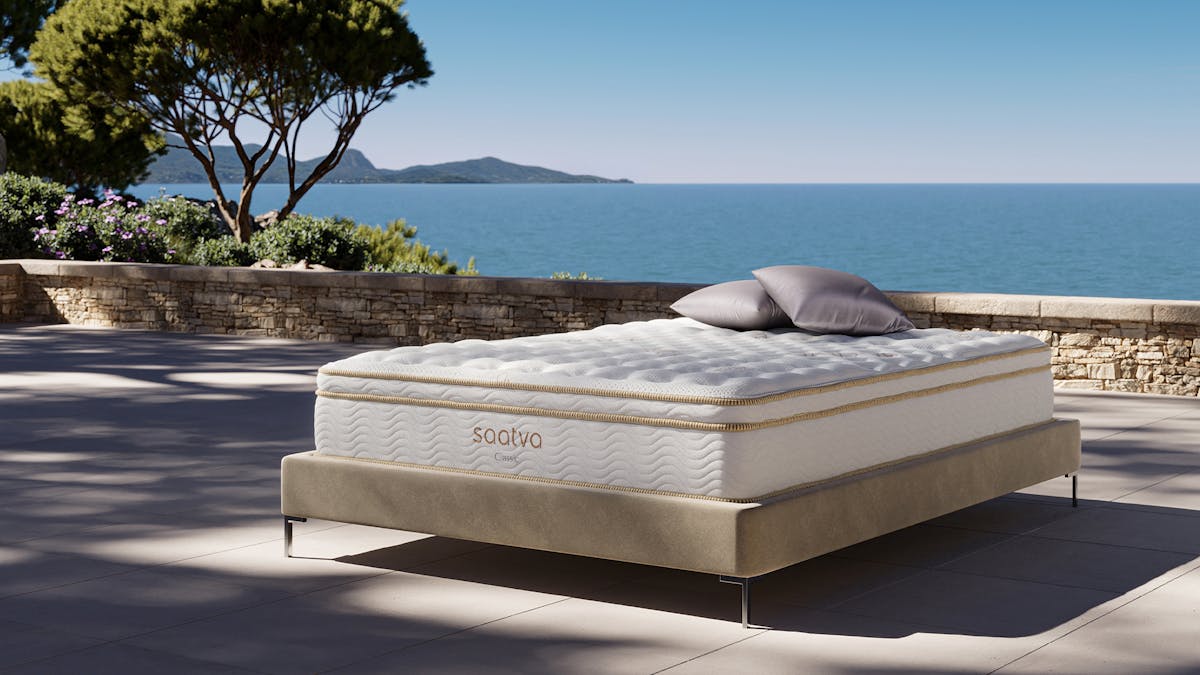
by Sleeping bags and mattresses are not interchangeable. A sleeping bag is an insulation system built for portability and warmth in outdoor or temporary settings. A mattress is a long-term sleep surface that provides spinal support, pressure relief, and temperature regulation for nightly use. For any regular sleep situation, a mattress wins. If you are ready to upgrade, the Saatva Classic is our top pick: dual-coil support, three firmness levels, and a 365-night trial.
Saatva Classic
9.2/10
- Dual-coil construction with a reinforced lumbar zone pad -- the structural opposite of a sleeping bag
- Three firmness levels (Plush Soft, Luxury Firm, Firm) to match any sleep style
- Free White Glove delivery with in-room setup and old-mattress removal
- 365-night trial, lifetime warranty -- the longest coverage in this category
- Higher price than compressed-in-a-box options
- Heavier and not shipped flat in a box
The Saatva Classic is what a sleeping bag can never be: a structured, durable sleep surface that supports the spine, relieves pressure, and adapts to seasons through its materials. If you are transitioning from temporary sleeping bag use to a proper bed, this is the clearest upgrade available.
What a sleeping bag actually does
A sleeping bag is an insulation system. Its job is to trap body heat and create a microclimate around your body that prevents heat loss to the surrounding environment. The temperature rating printed on the bag, such as 20°F or 32°F, tells you the lower limit at which a standard adult sleeper can remain warm, not the ideal or comfortable use temperature.
Sleeping bags provide almost no cushioning from the surface beneath you. They are not designed to. The support a sleeping bag offers is incidental at best: the compression of the insulation under your body collapses the loft, leaving little more than a thin fabric layer between you and the ground. For camping, you solve this with a sleeping pad. A sleeping pad provides both insulation from cold ground and the minimal cushioning your joints need. A sleeping bag and a sleeping pad together approximate, very roughly, the insulation function of a mattress plus bedding setup, but without any of the structural support.
What a mattress actually does
A mattress provides a supportive, cushioned surface that maintains spinal alignment and distributes body weight across pressure points throughout the night. A properly constructed mattress keeps the lumbar spine in neutral alignment whether you sleep on your back, side, or stomach, and it does this consistently across thousands of nights.
Good mattresses also regulate temperature through material choices: gel-infused foam, phase-change covers, open-coil airflow, and natural latex all dissipate body heat more predictably than the fixed insulation of a sleeping bag. They also isolate motion from a partner, provide consistent edge support, and are built to be maintained through standard bedding washing rather than periodic trips to a specialized laundry service.
Mattresses do not provide insulation against cold in the way sleeping bags do. In cold environments, bedding, including sheets, comforters, and blankets, handles that function alongside the mattress.
Sleeping bag vs mattress: direct comparison
| Feature | Sleeping Bag | Mattress |
|---|---|---|
| Primary function | Thermal insulation, warmth retention | Structural sleep surface, spinal support |
| Spinal support | None, collapses under body weight | Full, via foam or coil construction |
| Pressure relief | Minimal to none | Good to excellent depending on type |
| Portability | Excellent, compresses small | None, requires a frame and room |
| Temperature range | Fixed by rating, hard to adjust | Adapts via bedding, covers, and materials |
| Hygiene | Harder to clean, holds oils and moisture | Covered by washable bedding, easy to maintain |
| Durability | 3 to 7 years for regular camping use | 7 to 15+ years for a quality mattress |
| Cost | $50 to $600+ for a quality bag | $800 to $3,000+ for a quality mattress |
| Best use | Outdoor, camping, emergency, temporary | Nightly regular sleep, long-term use |
When a sleeping bag is the right choice
- Camping and backpacking: The portability and weight-to-warmth ratio of a sleeping bag is unmatched for outdoor use. No mattress travels this way.
- Emergency preparedness: A sleeping bag in an emergency kit provides warmth regardless of where you need to sleep. It works on floors, in vehicles, and in shelters.
- Occasional guests: A sleeping bag on a camping pad or an air mattress is a perfectly adequate temporary solution for guests who stay rarely.
- Transition periods: Moving, waiting for a mattress delivery, or traveling for extended periods are situations where a sleeping bag is a practical stopgap.
When a sleeping bag falls short for regular sleep
Using a sleeping bag as your primary sleep surface for weeks or months creates predictable problems:
- Spinal support failure: No sleeping bag provides adequate support for the lumbar curve. Back pain accumulates as the spine settles into whatever surface is underneath, whether that is a hard floor or a thin pad.
- Temperature inflexibility: Sleeping bags are built for a fixed temperature range. A 20-degree bag indoors at room temperature is genuinely uncomfortable. Most people end up opening the bag flat as a blanket, which defeats the warmth purpose.
- Restricted movement: Most people change sleep position 10 to 40 times per night. A mummy-cut sleeping bag resists repositioning in ways that interrupt sleep quality over time.
- Hygiene accumulation: Sleeping bags absorb body oils, skin cells, and moisture. They require specialized washing and drying, and most users wait too long between cleanings. Standard mattress bedding is machine washable weekly.
Transitioning from a sleeping bag to a proper sleep setup
If you have been sleeping on a sleeping bag due to a move, budget constraints, or a temporary situation, switching to a proper mattress makes a measurable difference in sleep quality and morning energy within a few weeks. The structural support alone reduces the muscle tension that accumulates from sleeping on an unsupported surface.
For the actual mattress, the Saatva Classic remains our recommendation for most sleepers making this transition: three firmness options let you match your sleep style, White Glove delivery brings the mattress directly to your room, and the 365-night trial gives you enough time to confirm the fit without pressure. The Amerisleep AS3 is a strong foam-based alternative if you prefer a softer, quieter surface.
Amerisleep AS3
8.8/10
- Plant-based Bio-Pur foam runs cooler than standard memory foam
- HIVE 5-zone support system targets lumbar reinforcement
- CertiPUR-US certified, made in the USA
- 100-night trial with free returns
- Softer edges than a coil hybrid
- One firmness level for the AS3 (AS2 and AS5 expand the range)
If you prefer an all-foam surface without the coil bounce, the AS3 offers HIVE lumbar zoning and a medium feel that suits most side and back sleepers transitioning from floor or bag sleeping.
Frequently asked questions
Can you use a sleeping bag as a permanent bed?
For emergency situations or very short periods, yes. For regular nightly sleep over weeks or months, sleeping bags lack the spinal support, temperature flexibility, and surface area needed for quality long-term sleep. Back pain from inadequate support tends to develop gradually and can take weeks to resolve after switching to a proper mattress.
How warm is sleeping in a sleeping bag indoors?
Sleeping bag temperature ratings apply to outdoor conditions. Indoors at room temperature, a 20-degree bag will be uncomfortably warm for most people. Most users end up opening the bag flat and using it as a blanket, which is a practical workaround but removes the portability advantage.
What is the difference between a sleeping bag and a mattress?
A mattress provides structural support for your body and distributes weight across pressure points. A sleeping bag provides thermal insulation and wraps around you like a blanket. They solve different problems and serve different situations, and they are not substitutes for each other in regular home use.
Is sleeping in a sleeping bag on the floor bad for you?
Over time, yes. Sleeping bags provide almost no padding from a hard floor. Long-term use without a proper sleeping pad creates pressure point problems at the hips and shoulders similar to direct floor sleeping, and no sleeping bag provides lumbar support. Short-term use for a few weeks is generally manageable for healthy adults.
When is a sleeping bag better than a mattress?
For camping, backpacking, emergency preparedness, and temporary situations like guest sleeping or transitional housing. In these contexts, sleeping bags offer portability, compressibility, and thermal insulation that no mattress can match. The decision is usually not either/or: in a permanent home a mattress is clearly better for sleep quality, and in the outdoors a sleeping bag plus pad is the practical choice.