
 by
by Tuft & Needle Original costs around $995 queen and delivers a responsive, on-top-of-the-mattress feel with solid cooling. Tempurpedic Tempur-Adapt runs $2,199+ queen and wraps you in classic slow-hugging memory foam with superior motion isolation and pressure relief. Neither brand is a partner here, so our honest take: Tempurpedic wins on comfort and motion isolation, Tuft & Needle wins on value and ease of movement. If you want the best of both worlds, the Saatva Classic beats both on construction depth, trial length (365 nights vs 90-100), and long-term support.
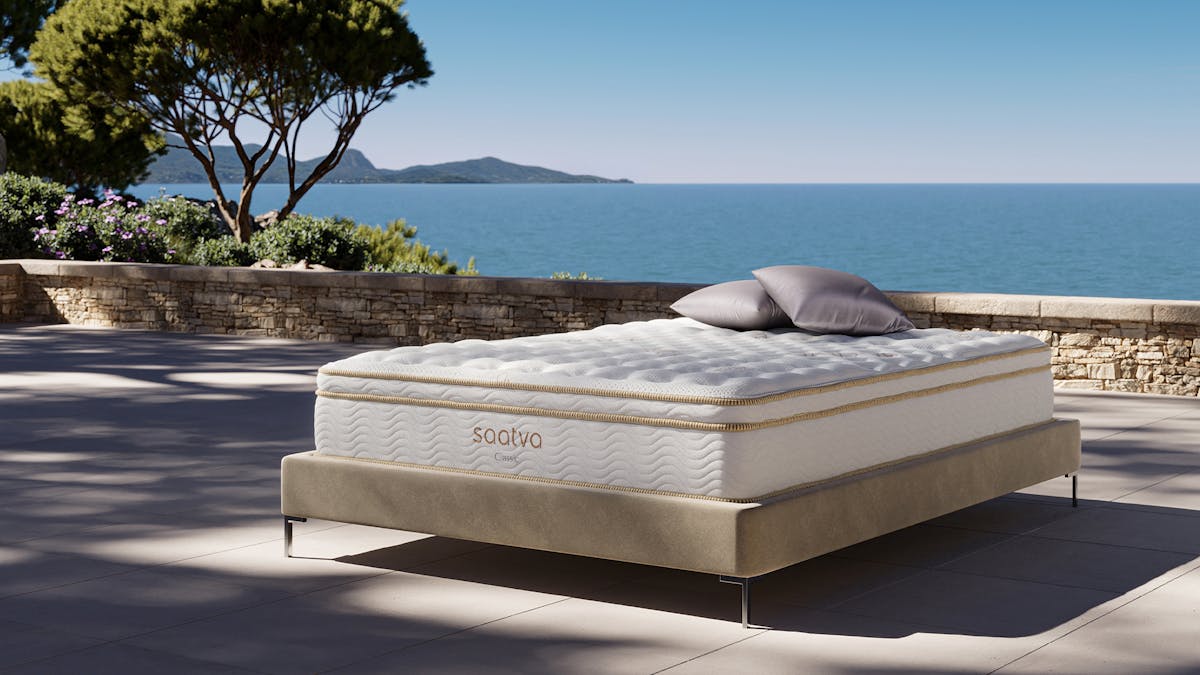
Saatva Classic
9.2/10
- Dual-coil construction with a reinforced lumbar zone pad outperforms both T&N and Tempurpedic for back support
- Free white-glove delivery, setup, and old-mattress removal
- 365-night trial is nearly 4x Tempurpedic's 90-night window
- Lifetime warranty vs 10 years from both competitors
- Ships flat, not compressed in a box
- $99 return fee applies during the trial period
When comparing two foam-heavy options at opposite ends of the price range, the Saatva Classic sits in the middle on price but well above both on construction quality, trial protection, and long-term durability. It's the pick we'd make if budget allows going past $995.
Tuft & Needle vs Tempurpedic: what you actually need to know
These two brands get compared constantly because they represent opposite ends of the mainstream foam mattress market. Tuft & Needle built its name on transparent pricing and a no-frills foam construction. Tempurpedic built its name on proprietary memory foam technology that genuinely performs differently from every other foam on the market. The gap between a $995 queen and a $2,199+ queen should produce real, testable differences, and mostly it does.
Head-to-head specs
| Feature | Tuft & Needle Original | Tempurpedic Adapt |
|---|---|---|
| Construction | 2-layer polyfoam (T&N Adaptive) | 3-layer Tempur memory foam (foam or hybrid) |
| Firmness | Medium-firm, ~6.5/10 | Medium-firm (varies by model) |
| Feel | Responsive, slight bounce, on-the-mattress | Deep hug, slow-moving, body-contouring |
| Cooling | Gel + graphite infusions, above average | Breathable cover; memory foam traps more heat |
| Motion isolation | Good | Excellent (among the best in foam) |
| Edge support | Moderate (collapses under sitting weight) | Better than average for foam |
| Queen price | ~$995 | ~$2,199 |
| Trial | 100 nights | 90 nights |
| Warranty | 10 years | 10 years |
| Best for | Side sleepers under 230 lb, value shoppers | Couples, pressure-point sleepers, back/side combo |
Construction breakdown
The Tuft & Needle Original is a two-layer all-foam build. The top 3 inches is T&N's proprietary Adaptive foam, infused with ceramic gel and graphite to pull heat away from the body. Below that sits a denser high-density support foam. At 10 inches total, it's on the thinner side, which is fine for most sleepers under 230 lb but can feel insufficient for heavier builds.
Tempurpedic's Adapt line uses three layers of Tempur material, with the exact composition varying across the base foam, hybrid, and cooling variants. The defining property is Tempur foam's extremely slow response time: it cradles body contours deeply and holds that shape, which explains both its motion isolation advantage and its tendency to retain heat. The hybrid version adds pocketed coils below the Tempur layers, improving airflow and edge support.
Firmness and feel
Both land around medium-firm on paper, but the feel is completely different. The T&N Adaptive foam behaves more like a traditional foam: it responds quickly, gives a slight bounce, and lets you move positions without feeling stuck. That responsiveness is good for combination sleepers who shift between back and side during the night.
Tempurpedic's Tempur material does the opposite. It takes several seconds to respond to pressure and creates a deep contouring effect around the shoulders and hips. Sleepers who love the classic "cradled" memory foam experience prefer it strongly. Sleepers who don't like feeling locked into one position often find it frustrating, especially when trying to roll over at night.
Cooling
Tuft & Needle has a real advantage here. The gel and graphite infusions in the top layer actively dissipate heat, and the cover is breathable. For hot sleepers, T&N holds up much better than the standard Tempur-Adapt.
Tempurpedic's base Adapt model runs warm. The dense Tempur foam absorbs and holds heat by design, which is the same mechanism that gives it superior pressure relief. Tempurpedic does sell cooler variants (the ProAdapt and LuxeBreeze lines) but at much higher price points. If temperature regulation matters more than deep pressure contouring, T&N wins this category outright.
Motion isolation
This is Tempurpedic's clearest advantage. Tempur foam absorbs motion almost entirely. Partners sleeping on opposite edges of a queen barely register each other's movements. T&N is good by foam standards but not exceptional. If you or your partner are easily disturbed by movement, Tempurpedic wins.
Sleeping position fit
Back sleepers: Both work. Tempurpedic provides slightly more lumbar contouring; T&N provides more even support without deep sinkage. Heavier back sleepers (230+ lb) may find T&N too thin for adequate support.
Side sleepers: Both pressure-relieve the shoulder and hip reasonably well. Tempurpedic's deep contouring is better for pronounced hip-to-shoulder width differences. T&N's quicker response lets side sleepers reposition more easily.
Stomach sleepers: Neither is a great choice. Both allow the hips to sink enough to cause lumbar strain. A firmer mattress (or the Saatva Luxury Firm) is a better call for dedicated stomach sleepers.
Combination sleepers: Tuft & Needle has the edge because the responsive foam doesn't fight you when changing positions. Tempurpedic's slow response can feel like it's pulling you back into the previous position.
Price and value
| Size | Tuft & Needle Original | Tempurpedic Adapt |
|---|---|---|
| Twin | ~$745 | ~$1,699 |
| Twin XL | ~$795 | ~$1,699 |
| Full | ~$895 | ~$1,999 |
| Queen | ~$995 | ~$2,199 |
| King | ~$1,395 | ~$2,599 |
| Cal King | ~$1,395 | ~$2,599 |
| Split King | Not available | ~$3,798 |
The price gap is real and the value calculation depends on what you weight. If motion isolation and pressure contouring are your primary needs, Tempurpedic's premium is at least partially justified. If you're a solo sleeper who moves around and runs warm, T&N delivers most of what you need at less than half the price.
Trial and warranty
Tuft & Needle offers a 100-night trial and a 10-year non-prorated warranty. Tempurpedic offers 90 nights and a 10-year warranty (prorated after year one for some defects, so read the fine print). T&N has a slight edge on both counts, particularly the warranty terms.
Choose Tuft & Needle if you want a responsive, cooler-sleeping foam mattress under $1,000 and you're under 230 lb. Choose Tempurpedic if motion isolation and deep pressure contouring are priorities and budget isn't a constraint. For most shoppers who want a better-built alternative with a longer trial and lifetime warranty, the Saatva Classic is worth the look.
Frequently asked questions
Is Tuft & Needle as good as Tempurpedic?
Depends on what you mean by "good." Tempurpedic wins on motion isolation, pressure contouring, and depth of material technology. Tuft & Needle wins on cooling, responsiveness, value, and ease of movement. If budget is no constraint, Tempurpedic's Adapt line outperforms T&N overall. At the price gap, T&N is competitive for the right sleeper.
Which is better for couples, Tuft & Needle or Tempurpedic?
Tempurpedic, not close. The Tempur foam's motion isolation is among the best available in any foam mattress. If your partner moves at night and you're a light sleeper, Tempurpedic handles this better than T&N.
Does Tuft & Needle sleep cooler than Tempurpedic?
Yes, significantly. T&N's gel and graphite infusions actively dissipate heat. Tempur foam is dense and warm by nature. Hot sleepers should favor T&N unless they're willing to move up to Tempurpedic's ProAdapt or LuxeBreeze variants.
How long do Tuft & Needle mattresses last vs Tempurpedic?
Tempurpedic's denser Tempur foam generally holds up 8-10 years without significant sagging. T&N's polyfoam typically shows wear a bit earlier, around 6-8 years for average-weight sleepers. Both carry 10-year warranties, but Tempurpedic's warranty terms can become prorated, so verify before purchasing.
Is the Saatva Classic better than both?
For most sleepers, yes. The Saatva Classic uses a dual-coil construction with a reinforced lumbar zone that surpasses all-foam options for spinal support, paired with a Euro pillow top for pressure relief. Its 365-night trial is nearly 4x Tempurpedic's and its lifetime warranty beats both. The main tradeoff is it's not a bed-in-a-box and won't get compressed-boxed to your door.
Saatva Classic
9.2/10
Dual-coil hybrid with zoned lumbar support, 365-night trial, lifetime warranty, and free white-glove delivery. A better-built alternative to both Tuft & Needle and Tempurpedic for most sleepers.