
 by
by Related Pillow Guides
Introduction to Pillow Types
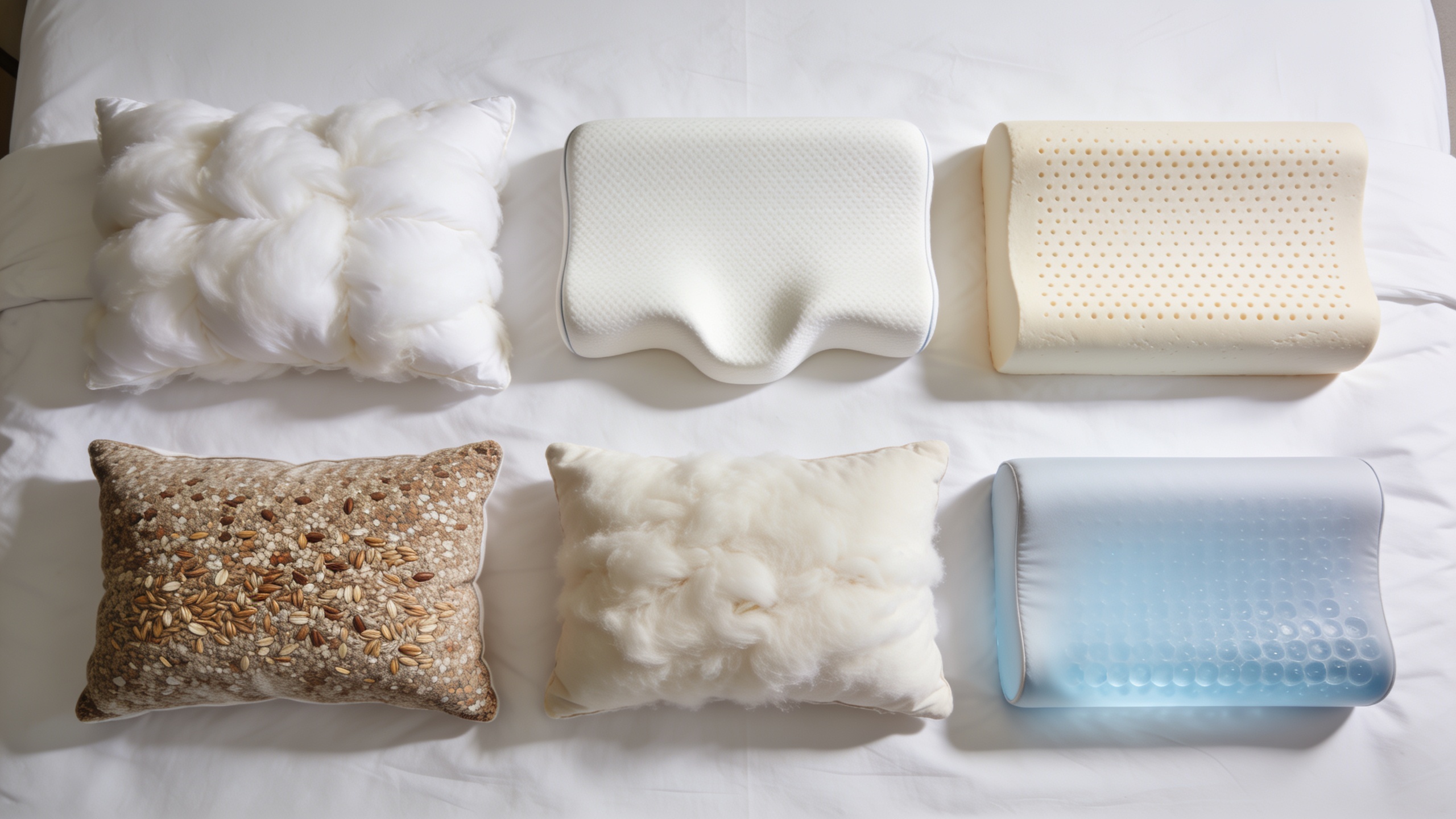
Choosing the right pillow starts with understanding what is available. The pillow market has expanded far beyond the basic polyester-filled rectangles of decades past. Today, shoppers can select from fills derived from animal products, plant fibers, petroleum-based synthetics, and even water. Each material behaves differently in terms of support, temperature regulation, durability, and price. This guide breaks down every major pillow type by fill material, shape, and cover fabric so you can make an informed choice.
Down Pillows
Down pillows use the soft undercoating of ducks or geese. The clusters trap air, creating a lightweight, compressible, and luxurious feel. High-quality down has a high fill power (typically 600 to 800) which measures loft and insulation. European white goose down is considered the premium standard. Down pillows are excellent for stomach and back sleepers who prefer a soft, moldable surface. Side sleepers usually need a firmer, higher-loft option or a down pillow with added feather support.
The main drawbacks are cost and care. Authentic down pillows start around 80 dollars and can exceed 200 dollars for top-tier fills. They are not machine washable and require regular fluffing to maintain shape. Allergy sufferers may react to residual proteins, although many down products are hypoallergenic-treated. Ethical concerns about sourcing have led some brands to adopt Responsible Down Standard certification.
Down Alternative Pillows
Down alternative pillows replicate the plush feel of down using synthetic fibers, usually polyester microfiber or gel fiber. They are significantly cheaper, typically 20 to 50 dollars, and are machine washable. This makes them practical for households with children, pets, or allergy sufferers. The fill does not clump as severely as low-quality down, but it also lacks the long-term resilience of premium down clusters.
Most down alternative pillows feel softer and less supportive than memory foam or latex. They work best for back and stomach sleepers who do not need aggressive neck support. Some premium models combine down alternative outer layers with memory foam cores to balance softness and structure.
Memory Foam Pillows
Memory foam pillows are made from viscoelastic polyurethane foam that softens with body heat and molds to the head and neck. This conforming property provides excellent pressure relief and spinal alignment, especially for side and back sleepers. Solid memory foam pillows offer uniform density, while shredded memory foam pillows allow users to adjust loft by adding or removing fill.
The primary complaint is heat retention. Traditional memory foam traps body heat, which can cause discomfort for hot sleepers. Modern solutions include gel-infused foam, open-cell structures, and charcoal or graphite additives that improve breathability. Memory foam pillows have a distinct chemical odor when new (called off-gassing) that usually dissipates within a few days. Look for CertiPUR-US certification to ensure the foam is free of harmful chemicals.
Latex Pillows
Latex pillows use natural rubber sap (Talalay or Dunlop process) or synthetic latex. They offer a responsive, buoyant feel that pushes back against weight rather than sinking like memory foam. This makes latex ideal for sleepers who change positions frequently, as the pillow recovers its shape instantly. Natural latex is also resistant to dust mites, mold, and mildew.
There are two main types of construction. Solid latex pillows provide consistent support and durability, often lasting 5 to 7 years. Shredded latex pillows allow loft adjustment and feel softer. Latex sleeps cooler than memory foam due to its open-cell structure. The trade-off is price: natural latex pillows range from 80 to 150 dollars. Some sleepers also dislike the slight rubbery smell of natural latex.
Buckwheat Pillows
Buckwheat pillows are filled with the hard outer hulls of buckwheat seeds. The hulls do not compress under pressure, creating a very firm and highly supportive surface. Air flows freely between the hulls, making buckwheat one of the coolest sleeping pillow types available. Users can add or remove hulls to customize loft and firmness.
The downsides are noise and weight. The hulls rustle when the head moves, which disturbs some sleepers. A standard-size buckwheat pillow can weigh 8 to 10 pounds. The firmness is also polarizing: side sleepers with broad shoulders often love it, while back and stomach sleepers may find it too hard. Buckwheat pillows last 8 to 10 years with proper care.
Kapok Pillows
Kapok is a plant-based fiber harvested from the seed pods of the ceiba tree. The fibers are hollow and waxy, giving them a lightweight, silky texture similar to down. Kapok pillows are vegan, biodegradable, and free of the chemical treatments common in synthetic fills. They are softer than latex and buckwheat but lack the spring-back of down.
Kapok pillows require daily fluffing because the fibers compress and do not recover on their own. They are not machine washable. The fill is highly flammable, so most kapok pillows include a fire-retardant barrier. For eco-conscious sleepers who want a down-like feel without animal products, kapok is a compelling option.
Pillow Shapes and Special Designs
Beyond fill material, pillow shape affects sleep quality. Standard rectangular pillows are the default, but specialized shapes solve specific problems. Cervical contour pillows have a dip in the center and raised edges to cradle the neck. Wedge pillows elevate the upper body to reduce acid reflux and snoring. Body pillows run the length of the torso and support side sleepers who need spinal alignment.
Bolster pillows are cylindrical and used for lumbar support or decorative purposes. Travel pillows wrap around the neck to prevent head bobbing during transit. Donut pillows have a center hole to relieve pressure on the tailbone or hemorrhoids. Each shape serves a distinct purpose, and many sleepers benefit from using more than one type.
Cover Materials Matter
The fabric surrounding the fill affects breathability, temperature, and skin health. Cotton is the standard: breathable, affordable, and easy to wash. Organic cotton avoids pesticide residues. Bamboo-derived fabrics are softer than cotton and have natural moisture-wicking properties. Silk and satin reduce friction on hair and skin, which benefits people with curly hair or sensitive skin.
Some performance covers use phase-change materials that absorb excess heat and release it when the body cools. Others incorporate silver or copper fibers for antimicrobial properties. A high-quality cover extends pillow life by protecting the fill from oils, sweat, and dust. Always choose a removable, washable cover when possible.
Pillow Type Comparison Table
| Type | Best For | Feel | Durability | Price Range |
|---|---|---|---|---|
| Down | Back/stomach sleepers | Soft, plush | 5-8 years | $80-$200+ |
| Down Alternative | Allergy sufferers, budget | Soft, light | 1-2 years | $20-$50 |
| Memory Foam | Side/back sleepers | Firm, conforming | 2-3 years | $40-$100 |
| Latex | Position changers | Responsive, buoyant | 5-7 years | $80-$150 |
| Buckwheat | Firm support seekers | Very firm, cool | 8-10 years | $50-$100 |
| Kapok | Eco-conscious, vegans | Soft, light | 2-3 years | $60-$120 |
Our Recommendation: Start With a Versatile Premium Pillow
If you are unsure which pillow type suits you, a hybrid design that combines responsive support with a plush surface is the safest starting point. Saatva engineers pillows that blend the best qualities of multiple fill types. The Saatva Pillow uses a shredded latex core for responsive support and a down-alternative outer layer for plush comfort. This dual-layer construction adapts to back, side, and combination sleepers without the heat retention of solid memory foam.
For sleepers who run hot, the Saatva Cooling Pillow uses graphite-infused memory foam with a phase-change cover that actively regulates temperature. Unlike standard gel pillows that warm up after an hour, the Saatva system maintains a cool surface through the night. Both pillows are machine-washable, made with CertiPUR-US certified foam, and backed by a generous trial period. Browse Saatva pillows here.
How to Choose the Right Pillow Type for Your Sleep Position
- Side sleepers: Need a firm, high-loft pillow to fill the gap between shoulder and ear. Memory foam, latex, and buckwheat work best.
- Back sleepers: Need a medium-loft pillow that supports the natural cervical curve without pushing the head forward. Down, down alternative, and shredded latex are ideal.
- Stomach sleepers: Need a thin, soft pillow to avoid neck extension. Down and down alternative are preferred.
- Combination sleepers: Benefit from responsive fills like latex and shredded memory foam that adapt quickly to position changes.
- Hot sleepers: Should prioritize breathable materials like buckwheat, latex, or gel-infused foam with cooling covers.