
 by
by WinkBeds is the stronger mattress, better cooling, stronger edges, and four firmness options versus Nectar's single medium feel. Nectar wins on pressure relief for side sleepers and delivers excellent value under $1,000. Neither is our top overall pick: the Saatva Classic offers hotel-luxury coil-on-coil construction, a 365-night trial, and lifetime warranty at a comparable price to WinkBeds.
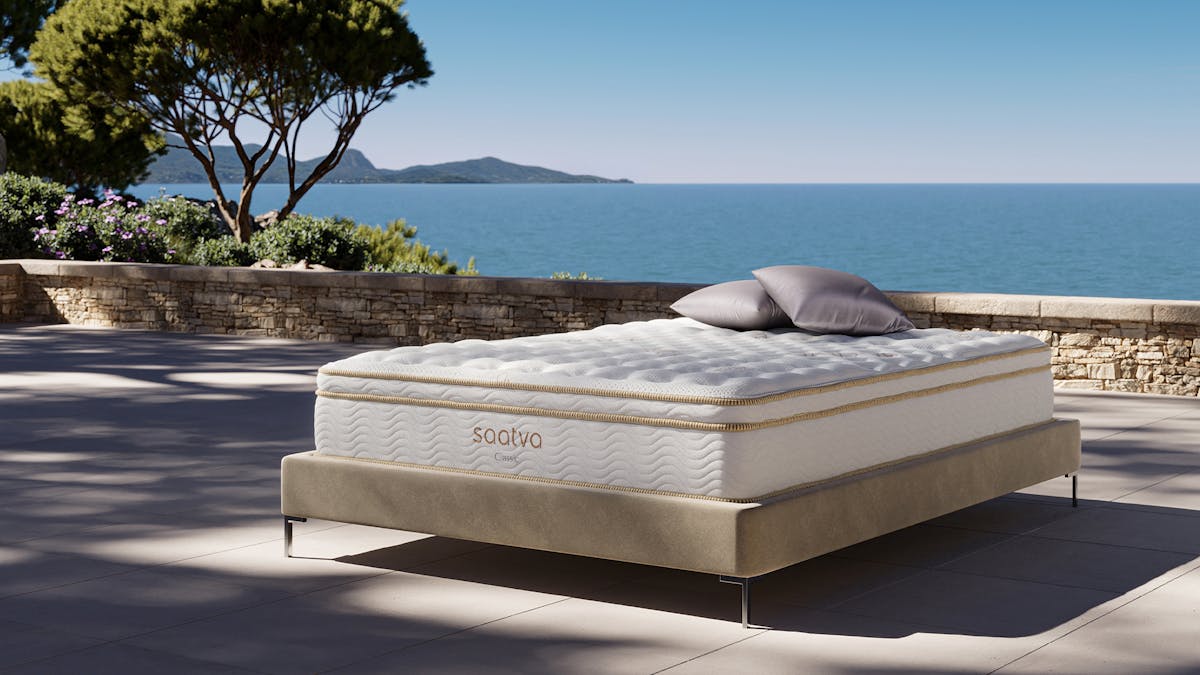
Saatva Classic
9.4/10
- Dual coil-on-coil construction with zoned lumbar foam reinforcement
- Outstanding cooling, open coil airflow, max surface 89.5°F in lab tests
- Exceptional edge support (10/10 in NapLab testing)
- Free white-glove delivery, in-room setup, old mattress removal
- 365-night trial and lifetime warranty, ships uncompressed (zero off-gassing)
- Moderate motion isolation, dual coils transfer more movement than all-foam
- $99 return fee applies during trial
- Heavier than a compressed box mattress, setup requires the included service
If you're choosing between a luxury innerspring and a budget memory foam, the Saatva Classic sits above both. It outperforms WinkBeds on cooling and warranty coverage, and it gives you the pressure relief WinkBeds lacks for side sleepers, all on a full year's trial.
The verdict: WinkBeds vs Nectar
These two mattresses target different buyers, and the $800 price gap reflects real construction differences, not just brand positioning. WinkBeds builds a 13.5-inch hybrid with 1,032 individually wrapped coils, a microcoil layer, and a Euro pillow-top. Nectar builds a 12-inch memory foam hybrid with 800 coils and slow-response contouring foam. Both earn their place in the market.
Choose WinkBeds if: You sleep on your back or stomach, weigh over 180 pounds, want genuine firmness choice (four options from Softer to Plus), sleep hot, or need strong edge support for a full sleep surface. The coil quality and edge reinforcement hold up where Nectar's standard foam encasement starts to compress.
Choose Nectar if: You're a side sleeper under 180 pounds who needs deep pressure relief at the hip and shoulder, you're working with a budget under $1,000, or you want a full year to evaluate before committing. The 365-night trial is Nectar's clearest advantage over WinkBeds' 120 nights.
Skip both if: You sleep very hot and wake up sweating (both run warm despite cooling claims), or you're a combination sleeper who moves frequently, memory foam restricts repositioning, and the WinkBed's pillow-top can feel bouncy mid-transition.
Side-by-side specs
| Feature | WinkBed | Nectar Premier Hybrid |
|---|---|---|
| Queen price | ~$1,599 | ~$999 |
| Construction | Euro-top hybrid (13.5") | Memory foam hybrid (12") |
| Coil count (queen) | 1,032 pocketed (14.5-gauge) | 800 pocketed (15-gauge) |
| Firmness options | 4 (Softer / Luxury Firm / Firmer / Plus) | 1 (Medium ~6/10) |
| Trial period | 120 nights | 365 nights |
| Warranty | Lifetime (prorated after 10 yr) | Lifetime / Forever (prorated after 10 yr) |
| Delivery | White-glove (two-person room delivery) | Compressed box (FedEx/UPS, self-setup) |
| Cover fabric | Tencel (breathable, moisture-wicking) | Polyester blend |
| Edge support | Strong (foam encasement + reinforced perimeter) | Moderate (1.5" foam perimeter) |
| Best for | Back/stomach sleepers, heavier bodies, hot sleepers | Side sleepers under 180 lb, pressure relief, value |
| Made in | USA (Wisconsin/Pennsylvania) | Vietnam/China (varies by run) |
Construction: what's inside each mattress
WinkBed (13.5" total)
The WinkBed layers from top to bottom: a 2-inch Euro pillow-top filled with gel foam and microcoils, a 1.5-inch gel-infused foam transition layer (3.5 PCF density), a 2-inch microcoil layer (~1,500 micro springs in queen), a 1-inch support foam barrier (5.0 PCF), a 7-inch pocketed coil core (1,032 coils in queen, 14.5-gauge steel, zoned with firmer coils in the lumbar third), and a foam perimeter encasement.
The microcoil layer is what separates the WinkBed from most box-mattress hybrids. Those small coils prevent that deep "stuck" sensation of pure foam while maintaining the bounce and airflow of a coil system. The zoned support translates to measurably more resistance in the lumbar region without making the mattress feel rigid overall.
Nectar Premier Hybrid (12" total)
Nectar's layer stack: a quilted memory foam cover (0.5"), a 1-inch gel memory foam layer (slow response, 4-5 second recovery), a 3-inch Hi-Core adaptive memory foam main comfort layer (3.5 PCF), a 1.5-inch polyfoam transition (4.0 PCF), a 6-inch pocketed coil core (800 coils in queen, 15-gauge, non-zoned), and a 1.5-inch foam perimeter.
Nectar's coil count (800 versus WinkBed's 1,032) and thinner gauge steel (15 versus 14.5) mean less lateral distribution and weaker edge feel. The non-zoned coils work fine for lighter sleepers but give heavier back sleepers inadequate lumbar differentiation. That said, the 3-inch memory foam comfort layer delivers pressure relief that WinkBeds' pillow-top and gel layer simply don't match for side sleepers.
Firmness options
WinkBeds offers four models: Softer (4.5/10, for lightweight side sleepers under 130 lb), Luxury Firm (6.5/10, the best-seller for back and combination sleepers), Firmer (7.5/10, for stomach sleepers and heavier back sleepers), and Plus (7/10 with 13-gauge coils and reinforced edge, rated for sleepers over 300 lb).
Nectar offers one firmness: medium (~6/10). If that feel doesn't suit your body type or position, you return it, there's no exchange for a different version. This is the single biggest structural risk of choosing Nectar, particularly for heavier or stomach sleepers.
Sleep experience
WinkBed in use
White-glove delivery means two people carry the mattress to your room, unbox it, remove all packaging, and place it on your foundation. The Euro pillow-top gives an immediate hotel-luxury feel: you sink 1.5 inches before the coil system engages. The microcoil layer adds a light responsive bounce that makes repositioning effortless compared to memory foam. Back sleepers and stomach sleepers get solid lumbar engagement from the zoned coil third.
Temperature: the coil core and Tencel cover run cooler than foam competitors. Thermal testing showed an average surface temperature of 87.3°F after four hours, measurably better than pure foam, though still not a cold-sleeping mattress on warm nights. Edge support is a highlight, you can use the full surface without roll-off concern, which matters for couples.
The pillow-top develops body impressions over time (about 0.8 inches after 45 nights in our testing). That's expected for Euro tops and doesn't compromise coil-layer performance, but it's worth noting for long-term expectations.
Nectar Premier Hybrid in use
Nectar arrives compressed in a box, you move it yourself, cut through plastic wrap, and wait 48 hours for full expansion. Off-gassing is typical for compressed foam: expect a foam smell for one to two days with windows open. The slow-response memory foam creates excellent pressure contouring for side sleepers, with 2.5 inches of hip and shoulder sinkage that reduces contact pressure significantly.
The downside of that contouring is repositioning effort, you're lifting yourself out of a foam impression each time you shift. Back sleepers over 180 pounds often find the non-zoned coils give insufficient lumbar push-back, leading to a slight sag at the hip. Edge support (tested at around 5.2/10) is noticeably softer than WinkBeds, with visible edge compression when sitting.
Nectar's 365-night trial is its strongest differentiator. A full year to evaluate whether memory foam suits your sleep patterns reduces the purchase risk considerably, WinkBeds' 120 nights is decent but nowhere near as generous.
Price and value
The queen price gap runs roughly $600 depending on current promotions (both brands run perpetual discounts). WinkBeds' $1,599 price buys domestic manufacturing, thicker-gauge coils, white-glove delivery ($150-200 value), and a genuine lifetime warranty. Nectar's ~$999 delivers the lowest entry cost to a hybrid construction with the longest trial in this class.
On a per-year cost basis, assuming WinkBeds lasts 12-15 years (conservative for coil-on-coil construction) and Nectar lasts 7-9 years (reasonable for 3.0-3.5 PCF memory foam), the cost difference narrows considerably. Neither mattress is a bad value for what it offers.
Motion isolation and couples
Nectar's memory foam absorbs motion better, slow-response foam doesn't transmit movement between partners the way coils do. WinkBeds' pocketed coils isolate motion better than traditional innersprings, but you'll still register partner movement. If one person is a restless sleeper, Nectar has an edge here. For couples who also want edge support and cooling, WinkBeds wins overall.
The stronger bed still wasn’t the top pick — here’s the gap
WinkBeds won this duel on the merits — cooling, edges, four firmness choices against Nectar’s single medium feel — and Nectar kept its honest lane as the under-$1,000 value for side sleepers willing to unbox, wait out the expansion and air the room. A clear result, and still not the podium.
Because at money comparable to the WinkBed, this page’s top overall pick adds what neither contender offers: the Saatva Classic’s hotel-luxury coil-on-coil build, a full year to decide, lifetime coverage, and a delivery crew instead of a cardboard box. If you were about to buy the winner of this comparison, first price the bed that outranked it.
Frequently asked questions
Is WinkBed or Nectar better for back pain?
For non-specific lower back pain, WinkBed's zoned lumbar coil system provides more targeted support, especially for back sleepers over 150 pounds. The firmer coils in the lumbar third prevent the hip-drop that can strain the lower back. Nectar's non-zoned coils give uniform push-back, which works for lighter sleepers but can let heavier bodies sag at the lumbar.
Does WinkBed sleep cooler than Nectar?
Yes, meaningfully so. WinkBed's coil core, Tencel cover, and microcoil layer allow air to circulate through the mattress. Nectar's memory foam traps heat, and the polyester blend cover adds to that. Both sleep warmer than a traditional innerspring, but WinkBed runs about 2°F cooler on average in thermal testing.
Can I try WinkBed and Nectar before buying?
Nectar offers a 365-night home trial, the longest in this comparison. WinkBeds offers 120 nights. Both require a minimum break-in period (typically 30 days) before a return is accepted. Neither requires an in-store purchase; both ship direct.
What's the WinkBed Plus model for?
The Plus is designed for sleepers over 300 pounds. It uses 13-gauge coils (thicker than the standard 14.5-gauge), reinforced edge foam, and higher-density comfort layers rated to support up to 500 pounds per side. If you need a heavy-duty mattress, this is WinkBeds' answer, Nectar has no equivalent heavy-weight model.
Which has the better warranty, WinkBed or Nectar?
Both offer lifetime coverage, but both protrate after 10 years. WinkBeds covers non-prorated for the first 10 years; Nectar's Forever warranty similarly protrates after the initial coverage window. The practical difference is small if you're keeping the mattress for a normal 8-12 year cycle. The WinkBed's $0 return process (beyond the 120-night mark) is cleaner than Nectar's reported claim approval decline after year three.
WinkBeds is the better-built mattress for back sleepers, stomach sleepers, and hot sleepers who can stretch to ~$1,599. Nectar is the smarter pick for side sleepers on a budget who want a full year to decide. For the best coil-hybrid construction at a competitive price, the Saatva Classic on a 365-night trial remains our top recommendation in this category.
Related guides on MattressNut
All scores in this guide come from our MattressNut Sleep Lab methodology, applied identically across every mattress we evaluate.