
 by
by Our #1 Recommended Mattress
Saatva Classic. From $1,095
365-night trial · Lifetime warranty · Free white-glove delivery
We earn a commission if you make a purchase through our links, at no extra cost to you. Full disclosure.
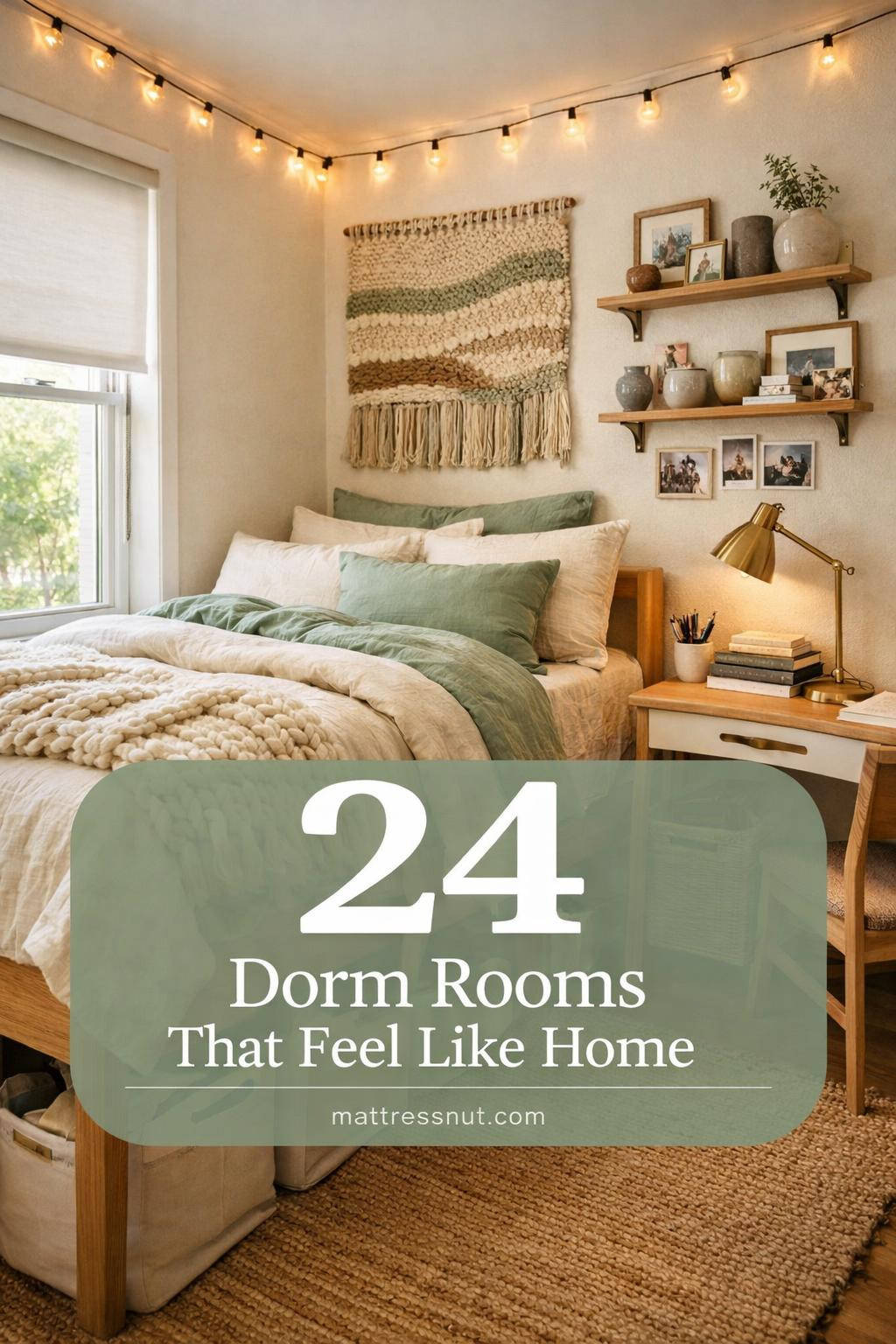
Single dorm room ideas turn your tiny box into a space you’ll actually want to spend time in. You’re about to see how students everywhere are ditching the sterile look and creating rooms that feel warm, personal, and completely their own.
From moody brass lamps to rumpled linen that looks expensive, these 24 setups prove you don’t need square footage to have style. Small spaces work when you nail the details.
Luxe Single Dorm With Golden Hour Glow
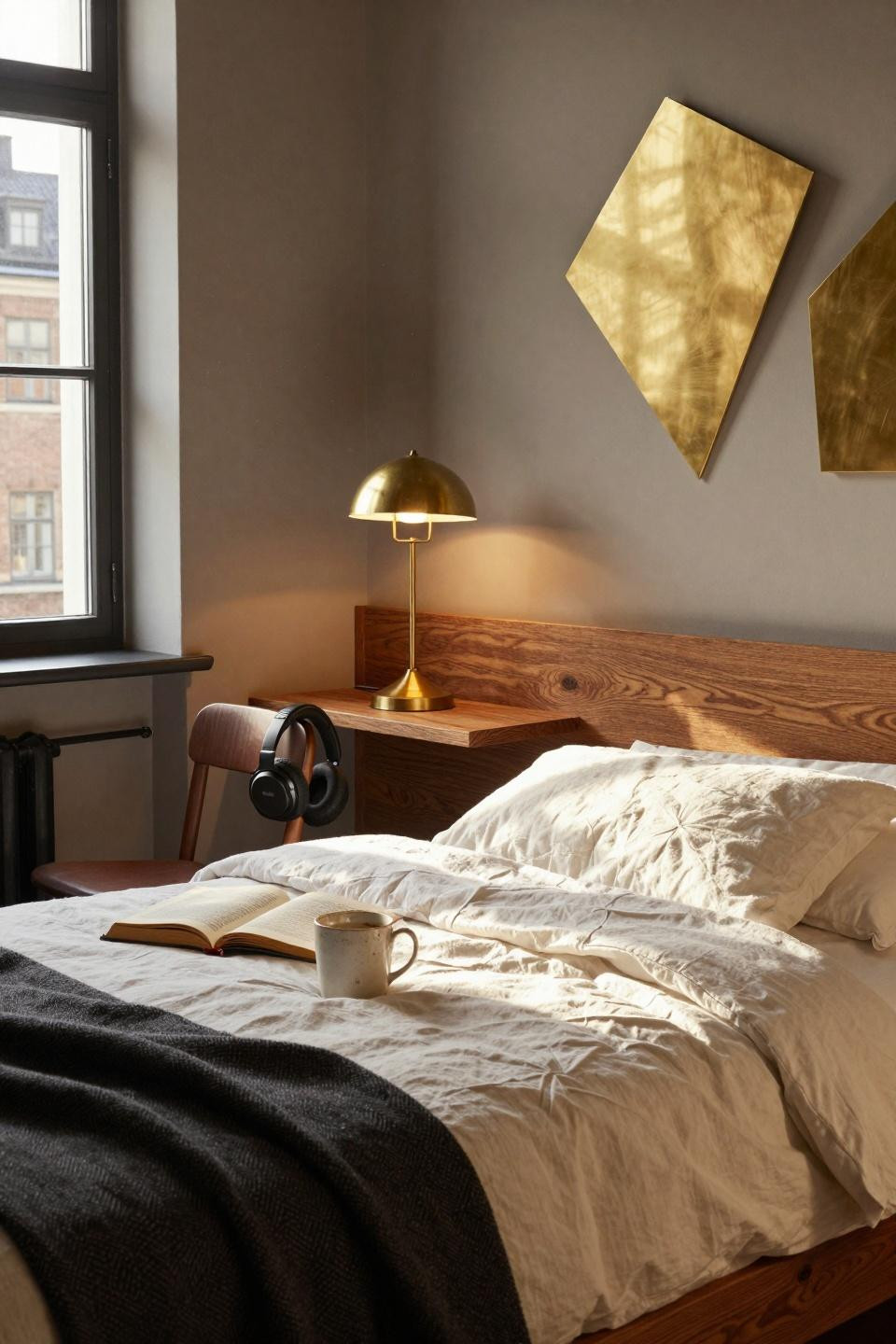
This setup uses brass hardware everywhere – lamp, wall art, shelf brackets. The warm metal catches light and makes the whole room feel more expensive than it is.
Perfect for anyone who wants that boutique hotel vibe without spending boutique hotel money. The greige walls keep it calm while the brass adds just enough edge.
That chunky throw tossed at the foot of the bed? Not staged. When your bedding looks good messy, you’ve won.
Brass Desk Lamp Corner For Focused Study Sessions
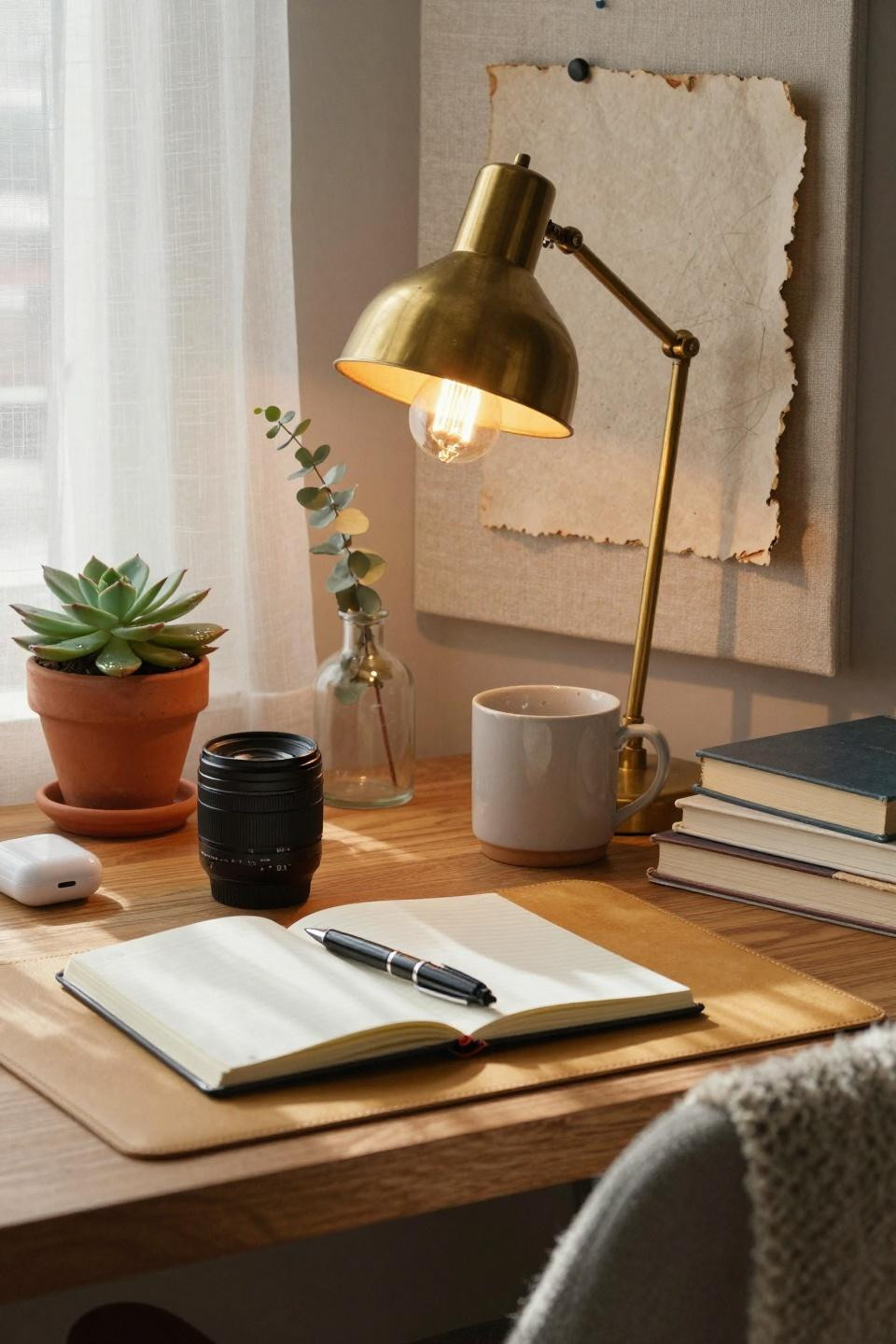
That brass task lamp does all the heavy lifting here. It’s sculptural enough to look cool but functional enough for late-night paper writing.
The oak desk and linen pinboard combo feels grown-up in a good way. Stack some books you actually read and toss your AirPods nearby – instant personality.
Real students have coffee rings on their desk. This space gets it.
Belgian Linen Bed With Floating Walnut Shelves
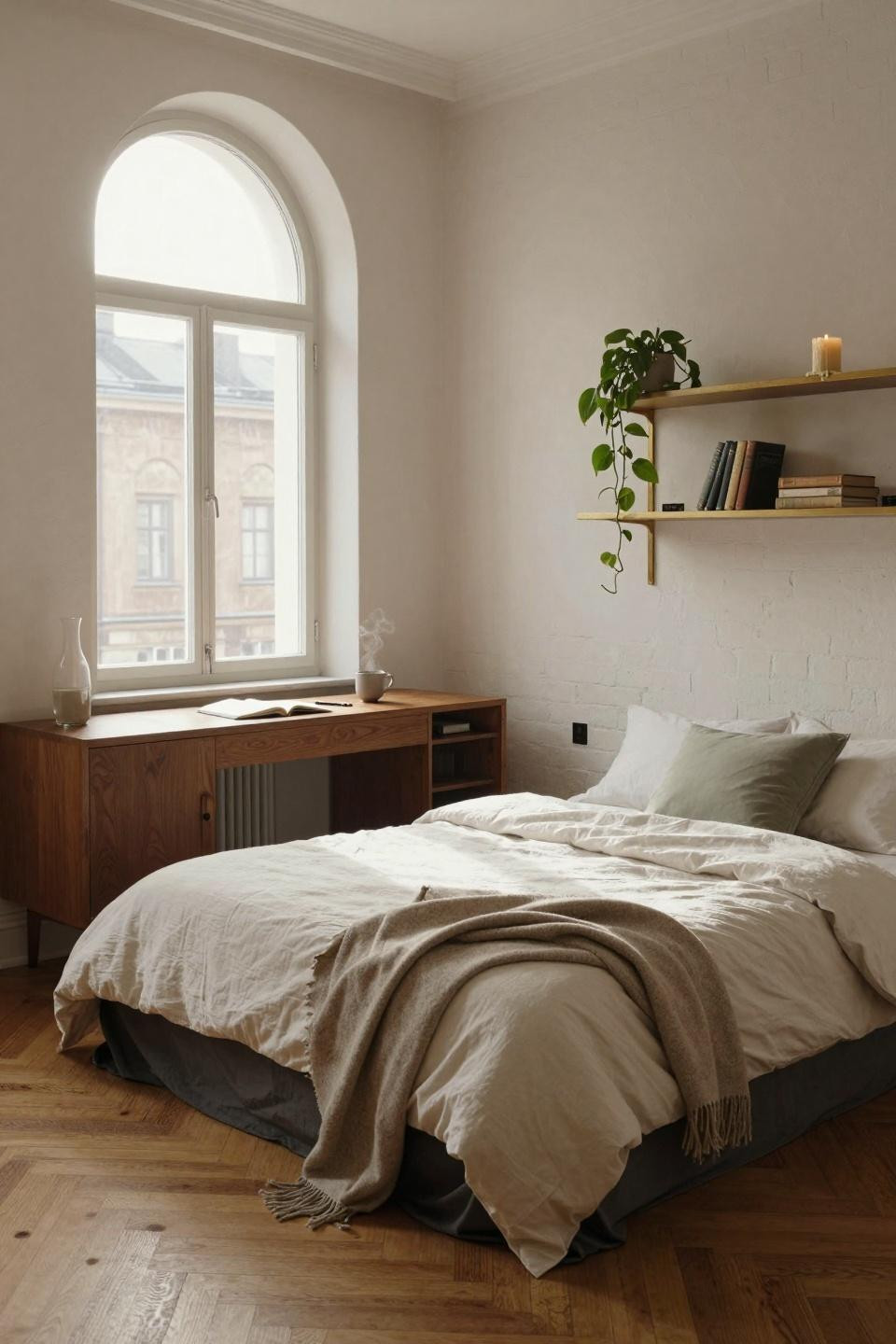
Platform beds make tiny rooms feel less cramped because they sit lower. This one’s dressed in Belgian linen that wrinkles beautifully, which matters when you’re not making your bed every morning.
The floating walnut shelves keep things off the floor without taking up visual space. Display your worn paperbacks and a trailing plant – done.
That oatmeal throw draped over the footboard ties everything together without trying too hard.
European Dorm With Arched Windows And Natural Light
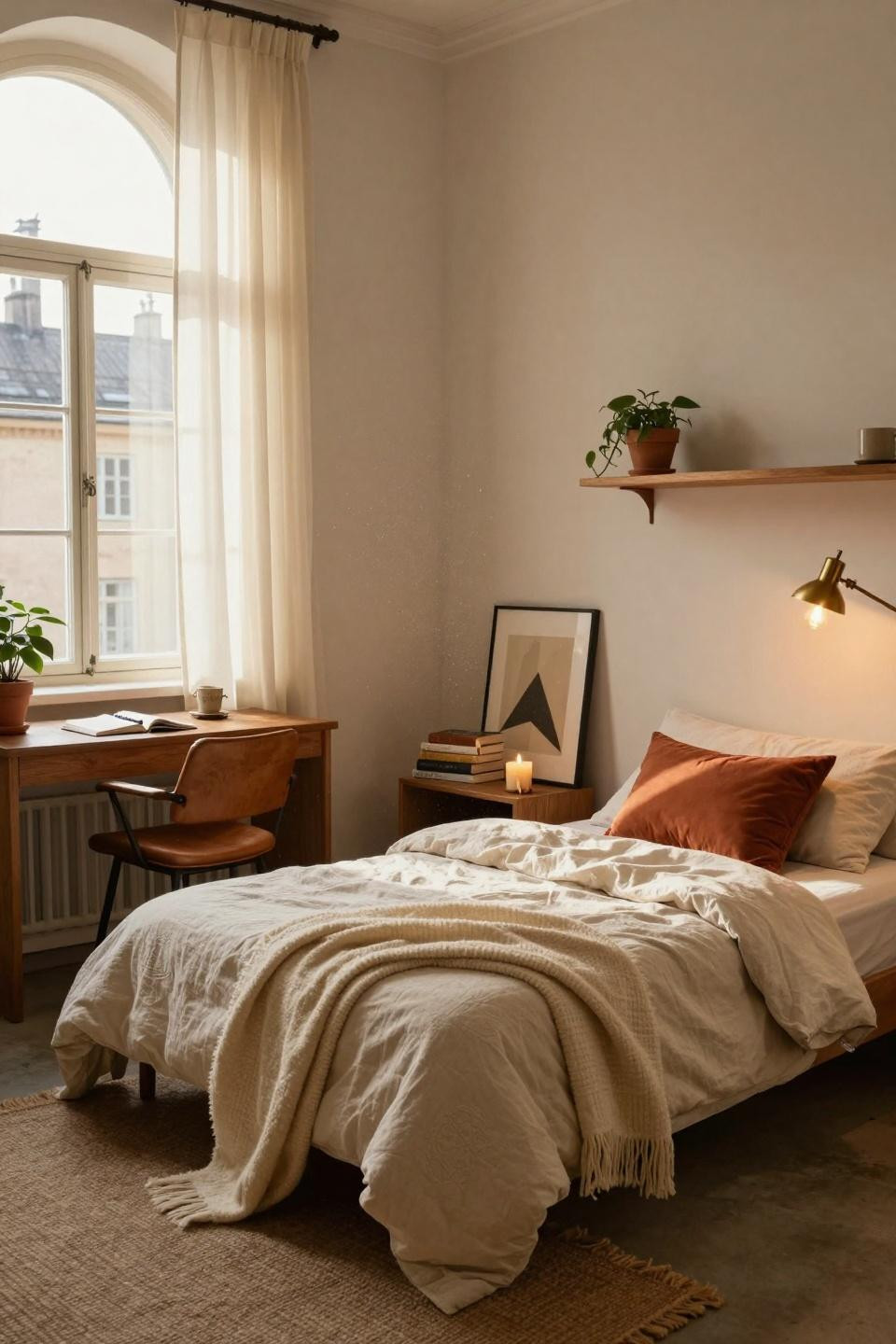
Can’t beat natural light. These tall arched windows flood the space and make the cream walls glow all day.
Ideal for students in older dorms with character. The vintage brass lamp and stacked books lean into that academic vibe without feeling stuffy.
Sheer linen curtains soften everything and give you privacy without blocking that gorgeous light.
Curved Daybed Setup For Lounging And Studying
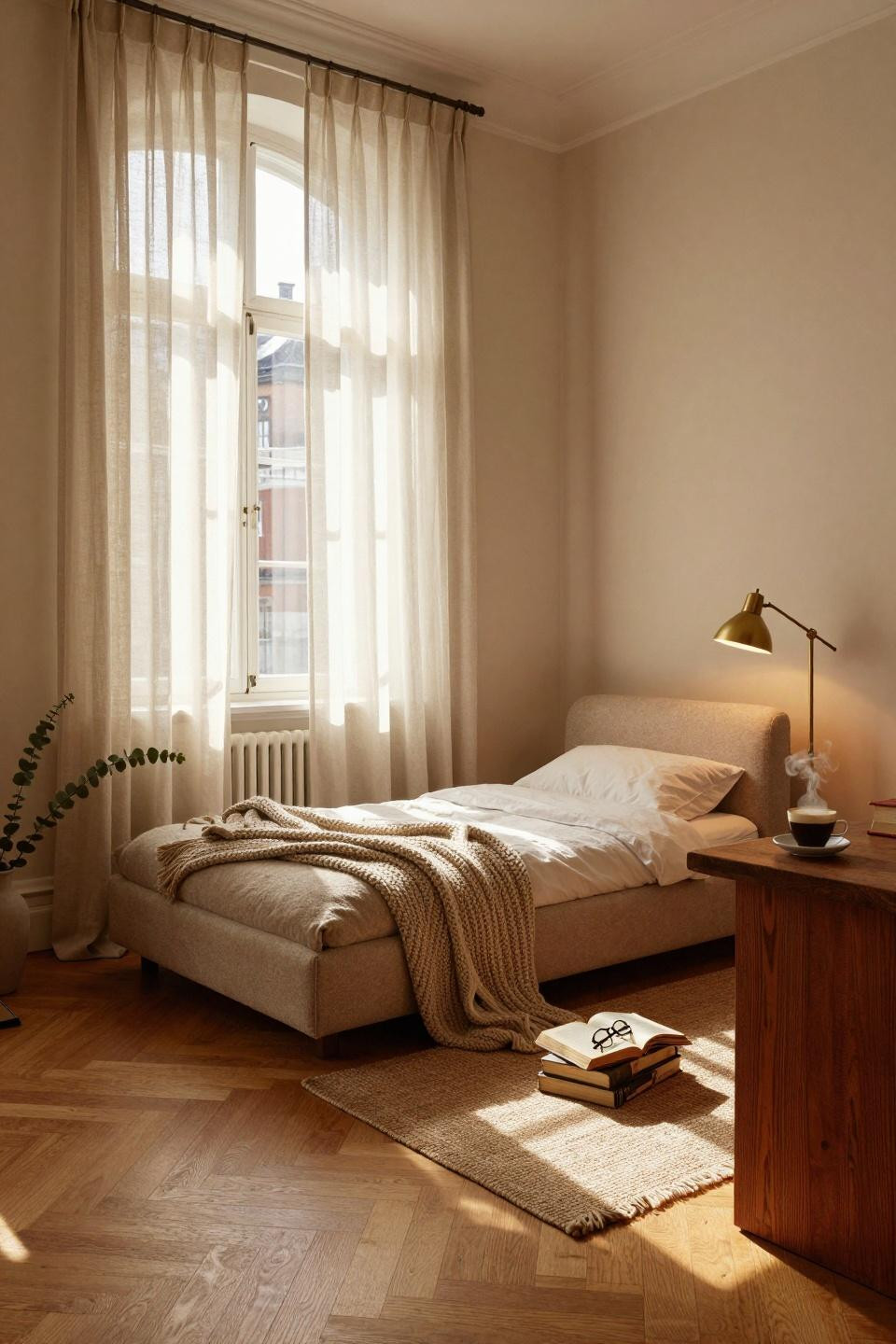
This daybed doubles as a couch, which is clutch when you want to hang with friends but only have one chair. The chunky knit throw makes it look cozy, not dorm-issued.
Works best in narrow rooms where a traditional bed setup would block the flow. You get sleeping space and a lounge spot without cramming furniture everywhere.
That jute rug underneath adds texture without clashing with anything else you might bring in.
Ivory Linen Dorm With Blush Velvet Accents
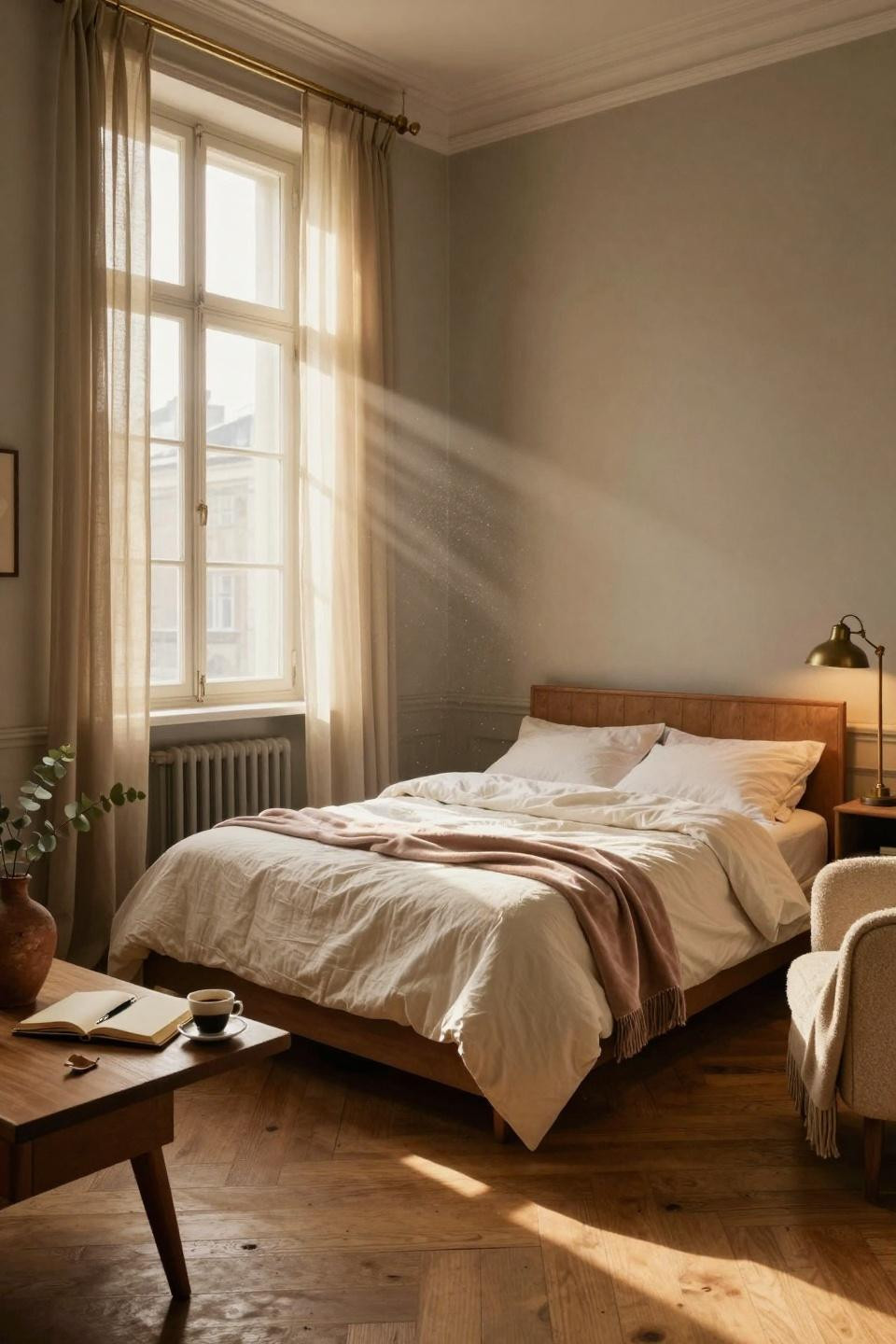
Velvet throws on dorm beds always look more expensive than they are. This blush one pops against the ivory linen without screaming for attention.
Great for anyone who wants their room to feel soft and warm instead of stark white. The greige walls keep it from getting too sweet.
Pair it with a brass lamp and floating oak shelves – the mix of textures is what makes it work.
Low Dorm Bed With Charcoal Bouclé And Brass Hardware
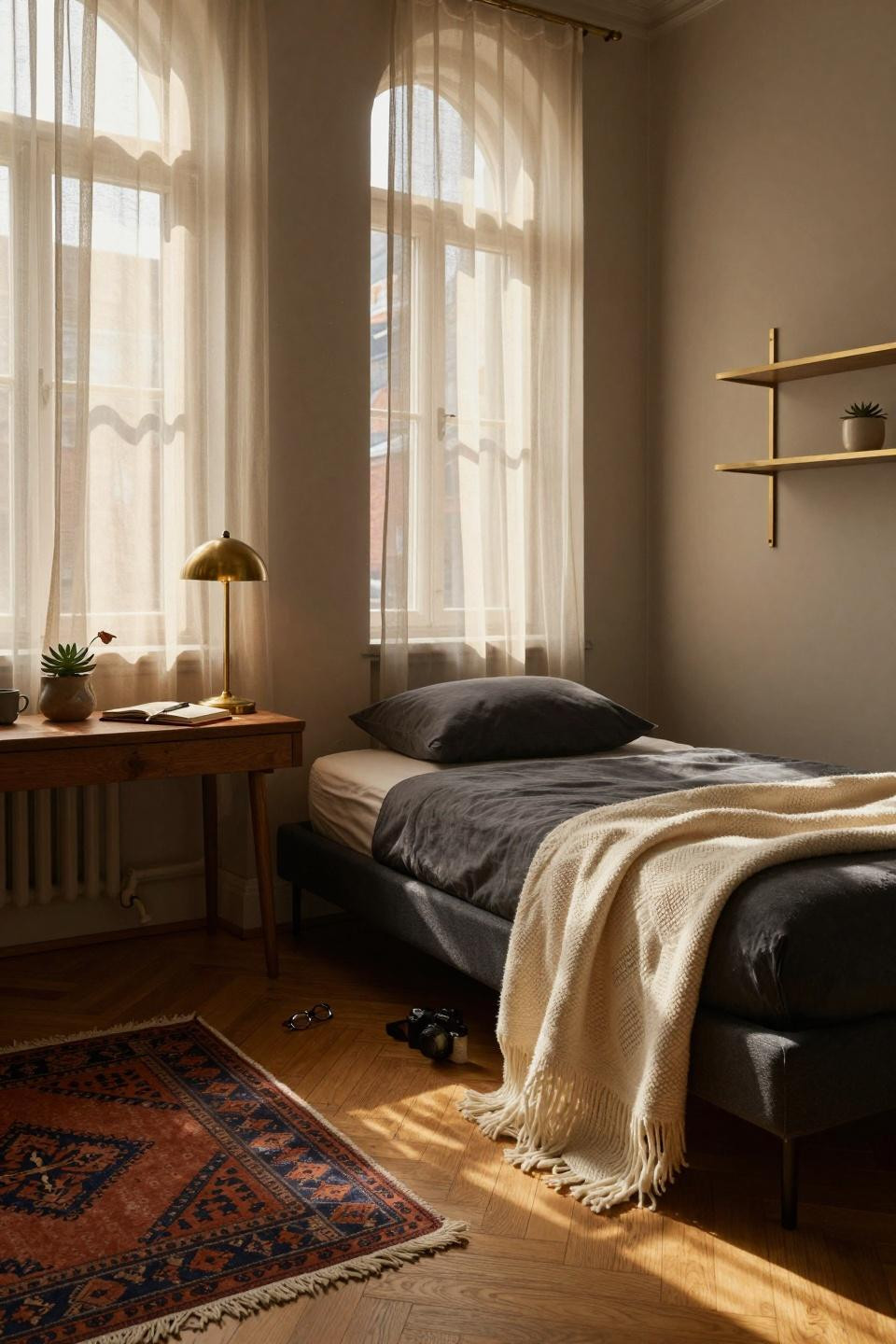
Charcoal bouclé looks ridiculously expensive but you can find affordable versions everywhere now. It hides stains better than white and adds instant sophistication.
This low bed makes the ceiling feel higher, which matters when you’re working with 8-foot ceilings. The brass accents tie into the lamp and wall art.
That trailing pothos on the shelf? Adds life without taking up floor space.
Gallery Wall Single Dorm With Botanical Prints
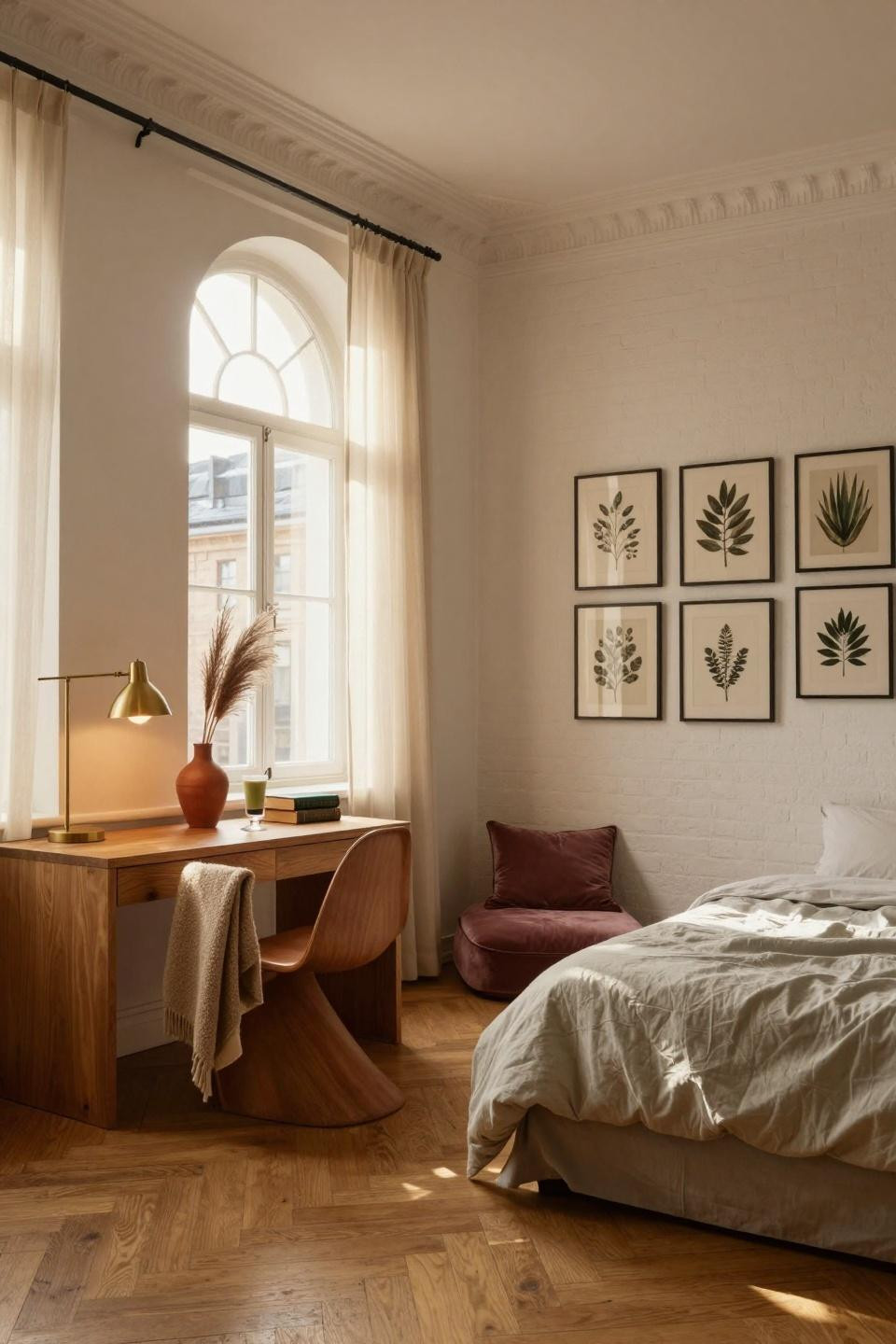
Gallery walls work in dorms if you keep the frames matching. These black frames on cream walls create a clean grid that feels intentional, not cluttered.
Perfect for covering up boring dorm paint without breaking lease rules. Botanical prints never go out of style and work with any color scheme you bring in later.
The low platform bed keeps the focus on the wall art instead of competing for attention.
Minimal Dorm With Floating Oak Desk And Jute Rug
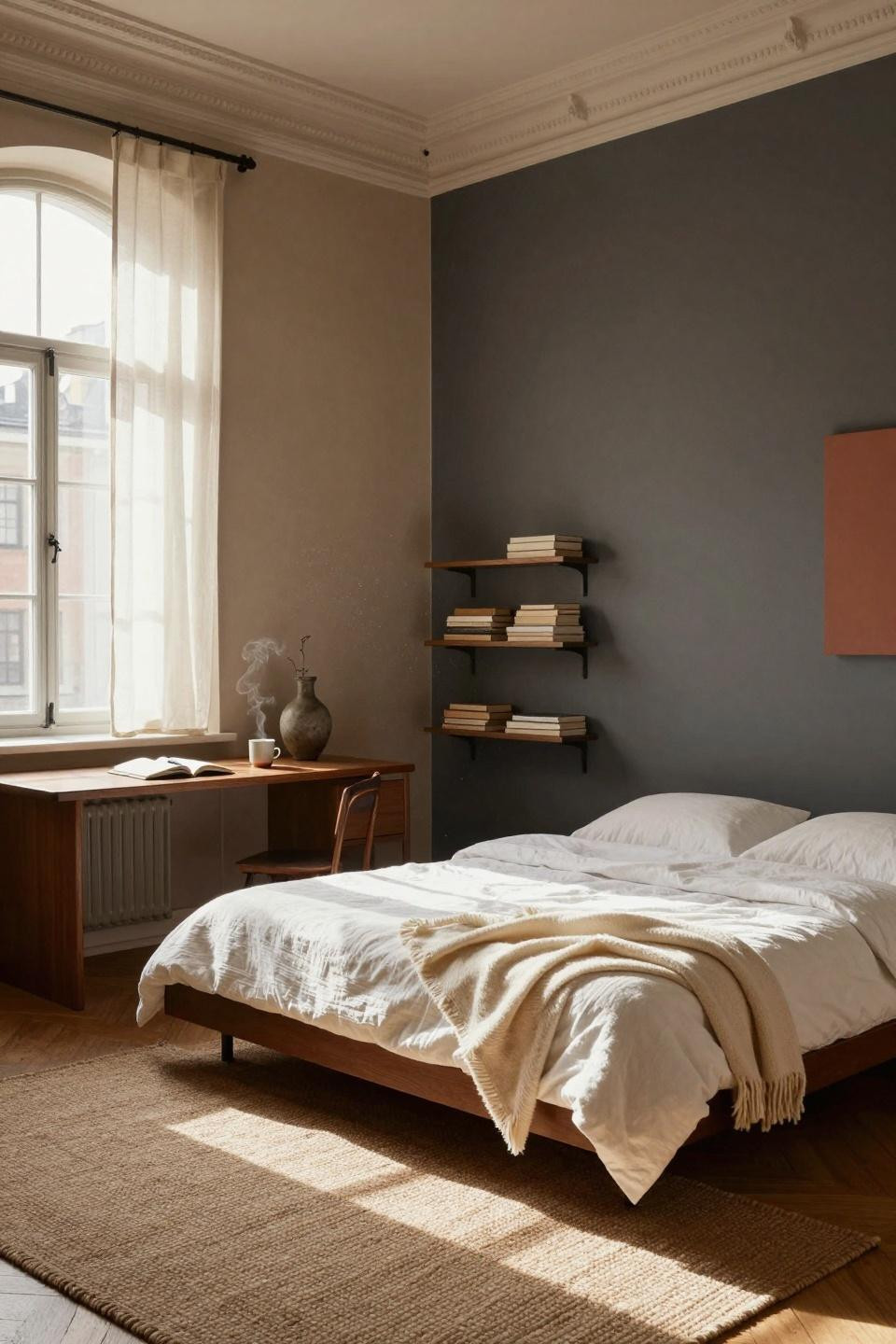
Floating desks save so much floor space because you can tuck your chair completely underneath. This oak one feels warm and custom without the custom price tag.
The jute rug grounds everything and adds that casual texture that makes small rooms feel less cold. It’s durable enough to handle desk chair wheels too.
Great for minimalists who want function over fuss.
Industrial Single Dorm With Unlacquered Brass Lamp
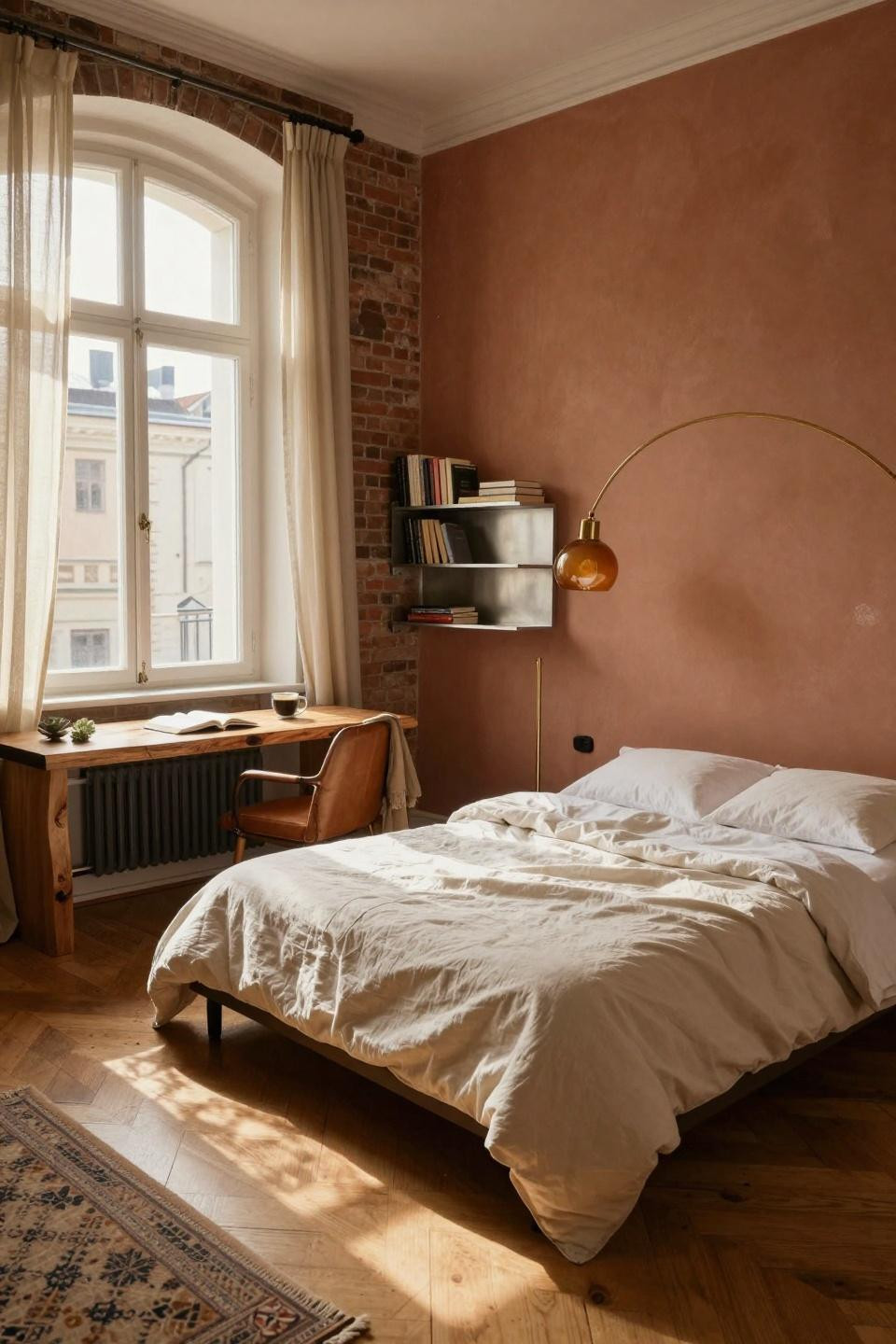
Unlacquered brass develops a patina over time, which means it gets better looking the longer you have it. This arc lamp is the hero piece that makes everything else fall in line.
If your dorm has exposed brick or concrete, lean into the industrial vibe with steel shelving and leather accents. Keeps it masculine without feeling cold.
That rumpled linen duvet softens the whole look so it doesn’t feel too harsh.
Eclectic Dorm Corner With Vintage Books And Plants
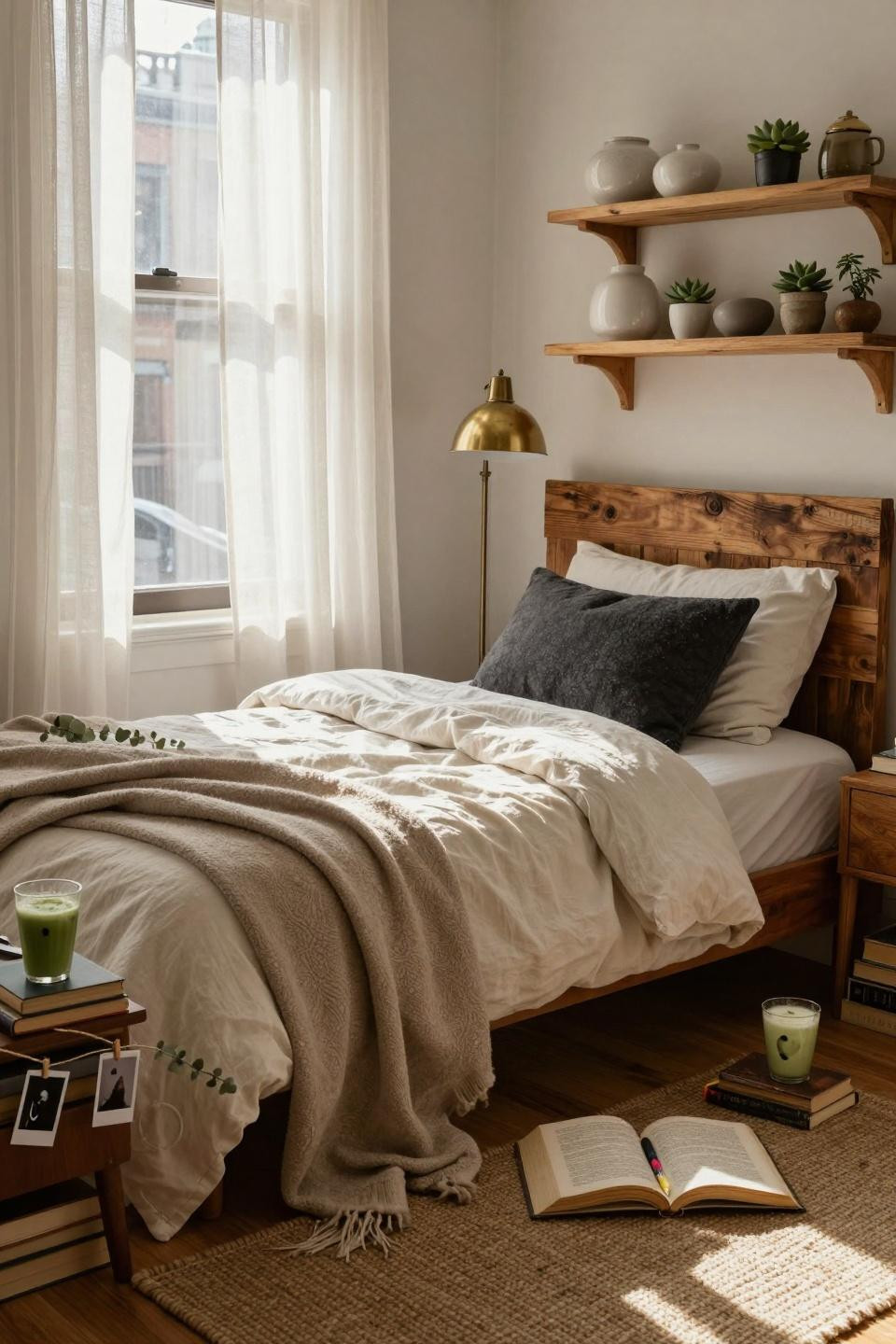
Stack your books in slightly messy piles instead of organizing them perfectly. Looks more lived-in and gives you easy access to what you’re actually reading.
Those eucalyptus stems in a ceramic vase add instant style for like five bucks at the grocery store. They last forever dried out too.
Perfect for anyone who wants their space to feel personal and collected, not catalog-perfect.
Cognac Leather Chair Dorm With Brass Arc Lamp
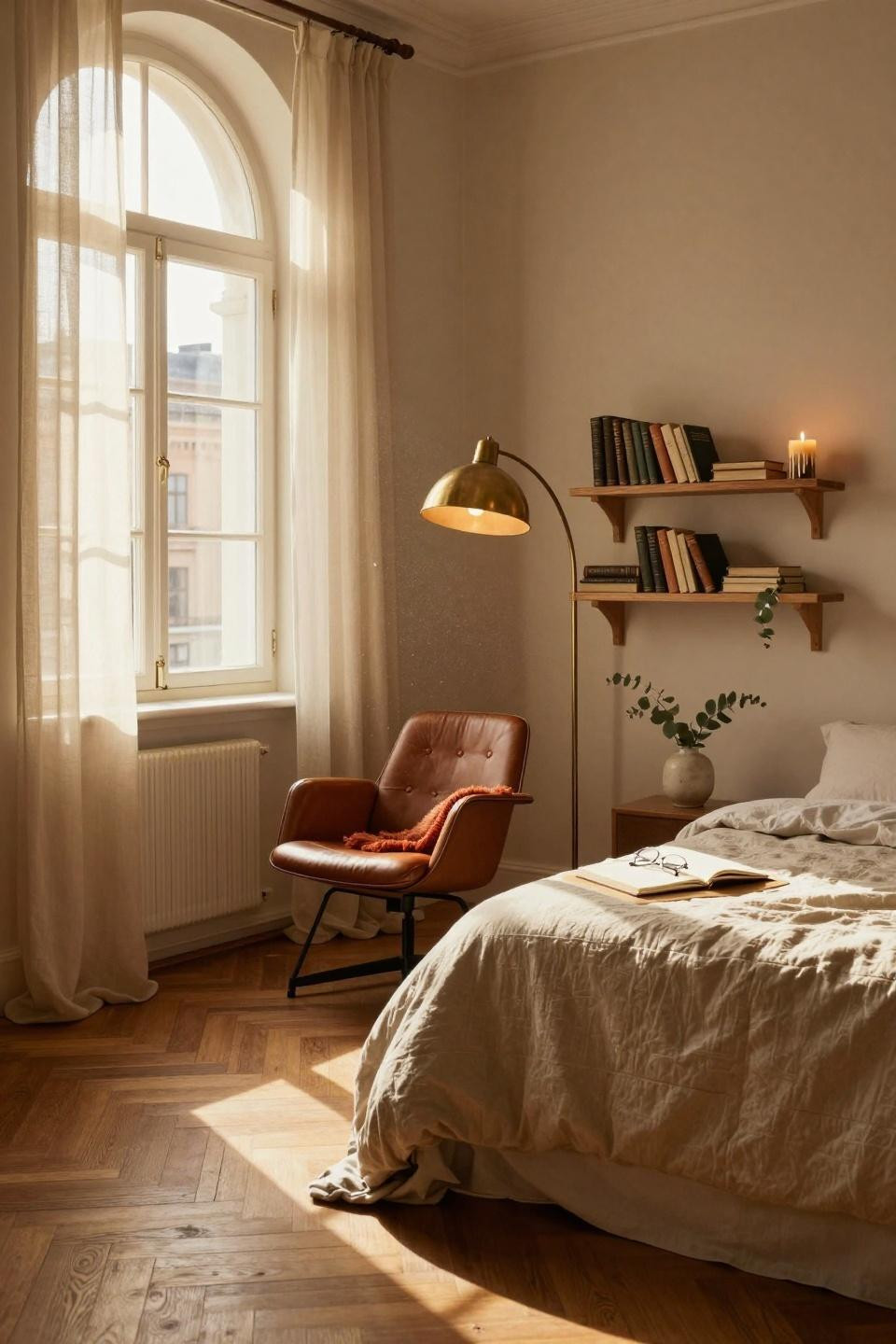
A good reading chair changes everything. This cognac leather one looks expensive, wears in beautifully, and gives you somewhere to sit besides your bed.
The brass arc lamp creates a dedicated reading nook without needing a separate floor lamp taking up space. It’s all about vertical real estate in tiny rooms.
Toss a chunky throw over the arm for extra texture and you’re set.
Walnut Floating Shelf Dorm With Vintage Hardcovers
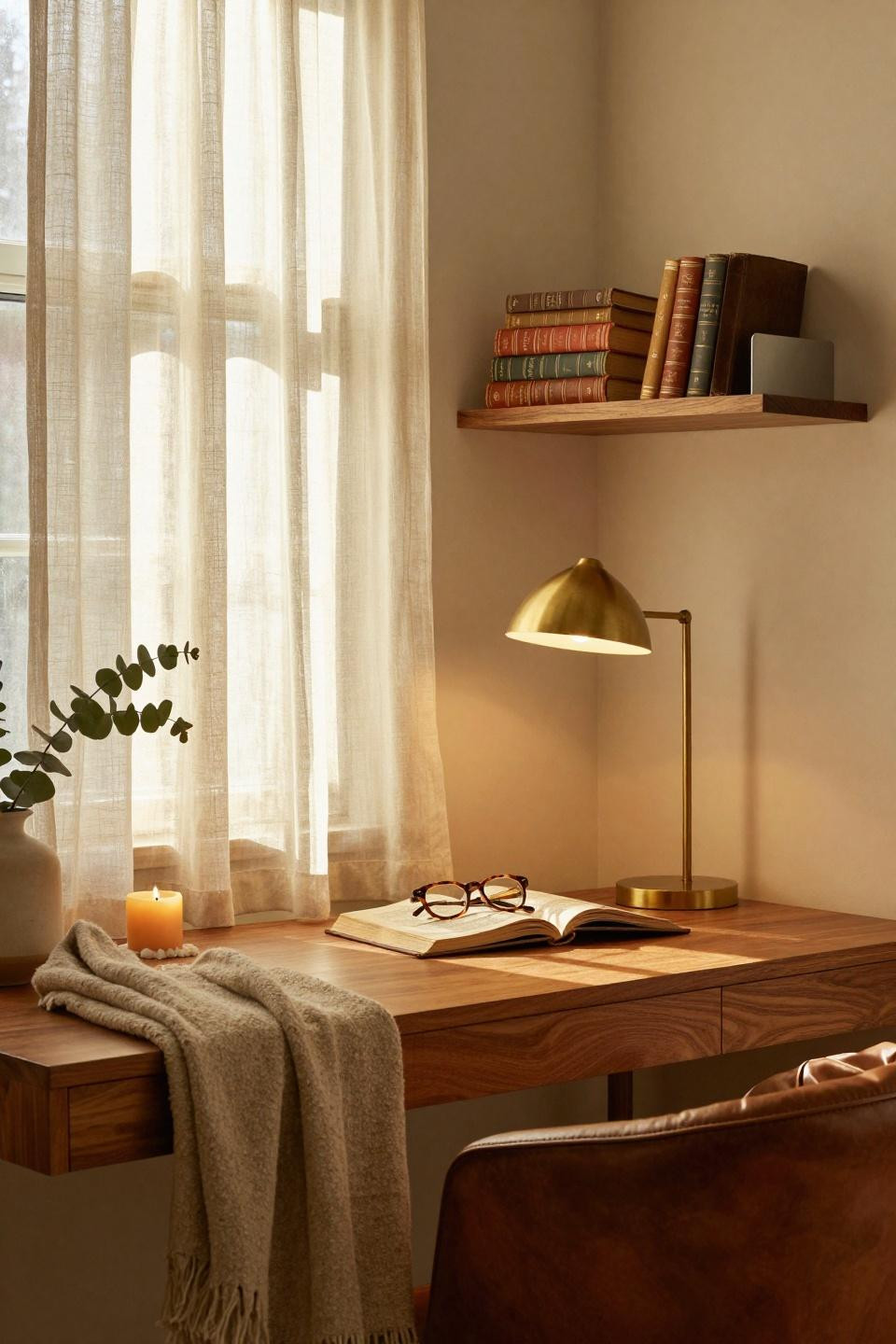
Floating shelves above your desk create storage without eating into your floor space. Display stuff you actually use – vintage books, reading glasses, that candle you never light.
Walnut tones add warmth against cream walls and pair perfectly with brass desk lamps. The grain patterns give it character that particle board never will.
Keep it slightly imperfect – one book lying flat, things stacked at angles. Makes it feel real.
Elevated Twin Bed Dorm With Belgian Linen Layers
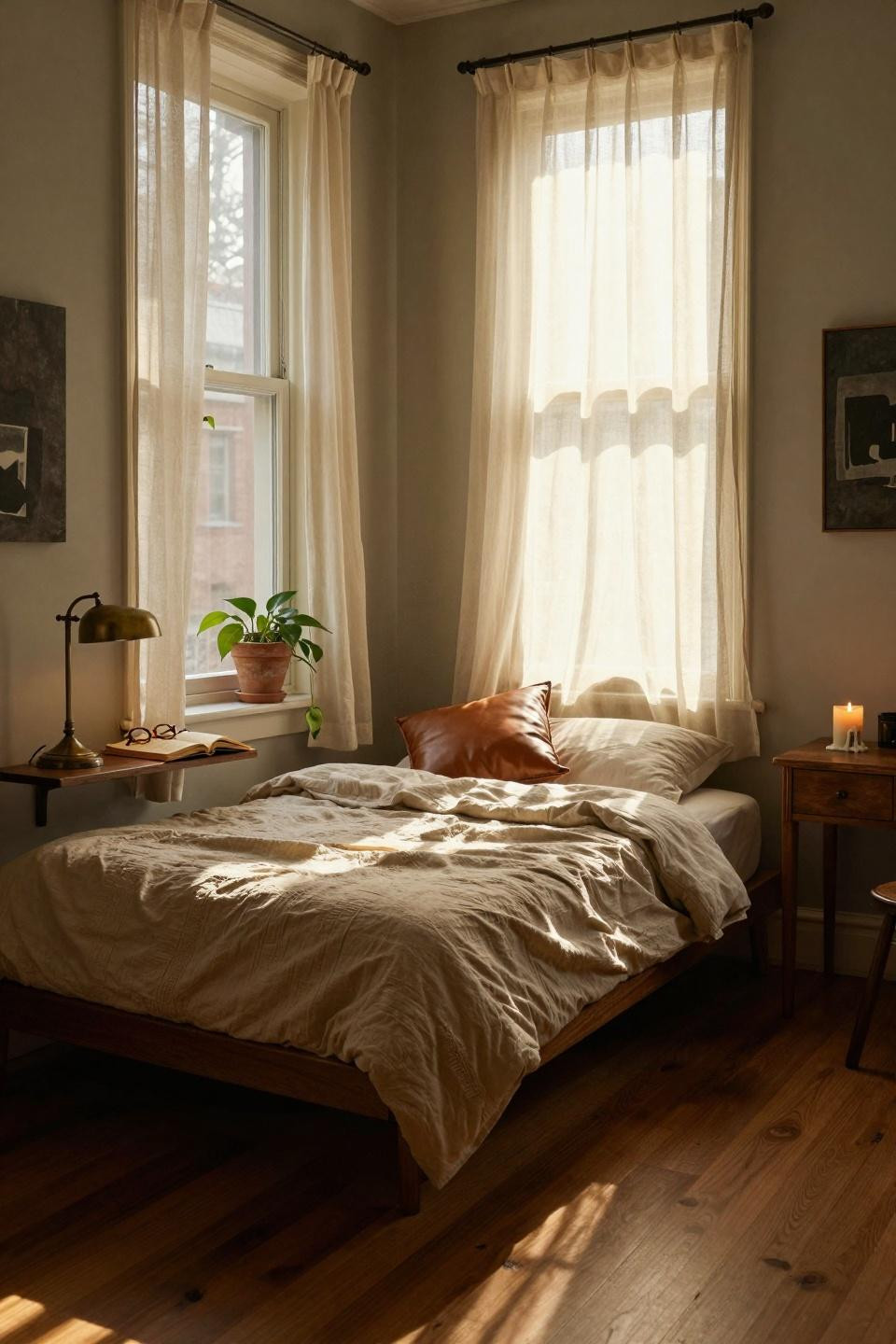
Belgian linen wrinkles are a feature, not a bug. This setup embraces the rumpled look because it photographs well and feels relaxed.
Elevating your bed on a platform gives you storage space underneath for bins and bags. You gain square footage without actually having more room.
Layer different textures – linen duvet, wool throw, velvet pillow. The mix is what makes it interesting.
Black Steel Shelving Dorm For Design Students
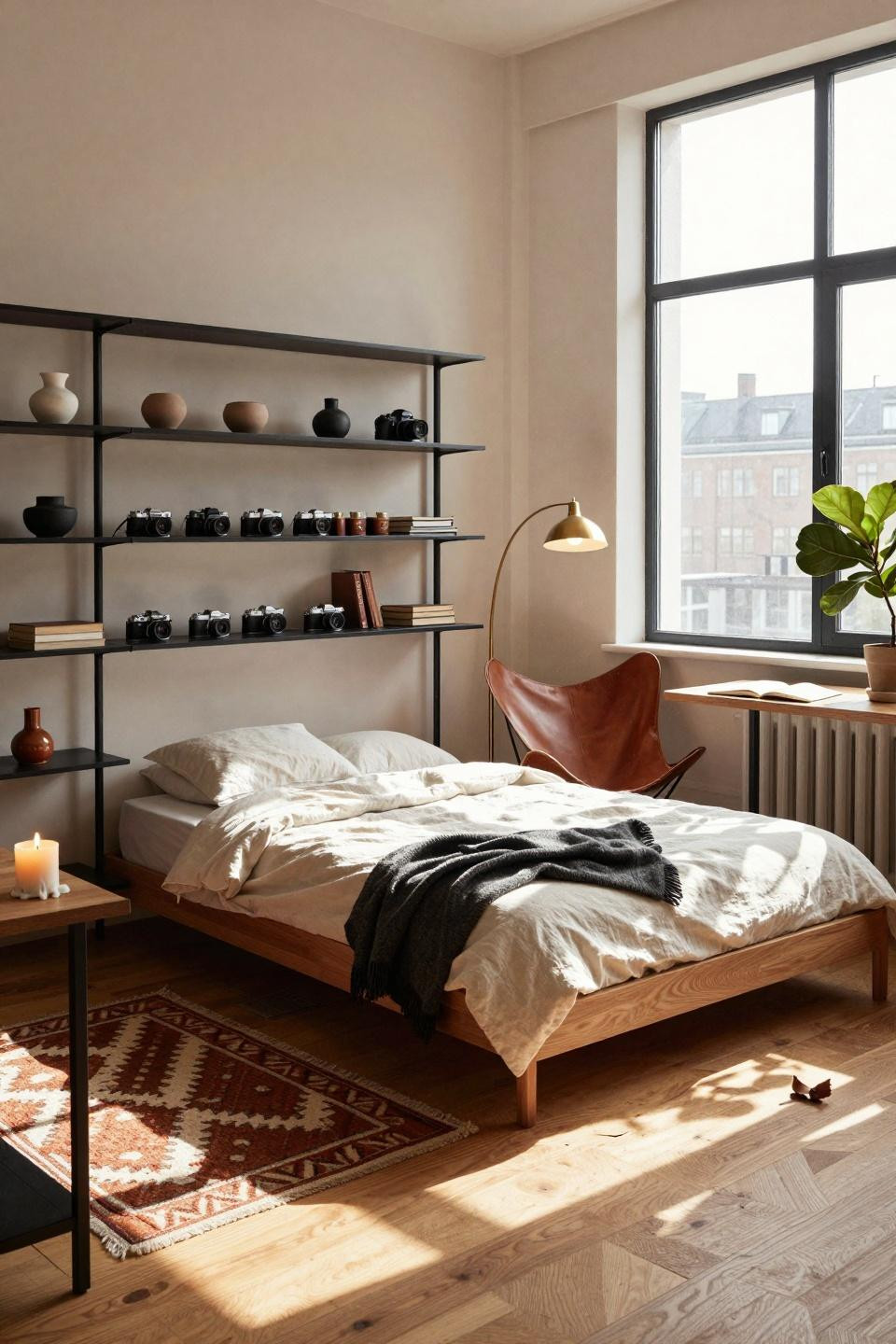
Floor-to-ceiling black steel shelving looks industrial and holds a ton without feeling bulky. Perfect for students with lots of books, ceramics, or camera gear to display.
Mix the hard steel with warm oak and soft textiles so it doesn’t feel like a warehouse. That cognac leather chair and cream linen bedding do the softening work.
Great for art or design students who need functional display space that still looks good.
Scandinavian Minimal Dorm With Birch Platform Bed
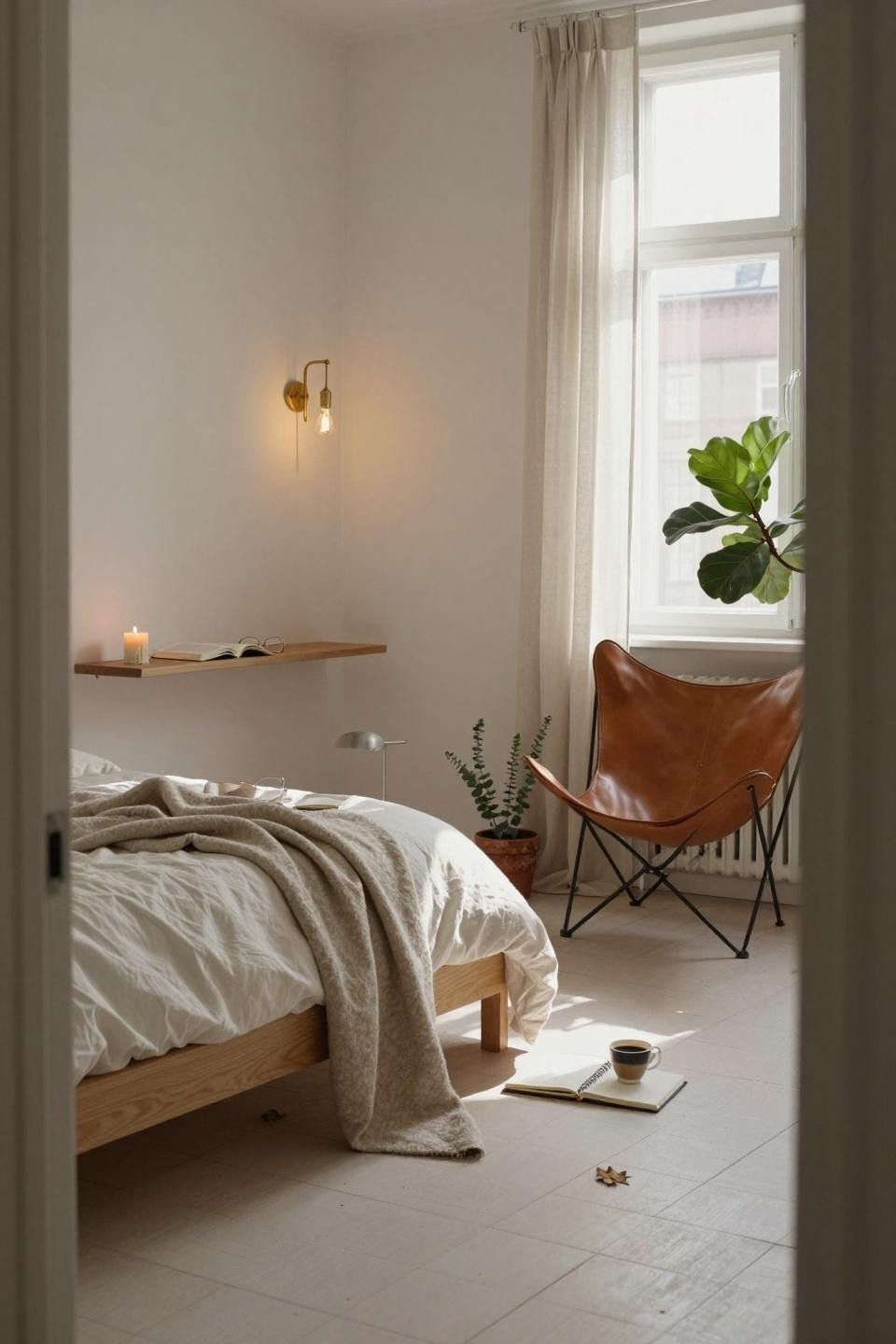
Birch and ivory create that clean Scandinavian look without trying too hard. The natural wood grain adds just enough visual interest against white walls.
This style works best if you’re naturally tidy and like open space. It’s about what you don’t include as much as what you do.
One plant, one throw, one lamp. Keep it simple and let the quality materials do the talking.
Brass Desk Lamp Vignette For Late Night Study
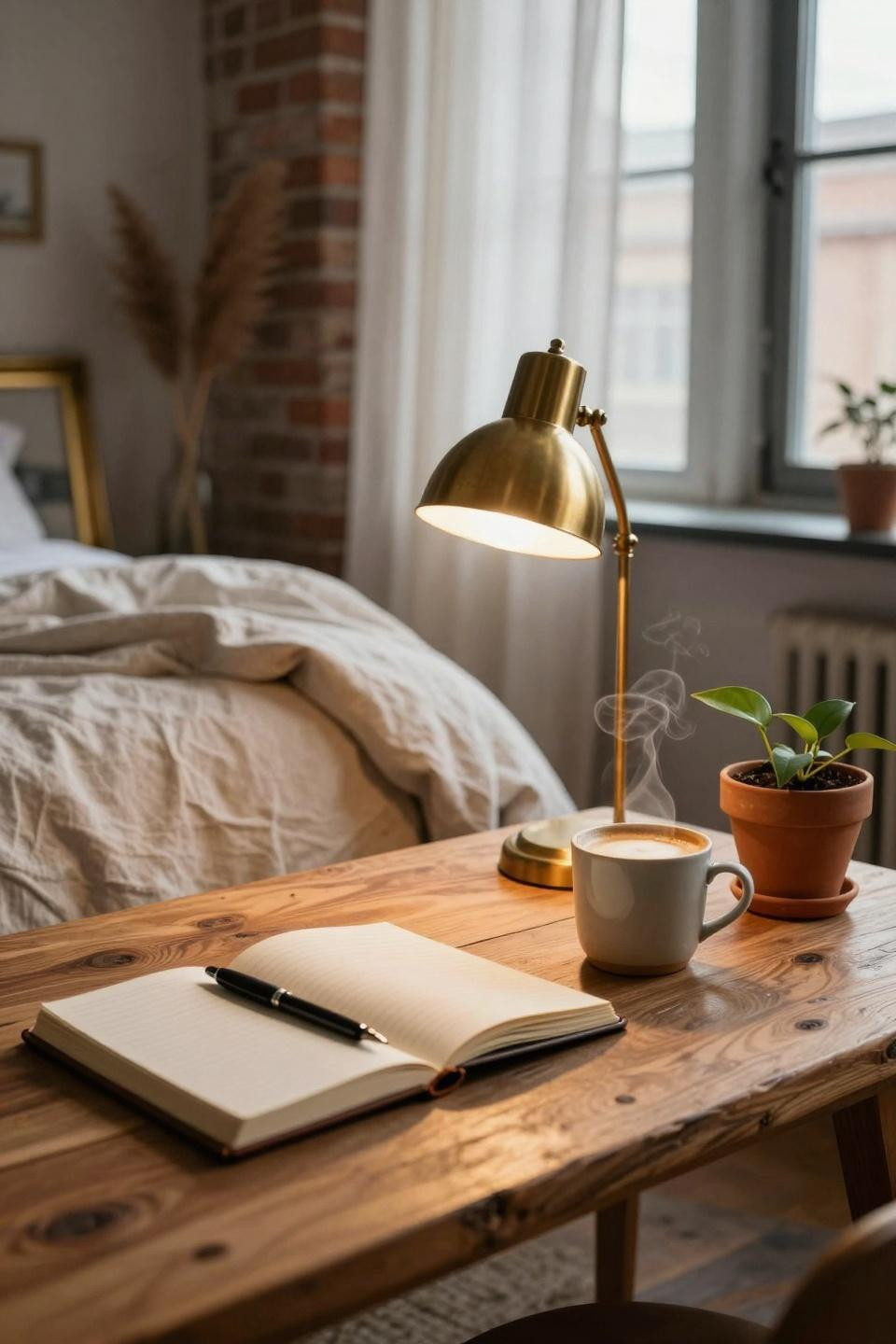
Your desk lamp matters more than you think. This brass one with an Edison bulb creates warm light that’s easier on your eyes than harsh overhead fluorescents.
Pair it with a leather journal, good pens, and a ceramic mug for coffee breaks. Small details make studying feel less miserable.
That trailing pothos in the background adds life without needing much care.
Reclaimed Oak Desk Dorm With Brass Hardware
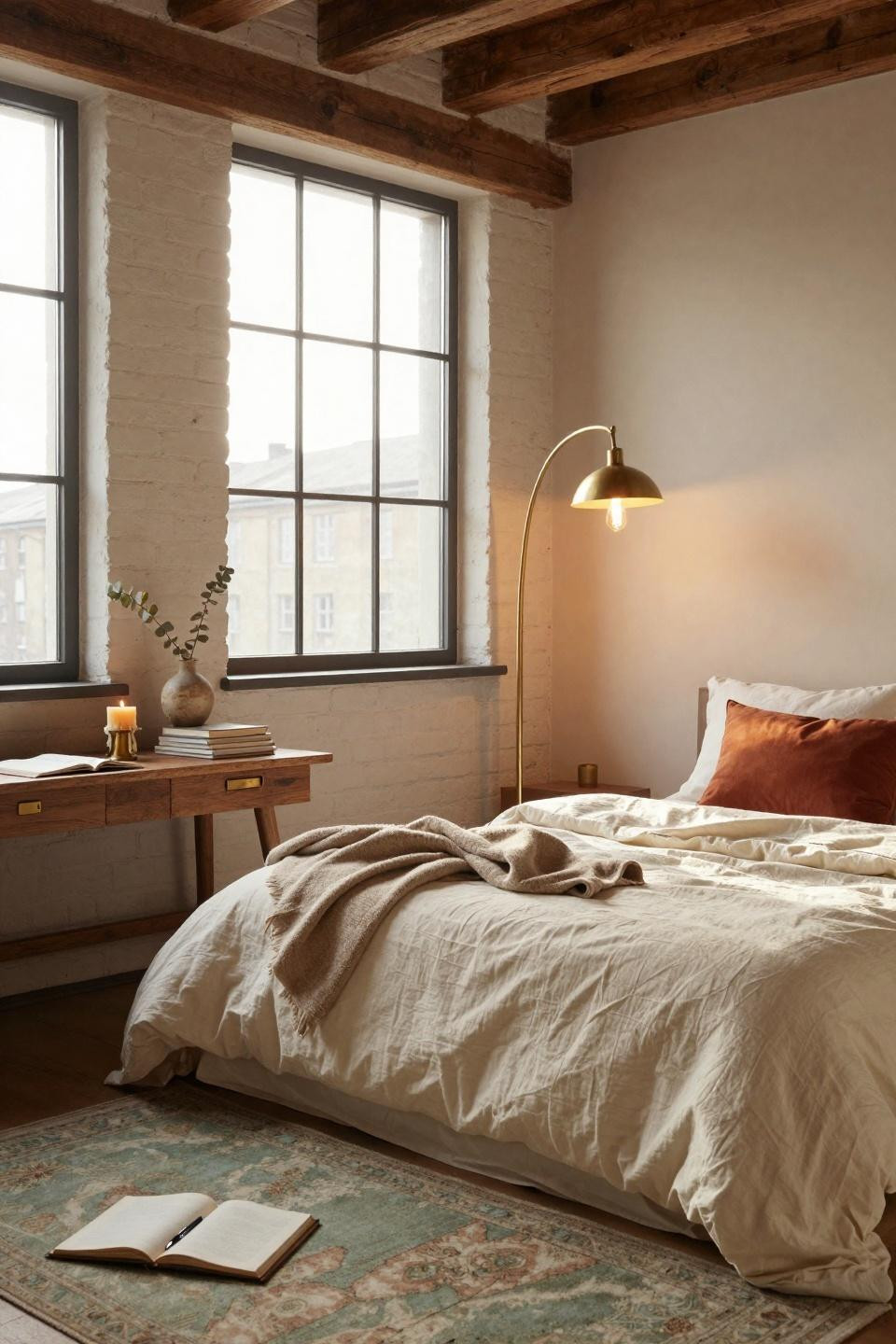
Reclaimed oak desks have visible grain and character that makes them look way more expensive than standard dorm furniture. The rough texture gives your room instant personality.
Brass hardware and unlacquered finishes add warmth and patina over time. This is stuff that looks better with age instead of falling apart.
Perfect for anyone who wants their room to feel grown-up but not corporate.
Sage Green Accent Wall Dorm With Oak Floating Desk
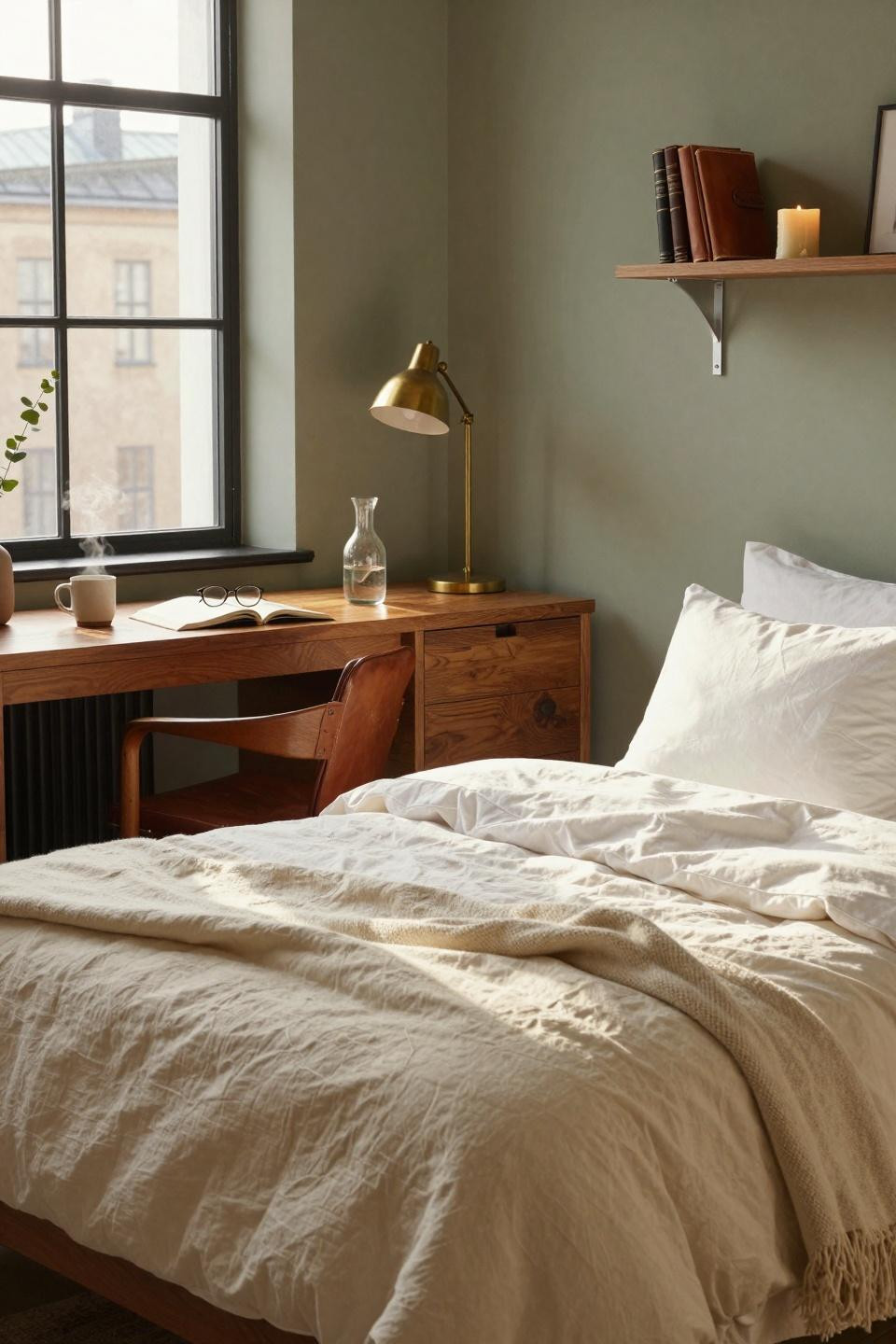
One accent wall changes the whole vibe. This sage green feels calm and modern without being trendy in a way that’ll look dated next year.
Floating desks work great against painted walls because they don’t visually chop up the color. You get the impact without blocking the statement.
Pair it with cream bedding and brass accents to keep it balanced and not too matchy.
Herringbone Oak Floor Dorm With Pressed Botanicals
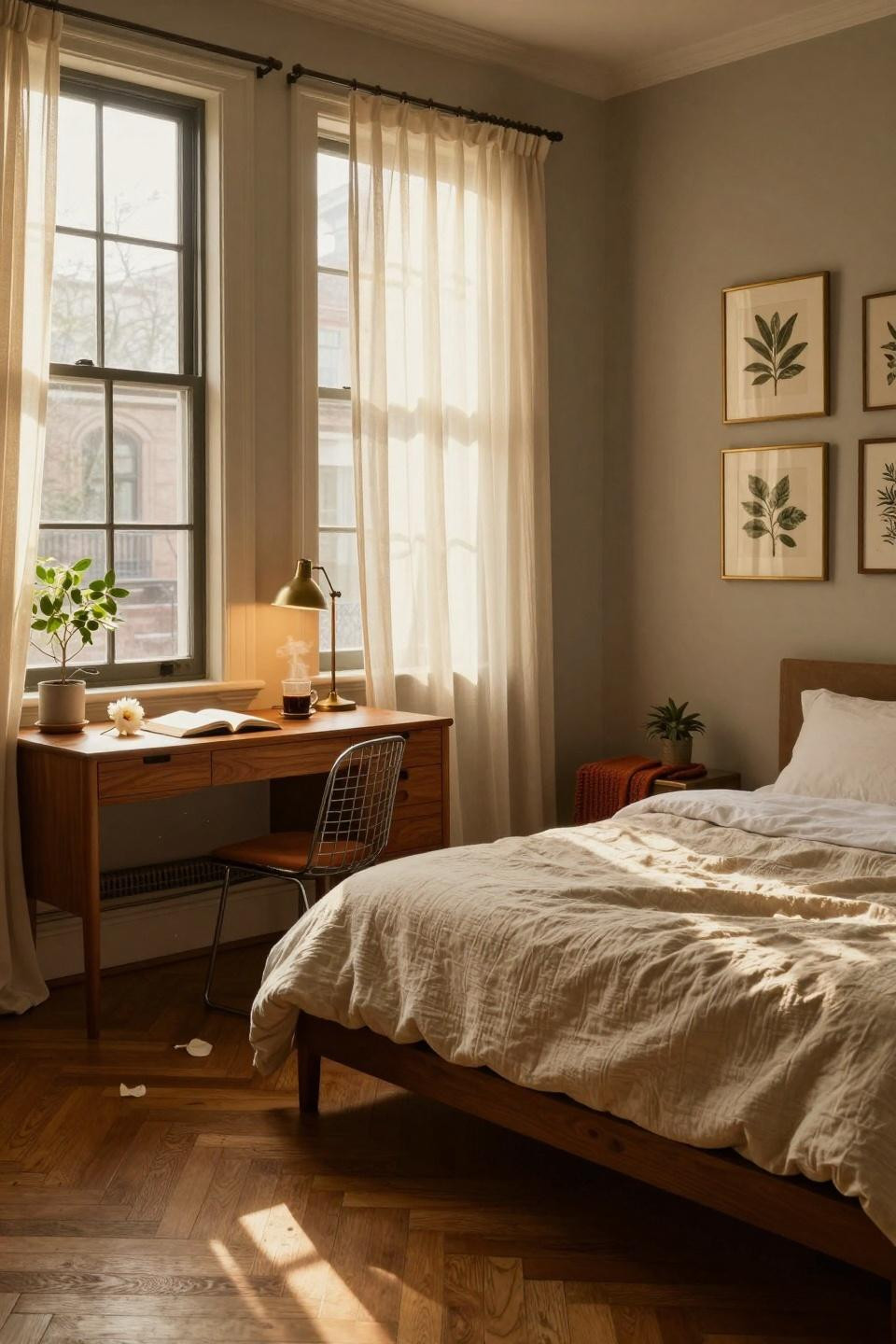
If you’re lucky enough to have original wood floors, show them off. This herringbone oak is the room’s best feature, so everything else stays simple.
Pressed botanical prints in brass frames add a collected, intellectual vibe. They’re cheap to DIY if you find the right flowers and frames.
That rust wool throw adds just enough color without competing with the floor.
Collegiate Loft Dorm With Walnut Desk And Vintage Rug
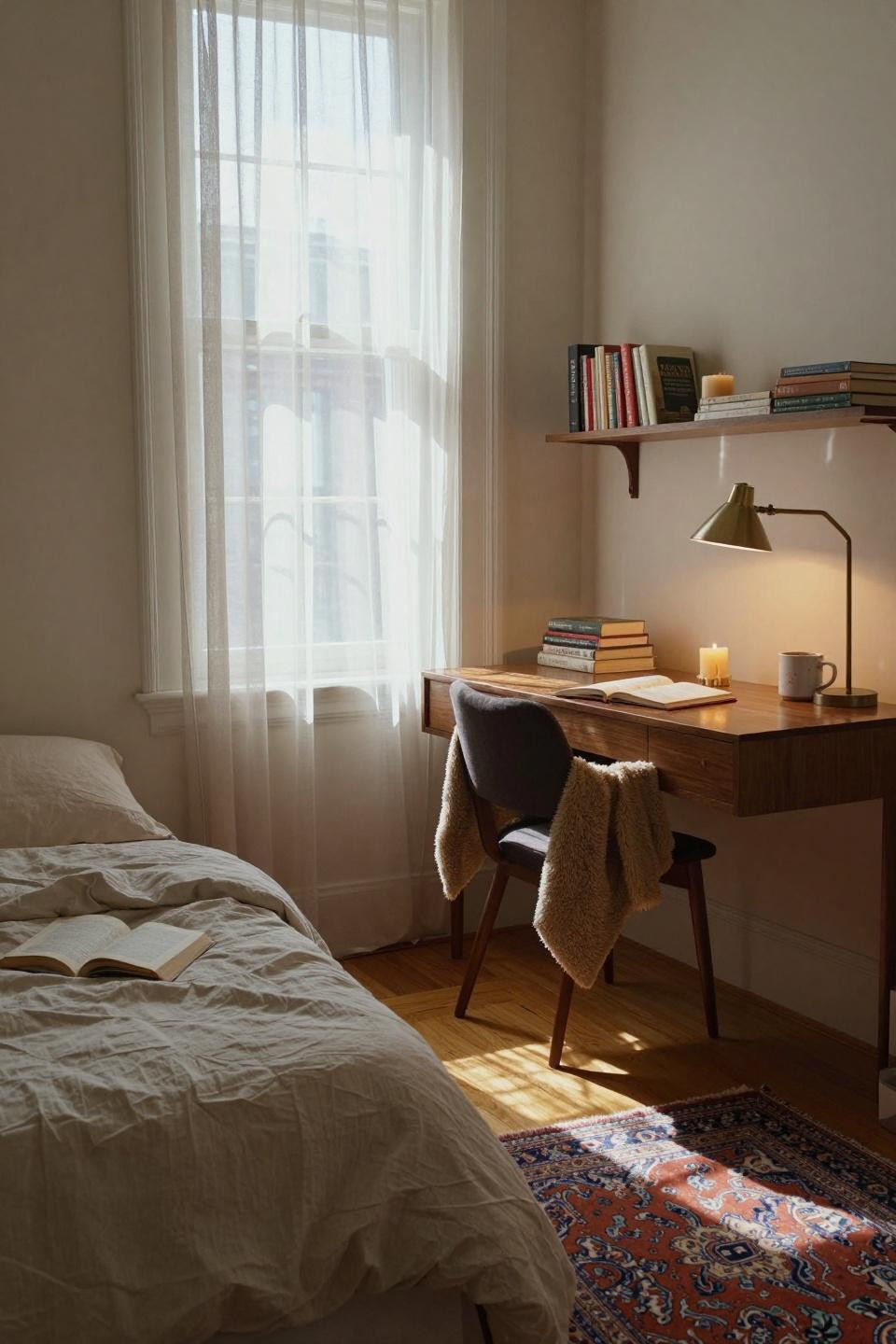
Vintage rugs add instant warmth and hide questionable dorm flooring. This faded Persian style in terracotta and indigo works with everything and hides dirt like a champ.
The walnut desk positioned by the window gives you natural light for studying without needing your overhead on constantly. Saves energy and looks better.
Lofted beds free up floor space underneath for your desk and chair setup, which matters in rooms under 150 square feet.
Burnt Terracotta Dorm With Nubby Linen And Oak Desk
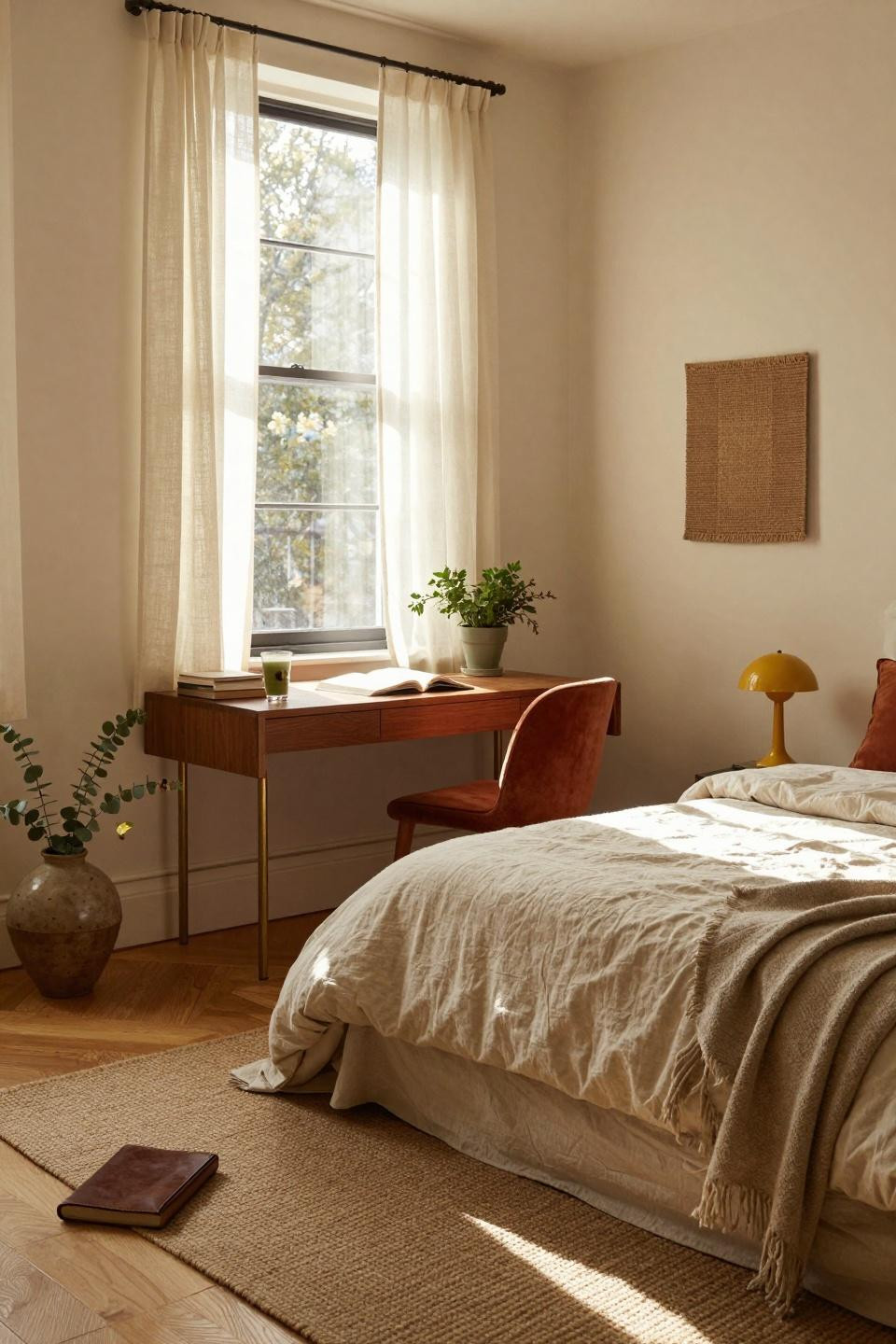
Terracotta accents warm up cream and white spaces without being too loud. This throw pillow and wall hanging combo adds just enough color to make the room feel personal.
Nubby textures – linen, wool, jute – create visual interest when your color palette is neutral. It’s all about layering materials that feel different to the touch.
Great for anyone who wants cozy without going full maximalist.
Handmade Ceramic Mug Desk Corner For Coffee Breaks
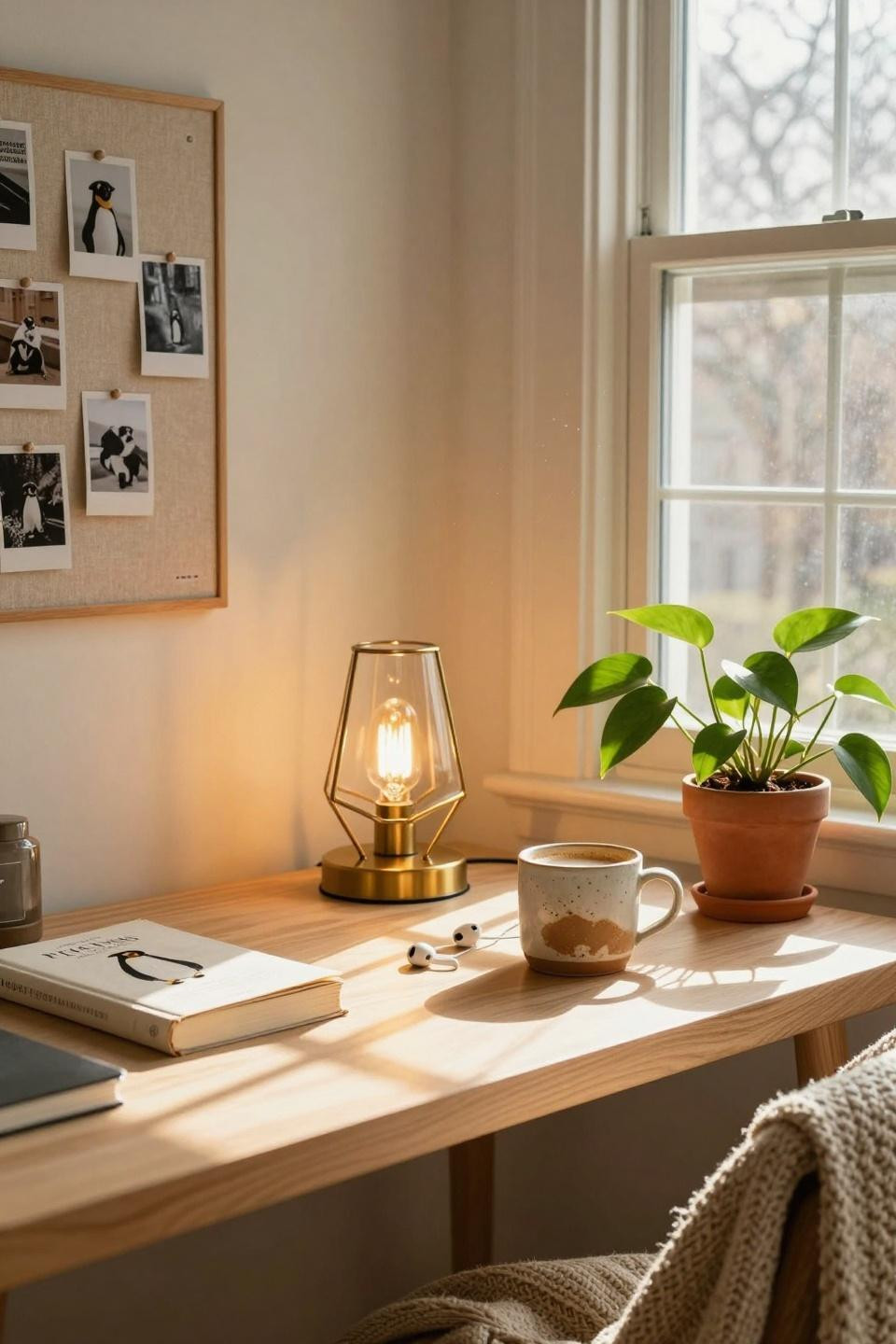
Your desk accessories matter. This handmade ceramic mug, leather journal, and brass lamp combo makes studying feel less institutional.
Keep your earbuds nearby, stack books you’re actually reading, and let a plant trail over the edge of your pinboard. Functional but pretty.
Small touches like this turn a generic desk into your workspace.
Platform Bed Single Dorm With Persian Rug And Brass Task Lamp
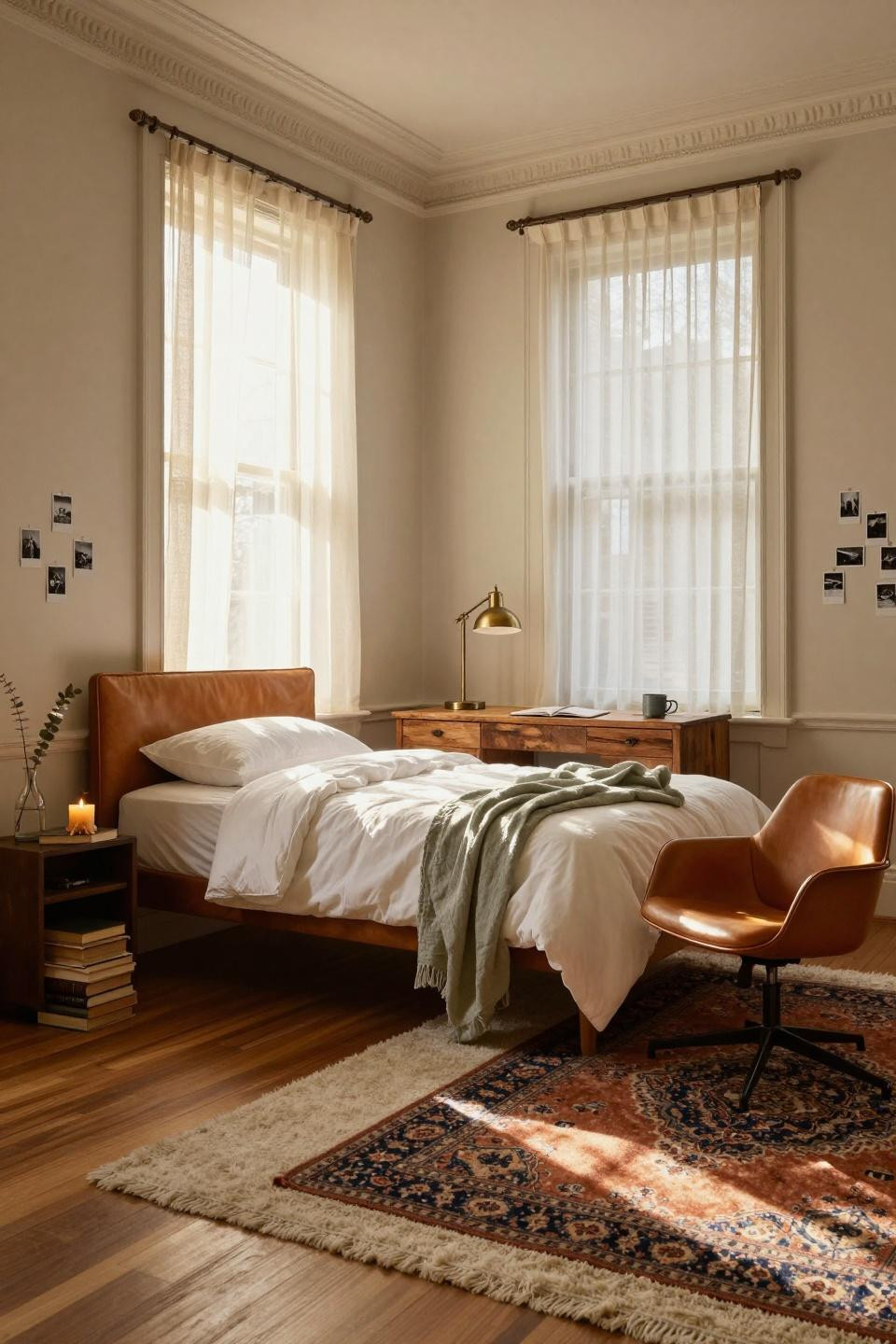
This setup hits all the marks – elevated platform bed for storage, vintage rug for warmth, brass task lamp for focused light. It’s a complete package that actually functions.
The cognac leather headboard adds richness without being too formal. Pair it with white bedding and a sage throw to keep it balanced.
Perfect for students who want their room to feel put-together without obsessing over every detail.
Make Your Space Actually Yours
Single dorm rooms don’t have to feel temporary or generic. When you invest in a few key pieces – good lighting, real textures, stuff you actually like – the space transforms.
Start with one anchor piece that makes you happy, then build around it. Save these ideas to Pinterest and mix what works for your style. Your room should feel like home, not a holding pattern.
Try Saatva risk-free →