
 by
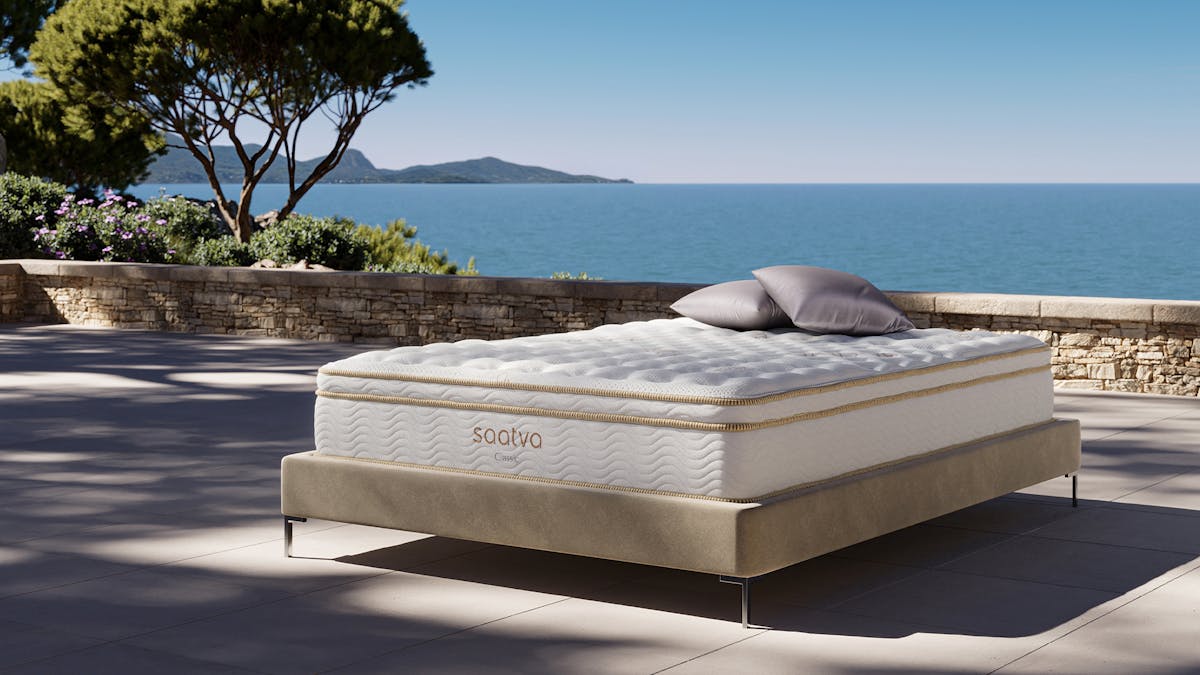
by Saatva Classic
9.1/10
Saatva Classic is the cleanest recommendation because shoppers can choose between two mattress heights without leaving the same product family.
Puffy Cloud
8.7/10
A cleaner budget path for readers who want a simpler foam mattress instead of a thick luxury build.
Amerisleep AS3
8.8/10
A good fit when the reader wants a thicker foam mattress with better support than cheap 10-inch foam.
For most adults, a 12-inch mattress is the better daily-use choice: more comfort layers, better pressure relief, and longer durability. A 10-inch mattress makes sense for bunk beds, children, lightweight stomach sleepers, or tight height clearances. Thickness alone does not determine quality, but 12 inches gives the construction room to support side sleepers and heavier bodies properly. If you want a mattress that sidesteps the thickness dilemma entirely, the Saatva Classic at 11.5 or 14.5 inches offers dual-profile flexibility with a dual-coil construction that outperforms most single-height alternatives.
10 vs 12 inch: what the 2 inches actually change
The difference between a 10-inch and a 12-inch mattress is almost entirely in the comfort layer depth, not the support core. A well-built 10-inch mattress typically carries 2 to 3 inches of comfort foam above a 7 to 8-inch base. A 12-inch mattress gives that comfort layer 3 to 5 inches, which changes how the mattress contours to your body and how long it holds its shape.
The base layer is the structural element that prevents sagging and keeps the spine aligned. Both 10-inch and 12-inch mattresses can have adequate support cores, the real question is whether the comfort layer is thick enough for your body weight and sleep position. For most adults sleeping on their side or sharing a bed, 2 to 3 inches of comfort foam is borderline; 3 to 5 inches is more reliable.
Temperature is the one area where a 10-inch mattress has a marginal advantage: thinner mattresses trap slightly less heat. But material choice matters far more than thickness here. An innerspring 12-inch runs cooler than a dense all-foam 10-inch.
10-inch vs 12-inch mattress: specs at a glance
| Feature | 10-Inch | 12-Inch |
|---|---|---|
| Comfort layer depth | 2-3 inches | 3-5 inches |
| Best for body weight | Under 180-200 lbs | Under 230-250 lbs |
| Side sleeping | Limited pressure relief on hips/shoulders | Better contouring and pressure relief |
| Stomach sleeping | Firmer feel, prevents hip sag | Can feel too soft for strict stomach sleepers |
| Back sleeping | Works for most body types | Works for most body types |
| Couples / shared use | Acceptable for lightweight pairs | Better durability and motion isolation |
| Bunk bed use | Usually fits rail height | Check rail clearance before buying |
| Durability | Can sag faster under heavier loads | More resilient over time |
| Typical price range (queen) | $200-$900 | $300-$1,500 |
| Bed height (with standard frame) | 18-22 inches | 20-24 inches |
Who should choose which thickness
Choose a 10-inch mattress if
- You use a bunk bed or have limited rail-to-slat clearance
- You are a child or a lightweight adult under 150 lbs
- You sleep exclusively on your stomach and want firmer surface contact
- Budget is the primary driver and you are willing to replace sooner
- You sleep on a high bed frame and want to keep total bed height reasonable
Choose a 12-inch mattress if
- You sleep on your side, the extra comfort layer depth relieves hip and shoulder pressure
- You weigh over 180 lbs or share the bed with a partner
- You want a mattress that holds its shape for 7 to 10 years without sagging
- You are a combination sleeper who changes positions through the night
- You want genuine motion isolation, which requires enough foam depth to absorb movement
How sleep position drives the decision
Sleep position is the single most reliable predictor of which thickness will work for you.
Side sleepers put concentrated pressure on the hip and shoulder. A comfort layer shallower than 3 inches cannot fully absorb that load, and you will feel the support core pushing back, which causes pressure points and poor blood circulation. A 12-inch mattress with 3 to 4 inches of foam is the safer choice here.
Back sleepers distribute weight across a wider surface and are less dependent on comfort layer depth. A 10-inch mattress with a quality support core works well, as does a 12-inch. The priority for back sleepers is lumbar support, not pure thickness.
Stomach sleepers need the hips held up, if the comfort layer is too deep, the hips sink and the lumbar spine arches upward. A 10-inch mattress with a firmer feel is more appropriate for strict stomach sleepers. If you buy a 12-inch, choose a firm firmness option.
Combination sleepers move through positions throughout the night and benefit from the pressure relief a 12-inch provides during side-sleeping phases without being penalized in back or stomach positions, especially if the mattress uses a coil hybrid construction that is more responsive than pure foam.
Body weight and thickness: the practical guide
Body weight determines how deeply you compress the comfort layer. At 150 lbs, a 2-inch comfort layer leaves about 1 inch of uncompressed foam above the support core, adequate. At 230 lbs, that same 2-inch layer can compress fully to the coil or foam base, eliminating the cushioning effect entirely and accelerating wear.
A rough guide:
- Under 150 lbs: 10-inch is sufficient for most positions and materials
- 150-200 lbs: 10-inch works for back and stomach sleepers; 12-inch is better for side sleepers
- 200-250 lbs: 12-inch is the minimum; prioritize a coil hybrid for support core durability
- Over 250 lbs: look at 13 to 14-inch options, or a mattress specifically rated for heavier bodies
Durability and sagging: what thickness actually predicts
A 12-inch mattress is not automatically more durable than a 10-inch, durability depends primarily on material quality and density. A high-density 10-inch foam mattress will outlast a cheap 12-inch one. That said, thickness does affect longevity indirectly: a thicker comfort layer takes longer to compress to the point of bottoming out. For two adults sharing a bed, a 12-inch simply has more material buffer before the mattress degrades to the point of disrupting sleep.
All-foam mattresses are more susceptible to sagging under weight than hybrid or innerspring models, regardless of thickness. If durability is a concern, a coil-based construction is more important than choosing 12 inches over 10.
Temperature regulation: thickness vs materials
Thicker mattresses, particularly all-foam models, can retain more heat. But this is largely a material issue rather than a thickness issue. Memory foam is the main culprit. Open-cell foam, gel-infused foam, latex, or coil-based constructions all sleep cooler, and that property holds whether the mattress is 10 or 12 inches.
If you sleep hot and want a 12-inch mattress, choose one with an innerspring or pocketed coil support core (which allows airflow), or a latex comfort layer. Gel-infused memory foam helps but does not fully offset the heat retention of dense closed-cell foam.
For most adults, a 12-inch mattress with a quality support core is the safer long-term choice, more comfort layer depth, better pressure relief, and more durability margin. A 10-inch mattress is the right pick for bunk beds, children, lightweight stomach sleepers, or situations where total bed height needs to stay low. The 2-inch difference matters most at the extremes of body weight and sleep position.
Frequently asked questions
Is a 12-inch mattress significantly better than a 10-inch?
For most adult sleepers, yes, the extra 2 inches adds comfort layer depth that improves pressure relief and extends the lifespan of the mattress before sagging sets in. The gap matters most for side sleepers and anyone over 180 lbs. For stomach sleepers or children, the difference is minor.
Can a 10-inch mattress cause back pain?
It can, if you are heavy enough or sleep in a position that requires more comfort layer cushioning than the mattress provides. When the comfort foam compresses fully and you are resting on the support core, pressure points develop at the hips and shoulders, and spinal alignment suffers. A 12-inch mattress gives that foam layer more working room.
Is a 10-inch mattress too thin for adults?
Not necessarily. A 10-inch mattress with quality construction is appropriate for lightweight adults, stomach sleepers, and single sleepers under 180 lbs. The concern with 10-inch mattresses is that cheaper versions compress quickly under heavier loads, leaving very little comfort layer after a year or two of use.
What total bed height is ideal?
Most people find a total bed height of 20 to 25 inches (from floor to sleeping surface) comfortable for getting in and out of bed. A 10-inch mattress on a standard platform frame sits at around 18 to 22 inches; a 12-inch at 20 to 24 inches. Seniors or people with mobility issues generally prefer the higher range for easier transitions.
Does mattress thickness affect motion isolation?
Indirectly. More comfort foam generally absorbs more motion before it travels across the bed. However, the construction type matters more: pocketed coil hybrids isolate motion well regardless of overall thickness, while thin all-foam mattresses can transmit movement if the foam density is low. For couples, choose a hybrid or memory foam construction over simply choosing a thicker option.
If you buy through links on this page, we may earn a commission at no extra cost to you.
OUR PICK
Height matters less than what fills it: the Saatva Classic comes in two height options so you can match your frame, per saatva.com.