
 by
by Our #1 recommendation for mattress for athletes
Amerisleep AS3
For recovery-focused athletes who prefer foam contouring over a springy coil feel, the AS3 delivers excellent pressure relief and motion isolation at a competitive price point.
Our first recommendation for mattress for athletes is the Amerisleep AS3. For recovery-focused athletes who prefer foam contouring over a springy coil feel, the AS3 delivers excellent pressure relief and motion isolation at a competitive price point. The Saatva Classic is our runner-up.
Amerisleep AS3
8.6/10
- HIVE 5-zone support eases pressure on hips and shoulders after intense training sessions
- Plant-based Bio-Pur open-cell foam sleeps cooler than traditional memory foam
- CertiPUR-US certified, made in the USA
- Motion isolation rated 10/10 by NapLab, so partners sleep undisturbed
- Average edge support for an all-foam build
- Athletes over 230 lb training heavy loads may prefer the firmer AS5 Hybrid
For recovery-focused athletes who prefer foam contouring over a springy coil feel, the AS3 delivers excellent pressure relief and motion isolation at a competitive price point.
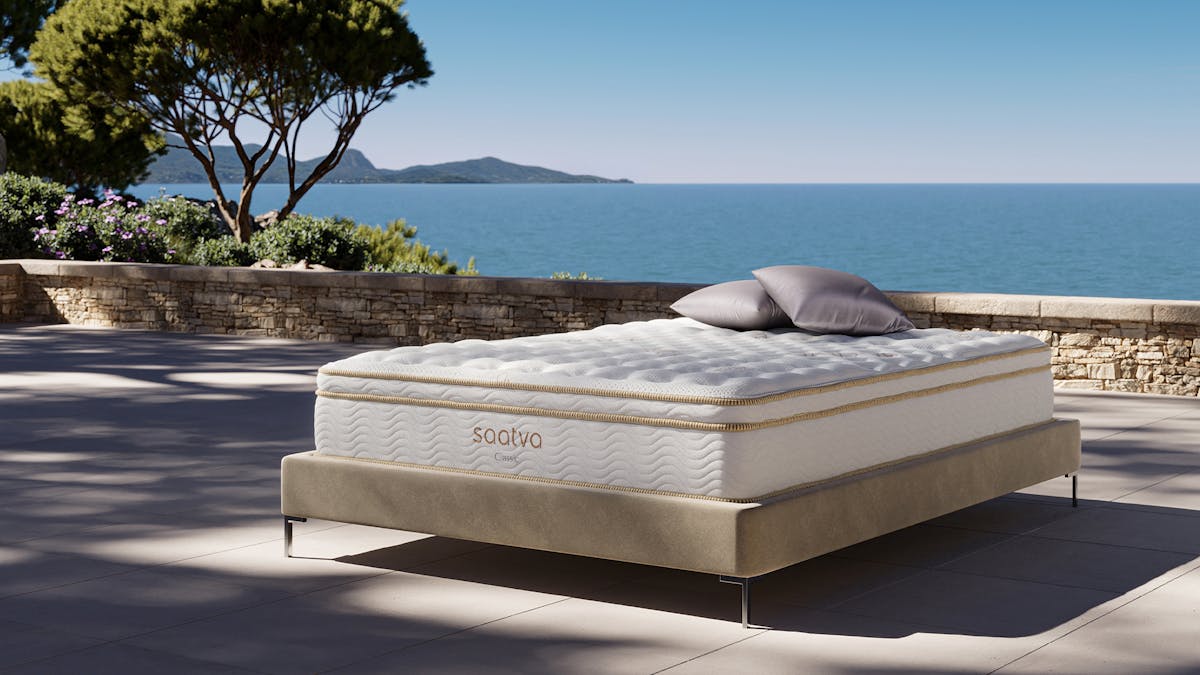
Saatva Classic
9.3/10
- Dual-coil construction with a reinforced lumbar zone pad keeps the spine neutral after high-load training sessions
- Outstanding edge support (10/10 NapLab) makes getting in and out of bed easy on sore legs and hips
- Excellent cooling from open coil airflow, rated 10/10 at 89.5F surface temp, ideal for athletes with elevated post-training core temps
- Free white-glove delivery, setup, and old-mattress removal included
- 365-night trial and lifetime warranty set the industry standard for long-term value
- Moderate motion isolation, less ideal if your partner is a very light sleeper
- $99 return fee applies during the trial period
The Saatva Classic in Luxury Firm delivers the zoned lumbar reinforcement and coil-driven airflow that athletes most need: spinal alignment through a full training block and a cool sleep surface that supports the temperature drop required for deep-sleep onset.
Why sleep quality directly affects athletic recovery
Training breaks tissue down. Sleep rebuilds it. During slow-wave and REM sleep, the body releases growth hormone, repairs muscle microtrauma, consolidates motor patterns, and processes the metabolic byproducts of exercise. A mattress that creates pressure points or misaligns the spine interrupts this process by pushing the sleeper into lighter stages or triggering repeated micro-arousals they may not consciously notice.
The two most common ways a mattress fails an athlete:
- Pressure failure: a surface too firm for the sleeper's build concentrates stress on the greater trochanter, iliac crest, and shoulder acromion, which are already inflamed from training. The result is fragmented sleep and muscle tightness that accumulates across a training block.
- Support failure: a surface too soft allows the hips to sag below the lumbar spine, creating a reverse arch. Back-dominant athletes (powerlifters, rowers, cyclists) are particularly vulnerable here.
A medium-firm mattress with zoned support resolves both: it cushions the prominent bony landmarks while providing firmer resistance under the lumbar and hips.
What to look for in a mattress as an athlete
- Zoned support: a mattress that is firmer under the lumbar and hips, softer at the shoulders, follows body geography rather than treating the entire surface identically.
- Temperature regulation: body temperature drops slightly before and during deep sleep. Athletes training twice daily have elevated core temps, so a mattress that traps heat delays this drop and cuts into deep-sleep time. Open-cell foams, hybrid coil airflow, or latex all perform better here than dense traditional memory foam.
- Motion isolation: training-fatigued athletes fall into deep sleep faster and need to stay there. A mattress with poor motion isolation transfers partner movement and degrades sleep architecture.
- Pressure relief without excessive sinkage: deep foam sinkage over 1.5 inches creates spinal flexion in side-sleeping athletes, stressing the already-taxed lumbar. Medium firmness with a conforming but responsive comfort layer avoids this.
Best mattresses for athletes (tested)
| Mattress | Type | Firmness | Best for | Trial | Queen |
|---|---|---|---|---|---|
| Saatva Classic | Innerspring hybrid | Luxury Firm 6/10 | Lumbar support, cooling, edge support, strength athletes | 365 nights | From $1,395 |
| Amerisleep AS3 | All-foam Bio-Pur | Medium 5/10 | Recovery, pressure relief, all sleep positions, motion isolation | 100 nights | From $1,049 |
| PlushBeds Botanical Bliss | Organic latex | Medium or Medium-Firm | Natural materials, responsive feel, hot sleepers | 100 nights | From $1,999 |
| Puffy Lux | Hybrid | Medium | Pressure relief, motion isolation | 101 nights | From $1,549 |
PlushBeds Botanical Bliss
8.7/10
- GOLS-certified organic Dunlop latex is naturally responsive and pressure-relieving without deep sinkage
- Excellent temperature regulation from latex's open-cell structure, better than traditional memory foam
- GOTS-certified organic cotton and wool cover adds breathability and natural moisture management
- Customizable firmness by layer, so athletes can dial in the feel as their needs evolve
- Higher entry price than most foam options
- Heavier than foam beds, harder to rotate
For athletes who want a natural, responsive surface, the Botanical Bliss delivers latex's buoyant pressure relief with superior cooling and certified organic materials.
Puffy Lux Hybrid
8.3/10
- Climate Comfort foam layer helps regulate temperature for athletes with elevated post-training body temps
- Hybrid construction balances foam contouring with coil responsiveness
- Lifetime warranty offers strong long-term protection
- Less lumbar zoning than the Saatva Classic or AS3
- Motion isolation not as strong as all-foam options
The Puffy Lux Hybrid gives athletes a comfortable middle ground between foam contouring and coil responsiveness at a competitive price.
Sleep position and athletic recovery
Most athletes are either back or side sleepers:
- Back sleeping athletes: the lumbar spine should maintain its natural lordotic curve without sagging. A medium-firm mattress keeps the hips from sinking while the lumbar zone provides upward resistance. Placing a pillow under the knees reduces disc compression further.
- Side sleeping athletes: the shoulder and hip must sink enough to keep the thoracic and lumbar spine horizontal. A mattress that is too firm creates a lateral bend in the spine, which is particularly problematic after overhead and bilateral leg training. Medium firmness with active shoulder zoning addresses this directly.
- Stomach sleeping: increases lumbar extension and intervertebral disc compression, exacerbating injuries common in sprint, throw, and deadlift athletes. If unavoidable, place a flat pillow under the pelvis.
Why heat management matters more for athletes
After a hard training session, core body temperature remains elevated for longer than on rest days. The natural sleep-onset signal is a peripheral vasodilation that drops core temperature by roughly 1 to 2 degrees Celsius. A mattress surface that traps body heat delays this signal and increases sleep-onset latency.
Traditional dense memory foam is the worst offender. Open-cell foam (Amerisleep Bio-Pur), innerspring with coil airflow (Saatva Classic), and natural latex (PlushBeds) all perform significantly better. Athletes training in warm climates or evening sessions benefit most from these constructions.
Firmness guide by training type
Not all athletes have the same needs. Training modality matters:
- Endurance athletes (running, cycling, swimming): side sleeping is most common, hip and IT-band tightness is prevalent. Medium (5/10) with good shoulder and hip zoning works best. The Saatva Classic in Plush Soft or the AS3 are well suited here.
- Strength athletes (powerlifting, CrossFit): higher body weight and lumbar stress from heavy loading. Medium-firm (6/10) provides more lumbar reinforcement. The Saatva Classic in Luxury Firm handles this best, with its reinforced lumbar zone coil layer.
- Court and field sports (basketball, soccer, tennis): combination sleepers who change positions frequently. Medium firmness with responsive foam or a hybrid that allows easy repositioning. The Saatva Classic or AS3 both work well here.
The Saatva Classic is our top mattress for athletes: dual-coil lumbar support, excellent cooling airflow, outstanding edge support, 365-night trial, and a lifetime warranty. For a foam-first option focused on pressure relief, the Amerisleep AS3 delivers HIVE 5-zone support on a 100-night trial.
Frequently asked questions
Is a firm mattress better for athletes?
Not universally. Firmness needs depend on body weight, sleep position, and training type. Most athletes need medium to medium-firm (5 to 7 out of 10), not extra-firm. A mattress that is too firm creates pressure points on hips and shoulders that interrupt deep sleep. What matters more than firmness level is zoned support: firmer under the lumbar and hips, softer at the shoulders.
What kind of mattress do professional athletes sleep on?
Many elite sports programs partner with mattress brands for sponsorship, which does not mean those beds are independently the best choice. Independently reviewed options like the Saatva Classic or Amerisleep AS3 consistently perform well in lab tests for pressure relief, temperature regulation, and motion isolation, the three metrics most relevant to athlete recovery.
Should an athlete use a soft or firm mattress for recovery?
Medium firmness (5 to 6 out of 10) is the recovery sweet spot for most athletes. Soft beds allow the hips to sag, stressing the lumbar discs. Extra-firm beds prevent bony landmarks from adequately decompressing. Medium firmness lets the spine settle into a neutral curve while allowing the hip and shoulder to receive pressure relief, which is where inflammation concentrates after training.
How long until a new mattress improves sleep quality?
Most people adapt within 2 to 4 weeks. Athletes with significant muscle soreness from a hard training block may feel the difference more quickly. Full adaptation, including changes in sleep architecture, typically takes 8 to 12 weeks. This is why trial periods of 100 nights or more are worth prioritizing: they give enough time to test through a complete training cycle.
Our #1 pick for mattress for athletes
The Amerisleep AS3 is where we would start.