
 by
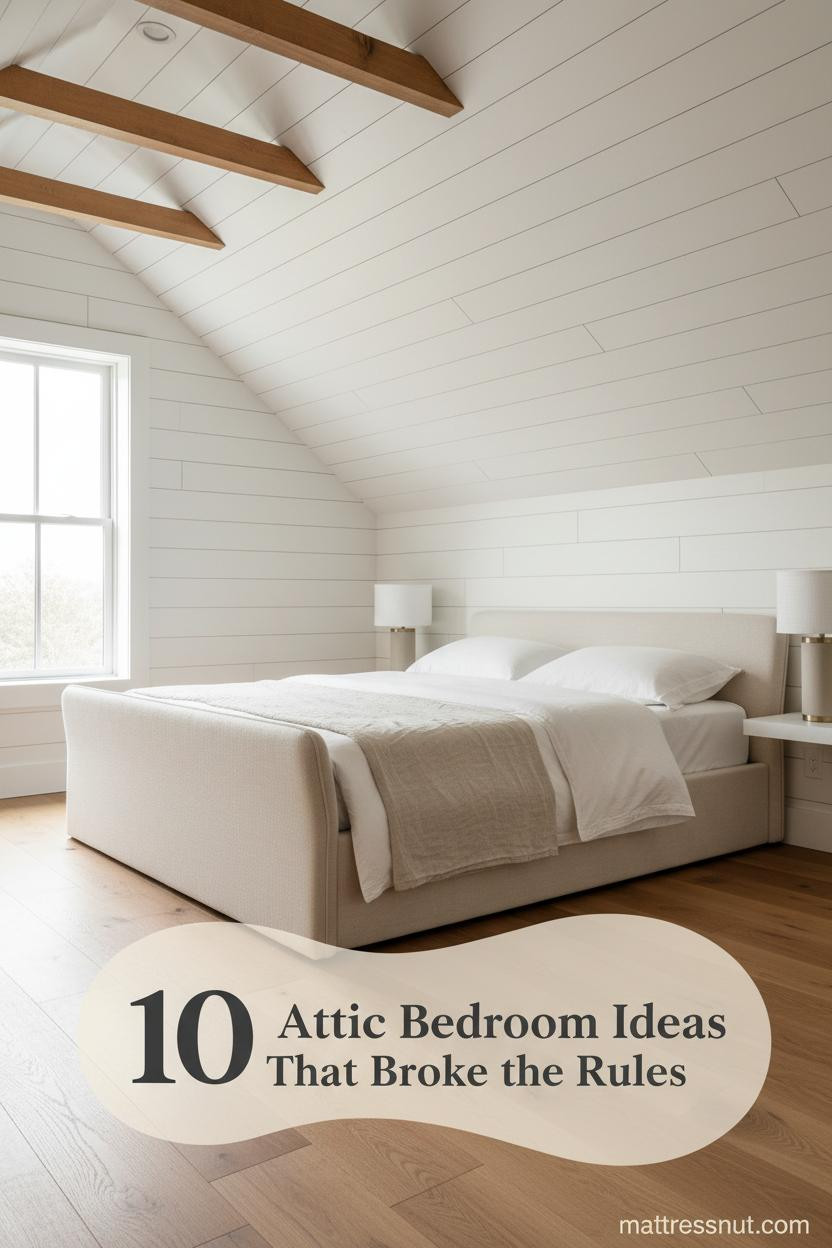
by The first thing you notice in the best low attic bedroom ideas is that the slant isn't the problem. It's the whole point. These rooms work because someone stopped fighting the geometry and started using it.
Ten rooms. Ten ways to make a pitched ceiling feel like a choice.
The Dormer That Makes the Whole Room Feel Intentional
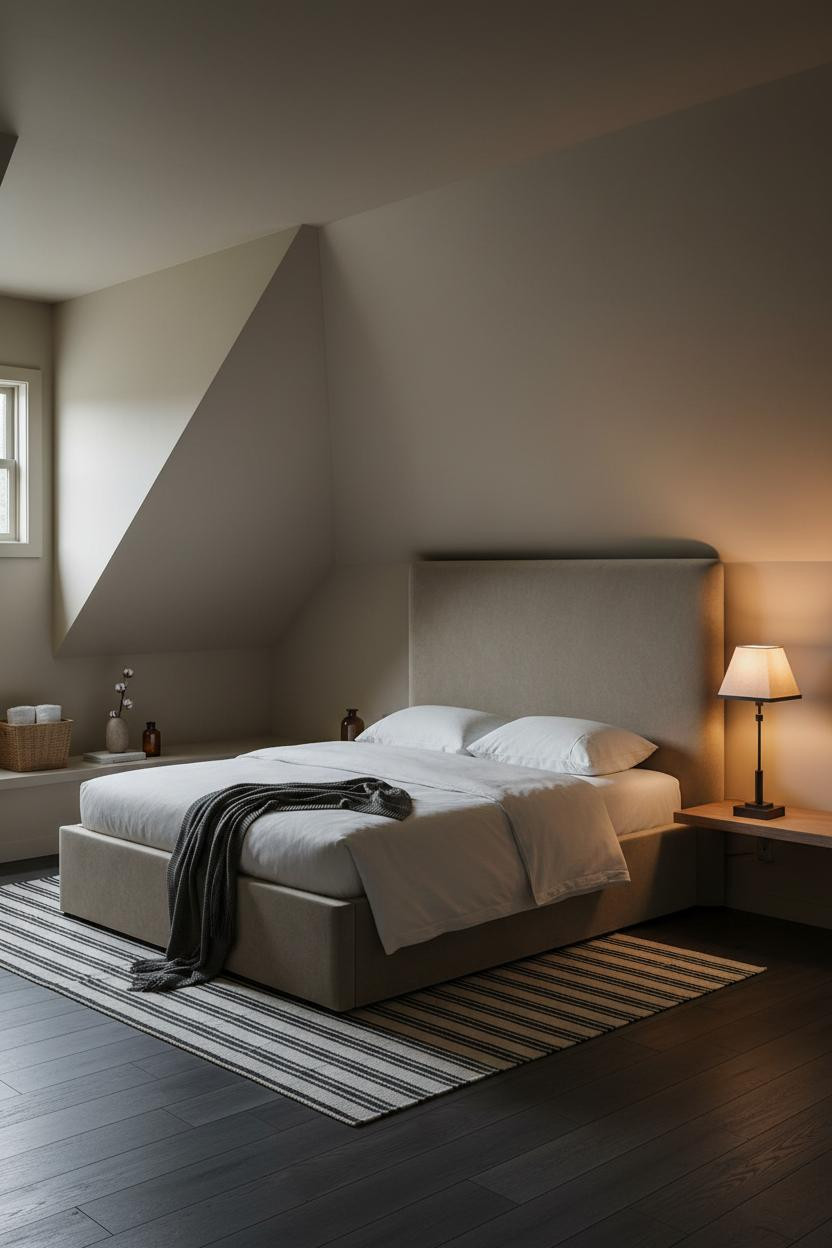


I keep coming back to this one. The compressed geometry feels sheltered, not cramped.
Why it works: Warm camel-greige plaster on the slopes absorbs the tight angles instead of fighting them, so the pitch reads as intimacy rather than limitation.
The smarter choice: Mount the lamp on a floating shelf instead of a nightstand. It keeps the floor clear where the eave presses lowest.
Exposed Rafters Are the Feature, Not the Problem
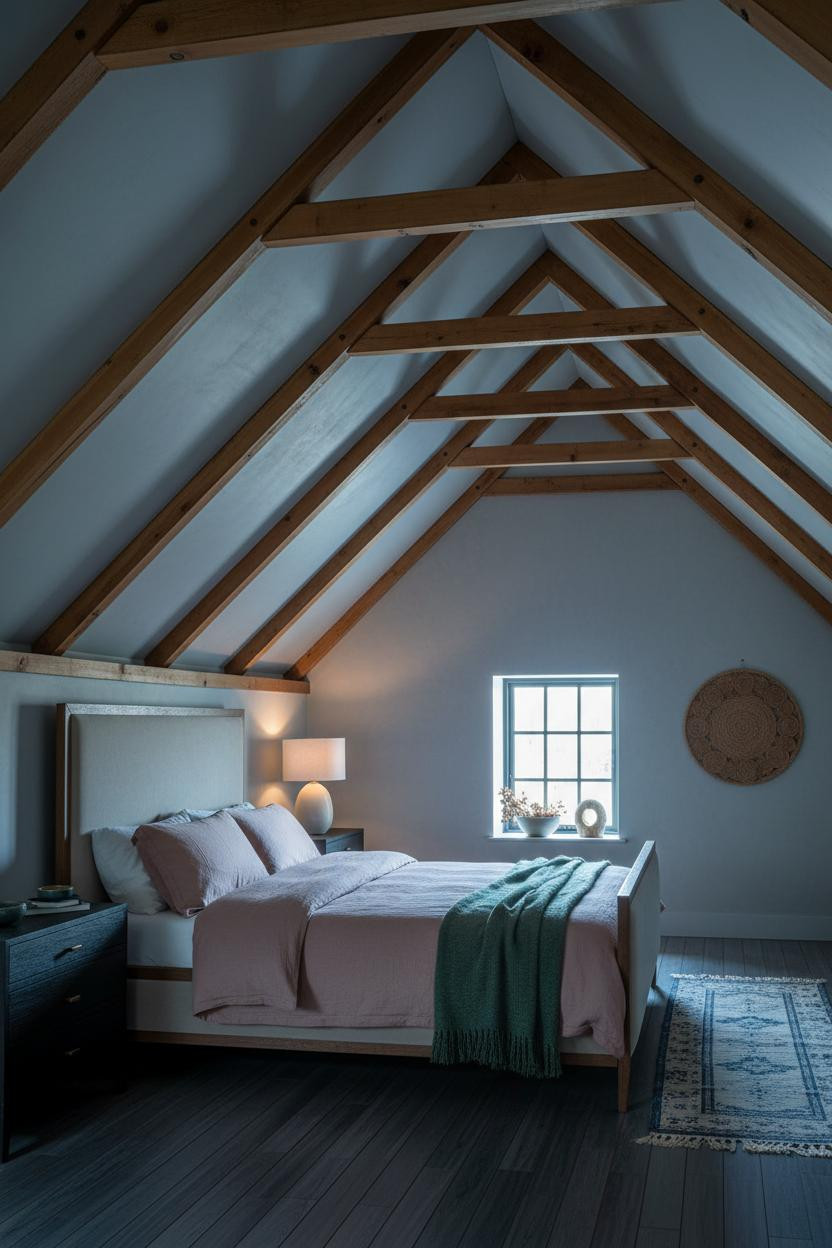


This is divisive. Some people sand them smooth and paint over. They're wrong.
But honestly, honey-toned timber rafters running the full pitch do something flat ceilings simply can't. They give the eye a structure to follow, which makes the room feel bigger, not tighter.
Avoid this mistake: Don't hang anything from the rafters. Let them breathe. A woven jute wall hanging on the low eave wall is enough texture.
Whitewashed Shiplap Makes a Low Ceiling Feel Like a Decision
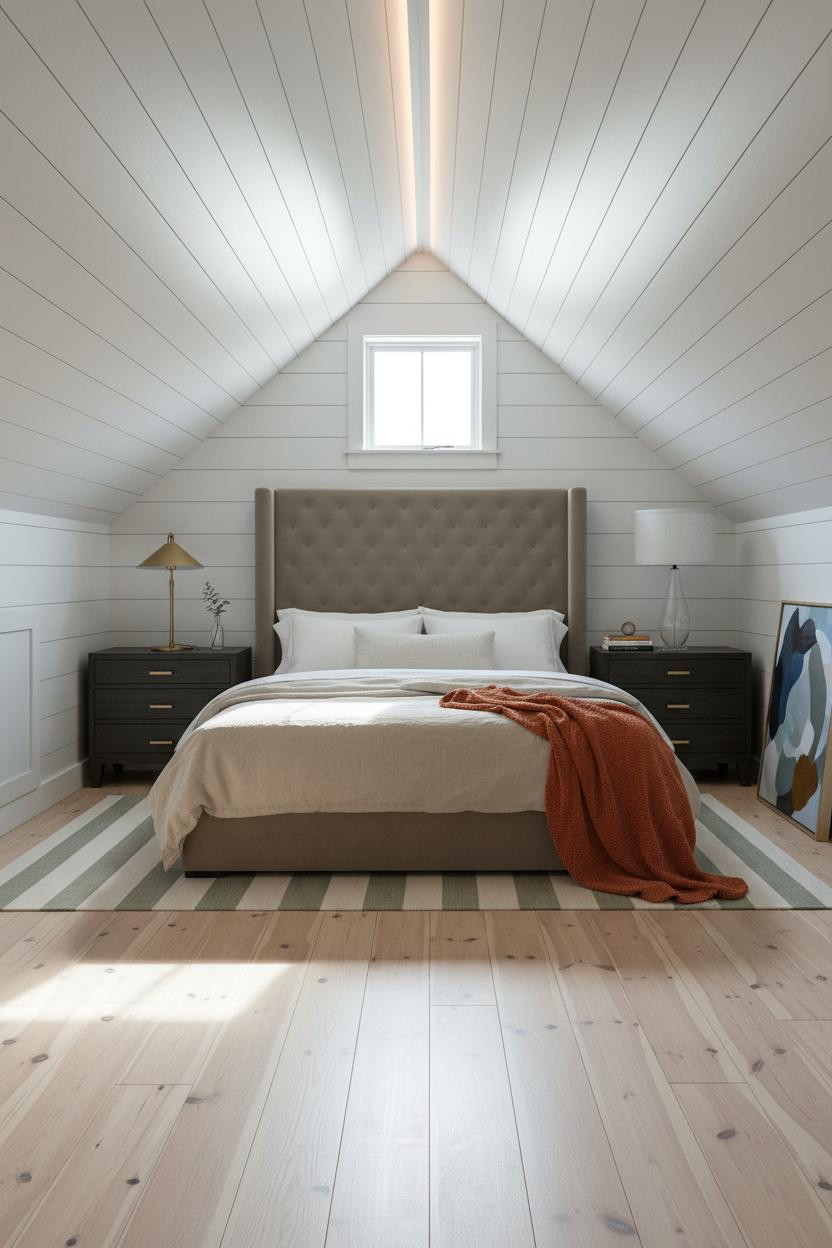


Nothing fancy. That's the point. And somehow that restraint is what makes this room feel finished.
What gives it depth: Whitewashed shiplap running horizontally with the pitch catches raking light along every groove, so the slope reads as texture rather than compression. The room feels calm and cohesive without a single decorative distraction.
Try this: Lean oversized abstract art against the knee wall instead of hanging it. Lower eye level, less fuss, and it fills the dead zone where the eave meets the floor. See more small bedroom ideas that feel cozy without cramped.
Wainscoting on an Angled Wall Is a Move Most People Miss
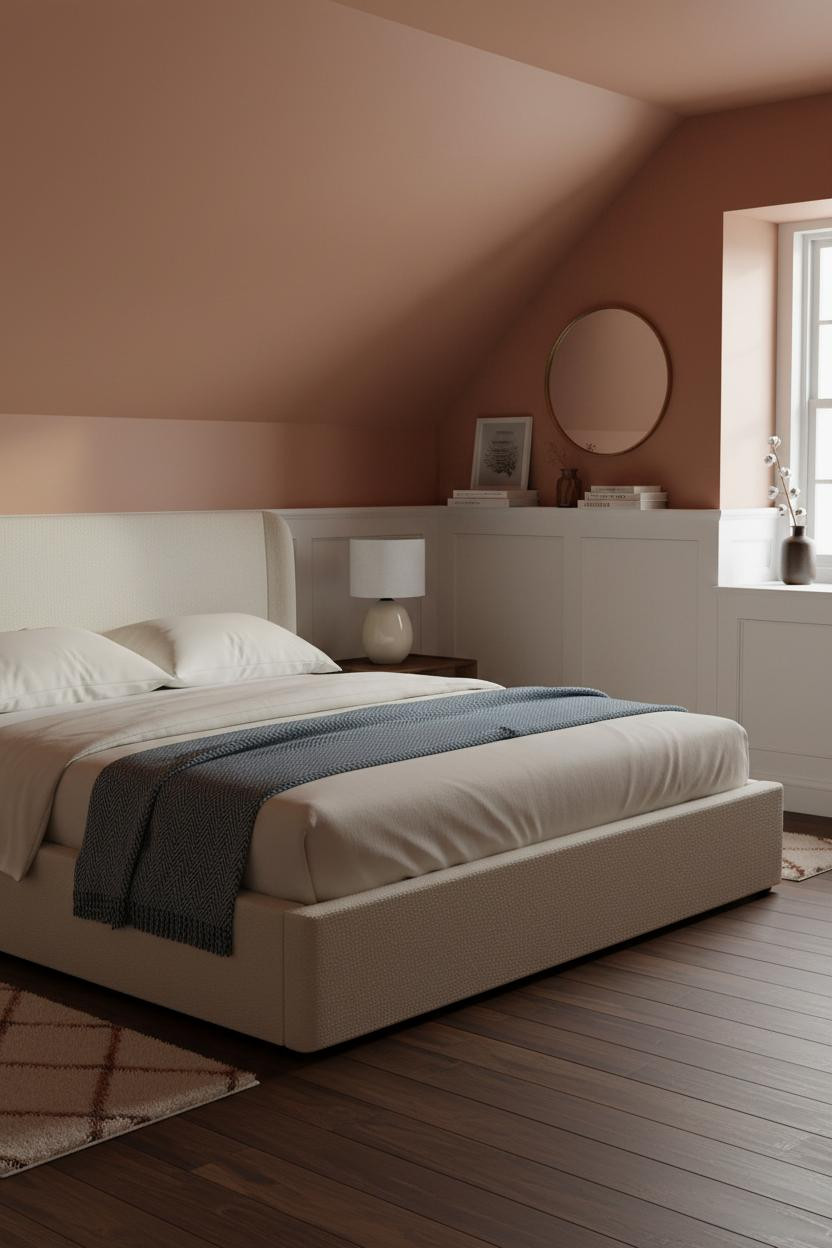

Fair warning: this takes commitment. But the payoff is real.
Why it looks custom: Half-height painted wainscoting on the knee wall creates a clear visual break between floor and pitch, so the terracotta plaster above feels intentional rather than arbitrary. That line does a lot of work in a small room.
What to borrow: A round brass-framed mirror leaning against the angled wall near the eave reflects light back into the lowest corner, where you need it most.
Dark Walls in a Tiny Attic Bedroom? I'd Do It
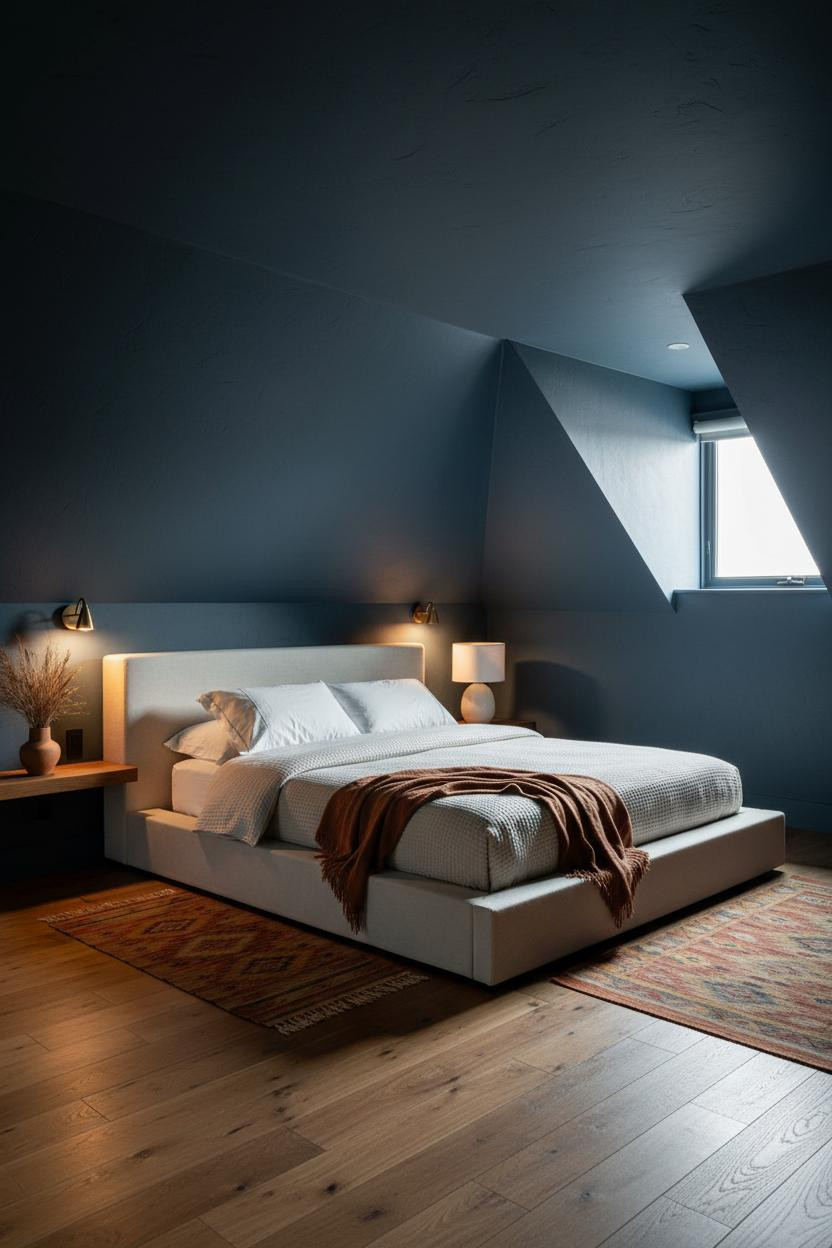

Counterintuitive in a low ceiling attic bedroom. Works anyway.
The reason it feels cave-like in a good way instead of cave-like in a bad way is deep slate blue-grey raw plaster. The texture catches pockets of shadow along the rake, which makes the pitch feel carved rather than collapsed. And paired sconces flanking the bed pull warm amber light into a room that would otherwise feel cold.
Where to start: Pair a rust linen throw with an oatmeal duvet. The contrast keeps the dark walls from absorbing everything.
Dusty Rose Walls in an Attic Are Underrated
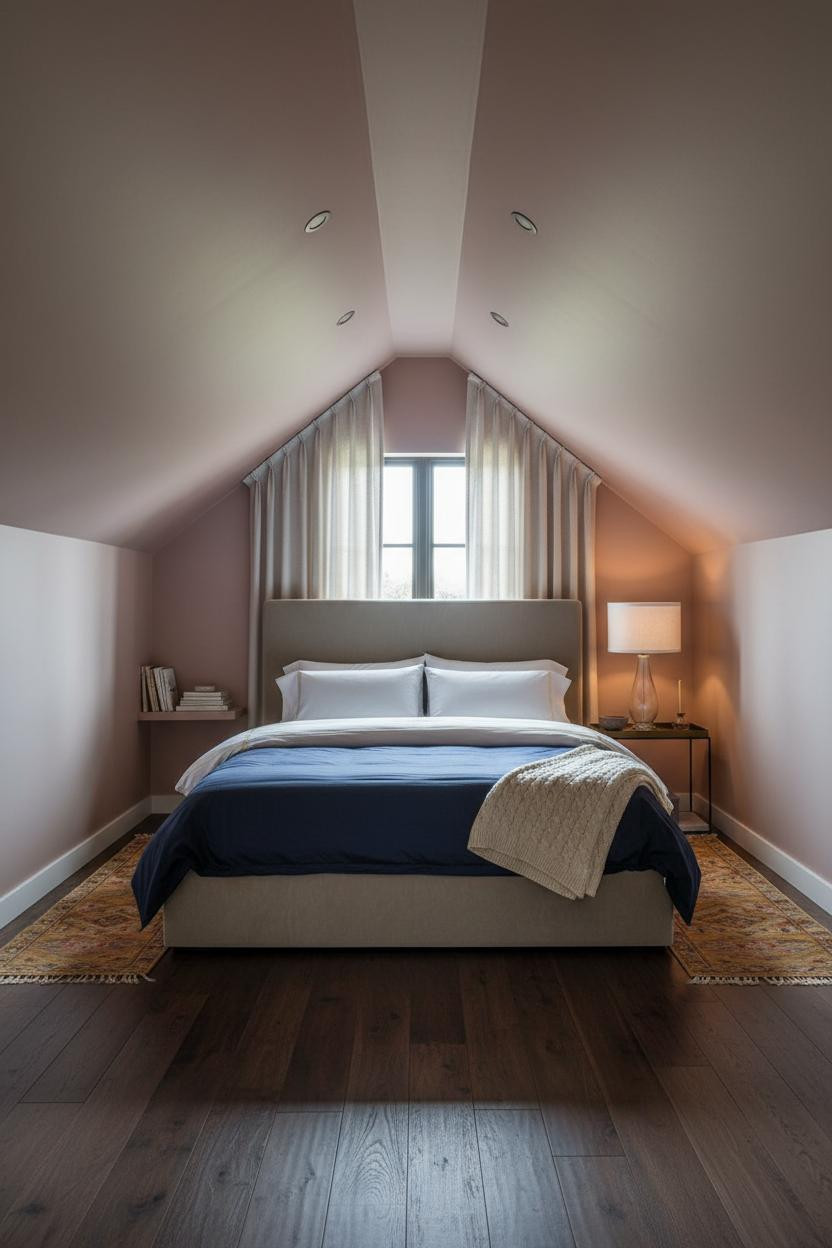

I almost talked myself out of this palette. Glad I didn't.
Why the palette works: Muted dusty rose plaster on the slopes absorbs afternoon light softly, so the compression reads as warmth rather than weight. Navy sateen bedding grounds it without turning the room heavy.
Floor-to-ceiling oatmeal linen at the gable window is the finishing layer. One tall vertical line. It draws the eye up and makes the pitch feel intentional. Check out more neutral bedroom decor for calm spaces if this palette speaks to you.
The Sage Attic That Actually Feels Coastal
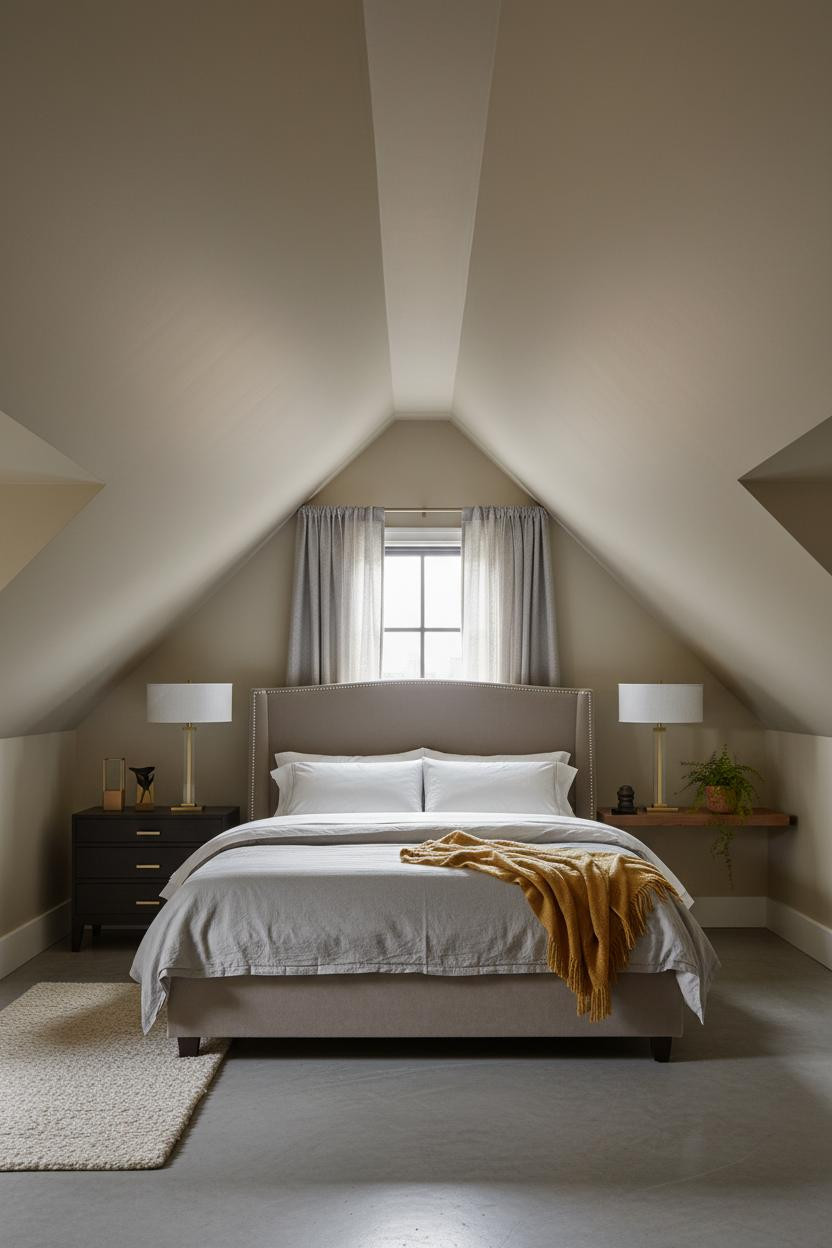


This one surprised me. The proportions shouldn't work but they do.
What creates the mood: Warm sage-taupe walls paired with a polished concrete floor keep the room feeling airy in a way that painted wood floors usually can't manage. And a chunky wool cream rug beside the bed pulls the whole thing back to soft.
The easy win: Swap a bedside table for a low floating shelf. In a slanted roof bedroom, that extra inch of floor space matters more than you'd think.
Board-and-Batten on a Sloped Wall Earns Its Place
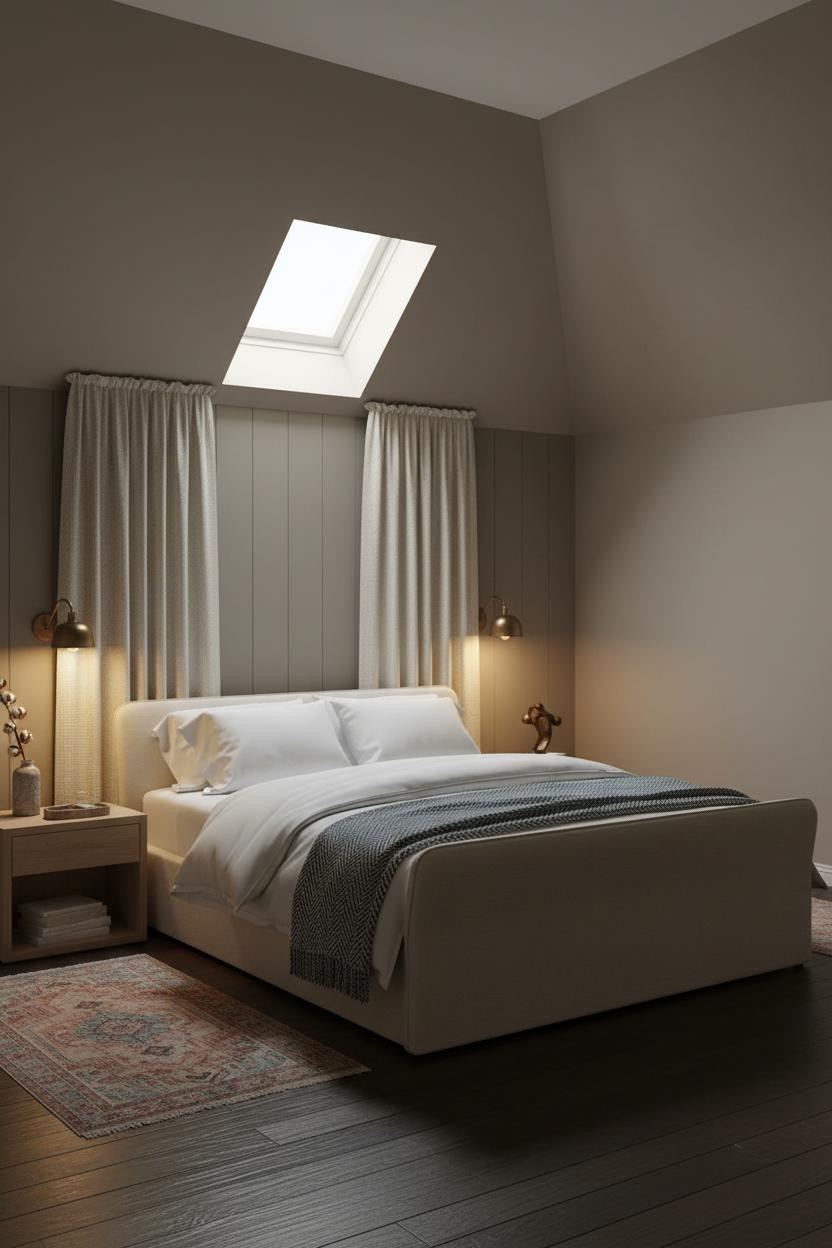

A skylight alone isn't enough texture. You need something on the walls to hold the light.
Why it holds together: Vertical board-and-batten running floor to rafter on the far angled wall casts shallow parallel shadows under flat diffused daylight, which makes the slope feel structured rather than random. The room feels lived-in and intimate without a single pattern in sight.
The detail to keep: Pair it with a vintage Persian runner and ivory percale. Nothing too matchy. Just enough warmth to offset all that grey. This approach also works beautifully for single bed designs that make a small room feel finished.
Low Furniture Is the Whole Strategy Here
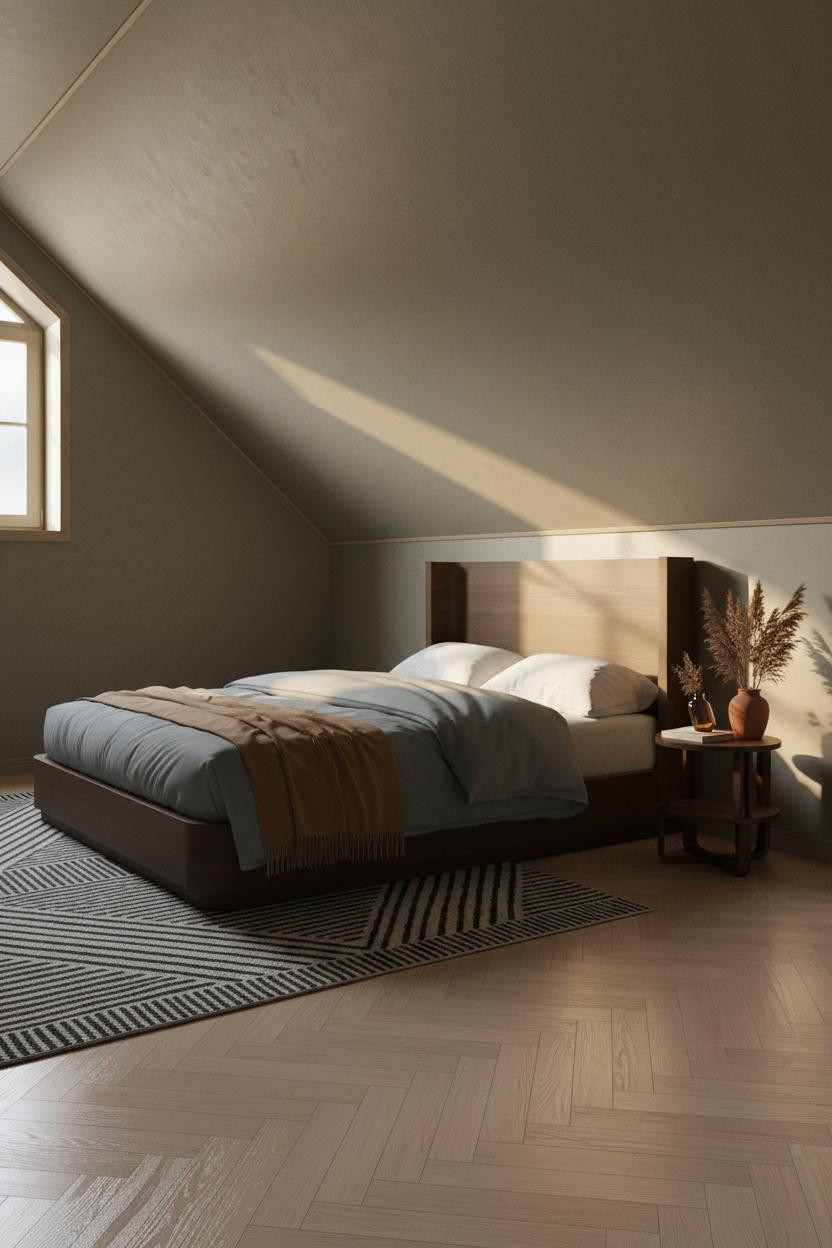


In a sloped ceiling bedroom, going lower with furniture isn't a compromise. It's actually the right call.
The practical move: A low platform bed centered under the tallest point of the pitch leaves breathing room overhead, while muted olive-grey plaster walls with faint hand-applied texture keep the angled geometry from feeling stark.
One smart swap: Tuck the nightstand into the low eave, not beside the bed at full height. And use a corner floor lamp rather than a wall sconce. Flexibility matters in a room where every inch of clearance counts. Browse more platform bed ideas that maximize space for tight layouts.
Exposed Beams in a Japandi Attic Bedroom Are Hard to Beat
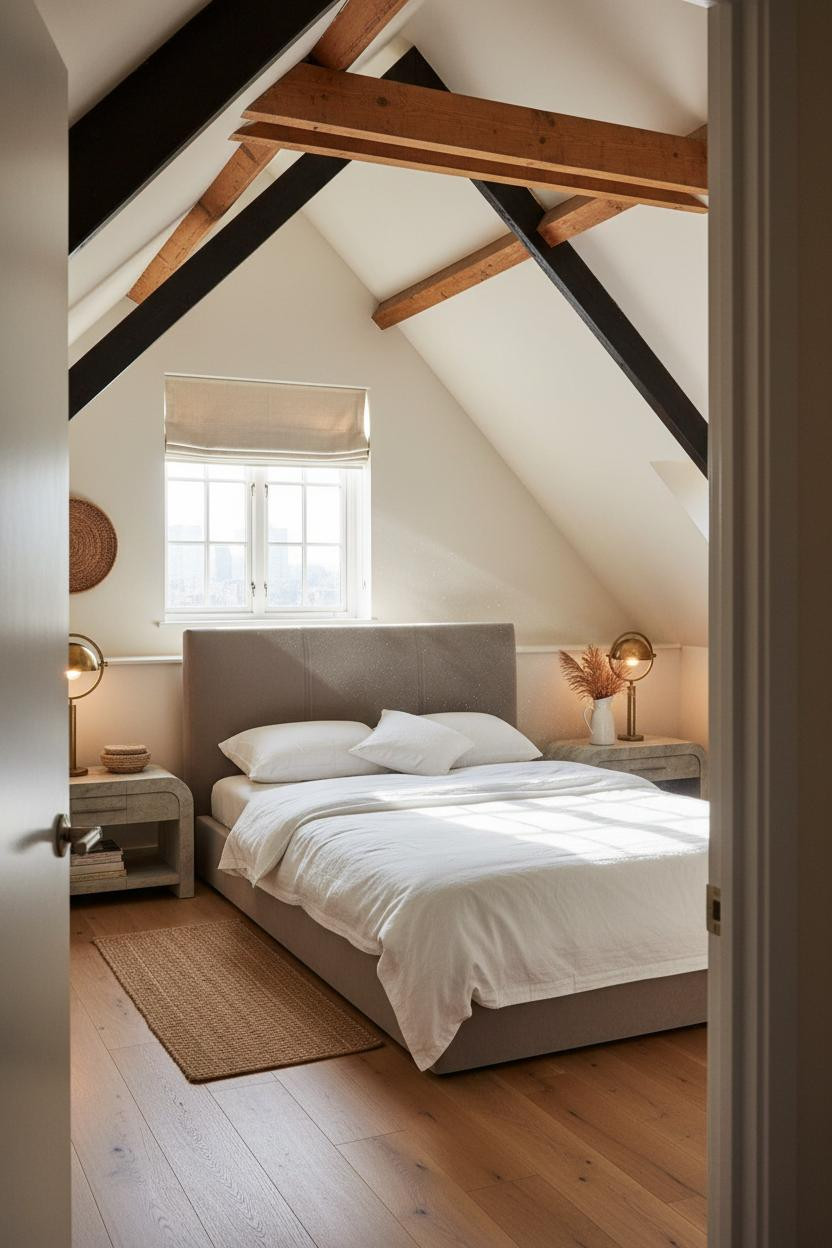

I think this is the best version of a small attic bedroom idea. And I've looked at a lot of them.
Why it feels balanced: Honey-toned exposed rafters running the full pitch do the architectural work, so the soft warm white plaster walls can stay completely quiet. Wide-plank light oak flooring ties the warmth together in a way that feels collected rather than decorated.
What to copy first: A natural jute runner beside the bed and a ceramic pitcher with dried pampas grass on the nightstand. Just enough texture. Nothing too precious.

Our #1 Pick
Saatva Classic Mattress
America's best-selling online luxury innerspring. 365-night trial, lifetime warranty, free white glove delivery.
Shop Saatva Classic
The Foundation Of Every Beautiful Bedroom
Every one of these rooms starts with the walls, the pitch, the light. But they end with the bed. And a beautiful bed frame on the wrong mattress is, admittedly, a waste of a good room.
The Saatva Classic is the mattress I'd put in any of these attic bedrooms. Dual-coil support that holds its shape over years, a breathable organic cotton cover that doesn't trap heat under a low ceiling, and a Euro pillow top that's soft without going spongy. It's the kind of support that makes you stop noticing the mattress, which is the whole point.
Walls get repainted. Linen gets swapped. The mattress stays. Start there.

The rooms people save are the ones where nothing looks accidental. But the rooms people actually want to sleep in? Those start with what's underneath the duvet. Good design ages well because it's made well.