
 by
by Our #1 Recommended Mattress
Weighted therapy option: how Zonli stacks up vs Bearaby, Baloo and YnM
The three names readers bring up most are Bearaby (chunky knit, $249–$299), Baloo (cotton shell, $169–$229), and YnM (glass-bead budget leader, $40–$90). Zonli sits between them: focused entirely on deep-pressure stimulation (DPS), with the BalanceFlow weighted blanket at $99–$119 for 15 lb or 20 lb in 48"×72" or 60"×80".
What matters for anxiety and sleep maintenance is the 8–12% body-weight rule: a 150 lb sleeper should target 12–18 lb. BalanceFlow covers that range with evenly distributed premium beads and a natural fabric face that breathes better than minky-lined competitors. For side sleepers or spot use, the Bamboo Calm Body Pillow (6.5–8.5 lb) and the Weighted Lap Blanket (3–5 lb, desk-friendly) handle targeted pressure without committing to a full 15 lb blanket.
Ownership terms: Eco & Health Certified, free shipping, 30-day trial, 1-year warranty. Spring sale currently runs up to 47% off.
Saatva Classic. From $1,095
365-night trial · Lifetime warranty · Free white-glove delivery
Meditation rooms fail when they try to do too much. The spaces that actually support a daily practice share a different quality: they are quiet, they are low, and they are built around a single decision about where you sit and what you face when you do. Everything else follows from those two choices.
2026 Meditation Room Trends: What Designers Are Actually Building
The meditation room trend has matured past the phase of minimalist white rooms with a single cushion. What designers are building now is more layered: a defined zone within an existing room, a dedicated corner with a visual anchor, or a converted closet that removes the need to face the rest of the house. The common thread is threshold psychology. When you enter a meditation space, something about it should signal that you have crossed from the active world into a quieter one.
In 2026, the most searched meditation room decor includes floor cushions with textured natural fabrics, handmade altars with mixed-material styling, ultrasonic diffusers with wood or ceramic casings, and acoustic solutions that address urban sound without adding visual clutter. Earthy palettes dominate: sage, terracotta, cream, and soft sand. Jewel tones like deep teal and amethyst purple appear in cushion and textile choices rather than on walls.
Floor Cushions: The Foundation of Any Meditation Space
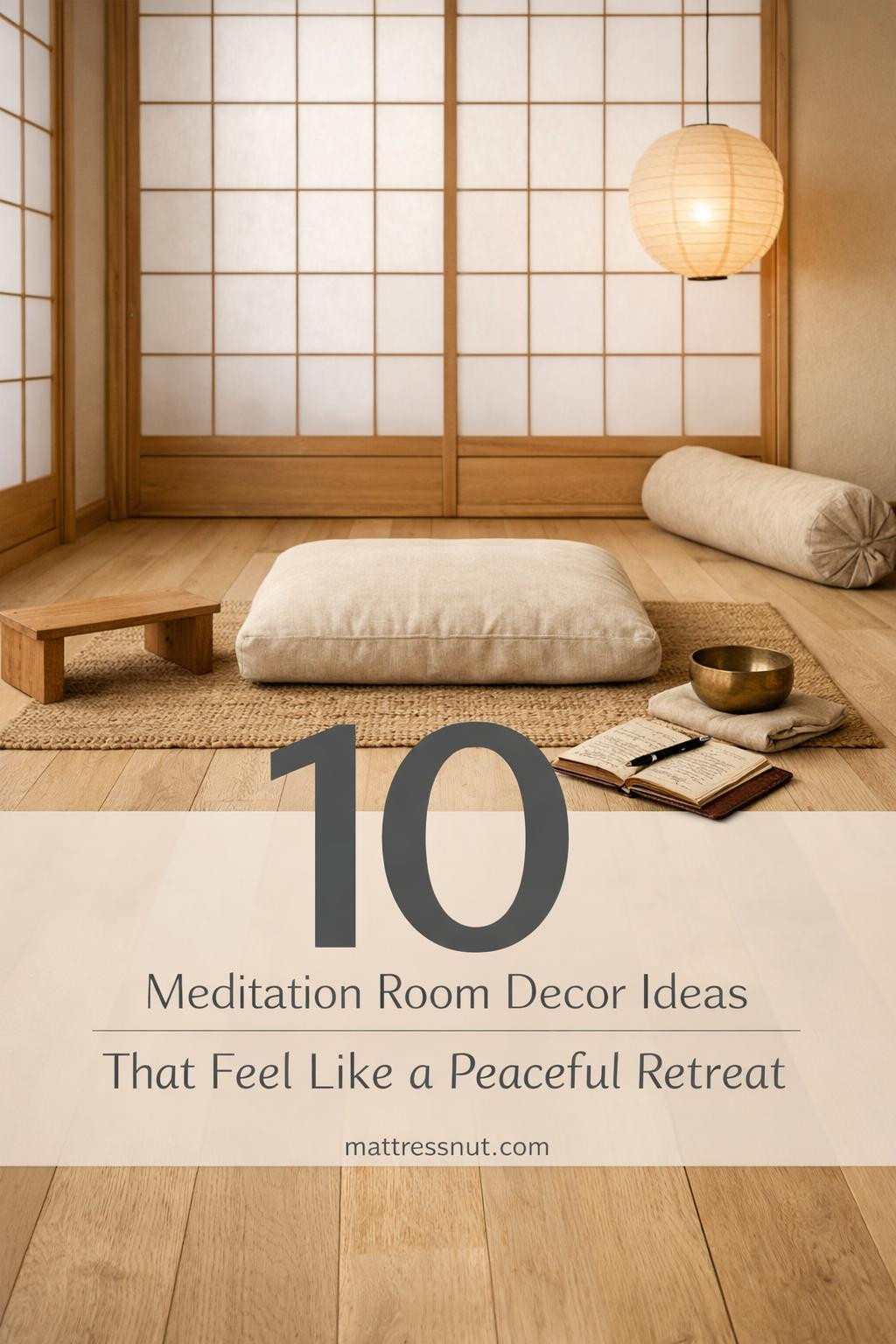
Floor seating defines meditation rooms more than any other element because it determines posture, which determines everything about the quality of practice. The choice between a zafu (round, firm), a zabuton (flat, wide), a yoga support, or stacked floor cushions is personal and practice-specific. For seated meditation lasting twenty minutes or more, a firm zafu with a flat zabuton beneath it supports the hip-to-knee relationship better than softer alternatives that compress and shift.
For a more relaxed or restorative practice, stacking two or three floor cushions in varying sizes creates a graduated surface that adjusts to the body rather than requiring the body to adjust to it. Choose cushions in natural linen, cotton, or wool in earth tones that age gracefully. Avoid synthetic microfiber, which pills quickly and introduces texture that becomes distracting over months of daily use.
Rattan chairs work beautifully in meditation spaces for practitioners who cannot sit at floor level comfortably. The organic material softens the chair's presence visually and aligns with the natural material palette that makes meditation rooms feel grounded rather than sterile. Position the chair facing a blank wall or a simple altar rather than a window, which introduces light variation and visual distraction during practice.
Building a Personal Altar: Where to Start
The altar is the visual anchor of any meditation room. It does not need to be elaborate or spiritually specific. A low reclaimed wood surface, a floating shelf at eye level when seated, or a dedicated stone slab on the floor all function identically as long as they hold a small number of meaningful objects and nothing else.
Classic altar components that work across different spiritual traditions and for secular practitioners alike: a candle in a simple holder, one or two crystals chosen for personal resonance, a small brass or ceramic singing bowl, an incense holder, and one personal object that holds meaning. Keep the altar low to the ground to promote a sense of humility and physical groundedness during practice. Styled with essential oil diffusers, small spiritual statues, oracle decks or affirmation cards, and soft cloth beneath the objects, it becomes a visual cue that practice is available whenever you face it.
Mixed materials work better than matched sets on meditation altars. Brass, ceramic, woven baskets, and natural stone at varying heights prevent the display from feeling like a retail arrangement and more like something assembled with care over time. The patina that develops on unlacquered brass over months of use adds to this quality rather than detracting from it.
Essential Oil Diffusers: Making Scent Part of the Practice
The olfactory system processes scent faster than any other sense and connects more directly to the limbic system, the brain region associated with emotion and memory. This is why experienced meditators often use the same scent consistently: the brain begins to associate the smell with a particular mental state, and the scent itself becomes a cue that accelerates the transition into stillness.
Choose an ultrasonic diffuser with a run time of at least three hours and a water tank large enough to last a full session without refilling. Ceramic and wood-cased models integrate into natural-material meditation spaces far more gracefully than plastic units. For scent, lavender reduces cortisol demonstrably in clinical settings. Frankincense produces alpha brain waves associated with meditative states in EEG studies. Sandalwood grounds energy and pairs well with incense for practitioners who use both. Start with one scent for the entire first month of practice so the association can develop without competition from variety.
Soundproofing: The Overlooked Priority
Urban apartments and suburban homes both present acoustic challenges that make deep meditation harder. The solution does not require professional acoustic treatment. Strategic layering of soft materials accomplishes most of what expensive panels do at a fraction of the cost and visual intrusion.
Heavy curtains from floor to ceiling do two things: they block sound transmission through windows and they absorb echo within the room. Wool or velvet curtains outperform linen for acoustic purposes. A large natural fiber rug on the floor absorbs the low-frequency sound that curtains miss. Multiple cushions and textile layers on walls, even a woven hanging piece, further dampen sound without turning the space into a recording studio.
For rooms where street noise cannot be adequately blocked through soft furnishings, a small water fountain positioned near the room's entrance uses pink noise to mask external sounds without the mechanical quality of white noise machines. The fountain also adds a living, natural element to the sensory environment that supports the broader meditation room aesthetic.
Color and Light: Setting the Meditative Atmosphere
Neutral tones like warm white, cream, and light gray create the quietest visual base for meditation rooms, allowing the mind to settle without competing stimulus from the walls. Earthy hues including sage green, terracotta, and warm sand add grounding quality for practitioners who find stark white rooms too stark or clinical. Soft lavender and dusty blue both poll well in meditation contexts for their association with calm, though they work best with adequate natural light to prevent them from reading as cold.
Natural light is preferable to artificial light in meditation rooms used during daytime hours. Sheer curtains filter direct sunlight into soft diffuse illumination that does not create harsh shadows or glare. For rooms used in early morning or evening hours, warm-spectrum bulbs at 2700K or below, ideally on dimmer switches, replicate the quality of candlelight without the fire hazard of actual candles during unattended sessions. Salt lamps at this color temperature perform particularly well as ambient light sources in meditation spaces because they provide illumination without the visual sharpness that triggers wakefulness.
Natural Elements: Wood, Stone, and Living Material
Natural materials in meditation rooms serve a function beyond aesthetics. Research on biophilic design consistently shows that exposure to natural materials and patterns reduces physiological stress markers. Wood grain, stone texture, and living plants all trigger the nervous system's rest response more effectively than synthetic materials with identical visual properties.
Low bamboo platforms with a single firm cushion provide a defined meditation surface that improves the practice spatially without breaking the low-to-the-ground quality that grounded postures require. River stone or smooth pebbles in a shallow bowl add tactile grounding when held during breathwork. A single well-chosen houseplant, a pothos, snake plant, or peace lily, adds a living presence that shifts the room's energy in a way that no inanimate object fully replicates.
Small Space Solutions: Meditation Corners That Actually Work
A dedicated meditation room is not a prerequisite for a meditation practice. A corner measuring three feet by three feet is sufficient for a cushion, an altar at floor level, and a small rug defining the zone. The key is that this corner is used only for meditation and nothing else. A desk chair that migrates into the space, shoes stored nearby, or laundry piled in the corner undermine the psychological function of the threshold even if the physical space looks right in photographs.
Doorway framing works as a boundary marker when a corner lacks architectural definition. A sheer curtain hung from a tension rod creates the sense of crossing into a separate space. Bamboo room dividers accomplish the same with more visual weight and better sound dampening. Even a low bookcase or a change in floor material, a small rug versus exposed hardwood, signals the transition effectively for consistent practitioners.
Maintaining Your Meditation Space: The Daily Practice of Keeping It Sacred
The meditation space that serves you best is one you return to daily, not one you enter only when everything is perfectly arranged. Maintenance is part of the practice. Spend two minutes after each session returning cushions to their positions, relighting any candles that burned out, refreshing the diffuser water, and removing anything that drifted into the space from the rest of your day. This closing ritual is as important as the opening one and prevents the gradual accumulation of non-practice items that will eventually disrupt the space's function.
A monthly deeper reset is worth scheduling: wipe down the altar surface, clean the diffuser according to the manufacturer's instructions to prevent mold and mineral buildup, dust the shelving and any decorative objects, and reassess whether every element in the space is still serving its purpose. Spaces that started simple sometimes accumulate objects that felt meaningful when they arrived but no longer contribute. The willingness to remove things as well as add them is what keeps a meditation space functioning rather than becoming another room in the house that is cluttered with meaningful objects that have stopped being used.
Budget Meditation Room Setups That Actually Work
An effective meditation space does not require significant investment. A twenty-dollar jute mat from a home goods store, a brass singing bowl purchased for forty dollars, a five-dollar candle, and a plant propagation taken from another room in the house create the essential elements of a functional practice space. The quality of the practice that happens in this space will be determined by the consistency of your return to it, not by the price of the cushion or the brand of the diffuser.
As the practice becomes more established, individual elements can be replaced with higher-quality versions based on their specific function in your practice. The singing bowl is worth upgrading to a hand-hammered version when budget allows because the sound quality genuinely affects the practice. The diffuser is worth replacing with a reliable ultrasonic model if the inexpensive version breaks or leaks. The cushion is worth replacing with a properly filled zafu if back or hip discomfort is interrupting sessions. These sequential investments spread over time create a space that developed from practice rather than from planning, which gives it the accumulated quality that makes it genuinely personal.
Complete Your Space
Every beautiful room deserves a great night's sleep. The Saatva Classic, white-glove delivery, 365-night trial.