
 by
by Our #1 Recommended Mattress
Saatva Classic. From $1,095
365-night trial · Lifetime warranty · Free white-glove delivery
We earn a commission if you make a purchase through our links, at no extra cost to you. Full disclosure.
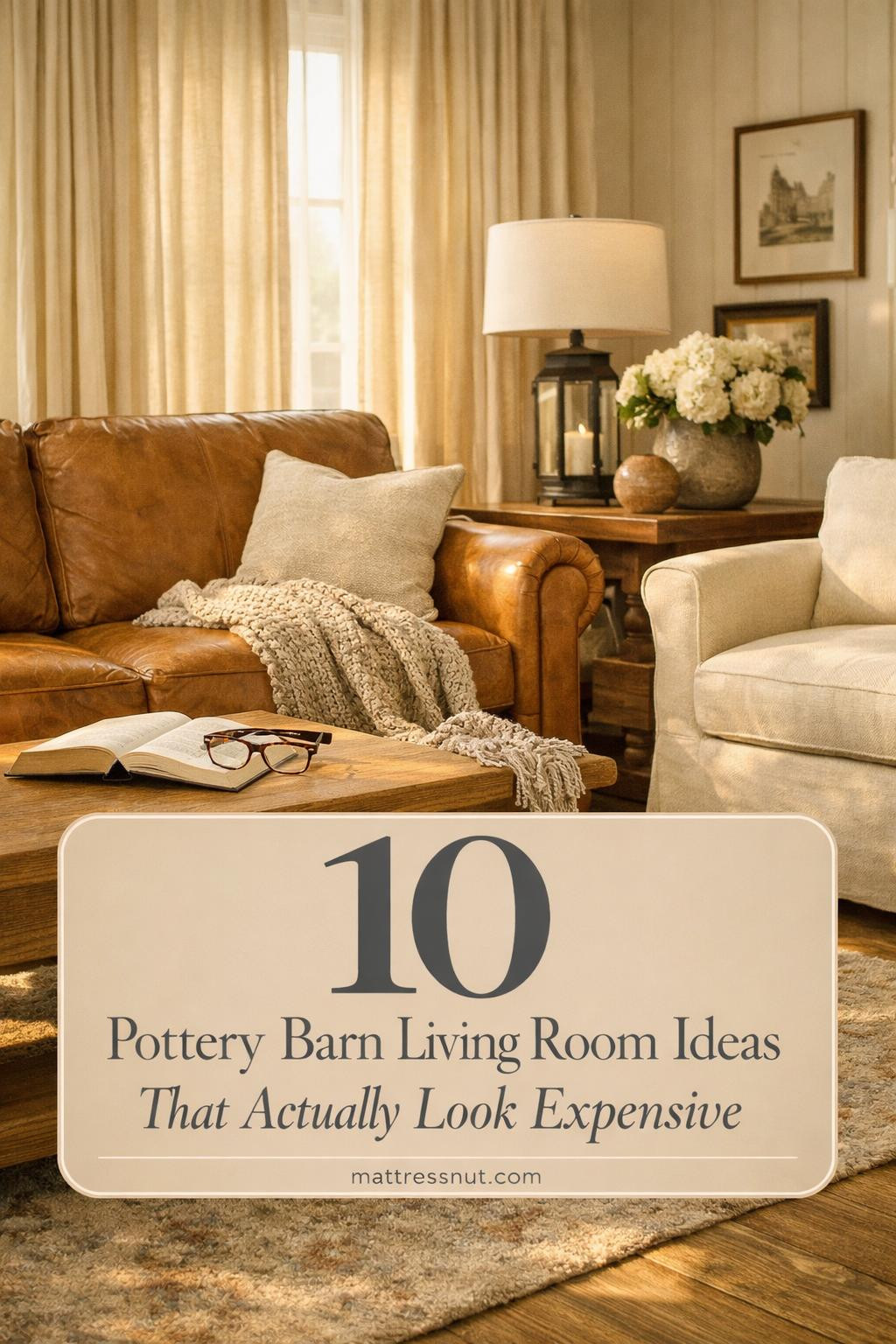
Pottery Barn living rooms hit different. That specific mix of lived-in luxury and actual comfort - not the kind where everything’s too precious to touch. Here’s what makes them work.
The Cognac Leather Move That Anchors Everything
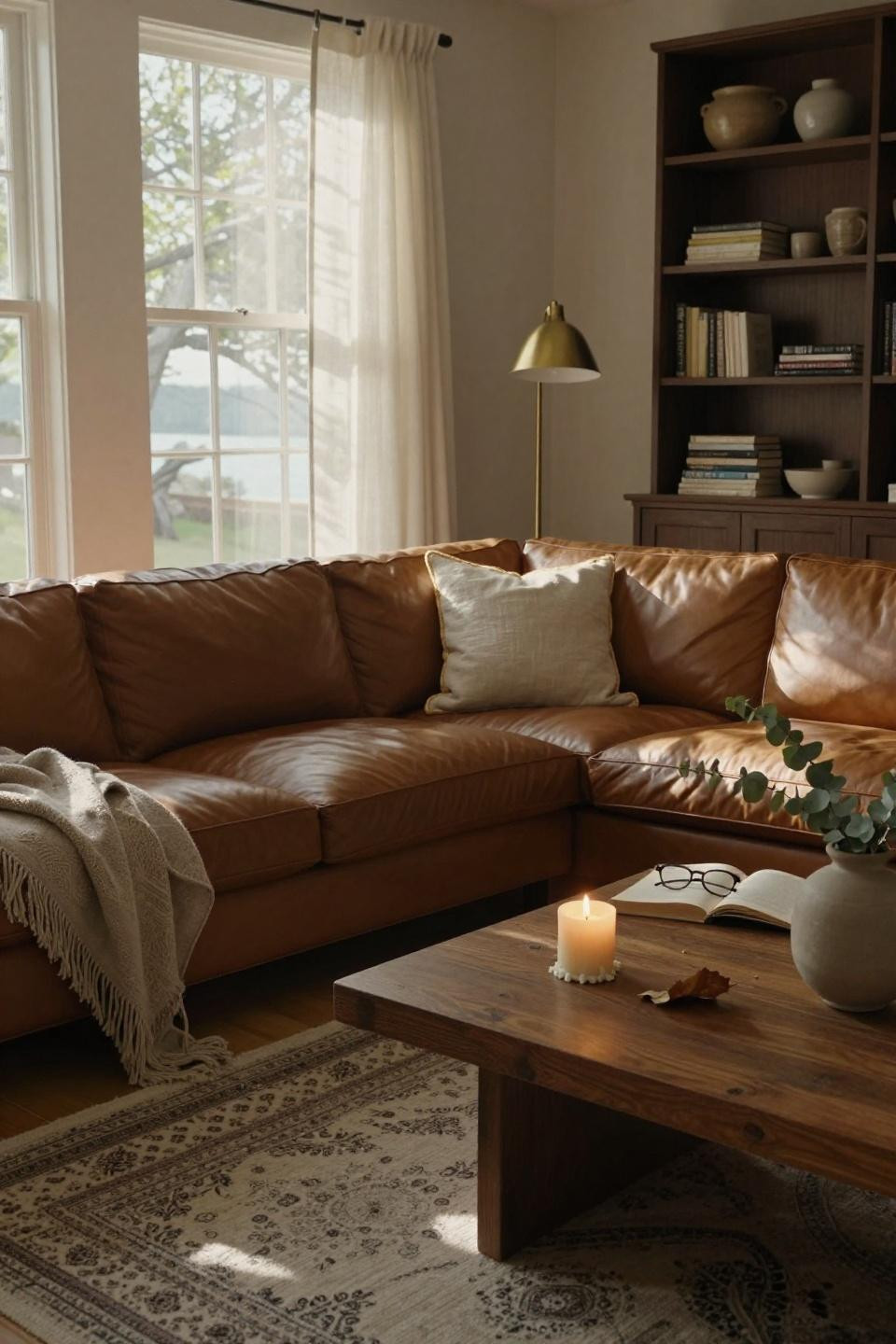
That massive cognac leather sectional isn’t just furniture - it’s the entire mood. The buttery cushions and natural patina make everything else fall into place. Pair it with unlacquered brass (the floor lamp especially) and suddenly the room has weight. The reclaimed elm coffee table grounds it further. Honestly, I’d start here if the budget only allows one big piece. The way afternoon light hits that leather? Chef’s kiss.
Steel Windows That Frame the Whole Vibe
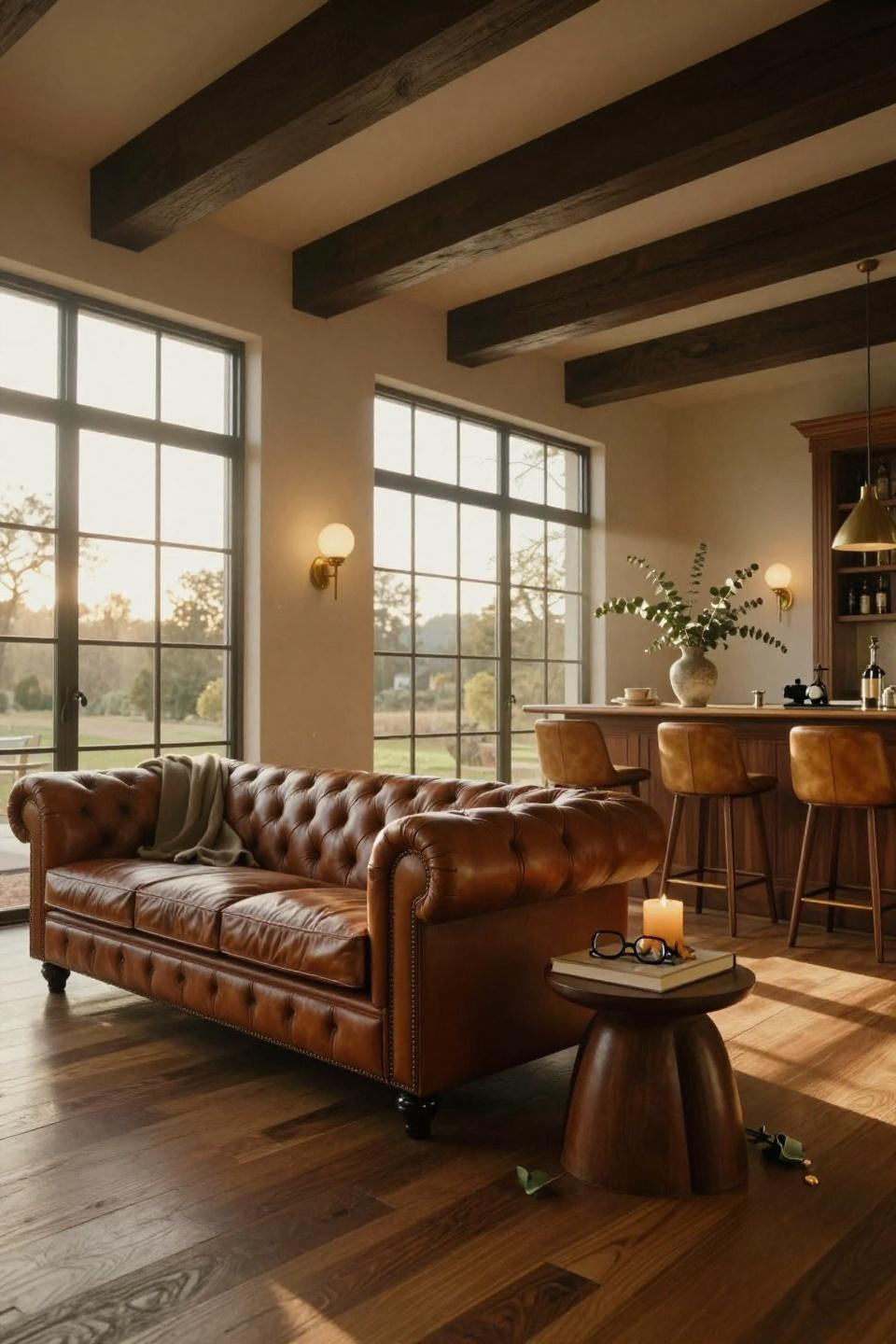
Floor-to-ceiling steel-framed windows. That’s it. That’s the architectural flex that makes Pottery Barn rooms feel elevated without trying too hard. The frames create structure while the light does all the work. Plus, they’re the perfect backdrop for that 10-foot Chesterfield. The honey oak flooring reflects the golden hour glow, and suddenly you’ve got a room that photographs itself. West Elm has more affordable steel-look options if budget’s tight.
When Travertine Meets Unlacquered Brass
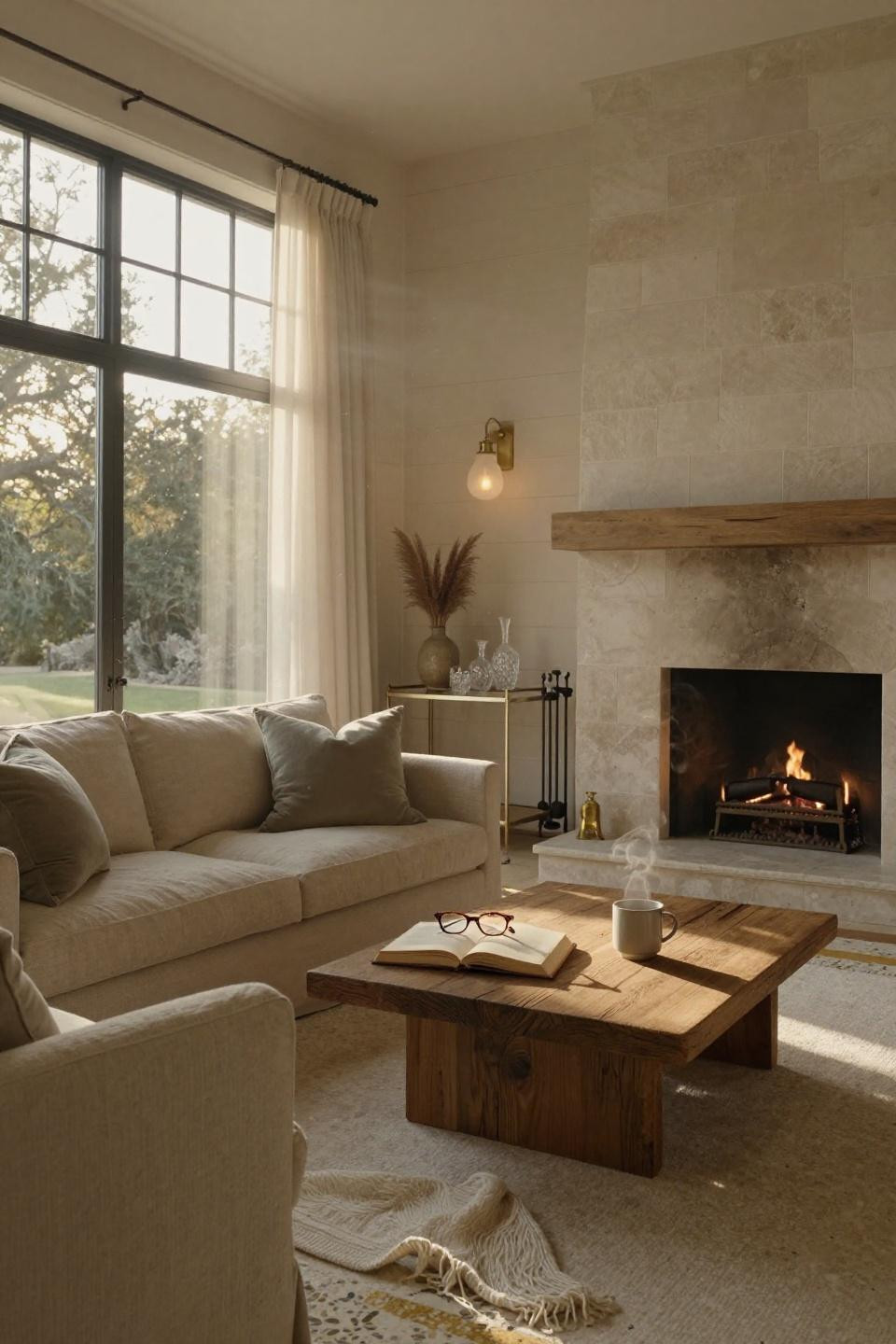
The hand-carved travertine fireplace is doing all the heavy lifting here. Pair it with unlacquered brass fire tools and you’ve got instant warmth. The linen-slipcovered sofa in natural oatmeal keeps things from feeling too formal. And that honey-toned oak coffee table? Total MVP for balancing the cool stone with warm wood. The trick is letting materials contrast instead of match. Been living with a similar setup for months - gets compliments every time.
The Barrel-Aged Bar Cart Setup

This cocktail station moment. The reclaimed oak shelving against that limestone accent wall creates texture contrast you can actually feel in the room. Unlacquered brass tray with crystal decanters catching afternoon light - it’s the kind of detail that makes a space feel curated without being precious. CB2 has similar brass trays for under $100. The half-empty rocks glass and leather-bound cocktail book? That’s the lived-in energy that keeps it from looking like a showroom.
Herringbone Oak That Changes Everything
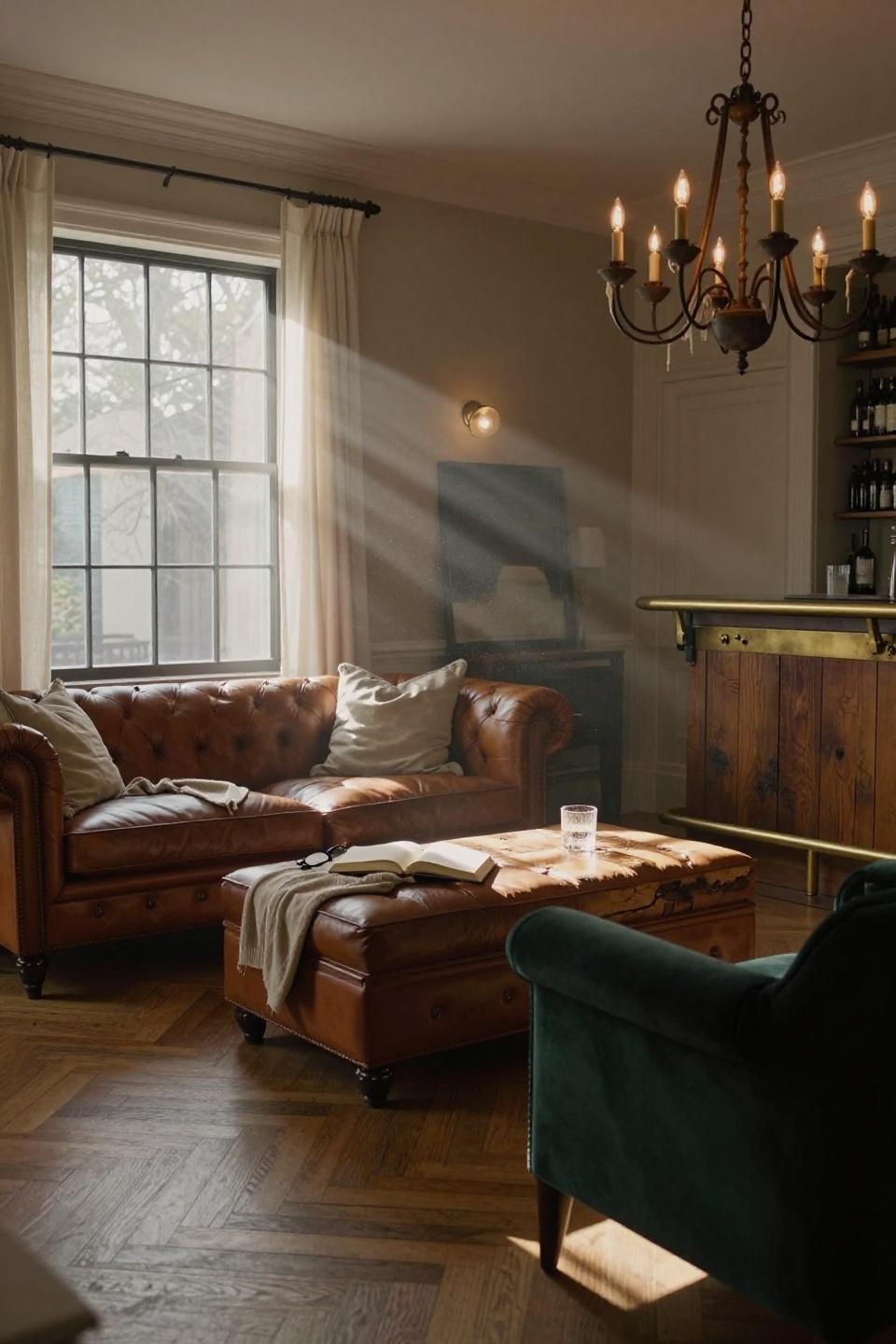
Real talk: the herringbone honey oak floor is what makes this room expensive-looking. Not the furniture. The pattern creates movement, and that warm tone works with literally every palette - cognac leather, ivory linen, forest green velvet. The reclaimed barn wood bar top adds another wood tone (which shouldn’t work but totally does). And that massive iron candelabra? Pottery Barn’s version runs pricey, but Wayfair has lookalikes that nail the same drama.
The Live-Edge Coffee Table Everyone Asks About
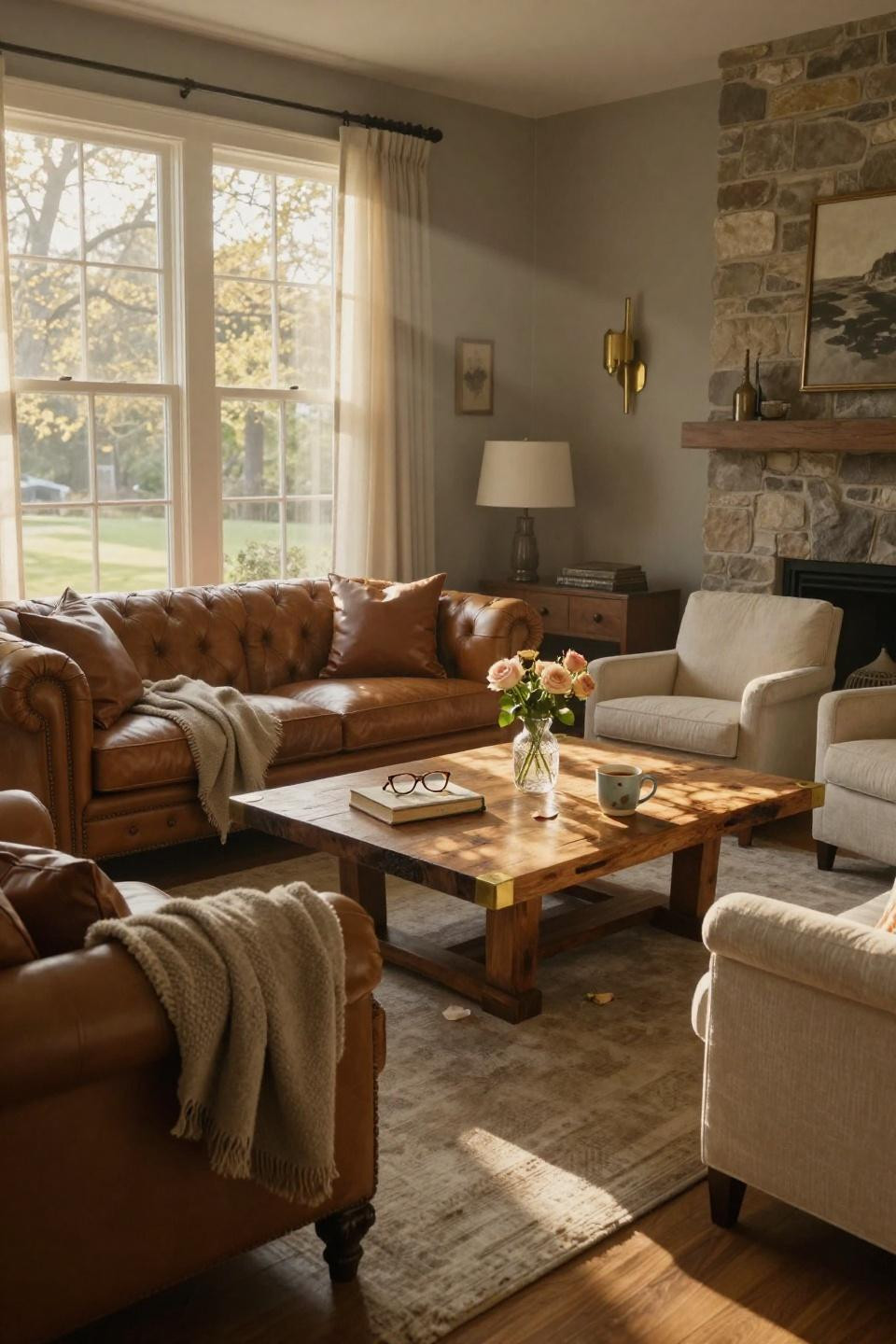
That monumental reclaimed barn wood coffee table with live edges. This is the piece friends always ask about. The aged brass corner details catch light in a way that makes the whole room feel intentional. Works with the caramel Chesterfield and ivory linen club chairs because the raw wood keeps things grounded. The trick? Don’t center it perfectly - let it sit slightly off to create visual tension. Three friends bought similar tables from Article after seeing this setup.
Belgian Linen Sectionals Done Right
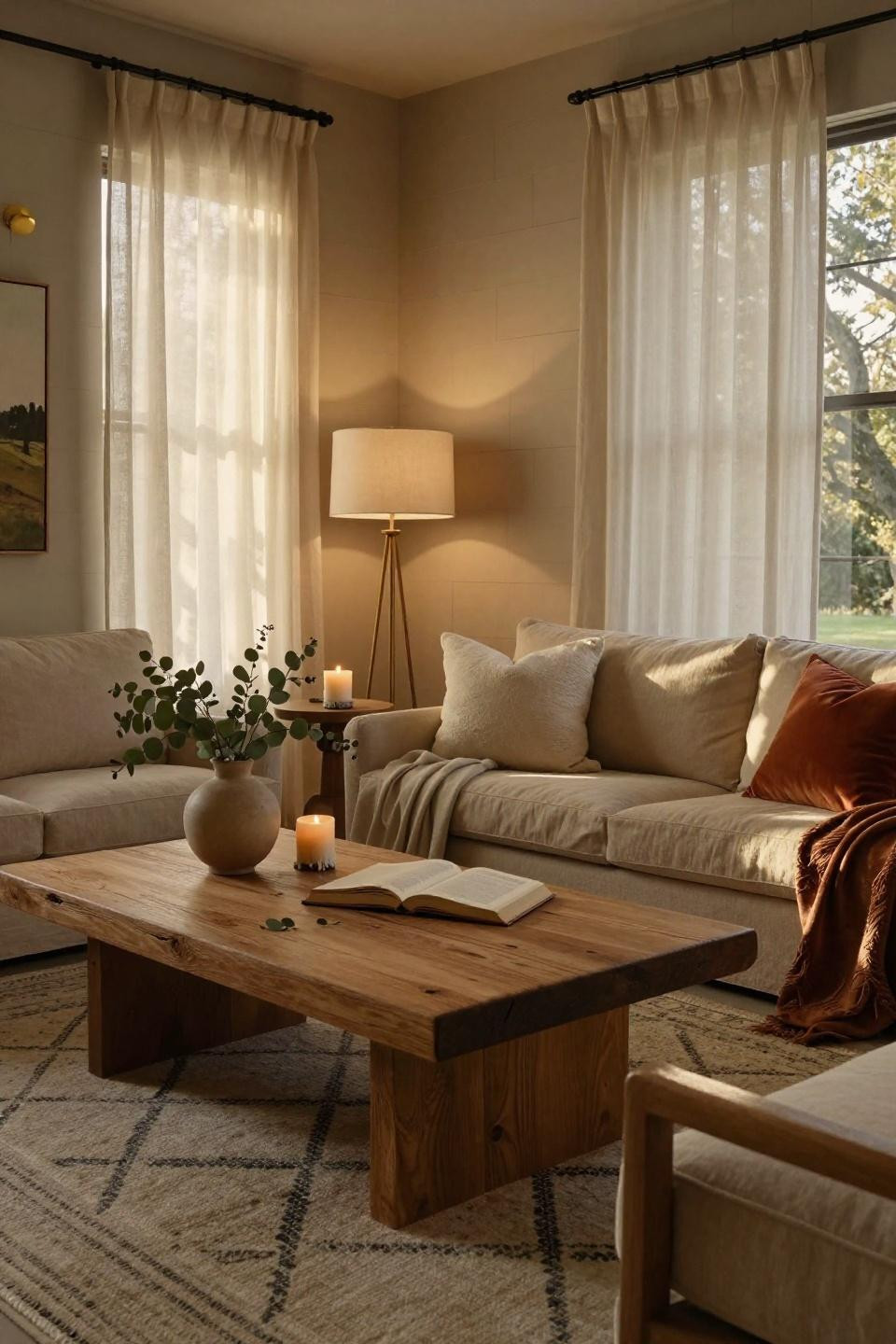
The Belgian linen sectional in warm oatmeal is Pottery Barn’s signature move for a reason. Nubby boucle pillows layered with one velvet terracotta accent pillow - that’s the formula. The hand-knotted wool rug grounds everything without competing. And here’s the thing: the shiplap accent wall in soft greige makes the whole setup feel intentional without screaming “farmhouse.” Target’s Threshold line has linen-blend sectionals that come close to this look for way less.
When Dark Walnut Paneling Actually Works
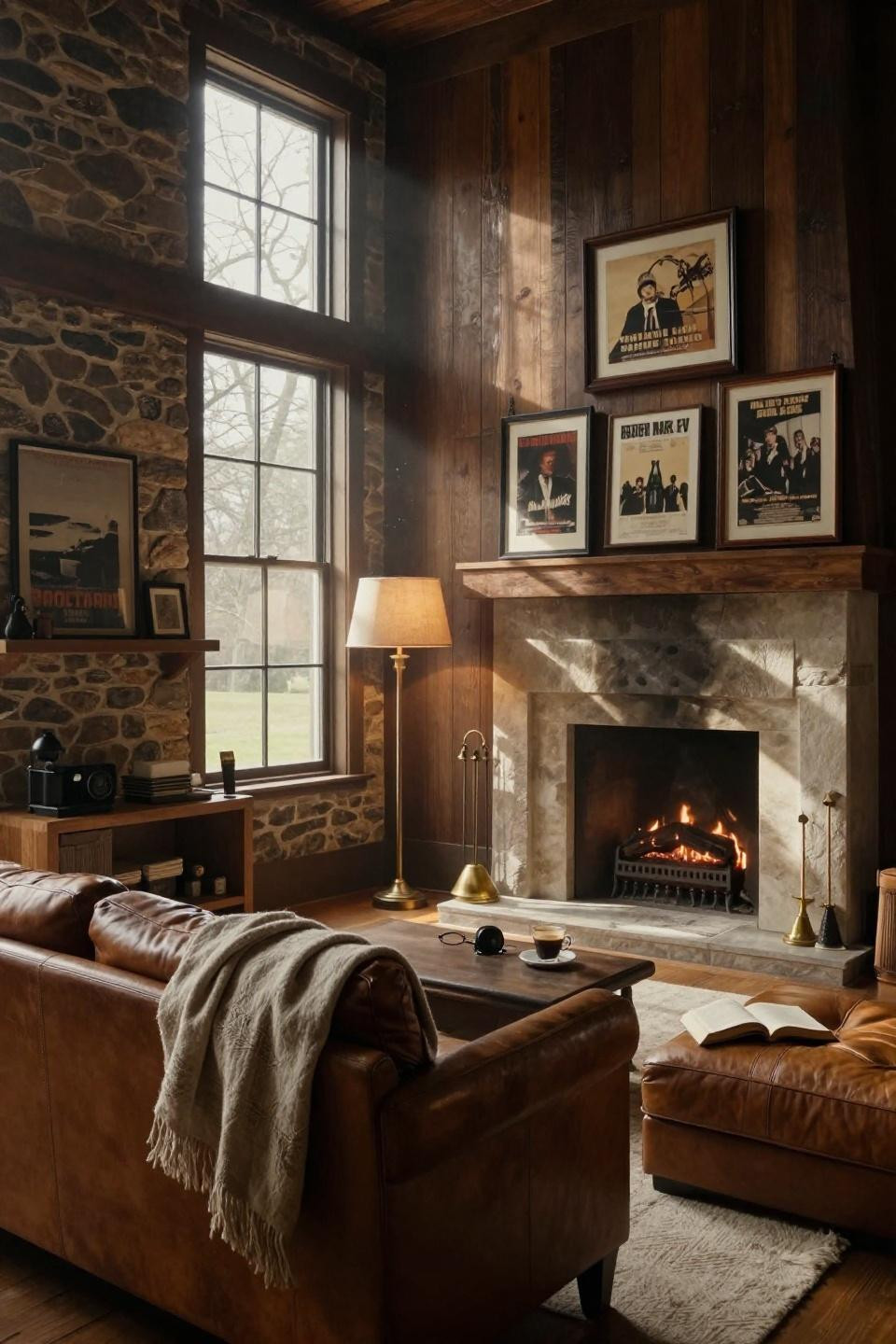
Dark walnut paneling could go wrong fast. But paired with that deep caramel leather sofa and massive limestone fireplace? It creates warmth instead of gloom. The honey-toned oak console and buttery cream wool rug lighten things just enough. And the gallery wall of vintage framed movie posters in mismatched frames - that’s the lived-in detail that keeps it from feeling too designed. The aged brass floor lamp is key for adding warmth at night.
Our Top Mattress Pick
| Saatva Classic | $1,395+ | Shop |
| Saatva Contour5 | $1,595+ | Shop |
| Saatva Zenhaven | $1,895+ | Shop |
The Exposed Brick Wall Nobody Regrets
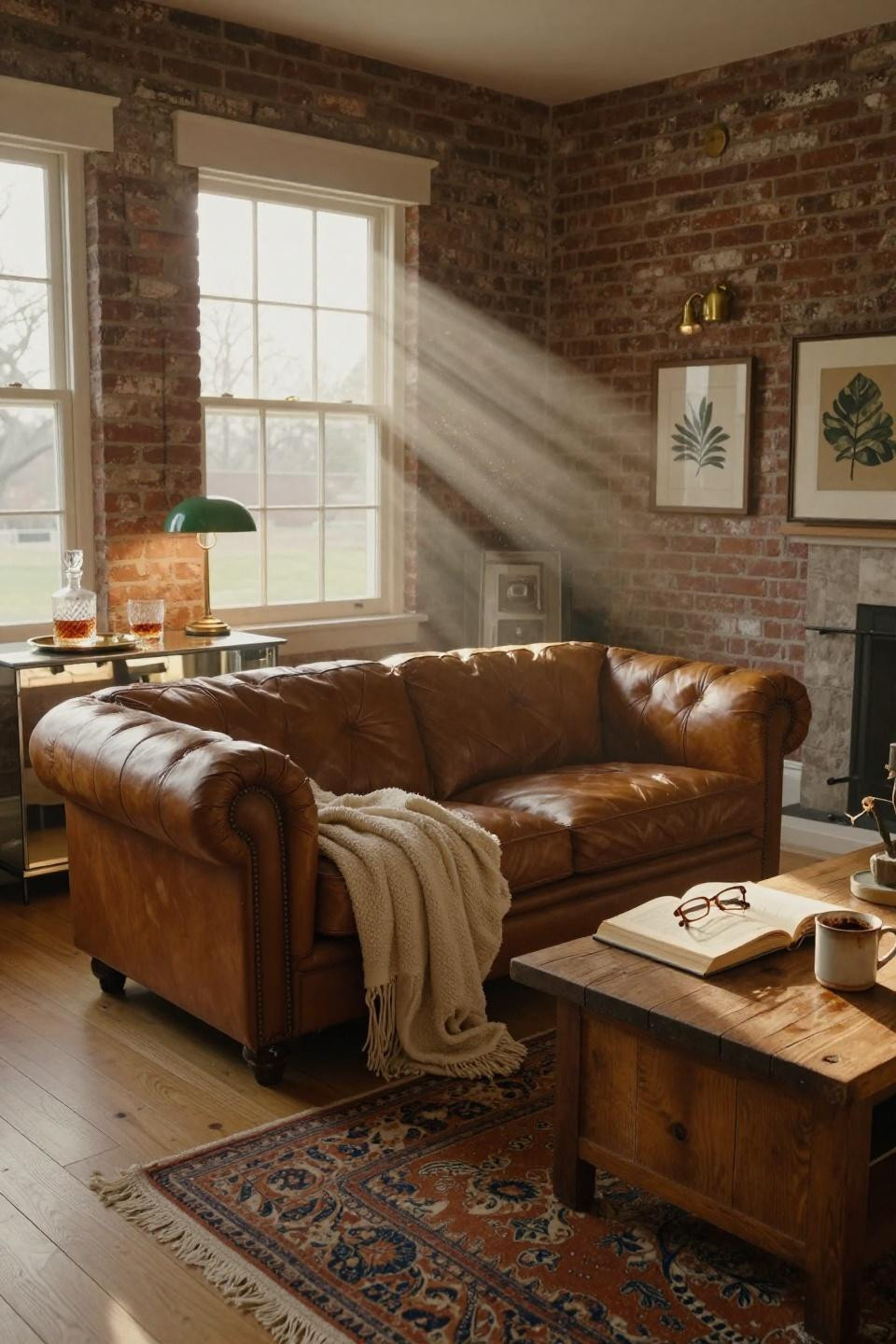
That exposed brick accent wall with authentic weathered mortar. Rough, pitted texture that photographs like a dream. The eight-foot Chesterfield in caramel distressed leather plays off it perfectly - both materials have patina and history. Ivory boucle throw draped asymmetrically keeps it from feeling too masculine. The reclaimed barn wood coffee table ties the materials together. And that vintage Turkish kilim in faded terracotta? Total room MVP. Been getting compliments for weeks.
Travertine Fireplaces That Steal the Show
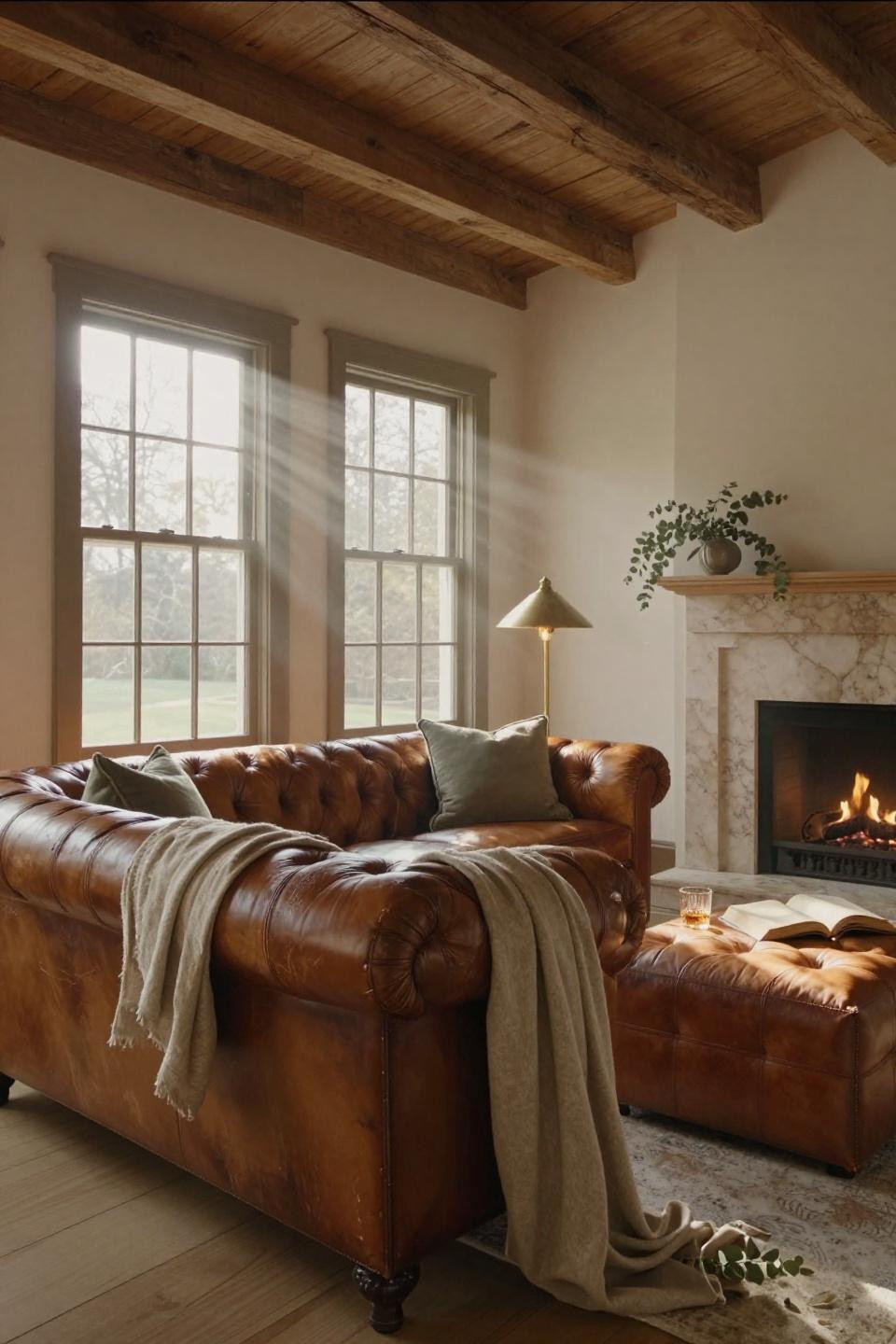
The hand-carved travertine fireplace with flickering flames - this is the focal point that makes everything else work. Pair it with that distressed cognac Chesterfield and honey-toned white oak flooring, and you’ve got the Pottery Barn formula. The rough-hewn reclaimed barn wood beams overhead add another layer of texture. Muted sage green accent pillows (just 15% of the palette) punch it up without overwhelming. The unlacquered brass lamp? Worth every penny for the warm Edison bulb glow it creates.
Start with one hero piece - the leather sofa or travertine fireplace - and build from there. The rest is just layering textures and letting materials do their thing. Honestly, the imperfect styling (draped throws, open books) matters more than matching everything perfectly.
Try Saatva risk-free →
The Pottery Barn Formula: Why It Always Looks Expensive
Pottery Barn's design language has remained remarkably consistent for three decades, and understanding why it works explains how to recreate it. The formula is built on three principles: neutral color as a foundation, natural materials as texture, and layering as depth. When all three are present simultaneously, the result looks like a catalog spread. When any one is missing, the room falls short of the look despite having similar individual pieces.
The neutral foundation means starting with walls, major upholstery, and flooring in tones that are warm rather than stark. Warm white (Sherwin-Williams Alabaster or Benjamin Moore White Dove), warm gray, and greige work. Cool whites and stark blacks do not. The Pottery Barn palette is specifically warm and organic, never clinical or high-contrast in the primary surfaces.
The Sofa: Starting With the Right Anchor
The sofa is the most important single purchase in achieving a Pottery Barn living room look. Pottery Barn's own sofas, particularly the Comfort Roll Arm series ($1,699 to $3,499 in slipcovered linen) and the York slope-arm sofa, are the obvious starting point. But similar aesthetics are available from:
- Article: The Soma sofa ($1,399) in natural fabric is visually indistinguishable from the Pottery Barn look at significantly lower cost.
- Joss and Main: Carries several slope-arm upholstered sofas in neutral linen and performance fabric starting around $800.
- IKEA KIVIK: At $899 with a natural fiber slipcover, the KIVIK is the most budget-accessible way to get a slipcovered sofa that reads as Pottery Barn without the Pottery Barn price.
The key features to look for regardless of brand: a low to medium profile (not deep sectional), visible legs in wood or metal, clean slope-arm or English-roll-arm silhouette, and fabric in natural linen, brushed cotton, or performance fabric in warm neutral tones. Avoid tufted details, nailhead trim, and overly cushy proportions that push toward a different aesthetic.
Textiles: The Layer That Does the Most Work
In a Pottery Barn living room, the textile layers are where the warmth and visual richness come from. The sofa itself may be in a single neutral fabric, but the throw pillows, area rug, curtains, and throws collectively create the magazine-spread quality of the finished room.
The pillow formula that professional stylists use for the catalog look is: start with two large 24x24 or 26x26 solid-color pillows in the sofa's own fabric or a matching neutral, add two medium 22x22 pillows in a subtle pattern (ticking stripe, small diamond, or simple geometric), then add two small 18x18 lumbar pillows in a texture-forward fabric like boucle, velvet, or a woven stripe. Six pillows total for a standard three-seat sofa, arranged symmetrically but varied in size and texture.
The area rug is equally important. Pottery Barn's signature rug choices are natural fiber (jute, sisal, or seagrass) or wool in traditional patterns (Persian-inspired medallion, subtle geometric, or distressed vintage-look). Size matters enormously: for a standard living room with a sofa and two chairs, a rug that is at least 8x10 feet, and ideally 9x12 feet, ensures that all furniture legs sit at least partially on the rug. A rug that is too small makes the room look unanchored regardless of how beautiful the individual pieces are.
Natural Materials: Wood, Rattan, and Brass
Pottery Barn's material palette is consistently natural and warm: reclaimed or wire-brushed wood, rattan and wicker, hammered brass and aged bronze, linen and cotton, leather and jute. The combination of these materials creates layered texture that no single material can achieve alone.
For the coffee table, the Pottery Barn look calls for a natural wood surface with some character, such as a live-edge slab, a reclaimed wood plank top, or a wire-brushed oak finish. The Pottery Barn Griffin reclaimed wood coffee table ($799 to $1,299) is the canonical example. Similar tables are available from World Market ($250 to $500) and from Wayfair under the Laurel Foundry Modern Farmhouse label ($300 to $600).
Side tables should bring a different material than the coffee table to avoid monotony. If the coffee table is wood, bring in a rattan side table, a marble-topped metal table, or a hammered brass accent table. This material variation is what creates the layered, collected feeling that Pottery Barn styling is known for.
Lighting: Warm and Multi-Source
Pottery Barn living rooms are never lit by a single overhead fixture. The look requires multiple light sources at different heights to create warmth and atmosphere. Here is how to build the lighting plan:
- Overhead: A statement chandelier or pendant in natural materials (rattan, linen shade, aged brass, or driftwood) provides ambient light and visual scale. Pottery Barn's Clarissa drop pendant and Seagrass drum pendants are frequently referenced. Comparable options from Wayfair and World Market start at $150.
- Floor lamps: One or two floor lamps flank the sofa or reading chair. Arc floor lamps in matte black or aged brass bring height and task light for reading. The CB2 Arched Floor Lamp ($249) and the Threshold arc floor lamp from Target ($65 to $120) both work well.
- Table lamps: Ceramic or wood base lamps with linen shades on console tables, sideboards, or end tables. The linen drum shade is the most Pottery Barn-canonical shade shape. Expect $80 to $200 for quality options from most home stores.
- Candles: Real candles on the coffee table, mantel, or side tables are irreplaceable for the warm, organic quality they add. White pillar candles at varying heights in simple wood, brass, or ceramic holders are the most versatile option.
The Mantel and Gallery Wall: Pulling the Room Together
If the room has a fireplace, the mantel styling is the most photographed single element and the one that guests remember. The Pottery Barn mantel formula: start with one large anchor (a framed mirror or a piece of art that fills most of the space above the firebox), then layer smaller objects at varying heights in front of and beside it. The classic objects are: a few hardcover books stacked horizontally, a small plant or dried botanicals, a ceramic or stone object with interesting texture, and two candles in holders of different heights.
For rooms without a fireplace, a gallery wall performs the same function of providing a visual anchor for the seating area. Pottery Barn gallery walls use consistent framing (all black frames, all natural wood frames, or a mix of sizes in the same finish), a limited color palette in the art or photos (black and white photography is the most versatile), and asymmetrical arrangement with the largest piece off-center. The frames should be installed so the cluster reads as one large element rather than individual hanging pieces scattered across the wall.
Five Specific Product Picks Under $200
You do not need to shop at Pottery Barn to achieve the Pottery Barn look. These five pieces from accessible retailers collectively create the aesthetic at a fraction of catalog pricing:
- Jute rug, 8x10, World Market: $180. The natural texture does more work than any other single piece in anchoring the Pottery Barn look.
- Seagrass basket set, Target Threshold: $35 to $55. Three nested baskets in graduated sizes for storage and display.
- Ceramic table lamp with linen shade, HomeGoods: $45 to $80. The material combination is directly Pottery Barn-adjacent at HomeGoods prices.
- Linen throw, Parachute Home: $79. The quality and drape of Parachute's linen throws match or exceed Pottery Barn's own at similar price points.
- Rattan mirror, West Elm or Wayfair: $120 to $160. A round or oval rattan-framed mirror on a console or leaning against a wall is one of the highest-visual-impact, most specifically Pottery Barn-coded pieces you can add.
Complete Your Space
Every beautiful room deserves a great night's sleep. The Saatva Classic, white-glove delivery, 365-night trial.