
 by
by Our #1 Recommended Mattress
Saatva Classic. From $1,095
365-night trial · Lifetime warranty · Free white-glove delivery
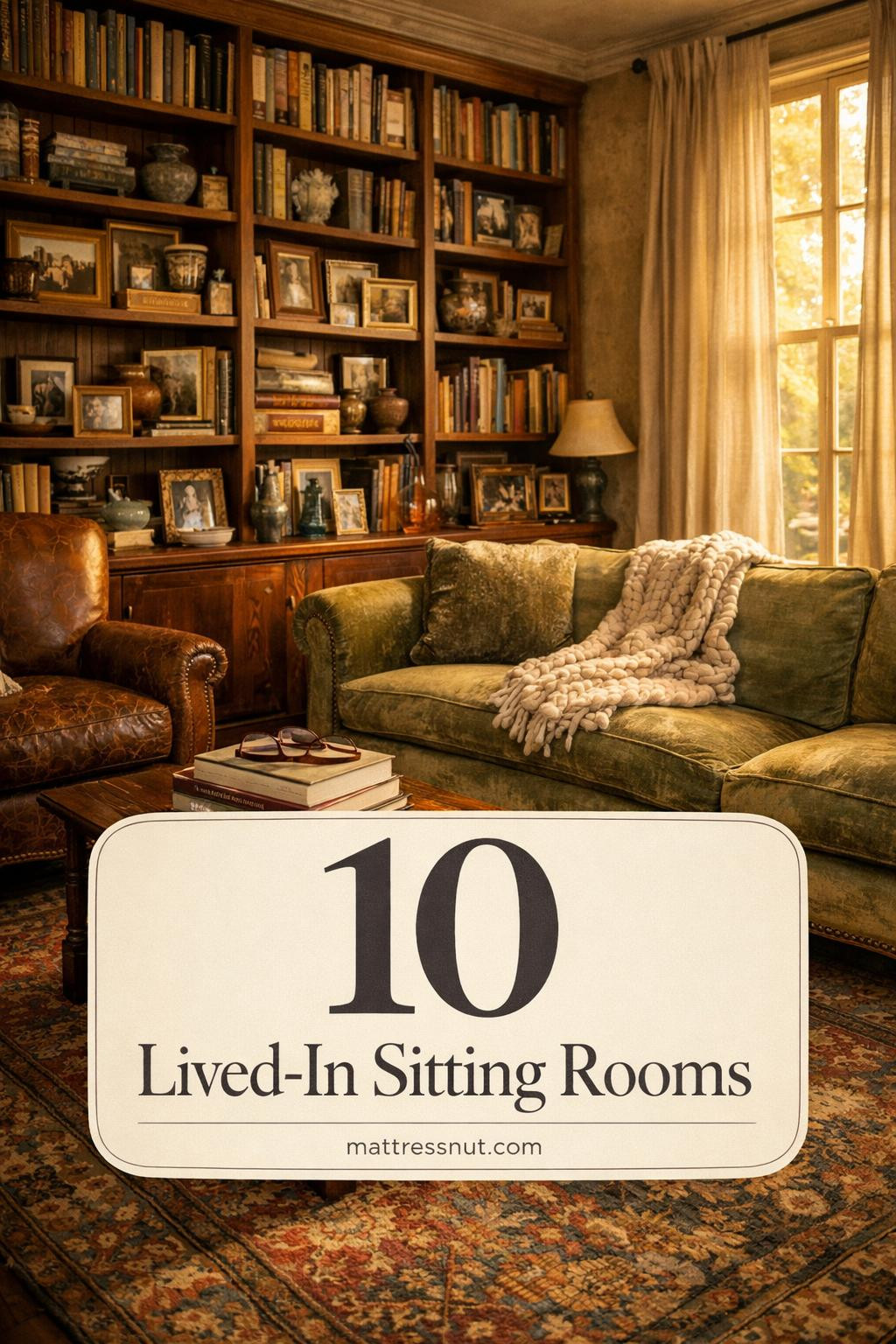
Check Price at Saatva →A sitting room that feels lived-in is one of the hardest things to design and one of the easiest things to achieve by accident. The rooms that succeed at this spend years accumulating their character: a leather chair that developed a patina from regular use, a rug chosen for the wrong reasons that turned out to be perfect, a shelf that started as storage and became a portrait of the people who live there. The design challenge is to create this feeling intentionally, without the years.
The 2026 Shift Toward Soul Over Showroom
Interior design surveys consistently show that the aesthetic most searched and most saved in 2026 is not a specific style but a quality: spaces that look collected over time rather than purchased at once. Maximalism and eclecticism are now the most requested aesthetics among homeowners working with professional designers, outpacing the restrained styles that dominated the previous decade. The implication for sitting rooms is that the things that look most designed are the ones that look least designed: open books on the coffee table, a blanket thrown rather than folded, a chair that is not quite where it should be.
This does not mean clutter. The distinction between a room that looks lived-in and a room that looks messy is curation at the level of individual objects rather than the arrangement of furniture. Every object in the room should have a reason to be there. The books on the side table should be ones actually being read. The candles should be burned ones. The throw should smell faintly of the person who uses it. These qualities cannot be purchased, but the conditions that allow them to develop can be designed.
Antiques and Vintage Pieces: The Fastest Route to Authenticity
Antiques and vintage furniture pieces do more work per unit of visual space than any new item can. A single antique mirror, an inherited side table, or a wingback chair with visible upholstery wear establishes the idea that this room exists in time rather than being constructed in a single week. Designers consistently recommend that if a room has twelve key pieces, four or five of them should be vintage or antique: a Persian or Turkish rug, a pair of mid-century chairs, an antique mirror, a Murano-glass pendant or table lamp. The contemporary pieces, a new sofa, a simple media unit, can then be quietly minimal, chosen for performance and comfort, because the vintage elements carry the room's visual identity.
The patina that develops on wood, leather, and metal over years of use is one of the most visually powerful qualities in interior design and one that cannot be faked convincingly. Distressed leather, burnished brass, and worn wood grain all read as genuine rather than applied because they have a consistency across the entire object that artificially distressed alternatives lack. Buying pieces with genuine age is therefore more effective than buying new pieces designed to look old.
Two cognac leather armchairs positioned at slight angles to each other with a travertine side table between them creates a conversational setup that works in apartments as effectively as in large sitting rooms. The conversation grouping signals that the room is used for actual conversation rather than simply for the occupant to face a television, which shifts the entire character of the space toward the intimate and intentional.
Warm Textiles: Layering for Depth and Physical Comfort
Textiles are the fastest and most reversible way to add warmth and character to any sitting room. The 2026 interior design tendency toward texture-maxing, stacking rugs on wood floors, draping sofas in nubby weaves, mixing velvet and linen and aged leather, creates enveloping, sanctuary-like rooms that invite extended occupation. The specific materials matter more than the color palette: chunky knit blankets, cashmere throws, and velvet cushions all signal quality through texture in a way that synthetic alternatives cannot regardless of color or pattern.
Deep forest green velvet against off-white walls creates richness without heaviness and is one of the most reliable upholstery choices for vintage-style sitting rooms. Burnt orange velvet or silk adds warmth against dark charcoal walls and natural wood. Both color choices age well because velvet develops a directional sheen that changes with the light and with handling, which is precisely the lived-in quality that makes spaces feel personal rather than preserved.
Vintage floral patterns mixed across upholstery, rugs, drapery, and cushions create a layered botanical quality that characterizes the most celebrated lived-in sitting rooms in British and American interior design traditions. The key to mixing patterns without creating visual chaos is tying all the patterns to a consistent underlying color palette, even if the patterns themselves vary wildly in scale and style. A room with three pattern types all sharing cream, dusty blue, and aged gold reads as cohesive. The same three patterns in different colorways do not.
Layered Rugs: The Floor as a Design Surface
Layered rugs have become one of the signature visual elements of collected, lived-in sitting rooms. A large natural fiber jute or sisal rug as the base layer, with a smaller Persian or Moroccan rug centered on top of it, creates the kind of floor treatment that looks like it arrived over time rather than being installed on a single day. The base layer provides texture and definition. The top layer provides color, pattern, and the warm worn quality that aged rugs contribute even when new ones would be easier to clean.
The proportional relationship between the two rugs matters. The base rug should extend significantly beyond the furniture grouping on all sides. The top rug should sit entirely within the furniture grouping, anchoring the coffee table and seating arrangement. This creates a clear visual hierarchy where the floor treatment supports the furniture rather than competing with the walls or the ceiling for attention.
Reading Nooks: The Ultimate Lived-In Feature
A reading nook is the single most effective design element for signaling that a sitting room is genuinely inhabited rather than curated for visits. The nook does not need a dedicated architectural recess to work. A single armchair positioned beside a window, with a floor lamp directly behind it, a side table within reach for a cup and a bookmark, and a small shelf of frequently read books within arm's reach, is a complete reading nook that requires no construction.
The jewel-box reading nook, where a small corner or alcove is heavily upholstered and draped in sumptuous fabric, represents the more architectural version of this idea. Deep-set window seats with cushioned covers and stacked throw pillows, surrounded by built-in shelving, create a secondary seating zone that anchors one end of the sitting room and provides the kind of layered visual depth that makes rooms look larger rather than smaller in photographs and in person.
Built-In Shelving: The Backbone of a Lived-In Room
Built-in shelving changes the character of a sitting room more permanently and more fundamentally than any movable furniture piece. Walnut or white oak built-ins with burnt orange or jewel-toned seating nearby add vertical interest and establish the idea that this room has been arranged around books and objects rather than around a television. The shelves should hold a mix of books, objects at varying heights, and empty space. The empty space is as important as what fills it: it prevents the shelving from reading as packed rather than curated.
For rooms without built-ins, a combination of a tall bookcase and a low credenza creates a similar sense of vertical organization without permanent installation. Position the bookcase so that it is visible from the primary seating position and faces the light source that illuminates the room in the evenings, so that the spines of the books and the objects on the shelves catch warm light and create depth rather than falling into shadow.
Lighting: The Element That Transforms Lived-In Into Something More
The lighting in a genuinely inhabited sitting room is never overhead-only. Multiple light sources at different heights, a floor lamp behind the reading chair, a table lamp on the side table, a pair of sconces flanking a fireplace or mirror, and the ambient glow of candles on the coffee table, create the kind of layered warmth that makes rooms look inhabited at all times and genuinely inviting in the evenings. The overhead fixture, if present, should be on a dimmer and used only for cleaning rather than for the room's regular occupation.
A brass pharmacy lamp or an aged tortoiseshell table lamp provides the reading light that a floor lamp cannot, because it directs light precisely at the surface where it is needed without illuminating the rest of the room. This precision-lighting quality, where different zones of the room are lit differently according to their function, is one of the most reliable signals that a room has been designed with actual use in mind rather than with photography as the primary consideration.
Personal Objects and Intentional Imperfection
The final layer of a truly lived-in sitting room is the one that cannot be designed: the personal objects that accumulate through actual occupation. The book left face-down on the armrest because you were interrupted mid-chapter. The birthday card propped on the mantelpiece three weeks past its occasion because something about it still deserves to be seen. The dog-eared paperback on the window seat that has been read so many times its spine has cracked in three places. These details are the evidence of a room in use and they are what separates a room that photographs well from one that feels genuinely inhabited when you enter it.
Design deliberately for the possibility of these accumulations rather than against them. Leave surfaces clear enough that objects placed on them look considered rather than piled. Choose furniture at heights and positions where a person would actually rest something rather than heights where objects are placed out of obligation. A side table at the exact height of the armchair's armrest invites a glass. A windowsill wide enough to rest a book invites a book. A coffee table low enough to rest feet on invites feet, which is perhaps the most reliable indicator that a room is genuinely comfortable rather than aesthetically comfortable. Build for the room's occupation and the lived-in quality develops faster than any styling decision can create it.
The Final Detail: What to Put on the Coffee Table
The coffee table is the surface that most directly signals whether a sitting room is lived-in or simply well-styled. A coffee table with a single large art book, a small vase with three stems, a coaster, and nothing else reads as designed. A coffee table with the same art book left open to a page, a stack of smaller books with a sticky note on top, the coaster being used by an actual glass, and a small bowl of objects from someone's pockets reads as inhabited. The inhabited version is more interesting to be in and more interesting to look at, and it is achieved entirely through use rather than through additional purchases. Allow your sitting room to be used and the final design decision resolves itself.
Complete Your Space
Every beautiful room deserves a great night's sleep. The Saatva Classic, white-glove delivery, 365-night trial.
Shop Saatva Classic →