
 by
by Our #1 Recommended Mattress
Sleep Lab Pick · Current Sale
Amerisleep's Current Sale: $500 off every mattress. The AS3, plant-based Bio-Pur® foam, sleeps cooler than memory foam, 100-night trial, 20-year warranty.
Saatva Classic. From $1,095
365-night trial · Lifetime warranty · Free white-glove delivery
The best Bloxburg house exteriors do not look like Bloxburg. They look like houses worth living in: proportioned correctly, with materials that feel deliberate rather than selected from a default palette, and with the kind of small-scale detail at the entry and roofline that separates a build that photographs well from one that just fills a lot. These principles translate directly from real architecture, and they apply to every budget and plot size in the game.
Why Exterior Design Matters More Than Interior in Bloxburg
Bloxburg exteriors do a different kind of work than interiors. Interiors reward detail visible only at walking distance. Exteriors need to read from across the street, from thumbnails in build showcases, and in the first two seconds of a tour video. This means the decisions that matter most are architectural rather than decorative: roof pitch and shape, facade material combination, window proportion, and entry framing. Get these right and the build looks expensive regardless of the actual cost. Get them wrong and no amount of decorative detail rescues the first impression.
Modern Exterior Designs: Clean Lines and Material Contrast
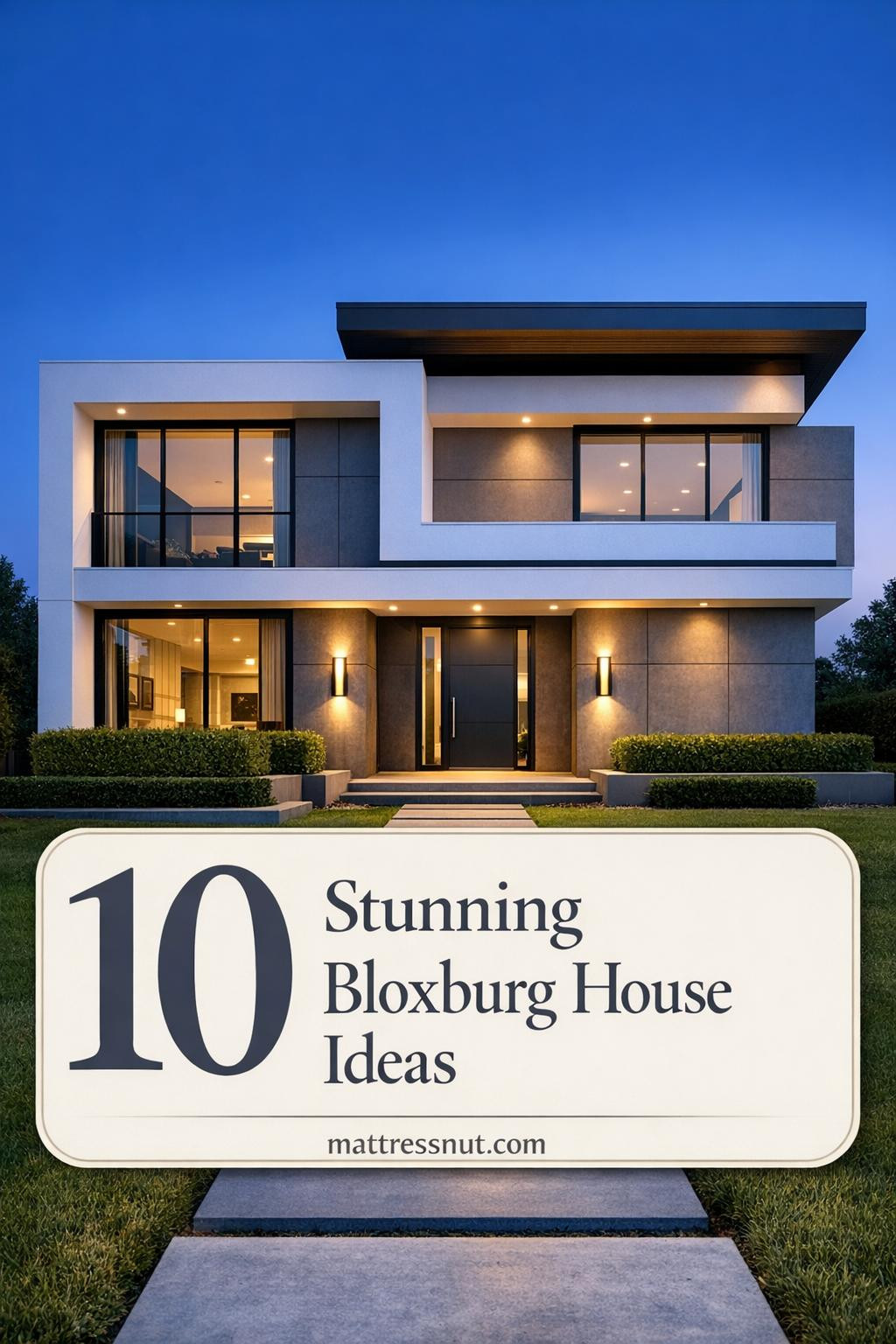
Modern Bloxburg exteriors work through contrast: light stucco against dark wood paneling, concrete against warm-toned wood screen panels, white against charcoal. The cantilevered second-floor volume, where the upper story extends beyond the lower story footprint, creates shadow play that makes facades interesting at all times of day without requiring any decorative elements. Floor-to-ceiling glass on at least one facade section allows interior lighting to project outward at night, creating a warm inhabited glow that makes the build look occupied and real.
The hillside modern mansion uses elevation as a design element: the building appears to rise from the landscape rather than sit on top of it, with retaining wall terracing, exterior stairways, and lower-level carport integrated into the slope. On flat plots, you achieve similar visual interest through split-level floor plans where the garage is set lower than the main living level, creating a step in the facade that breaks the horizontal monotony of a single-story mass.
For the minimalist floor-to-ceiling glass wall approach, the key detail is the window frame finish. Black window frames against light stucco create the high-contrast graphic quality that makes this style recognizable. Use the thinnest frame option available in the game to maximize the glass-to-frame ratio and get the floor-to-ceiling effect looking as close to contemporary architectural glass as the build tools allow. Interior lighting color should be warm, around 3000K in aesthetic terms, to prevent the glowing windows from looking clinical at night.
Modern Farmhouse Exterior: Warmth, Character, and Practical Detail
The modern farmhouse exterior remains one of the most consistently popular Bloxburg build styles because it has a clear set of material rules that produce a coherent result even when executed imperfectly. White or cream vertical siding, natural stone accents at the base or around the entry, a steep-pitched charcoal roof with exposed rafter tails, and a covered front porch with simple steel or wood posts: these elements together read as farmhouse from any distance.
Vertical shiplap in warm blonde or natural wood tones works better than generic white for family-focused farmhouse builds that want character rather than catalog appearance. The roofline is the single most impactful element in farmhouse design: a steep-pitched gable roof with visible rafter overhangs signals the style from a distance before any other detail registers. Exposed rafter tails at the eaves add to this effect and are worth the structural detail investment. A recessed carport with simple steel posts keeps practical elements from visually overwhelming the decorative porch and entry.
Deep charcoal siding paired with natural wood highlights gives the modern farmhouse a sophisticated edge over the strictly white version. The dark tone grounds the structure visually while warm wooden accents around the door, in porch beams, or as decorative shutters soften the moodiness and keep the exterior approachable rather than austere.
Cottage Exterior Designs: Romantic Detail and Storybook Character
Cottage exteriors in Bloxburg live and die by their rooflines. Steeply pitched roofs with multiple dormers, mismatched ridge heights, and visible structural expression at the eaves create the irregular, hand-built quality that defines the cottage aesthetic and separates it from a generic two-story box. The more asymmetrical the roofline, the more authentically cottage the exterior reads, as long as the asymmetry comes from structural logic rather than random variation.
Butter-yellow board-and-batten siding with deep burgundy brick chimneys rising full height creates cottage character without clutter. Arched wooden doors framed by climbing jasmine add romance that flat-topped doors with standard frames cannot achieve. White-trimmed casement windows keep the facade fresh and prevent the warm siding color from reading as dated. Curved brick pathways through cottage garden beds, even simple ones using the landscaping tools available in Bloxburg, soften the geometry between the door and the street and signal that this is a home someone tends with care.
Pale mint or sage green vertical wood siding against soft cream accents reads cottage without being precious. A rounded or arched doorway in forest green with stone voussoirs adds the hand-built quality that makes cottage exteriors feel genuinely old rather than theme-park old. Mismatched weathered slate shingles, where you vary the shingle color slightly across sections, and multi-paned casement windows scattered irregularly across the facade both contribute to the organic, grown-over-time quality that is the aesthetic goal of cottage-style builds.
Curb Appeal Techniques That Work at Every Budget
Curb appeal in Bloxburg, as in real architecture, comes from three overlapping decisions: material combination, light manipulation, and scale detail at the entry. None of these requires a large build budget. A single material change, replacing generic siding with horizontal wood slats or substituting a colored door for the default option, can shift the perceived quality of an entire build. The principle is that one good decision executed consistently reads better than many mediocre decisions layered together.
Exterior lighting is the single most cost-effective curb appeal investment in Bloxburg builds. Uplighting on the facade, where light sources positioned at ground level wash upward across the building surface, creates drama and dimension at night that flat ambient lighting cannot. Wall sconces flanking the entry door add a finished, residential quality that no other small detail achieves as efficiently. String lights along a porch railing or between exterior posts create warmth that pulls attention toward the entry point and away from any structural weaknesses elsewhere in the build.
Landscaping around the foundation matters more than most Bloxburg builders invest in. A two-foot band of low hedging, flowering plants, or ground-level planters along the base of the facade breaks the hard line where the wall meets the ground and signals maintenance and intention. Flower beds along the path from street to entry guide the eye and add the kind of layered color that photographs beautifully and suggests a space someone cares about coming home to.
Statement Doors: The Single Detail That Changes Everything
The front door is the face of any exterior, and in Bloxburg it is one of the simplest elements to swap for maximum impact. A cobalt blue door against white stucco creates the kind of bold, confident entry that makes the rest of the facade look more intentional by association. A deep forest green door on a cottage exterior signals personality and sets expectations for the interior that the rest of the build then needs to meet. A matte black door on a modern or farmhouse exterior is the 2026 default choice among experienced Bloxburg builders because it pairs with virtually every other exterior material without conflict.
Door hardware details, the knocker, the handle, the house number plate, function in Bloxburg as they do in real architecture: they reward close inspection and add the finishing touch that separates a build that looks complete from one that looks like it is still in progress. Brass hardware reads warmer and more traditional. Matte black hardware reads contemporary and deliberate. Mix them only if you have a specific reason, as the mixing of metal finishes at the entry point tends to read as oversight rather than intention in most build contexts.
Mixing Materials: The Advanced Technique
The Bloxburg builds that consistently attract the most attention and perform best in showcase settings are those that mix exactly two or three exterior materials with clear visual hierarchy. The primary material, covering sixty to seventy percent of the facade, is the base. A secondary material, covering twenty to thirty percent, provides contrast and defines zones like the entry, the base, or a feature wall. An accent material, covering the remaining ten percent in hardware, trim, or small detail elements, ties the primary and secondary together.
Smooth stucco as primary with warm wood paneling as secondary and dark metal as accent creates the modern hillside look. White vertical siding as primary with natural stone as secondary and brass as accent creates the modern farmhouse. Rendered cream walls as primary with aged stone as secondary and wrought iron as accent creates the European cottage. The specific materials matter less than the proportional relationship between them and the clarity of the primary-secondary-accent hierarchy that makes the combination legible from a distance.
Avoiding the Most Common Bloxburg Exterior Mistakes
The most frequent mistake in Bloxburg exterior builds is applying too many materials at once without establishing a clear hierarchy between them. Four or five different textures on a single facade create visual noise that prevents any one element from reading as intentional. The rule of two primary materials with one accent, applied consistently across the entire facade, resolves this consistently. The second most common mistake is neglecting the roofline. A flat or minimally pitched roof on a style that requires visual height creates a proportional problem that no amount of material or landscaping investment resolves. Commit to the roof pitch that the architectural style demands and build the wall heights required to support it.
Window placement is the third most impactful detail. Windows that are spaced irregularly without a rhythm across the facade look unfinished. Windows that are all identical in size and format look institutional. The goal is a rhythm that is legible from the street while incorporating at least one window element that breaks the pattern intentionally, a wider feature window at a primary living space, a taller window in a stairwell, or a small decorative element in an unexpected location that rewards inspection without interrupting the overall composition. Getting this right in Bloxburg requires patience with the grid system but produces results that make the difference between a build that is competent and one that is memorable.
Building in Stages: How to Plan a Long-Term Bloxburg Project
The best Bloxburg exteriors are rarely built in a single session. Planning a build in stages, starting with the core structure and roofline, adding material details in a second pass, then completing landscaping and lighting in a third, produces more refined results than attempting to complete all elements simultaneously. The break between sessions gives you the distance to evaluate proportions and material relationships with fresh eyes, which consistently reveals adjustments that are invisible when you are immersed in the building process. Saving progress at each stage also allows rollback to an earlier version if a material choice or structural modification does not work as planned, which is a practical advantage that linear building sessions do not provide.
Complete Your Space
Every beautiful room deserves a great night's sleep. The Saatva Classic, white-glove delivery, 365-night trial.