
 by
by Our #1 Recommended Mattress
Saatva Classic. From $1,095
365-night trial · Lifetime warranty · Free white-glove delivery
The green spa bathroom is the most aspirational direction in residential bathroom design right now, and the Japanese-inspired version is the most refined expression of it. The concept draws from the ofuro bathing tradition, the wabi-sabi aesthetic of imperfect natural beauty, and the contemporary wellness movement's conviction that the bathroom should function as a genuine sanctuary rather than a purely utilitarian space. In 2026, this combination is producing bathrooms that look extraordinary and, more importantly, feel extraordinary to inhabit every day.
The Philosophy Behind the Tokyo Spa Bathroom
Japanese bathing culture treats the bath not as a cleaning ritual but as a restorative practice. The ofuro, the traditional Japanese soaking tub, was designed for immersion and contemplation rather than washing. You clean yourself before entering the tub. The soak itself is entirely about the experience: the depth, the heat, the stillness, the gradual unwinding of the day.
Translating this philosophy into a residential bathroom means prioritizing sensory experience over storage efficiency, natural materials over synthetic surfaces, and atmospheric quality over clinical brightness. Every design decision should be evaluated against the question of whether it adds to or subtracts from the quality of the experience of being in the room. This is a more demanding standard than most bathroom renovations apply, and it produces correspondingly more remarkable results.
The Japanese Soaking Tub: The Centerpiece That Defines Everything
An ofuro tub is compact, upright, and significantly deeper than a Western bathtub. Rather than lying horizontal in shallow water, you sit in a smaller, deeper tub with water up to your neck or shoulders. The depth creates a completely different soaking experience: more enveloping, more effective at raising core body temperature, and more conducive to the meditative stillness that is the goal of the practice.
Original wooden ofuro tubs were crafted from hinoki cypress, a material valued for its warm honey color, exceptional moisture resistance, and distinctive aromatic quality. When heated water contacts hinoki, it releases a subtle, cedar-like fragrance that is one of the most celebrated sensory elements of traditional Japanese bathing. Modern versions are available in hinoki, teak, acrylic, and composite materials. Hinoki remains the most authentic and the most beautiful but requires dedicated maintenance including periodic oiling and careful ventilation between uses.
The soaking tub can be positioned near a window with a garden or courtyard view, which extends the bathing experience visually into the natural environment. A small wooden step stool for entry and exit, a bamboo tray across the tub for a book or candle, and a simple folded linen towel on a nearby hook complete the setting without cluttering it. Adding medicinal ingredients such as hinoki oils, salts, or botanical sachets to the water extends the sensory and therapeutic qualities of the soak.
Green as the Defining Color
The green palette in a Tokyo spa bathroom serves a specific psychological function. Scientists have documented that green tones, particularly the gray-green and sage-green ranges, lower pulse rate and reduce cortisol levels in controlled conditions. This is not simply aesthetic preference. The color is doing measurable physiological work in creating the calm that the spa bathroom concept promises.
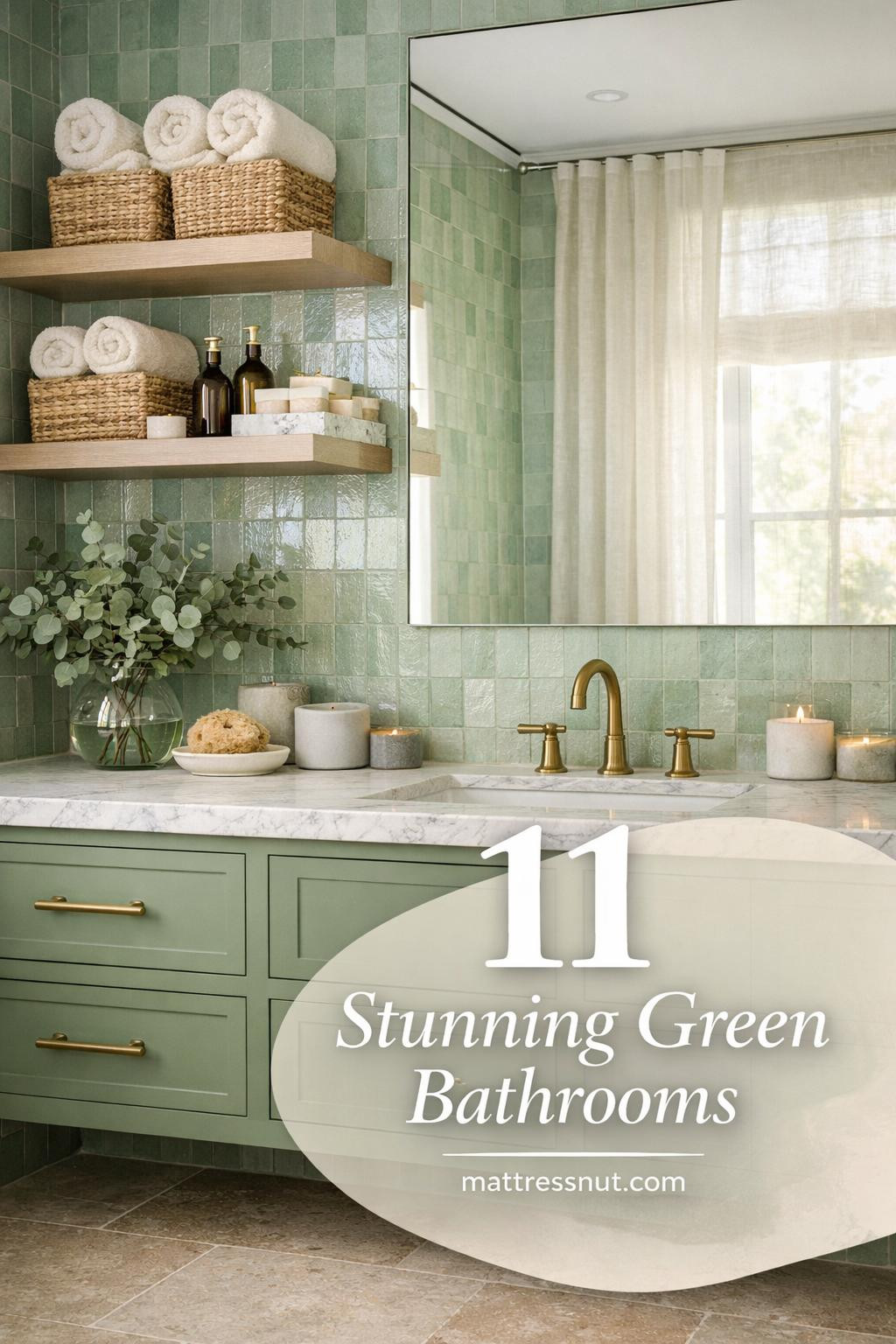
The most successful green spa bathrooms use green as a field rather than an accent. Sage zellige tiles on the walls, forest green marble on the floor, or deep mosssy green plaster surfaces create an immersive green environment that envelops you completely rather than simply nodding to the botanical world from a neutral backdrop. The intensity of the effect depends on how much of the room's surface area carries the green tone.
Sage green works well in smaller bathrooms where a deep, saturated green would feel oppressive. Forest green and emerald work best in larger bathrooms with adequate natural light, where the depth of the color creates drama rather than claustrophobia. In both cases, the green should lean toward the cooler, gray end of the spectrum rather than the yellow-green range, which can read as sickly in interior applications without strong natural light to support it.
Natural Materials: Wood, Bamboo, and Stone
Natural stone, warm woods, and river rock floors transport you to a Zen forest. Bamboo and teak sneak into shower benches and vanities, quietly adding refinement and a sense of taste that synthetic materials cannot replicate. The material combinations that work best in Japanese-inspired green bathrooms are those that bring together at least two natural material families: a stone and a wood, or a tile and a wood, or a plaster wall with a stone floor.
Horizontal bamboo slats across the ceiling add natural texture overhead and create interesting shadow patterns when light filters through them from a high window or skylight. The natural golden-brown tones of bamboo warm up a room that might otherwise feel cool from all the green and stone. The slats also improve room acoustics by softening echoes in tile-heavy bathrooms, which contributes to the quieter, more meditative atmosphere.
Teak vanities and shower benches combine naturally with the wet environment of a bathroom better than most other woods because teak's high natural oil content makes it resistant to moisture damage. Over time, untreated teak develops a silver-gray patina that is beautiful in a spa bathroom context. Cedar or cypress panels lining a steam shower release natural calming scents when steam rises, creating a therapeutic atmosphere that tile walls simply cannot match.
A floating vanity in bamboo or light oak creates a clean horizontal line that grounds the room without heaviness. Paired with a rectangular or oval sink in matte white or pale stone, and lantern-like wall sconces or shoji-inspired lighting, the vanity establishes the Japanese aesthetic at a functional piece that you engage with twice daily. The hardware should be minimal: matte black or brushed brass with simple geometric profiles.
The Steam Shower: Wellness in Your Own Bathroom
Steam showers are among the fastest-growing wellness investments in residential bathroom design in 2026. The documented benefits include improved circulation, clearer skin, stress relief, muscle relaxation, and better sleep quality. A steam shower generates temperatures of 110 to 120 degrees Fahrenheit at 100 percent humidity, creating a physiological response that cold showers simply cannot produce.
The steam shower enclosure in a Japanese-inspired bathroom is most effective when lined with cedar or cypress panels rather than tile, releasing natural calming aromas when heat activates the wood. When tile is used instead, consider a deep green or blue-green tile that carries the spa color palette into the shower enclosure and creates a visually distinctive zone within the broader bathroom.
Modern steam shower systems often come with integrated oil diffusers that release eucalyptus, lavender, or hinoki oil into the steam. A digital control panel allows you to set temperature, humidity, duration, and aromatherapy intensity before you even step into the enclosure. The technology is hidden behind minimal, clean-surfaced controls that do not interrupt the natural material aesthetic of the room.
A teak or cedar bench in the steam shower provides a surface for seated relaxation and creates the sensory association with traditional Japanese sauna culture. The bench should be at a height that allows comfortable sitting with feet flat on the floor and knees at 90 degrees, typically 17 to 18 inches from the floor surface.
Greenery and Living Elements
Living plants in a bathroom do more than add decoration. In a steam-enriched environment with adequate natural light, plants thrive at rates that would be impossible in drier domestic spaces. Monstera, ferns, and peace lilies are particularly well-suited to bathroom conditions. Their large, distinctive leaves create the immersive greenhouse atmosphere that makes the best Japanese-inspired green bathrooms feel like stepping into a different world.
A living wall featuring monstera and tropical ferns on one end of a bathroom with adequate natural light creates an effect that no painted or tiled surface can replicate. The wall grows and changes with the seasons. It filters the air. It adds humidity to a space that might otherwise be too dry outside of shower hours. And it creates a sensory experience, the smell of green growth, the sight of natural movement in the leaves, the texture of living surfaces adjacent to polished stone, that is genuinely unlike anything mass-produced materials can achieve.
For bathrooms with less natural light, pothos, ZZ plants, and snake plants are the low-maintenance alternatives that still add the living quality the aesthetic requires. A collection of three to five plants at different heights, in simple terracotta or ceramic pots that complement the green color palette, is enough to meaningfully change the character of the space.
Wet Rooms and Spatial Zoning
Wet rooms are increasingly popular for homeowners seeking the most authentic Japanese spa bathroom experience. This layout encloses the shower and soaking tub within a shared waterproof zone, allowing free movement between the two without the interruption of glass enclosures or threshold steps. The result feels more like a traditional Japanese bathhouse than a Western bathroom conversion.
In a wet room configuration, the soaking tub is placed near a window or featured wall, the shower area occupies an adjacent zone with a curbless transition, and a central floor drain manages water from both areas. The floor surface must slope gradually toward the drain, which requires careful planning at the tile installation stage to achieve invisible drainage without visible pitch.
The bathroom becomes a retreat, not just a daily routine stop. A place where one can unwind, decompress, and rejuvenate after demanding days. Thoughtful zoning within the wet room, positioning the soaking tub where you want to be still and the shower where you want to transition in and out of the room, creates a spatial logic that makes the room feel designed for experience rather than efficiency.
Lighting: Soft, Warm, and Layered
Bright, harsh overhead lighting is the enemy of the spa bathroom atmosphere. The Japanese bathing aesthetic demands soft, warm, layered lighting that responds to the time of day and the activity within the space. A morning bath needs more light than an evening soak. Task lighting at the vanity needs a different quality than ambient lighting near the soaking tub.
Recessed dimmable lights in warm 2700K tone provide the base ambient layer. Lantern-style sconces at the vanity provide the task lighting without overwhelming the room with brightness. A small pendant or a strip of LED concealed beneath a floating vanity creates a glowing wash of light along the floor plane that is visually beautiful and practically useful for night navigation. Candles, real or high-quality LED, near the soaking tub provide the flickering warmth that elevates an ordinary bath to a genuine ceremony.
Common Mistakes to Avoid
The most common mistakes in Japanese-inspired green spa bathrooms include overcrowding the space with too many accessories, which ruins the minimalist restraint that defines Japanese design at its best. Every object in the room should be earned by its function or beauty. If it does neither, it should not be there.
Using bright, harsh lighting instead of soft ambient sources destroys the calm, relaxing mood. Even a perfectly designed room in every other respect will fail as a spa environment if it is lit like a commercial kitchen. And forgetting the importance of natural elements, wood, stone, plants, and the textural contrast they provide, produces a bathroom that feels cold and generic rather than warm and restorative regardless of how carefully the color palette is chosen.
Complete Your Space
Every beautiful room deserves a great night sleep. The Saatva Classic — white-glove delivery, 365-night trial.