
 by
by Our #1 Recommended Mattress
Saatva Classic. From $1,095
365-night trial · Lifetime warranty · Free white-glove delivery
Check Price at Saatva →Green tile has quietly become the bathroom color story of the current decade. It bridges the gap between bold and calm in a way that few other colors can manage: dark greens feel moody and luxurious without being heavy, sage tones feel organic and serene without being bland, and emerald reads as jewel-like and sophisticated without requiring the bold commitment that other saturated colors demand. In 2026, the range of green tile available, from handmade Moroccan zellige to large-format porcelain in forest tones to classic subway reformatted in olive, provides enough variety that there is a green tile solution for virtually every bathroom and every budget.
Why Green Is the Defining Bathroom Tile Color of 2026
The dominance of green tile in bathroom design is driven by several converging forces. The biophilic design movement, which prioritizes materials and colors that connect interior spaces to natural environments, identifies green as the most effective interior color for reducing stress markers and improving subjective wellbeing in enclosed spaces. Simultaneously, the zellige tile trend, which began in high-end renovation and has filtered steadily into mainstream bathroom design, is predominantly executed in green, cream, and terracotta, giving green tile both aspirational and accessible market positions simultaneously.
From a practical design standpoint, green pairs successfully with more material combinations than any other saturated color. It works with warm metals in brass and gold. It complements cool metals in nickel and chrome. It pairs naturally with wood tones across the warm spectrum from honey oak to deep walnut. It contrasts effectively with white, cream, and warm gray grout. This versatility means a green tile bathroom is less likely to feel dated as adjacent design decisions change over time, which makes it a better long-term investment than more color-specific choices.
Sage Green: Calm, Organic, and Widely Applicable
Sage green is the entry point for homeowners who want green tile without committing to intensity. Its muted, gray-green quality reads as neutral in many lighting conditions while still delivering the color story that distinguishes a bathroom from the generic white tile aesthetic. Sage zellige tiles, with their handmade surface irregularity and variation in glaze depth, bring artisan character that factory-perfect subway tiles cannot replicate. The light catches differently on each tile surface throughout the day, creating a dynamic quality that makes the bathroom feel less static than smooth, uniform surfaces.
Sage pairs naturally with honey oak or warm white oak vanities, where the green's gray undertone prevents the combination from reading as too warm or too cool. Unlacquered brass fixtures add warmth without fighting the green. Warm white grout maintains the pale, organic quality of sage surfaces. Darker grout in charcoal or forest green creates a grid pattern that emphasizes the tile format and makes the installation feel more graphic and intentional.
For small bathrooms, sage green tile on all walls creates an enveloping quality that makes the space feel like a deliberate color decision rather than an attempt to visually enlarge the room. Small bathrooms benefit more from committing to a color story than from the reflexive use of white tile that was the previous decade's default answer to space constraints. Sage green specifically avoids the clinical quality of white while remaining light enough that the room does not lose its sense of brightness.
Emerald Green: Jewel-Box Drama and Maximum Impact
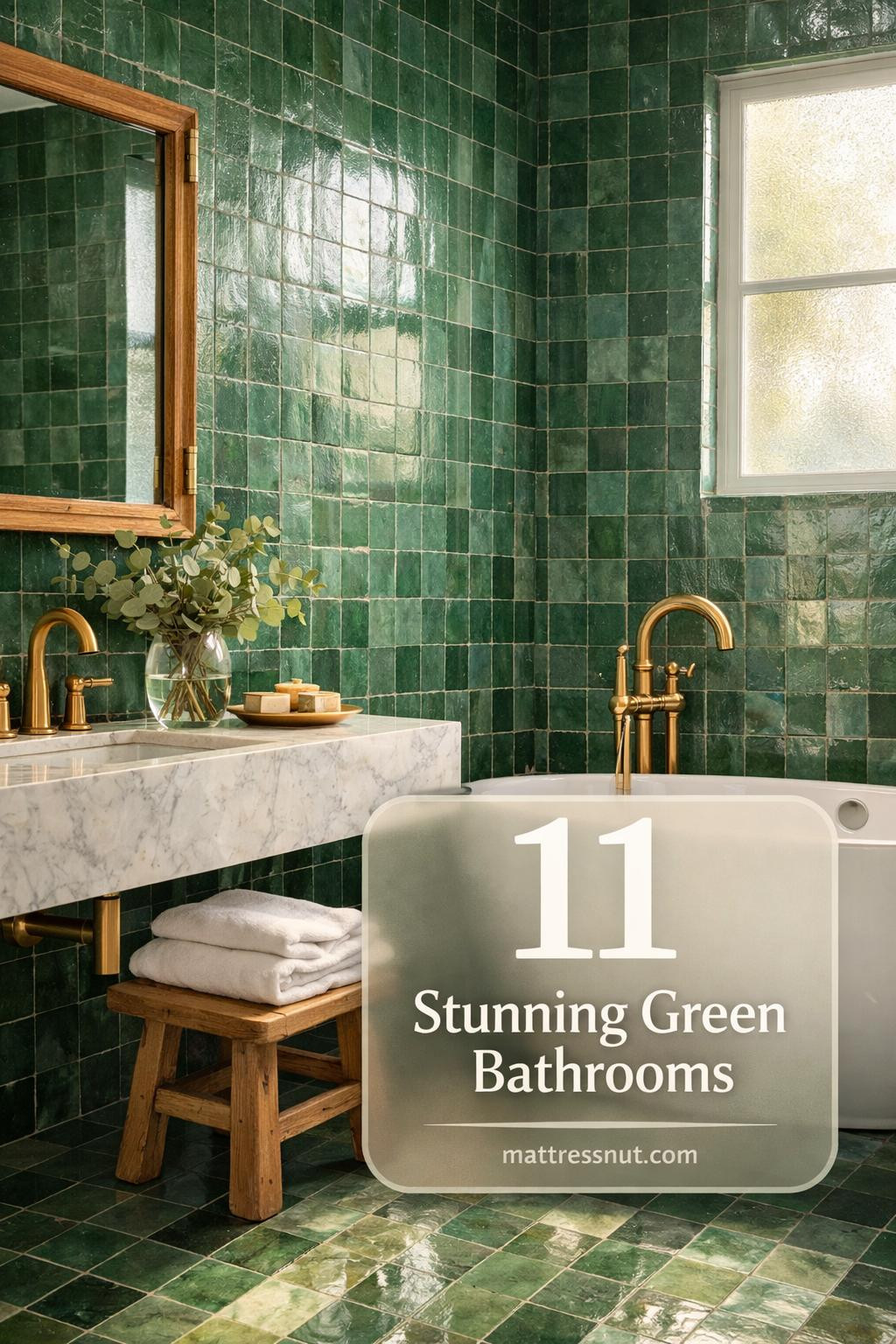
Emerald green tile creates a bathroom experience that is genuinely different from any other color choice. Glossy emerald subway tiles wrap the space in a jewel-like quality that shifts from deep forest tones in shadow to vibrant, light-catching saturation in direct light. The effect is most pronounced in bathrooms with east or south-facing windows where morning and afternoon light can animate the tile surface. In artificial light conditions, warm-spectrum bulbs bring out the warmth in emerald's blue-green tones while cool-spectrum bulbs emphasize the color's depth and richness.
Brass fixtures glow against emerald in a way that no other hardware finish matches. The warm gold of brass against the cool jewel quality of emerald creates a tension that designers describe as sultry: the room asks to be inhabited slowly rather than passed through quickly. Brass mirror frames, brass tap sets, and brass drawer pulls all strengthen this relationship. Polished chrome, by contrast, reads as too clinical against emerald's richness and should be avoided if the goal is the jewel-box effect that emerald tile performs at its best.
Full wet room treatment in emerald tile, where the same glossy emerald surface covers the shower walls, the shower floor, and the bathroom floor continuously, creates the most immersive version of this effect. The bathroom becomes a room that envelops rather than simply containing fixtures. This approach works best in bathrooms with at least adequate natural light and ventilation, as emerald tile in a dark, poorly ventilated bathroom can read as heavy rather than luxurious.
Forest Green: Moody, Sophisticated, and Deeply Restful
Forest green sits between sage and emerald in saturation but occupies its own distinct aesthetic territory: it is the moody green, the one that transforms a bathroom into something closer to a private retreat than a functional room. Large-format forest green zellige tiles on high-ceiling bathrooms create drama at a scale that smaller tiles cannot achieve. The handmade surface variation in zellige prevents the color from reading as flat or oppressive even at full-wall saturation, because the subtle shifts in glaze depth and surface angle keep the eye moving.
In sunlit spaces, a saturated forest green will look jewel-like and vibrant during the day while deepening to a genuinely dark, intimate quality in the evenings. This dual character makes forest green bathrooms particularly effective as master bathroom designs, where the morning quality and the evening quality are both desired and serve different parts of the daily routine. A vintage brass mirror and oak vanity against forest green creates a warmth that prevents the color from reading as cold despite its depth.
Zellige Tiles: The Artisan Standard for Green Bathrooms
Zellige tiles, the traditional Moroccan handmade ceramic known for their glossy, irregular glaze, have become the signature material of the green tile bathroom movement for reasons that go beyond aesthetics. The handmade quality means each tile is slightly different in glaze depth, surface texture, and precise shade, creating an installation that could not have come from a factory and could not be replicated exactly if redone. This uniqueness is the quality that makes zellige bathrooms feel genuinely personal rather than selected from a showroom.
Green zellige is available across the full shade range from pale mint to deep forest, and the light-catching quality of the glaze amplifies the color's richness in ways that matte tile finishes cannot. For bathroom installations specifically, the glazed surface is naturally moisture-resistant and requires no sealing, which is a practical advantage over natural stone alternatives at comparable price points. Grout selection for zellige is particularly consequential: wide grout joints in contrasting colors can overwhelm the tile's delicate surface variation, so narrow joints in a complementary neutral generally serve the material better.
Green Tile Shape Guide for 2026
The tile format chosen for a green bathroom installation determines the visual language almost as much as the color itself. Subway tiles in a three-by-six format remain the most versatile green tile choice because the format's familiar proportions keep the focus on the color rather than on the tile geometry. Vertical stacked installation rather than traditional brick pattern creates a more contemporary, architectural quality that works well in transitional and modern bathrooms.
Mint green hexagon tiles on floors provide excellent grip as an inherent function of the multiple grout joints while creating a geometric pattern that reads as both vintage and contemporary depending on the surrounding palette. Olive penny tiles, the small circular format, on shower floors provide similar traction benefits in a format that reads as artisan and collected rather than factory-standard. Checkerboard patterns in two tones of green, or in green and cream, are gaining significant traction in 2026 as an alternative to the black-and-white checkerboard that has been extensively covered in recent years.
Hardware, Fixtures, and Finishing Details
Chrome hardware against deep green tile is the combination that most frequently undermines otherwise well-designed green bathrooms. Chrome reads cool and clinical, which pulls against the warmth that most green tile palettes are trying to establish. Unlacquered or aged brass is the default recommendation for green tile bathrooms in warm palettes. Brushed nickel works in sage and muted green applications where the palette is intentionally cool and Scandinavian in character. Matte black is the clean, contemporary option that works across the full green shade range without adding warmth or coolness of its own.
Vanity selection is the second most consequential decision after tile choice. Warm wood tones from honey oak to medium walnut complement green tile across the full shade range by providing the organic material counterpoint that prevents green from feeling artificial. White or off-white cabinetry creates a classic, graphic contrast that suits emerald and forest green particularly well. Matte black vanities with open oak shelving create a moody, sophisticated complement to dark greens that avoids the expected pairing of wood and tile while maintaining warmth through the wood element.
Green Tile Maintenance: Keeping the Finish Looking Its Best
Green tile maintenance requirements vary significantly by tile type and finish. Glazed ceramic and porcelain green tiles, including zellige and most factory-made subway formats, require only regular cleaning with a pH-neutral cleaner to maintain their finish. Abrasive cleaners and acidic products damage the glaze over time and should be avoided regardless of how thorough the cleaning needs to be. For stubborn soap scum and mineral deposits on glazed tile, a solution of warm water and white vinegar applied briefly and rinsed immediately dissolves the deposit without affecting the glaze.
Natural stone green tiles, including some varieties of quartzite and serpentine that fall in the green shade range, require sealing on installation and resealing annually or as the manufacturer specifies. Natural stone is porous and will absorb soap, body oils, and cleaning product residue without proper sealing, leading to surface staining that is difficult or impossible to remove without professional intervention. Polished stone surfaces show water spots and fingerprints more prominently than honed surfaces do and require more frequent cleaning in high-use areas.
Grout is the maintenance variable that most homeowners underestimate in tile installations. Standard cementitious grout in bathroom applications requires sealing on installation and resealing every one to two years depending on traffic and cleaning frequency. Epoxy grout, while harder to install and more expensive, is inherently non-porous and requires no sealing. For green tile bathrooms where the grout line is a visible design element, investing in the grout quality and sealing frequency maintains the visual quality of the installation over years of use at far less cost than re-grouting.
Complete Your Space
Every beautiful room deserves a great night's sleep. The Saatva Classic, white-glove delivery, 365-night trial.
Shop Saatva Classic →