
 by
by Our #1 Recommended Mattress
Saatva Classic. From $1,095
365-night trial · Lifetime warranty · Free white-glove delivery
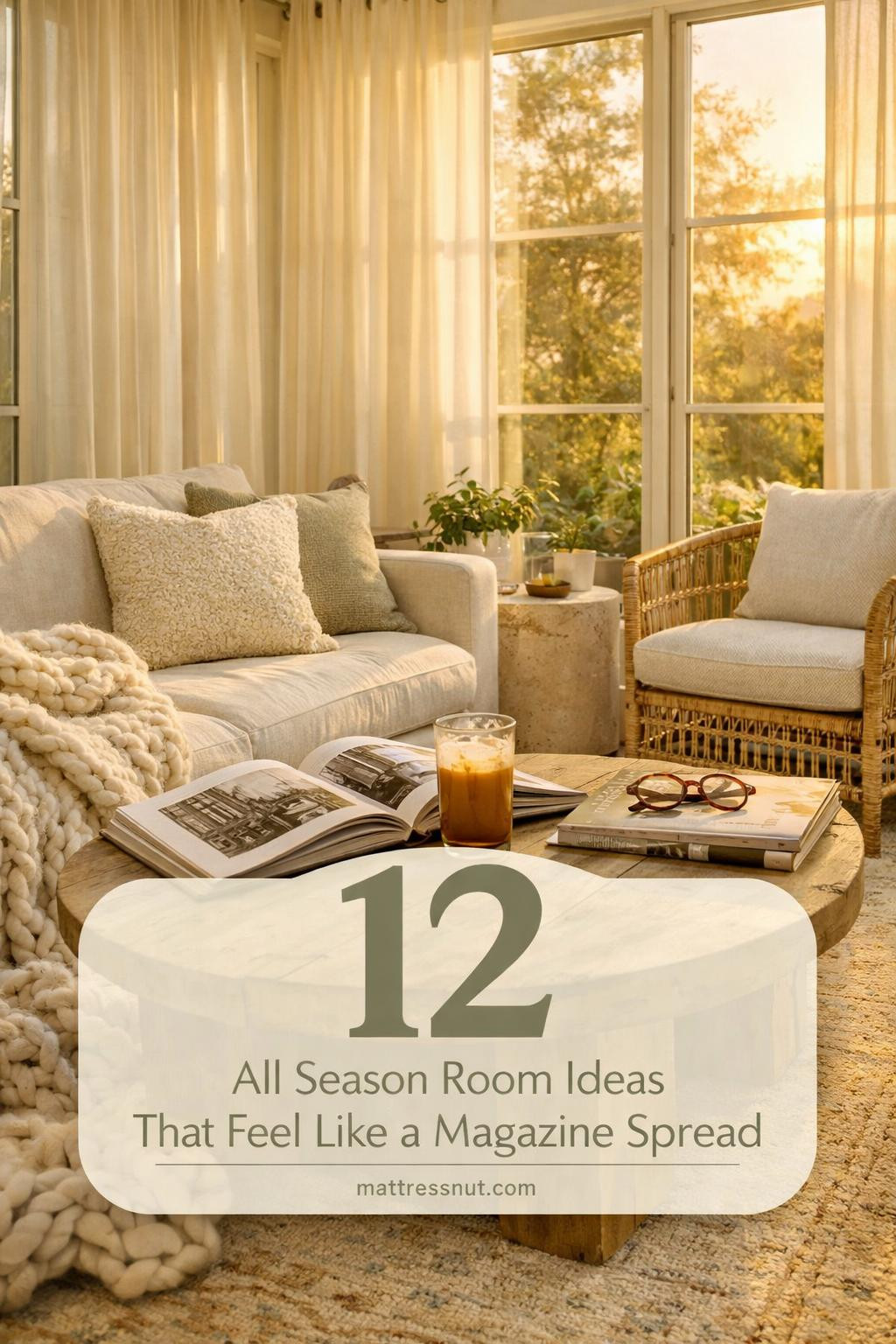
All season rooms are having their moment - and honestly? Most of them actually deliver. These spaces work January through December without feeling like a compromise. Here's what makes the best ones look expensive.
The Wicker Sectional That Changed Everything
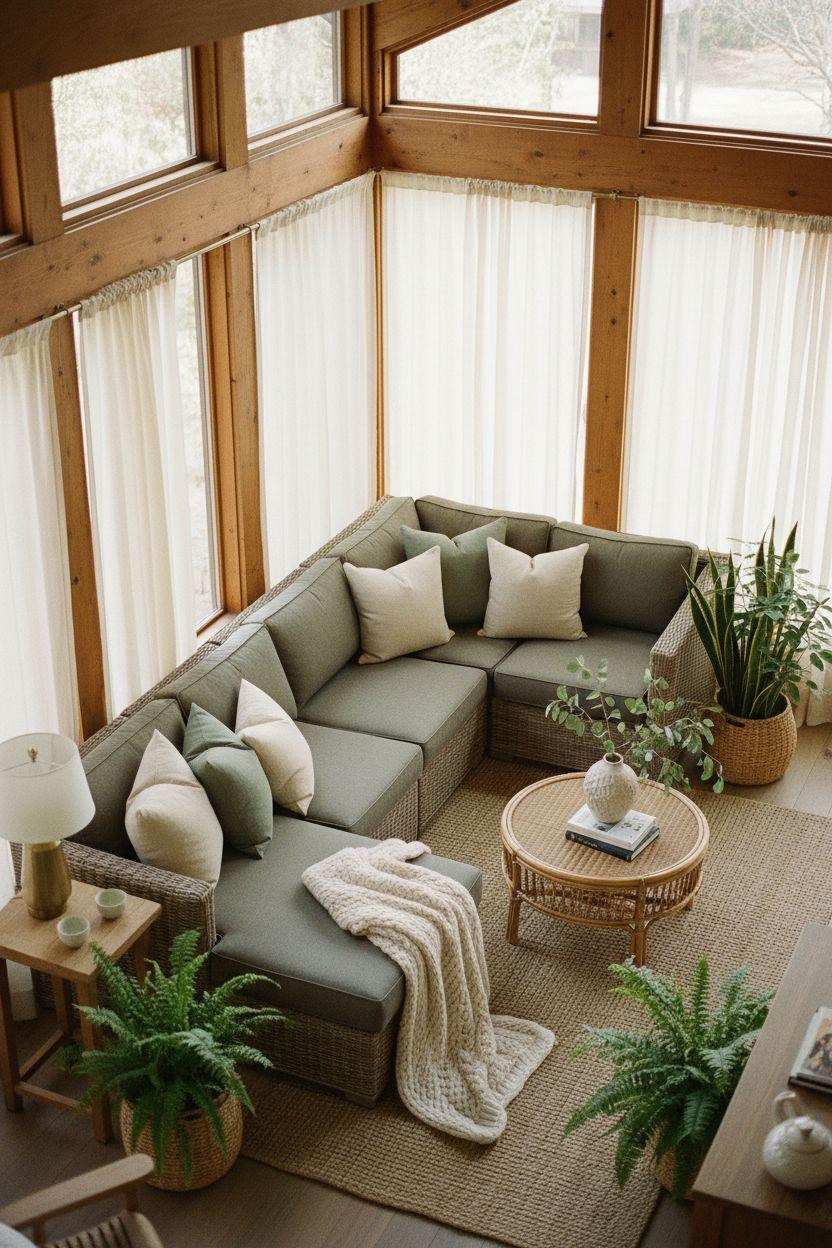
Floor-to-ceiling windows. That's the move. This setup pairs them with chunky wicker that looks expensive but actually holds up. The sage and cream pillows keep it from feeling too beachy - works in winter too. Cable knit throw draped over the corner adds texture without trying too hard. Been getting compliments for weeks. The jute rug grounds the whole thing, and those potted ferns? Total living room MVP.
Three Season Rooms With Actual Warmth
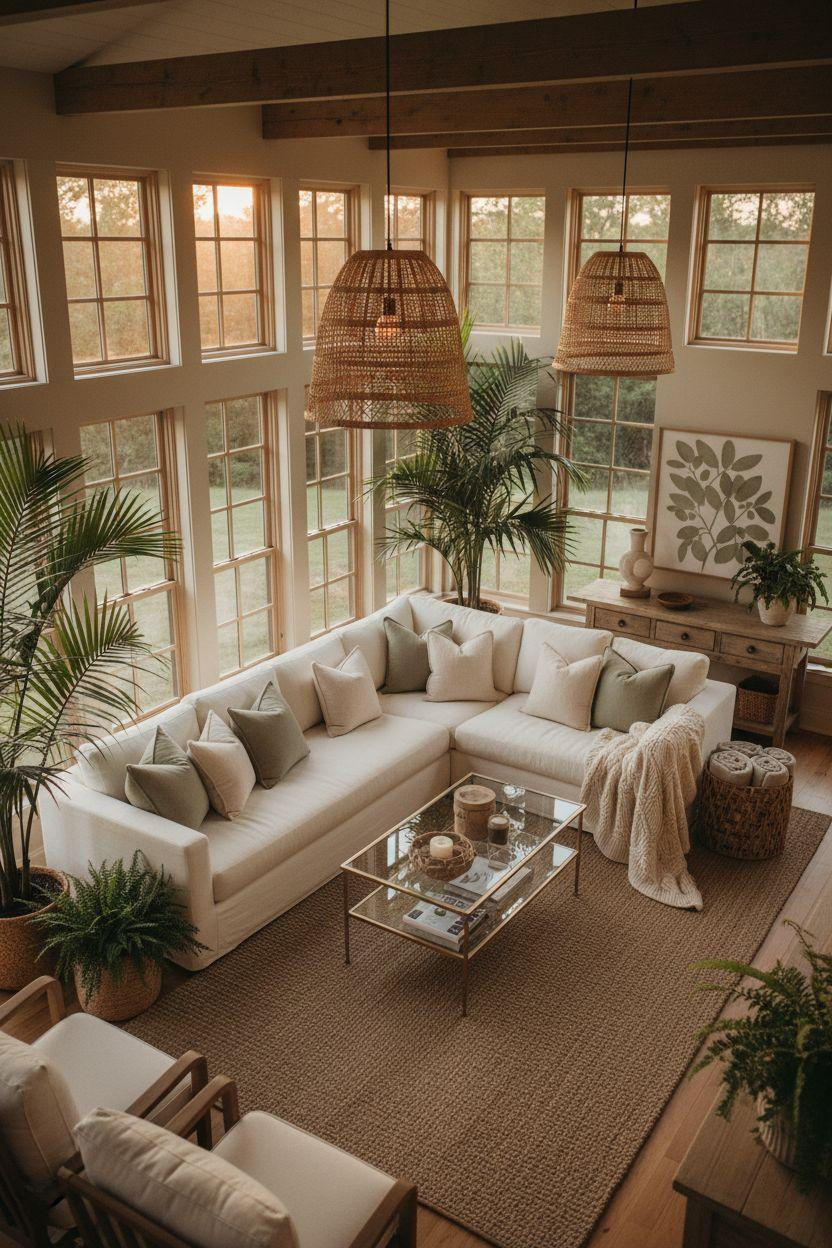
The trick is layering light sources. This one does pendant lights plus natural glow - creates depth the all-window versions miss. Cream linen sectional with eight pillows sounds excessive but works because the tones stay tight (ivory and sage only). Glass-top coffee table keeps it from feeling heavy. Plus, those rattan pendants. They're doing all the work after sunset when the room could go cold.
When White Oak Meets Floor-to-Ceiling Glass
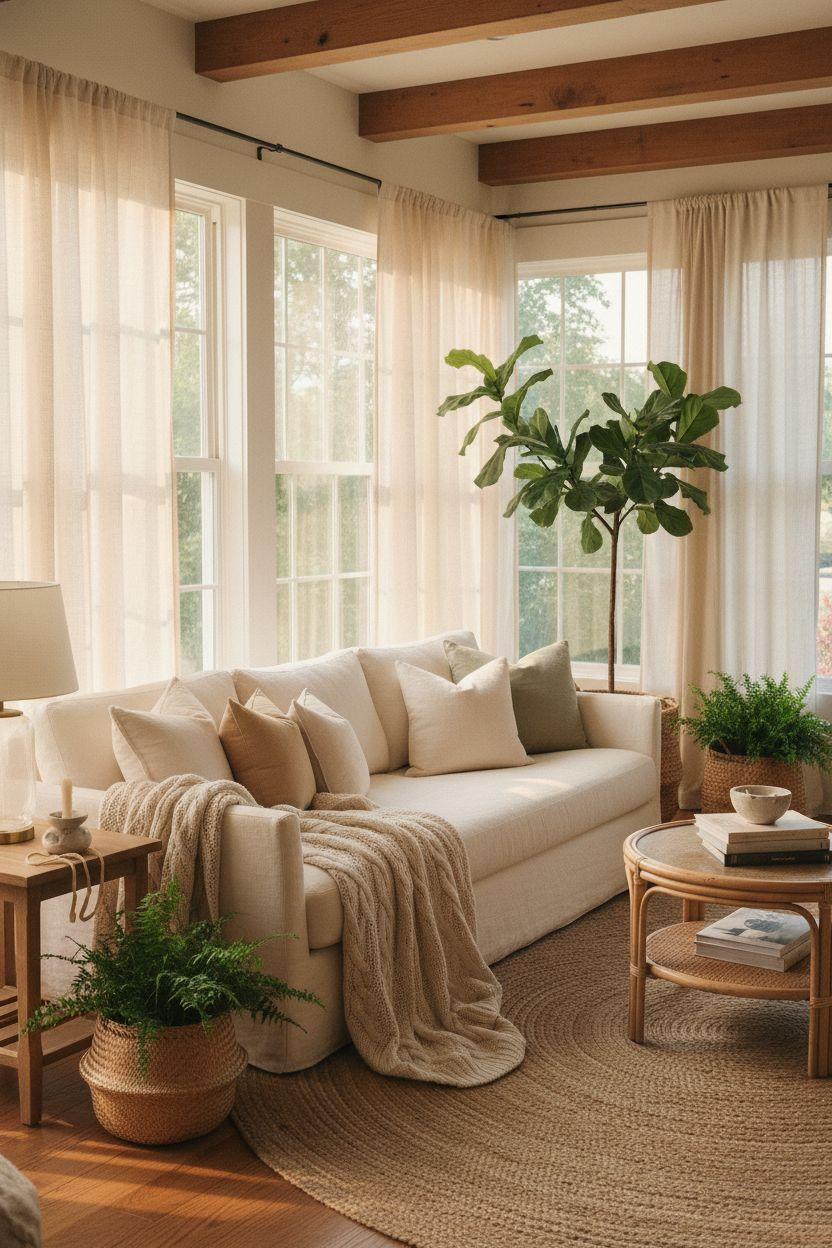
Exposed beams. Specifically, raw white oak with visible grain. That's what takes this from contractor-grade sunroom to something West Elm would photograph. The round rattan coffee table plays off the ceiling texture - intentional or not, it works. Brass lamp on the side table catches afternoon light in a way that makes the whole corner glow. Sheer linens filter without blocking. Smart.
The Vintage Touch Nobody Talks About
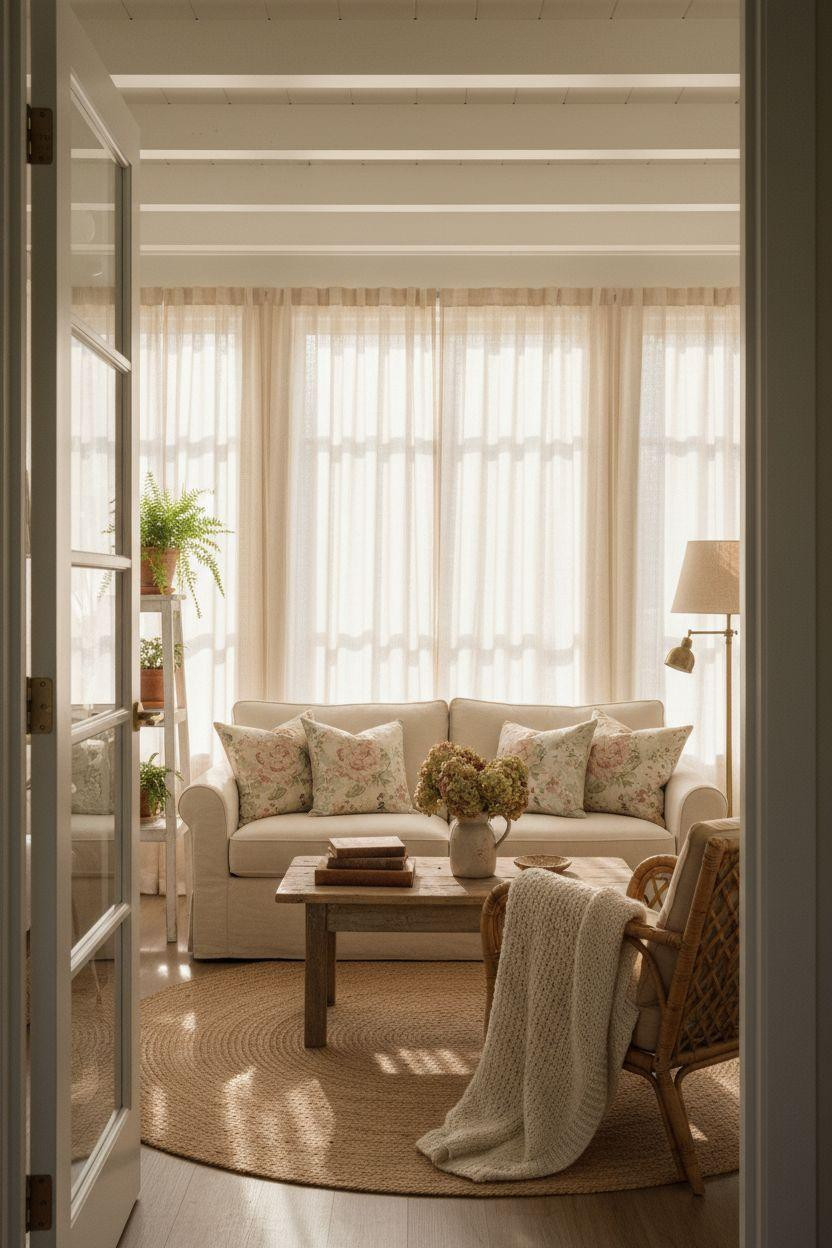
Reclaimed wood coffee table. Weathered white beams. This is what happens when you skip the all-new approach. The vintage rattan armchair with that chunky throw - everyone asks where it's from. Faded floral cushions shouldn't work but they do because the palette stays cream and terracotta. Antique brass floor lamp adds warmth without being too themed. HomeGoods energy but make it intentional.
Coral and Teal on a Neutral Base
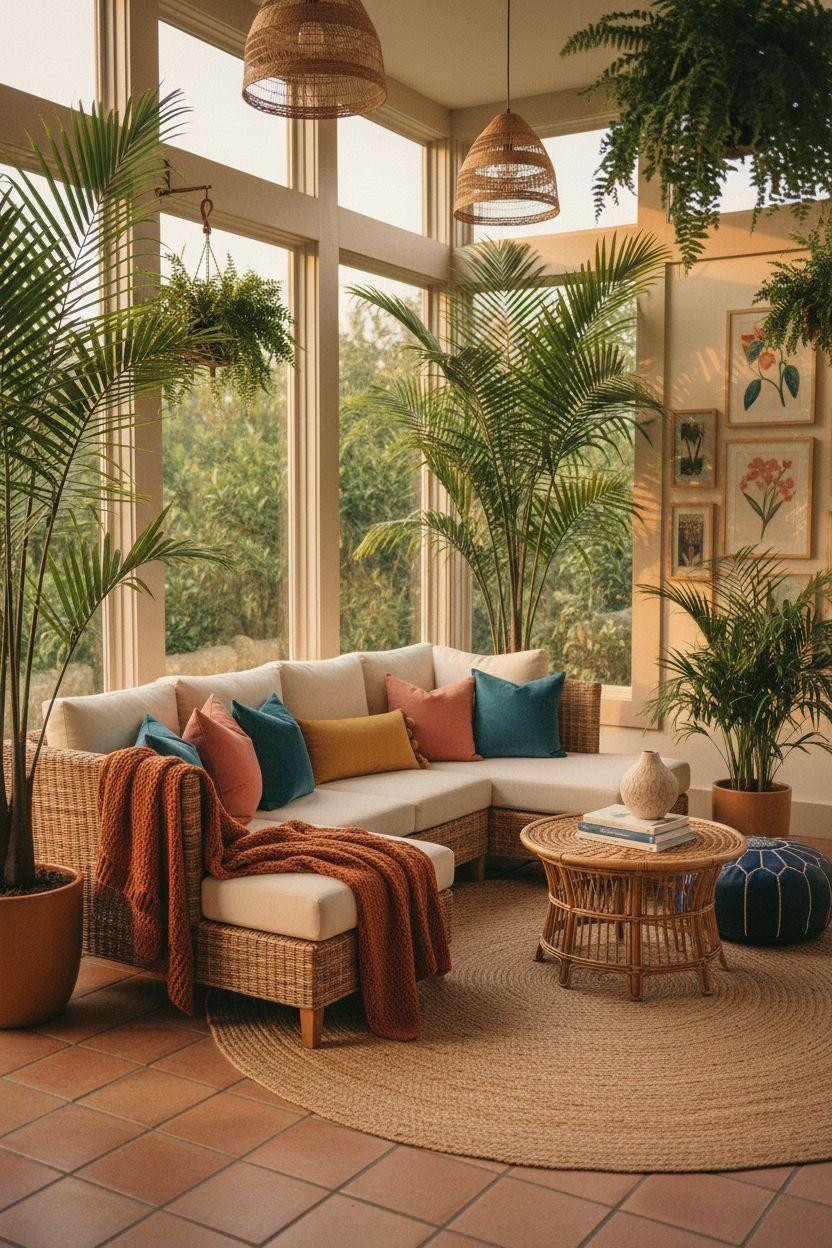
Okay but this color move. Coral, teal, mustard - could go wrong fast. Works here because the base stays cream and the tiles are terracotta (warm, not cold). The Moroccan pouf in deep blue anchors it. Gallery wall with botanical prints keeps it from feeling like a Pinterest board threw up. Best for when you're tired of seeing the same beige sunroom seventeen times.
Black Frames Make White Walls Pop
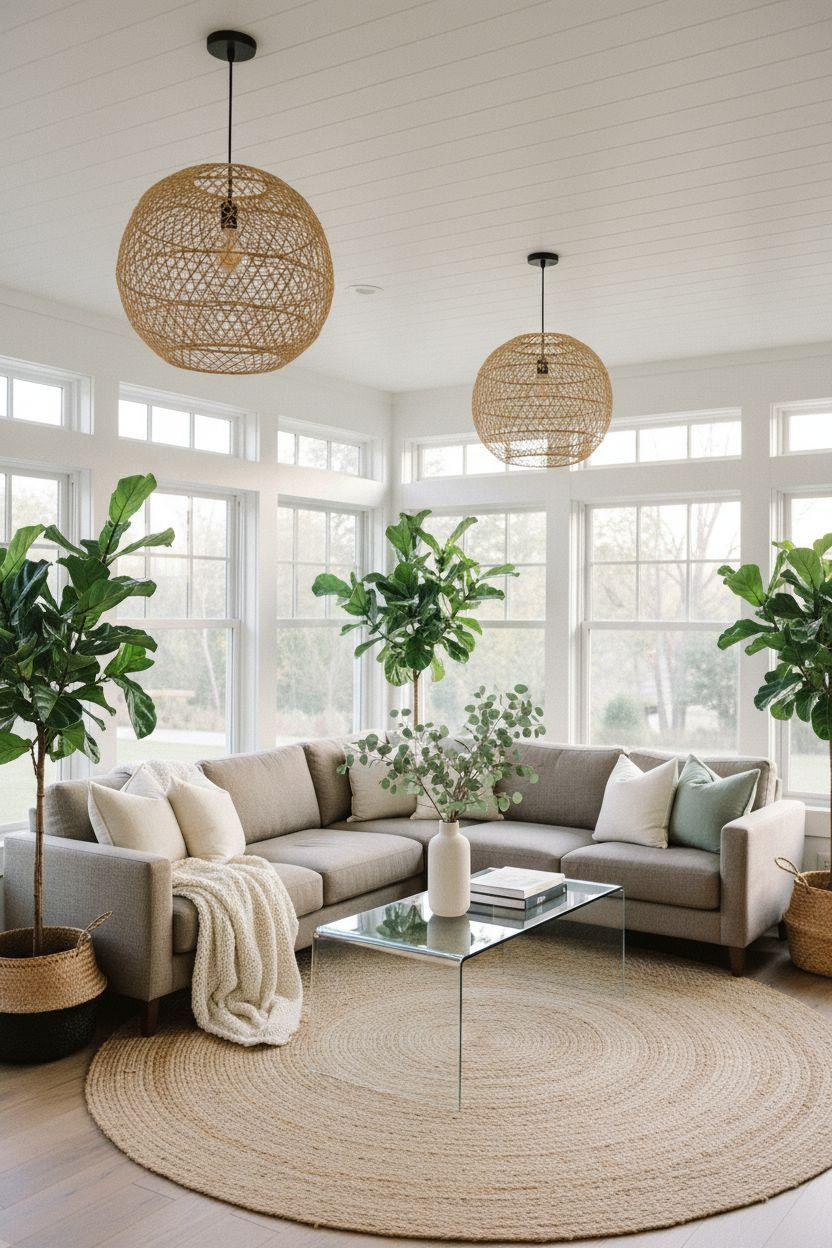
Black aluminum frames. That's the upgrade. White frames disappear - these create actual architecture. Gray linen sectional with textured pillows reads expensive without the Pottery Barn price tag. Walnut coffee table warms it up (critical - otherwise it goes cold). Three fiddle leaf figs in woven planters do the heavy lifting on the greenery front. Minimalist but not sterile. 10/10 recommend.
The IKEA Addition That Looks Custom
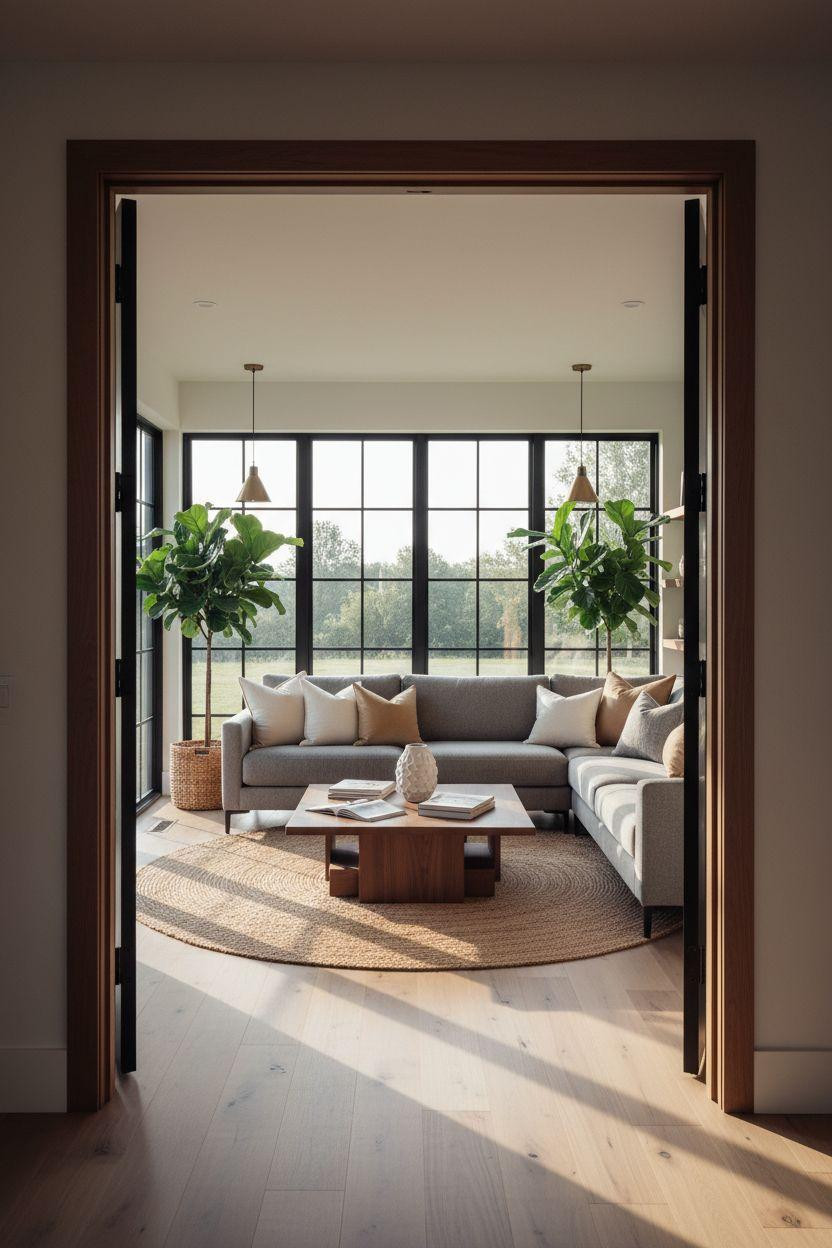
This smooth connection to the living room. That's what makes it feel like an actual addition, not a tacked-on porch. Walnut coffee table (could be IKEA's STOCKHOLM) with those stacked design books - classic move. Black frames on the windows tie back to the main house trim. Gray linen sofa keeps it cohesive with the interior palette. Floating shelves with minimalist decor prevent it from feeling too empty.
Brass and Concrete in One Space
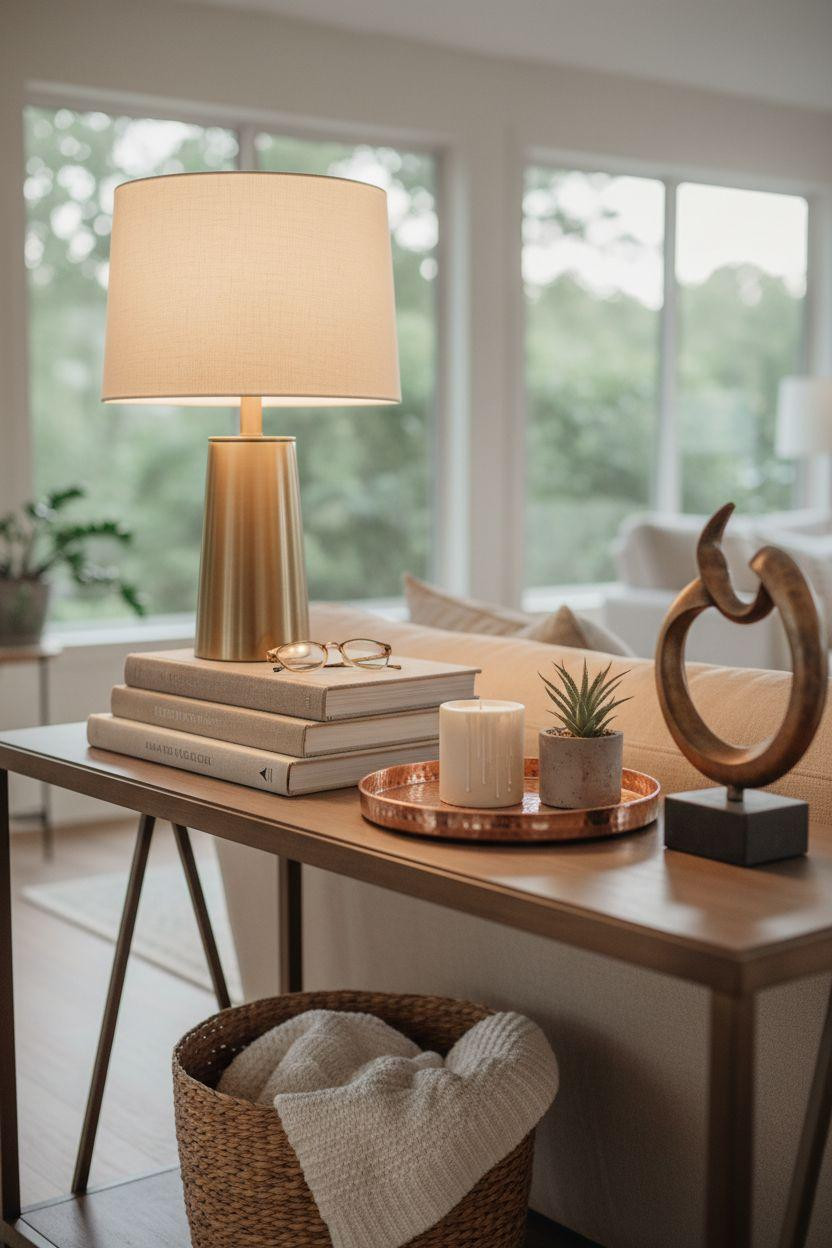
Console table moment. Brushed brass lamp base with cream shade - Target's Threshold line has these now. Hammered copper tray adds texture the smooth surfaces miss. Concrete planter with that succulent keeps it from going too warm. The trick is mixing metals (brass, copper) with something cool (concrete). Stack design books underneath in a woven basket. Casual but considered.
Modern Hardware on Traditional Bones
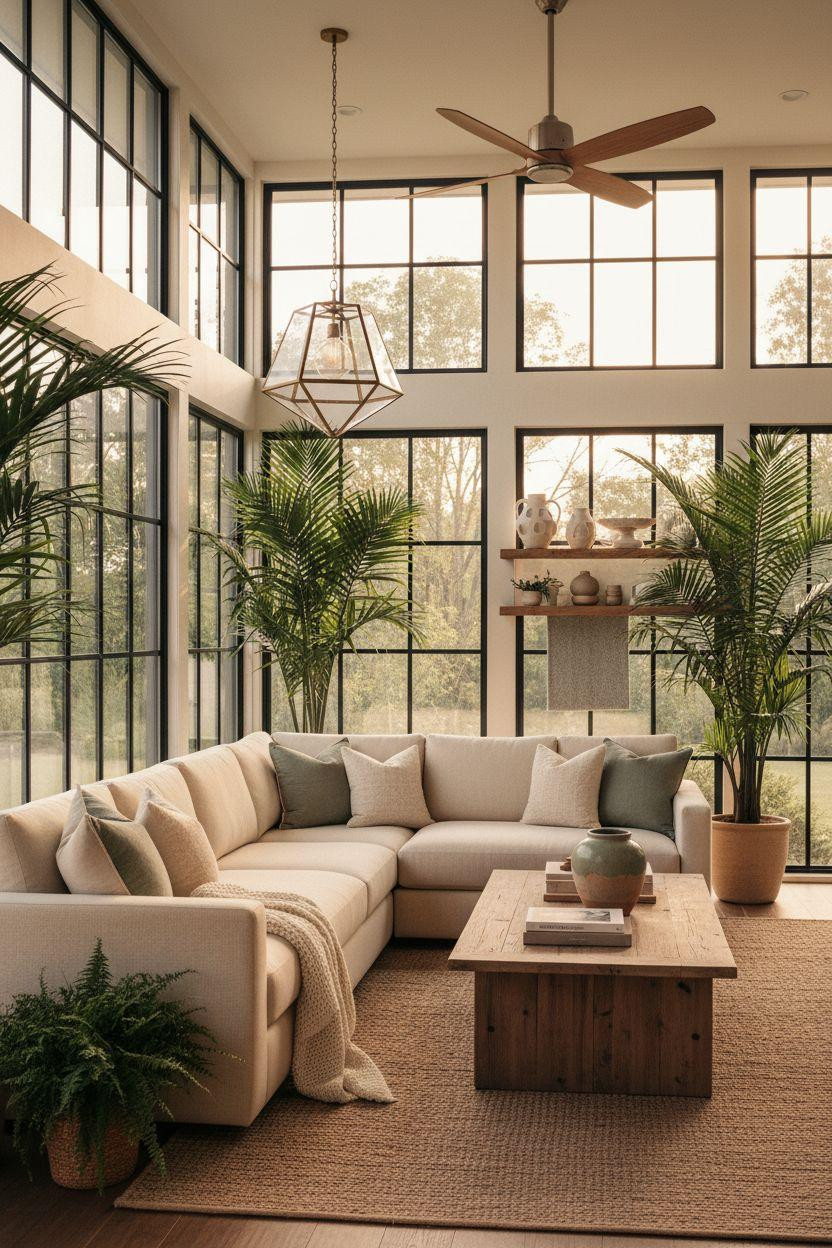
White beams. Black window frames. This contrast is doing all the work. Cream sectional with eight pillows (mix sage and ivory, never more than two colors). Reclaimed wood coffee table brings warmth the black hardware would kill on its own. Jute and wool rugs layered - adds depth without pattern overload. Rattan pendant lights in a vaulted ceiling space like this? Chef's kiss.
The French Door Framing Move
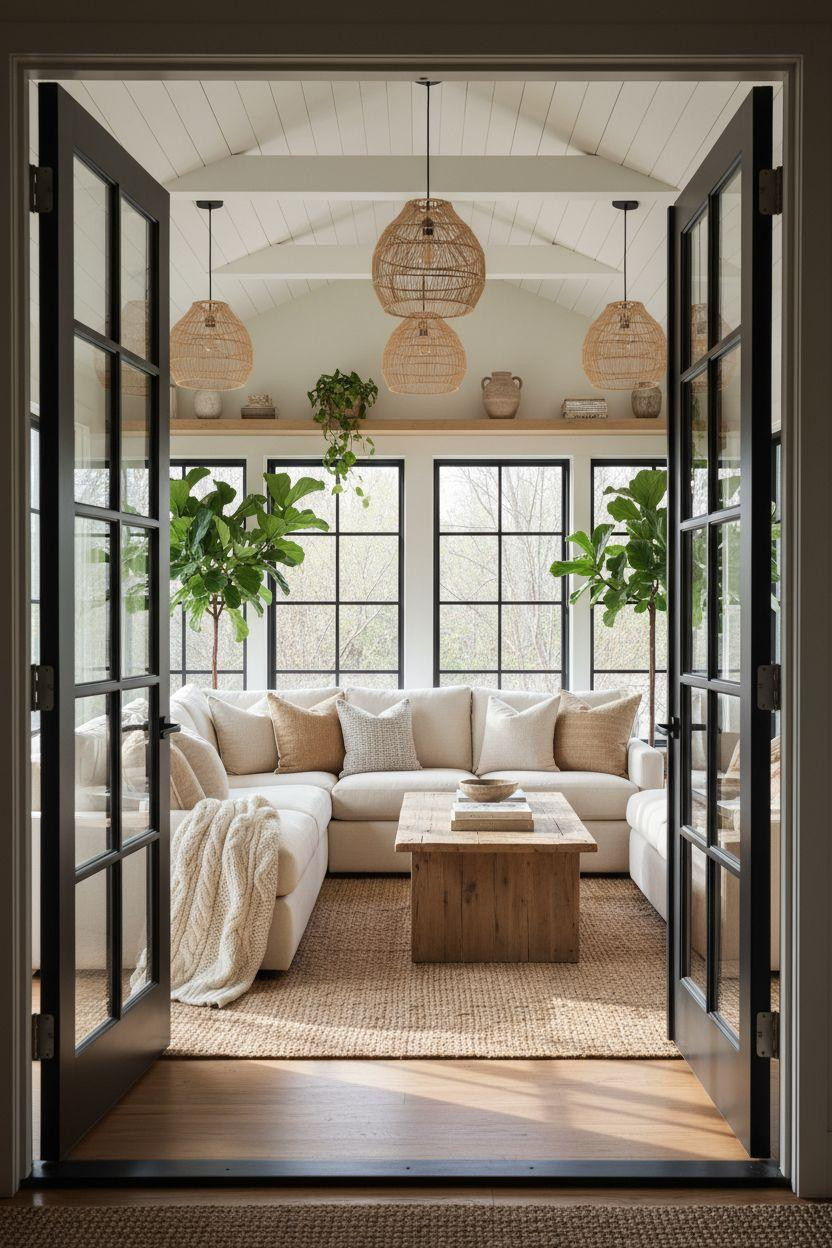
View through the doorway changes everything. Makes it feel like you're discovering the space, not just walking into it. Black grid-pattern windows add formality the open floor plan needs. Vaulted ceiling with exposed white beams - standard move but it works. That trailing pothos on the floating shelf? Three friends bought one after seeing mine. Cream sectional with the chunky throw stays cozy without seasonal.
Rattan That Doesn't Scream Coastal
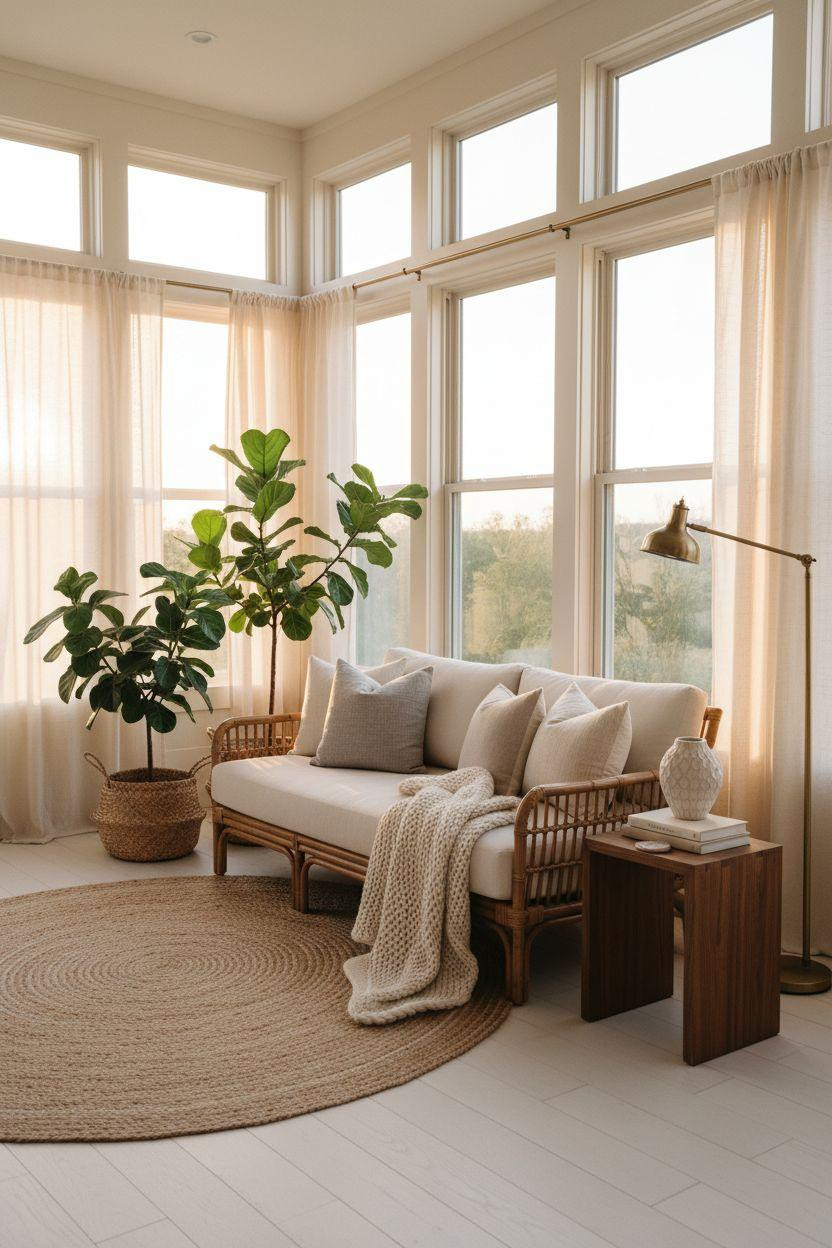
This IKEA sofa changed everything. The oversized rattan frame works with literally every style I've tried - minimalist, boho, even Japandi. Cream linen cushions keep it from going full beachhouse. Walnut side table with stacked books and that vintage brass floor lamp warm it up. White oak flooring with subtle grain variation (not the orange stuff). Natural jute rug completes it. Trust the process.
Open Shelving Done Right
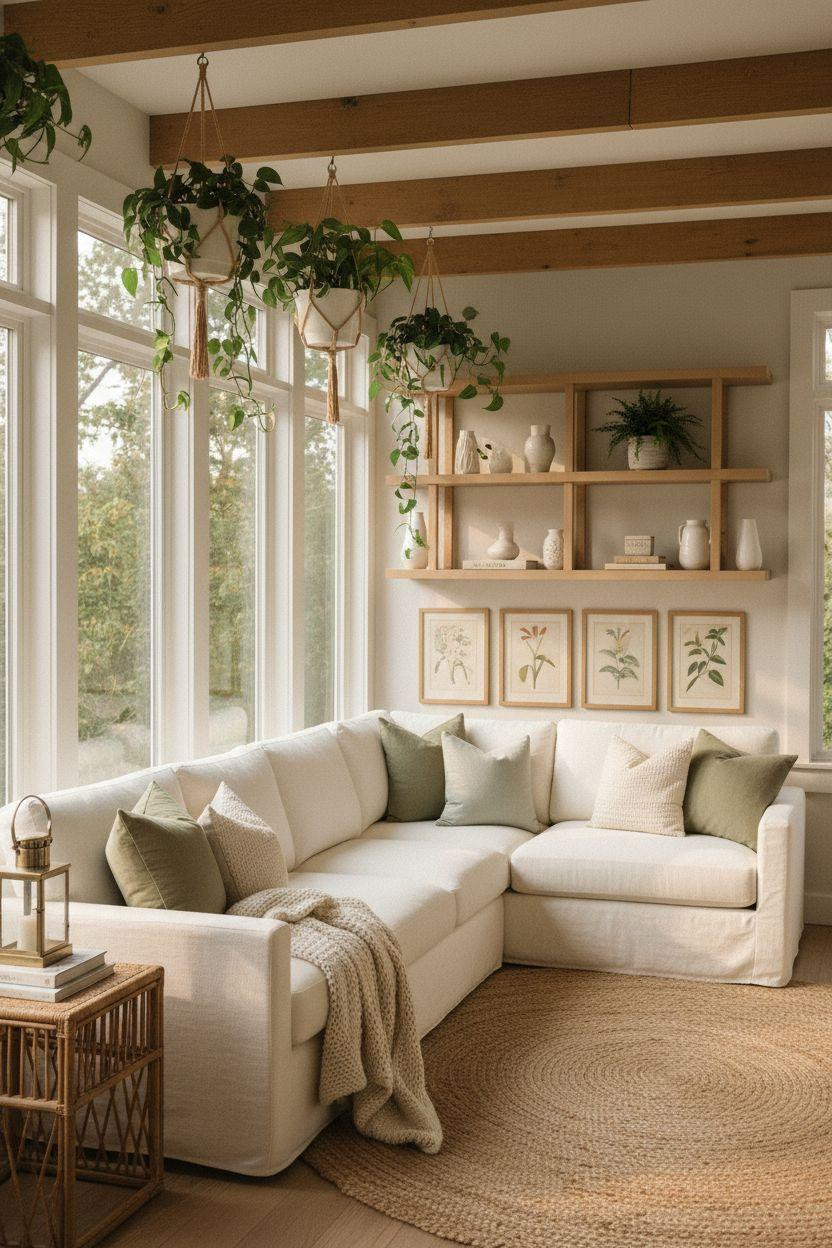
Light oak shelving styled with ceramic vases and potted ferns. That's it. That's the move. Cream sectional with seven pillows (sage and ivory only, stop adding colors). Hanging plants from exposed beams break up the horizontal lines. Woven rattan side table keeps the organic texture going. Vintage botanical prints on the back wall add depth without competing. Works because the palette stays tight and the shelving doesn't feel forced.
If I had to pick one move, I'd start with the black window frames. They anchor everything else and make even budget furniture look intentional. The vintage touches come second - reclaimed wood, aged brass, anything with patina. Skip the all-white approach.
What Separates a Four-Season Room from a Three-Season Porch
The distinction matters a great deal when you are planning or shopping for a sunroom addition. A three-season porch or screened-in porch uses single-pane windows, minimal insulation, and no HVAC connection. It is comfortable in spring, summer, and fall in most climates, but functionally unusable in winter without supplemental heating. A true four-season room uses thermally engineered double-glazed or triple-glazed windows, insulated wall panels, a proper roof with a thermal barrier, and either an extension of the home's existing HVAC or an independent mini-split system.
The additional cost of building a true four-season room rather than a three-season porch is approximately $15,000 to $40,000 more depending on size and climate zone, but the return is dramatic: the room adds genuine square footage to the home, can be used every day of the year regardless of weather, and typically returns 70% to 80% of its cost in added home value according to Remodeling magazine's cost-versus-value reports.
Heating and Cooling Solutions: What Actually Works
Temperature control in an all-season room is the technical challenge that determines whether the space is genuinely usable year-round or just tolerable most of the year. Here are the four primary options ranked by effectiveness:
- Mini-split heat pump system: The best option for most all-season rooms. A mini-split (also called a ductless system) uses an outdoor compressor unit connected to one or more indoor air handlers. It provides both heating and cooling from the same system, operates very quietly, and achieves efficiency ratings far above standard electric resistance heating. Brands like Mitsubishi, Daikin, and LG offer all-climate models that work efficiently even at outdoor temperatures below 0 degrees Fahrenheit. Installed cost: $2,500 to $6,000 depending on capacity.
- Extension of existing HVAC: If your home's existing heating and cooling system has sufficient capacity, extending ductwork into the sunroom is the most smooth solution. This requires an HVAC assessment to confirm capacity and costs $1,500 to $4,000 for the ductwork extension.
- Radiant floor heating: Electric radiant floor mats under tile or stone flooring provide incredibly comfortable heating from the ground up. This is often paired with a mini-split or HVAC extension rather than used as a standalone solution. Cost: $8 to $15 per square foot of floor area.
- Ceiling fans: Not a standalone heating or cooling solution, but essential in combination with any system. A ceiling fan on the correct setting (clockwise in winter to redistribute warm air that rises to the ceiling, counterclockwise in summer) measurably reduces energy consumption. Hunter and Casablanca both make outdoor-rated ceiling fans suitable for sunrooms.
Windows and Glass: The Decisions That Matter Most
The windows are the defining feature of any sunroom and the most important decisions you will make in the design. Three key factors:
Glazing type: Double-glazed windows with low-E (low-emissivity) coating are the minimum for a true four-season room in most climates. Low-E coatings block infrared heat transfer, which keeps the room warmer in winter and cooler in summer without significantly reducing visible light transmission. In very cold climates (USDA zones 5 and below), triple-glazed windows provide measurably better performance.
Frame material: Thermally broken aluminum frames are the industry standard for four-season rooms because they prevent heat transfer through the frame itself while providing structural strength that fiberglass and vinyl cannot match in larger spans. For a cleaner look, aluminum frames with a powder-coat finish in black, white, or bronze are available from most sunroom manufacturers.
Operable windows: A mix of fixed glass panels and operable casement or awning windows allows you to ventilate the room on mild days rather than relying entirely on HVAC. This is both more comfortable on shoulder-season days and more energy-efficient.
Furniture: Built for Year-Round Use
Furniture selection for an all-season room requires more consideration than a standard interior room because the space experiences greater temperature swings and sunlight exposure. The best materials for all-season sunroom furniture:
- Teak: The gold standard for sunroom furniture because it is naturally oil-rich, dimensionally stable in humidity changes, and does not require sealing or treatment to remain beautiful. Teak furniture from Pottery Barn Outdoor, Restoration Hardware, or Crate and Barrel's outdoor line ranges from $400 to $2,000+ per piece but lasts decades with minimal maintenance.
- Powder-coated aluminum: Light, rust-proof, and available in every finish and style from ornate traditional to sleek modern. Lloyd Flanders and Woodard are two well-respected brands. Cost: $300 to $1,200 per seating piece.
- Synthetic wicker over aluminum frames: All-weather synthetic wicker has the warmth and texture of natural rattan without the moisture sensitivity. Sunbrella cushion fabric on the seating pieces ensures fade resistance. This is the most popular combination in 2026 sunrooms because it photographs as warmly as natural materials while performing as well as metal.
- Performance upholstered indoor furniture: With adequate shade control (blinds or automated solar shades), standard indoor upholstered furniture in performance fabric (Sunbrella, Crypton, or similar) performs well in four-season rooms that are properly climate-controlled. This allows the sunroom to be furnished with the same quality and comfort as any interior room.
Design Styles: Matching the All-Season Room to the Home
The most successful all-season room designs feel like a natural extension of the main home rather than an addition or afterthought. Here are the four design directions that work best in 2026:
Modern farmhouse: White shiplap or beadboard walls, black-framed windows, wide-plank wood-look porcelain tile flooring, and rattan or white-painted wood furniture. This is the most searched and pinned all-season room aesthetic, and it works in almost every geographic context from New England to the Pacific Northwest.
Coastal casual: Light blue or seafoam green accent colors against white frames, natural wood composite flooring, rattan seating with washable linen cushions, and sheer ceiling-mounted curtains for light filtering on intensely sunny days. This design direction works particularly well in humid climates where materials need to perform in higher moisture conditions.
Mediterranean: Terracotta tile floors, arched window openings, plaster-textured walls in warm white or pale ochre, and wrought iron furniture with cushions in jewel-toned indoor-outdoor fabric. The Mediterranean sunroom is the most dramatic design direction and works best in Southwestern and Southern climates where the aesthetic matches the surrounding landscape.
Modern minimalist: Floor-to-ceiling glass with minimal frames (thermally broken steel frames or aluminum with thin profiles), polished concrete or large-format stone tile, furniture in a single material (all teak, all powder-coated aluminum, or all upholstered in a single fabric), and architectural plants as the primary decorative element. This direction photographs exceptionally well and ages gracefully.
Plants in the All-Season Room: What Thrives Year-Round
An all-season room with proper climate control is the ideal environment for tropical and subtropical plants that would otherwise struggle in a Northern climate. Because the room maintains a year-round temperature between 60 and 80 degrees Fahrenheit, you can grow plants that would be impossible outdoors. Specific species that perform well:
- Bird of paradise (Strelitzia reginae): A striking structural plant that can reach 4 to 6 feet indoors with adequate sunlight. A mature bird of paradise in a large pot becomes a significant design element in its own right.
- Fiddle leaf fig (Ficus lyrata): The iconic interior design plant performs much better in a sunroom than in a standard interior room because it receives the bright, indirect light it naturally craves.
- Meyer lemon tree: A true sunroom luxury. Meyer lemon trees in large terra cotta pots produce fragrant flowers and edible fruit year-round in a sunny, climate-controlled sunroom. They require a full-sun position and occasional fertilizing but reward with both beauty and productivity.
- Monstera deliciosa: Fast-growing and architecturally beautiful, monstera thrives in the humidity and bright light of a sunroom, producing the large split leaves that make it a perennial favorite in interior design.
Complete Your Space
Every beautiful room deserves a great night's sleep. The Saatva Classic, white-glove delivery, 365-night trial.