
 by
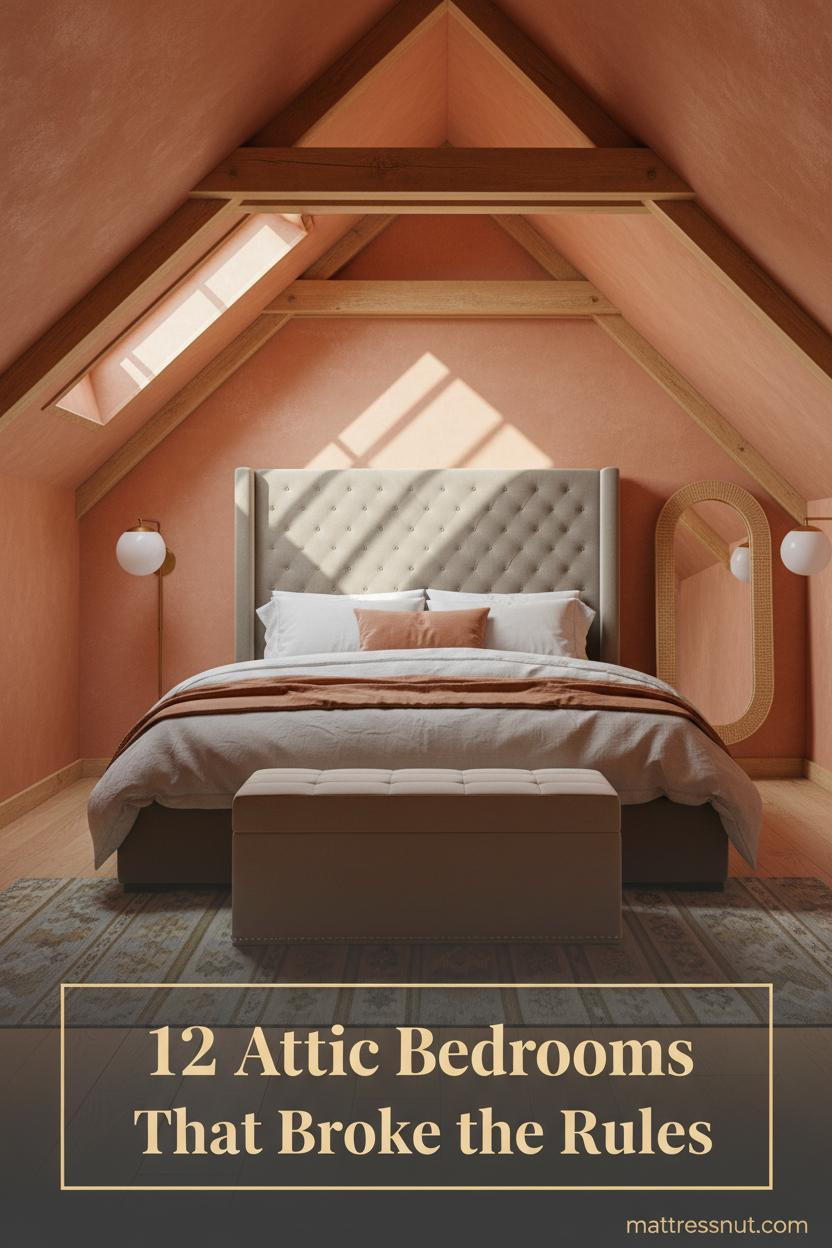
by Attic bedroom ideas with angled ceilings get dismissed constantly. Too awkward, too small, too much geometry to work around. But the rooms I keep saving are the ones where someone leaned into the slope instead of fighting it.
These twelve rooms do exactly that. Each one treats the roofline as the main event.
The Scandi Room That Makes Exposed Rafters Feel Architectural
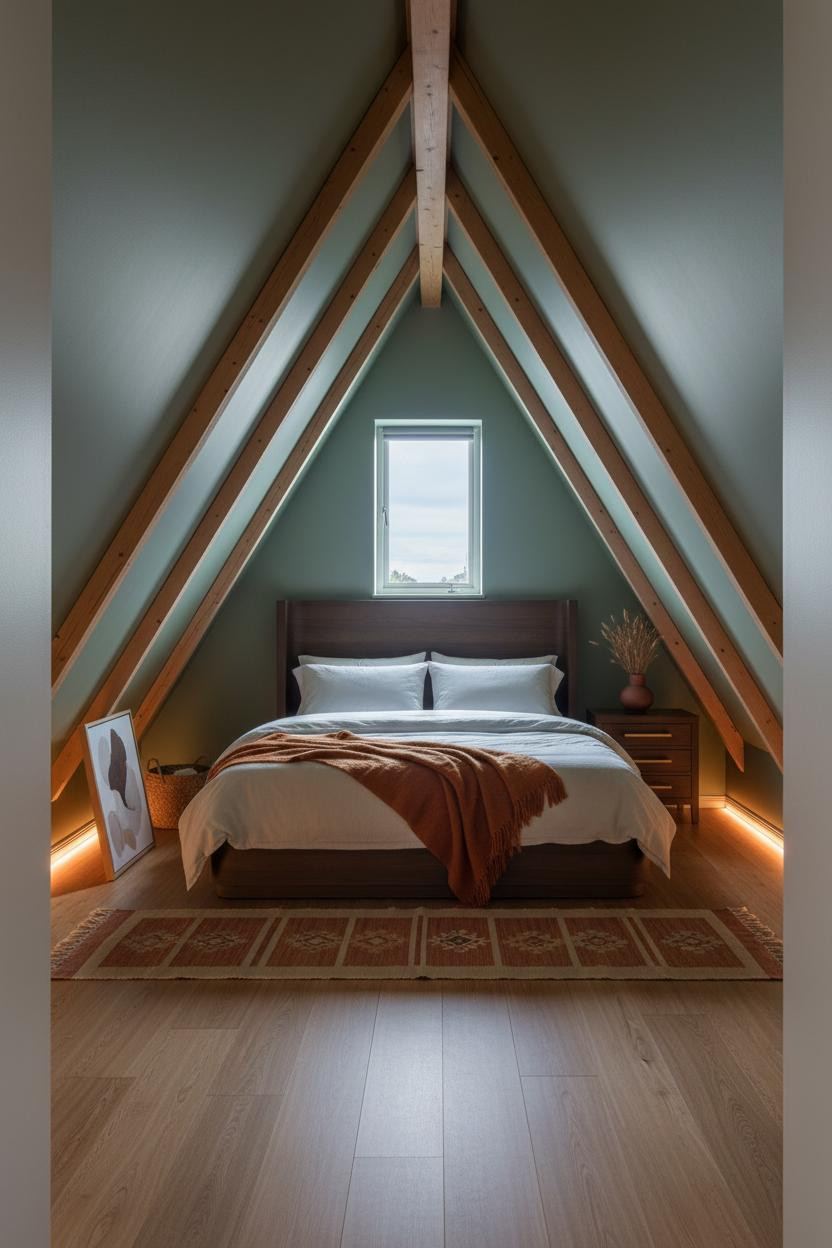

I keep coming back to this one. Something about the geometry feels deliberately calm.
Why it holds together: The raw honey-toned rafter tails cast parallel shadow stripes across the plaster, turning a structural detail into the room's main visual. That's not decoration. That's just letting the bones show.
Steal this move: Add a kilim runner perpendicular to the bed axis. It grounds the floor without competing with what's happening overhead.
Terracotta Walls That Work Harder Than Any Paint Color
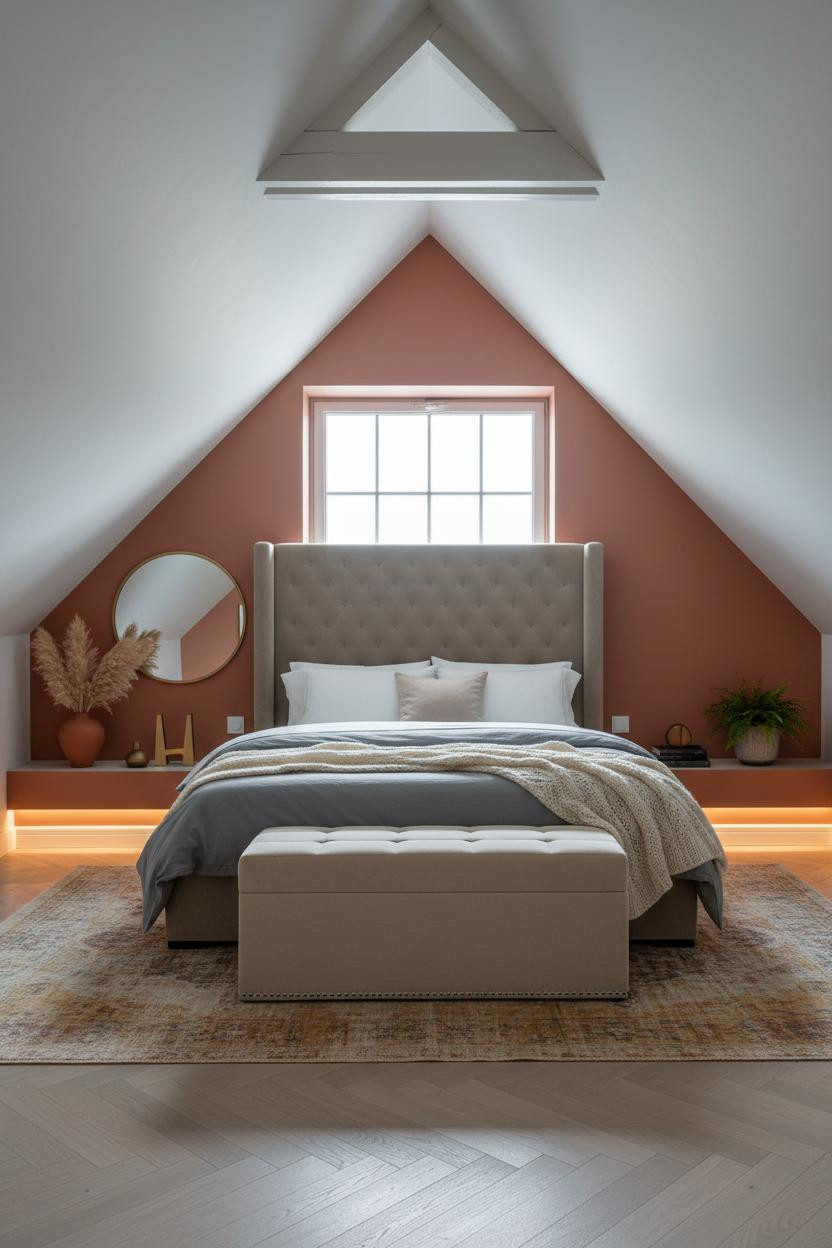

Warm plaster on a gable wall does something a flat paint color can't. It reads differently at every hour.
The terracotta plaster gable pulls the triangular roofline forward visually, making the geometry feel intentional rather than incidental. Cause-effect is immediate: warm wall, warm room, no extra work.
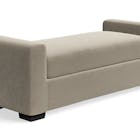
The practical move: A storage bench at the foot earns its keep in a low-ceiling room. The Rhone Storage Bench sits below the eave slope and hides what doesn't need to be seen. More small bedroom strategies that actually work here.
The Amber Room You Want To Stay In All Morning
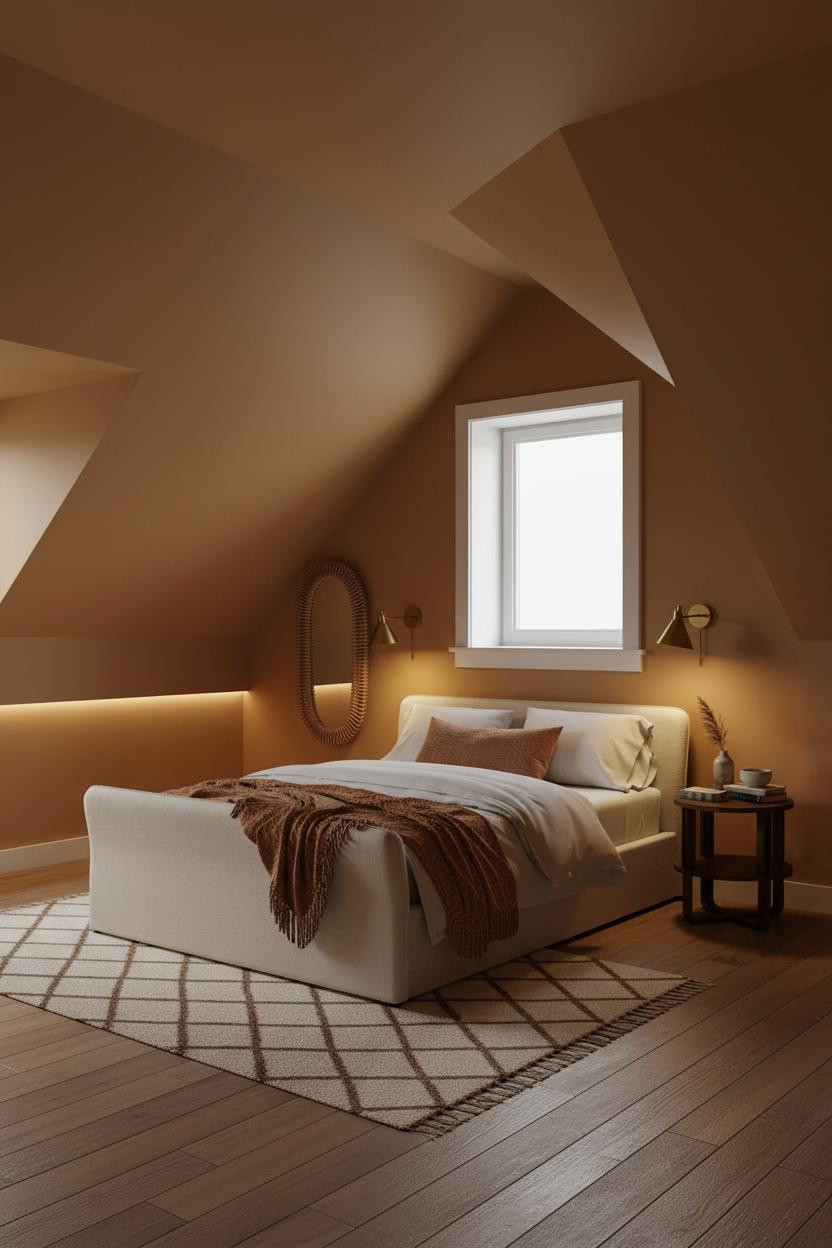


This is the cozy version. Not precious. Just warm in all the right places.
Honey-amber walls keep the sloped ceiling from feeling like it's closing in. The room feels lived-in and intimate, which is honestly the whole goal in a dormer space this size.
What creates the mood: Paired eave sconces at low height cast tight pools onto the reclaimed wood flooring, keeping light close to where you actually are. Overhead fixtures would kill this.
Pro move: Lean an oval rattan mirror against the gable wall instead of hanging it. Easier to adjust, and the organic frame softens all those sharp plaster angles.
Why Dark Shiplap Is Underrated In Small Attic Rooms
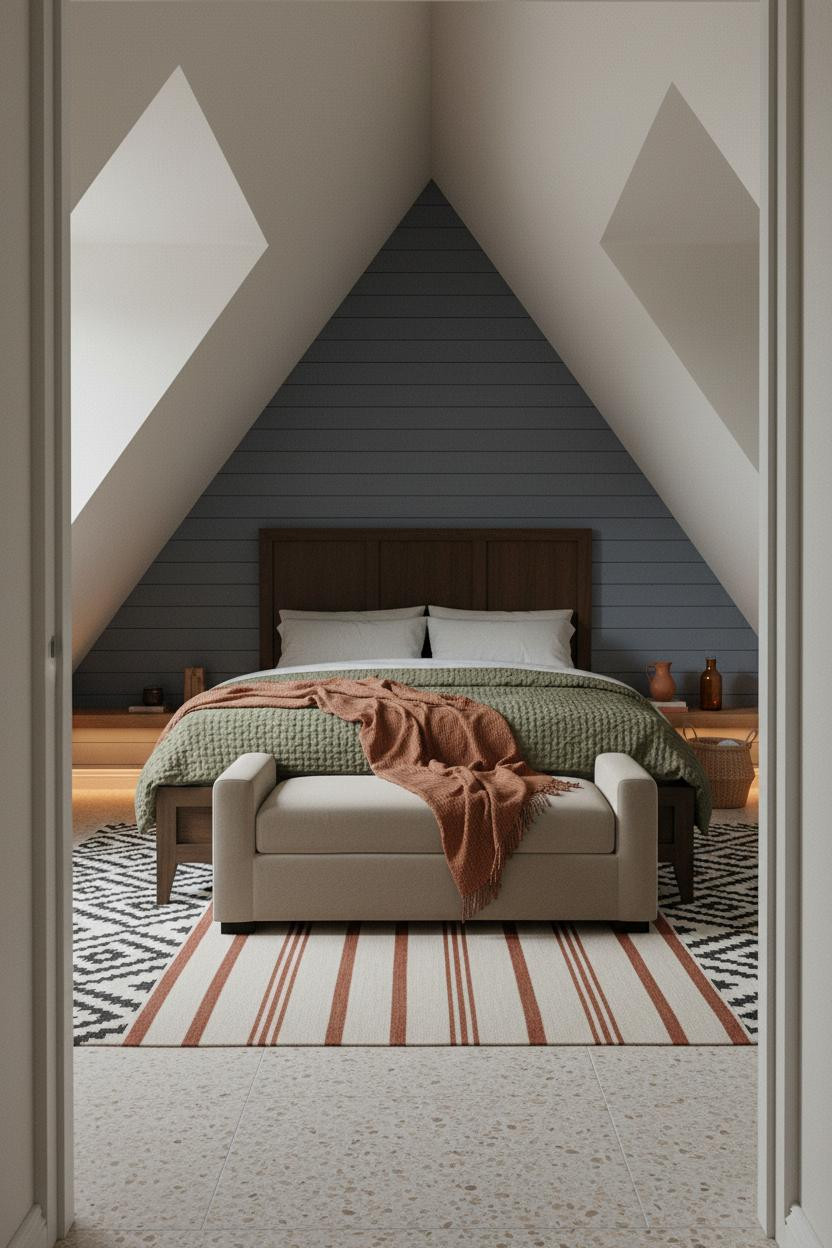
Fair warning. Dark walls in a low-ceiling room sound like a terrible idea. But this one proves otherwise.
What makes it work: The warm indigo shiplap runs floor to apex, which means the eye follows the boards upward. You read height, not confinement. Each horizontal shadow line reinforces the triangular geometry instead of flattening it.
Avoid this mistake: Don't pair dark shiplap with cool-toned bedding. The olive waffle-weave duvet here keeps the palette warm, while the rust linen throw ties it back to the wall color.
Boho Layering That Doesn't Look Cluttered Under A Sloped Ceiling
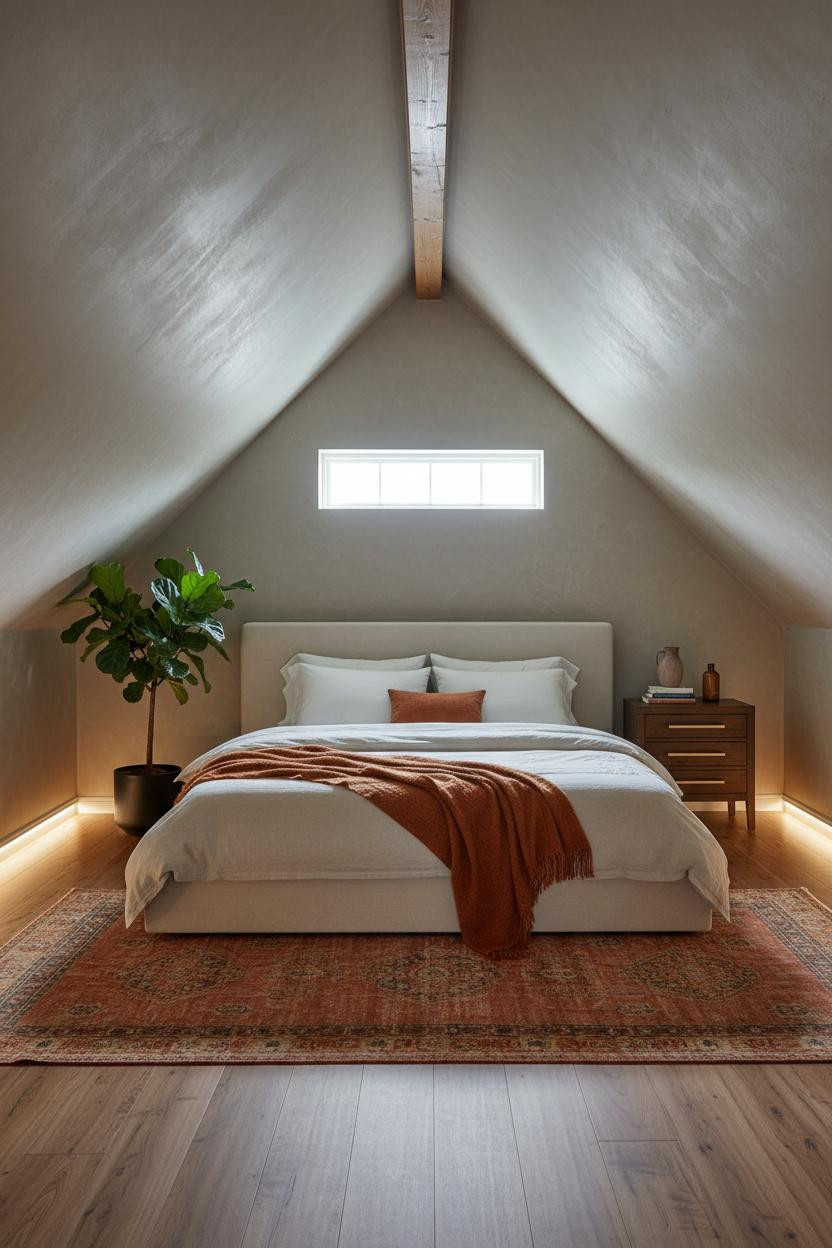
Boho layering under sloped ceilings usually tips into chaos. This one stays collected.
Why it stays grounded: The warm greige plaster acts as a neutral backdrop that absorbs the rust and oatmeal bedding without visual noise. Just enough texture to feel alive, while still feeling calm.
A large plant in the eave corner fills dead space in a way that furniture can't. Use that corner. It's not wasted floor area. It's one of the better spots in the room. More bedroom designs worth saving here.
Exposed Brick Against Sloped Plaster Is A Better Idea Than It Sounds
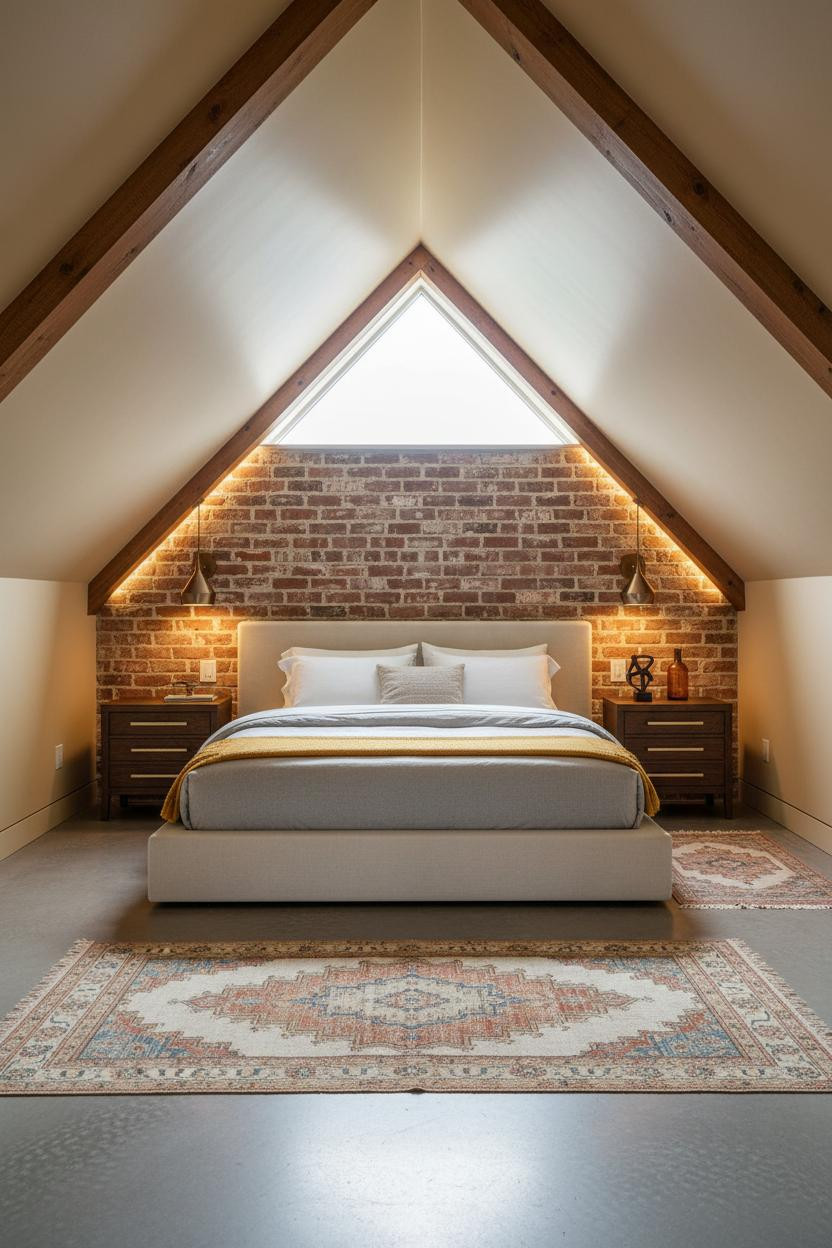
I almost dismissed this. MCM details plus sloped ceilings plus exposed brick feels like too many ideas. It isn't.
The real strength: Raw exposed brick at the gable end gives the angled room a fixed point. Everything else can be soft. The brick holds structure, and the camel plaster on the rafter walls keeps it from going too industrial.
What not to do: Don't overload the nightstand. One sculptural object and one bottle. The brick is already doing the heavy lifting.
How Wainscoting Makes Low Eaves Feel Like A Feature
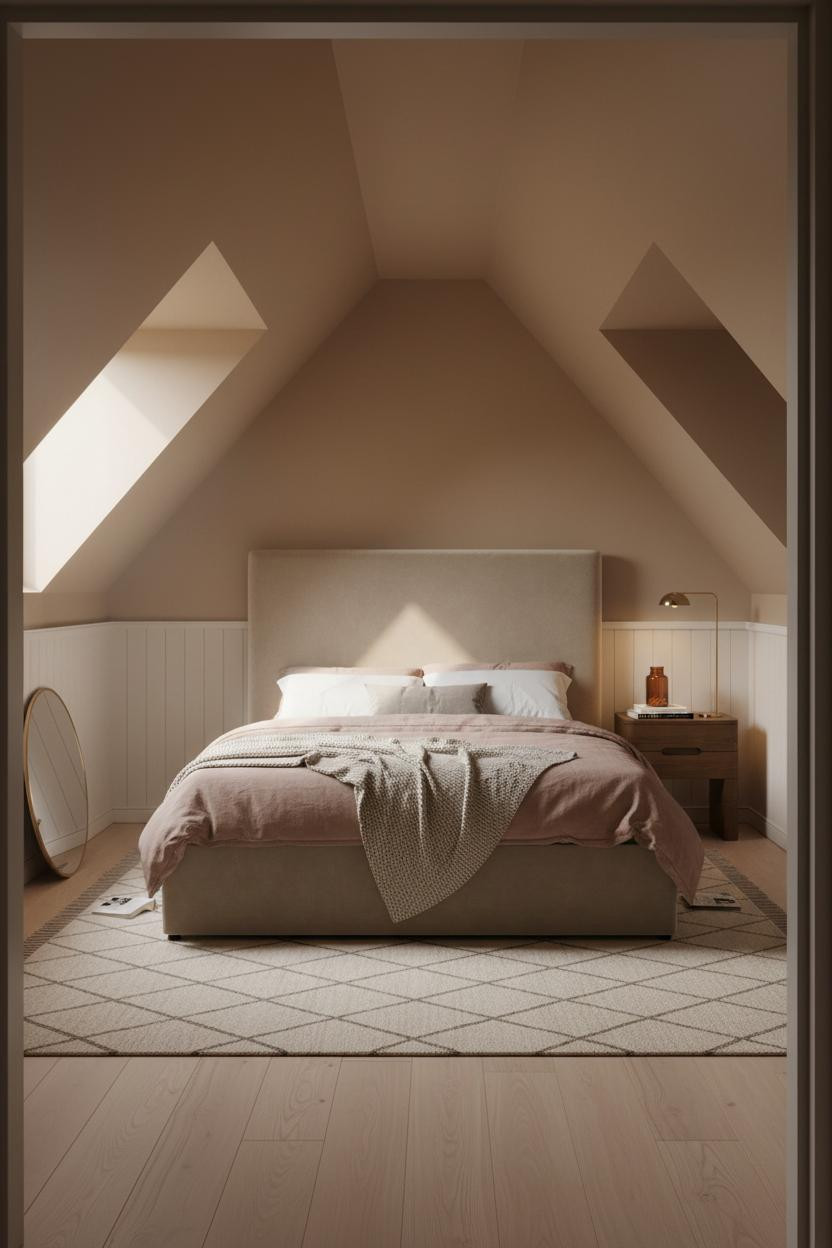
Nothing fancy. That's actually the point.
What changes the room: The painted honey-white wainscoting wraps the lower eave walls, and the chair rail creates a deliberate break between panel and plaster. The room feels layered rather than unfinished, which is the difference between a dormer bedroom and a proper room. See how similar tricks work in loft bedrooms too.
Worth copying: Keep the dusty pink linen duvet soft. The wainscoting already adds structure. You don't need more geometry in the bedding.
The Board-And-Batten Gable That Earns Every Inch Of Attention
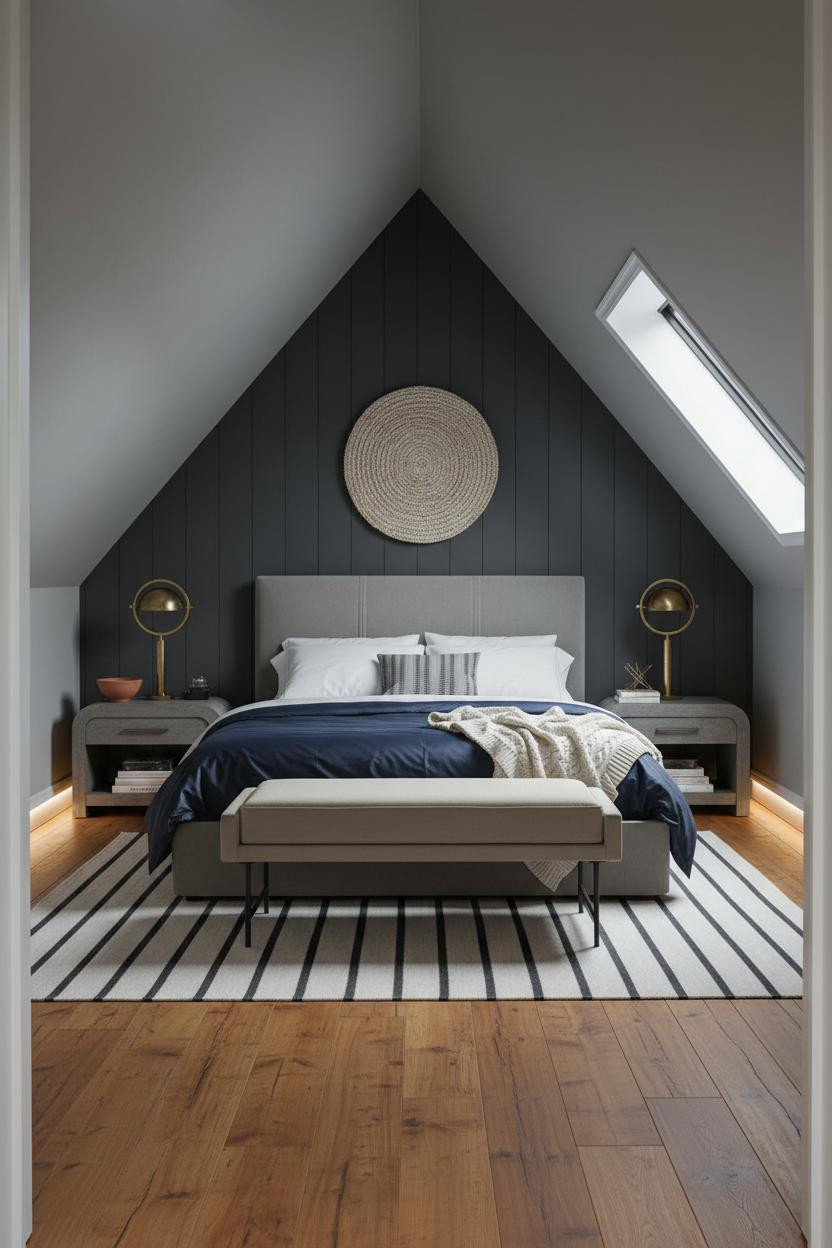

This is divisive. Matte charcoal on an entire gable wall, floor to peak.
But I think it's the right call here.
Why it looks custom: The board-and-batten in charcoal makes the triangular roofline read as architecture, not accident. The vertical battens draw the eye upward along the slope, and the matte finish absorbs the dormer light without going flat.
The smarter choice: Keep the sloped side walls a muted stone grey. The contrast between the dark gable and the lighter slopes is what makes the geometry pop. Matching all three walls would lose it entirely.
Dusty Blue Walls That Make Coastal Feel Grown Up
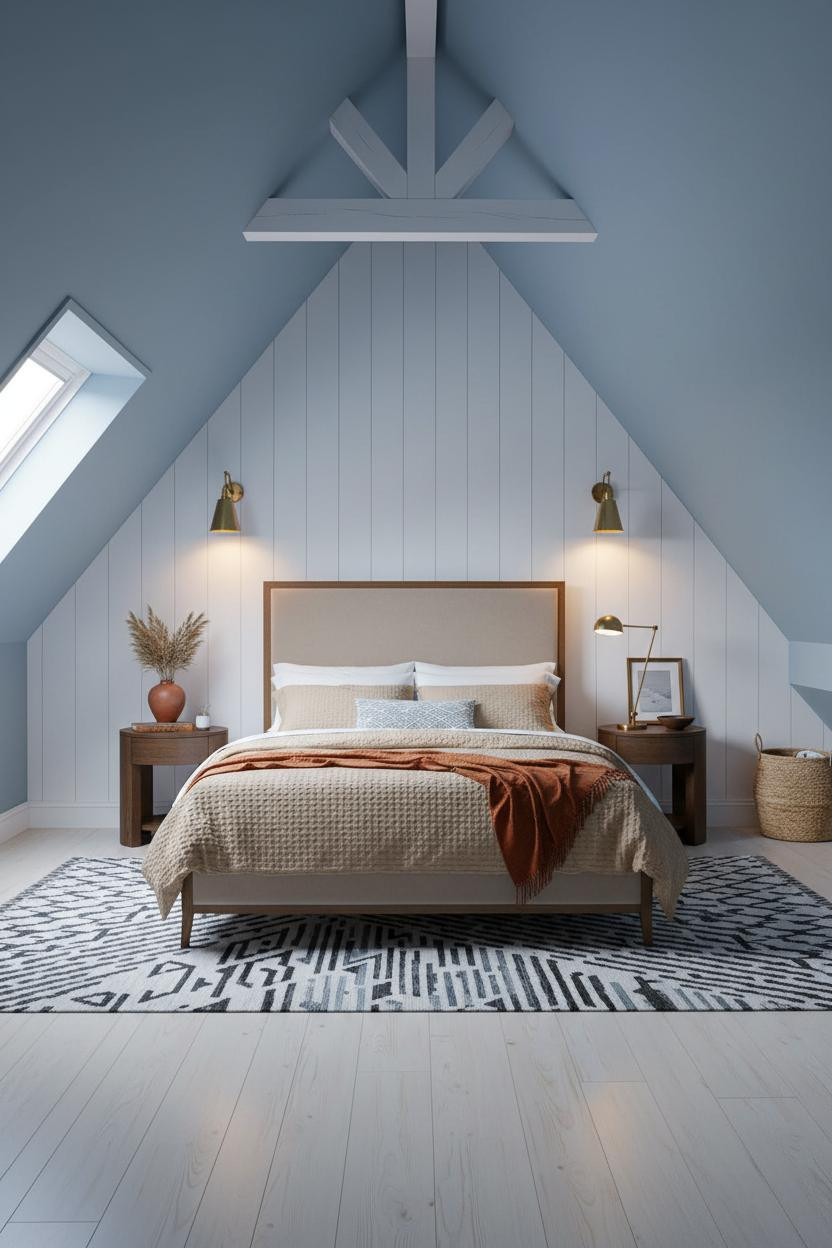

The reason this feels elevated rather than beachy is proportion. Everything is low and wide.
Why the palette works: Dusty blue on the flanking slopes lets the white board-and-batten gable carry the geometry, so the color stays supporting rather than competing. Paired wall sconces keep the lighting warm enough to offset the cool tone.
One smart swap: A mohair throw in burnt orange draped at an angle across the footboard. In a cool-toned room, one warm textile does more than three decorative objects.
Exposed Timber Rafters With A Floor-Length Curtain. Worth The Risk.
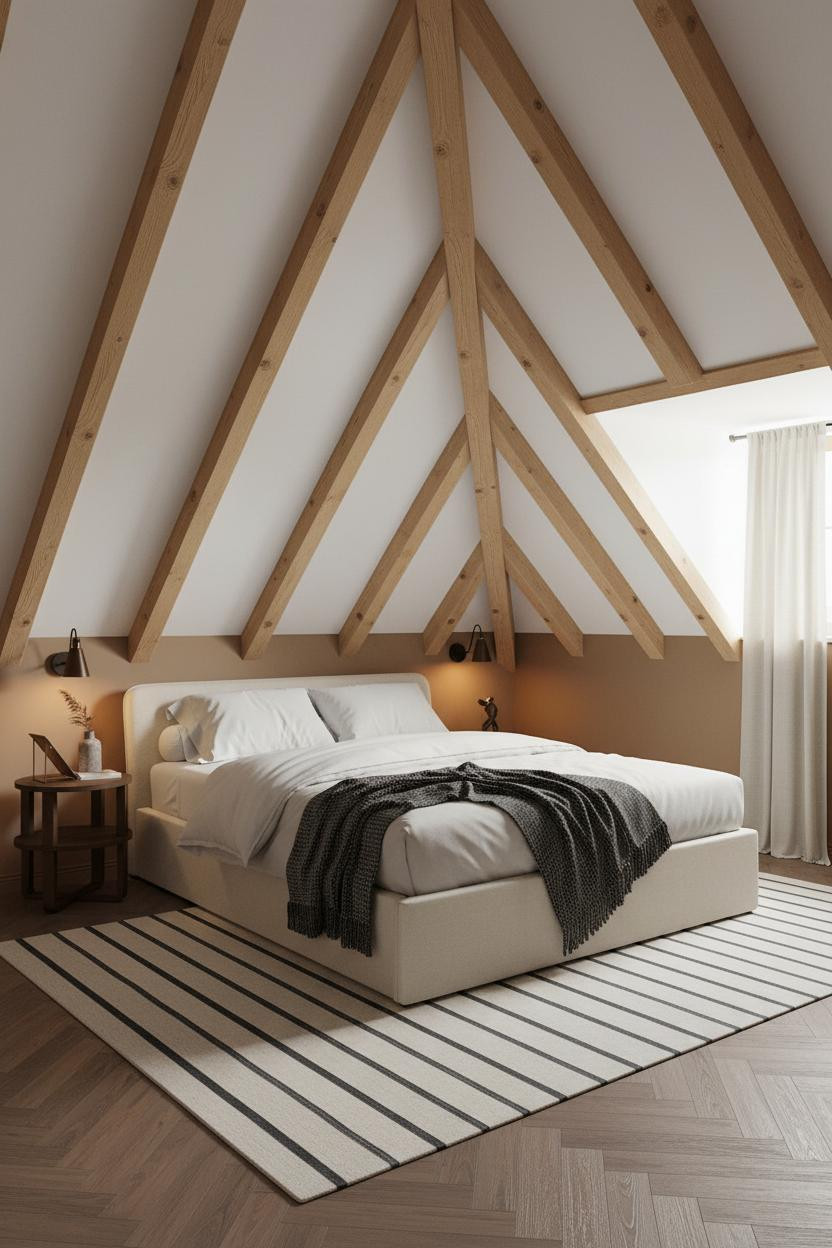
The room feels calm and cohesive in a way that's hard to pinpoint at first. Then you notice it's the curtain.
Design logic: A floor-to-ceiling deep ivory linen curtain in the dormer alcove softens the whole wall without blocking the light. It's the reason the rafters don't feel stark. And the charcoal cashmere throw folded over the footboard gives the ivory room an anchor point it needs.
The finishing layer: Keep the nightstand spare. A brass bookend, a clay bottle. The curtain and rafters are already carrying the room. For more layered bedroom ideas, this roundup is worth bookmarking.
Dove Grey Plaster And A Dormer That Does All The Work
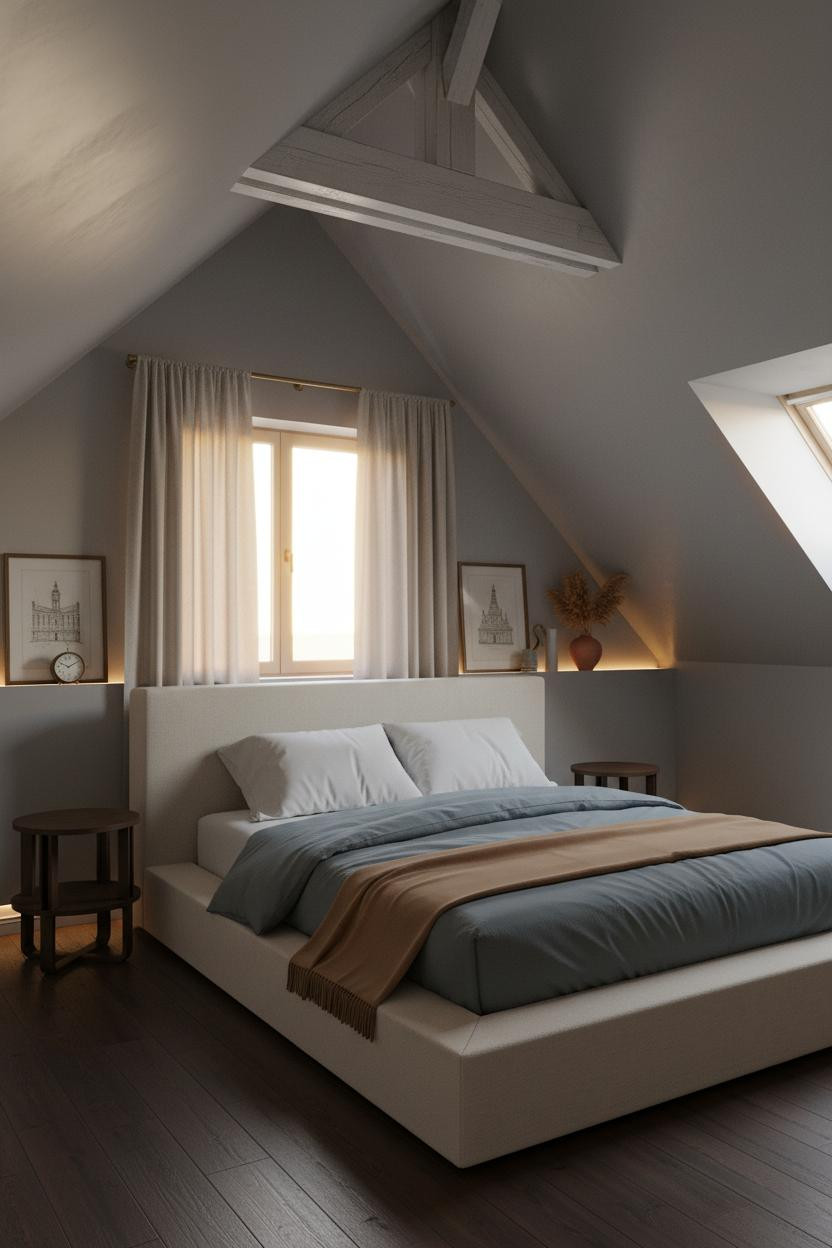
Honestly, this is the most restrained room in the bunch. And I mean that as a compliment.
What softens the room: The dove grey plaster reads warmer than it looks in isolation because the raking afternoon light from the dormer gives it texture. The triangular geometry stays visible, just not aggressive. That's a harder balance to hit than it looks.
The easy win: Floor-to-ceiling linen panels framing the dormer add softness in a way that keeps things polished but still relaxed. Skip anything with hardware on the slope side.
Japandi Meets Honey Beams And It Makes Complete Sense
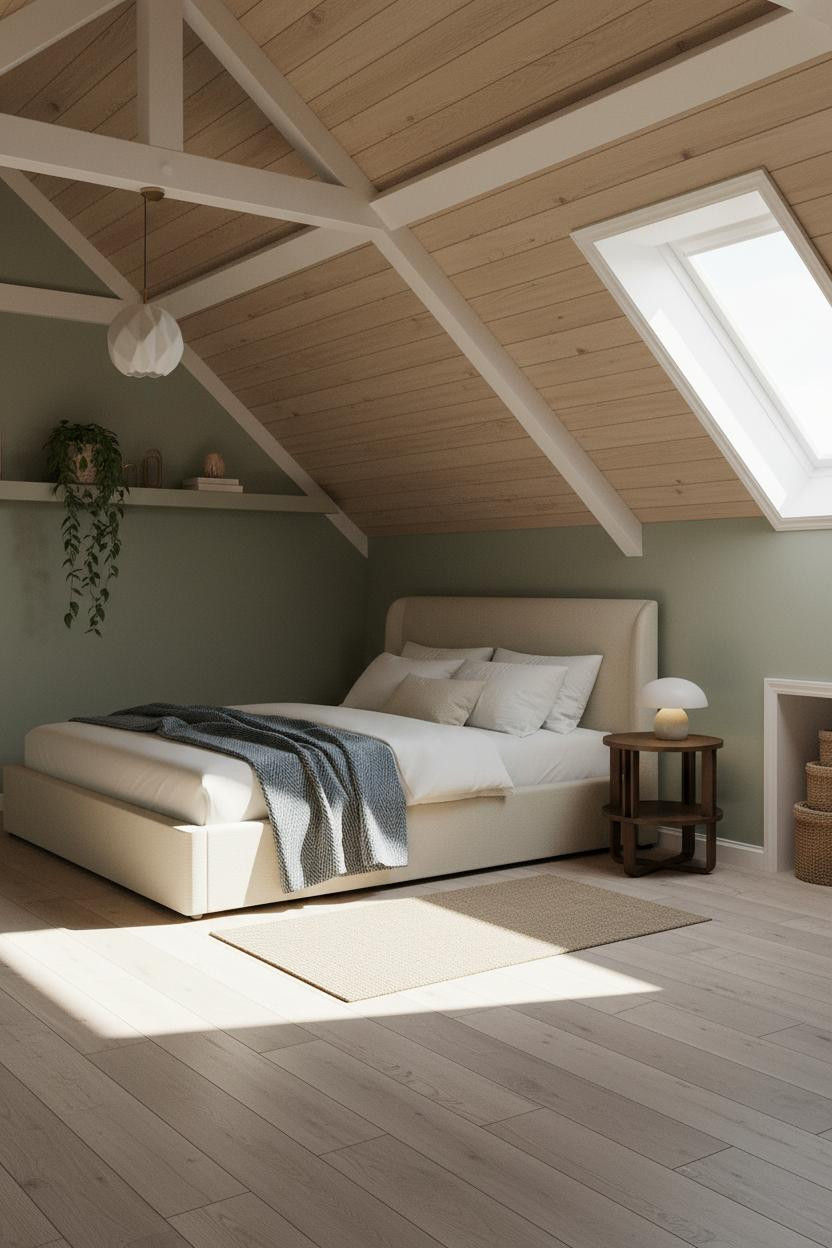

I wasn't sure about the pendant hanging from the apex beam. I am now.
Why it feels intentional: Honey-toned ceiling planks running apex to eave keep the Japandi palette from going cold. The sage green walls provide contrast without fighting the wood. And the sculptural pendant at the peak draws the eye exactly where the room wants it. More ideas for making low ceilings feel expensive here.
Where to start: Woven baskets tucked under the eave. It's a small move, but it turns an awkward corner into something that looks chosen rather than leftover.

Our #1 Pick
Saatva Classic Mattress
America's best-selling online luxury innerspring. 365-night trial, lifetime warranty, free white glove delivery.
Shop Saatva Classic
Why Luxury Bedrooms Always Feel Better
Walls get repainted. Linen gets swapped out. The mattress stays. So it matters more than most people admit when they're decorating.
The Saatva Classic is the one I'd put under all twelve of these rooms. Dual-coil support that holds up over years, a cotton cover that breathes through warm attic nights, and a Euro pillow top that's soft without losing structure. It's the kind of mattress that still feels right long after the design choices have been second-guessed.

Every room on this list works because someone made a deliberate choice and stuck with it. Start with the bed. The rest figures itself out.