
 by
by The first time I saw a green bed frame bedroom idea done right, it stopped me cold. Not because it was loud. Because somehow the whole room felt like it exhaled.
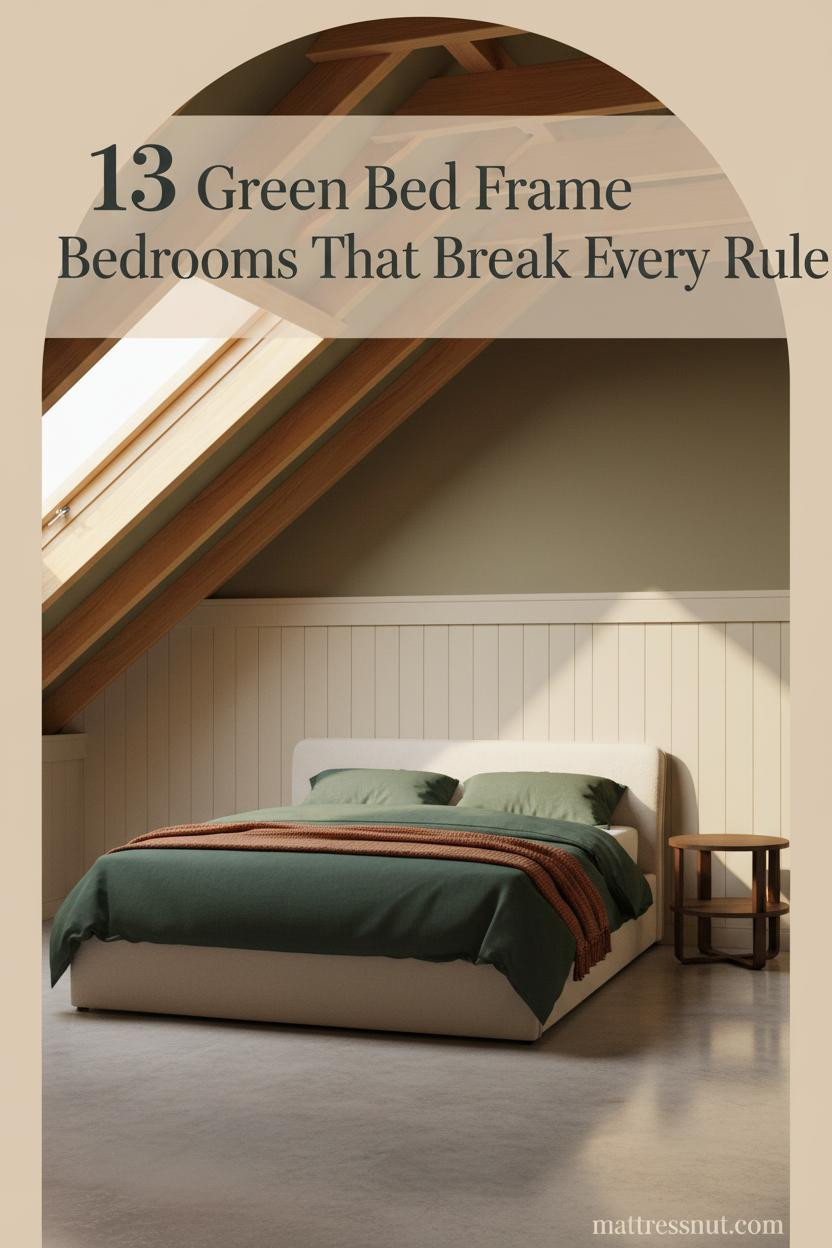
These 13 attic bedrooms prove that green isn't a statement color. It's a grounding one. Especially under a sloped ceiling.
The Stone Wall That Makes the Green Feel Ancient
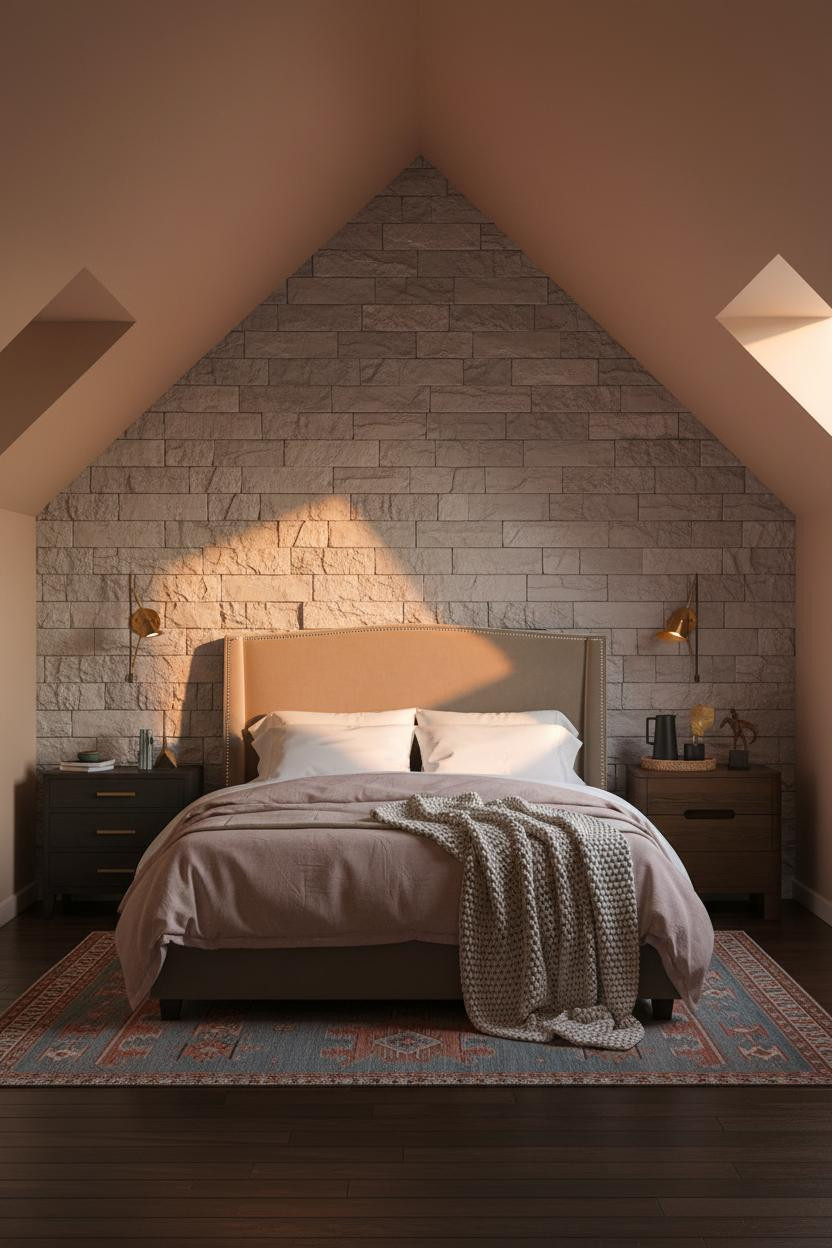

This one has a geological weight to it. The room feels anchored in a way that painted walls simply can't replicate.
Why it holds together: The rough-hewn limestone behind the bed cools the green frame down, turning what could feel trendy into something that looks like it's always been there.
Steal this move: Pair any green bed with a warm amber kilim and espresso-stained floors. The contrast keeps the mineral tones from going cold.
Timber Trusses That Do Half the Work for You


Honest admission: I used to think Japandi was overrated.
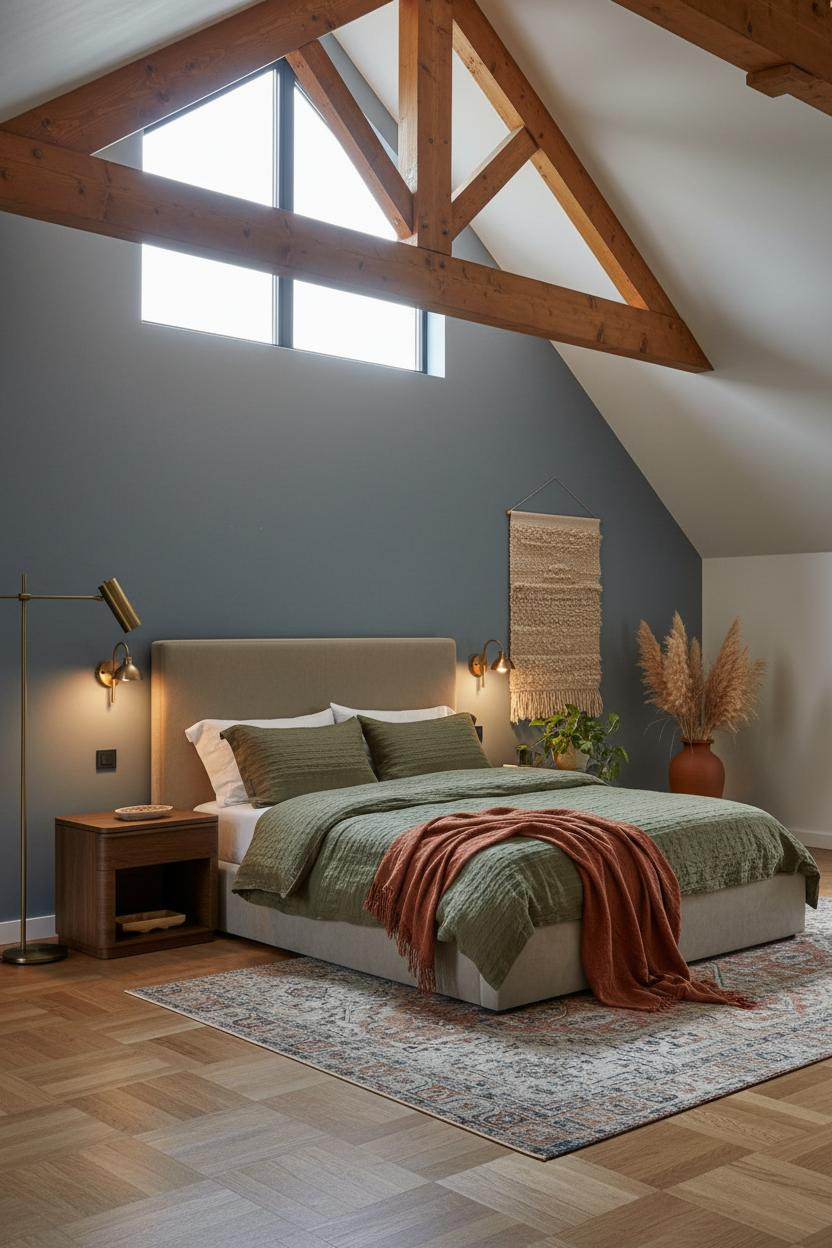
But a room like this changes the argument. The honey-toned V-truss system overhead creates enough geometric drama that the green bedding doesn't have to work hard. The room feels collected rather than decorated.
Worth copying: An overdyed kilim in rust and slate grounds the floor zone, especially when the walls are a muted blue-grey. Warm and cool in the same breath.
Skylight Geometry With an Olive Twist
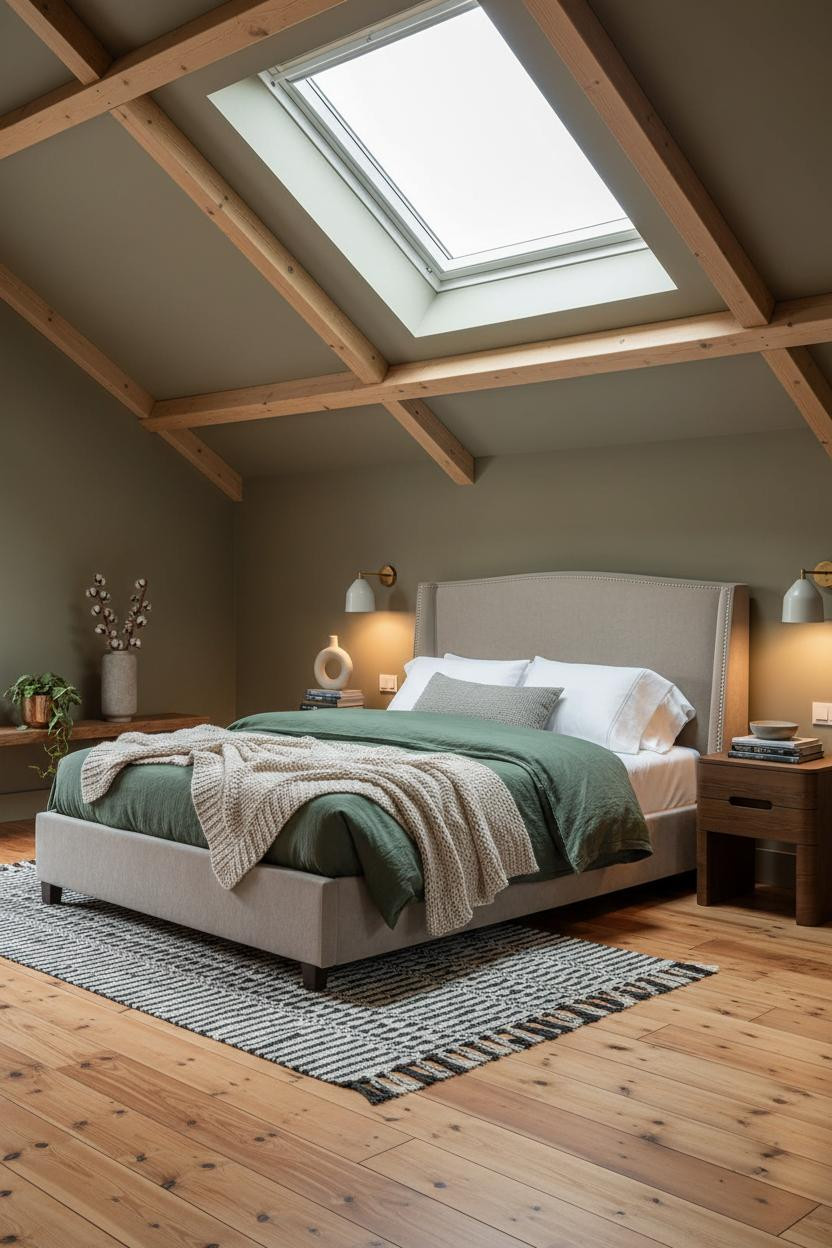
Nothing fancy. That's the point. The attic bedroom ideas that land best are the ones where the architecture does the heavy lifting.
Here, pale honey timber rafters run the full length of the slope, casting parallel shadows that repeat across the olive walls in a way that feels intentional without any styling effort. The forest green linen duvet ties directly into the wall tone, which keeps the room from splitting into two competing stories.
The easy win: A graphic black-and-white rug under the bed gives the eye a place to land when the upper half is all texture and grain.
When the Skylight Shaft Becomes the Statement
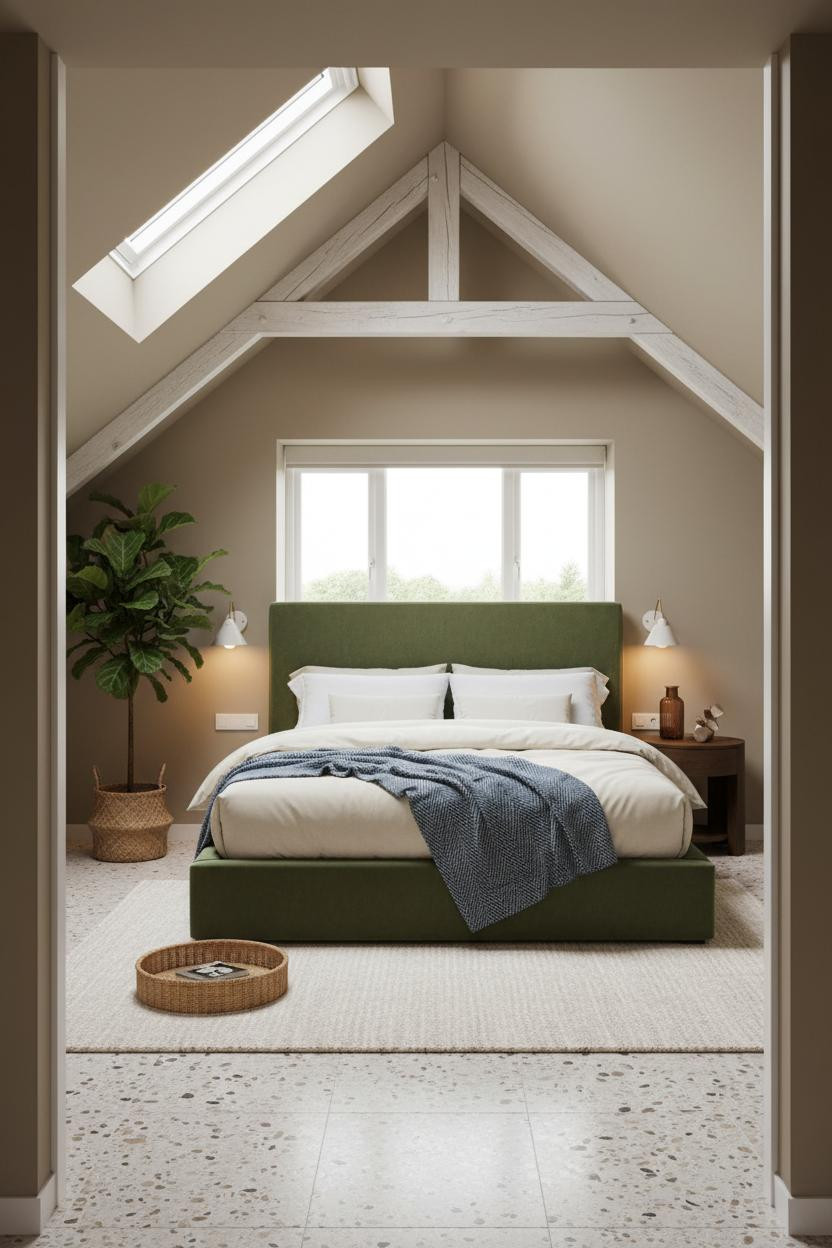
The whitewashed timber collar ties framing the skylight opening do something interesting. Bold shadow lines cut across the ceiling plane, and the green bed frame below feels deliberately framed by them rather than competing for attention.
What makes this one different: Pale terrazzo tile underfoot bounces light back up, which keeps the room luminous even when the walls lean toward khaki. It's a small material choice with a significant return.
Pro move: A fiddle-leaf fig beside the bed echoes the green frame while still feeling like living decoration rather than a matching set.
Hand-Troweled Plaster Behind an Emerald Bed
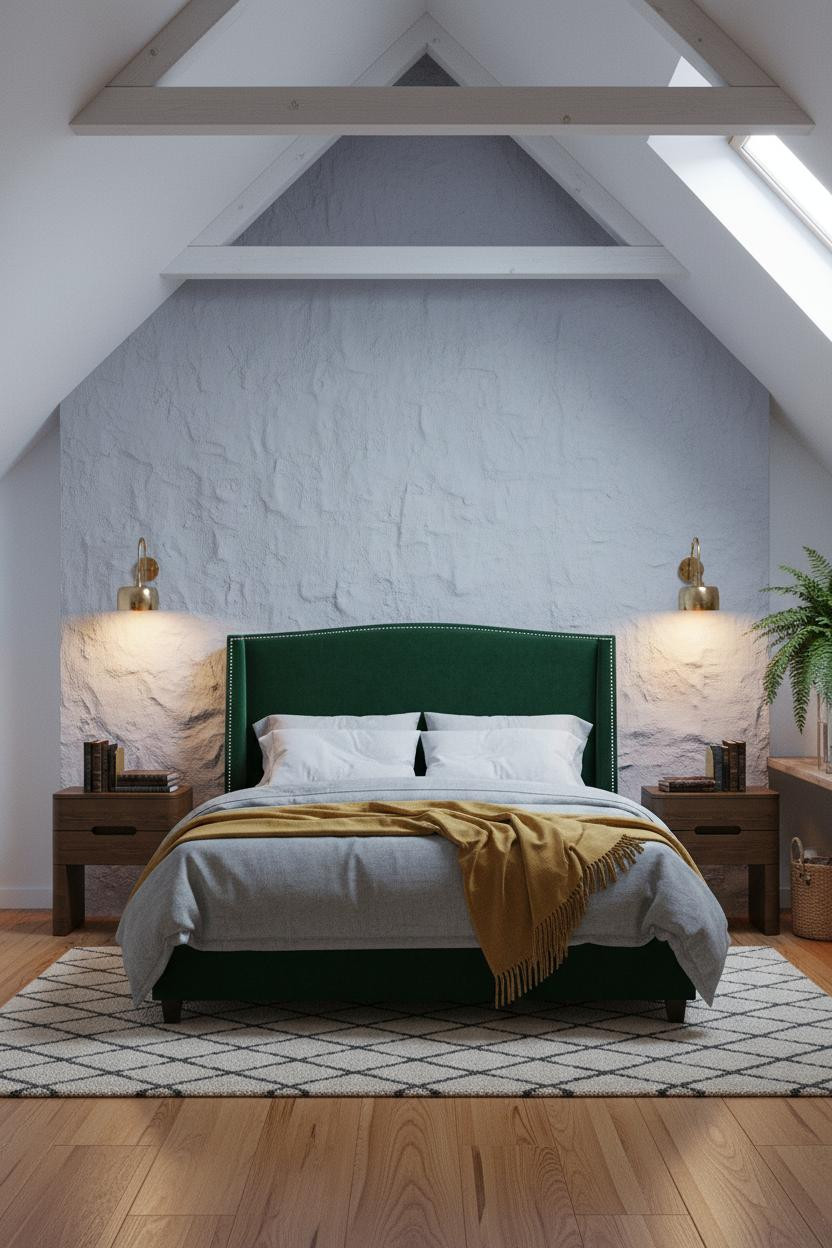
I keep coming back to this one. The plaster wall behind the bed is the reason.
A hand-troweled indigo-grey plaster panel floor to ceiling catches raking light in a way that flat paint never will. The irregular surface creates depth that changes throughout the day, which makes the emerald frame look different at noon than at dusk.
The smarter choice: Don't try to match the bedding to the wall. A mustard wool blanket and stone-washed grey duvet let the plaster breathe while the green holds the contrast.
Dark Rafters, Concrete Floor, and a Kilim That Ties It All Together
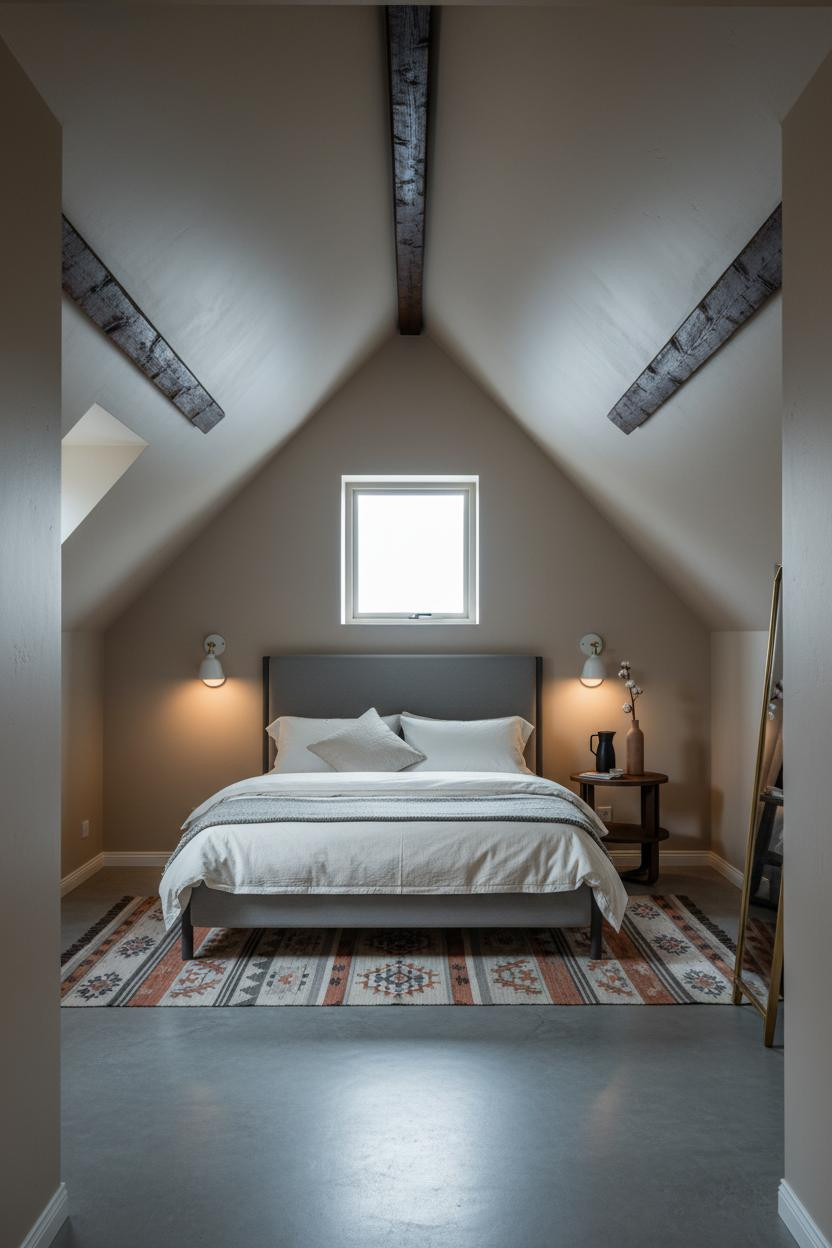


This one is divisive. Polished concrete under a sloped rafter ceiling reads industrial to some people. I think it reads grounded.
Why the materials matter: Dark-stained timber rafters overhead and cool concrete below create a frame that the green headboard interrupts perfectly, in a way that feels alive rather than austere.
A flat-weave kilim in rust and charcoal is the move here. Warm tones underfoot stop the concrete from going cold, while still letting the structure breathe.
Honey Beams and an Evening Room That Earns It
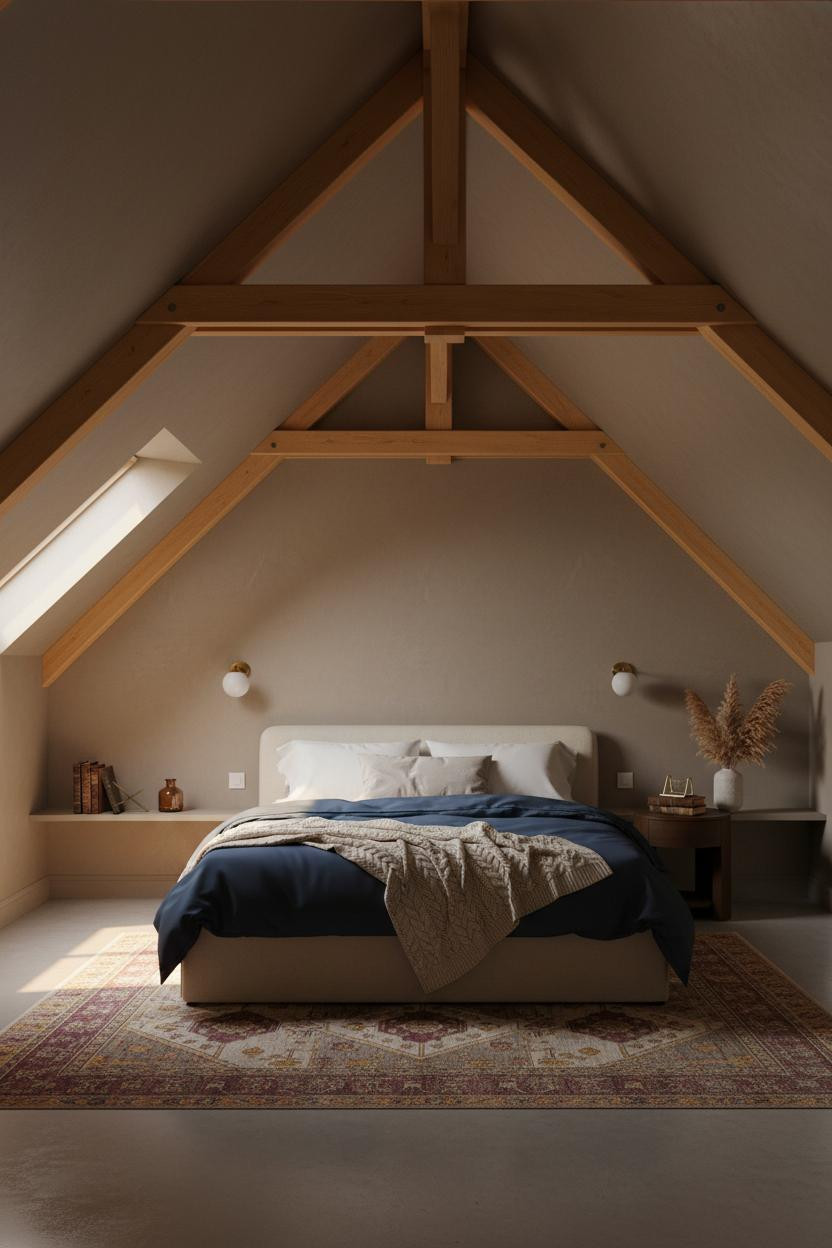

Late evening in an attic bedroom with honey-toned collar ties catching lamplight overhead. The room feels warm without being heavy.
The real strength: Those exposed beams create bold geometric shadow lines that make the whole ceiling feel intentional, not just structural. It's the kind of detail you'd pay an architect for, already built into the bones of a converted attic.
One smart swap: Pull a vintage overdyed Persian rug in muted burgundy under the bed. It anchors the floor plane and stops the greige walls from feeling adrift at night.
Why a Skylight and Green Bedding Is Actually Restraint
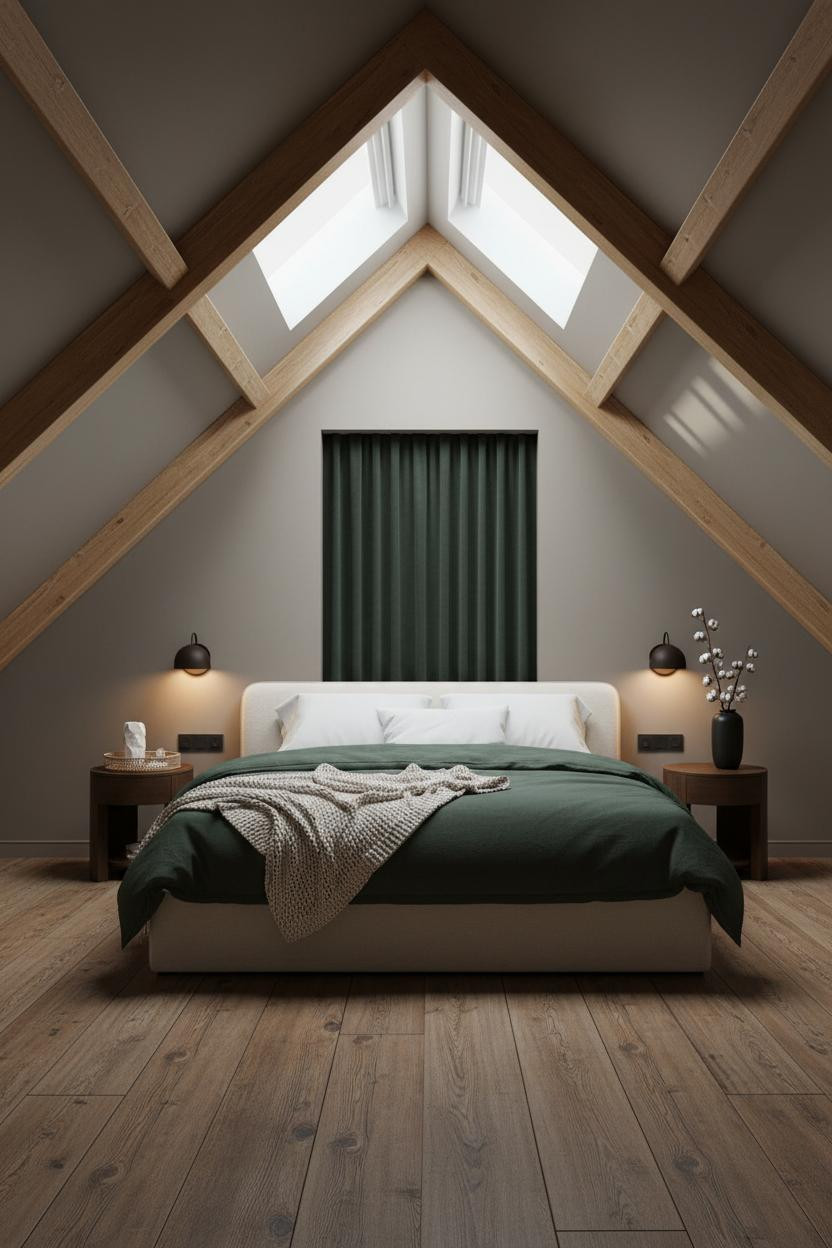
It might seem like a lot. A V-truss ceiling, a floor-length dark linen curtain, forest green bedding. But the restraint here is in what's not added.
The mushroom matte walls absorb the busyness overhead, which means the green duvet reads as a grounding element rather than a competing one. And reclaimed tobacco-brown planks underfoot warm the whole equation without asking for attention.
Avoid this mistake: Don't add a patterned rug here. The floor grain is doing enough work. Let it.
The Scandi Attic That Keeps Surprising Me
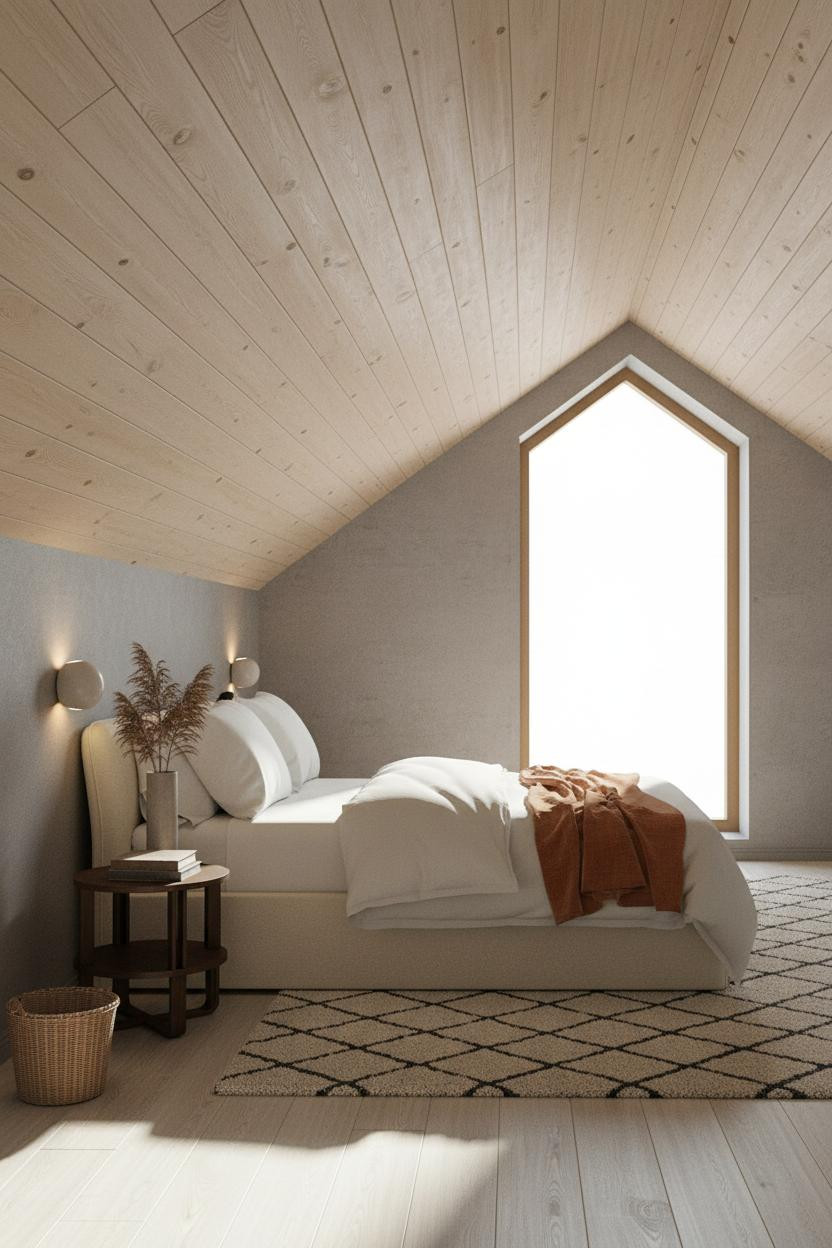
Stone grey walls with unpainted pine planks running diagonally along the roofline. You'd think it would feel cold. It doesn't. The room feels quietly alive, especially with midday sun cutting sharp geometric shadows across the floor.
What carries the look: The bed design anchors the pale birch flooring by providing the one saturated note in an otherwise restrained palette. Just enough contrast to keep things interesting.
Try this: A rust linen throw folded across the footboard connects to the warm pine grain overhead, tying the ceiling and floor into a single material story.
Sage Walls and a Pale Green Bed That Whisper the Same Thing
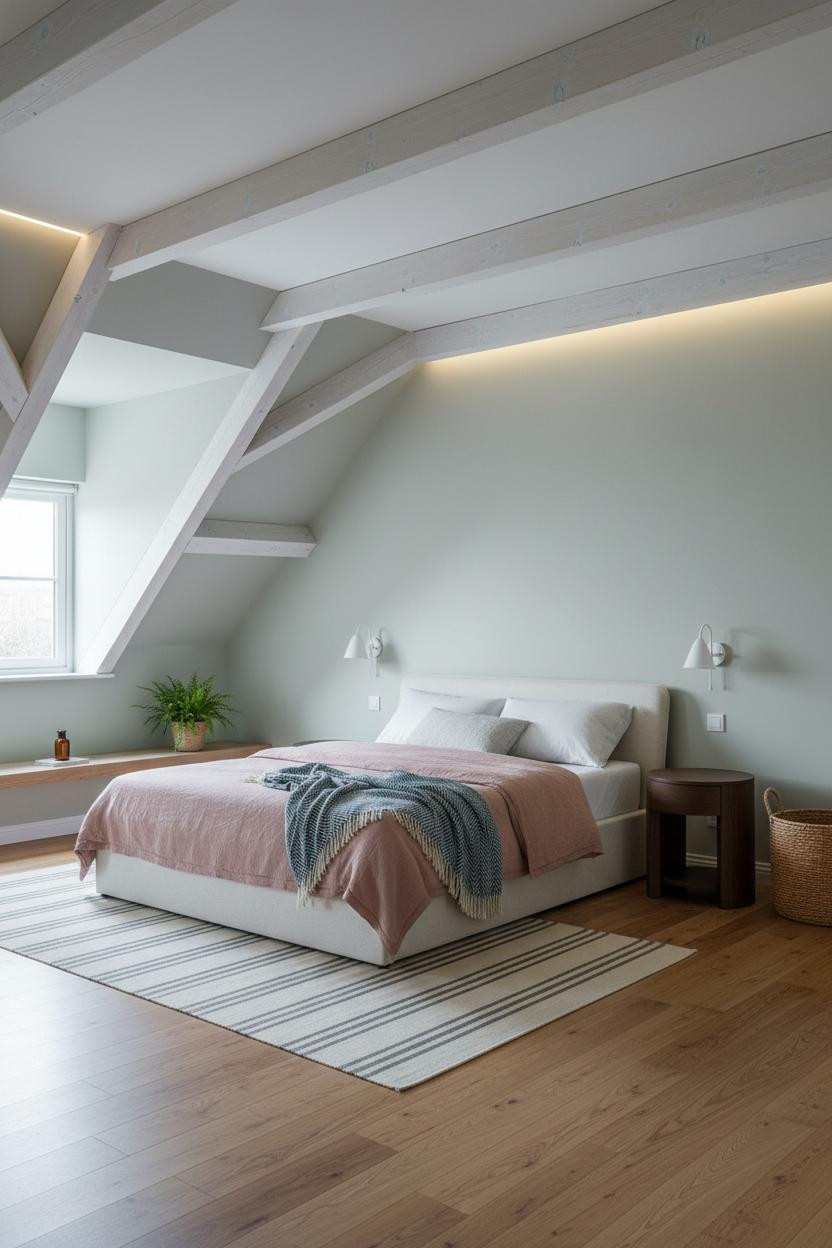
Admittedly, tonal dressing (wall color and bed frame in the same family) can tip into flat. This version avoids it because the architecture intervenes.
In a room where whitewashed timber purlins angle sharply overhead, the pale sage walls and green frame read as intentional color harmony rather than a failure of imagination. The structural geometry is what separates them visually.
The finishing layer: A dusty pink linen duvet and steel blue herringbone throw break the green-on-green just enough. Nothing too matchy. That's the whole trick.
Board-and-Batten in Cream Against a Sage Bed
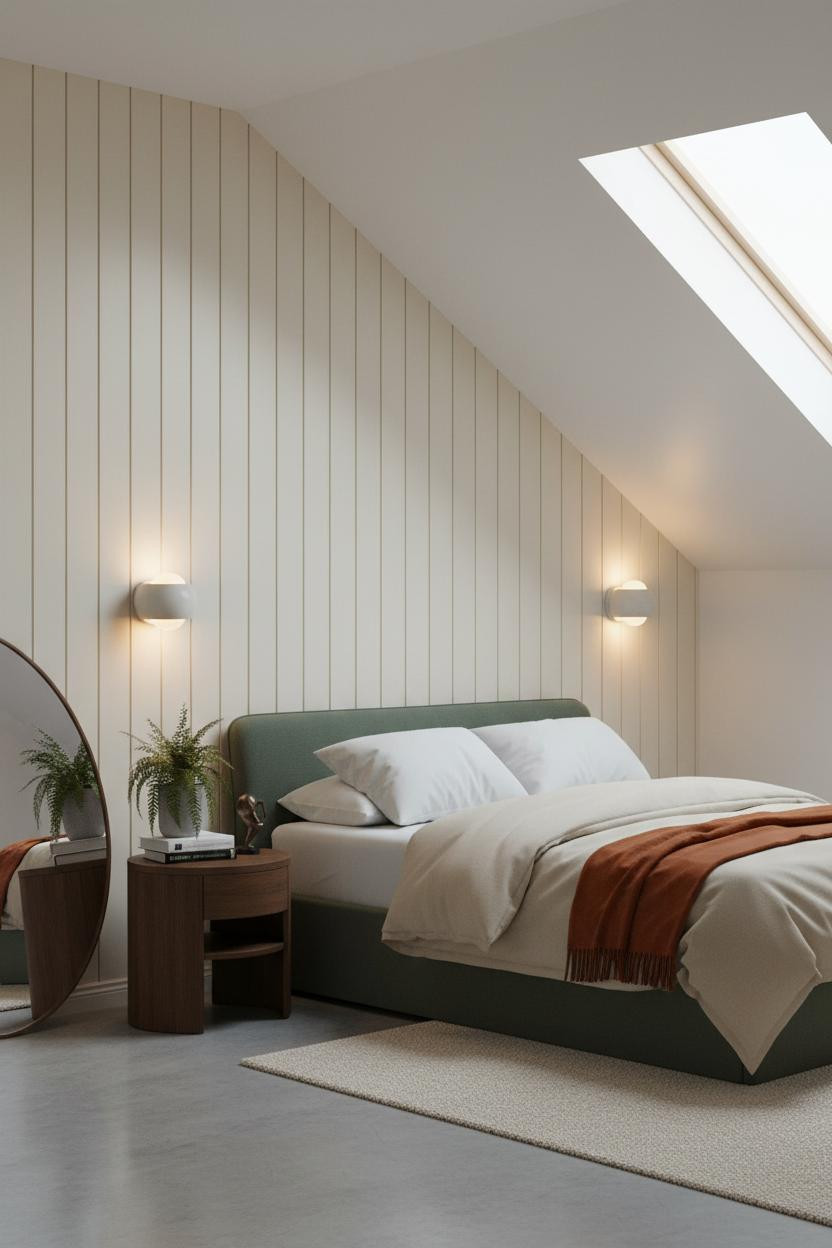
This is the combination I'd actually use. Cream board-and-batten behind the bed creates vertical rhythm that a flat wall simply can't, and the sage bed frame glows against it in a way that feels fresh rather than predictable.
Why it looks custom: The shadow lines between each vertical slat give the wall its own texture, which means the polished concrete floor and chunky wool rug beneath don't need to carry the whole room on their own. Load shared.
What to copy first: The burnt orange mohair throw at the foot. It's the one warm note that keeps the cream-and-sage from reading coastal. See more organic modern bedrooms with natural aesthetics for more on balancing cool structures with warm textiles.
Dusty Rose Walls With Exposed Beams and a Green That Shouldn't Work
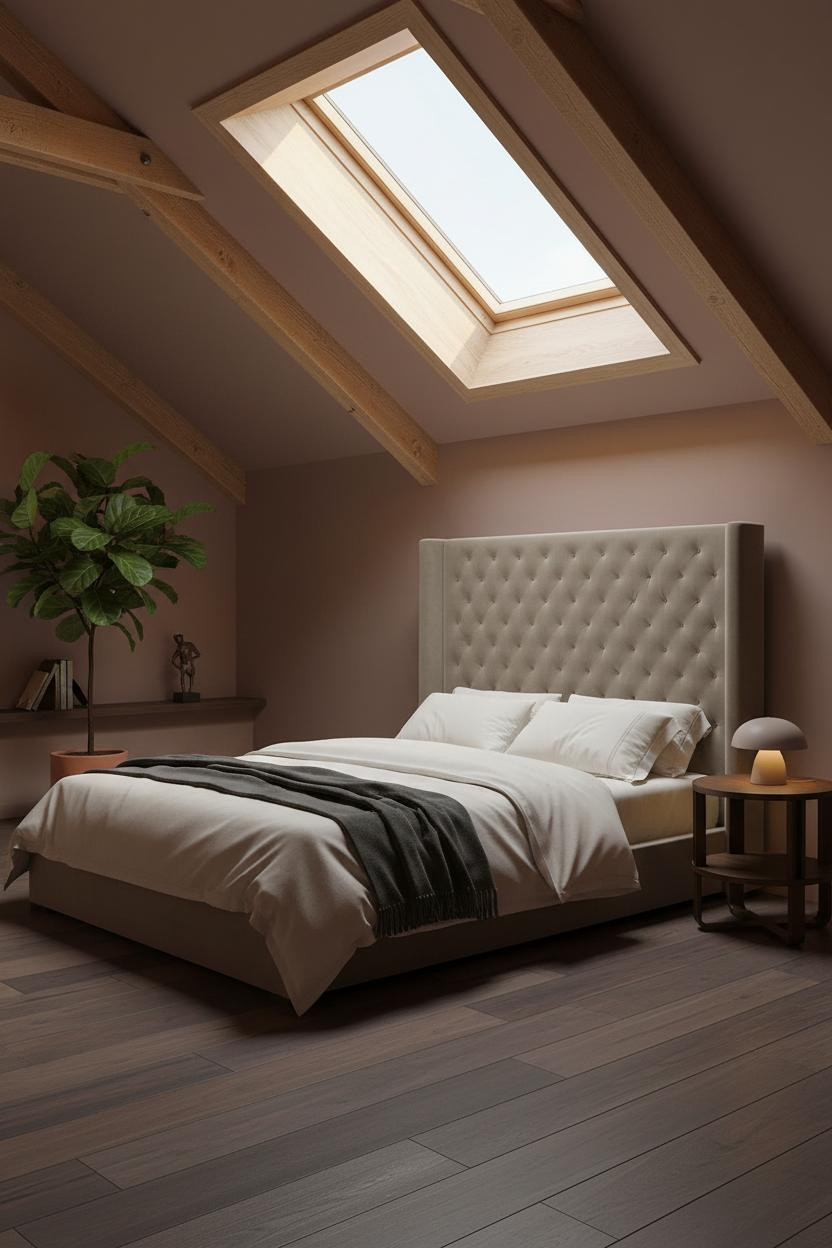

It shouldn't work. Dusty rose and green.
But the raw honey beam structure running diagonally across the ceiling is the mediator. It pulls warm tones from both the wall and the amber skylight, which means the green bed reads as a cool counterpoint rather than a clash. The room feels still and golden at the same time.
Where people go wrong: Choosing bedding that splits the difference between the two colors. Ivory cotton duvet and a charcoal cashmere throw are the right call here. Neutral. Confident. Let the architecture do the arguing.
White Beams, Herringbone Parquet, and Morning Light That Does Everything
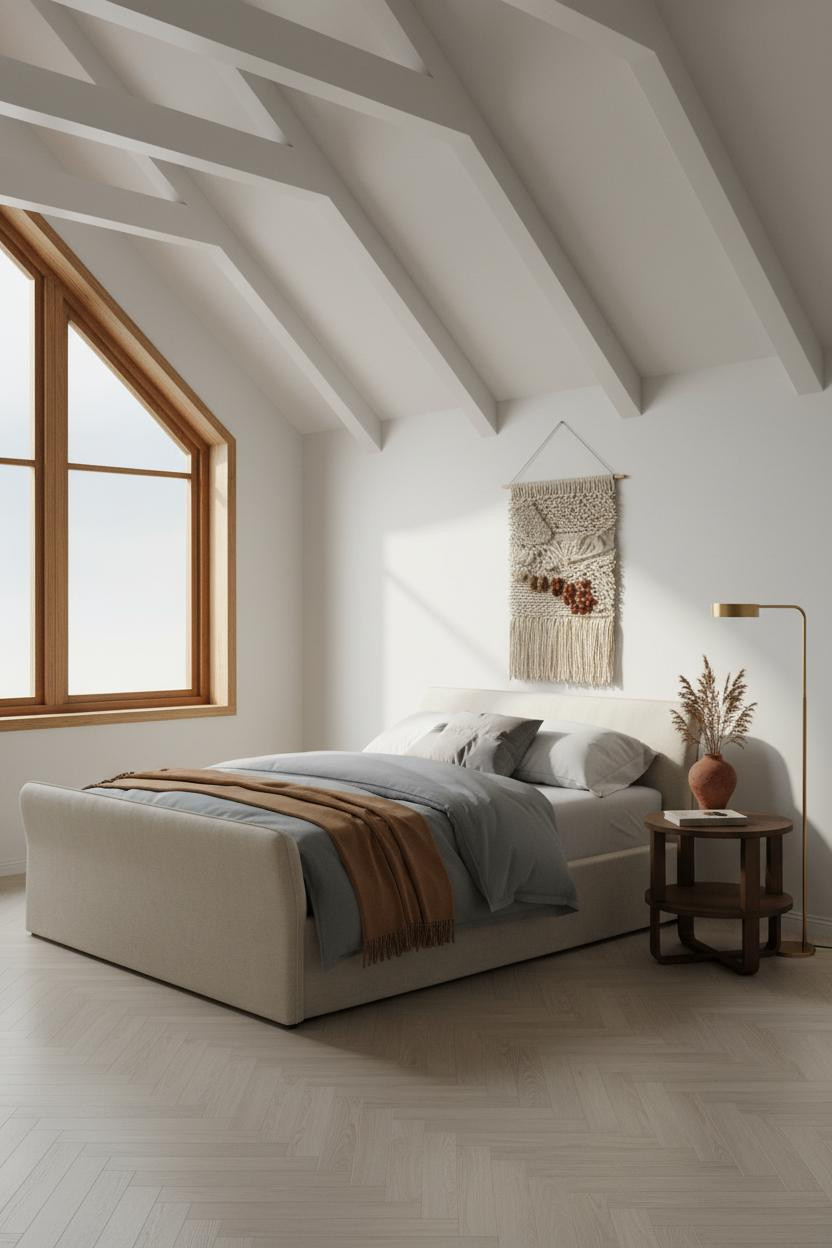
Early morning in an attic with white-painted beams and bleached oak herringbone parquet. The room feels lived-in and intimate in a way that bright midday light would actually ruin.
Why it feels intentional: White beams against soft white walls keep the structural overhead from darkening the room, while the slate jersey duvet and camel wool throw pull just enough warmth back in from the floor. See more neutral bedroom decor ideas if you want to push this direction further.
The detail to keep: An oversized woven wall hanging above the bed. It adds the one layer of texture the white walls can't provide, while still feeling more collected than decorated.

Our #1 Pick
Saatva Classic Mattress
America's best-selling online luxury innerspring. 365-night trial, lifetime warranty, free white glove delivery.
Shop Saatva Classic
The Foundation Of Every Beautiful Bedroom
Walls get repainted. The green bed frame gets swapped eventually. But the mattress stays for years, and it shapes how every morning in that carefully designed room actually feels. It's worth getting that part right.
The Saatva Classic is what I'd put under any of these beds. Dual-coil support that holds its shape over time, breathable organic cotton that doesn't trap heat in a warm attic space, and a Euro pillow top that's genuinely soft without going mushy. The kind of mattress you stop thinking about because it just works.

These dark earthy bedroom instincts translate directly into green frame rooms: commit to the color, trust the architecture, and start with what you sleep on. Good design ages well because it's made well.