
 by
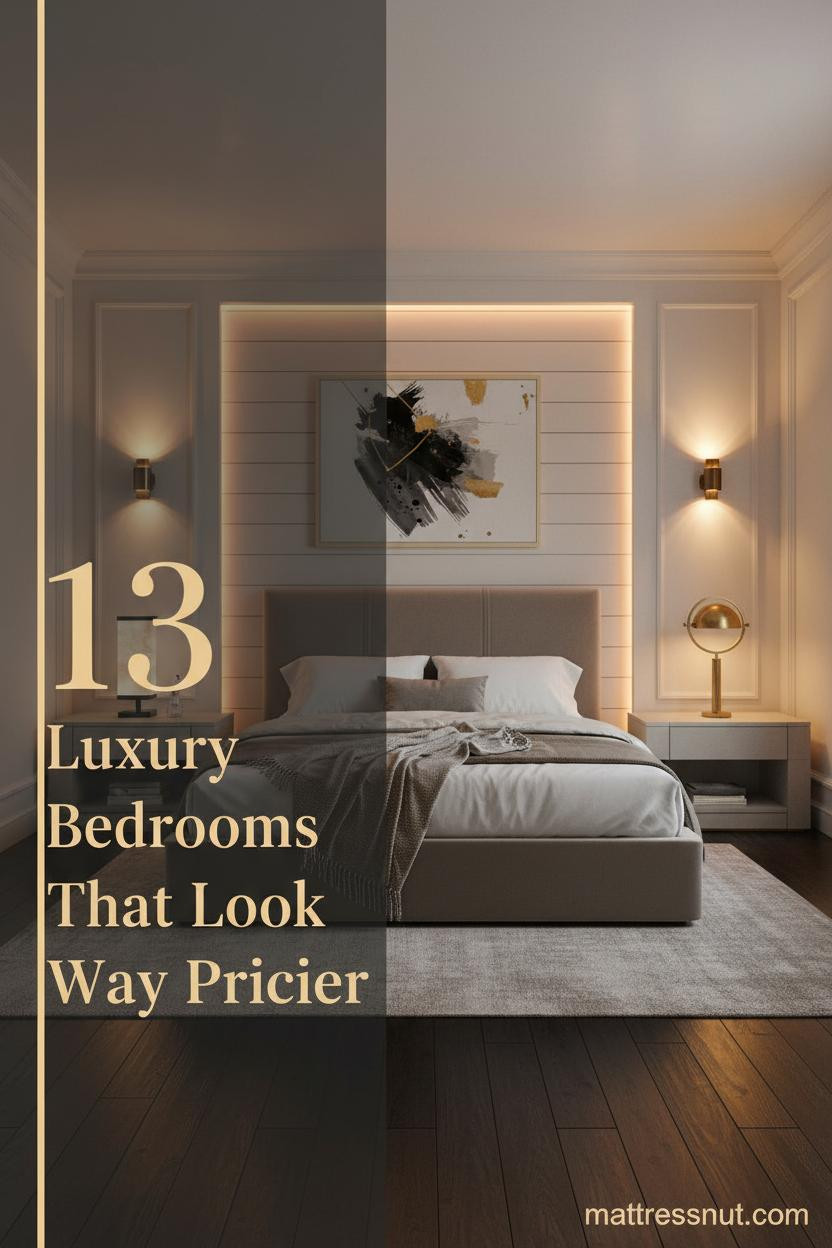
by The first thing you notice in the best fancy bedroom luxury rooms is what's not there. No clutter. No trying too hard. Just materials, light, and proportion doing the work.
These 13 master suites prove that quiet restraint hits harder than anything loud. I keep coming back to them for exactly that reason.
The Walnut Wall That Changes Everything
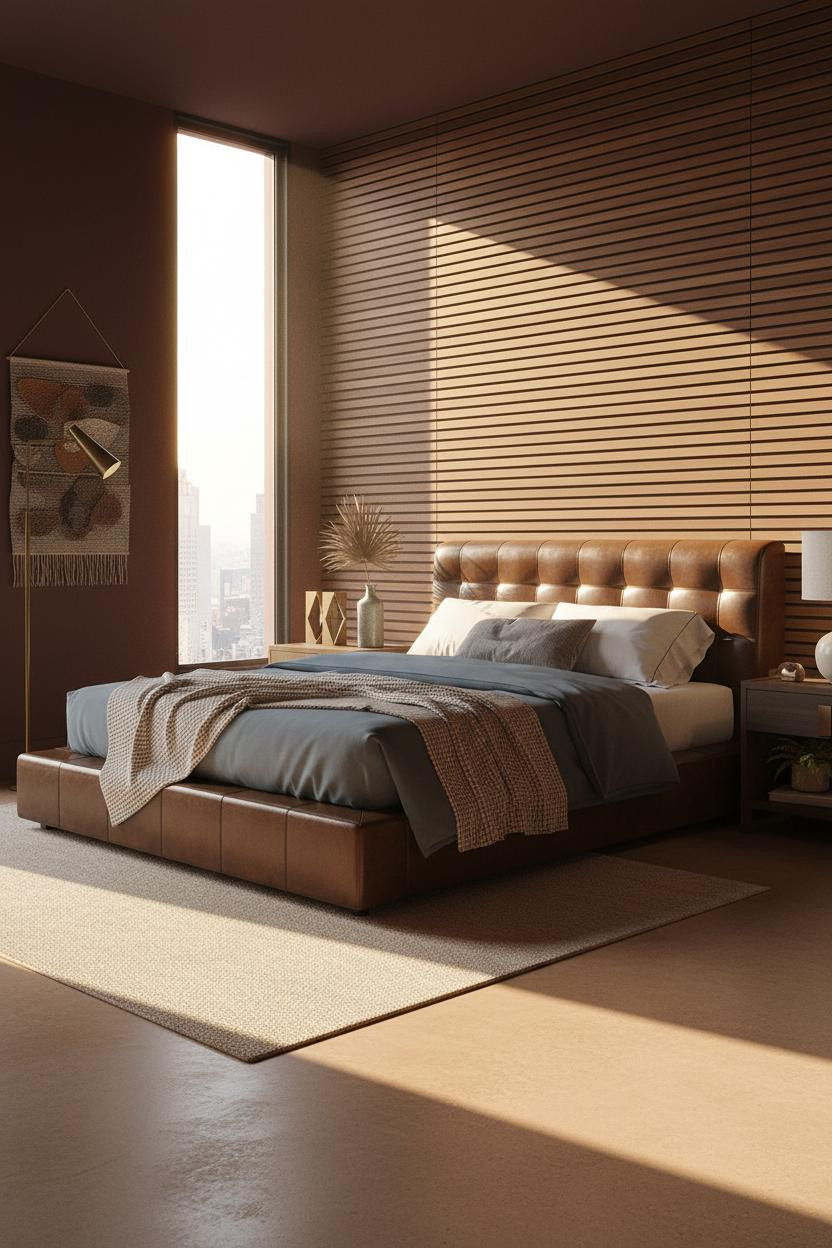

This is the kind of room that makes you want to slow down the moment you walk in.
Why it holds together: Full-height horizontal slatted walnut spanning the entire headboard wall gives the room a rhythm that paint simply can't replicate. Each slat casts its own shadow line, so the texture reads from across the room.
Steal this move: Pair the warm amber grain with a bed frame in a complementary dark tone and let the wall do the visual lifting.
Travertine That Earns Its Place
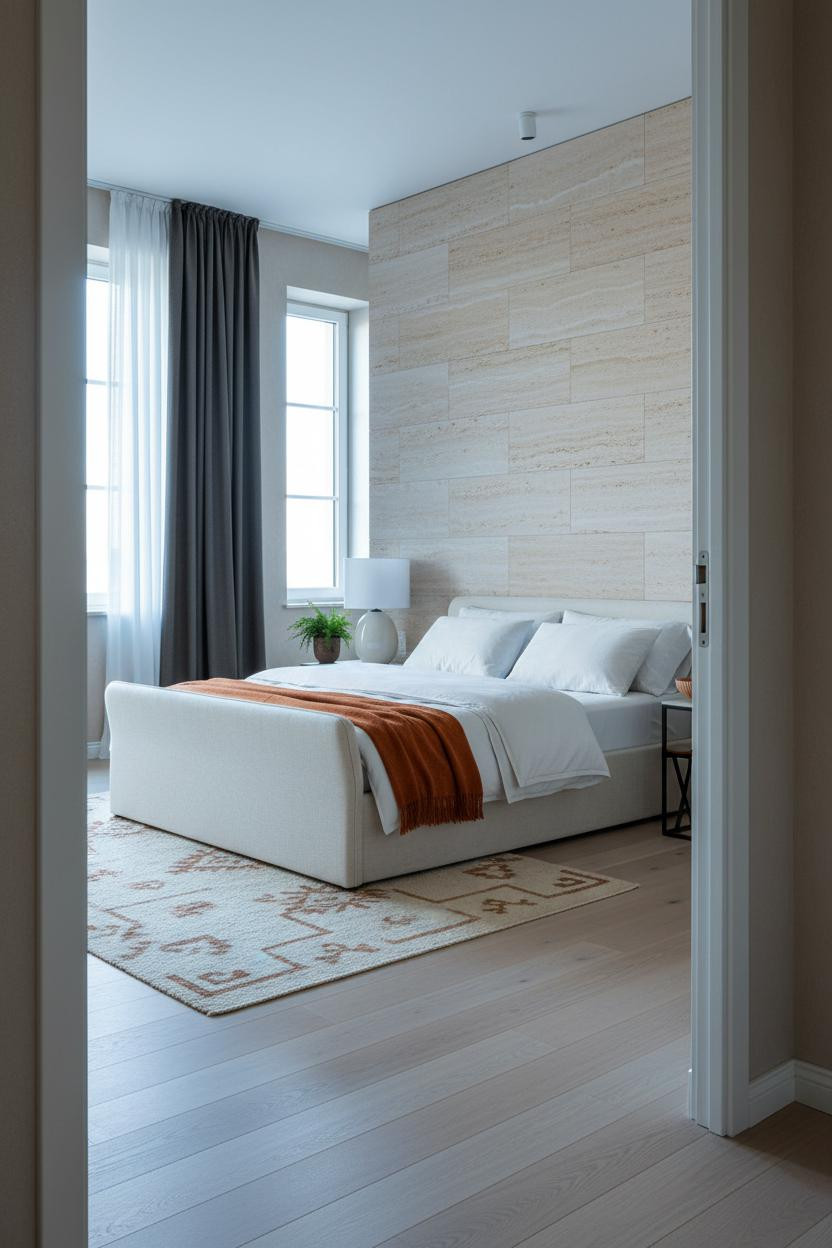


Monumental. But somehow it doesn't feel heavy.
The reason it feels expensive instead of cold is the hand-cut travertine itself. Each horizontal course has slightly different veining, which gives the wall life that polished stone never would. And the pale birch flooring keeps things from tipping too serious.
The smarter choice: Keep the flanking walls in soft matte plaster so the stone reads as a moment, not wallpaper.
Dark Ceilings Are Not as Risky as You Think
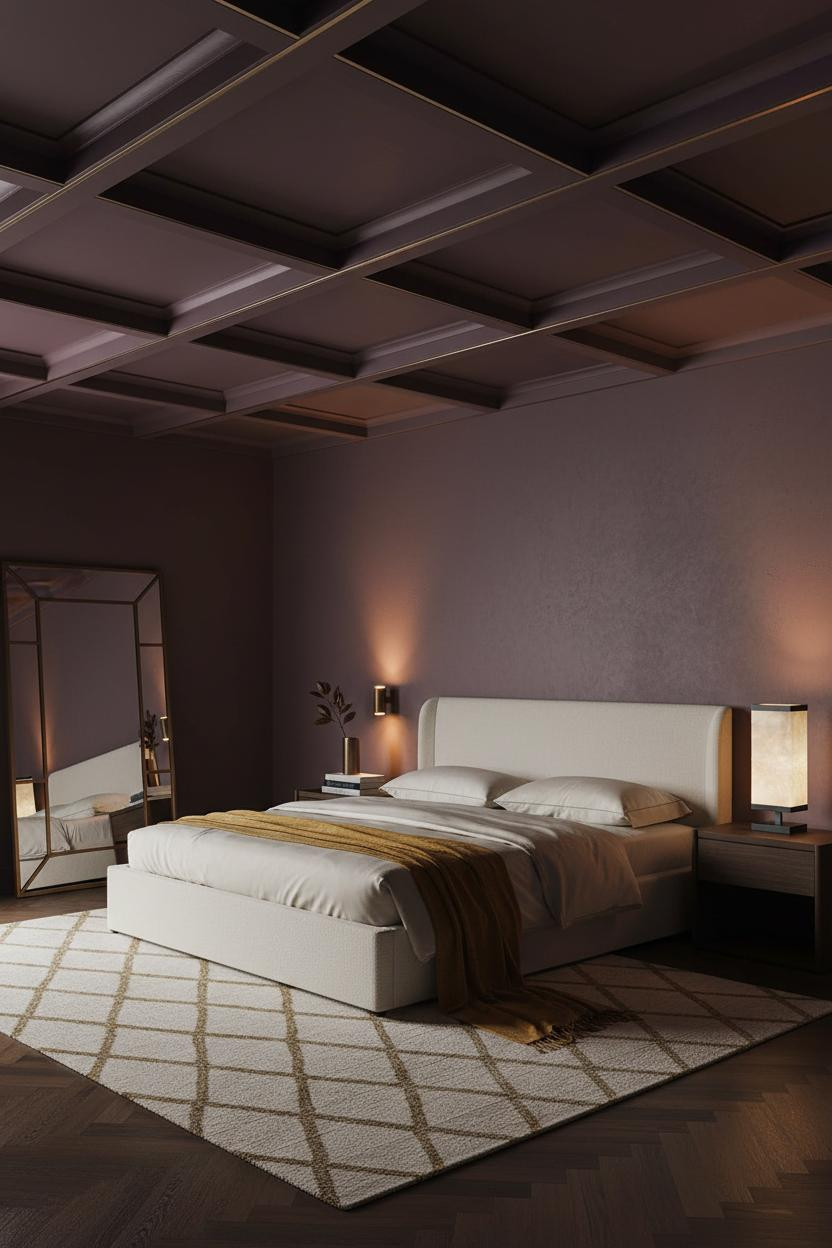

Bold choice. Not for everyone. But the rooms that go there never look timid.
And here's why it actually works: a deep plum lacquer coffered ceiling edged in brushed bronze trim multiplies the warm lamp light geometrically, so the room feels layered instead of just dark.
Avoid this mistake: Don't try this with cool-toned overhead lighting. Warm pools only, or the plum reads purple and flat.
Worth copying: The ebonized walnut herringbone floor keeps the drama grounded without competing with the ceiling.
Indigo Walls With Steel Windows Feel Like a Hotel You Can't Afford
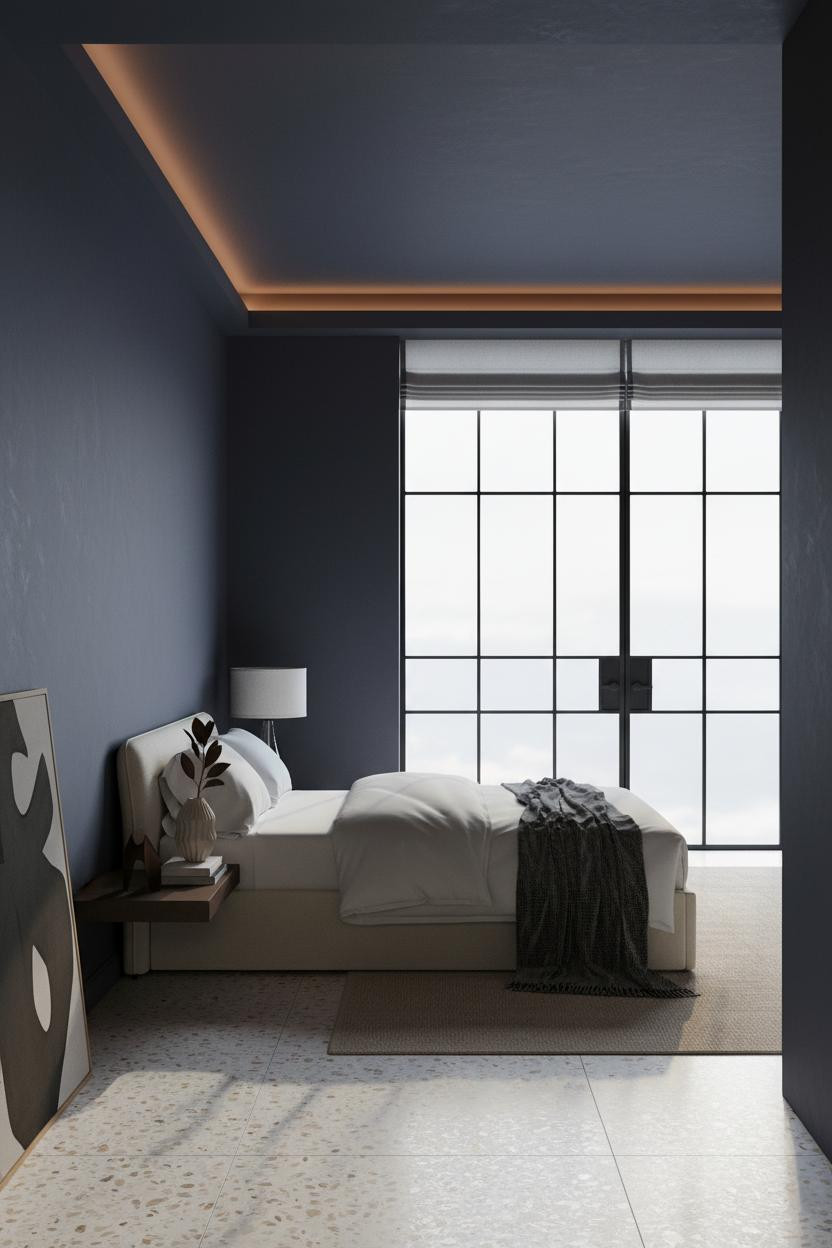

I've seen a lot of dark bedroom attempts. Most feel like a cave. This one feels commanding.
What makes it different: The Crittall-style steel window grid carves the pale daylight into graphic geometry, which gives the deep indigo plaster walls something to contrast against. Remove those windows and the room collapses.
The pale terrazzo tile underfoot keeps the base light, in a way that feels intentional rather than accidental. The easy win: Pair dark walls with one very light floor material and the balance arrives on its own.
A Curved Plaster Alcove You Can Actually Replicate
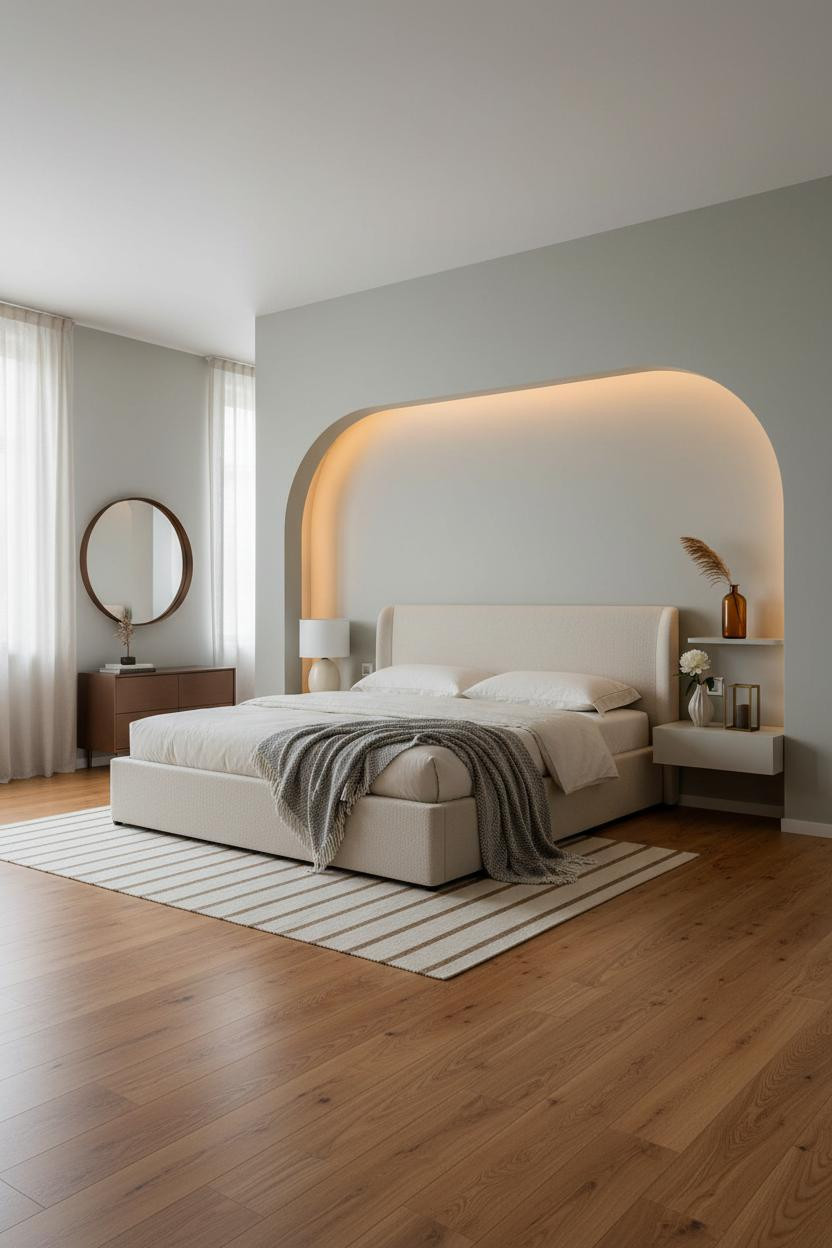
Nothing fancy. That's actually the whole point.
Why it feels custom: A floor-to-ceiling curved plaster alcove in muted sage-ivory wraps the headboard zone and makes the bed feel like it was always meant to sit exactly there. The inner radius catches recessed warm light in a way flat walls never could.
Pro move: Commission the alcove in smooth matte plaster, not paint. The difference in texture is immediate.
Slatted Oak Paneling For a Room That Feels Like a Resort
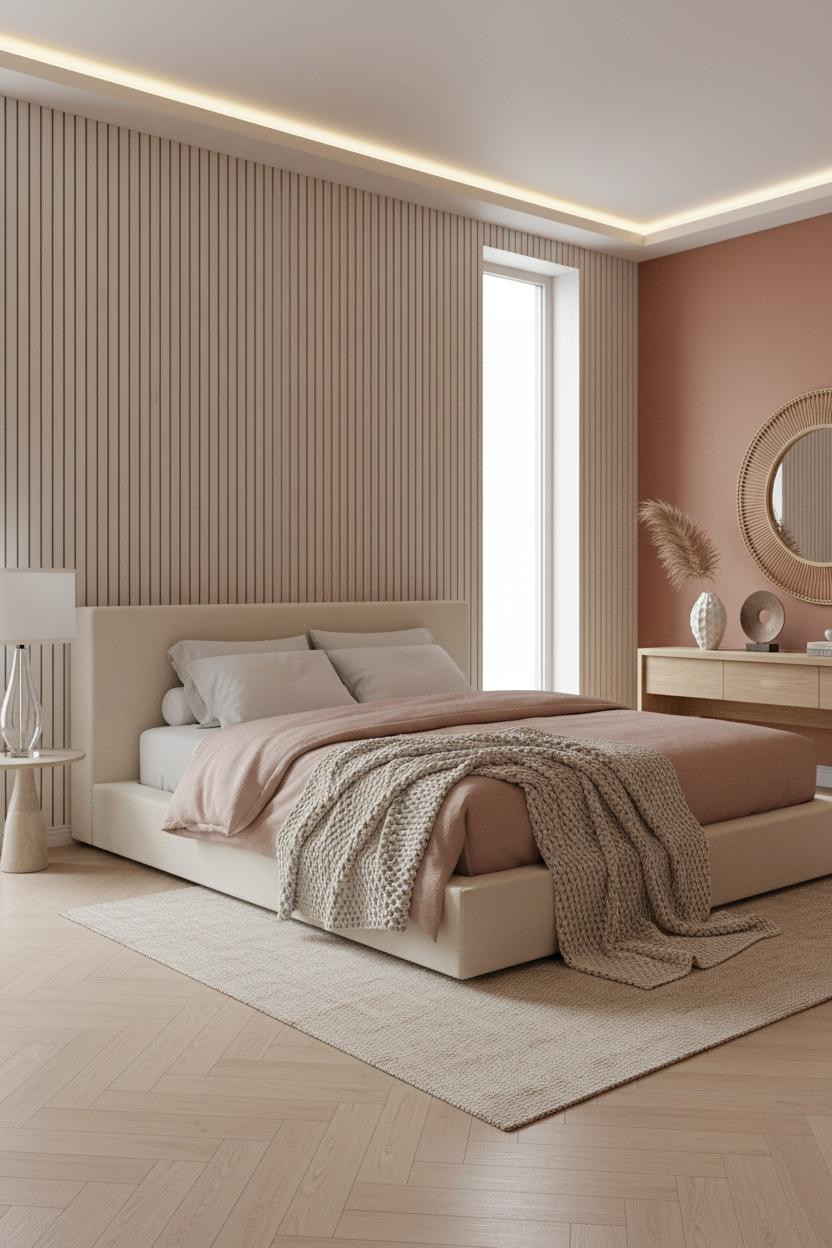
This one surprised me. It reads coastal but it's genuinely sophisticated.
The vertical slatted oak paneling on the full headboard wall creates rhythmic shadow lines that give the room texture without a single additional accessory. And the warm terracotta plaster on flanking walls stops it from reading too cool or beachy.
What not to do: Don't use a busy rug here. The paneling is already doing enough. A flat-weave neutral keeps the room from competing with itself.
Warm Plaster and Wainscoting: The Quiet Luxury Formula
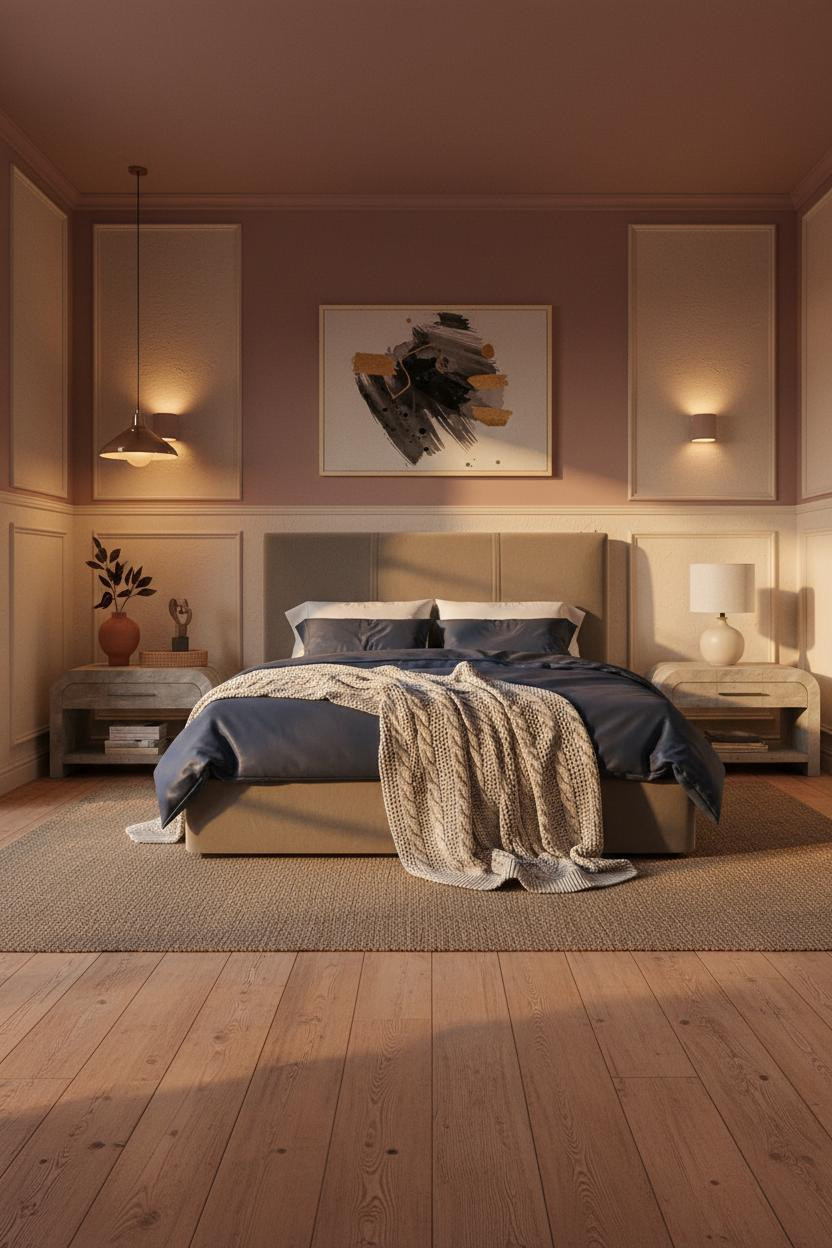

I'm a two-tone-wall kind of person. And this room is why.
The real strength: Hand-applied warm ivory plaster wainscoting below, deep dusty rose matte above. The rail between them casts a clean architectural shadow that makes the walls look built rather than painted. It's a small detail that changes the whole register of the room.
Pair it with reclaimed wood flooring and a jute rug. Nothing too precious. That restraint is what keeps it feeling lived-in and grand at the same time.
Built-In Shelving That Does More Than Store Things
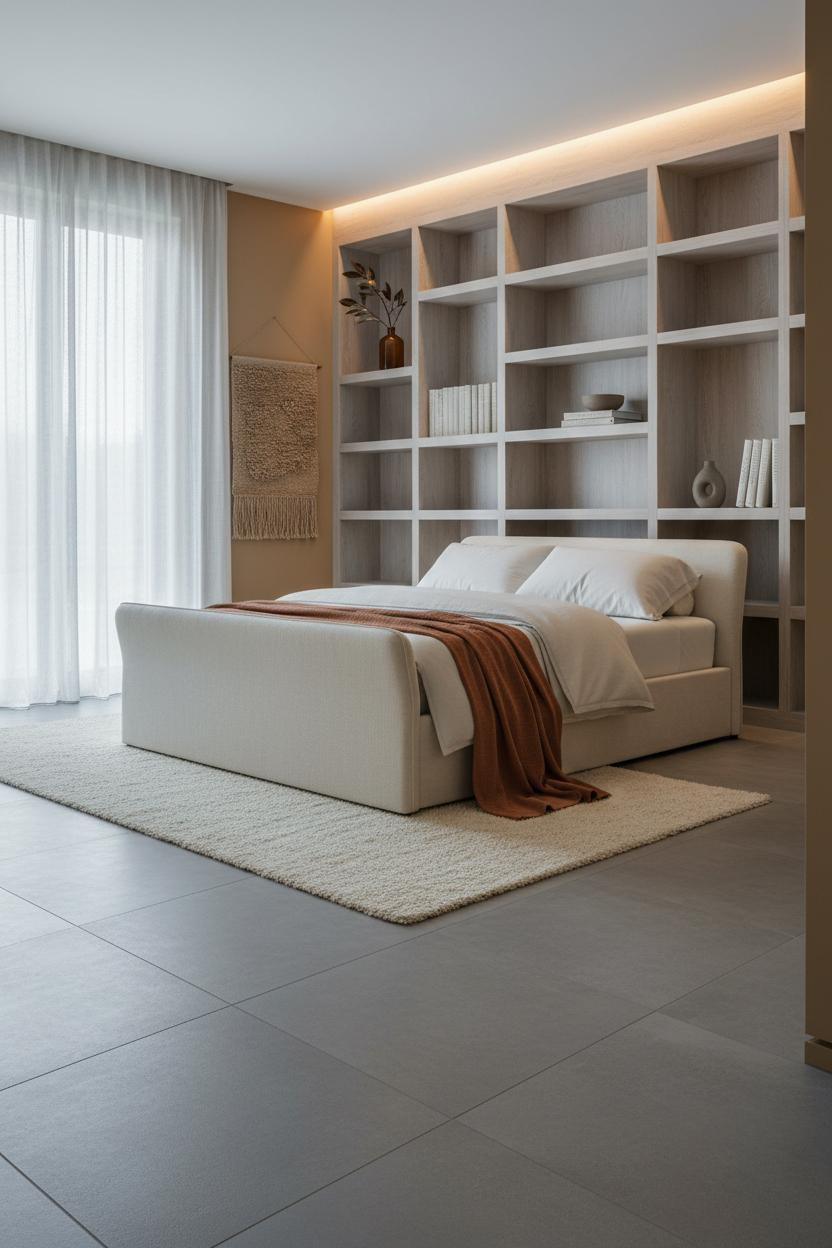
Having a full built-in shelf wall behind the bed changes how you actually use the room. Suddenly there's a place for everything, and the room feels considered instead of improvised.
What carries the look: The shelf is crafted in raw linen-white oak with open compartments of varying heights. That asymmetry keeps it from feeling like furniture store display shelving, while still feeling organized.
Where to start: Style the shelves with matte clay, amber glass, and a single dried stem. Three materials. Not four.
The Arched Alcove Niche Worth Committing To
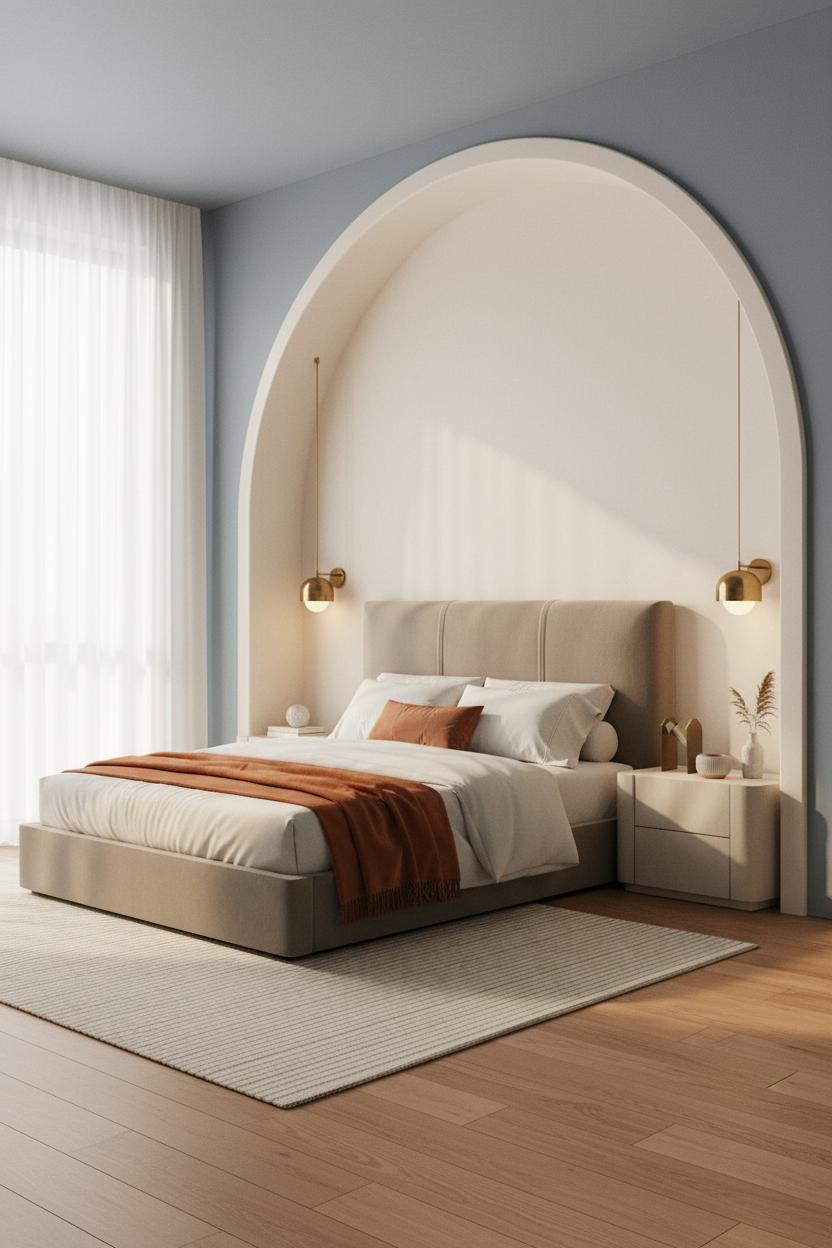
I almost scrolled past this. Glad I didn't.
Why it looks custom: A floor-to-ceiling arched niche in smooth ivory matte plaster frames the headboard zone so completely that the bed looks almost like it belongs inside architecture, not just in front of it. The slate blue-grey walls flanking it keep the palette from going too soft. And the warm honey maple floor ties both tones together without forcing it.
Forest Green Board-and-Batten: The Commitment That Pays Off
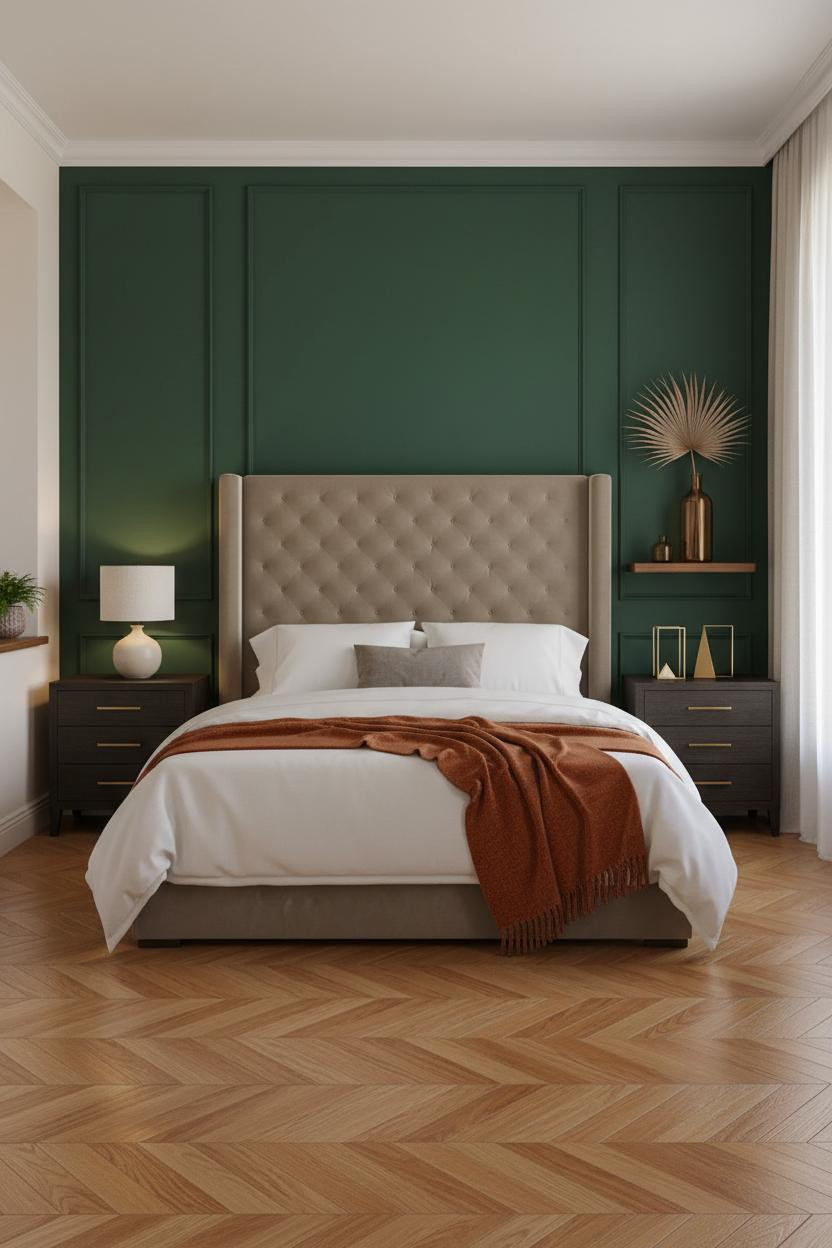

Fair warning. This one is divisive. But the people who go for it never look back.
Why the palette works: Deep forest green board-and-batten against warm ivory plaster flanking walls creates a contrast that feels intentional without reading aggressive. The vertical battens add just enough surface rhythm to make the wall feel architectural rather than just dark.
Burnt orange in the bedding is not an obvious choice here. But it grounds the green in a way that cool-toned linens never would. The detail to keep: Brushed brass accents on the nightstand, nothing chrome.
Backlit Lacquer Panels That Feel Like Understated Milan
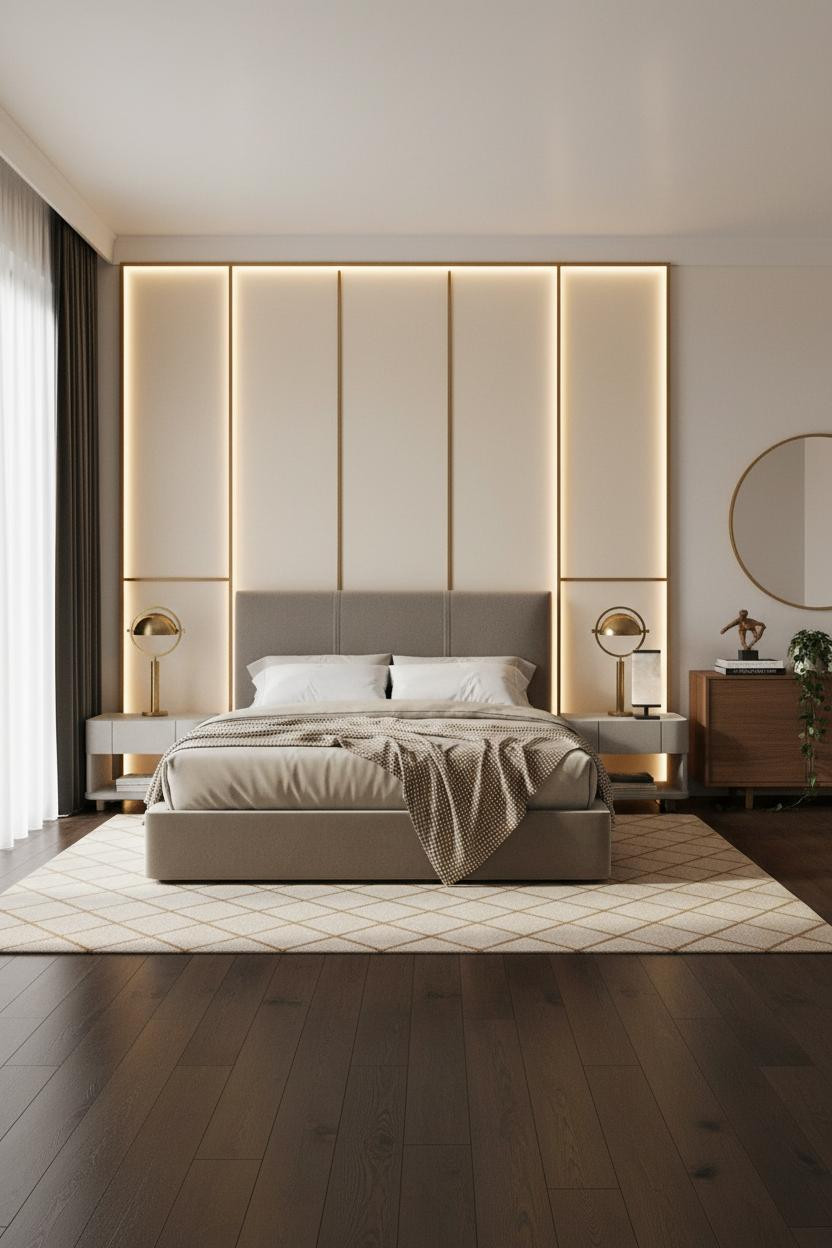
This is the kind of room that reads restrained until you look closely. Then you realize how much went into the details.
Where the luxury comes from: Ivory lacquered panels with recessed LED coves tracing each seam make the wall glow rather than just sit there. The effect is subtle. But you feel it the moment you walk in. Pair with dark stained narrow-plank flooring to keep the base grounded.
The finishing layer: A Moroccan diamond-pattern rug in ivory and warm sand anchors the bed zone without pulling focus from the wall. That layering is how the most sophisticated master suites stay cohesive.
Japandi Mushroom Plaster With Brass Sconces: Quietly Brilliant
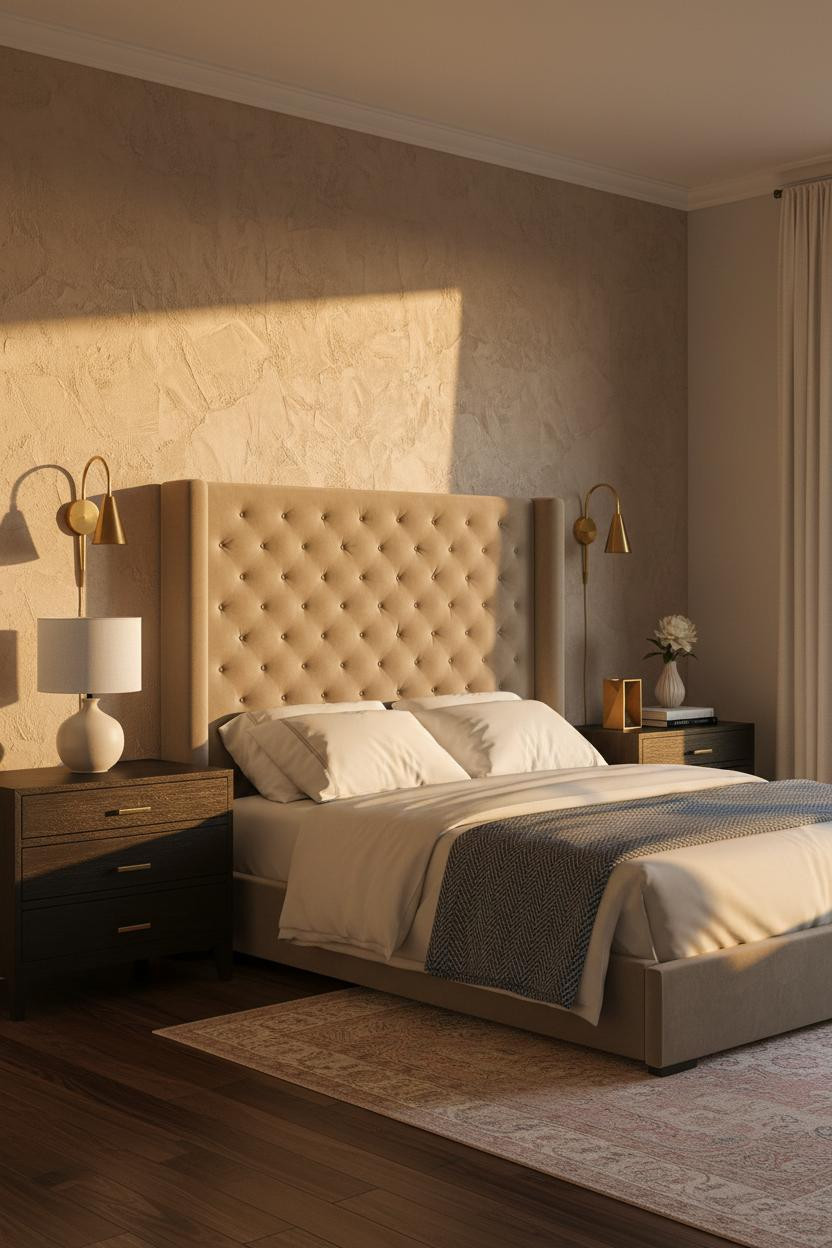
Honestly, this is my favorite in the whole collection.
What gives it presence: Hand-applied mushroom plaster with visible trowel marks catches the late afternoon light differently depending on the hour. It's a living surface. And the paired brushed brass sconces throwing upward arcs onto the textured wall make it feel warm without trying.
One smart swap: Ditch the overhead fixture entirely and commit to sconce pairs flanking the headboard. The room feels calm and cohesive in a way ceiling lights rarely allow.
Floor-to-Ceiling Windows Make the Room Do Less Work
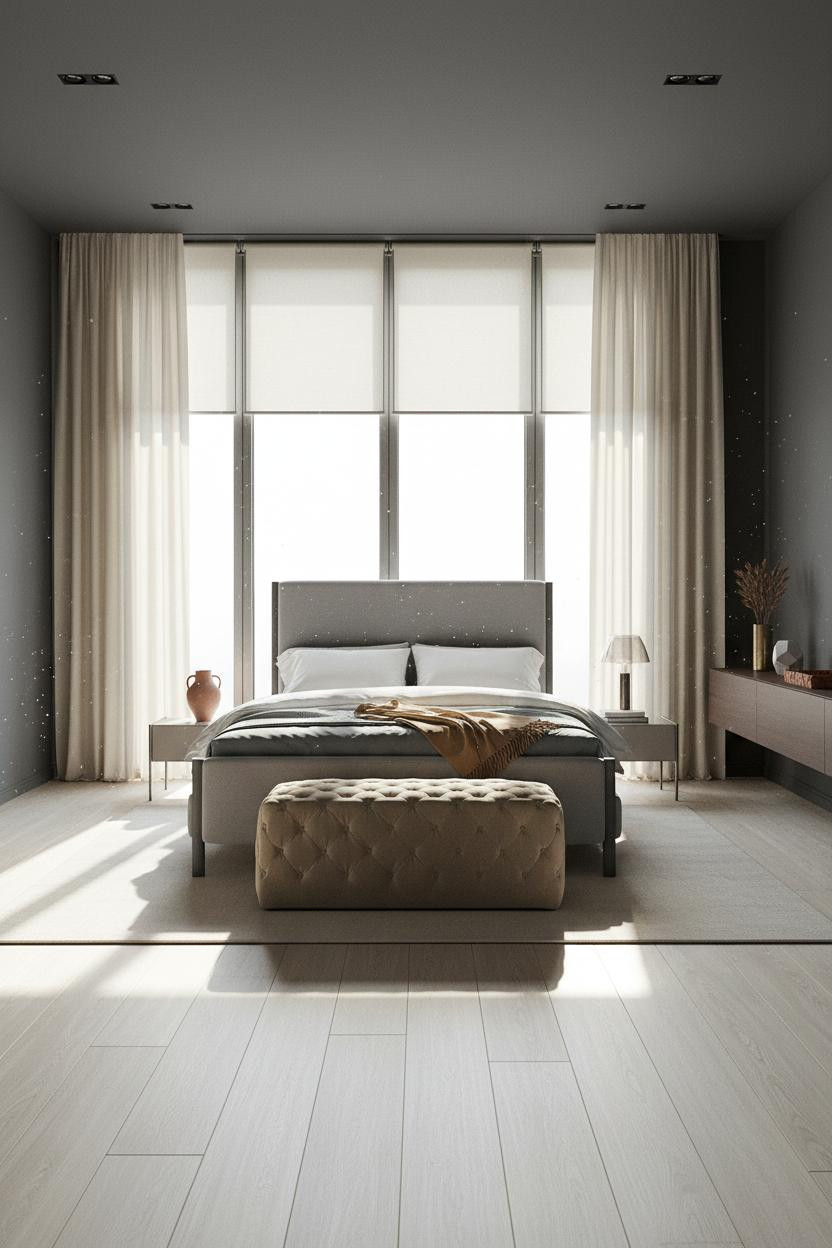
When you have floor-to-ceiling brushed steel windows spanning the full wall, the architecture becomes the decor. Everything else just needs to stay out of the way.
What sharpens the room: Deep charcoal smooth plaster on the walls creates enough contrast that the bright northern light reads as dramatic rather than flat. The bleached pale oak flooring stops the charcoal from feeling heavy, while still feeling grounded. This proportion strategy is what separates hotel-level design from everything else.
Skip this: Don't layer too many textiles here. The room breathes because it isn't trying to fill the space. Let it.

Our #1 Pick
Saatva Classic Mattress
America's best-selling online luxury innerspring. 365-night trial, lifetime warranty, free white glove delivery.
Shop Saatva Classic
The Foundation Of Every Beautiful Bedroom
Walls get repainted. Linen gets swapped. The headboard gets replaced eventually. But the mattress stays. And honestly, no amount of fancy bedroom luxury decor covers for a bad night of sleep.
The Saatva Classic is what I'd put under every single one of these rooms. Dual-coil support that holds without going stiff, a breathable organic cotton cover that doesn't trap heat, and a Euro pillow top that still feels right years in. Not the business hotel kind. The good kind.
Good design ages well because it's made well. Start with the mattress and let the rest follow.

The rooms people save are the ones where nothing feels accidental. And that starts before the decor, with what you're actually sleeping on.