
 by
by Our #1 Recommended Mattress
Saatva Classic. From $1,095
365-night trial · Lifetime warranty · Free white-glove delivery
We earn a commission if you make a purchase through our links, at no extra cost to you. Full disclosure.
Pocket doors used to scream “contractor special.” Now they’re everywhere, and the good ones actually earn their square footage. Here’s what’s working right now.
The Brass-Framed French Door Move Everyone’s Copying
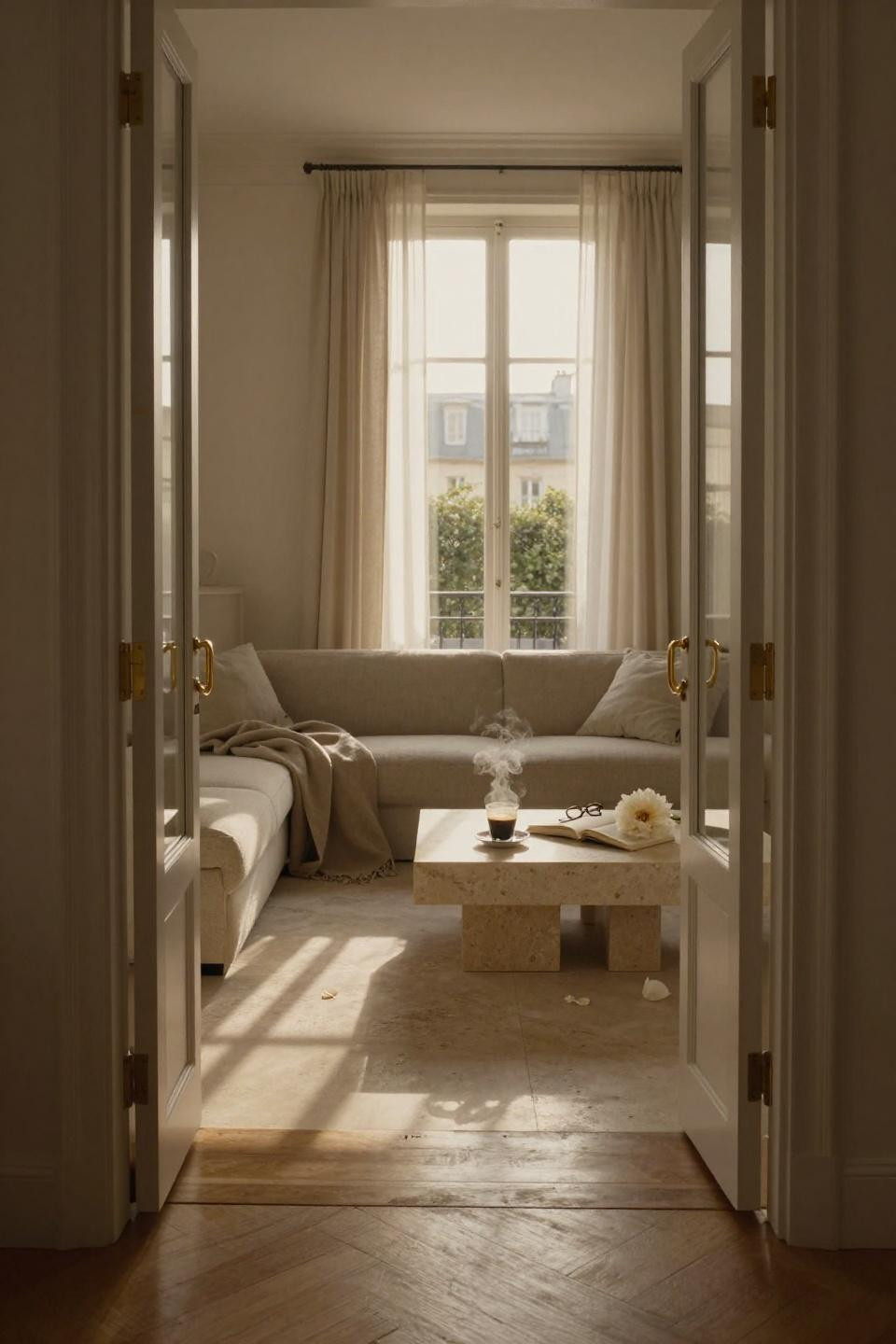
Unlacquered brass on pocket French doors. That’s it. That’s the entire move. The divided lights create architectural weight without blocking sightlines, and the brass handles develop patina that reads expensive in any light. Works best when the doors actually disappear into the wall - no half-measures with those surface-mount tracks. The key is proportion. Too many divided lights and it reads cluttered. This setup with 6-8 panes per door hits the sweet spot. Pair with warm white walls and let the brass do all the talking.
Reclaimed Oak With Zero Apologies
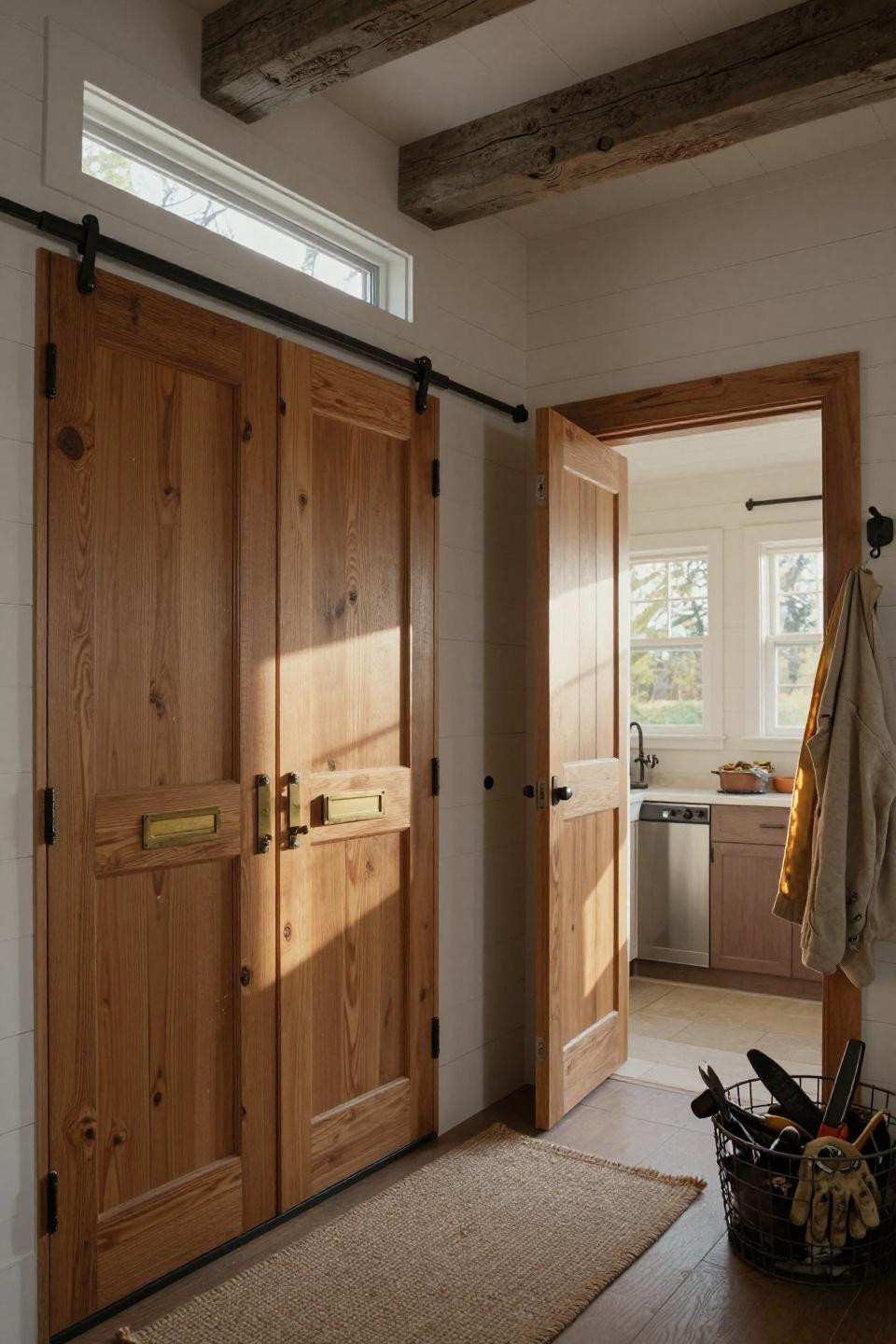
Reclaimed honey oak with visible grain and hand-planed texture. The rough-hewn surface catches light differently than smooth millwork - creates actual depth instead of flat Ikea vibes. This setup pairs it with blackened steel hardware, which grounds the rustic warmth. The trick is keeping surrounding walls simple. Whitewashed shiplap works because it doesn’t compete. Skip the distressing though. Real reclaimed wood already has the story built in. One friend installed a version of this between her kitchen and dining room. Gets compliments literally every time someone walks through.
When Mirror-Polished Brass Makes Sense
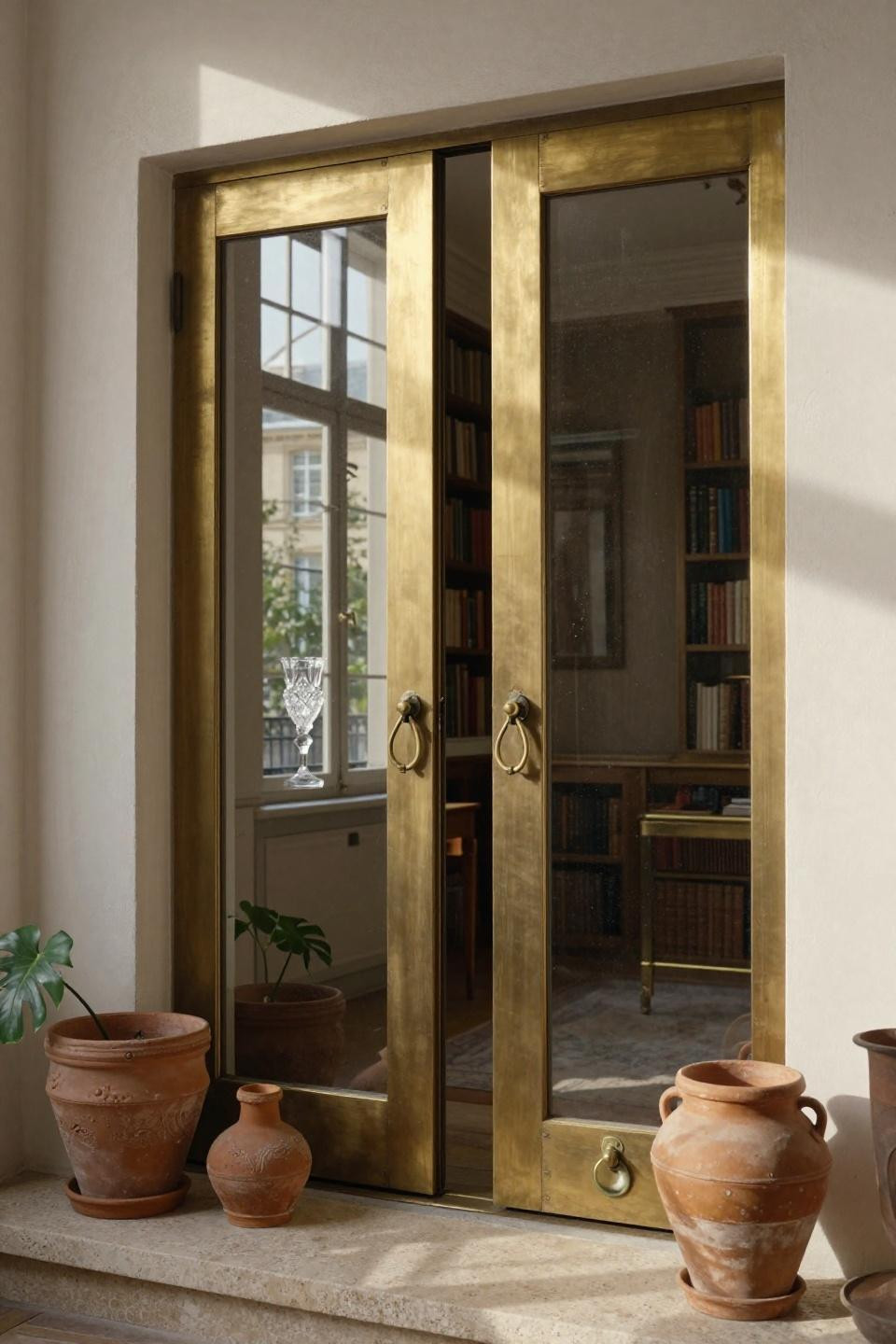
Floor-to-ceiling brass with mirror panels. Risky move that works when you commit fully. The reflection doubles the light in adjacent spaces without feeling like a gym. Here’s the thing - this only lands if your walls can handle the competition. Limewashed plaster in warm white creates enough texture to hold its own against all that shine. The aged brass frames prevent it from reading too slick. Plus the mirror surface shows fingerprints, which oddly makes it feel more lived-in. Not for everyone, but when it works, it really works.
The Flush Panel Trick Nobody Talks About
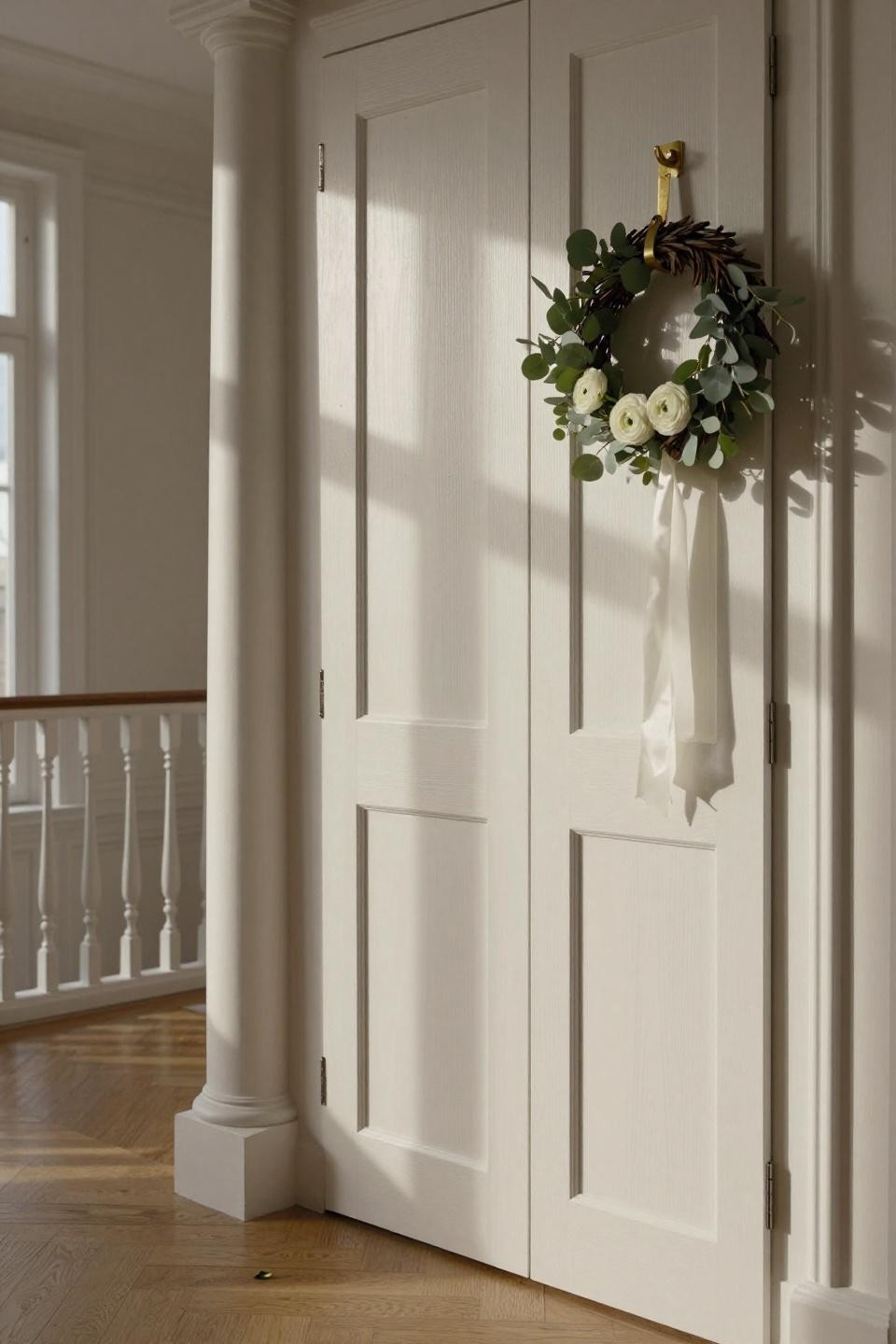
White oak paneling where the door completely disappears into the wall pattern. The vertical grooves continue across the door surface, making the whole thing invisible until you need it. Best for spaces where you want architectural mystery - you literally can’t tell there’s a door until someone opens it. The brushed brass lock plate is the only tell. This works because the door becomes part of the wall system instead of fighting it. Saw a version of this in a West Elm catalog that used their modern millwork line. Not cheap, but the effect is worth it if you’re doing a full renovation.
Frosted Glass That Doesn’t Look Medical
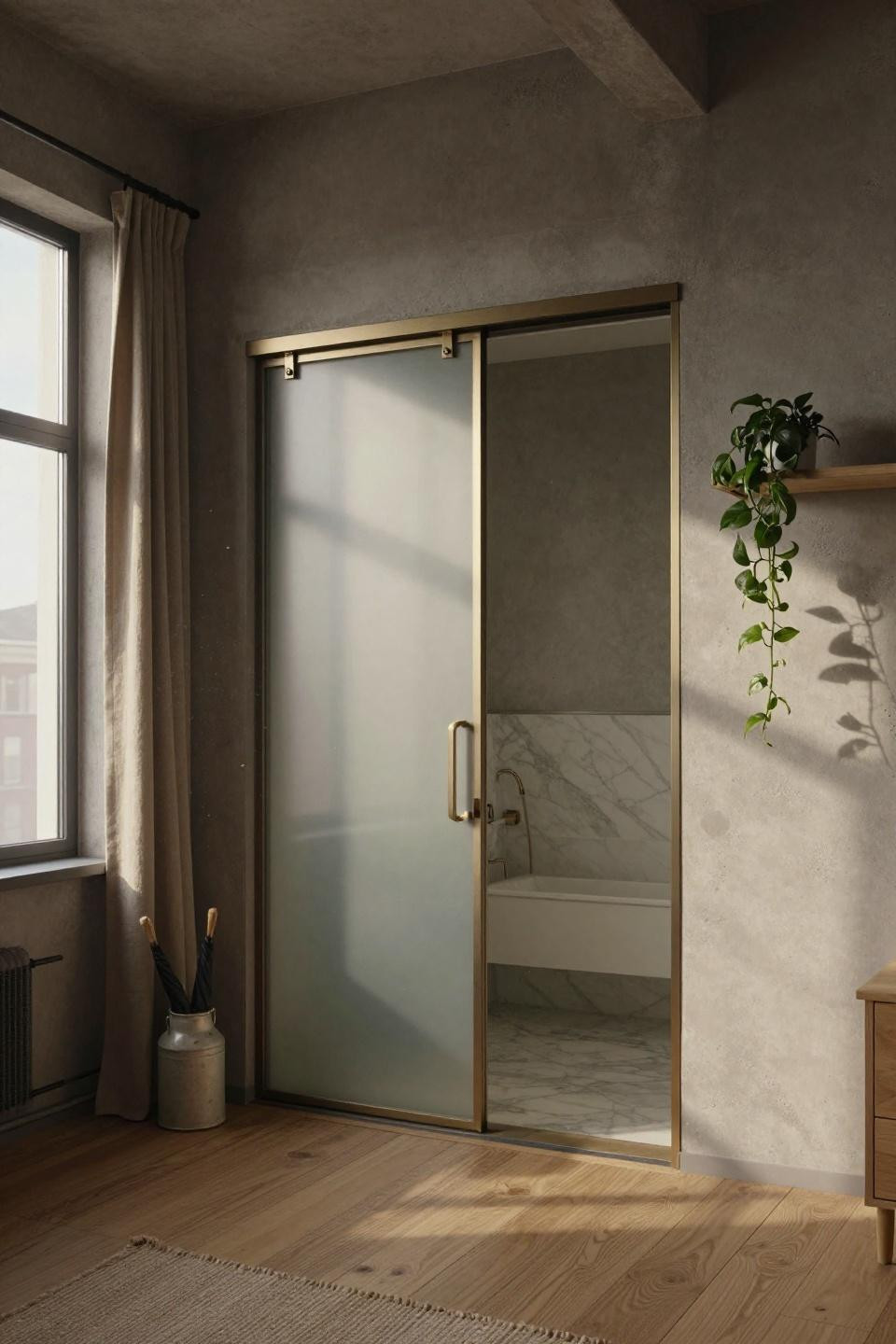
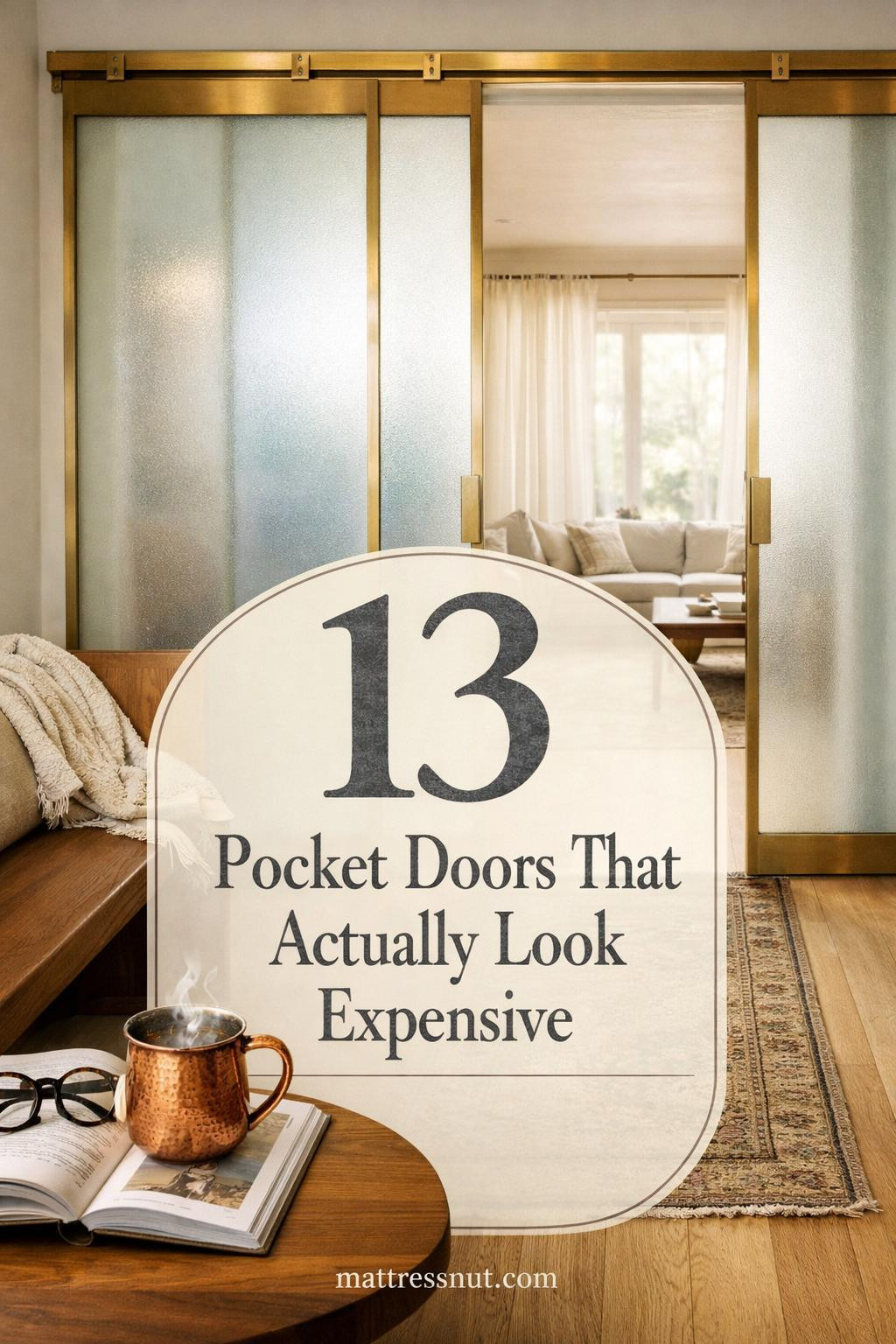
Frosted glass with brushed unlacquered brass hardware. The translucent panels let light through without the fishbowl effect, and the warm brass keeps it residential instead of corporate. This setup shows one door halfway retracted, which is actually how these live most of the time. The honey oak flooring grounds the cooler glass tones. Works great between bathrooms and bedrooms where you need privacy plus flexibility. The track mechanism integrated into the ceiling beam is key - exposed hardware here would kill the clean lines. CB2 has a similar system for about half what custom costs.
Beveled Glass In Actual Craftsman Style
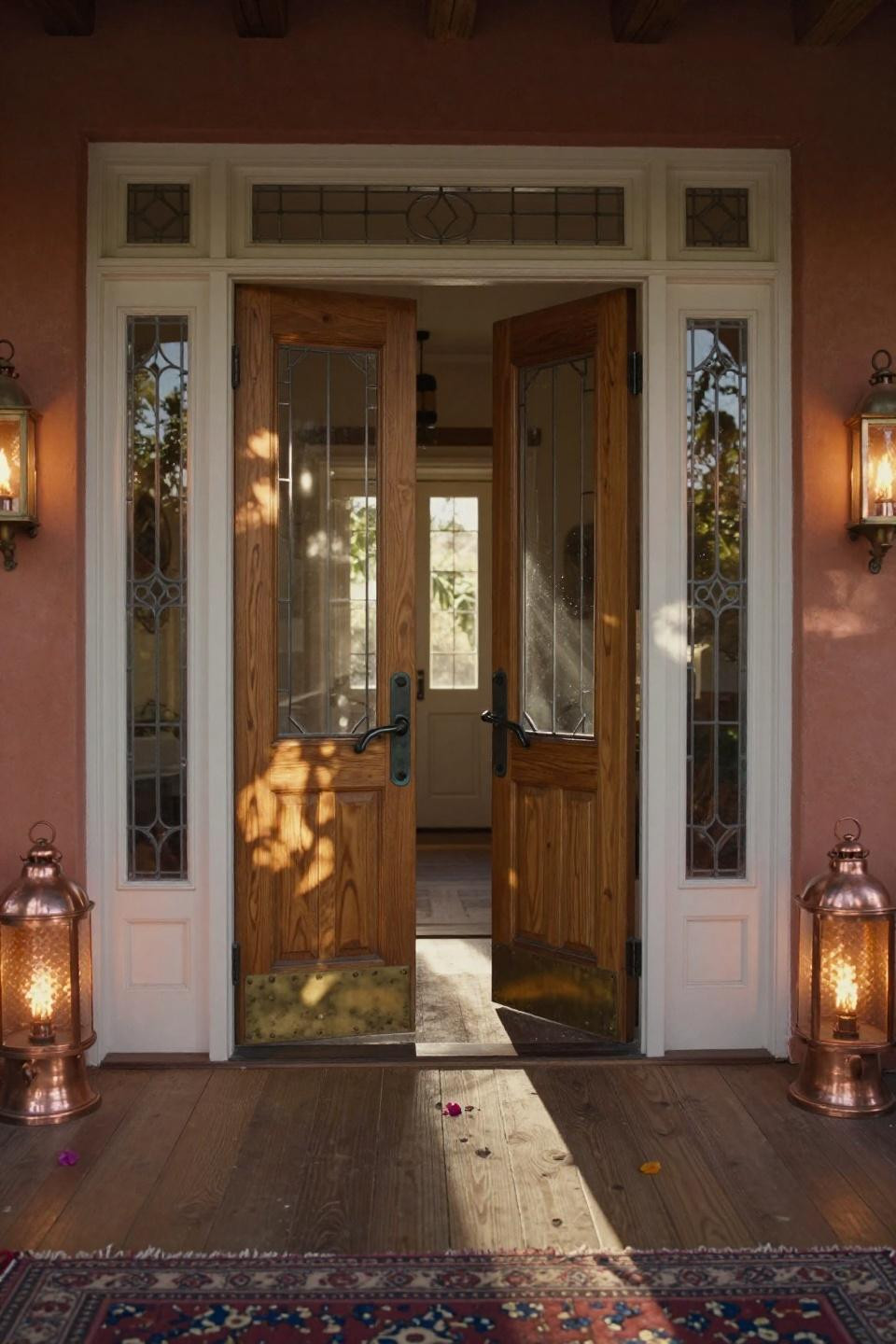
Quartersawn white oak with beveled glass sidelights and hand-forged copper hardware. This is how you do period-appropriate pocket doors without feeling like a museum. The copper patina develops naturally to deep bronze with verdigris accents - way more interesting than stock brass. The beveled glass catches light at multiple angles, creating subtle caustics across the floor. Flanking copper gas lanterns push it over the edge into statement territory. Honestly, if you’re restoring anything Arts and Crafts era, this is the move. Modern alternatives look wrong. The mortise and tenon joinery here is what sells the authenticity.
Steel Frames With Actual Transparency
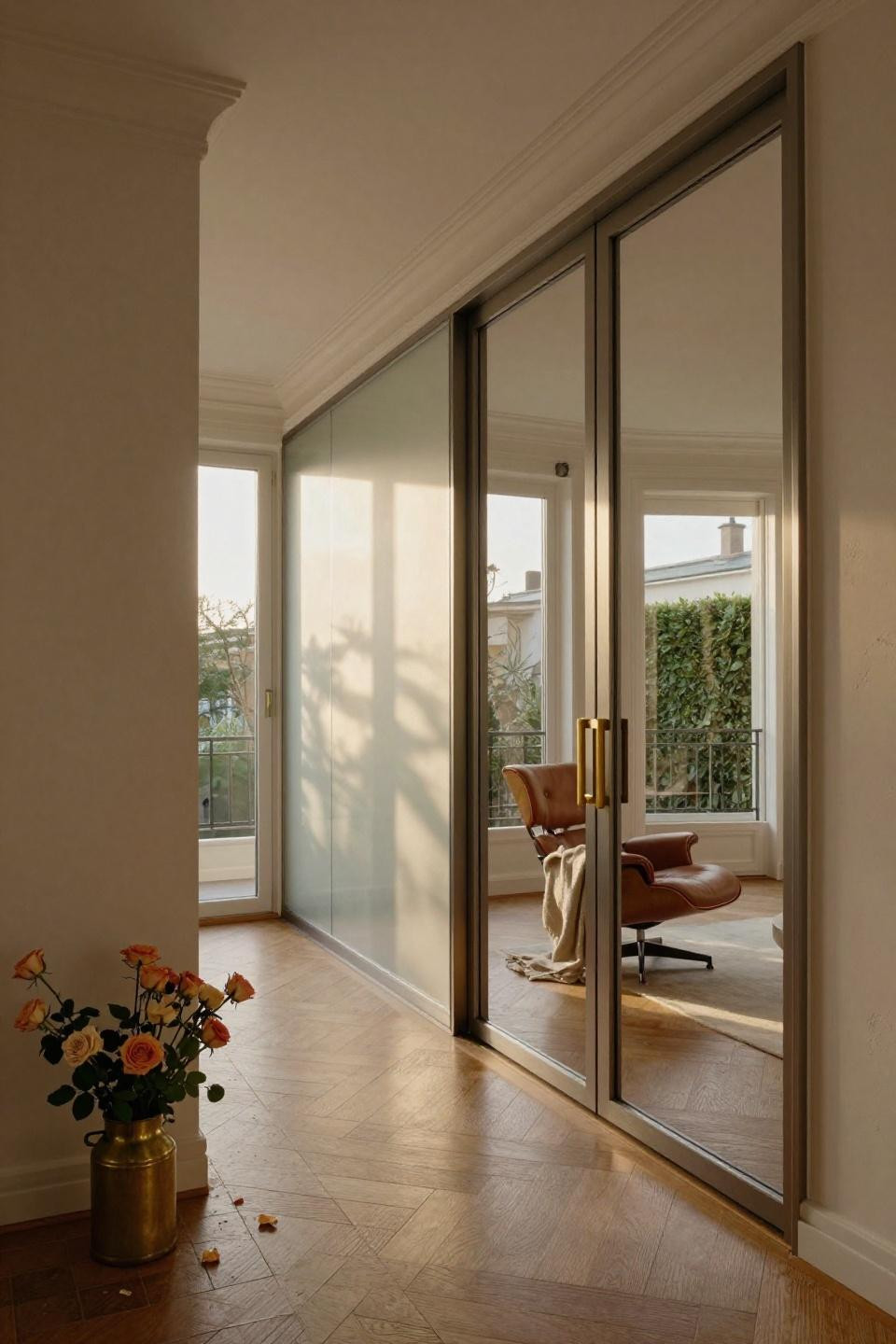
Floor-to-ceiling glass in slim unlacquered brass frames. The transparency creates layered depth through multiple rooms while maintaining separation when needed. These work because the frames are thin enough to disappear but substantial enough to feel intentional. The invisible ceiling tracks are critical - surface-mount hardware would ruin the floating effect. This setup connects a hallway to a living room, which is smarter than most people think. Keeps sightlines open but lets you close off spaces for noise control. Rejuvenation has a version that’s more accessible than full custom.
Smoked Bronze That Reads Jewelry
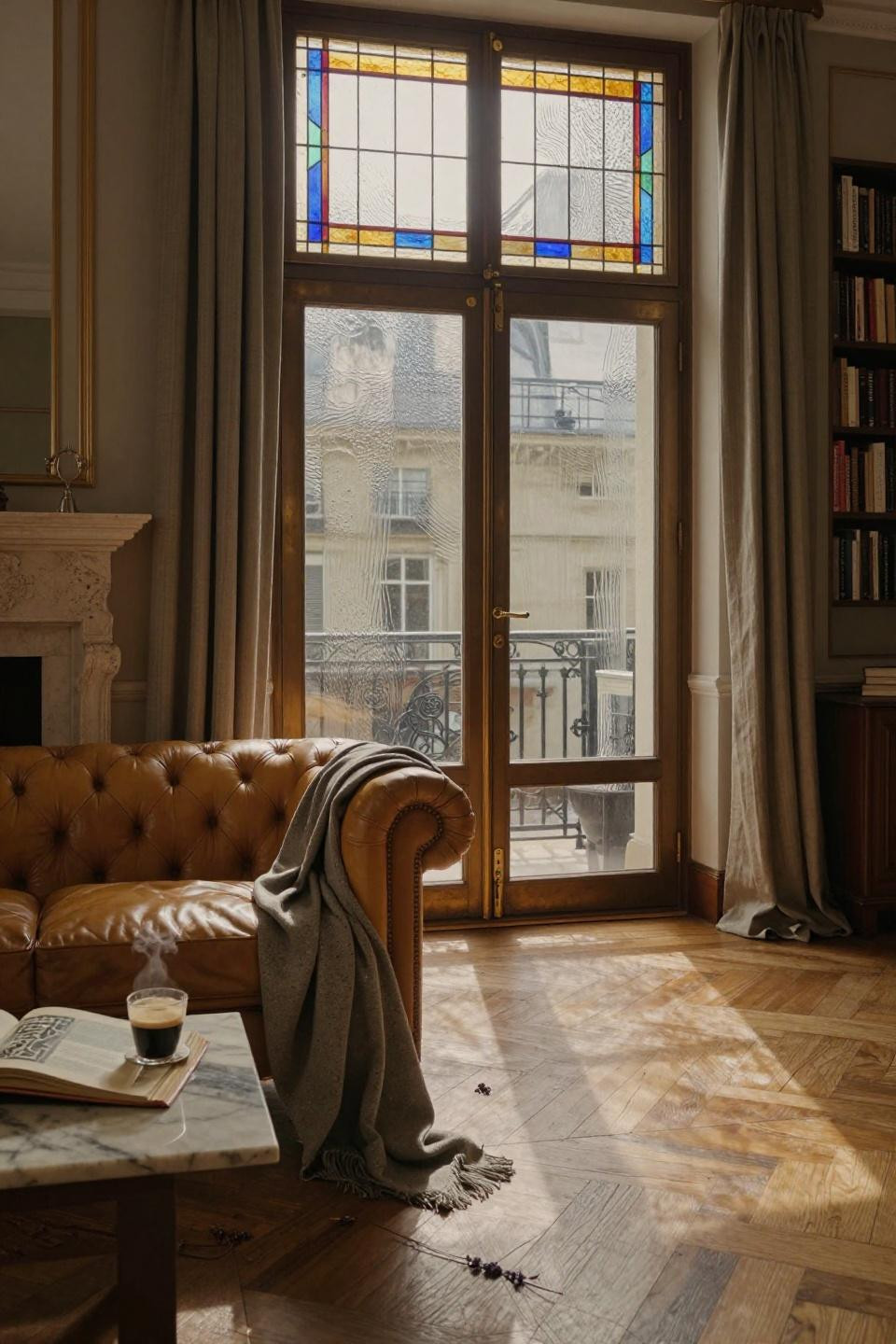
Smoked bronze frames with hand-blown glass panels and jewel-toned stained glass transoms. This is a lot of look, but when you commit, it becomes the room’s entire personality. The amber and sapphire transoms catch afternoon light and throw colored caustics across the floor - actual architectural theater. The unlacquered brass develops patina that complements the bronze finish. Here’s the truth: this only works in spaces with serious ceiling height. Standard 8-foot ceilings will make it feel heavy. But in a room with proper volume, it’s transformative. Saw something similar at an Anthropologie Home showroom that captured the same energy.
Frameless Glass For Maximum Drama
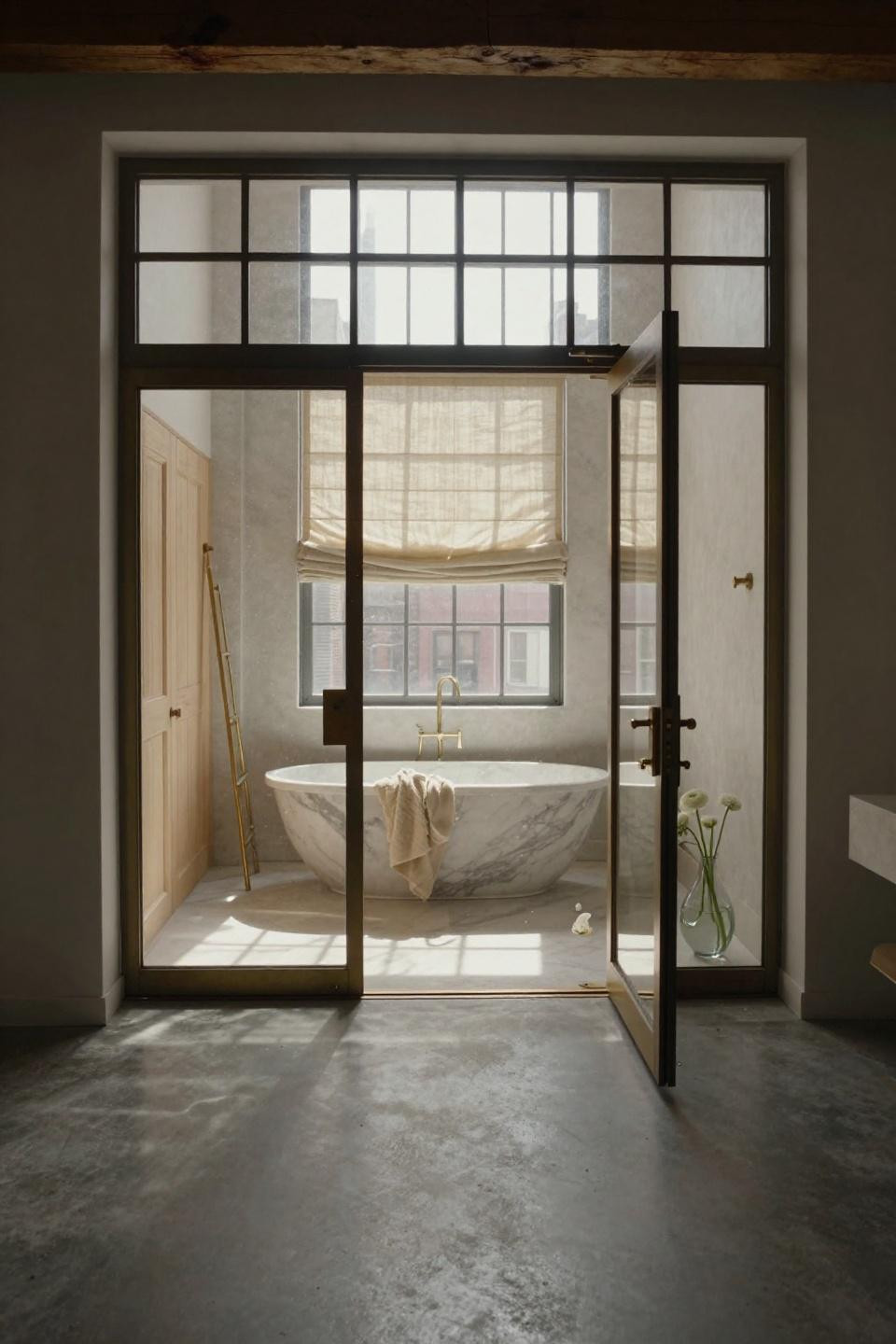
Frameless floor-to-ceiling glass with minimal brass hardware. The lack of visible framing makes the doors feel like floating planes instead of traditional millwork. This setup reveals a travertine bathroom beyond, which is smart - the visual continuity makes both spaces feel larger. The mirror-finish panels reflect the white oak millwork, doubling the warm tones. Works best in lofts or spaces with industrial bones where the simplicity contrasts against rougher textures. The unlacquered brass pulls develop patina at touch points, which adds subtle warmth over time. Not cheap, but the architectural payoff is real.
Walnut Frames With Geometric Glass Inserts
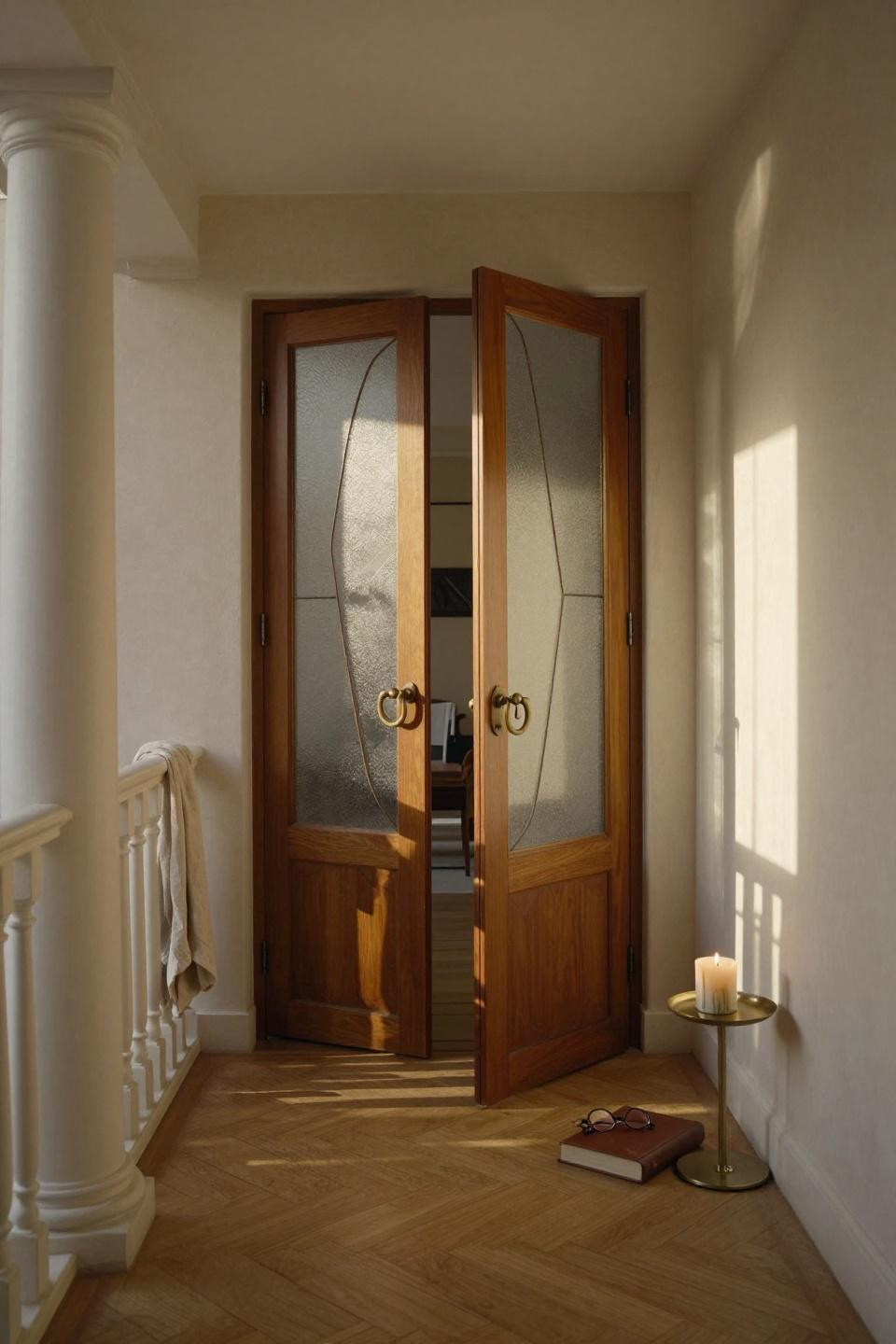
Honey-toned walnut frames with asymmetric frosted glass panels. The geometric pattern feels mid-century without being too literal. Aged unlacquered brass ring handles catch light and develop patina that complements the warm wood. This works because the glass pattern adds visual interest without blocking the door’s function. The partial opening at 35 degrees shows how these actually live - rarely fully closed or fully open. Pair with herringbone oak floors to echo the wood tones. The white fluted columns flanking the doors ground the modern elements with classical details. Total living room to bedroom MVP.
Bronze-Tinted Glass For Warm Transparency
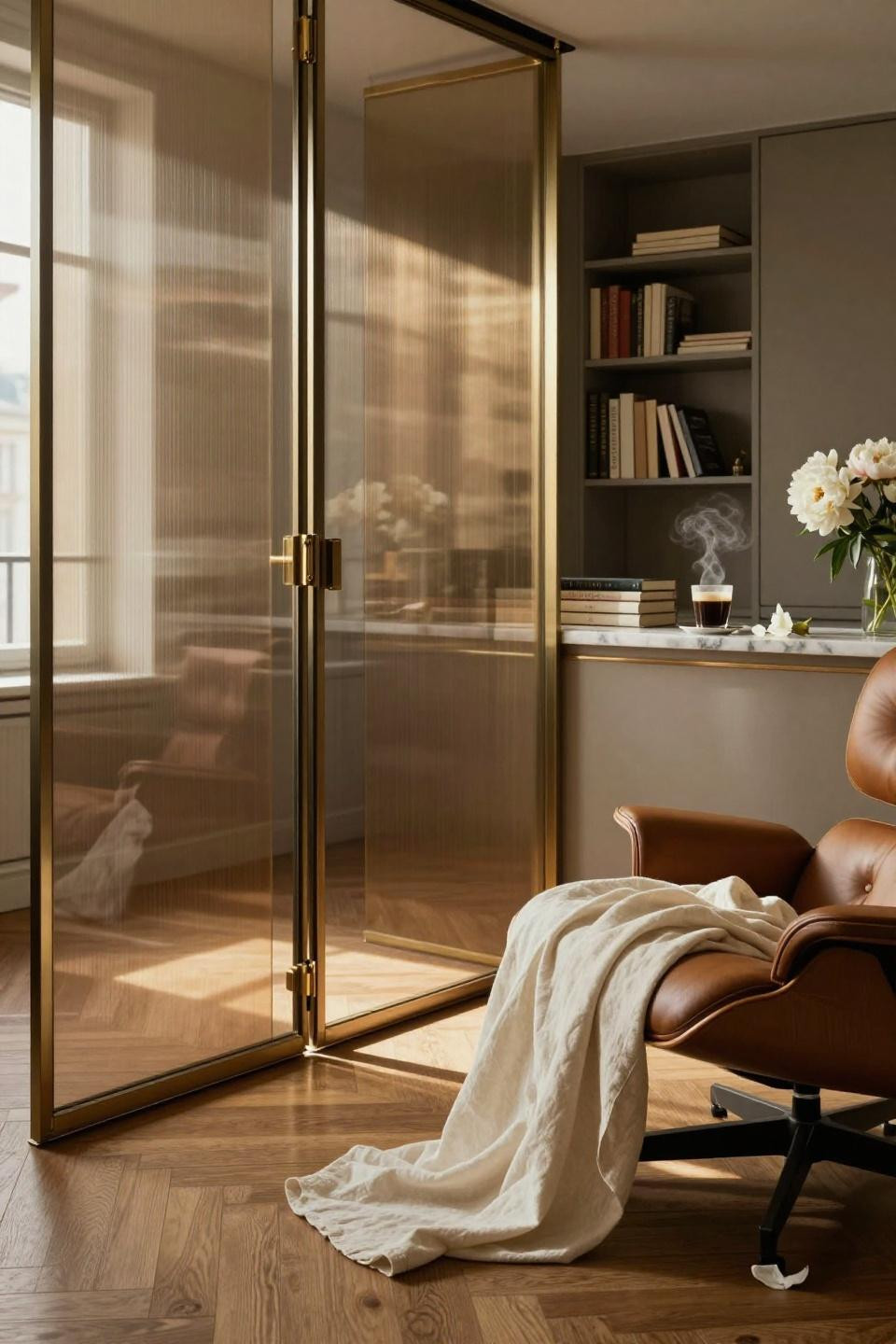
Bronze-tinted fluted glass that disappears into wall cavities. The amber tone warms transmitted light while maintaining privacy - way more interesting than standard frosted. The fluting adds texture that catches light at different angles throughout the day. Brushed unlacquered brass frames develop patina naturally, which reads expensive in ways polished finishes never do. This setup connects a library to a living area, creating flexible zoning without hard walls. The German engineering means silent operation, which matters more than most people realize. Seen similar effects with CB2’s glass door systems, though the bronze tint usually requires custom ordering.
Our Top Mattress Pick
| Saatva Classic | $1,395+ | Shop |
| Saatva Contour5 | $1,595+ | Shop |
| Saatva Zenhaven | $1,895+ | Shop |
Hidden Bookshelf Door For Actual Mystery
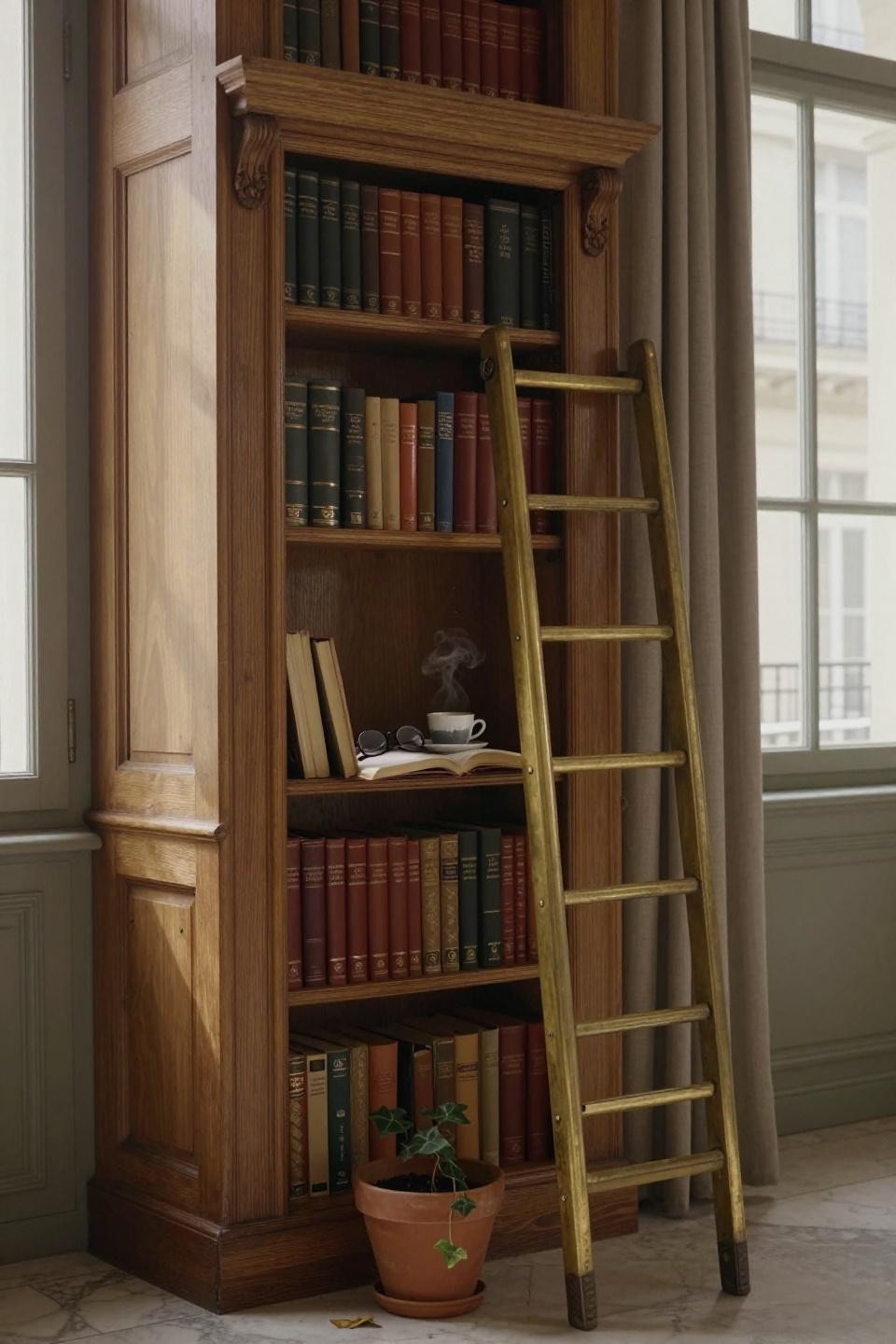
Floor-to-ceiling bookshelf that slides open as a pocket door. The crown molding continues across the moving panel, making it completely invisible when closed. Unlacquered brass mechanism hides behind the books, and the shelves are functional - not just decorative. This works because the door becomes part of the room’s architecture instead of an obvious feature. Best for libraries, studies, or anywhere you want a hidden passage vibe without feeling like a theme park. The trick is loading the shelves asymmetrically with actual books plus deliberate styling gaps. Restoration Hardware has attempted versions of this, but custom millwork delivers the smooth integration.
Industrial Steel Frames That Feel Museum-Quality
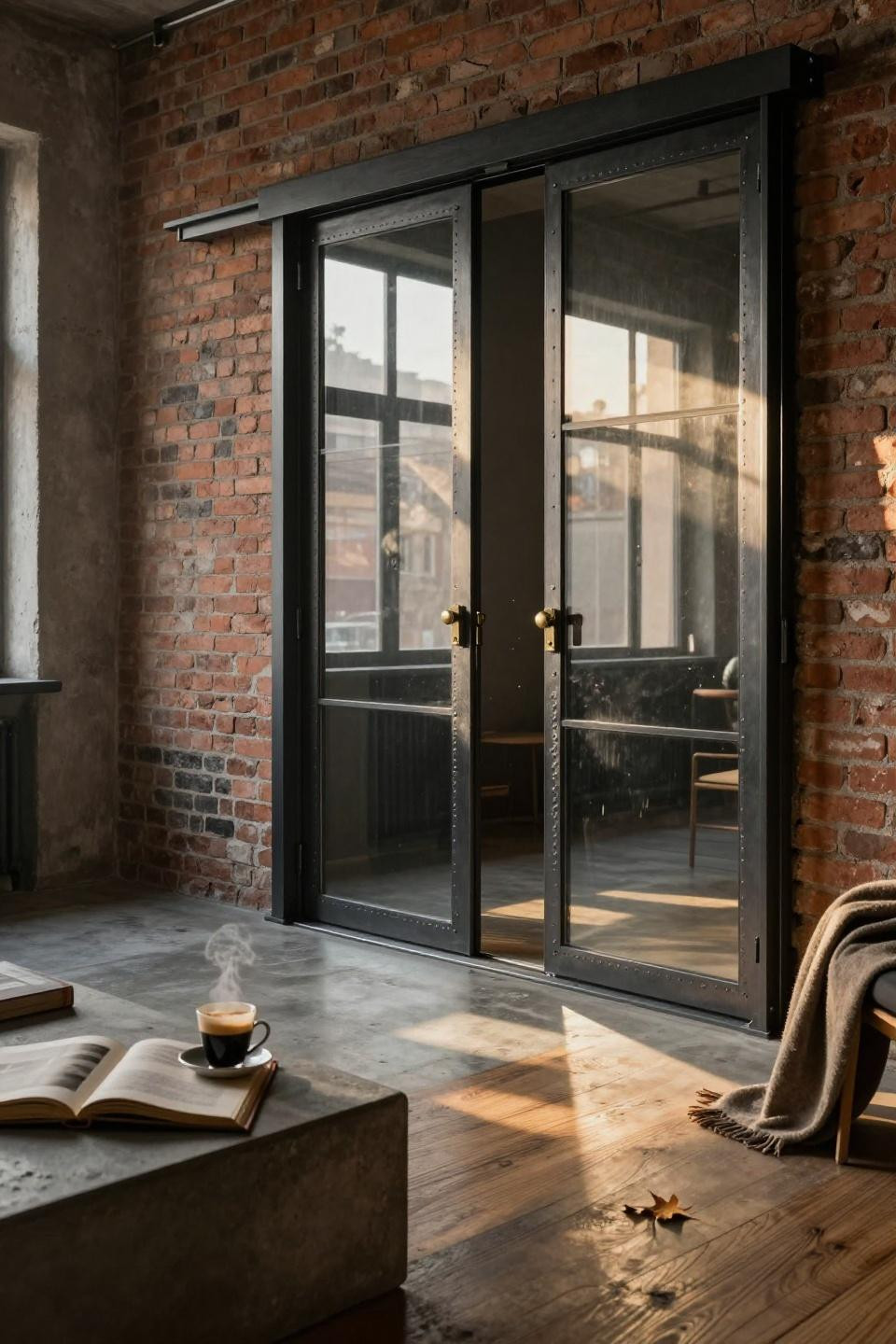
Black steel-framed glass with hand-hammered iron studs. Twelve-foot panels that slide into exposed brick walls like precision machinery. The steel frames read industrial without feeling cold, especially against terracotta brick and reclaimed oak floors. One panel fully retracted shows the engineering - this is the kind of detail that separates custom work from catalog solutions. The charcoal and terracotta palette keeps it grounded instead of sterile. Works in lofts or converted industrial spaces where the rawness is part of the appeal. Honestly, this is the direction I’d go if I had the ceiling height and budget.
If I had to pick one, I’d start with the brass-framed French doors. They work in more contexts than the dramatic options, and the divided lights age better than frameless glass. But honestly, the hidden bookshelf door keeps winning me over.
Try Saatva risk-free →