
 by
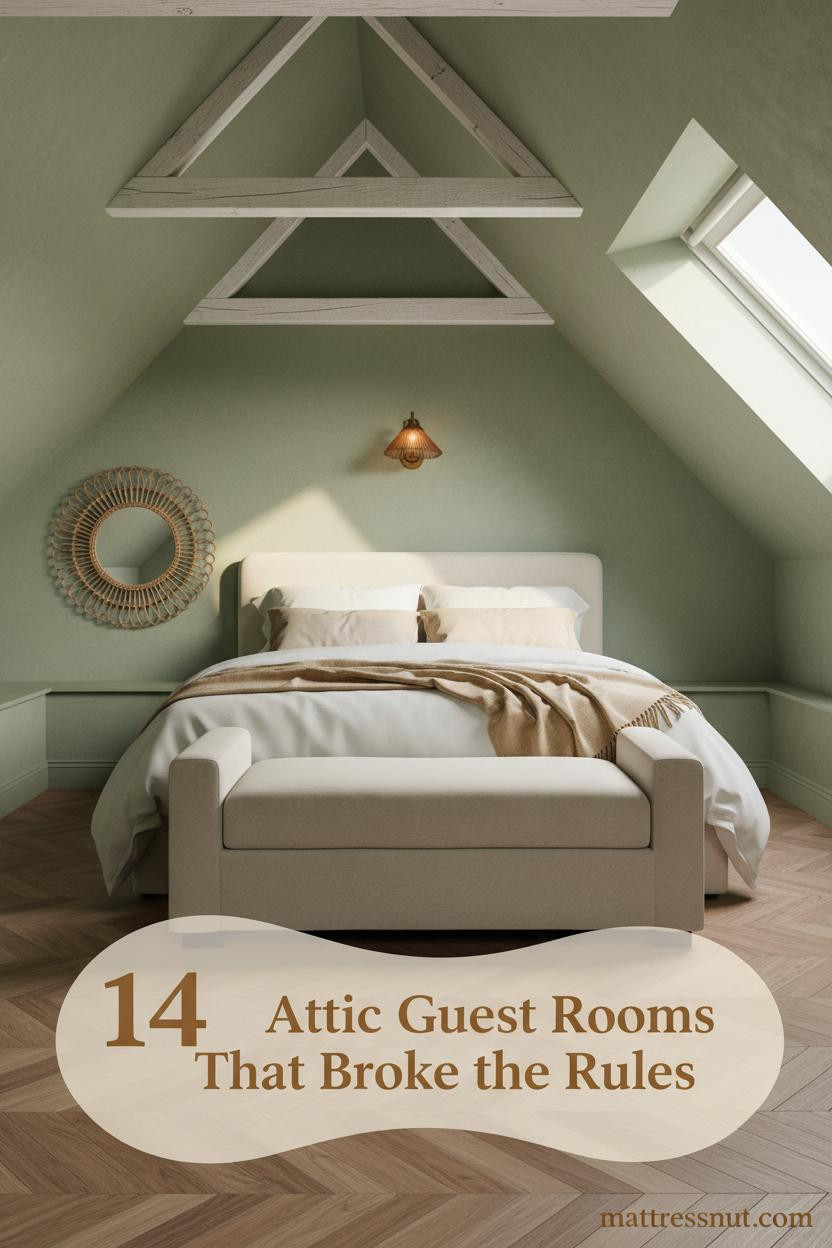
by The first thing you notice in a well-done attic guest room is that the sloped ceiling doesn't feel like a problem. It feels intentional.
Low ceilings, tight eaves, pitched angles: every constraint here can work in your favor. You just have to stop fighting the architecture.
Warm Cedar Beams Against Olive Plaster
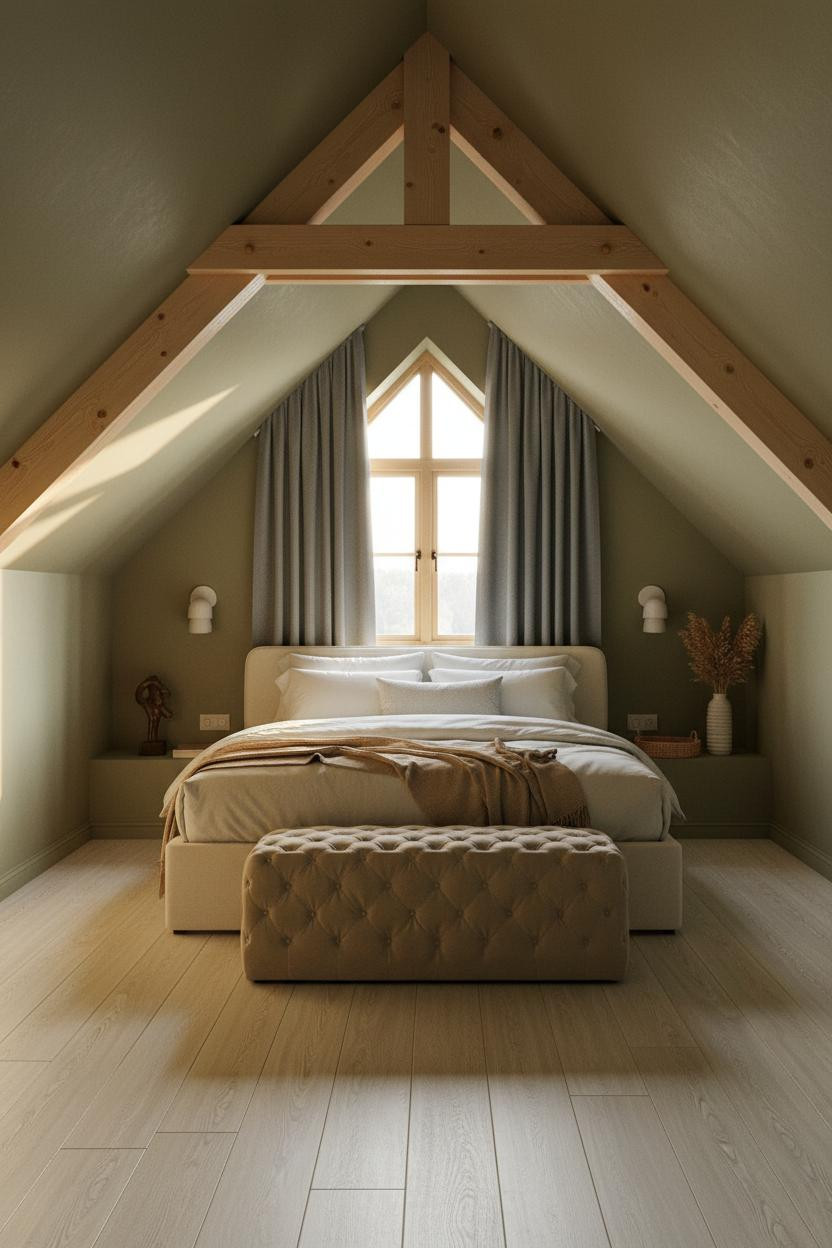

I keep coming back to this one. Something about the amber light pooling across raw honey-cedar beams makes the whole eave space feel settled.
Why it holds together: The olive plaster walls absorb light instead of reflecting it, which keeps the low pitch from feeling claustrophobic. The beams do the rest.
Steal this move: Pair warm-toned plaster with exposed timber and skip cool-toned bedding entirely. A camel wool throw is all you need at the foot.
Terracotta Walls Make a Nordic Attic Feel Grounded
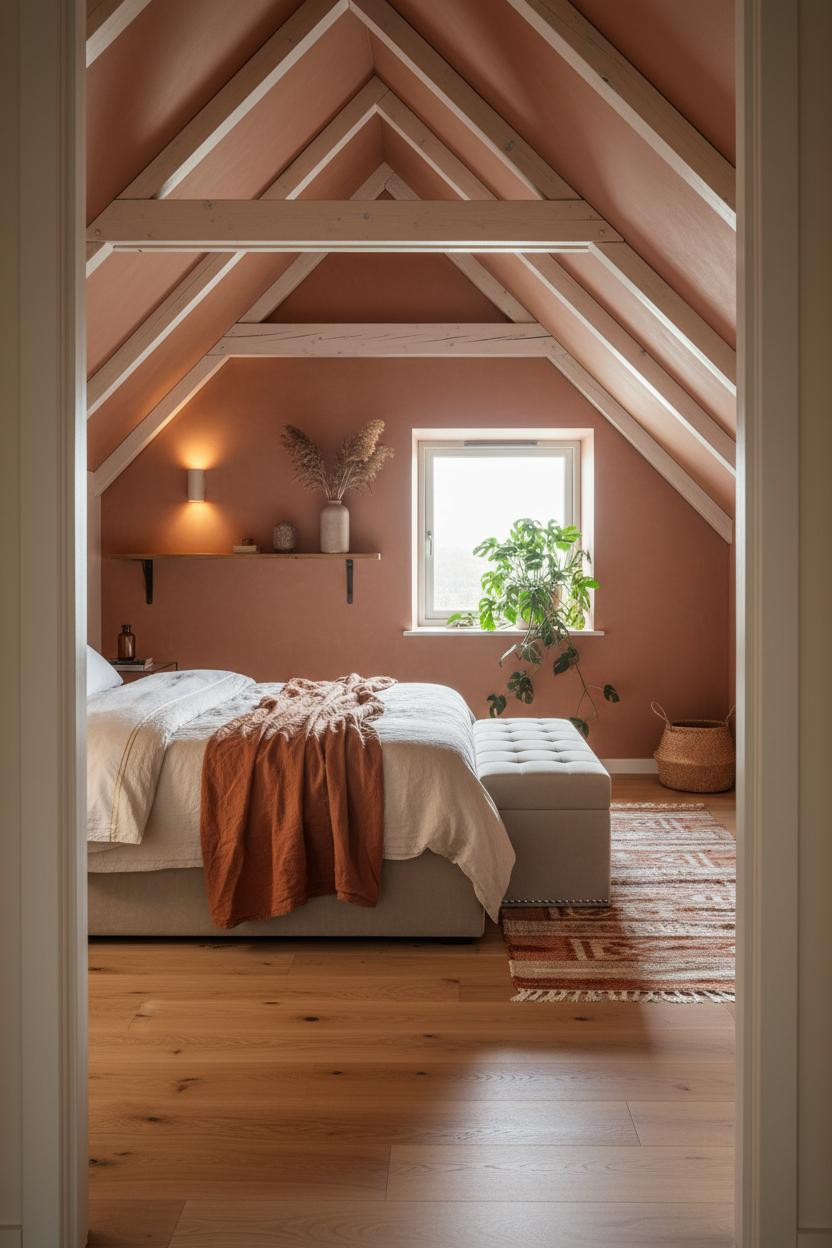

Nordic-minimal doesn't have to mean cold. This one proves it.
But the reason it actually works is the terracotta-washed plaster pushing back against the pale timber rafters. The warm wall keeps the minimal palette from tipping into clinical.
The practical move: A flat-weave kilim in rust and cream anchors the bed zone without adding visual height to the floor. Low-profile and grounding, which is exactly what a pitched space needs. A slim nightstand tucked beside the bed keeps the eave corner usable.
Whitewashed Beams Over Honey Floors
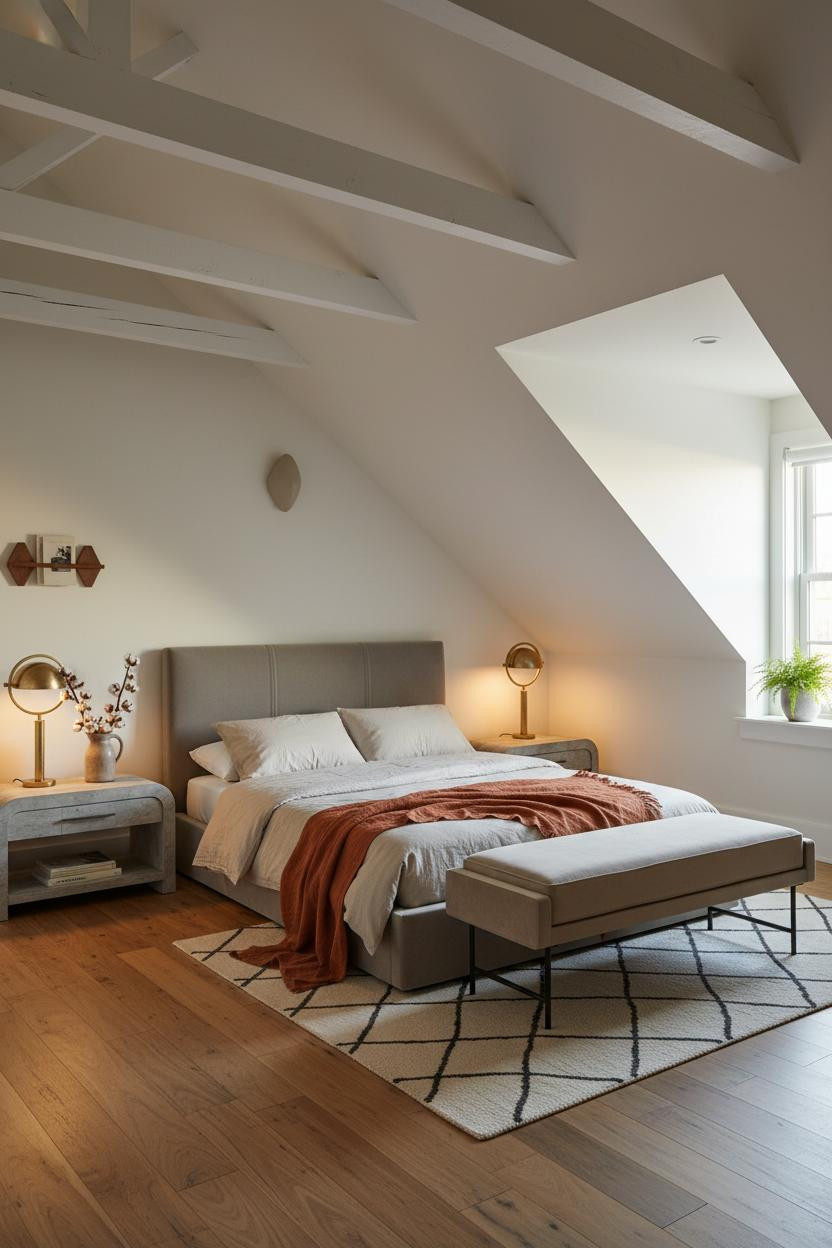

Nothing fancy. That's the point. Whitewashed collar tie beams against ivory plaster is the most low-effort high-return move in a low-ceiling attic.
What makes it work: The reclaimed honey-brown flooring pulls warmth up into the room, so the pale ceiling reads lighter instead of pressing down. A cream-and-charcoal geometric rug keeps it grounded.
Where to start: Whitewash the beams before you do anything else. That one move changes how big the room feels. Everything else follows.
Grey Timber Beams With Board-and-Batten Knee Walls
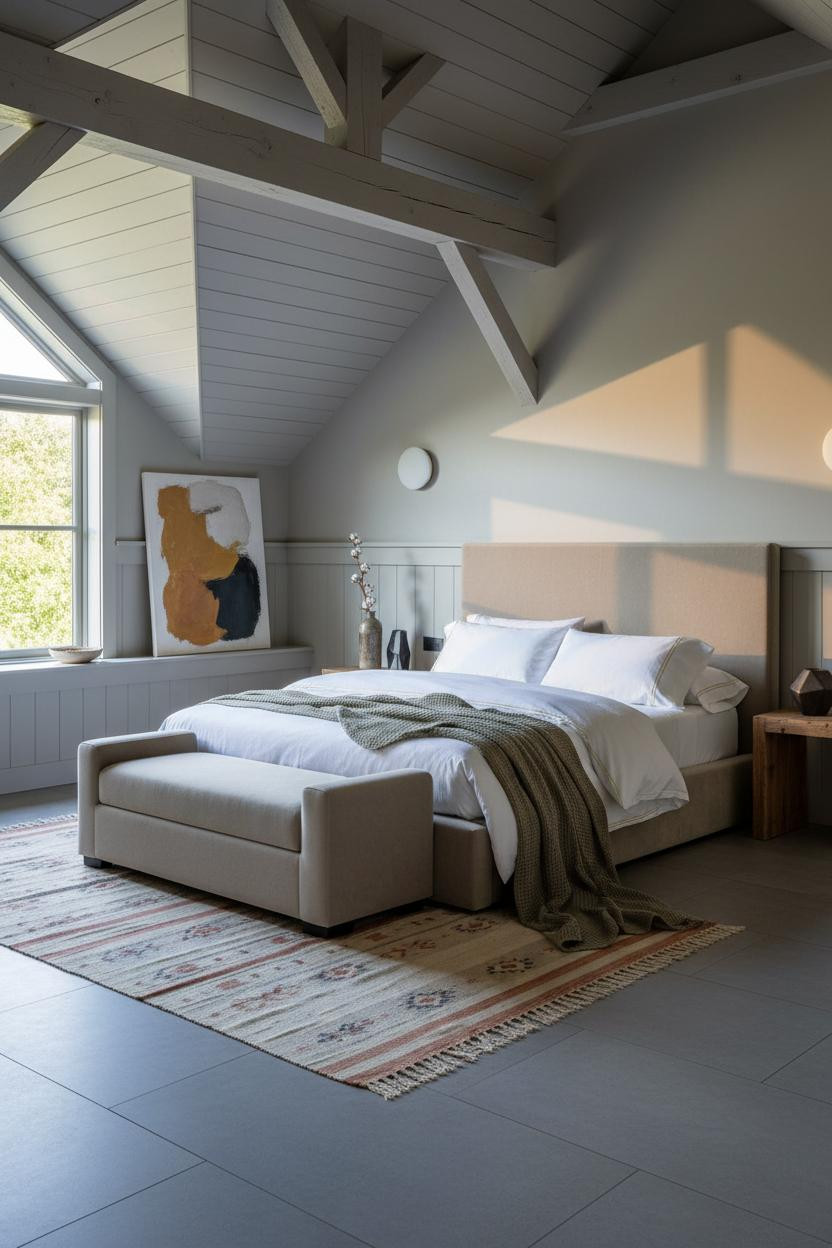
Farmhouse-modern in an attic works when the materials are doing real work, not just looking pretty.
Design logic: Weathered grey-stained timber beams against soft greige walls create contrast in tone without fighting each other. The board-and-batten knee wall cladding adds horizontal structure where the pitch gets tight.
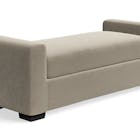
An olive waffle-weave throw draped over the bench pulls the whole warm-neutral palette together. Don't ruin it with matching accessories. A little mismatch is what makes it look collected, not staged.
Dove Grey and Mustard in a Board-and-Batten Eave
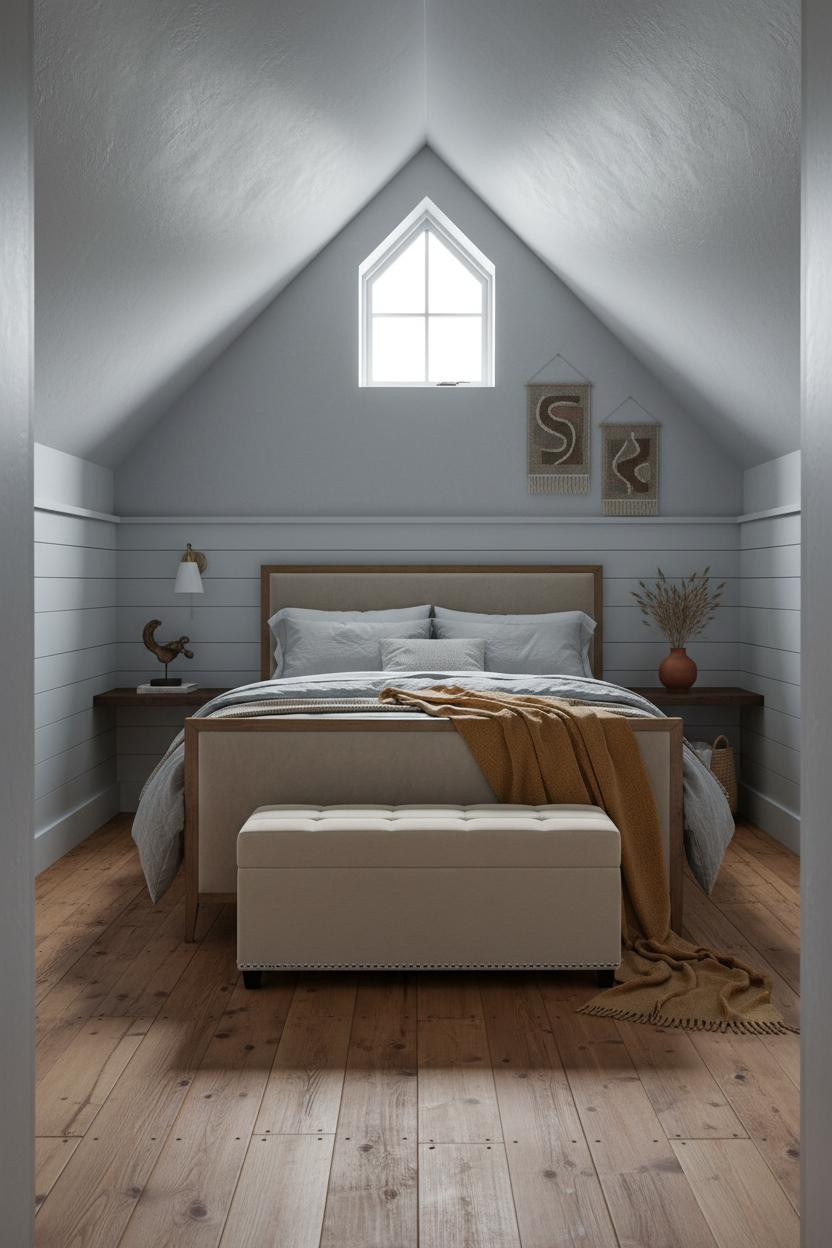

This is the kind of room that makes you want to close the door and stay a while.
Why it feels balanced: Dove grey plaster follows the steep pitch all the way down, which means the room feels like one cohesive shape (not a ceiling bolted onto four walls). The mustard wool blanket at the foot is the only real color, and it earns its place.
The easy win: Tuck a woven jute basket into the low eave corner for storage. It fills dead space, and it looks like you meant to put it there. See more low ceiling attic bedroom solutions that handle the eave zone well.
Raw Pine Beams and a Dark Walnut Floor
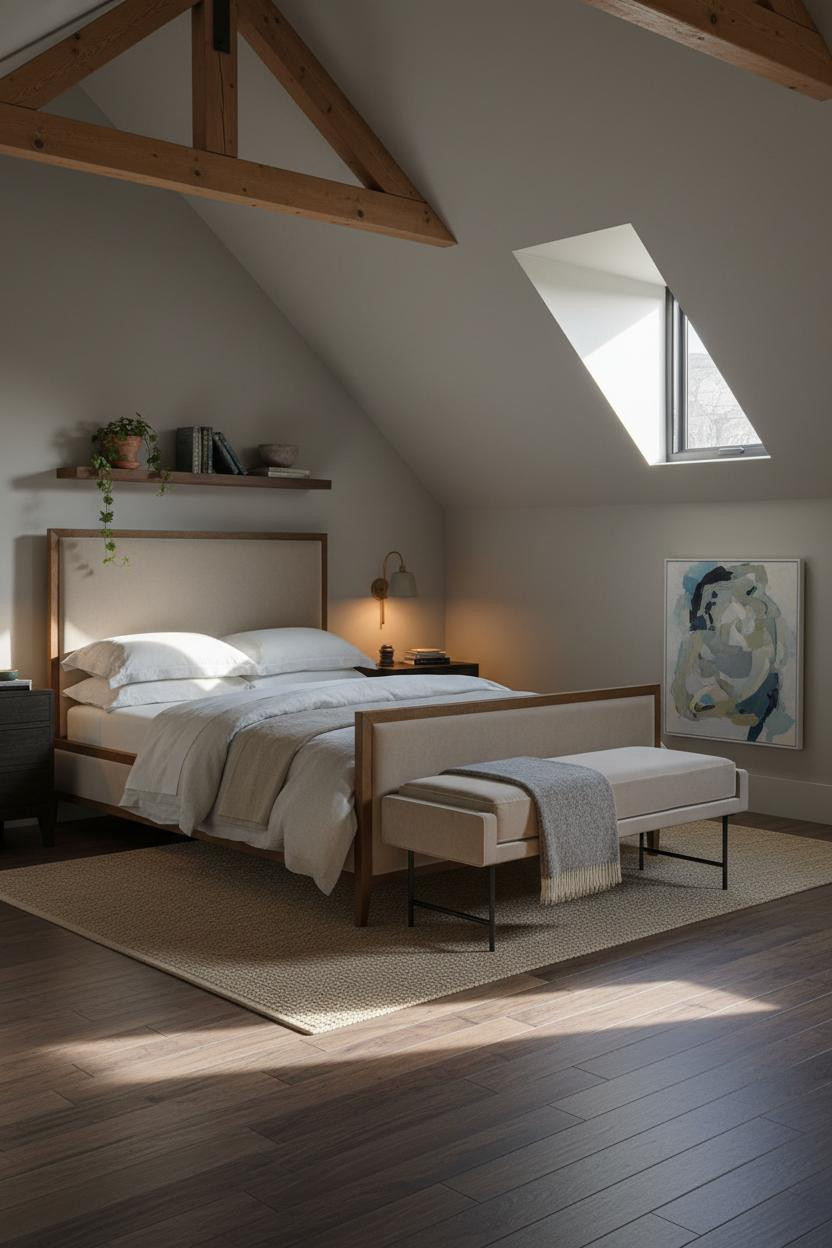
Honestly, the rough-sawn texture on those pine beams is doing more work than any paint color could.
What gives it presence: Raw pine collar tie beams against warm grey plaster create enough contrast to read as architectural detail, while a natural jute rug keeps the dark walnut floor from pulling the whole room into shadow.
One smart swap: Replace a matching bedside lamp with a ceramic wall sconce at the headboard. It frees up nightstand surface and keeps the eye moving horizontally, which helps in a room this narrow.
Whitewashed Beams and a Round Brass Mirror
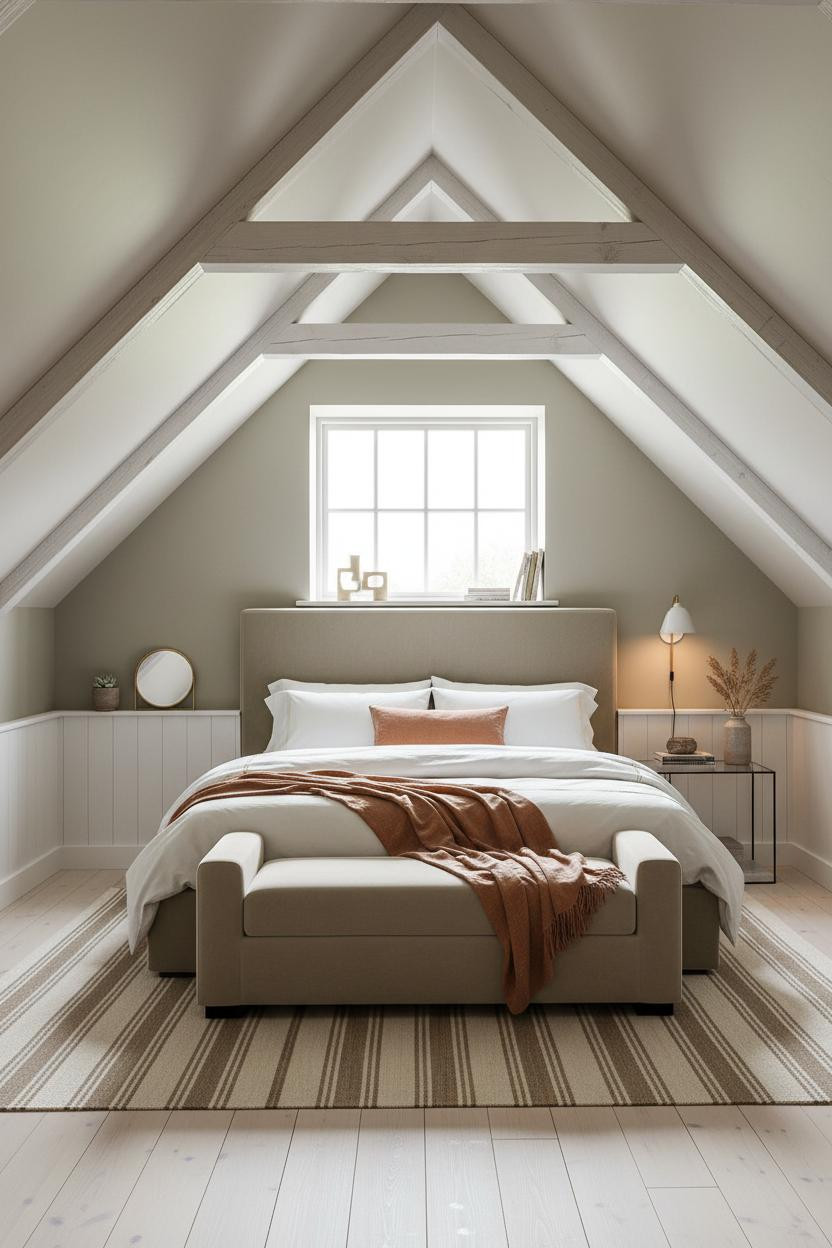
I almost skipped this one. The palette is quiet to the point of forgettable. But then I noticed the mirror.
A small round brass mirror leaning against the knee wall reflects the gabled window light back across the room. That's the whole trick. The pale birch flooring beneath keeps things from going too flat, and a striped natural runner ties the sleeping zone together without adding visual weight. This is one of those angled ceiling bedroom ideas where a single accent object shifts everything.
Dark Douglas Fir Beams With Botanical Touches
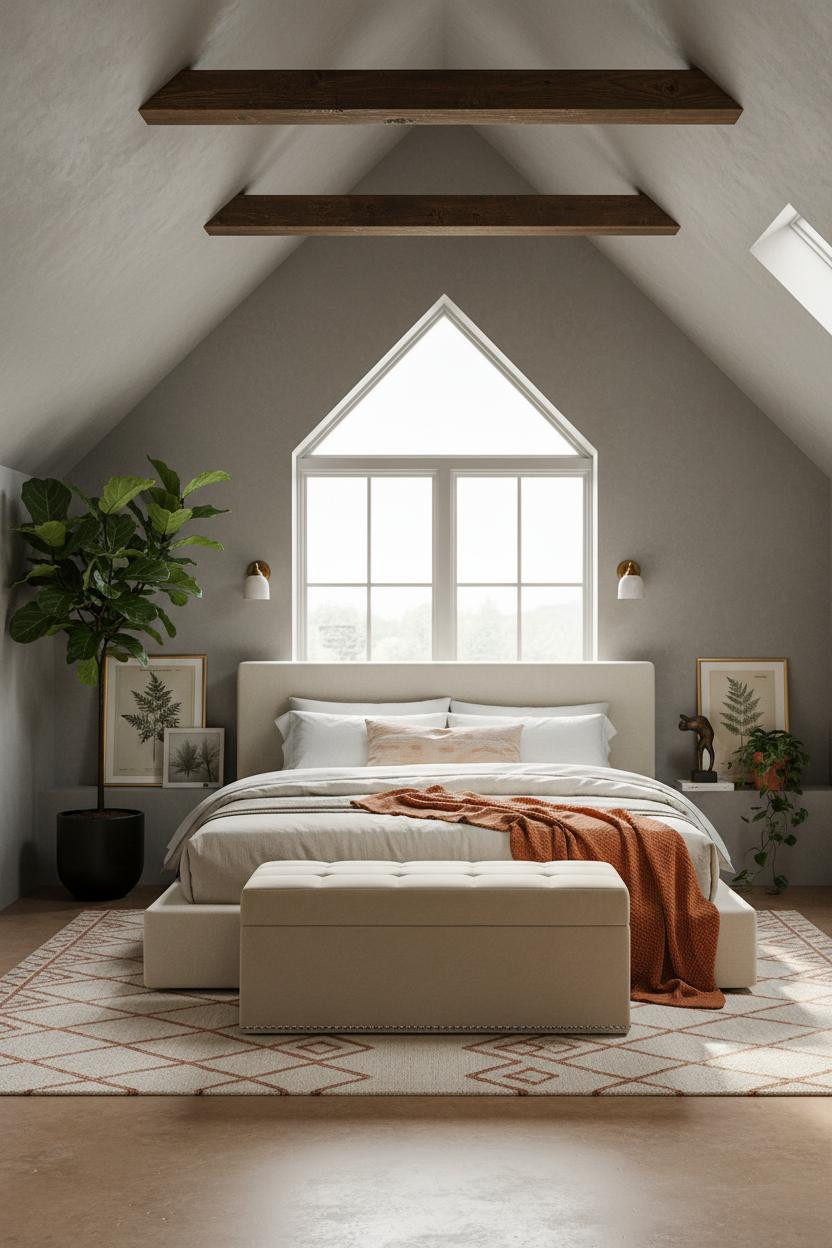

This is the most dramatic version of the formula. Dark beams, stone grey walls, polished concrete. It shouldn't feel warm. But it does.
Why the materials matter: The charred-brown Douglas fir grain catches raking light in a way that lighter timber doesn't, making the ceiling geometry feel alive rather than oppressive. A large fiddle-leaf fig in the low eave corner softens the whole scheme in a way that feels natural.
Best for: Guests who like things with a little edge. A burnt orange mohair throw against oatmeal cotton is the only warmth you need. Nothing too precious.
Dusty Rose and Shiplap in a Lamp-Lit Eave

Fair warning. This one is divisive.
But the dusty rose knee wall paired with pale birch shiplap ceiling panels creates a snug-on-purpose feeling that guests either love or don't. The horizontal grain lines of the shiplap pull the eye upward and make the pitched ceiling feel taller than it is, especially with amber sconce light pooling across it at night.
Avoid this mistake: Don't center a matte black pendant at the ridge unless you're committed to the contrast. It works here. On a lighter scheme, it reads heavy.
A Skylit Coastal Attic With Navy Bedding
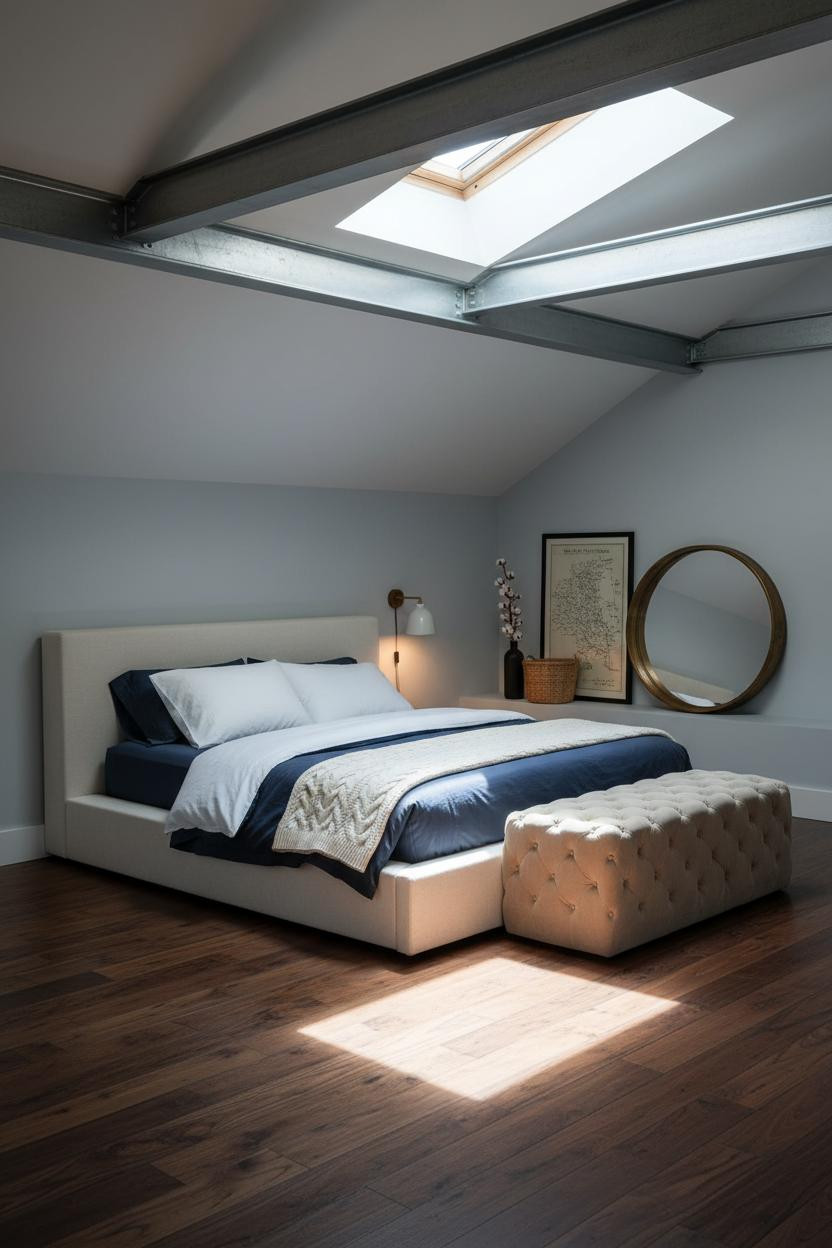
A skylight changes everything in a low attic. The light cuts straight down through the pitch instead of fighting the slope from the side.
What creates the mood: Dusty blue-grey plaster walls paired with navy sateen bedding keep the coastal palette from going nautical-themed. The antiqued brass mirror leaning on the knee wall earns its spot by bouncing skylight across the dark walnut floor.
In a small room, the smarter choice is one oversized reflective piece over several small ones. More surface, more light, less clutter.
Whitewashed Cladding and a Blush-Grey Wall
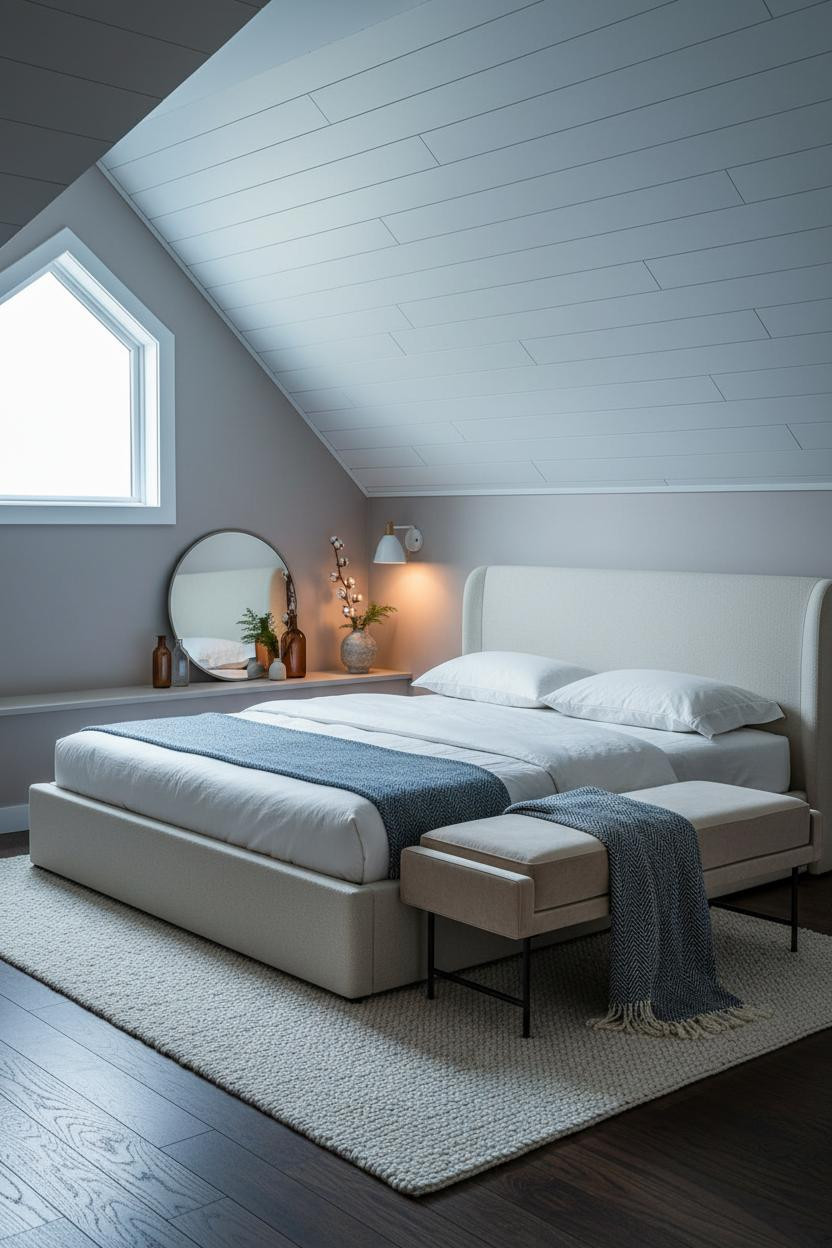

The room feels calm and cohesive before you even register why. It's the board-and-batten.
What carries the look: Whitewashed board-and-batten ceiling cladding gives the steeply pitched surface geometric rhythm that plain plaster can't replicate. Each thin shadow line pulls the eye along the roofline in a way that makes the low pitch feel like a feature.
Worth copying: A steel blue herringbone throw against cream percale bedding. Enough contrast to feel intentional, while still feeling easy. A large round mirror leaning on the knee wall does the same light-bouncing work here as it does in any low-ceiling room. Check out more attic loft bedrooms that feel bigger using the same principle.
Sage Plaster and Exposed Fir Beams
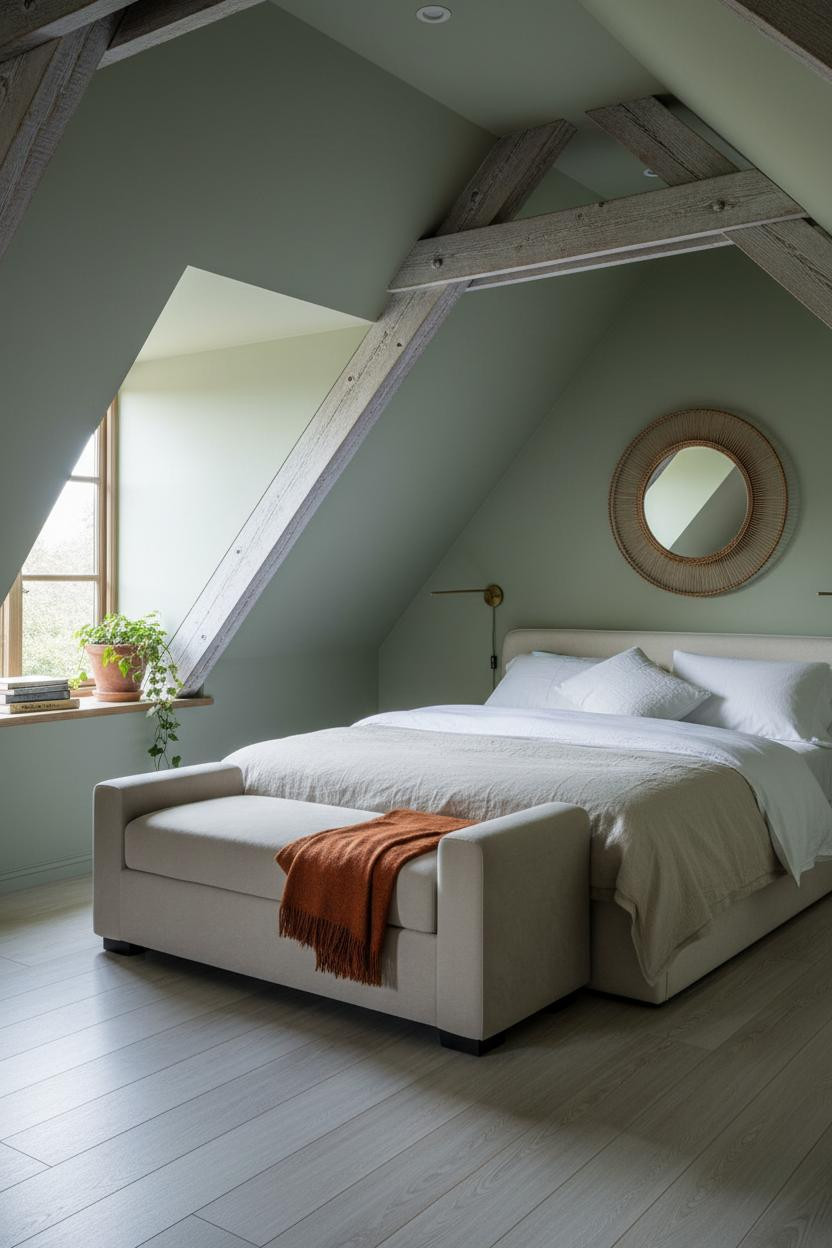
I think sage is the most underused color in an attic. It absorbs morning light without going cold, and it grounds an exposed-beam ceiling in a way that white simply doesn't.
Why it looks custom: Silver-grey Douglas fir collar tie beams against soft sage plaster create a contrast that reads as intentional and expensive. The knotted grain catches raking dormer light and throws just enough texture across the ceiling to make it interesting.
The finishing layer: Mount a round woven rattan mirror on the gable wall opposite the dormer. It bounces natural light back across the sleeping zone and adds warmth without adding mass.
Honey Timber and Herringbone Parquet
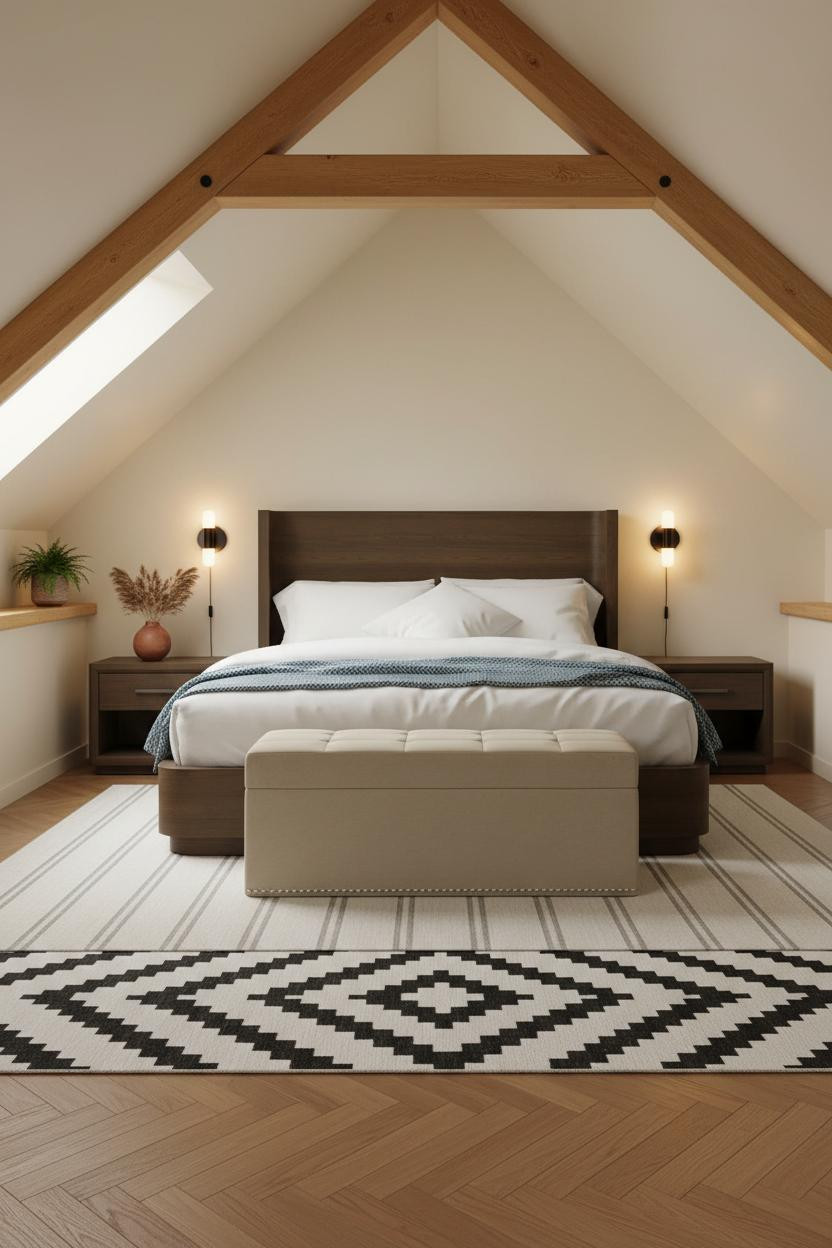

Admittedly, herringbone parquet in an attic feels like a bold call. But the pattern runs low and horizontal, which actually helps in a room where the ceiling draws the eye upward.
What sharpens the room: Honey-toned collar tie beams against warm cream walls keep the palette unified, so the parquet reads as detail rather than distraction. A steel blue herringbone throw on the bench (same pattern, different scale) is the kind of quiet callback that makes a room feel designed rather than assembled.
What not to do: Don't layer two different rugs in a room this compact. One cream flat-weave centered under the bed. That's enough.
Japandi Warmth in a Golden-Lit Dormer
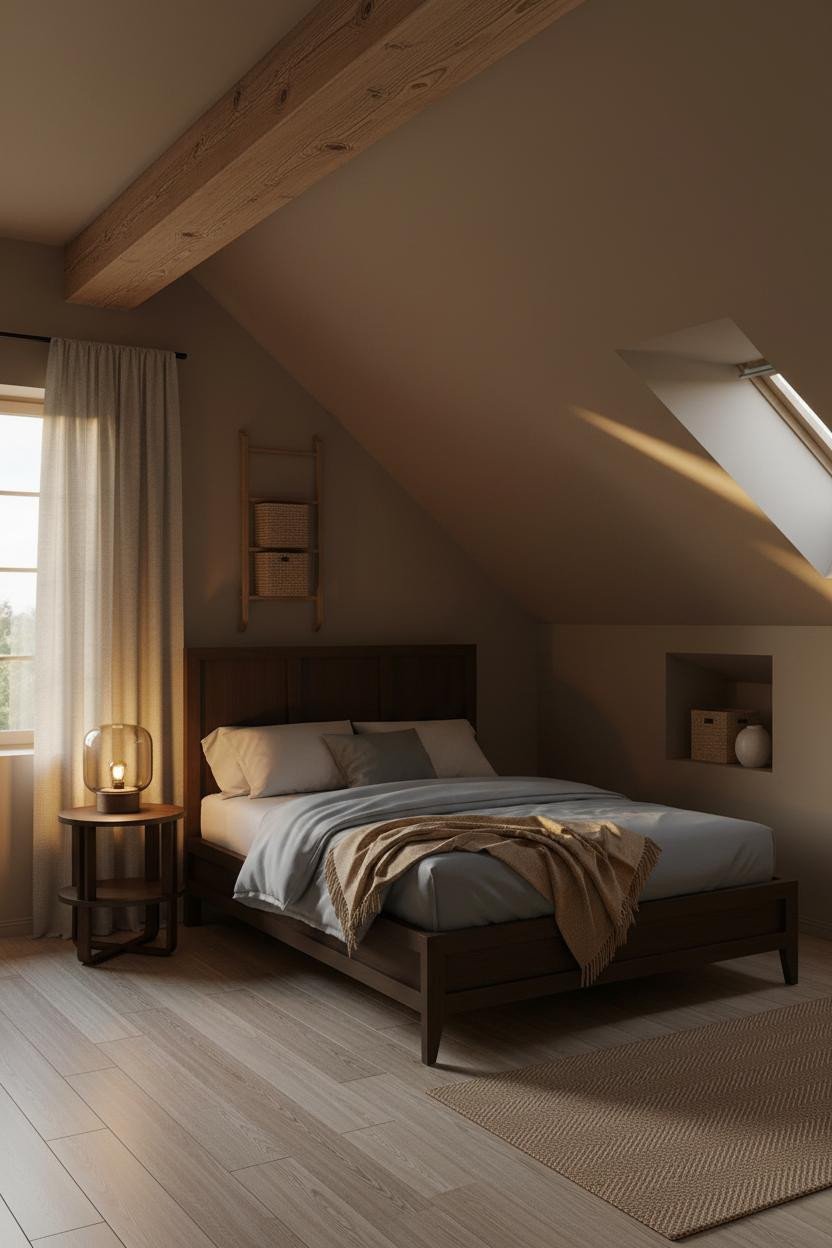


Late afternoon light in a west-facing dormer is its own design element. This room is built entirely around it.
Why it feels intentional: A floor-to-ceiling cream linen curtain panel framing the dormer catches the golden hour light and diffuses it across warm taupe walls, making the whole space feel like it's glowing from inside rather than lit from above.
The key piece: A wooden ladder shelf against the sloped wall solves storage for a space too shallow for a wardrobe. Two woven baskets on the rungs, a ceramic vase at the top. Collected rather than decorated. This kind of small bedroom approach works especially well in Japandi-influenced rooms where negative space matters.

Our #1 Pick
Saatva Classic Mattress
America's best-selling online luxury innerspring. 365-night trial, lifetime warranty, free white glove delivery.
Shop Saatva Classic
The Foundation Of Every Beautiful Bedroom
Walls get repainted. Linen gets swapped out. The mattress stays. And in a tucked-away attic guest room, that matters more than people realize: guests notice the bed before they notice anything else.
The Saatva Classic is what I'd put under those oatmeal cotton layers. Dual-coil support that holds through the night, a breathable organic cotton cover that doesn't trap heat in a room with low eaves, and a Euro pillow top that feels genuinely soft without losing structure after a few nights of use.
It's the kind of mattress that makes a guest room feel like somewhere worth staying.

The rooms people save are the ones where nothing looks accidental. Start with the structure the attic already gives you, and let the rest follow. Good design ages well because it's made well.