
 by
by Our #1 Recommended Mattress
Saatva Classic. From $1,095
365-night trial · Lifetime warranty · Free white-glove delivery
The farmhouse bathroom is one of those design categories that has been done badly so many times it has acquired a reputation problem. Shiplap for its own sake. Galvanized metal accents without context. Signs that say BATH in distressed wood above the actual bath. But strip away the Instagram cliches and what remains is a genuinely satisfying design philosophy: the celebration of materials that age well, the preference for handmade character over factory precision, and the conviction that a bathroom should feel warm and lived-in rather than clinical and perfect. In 2026, that philosophy is being executed at a higher level than ever.
The 2026 Farmhouse Bathroom Philosophy
Modern farmhouse bathrooms in 2026 are striking the balance between rustic warmth and modern simplicity. The overcrowded farmhouse look of five years ago, where every surface competed for attention with a different reclaimed element, has given way to something more restrained. The best farmhouse bathrooms now make one or two strong material statements and let everything else recede. The shiplap wall becomes more interesting because the fixtures beside it are clean and contemporary. The clawfoot tub becomes more beautiful because it sits against a simple plaster wall rather than competing with a dozen other period details. The core principle is intentional contrast: rough with smooth, old with new, warm wood with cool stone.
Shiplap: The Evolution of an Enduring Element
Shiplap is not going anywhere, but in 2026 it is being used differently. The high-contrast painted white shiplap covering every wall has given way to wider planks, subtler finishes, and more selective placement. An accent wall of horizontal shiplap behind the vanity or the tub creates the texture and warmth of the material without the visual saturation of using it everywhere. Board and batten is gaining ground as an alternative to horizontal shiplap. The vertical line of board and batten draws the eye upward and makes ceilings feel taller, which matters in bathrooms where the room is often smaller than ideal.
The biggest mistake with shiplap in bathrooms is using planks that are too narrow. Anything under four inches can read as busy and dated rather than restful and intentional. Wider planks, six to eight inches, create a quieter, more architectural effect. The finish matters too: a pure white paint is the classic choice, but a warm off-white, a very pale sage, or a natural wood stain creates more interesting results in the current design climate.
In wet areas, shiplap requires proper waterproofing behind it and a water-resistant top coat on the surface. Painted pine shiplap in a bathroom without adequate moisture protection will fail within a few years. Use moisture-resistant MDF or treated pine, seal all joints before painting, and ventilate the room properly to prevent condensation buildup.
The Clawfoot Tub: Still the Centerpiece That Cannot Be Beat
A clawfoot tub is the farmhouse bathroom's defining element because it does what almost no other single piece of furniture can: it anchors the entire room around a sculptural object that is also entirely functional. Freestanding in the middle of the floor, positioned beneath a window, or placed to anchor one end of a long master bath, the clawfoot tub demands that everything else in the room defer to its presence.
Original cast iron tubs from architectural salvage yards bring authentic period character and the satisfying weight of genuinely old materials. Expect to pay $500 to $1,500 for a well-maintained original depending on size and condition, plus refinishing costs if the enamel needs restoration. Modern reproductions in lightweight acrylic provide easier installation and better heat retention at $800 to $2,500 for quality versions.
The feet are a design decision. Ball-and-claw feet in polished chrome read as formal and traditional. Painted feet in matte black or dark bronze read as more contemporary. Original cast iron feet with their natural patina read as the most authentically period option. Consider the hardware alongside the feet: a wall-mount telephone faucet in matching finish connects the period aesthetic without requiring the tub to carry all of the visual weight alone.
One practical note that too many renovation guides omit: make sure your floor joists can support a cast iron clawfoot tub filled with water. A fully loaded cast iron tub can exceed 500 pounds. Many older homes need floor reinforcement before installation. This is a structural question worth answering before purchasing the tub.
Wood Vanities: Warmth at the Center of the Room
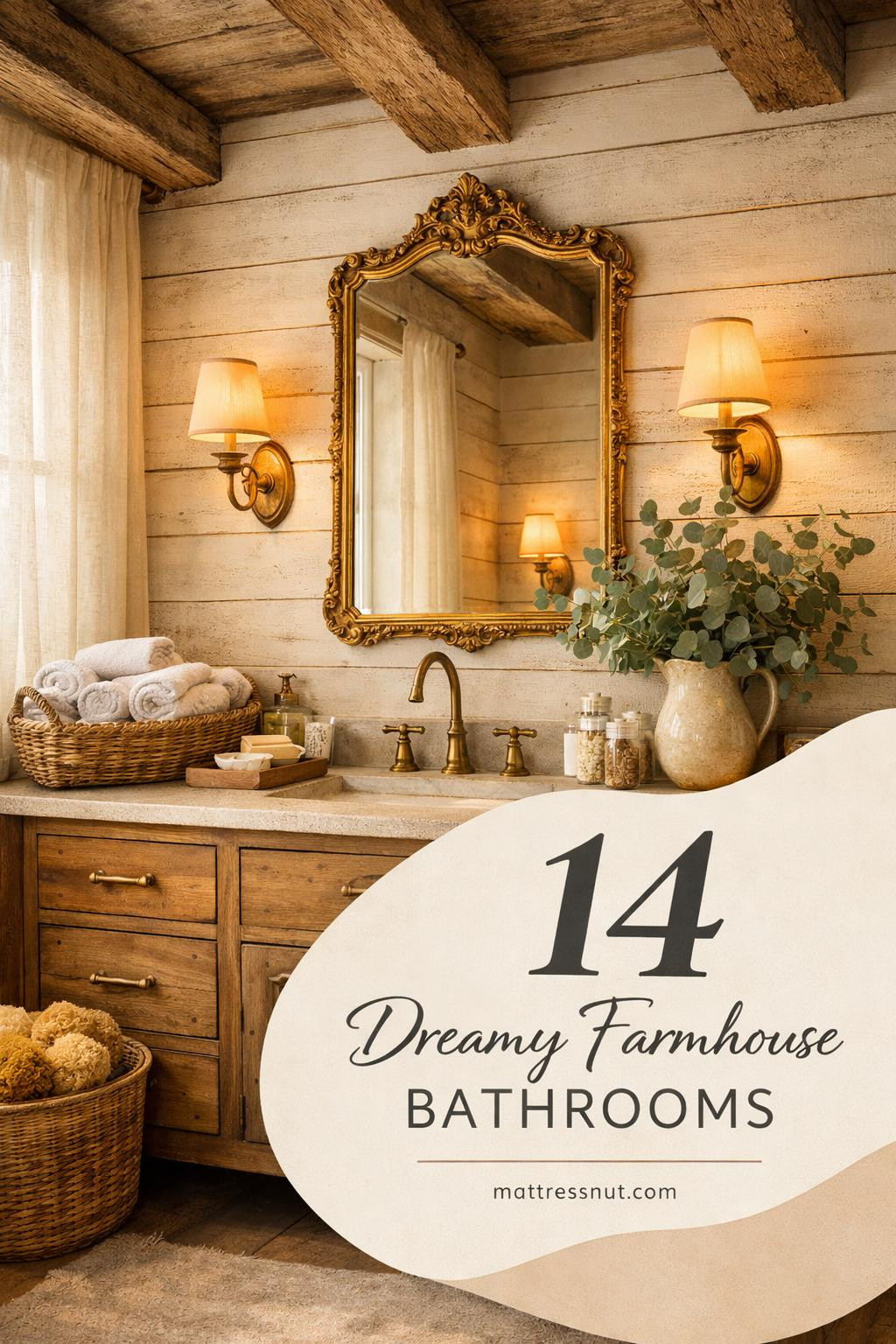
A wood vanity in a farmhouse bathroom does more than provide storage. It sets the thermal quality of the entire room. A painted vanity, even in the most beautiful color, cannot match the sensory warmth of actual wood grain. Reclaimed wood adds character and a sense of material history that new lumber cannot replicate regardless of finish.
In 2026, natural wood vanities meeting matte black or aged bronze hardware are the dominant farmhouse bathroom combination. Round or oval mirrors above the vanity add a modern counterpoint to the more traditional vanity base. Open shelving below the vanity, populated with folded towels and wicker baskets, extends the warm material palette while providing practical storage.
Repurposed furniture as vanity is an approach that produces the most distinctive results in farmhouse bathrooms. An antique dresser with a custom-cut marble top and an undermount sink installed through a local plumber creates a piece that no manufactured vanity can match for character or visual interest. The height difference between typical dresser height and standard vanity height is something to verify before committing to this approach.
The vanity countertop material makes as much difference as the base itself. Honed marble in a warm white or pale gray brings the cool mineral element that farmhouse bathrooms need to balance their wood warmth. Butcher block is period-appropriate but requires more maintenance than stone in a wet environment. Concrete countertops can work within a farmhouse aesthetic when the formwork is kept simple and the finish remains matte rather than polished.
Vintage Fixtures and Hardware: The Details That Define the Room
In a farmhouse bathroom, hardware and fixtures carry more design weight than in almost any other style. These are the details that visitors notice, that define the period reference of the space, and that age either gracefully or badly depending on the material choices made at installation. Unlacquered brass is the premium choice in 2026 farmhouse bathrooms because it develops a natural patina that reads as genuinely aged rather than artificially distressed. It will look different in five years than it does when installed, which is exactly the point.
Oil-rubbed bronze is a warmer, darker alternative with a more traditional character. Matte black is the contemporary option that still works within the farmhouse vocabulary when balanced with warm wood tones. Polished chrome and brushed nickel are the options to avoid in a farmhouse space: they read as too precise and too contemporary to support the material warmth that farmhouse style depends on. Exposed plumbing supply lines, when visible, should be treated as a design element. Copper supply lines naturally develop a warm green-brown patina that is beautiful in a farmhouse context.
Cotton Rugs and Natural Textiles: The Soft Layer
A cotton bath rug in a farmhouse bathroom does triple duty: it provides comfort underfoot, it adds a layer of pattern or color to the floor plane, and it creates the sense that the space is used and loved rather than staged. Striped cotton runners, thick woven cotton mats in natural tones, and fringed Turkish bath towels all fit within the farmhouse textile vocabulary. Avoid anything synthetic in a farmhouse bathroom. Microfiber mats and polyester curtains fight the natural material story that makes farmhouse style work. Cotton, linen, and natural jute are the textile standards. They look better, feel better, and age better than synthetic alternatives.
Lighting: Warm and Layered
Farmhouse bathroom lighting in 2026 is about warmth and layer rather than brightness and efficiency. A single overhead fixture is not adequate for a well-lit farmhouse bathroom. You need at least two sources: task lighting at the mirror for grooming, and ambient lighting that establishes the mood of the room. Sconces flanking the mirror at eye level provide the most flattering and functional task lighting. Industrial-style cage sconces, barn-shaped metal fixtures, and simple ceramic-socket sconces with Edison bulbs all work within the farmhouse aesthetic. Pendants above a freestanding tub or at the center of a high ceiling create a focal point that connects the verticality of the space.
All fixtures in a farmhouse bathroom should use warm-toned bulbs, 2700K maximum, and ideally Edison-style filament bulbs where the bulb itself is a visible part of the design. The golden quality of incandescent-equivalent LED light transforms even a mediocre farmhouse bathroom into something that feels genuinely warm and inviting at any time of day or night.
Tile and Flooring: Grounding the Space
Farmhouse bathroom floors in 2026 favor materials that feel aged and handmade rather than factory-perfect. Hexagonal white penny tile with gray grout is the classic choice that has endured because it works. Large-format limestone tiles in warm cream or pale gray read as more contemporary but still carry the natural material warmth that farmhouse style requires.
Encaustic cement tiles with simple geometric patterns are the statement option for floors that want to do more than just recede. They are high-maintenance relative to glazed ceramic but the visual result is worth the upkeep in spaces where the floor is a genuine design element. Shiplap on the floor is occasionally attempted and almost always regretted. Wood and constant water contact is a maintenance problem that no amount of sealing fully resolves in a heavily used bathroom.
Putting It Together: The Farmhouse Bathroom That Works
The farmhouse bathroom that succeeds in 2026 is the one that makes two or three strong material choices and executes them with care rather than the one that tries to include every possible farmhouse element in a single space. Choose your centerpiece, whether it is the clawfoot tub, the shiplap wall, or the reclaimed wood vanity. Design everything else in the room to support that choice. Let the hardware develop patina. Use real materials where it matters most. And let natural light do most of the decorating work, because no fixture or material selection produces the quality of warm morning light hitting brass hardware above a wood vanity. That moment is what farmhouse bathroom design is ultimately trying to capture and hold.
Tile and Flooring: Grounding the Farmhouse Space
Farmhouse bathroom floors in 2026 favor materials that feel aged and handmade rather than factory-perfect. Hexagonal white penny tile with gray grout is the classic choice that has endured because it works across a wide range of farmhouse aesthetics without competing with other strong design elements. Large-format limestone tiles in warm cream or pale gray read as more contemporary but still carry the natural material warmth that farmhouse style requires.
Encaustic cement tiles with simple geometric patterns are the statement option for floors that want to do more than simply recede into the background. They are higher maintenance than glazed ceramic but the visual result is worth the upkeep in spaces where the floor is a genuine design element rather than an afterthought. Unsealed natural stone, particularly honed limestone and tumbled travertine, is the most characterful option but requires annual sealing and careful management of cleaning products that could stain the porous surface.
Making the Farmhouse Bathroom Work in a Small Space
The farmhouse bathroom aesthetic is frequently attempted in spaces that do not have the square footage to support all of its traditional elements simultaneously. A clawfoot tub, a wood vanity, shiplap walls, and a separate shower enclosure require a relatively generous footprint to coexist gracefully. In a smaller bathroom, prioritization is essential.
If the bathroom can accommodate only one statement element, the clawfoot tub is the choice that most powerfully delivers the farmhouse aesthetic. Everything else, including the vanity, the wall treatment, and the hardware, can be simplified to support the tub's visual presence. A wall-hung vanity in simple white with unlacquered brass fixtures, a small shiplap accent wall behind the tub, and vintage-style wall sconces do the job without requiring each element to compete with the others for attention. In a very small bathroom, even just the hardware upgrade from builder-grade chrome to aged brass or matte black, combined with a cotton bath mat and framed vintage art, creates a meaningful farmhouse character without requiring any structural changes at all.
Complete Your Space
Every beautiful room deserves a great night sleep. The Saatva Classic — white-glove delivery, 365-night trial.