
 by
by Our #1 Recommended Mattress
Saatva Classic. From $1,095
365-night trial · Lifetime warranty · Free white-glove delivery
A media wall combining a fireplace and television used to require a professional contractor, a significant construction budget, and several weeks of disruption. In 2026, it is genuinely achievable as a weekend project using accessible components and without touching the structural bones of your home. The result, when executed well, is the single most impactful transformation available to a living room: a floor-to-ceiling focal point that combines the functional heart of the room's entertainment system with the atmospheric warmth of a fire feature.
Why the Media Wall Has Become the Defining Living Room Feature
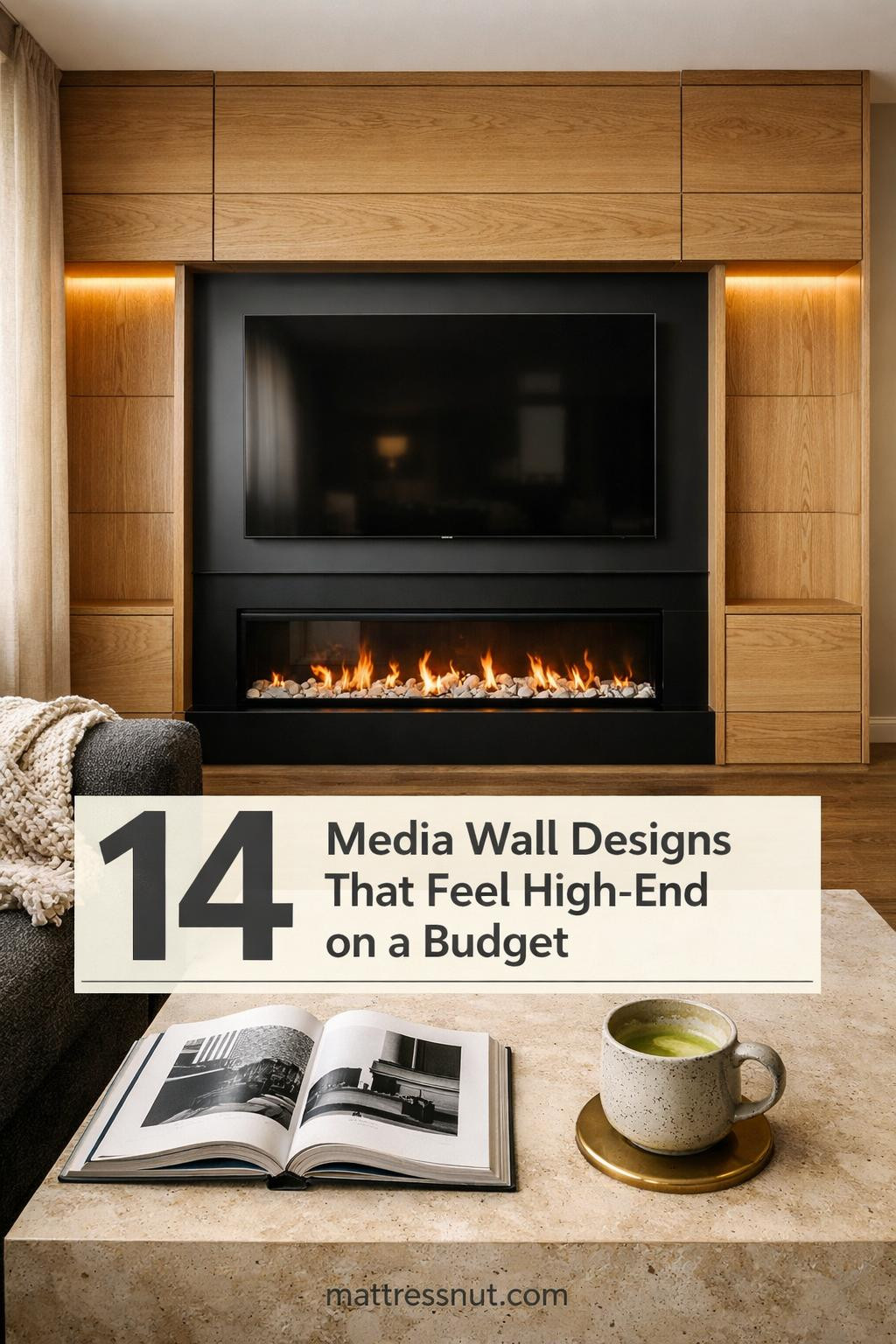
The media wall has replaced the traditional fireplace mantel as the living room's primary focal point in most newly renovated homes, because it solves the contemporary problem that the traditional fireplace cannot: where does the television go? For decades, the answer was an awkward compromise where the TV sat beside the fireplace or above it on a problematic mounting angle. The media wall format integrates both elements into a single designed composition that looks intentional rather than improvised. Floor-to-ceiling installations create the perception of custom millwork. Integrated shelving provides display space. The fireplace provides atmosphere on evenings when the television is off.
Material Choices: Wood, Stone, and Everything Between
🔗 Deeper reading: Best mattress under $1,000 2026 — our full 2026 roundup with detailed picks, firmness guidance, and current pricing.
Budget cooling pick — new Apr 2026
Sweetnight CoolNest Hybrid — queen $499
14" hybrid with PCMflux® phase-change foam, 3D cover with 10,000+ micro-vents, and 600 individually pocketed coils. Tests show an 8°C temperature drop — same cooling tech as the Tempur-Pedic Breeze at one-tenth the price ($4,999 vs $499 queen).
Medium-firm 6.5/10, ACA-endorsed (American Chiropractic Association), CertiPUR-US + OEKO-TEX. 4.8/5 stars, 100-night trial, 10-year warranty. Low motion transfer (6.79 m/s², 22% below average) makes it solid for couples.
New flagship 2026 — top of Puffy lineup
Puffy Legacy Hybrid — from $4,899
Puffy's most serious mattress to date. A 16" hybrid built in the USA, handcrafted with cashmere wool, horsehair and Talalay latex across 14 distinct layers. Ships in 7 business days because every unit is assembled to order — not off a warehouse stack.
Marketed as the Best Signature Cashmere Mattress 2026. 365-night home trial, lifetime warranty, free shipping in 1-2 days. If your spend is sub-$2k, the Lux Hybrid ($749) is the smarter entry point — but if you're benchmarking against Hästens or Duxiana, the Legacy is where Puffy finally competes.
Walnut paneling is the dominant material choice for media walls in 2026, appearing in both horizontal and vertical slat configurations. The warmth and grain character of walnut complements both the light of a fire and the ambient light of a television screen. White oak shelving paired with walnut paneling creates a two-tone composition that adds material complexity without visual chaos. Charcoal gray paneling is the cooler, more contemporary alternative that works particularly well in rooms with existing dark or industrial architectural elements.
Stone surrounds bring a different character entirely. A floor-to-ceiling stacked stone backdrop adds rich texture and visual depth, while a stained wood mantel floating between the television and electric fireplace brings warmth and contrast to the stone. Stacked stone media walls are bold, textured, and effortlessly timeless. Vertical wood slat walls, sometimes called slat walls or ribbed paneling, are gaining ground alongside traditional paneling approaches. The consistent vertical rhythm of slat walls creates clean lines, soft shadows, and an eye-catching sense of depth that changes as the light angle shifts throughout the day.
The Electric Fireplace: Performance and Design
Electric fireplaces have evolved dramatically in the last three years. The models currently available for media wall integration are convincing in their flame simulation, offer useful heat output for supplemental heating, and require nothing beyond a standard electrical outlet and a recess framed into the wall structure. The flame effects in premium 2026 models use multiple LEDs, mirrors, and misting systems to create a three-dimensional flame appearance that reads convincingly from normal viewing distances.
Linear electric fireplaces, which are wide and low rather than square, are the format that works best beneath a wall-mounted television. The horizontal emphasis of the fireplace opening complements the horizontal rectangle of the television above and creates a composed, balanced composition across the width of the media wall. Standard linear fireplace widths range from 40 to 100 inches, with 50 to 60 inches being the most versatile range for a typical living room width. The IKEA BESTÅ plus an electric fireplace insert is the most-cited budget media wall approach in 2026 and can get you 80 percent of the way to a custom result for under $2,000 in materials.
Floating Shelves and Built-In Storage
The floating shelves flanking the central fireplace and television zone are both functional storage and the design element that transforms a television mounting into an architectural feature. Floor-to-ceiling floating shelves create the impression of custom millwork regardless of how they are constructed. The floor-to-ceiling height is the crucial detail: shelves that stop below ceiling height read as furniture. Shelves that run to the ceiling read as architecture. Integrated lower cabinets at the base of the media wall provide closed storage for media consoles, gaming equipment, and the accumulated objects of domestic life. Handleless cabinet fronts with push-to-open mechanisms maintain the clean visual line of the wall without hardware interruptions.
LED strip lighting integrated behind the floating shelves, pointing downward to illuminate shelf contents, creates a glow that adds depth and warmth to the media wall in evening hours when ambient light is low. LED strips at floor level, pointing down from the lower shelf edge, create a floating effect for the shelf unit and add a horizontal light line that is particularly beautiful in rooms with dark floors and creates a cinema-like quality during film viewing.
Television Placement and Viewing Height
The most common mistake in media wall installation is mounting the television too high. When the television sits above a fireplace, the natural mounting point is eye level when standing, not when sitting. In practice, this means a television mounted at typical fireplace height is too high for comfortable viewing from a sofa, requiring everyone in the room to crane their necks upward for extended periods. This causes genuine neck strain over the course of a two-hour film.
The ideal television mounting height places the center of the screen at sitting eye level, approximately 42 to 48 inches from the floor for most sofa heights. This often means the television center sits at or slightly above the top of the fireplace opening rather than well above it. In a properly designed media wall, the space between the fireplace top and the bottom of the television frame is 12 to 18 inches, enough for a mantel shelf without forcing the television into an uncomfortable viewing angle. Recessing the television into the wall, so the screen face is flush with the surrounding paneling, creates the cleanest visual result and eliminates the shadow that a surface-mounted television casts at its edges.
Asymmetrical Shelf Styling: Making the Media Wall Live In
The way you style the shelves on a media wall determines whether the whole installation reads as a designed feature or a storage unit. The consistent advice from interior designers in 2026 is to leave some shelves empty. Visual breathing room matters. An entirely full media wall reads as storage. A media wall with considered gaps reads as display. The asymmetrical styling approach mixes books arranged both vertically and horizontally with ceramics, small sculpture, and plants at varying heights. No more than two or three objects on any single shelf maintains the calm that makes the composition readable. Books with neutral or complementary spines, ceramic objects in white or natural tones, and small-leafed plants or dried botanicals are the elements that appear most consistently in well-styled media walls in 2026.
Cable Management: The Detail That Makes or Breaks the Finish
A media wall that shows cables is a media wall that reads as unfinished, regardless of how beautifully everything else is executed. The standard approach for a wall-mounted television is to run all cables through the wall cavity to an outlet positioned directly behind the television mount. This requires cutting access holes in the drywall, running cables through the cavity, and installing flush-mount outlet boxes both behind the television and at the base of the media wall near the media console. All cables, power, HDMI, optical audio, ethernet, run through designated channels to a central point inside the media console where a power strip provides clean power distribution to all components.
Budget-Friendly Approaches That Still Look Expensive
The most budget-conscious approach to a media wall uses paint and MDF paneling rather than solid wood or stone. A floor-to-ceiling MDF panel wall painted in a deep, moody color, with a recessed electric fireplace and floating MDF shelves painted to match, creates a strong visual effect at a fraction of the cost of material-intensive approaches. The paint color does most of the work. Charcoal, deep navy, forest green, and soft black all read as sophisticated and intentional rather than budget-constrained when applied to a well-constructed panel wall.
Applying quality wood veneer over MDF panel construction is the intermediate approach that delivers most of the visual impact of solid wood at 40 to 60 percent of the material cost. Walnut veneer in particular is available in large sheets that can be applied with contact cement to painted or primed MDF surfaces. The result from any normal viewing distance is indistinguishable from solid walnut, and the veneer is actually more dimensionally stable than solid wood in the variable humidity conditions of a living room with a fireplace. If I had to pick one approach for maximum impact per dollar, I would start with walnut paneling and brass trim. The warmth of the walnut, the sophistication of the brass detail, and the visual depth created by a floor-to-ceiling installation create the kind of result that photographs beautifully and lives even better in person.
Smart Home Integration and Long-Term Maintenance
A media wall in 2026 is increasingly a smart home hub rather than simply a television and fireplace combination. Voice-controlled lighting, automated window treatments, and whole-room audio systems can all be integrated into the media wall build in ways that are completely invisible when not in use. LED strip lighting on the media wall can be integrated with smart lighting systems like Philips Hue or Lutron that allow color temperature and brightness adjustment from a phone or voice command. A movie-watching scene dims the shelf lighting and backlights the television for reduced eye strain. An ambient evening scene brings up warm tones and activates the fireplace to create atmosphere without watching anything on screen.
Wood media walls require the least maintenance of any material option. Dust with a soft cloth. Treat solid wood surfaces annually with a light coat of furniture oil or wax to maintain the finish and prevent drying. Avoid direct prolonged sunlight on wood surfaces. Electric fireplaces require cleaning of the glass front and inspection of the heating element annually according to manufacturer specifications. The built-in nature of a well-constructed media wall means it should be considered a semi-permanent installation. When planning the design, consider how your technology needs might change over the next five to ten years and build in flexibility where possible.
Stone Surround Details: Getting the Texture Right
A stone surround on a media wall fireplace is the element that most immediately communicates quality and permanence. The choice between stacked stone, large-format stone tile, and stone veneer panels affects both the visual character of the result and the installation complexity significantly. Real stacked stone, where individual pieces of natural stone are mortared in place, produces the most authentic and most dimensional result but requires a skilled mason and a properly reinforced wall structure that can handle the weight.
Stone veneer panels, which are thin slices of natural stone adhered to a lightweight backing material, deliver most of the visual character of real stacked stone at a fraction of the weight and installation complexity. They can be applied to standard drywall with the appropriate adhesive and are well within the capability of a skilled DIYer working over a long weekend. The result, when the panels are well-chosen and carefully installed, is genuinely indistinguishable from real stacked stone at normal viewing distances.
A charcoal stone surround grounds the design and prevents the media wall from reading as unfinished plain drywall adjacent to the more polished elements of the installation. The stone should extend at least 12 inches beyond the fireplace opening on each side and to the mantel shelf height above, creating a frame that feels proportionate to the fireplace opening rather than a thin border that reads as an afterthought.
Complete Your Space
Every beautiful room deserves a great night sleep. The Saatva Classic — white-glove delivery, 365-night trial.
Related Guides
Deeper reading on luxury mattresses
- Best luxury mattresses 2026: Puffy Legacy, Saatva Rx, Hästens & more — our full roundup of the 9 luxury brands that matter
- Puffy Legacy Hybrid review 2026 — is the $4,899 flagship worth it? (scored 9.3/10)
- Puffy Legacy vs Hästens — same materials, 10× price difference. Which wins?