
 by
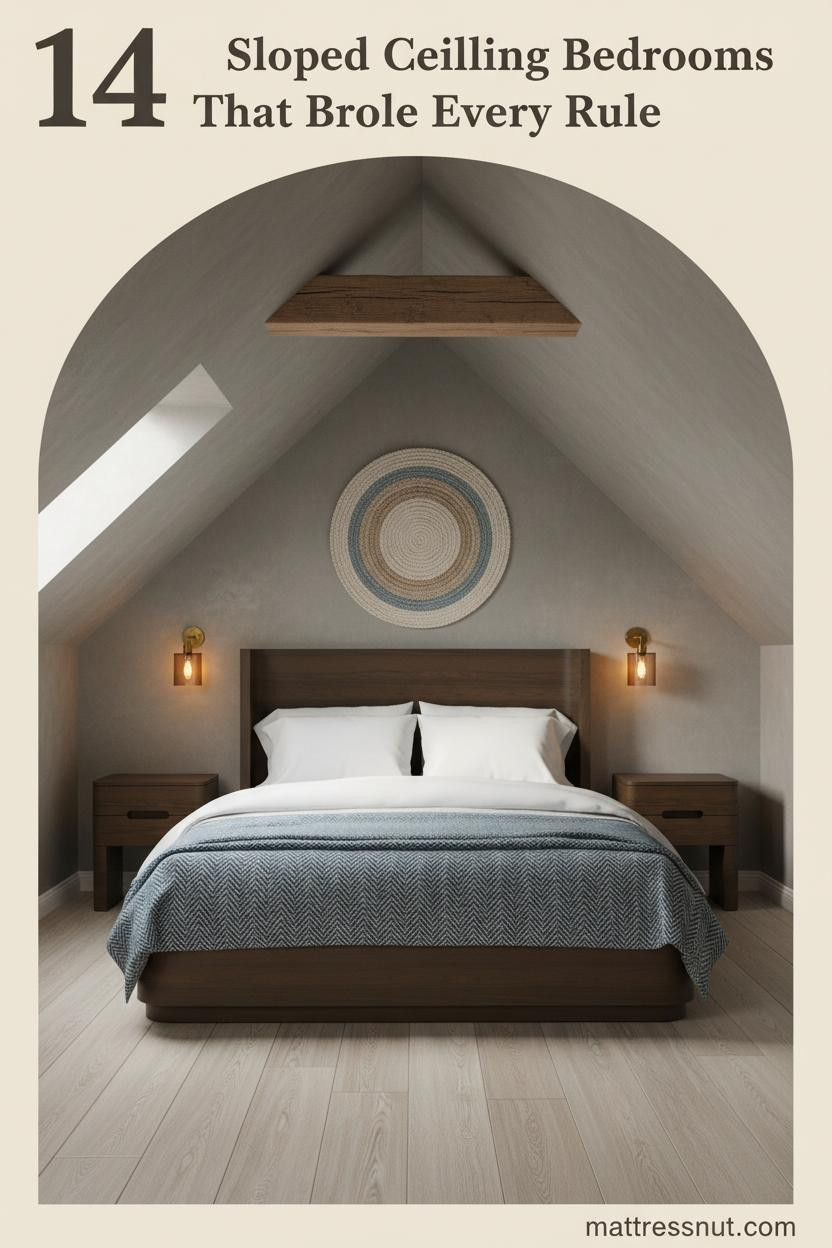
by The first thing I notice in a well-done sloped ceiling bedroom is that nobody apologized for the angles. They just worked with them.
These 14 rooms prove the geometry is the point. Not a problem to hide.
The Attic Angle That Makes the Whole Room Feel Intentional
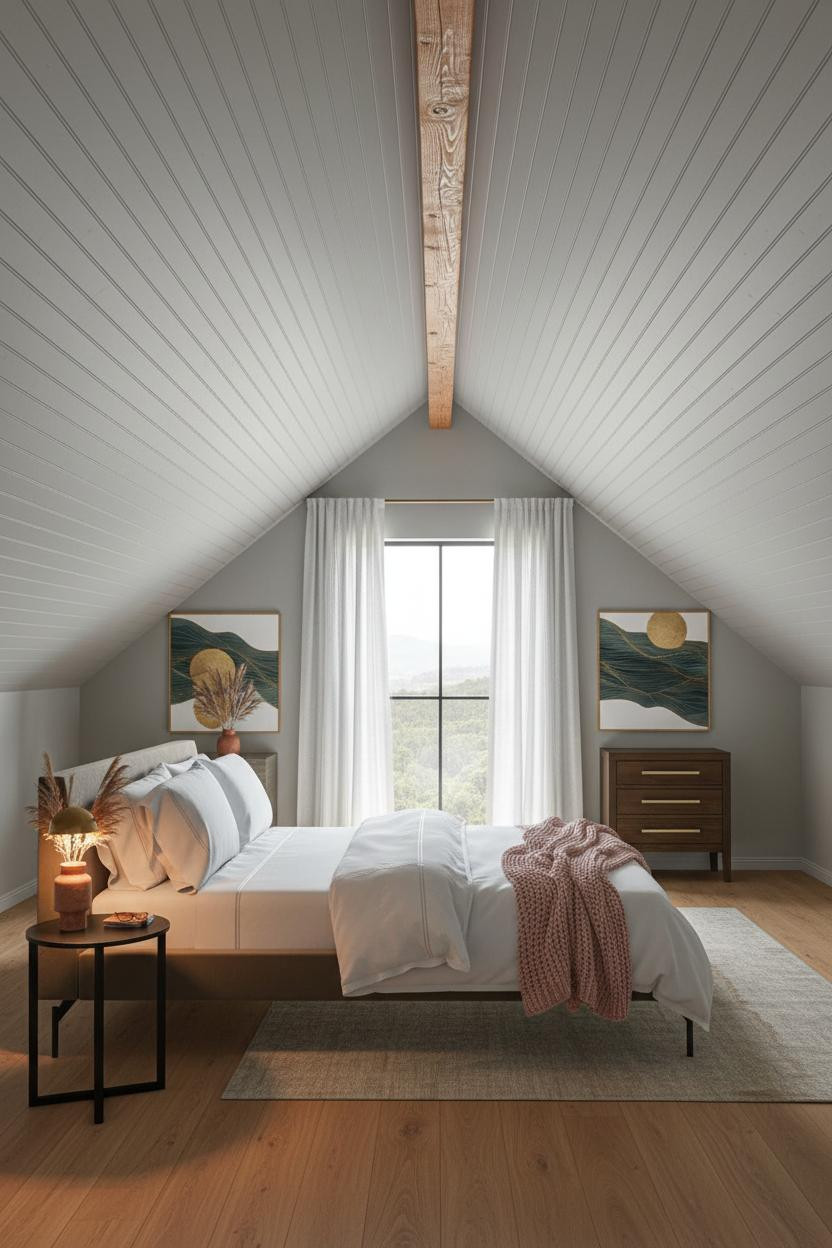


This is the kind of room that makes you want to stop and just sit in it for a minute.
Why it holds together: The raw timber ridge beam gives the converging planes a focal point, so the angles feel architectural rather than accidental. Greige limewash plaster on the slopes keeps the palette from fighting the geometry.
Steal this move: Center the bed directly under the ridge. It turns the roof's peak into a headboard the room provides for free.
Dark Tones in a Low Attic Actually Work Here
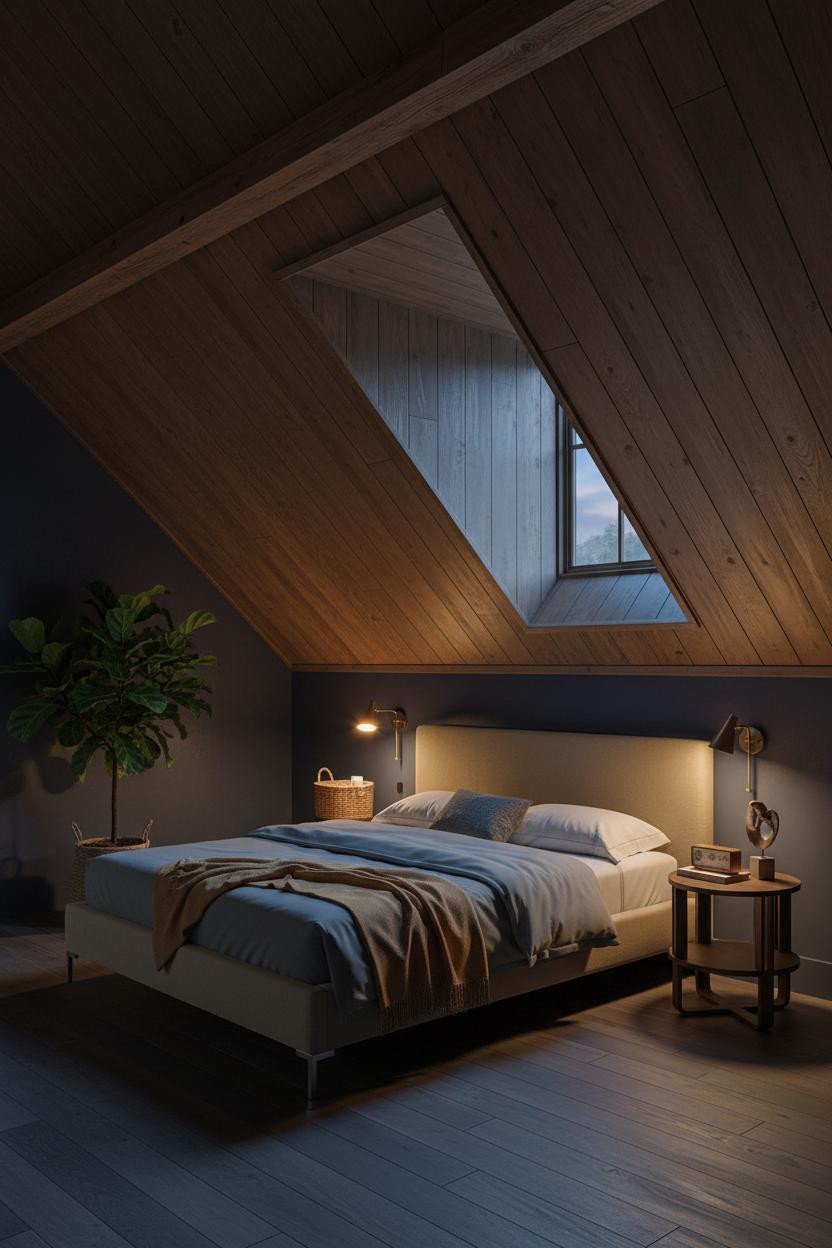


Bold choice. Most people would never go dark in a low-ceiling attic.
But here the tobacco-stained board-and-batten ceiling and deep indigo walls create something you can't manufacture with pale paint. The room feels like it's been here for decades.
What makes it work: Dark tones on angled planes actually compress the geometry in a way that feels moody and intentional, especially paired with warm amber sconce light on both sides of the bed.
Worth copying: Low platform bed. High contrast. Nothing else is competing.
Morning Light Changes Everything in This Honey-Toned Attic
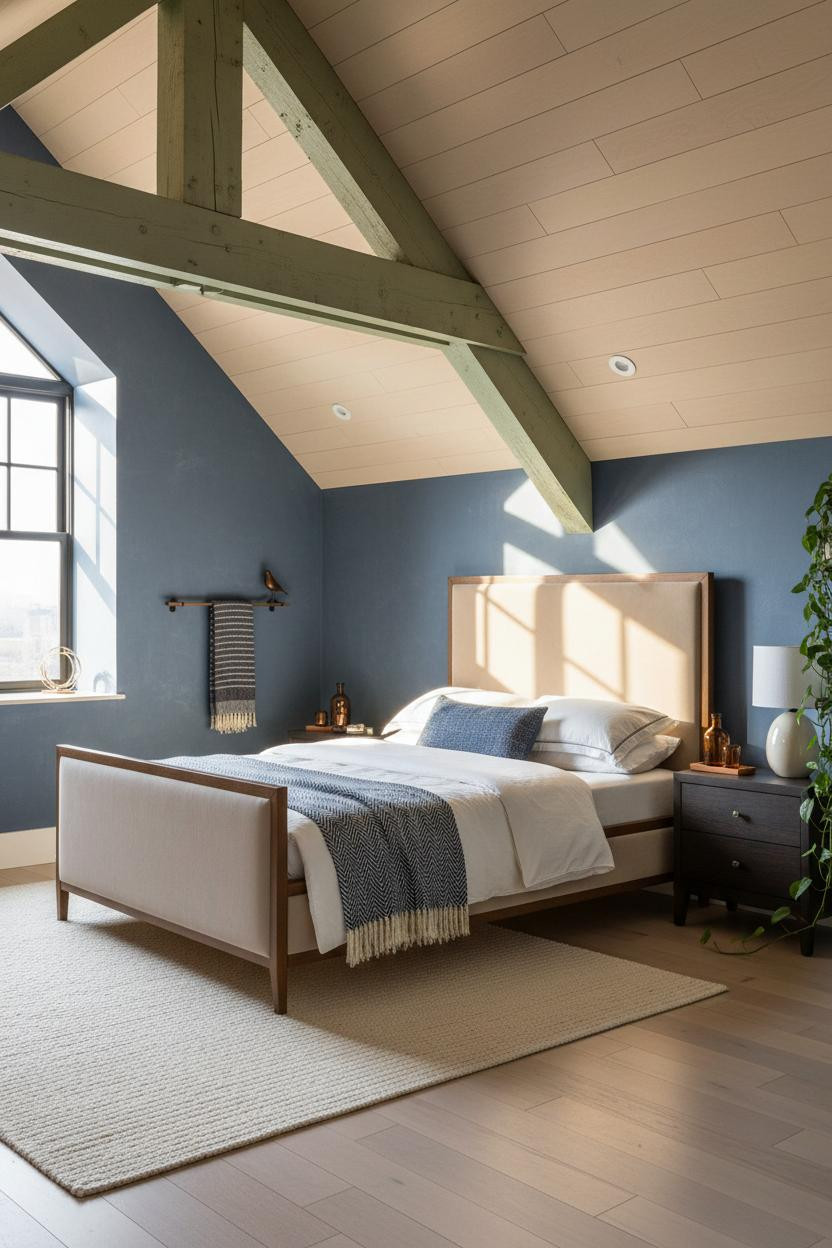


I keep coming back to this one. There's a looseness to it that's hard to explain.
Why it feels right: Pale honey tongue-and-groove boards on the ceiling catch morning light in raking strips, making the slope a feature rather than a liability. The faded denim blue walls below stop it from reading too warm.
A graphic kilim runner across the foot of the bed adds pattern without touching the walls. That's the whole trick.
Why Whitewashed Shiplap Belongs in a Farmhouse Attic
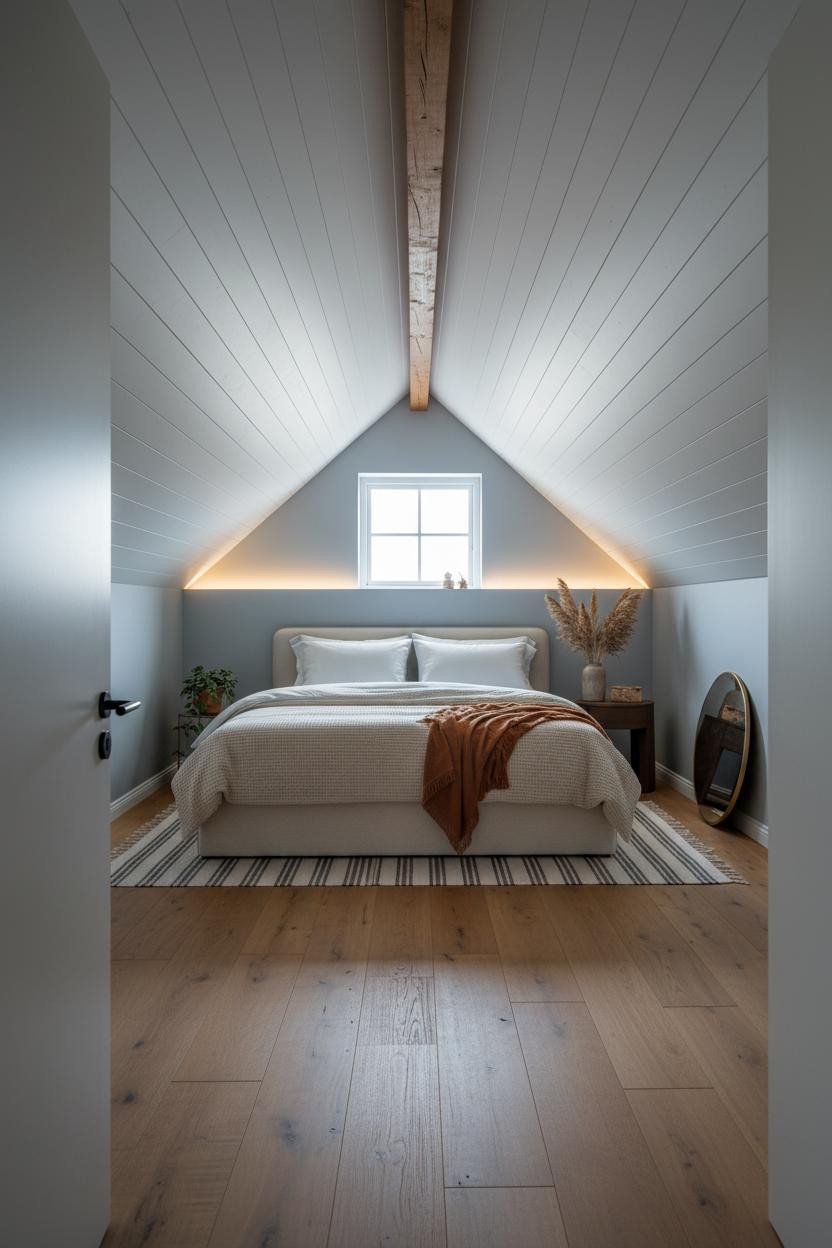

Nothing fancy. That's the point.
Design logic: Whitewashed shiplap on the ceiling planes softens the angle while keeping the raw timber ridge beam as the room's defining line. The pale surface reflects overcast light downward, which helps balance the low knee walls on both sides. See more approaches like this in our roundup of 14 low ceiling attic bedrooms that feel real.
The smarter choice: Keep the walls muted. Let the beam and the shiplap do all the talking overhead.
The Scandi Attic Room I'd Move Into Tomorrow
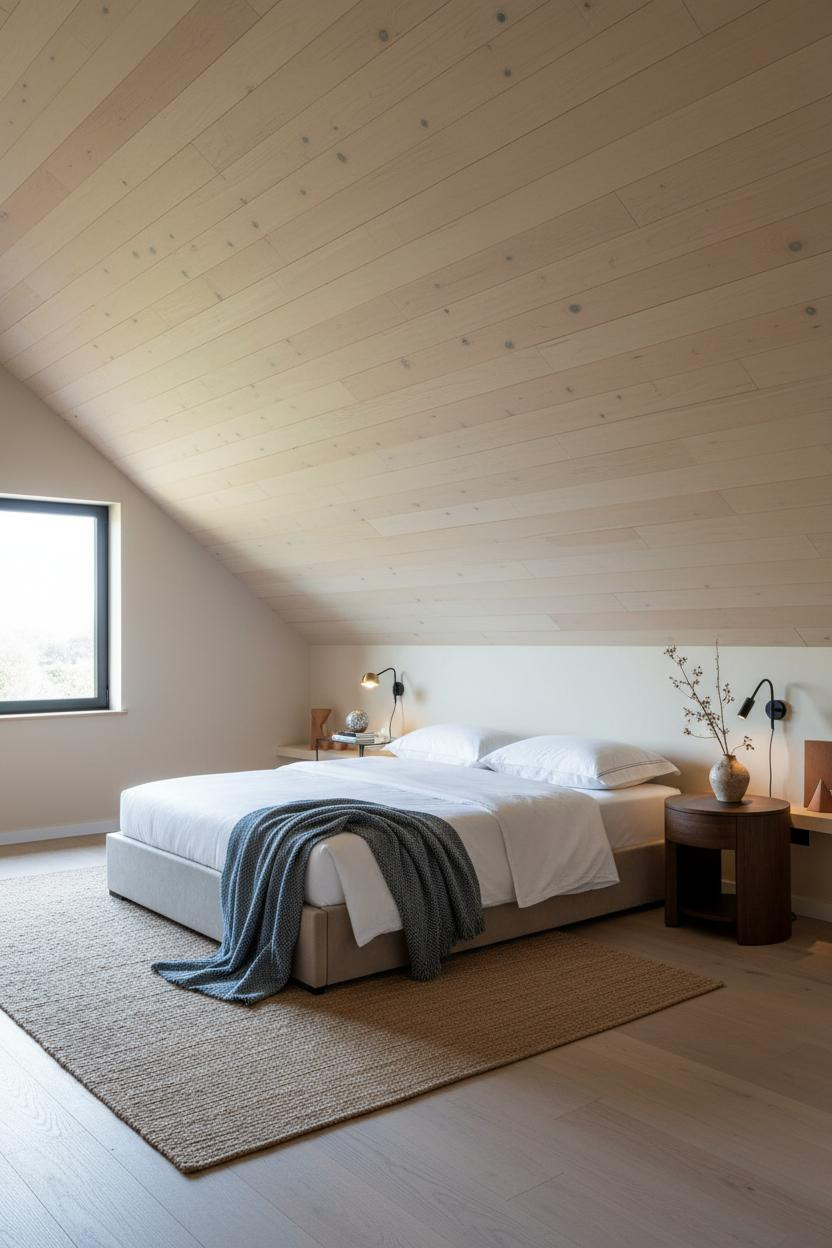

Honestly, the restraint here is what gets me. Cool morning blue light, pale birch grain, nothing competing.
Why the palette works: Ivory plaster walls at the gable ends keep the birch tongue-and-groove ceiling from feeling too woody, while the steel blue herringbone throw adds just enough contrast to stop the whole thing reading as one flat tone.
One smart swap: Built-in knee-wall shelving takes dead corner space and turns it into storage without adding a single piece of furniture.
Boho Attic Done Right: Warm Wood and Loose Textiles
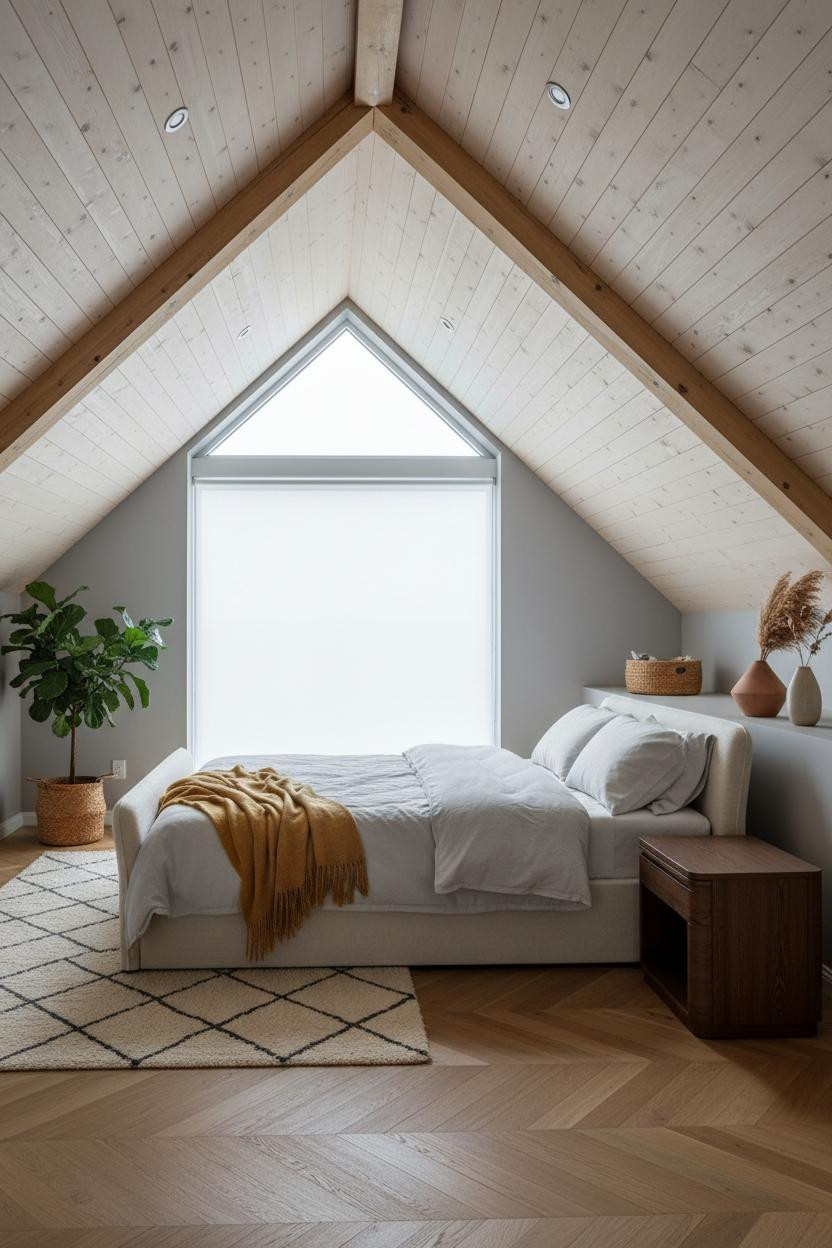
The room feels warm and lived-in without trying too hard to be either of those things.
In a way that feels collected rather than decorated, the pale pine tongue-and-groove ceiling pairs with the herringbone parquet below to create a material dialogue that holds without a single accent color. The mustard wool throw does the rest.
The easy win: Swap a plain area rug for a Moroccan diamond-pattern wool rug under the bed zone. It adds pattern low, which keeps the slopes clean.
Whitewashed Beams and a Woven Wall Hanging Do More Than You'd Expect
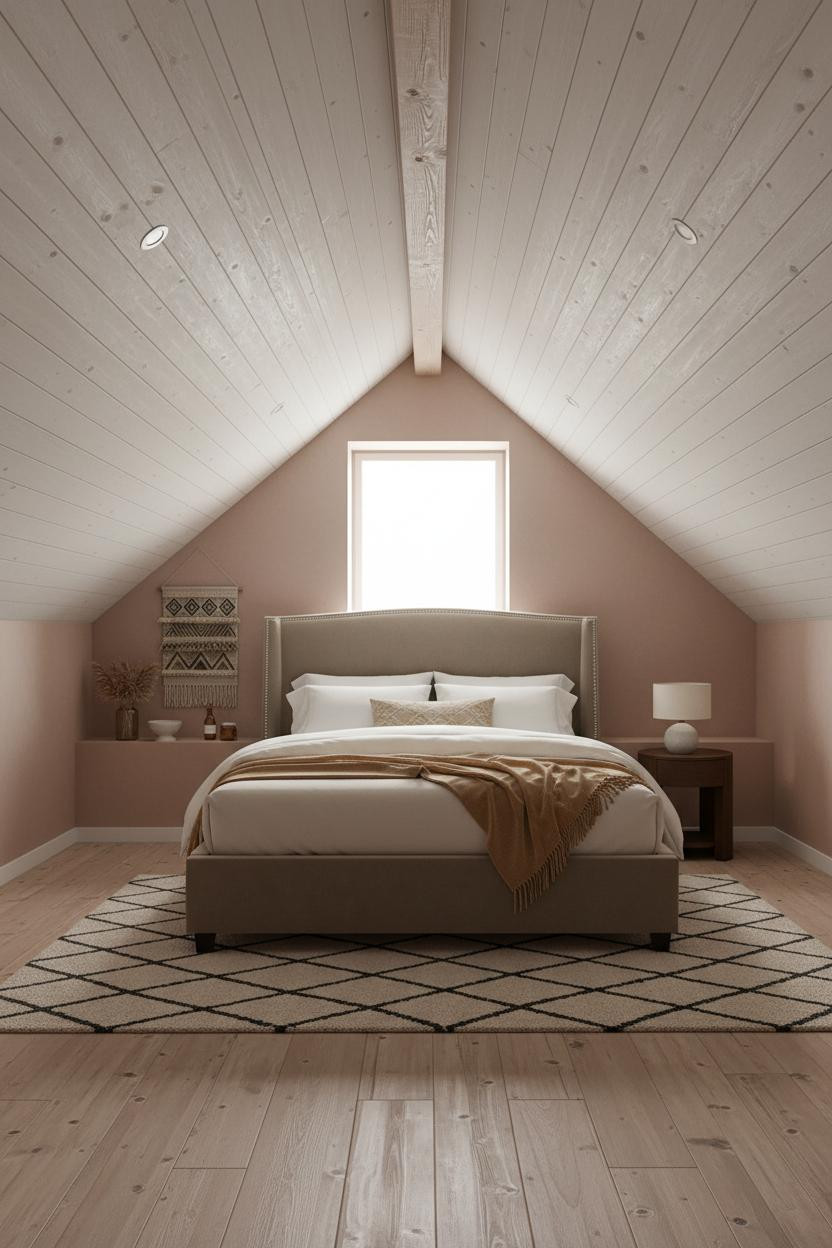
I almost scrolled past this. Glad I didn't.
What gives it presence: Mounting a woven wall hanging low on the gable end wall pulls the eye forward rather than up, which somehow makes the sloped ceiling feel like the right height. The whitewashed planks above stay light in a way that feels pale and airy, not blank. For more ideas on working with tight proportions, check out 11 small nightstands for tight spaces.
The finishing layer: A ceramic bedside lamp over a reclaimed pine floor is one of those combinations that just works, every time.
Exposed Beams and a Platform Bed Are a Reliable Pair
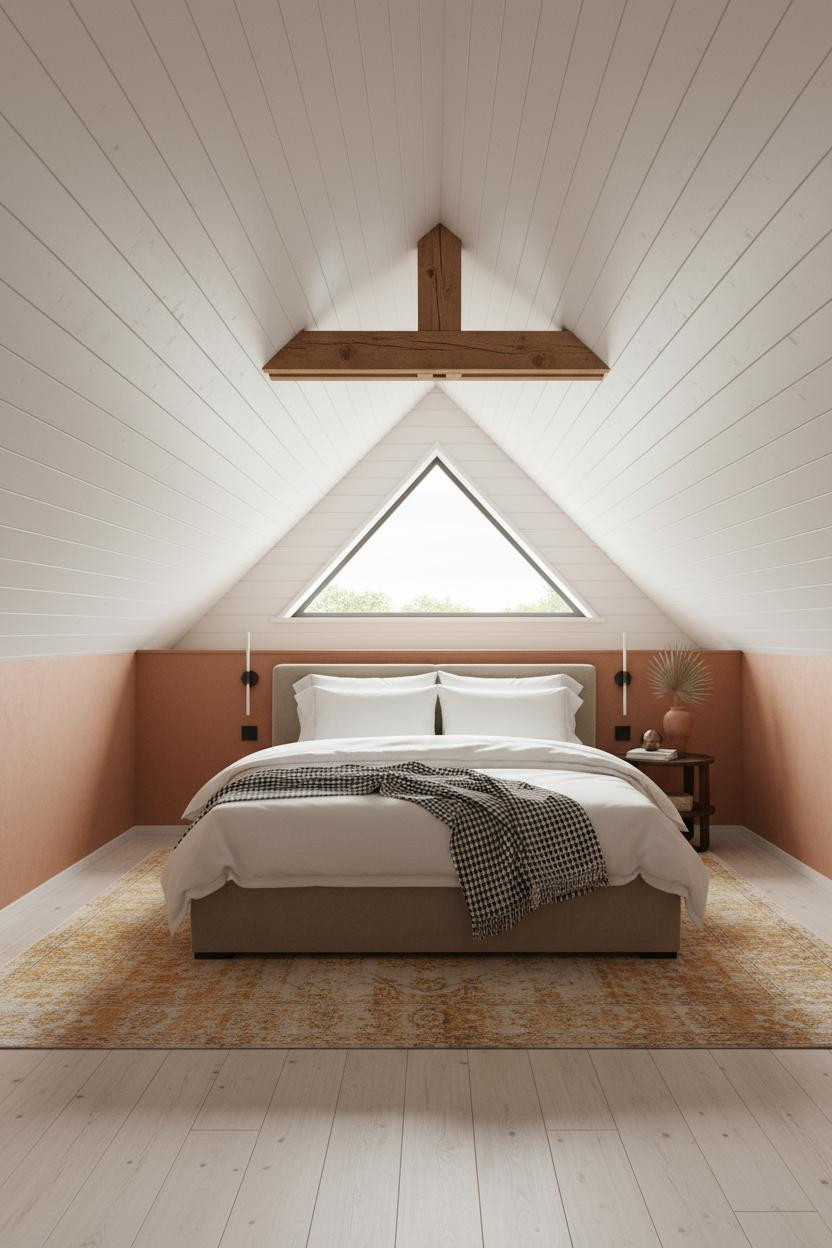
In a space under an angled roof, the smarter choice is going lower with furniture, not smaller.
Why it lands: The linen-white shiplap ceiling lets the raw-timber ridge beam carry all the visual weight overhead, while terracotta plaster at the gable ends grounds the warmth below. The room feels calm and cohesive rather than cramped.
Pro move: A platform bed drops the eye line just enough that the knee walls stop feeling like obstacles.
Sage Board-and-Batten Under a Pendant Light Is a Real Commitment
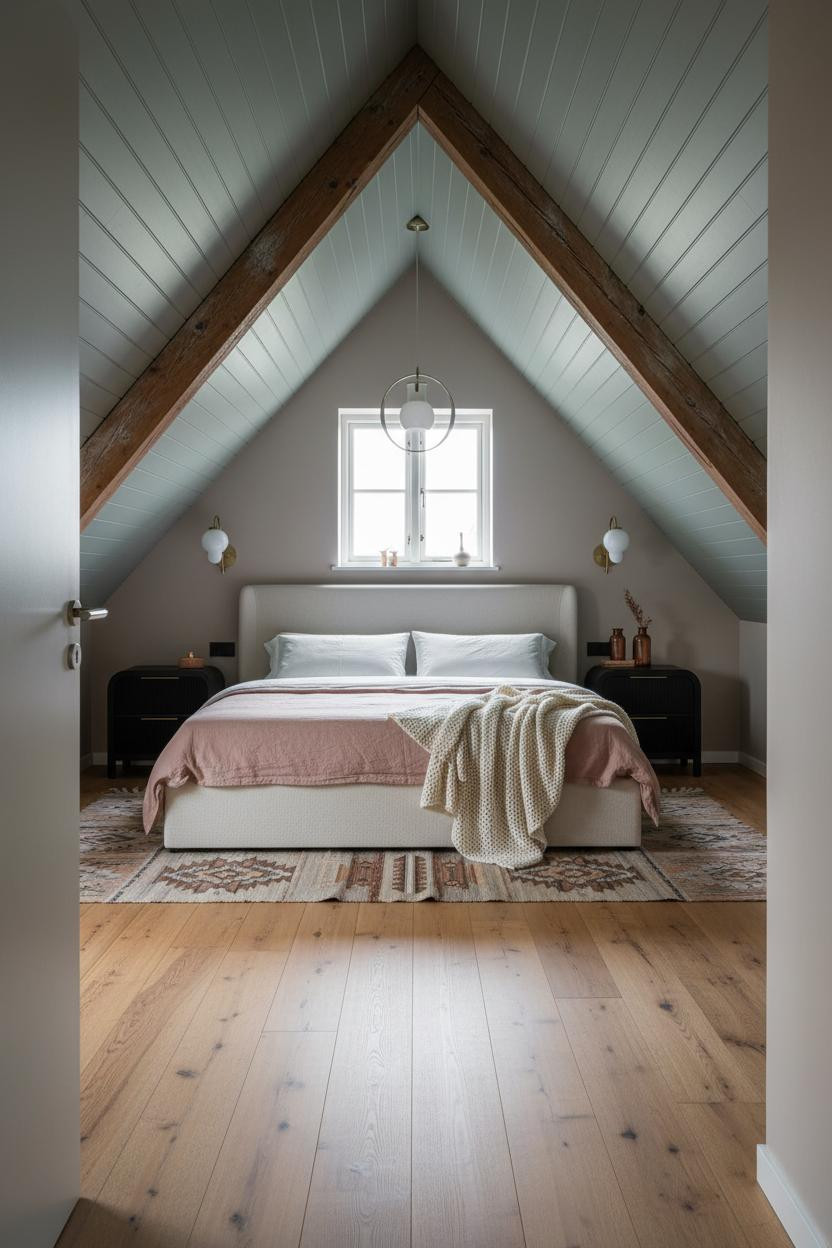

Fair warning. Painting your entire ceiling slope in sage is not a casual decision.
Why it pays off: Dusty sage board-and-batten on converging ceiling planes creates a color envelope that makes the attic feel like it was designed this way from the beginning, not just inherited. Pair it with taupe limewash walls and the contrast is immediate but not jarring.
A sculptural pendant hung from the ridge beam fills dead vertical space while still feeling purposeful. That detail alone changes the room. Browse more attic bedroom ideas with angled ceilings if you're planning something similar.
This Coastal Loft Turns Concrete Floors Into a Feature
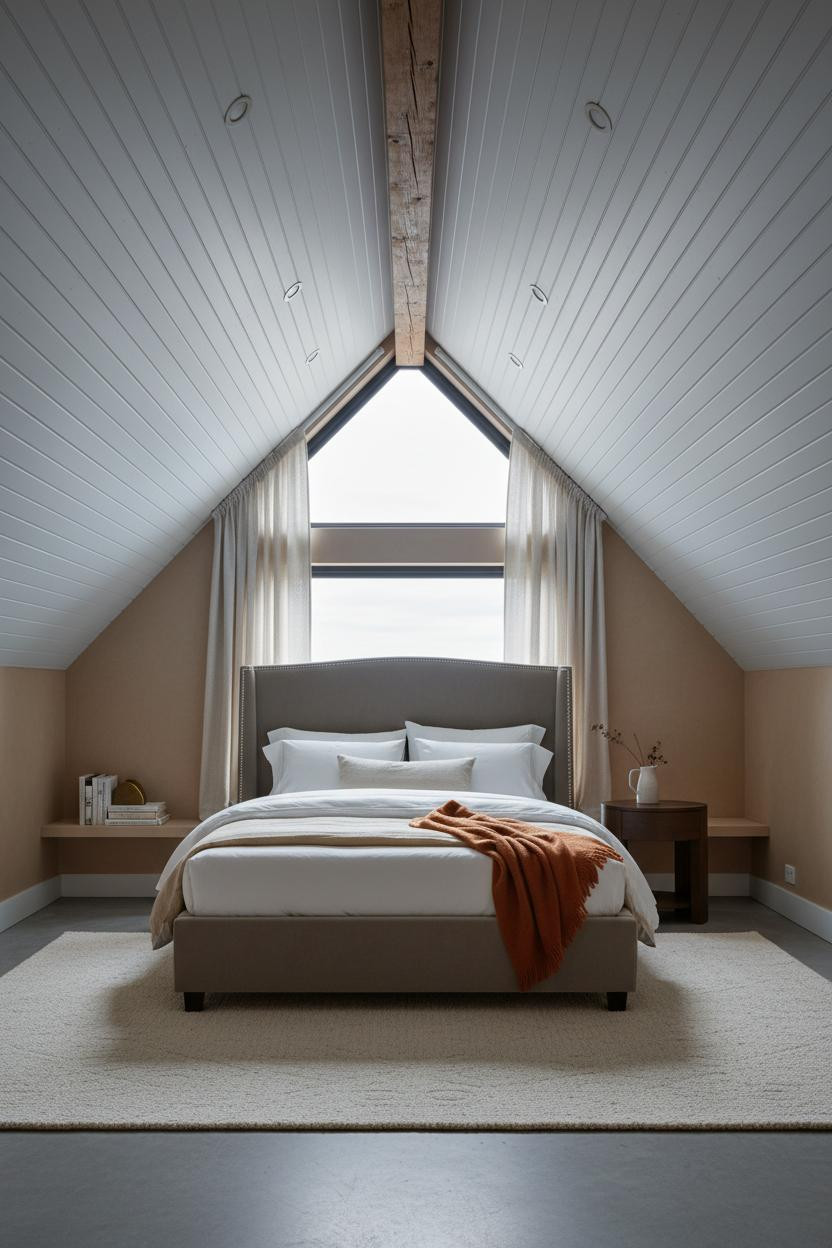
Most people carpet over concrete without thinking. This room didn't.
What creates the mood: Polished concrete under dove grey board-and-batten slopes reads as a deliberate material choice, especially once a chunky cream wool rug grounds the bed zone. The cool floors and warm clay plaster walls at the gable ends balance each other without either fighting for attention.
The practical move: A floor-to-ceiling linen curtain at the gable window adds softness where the architecture is at its hardest edge.
The Dusty Rose Attic Room That Somehow Works on Everyone
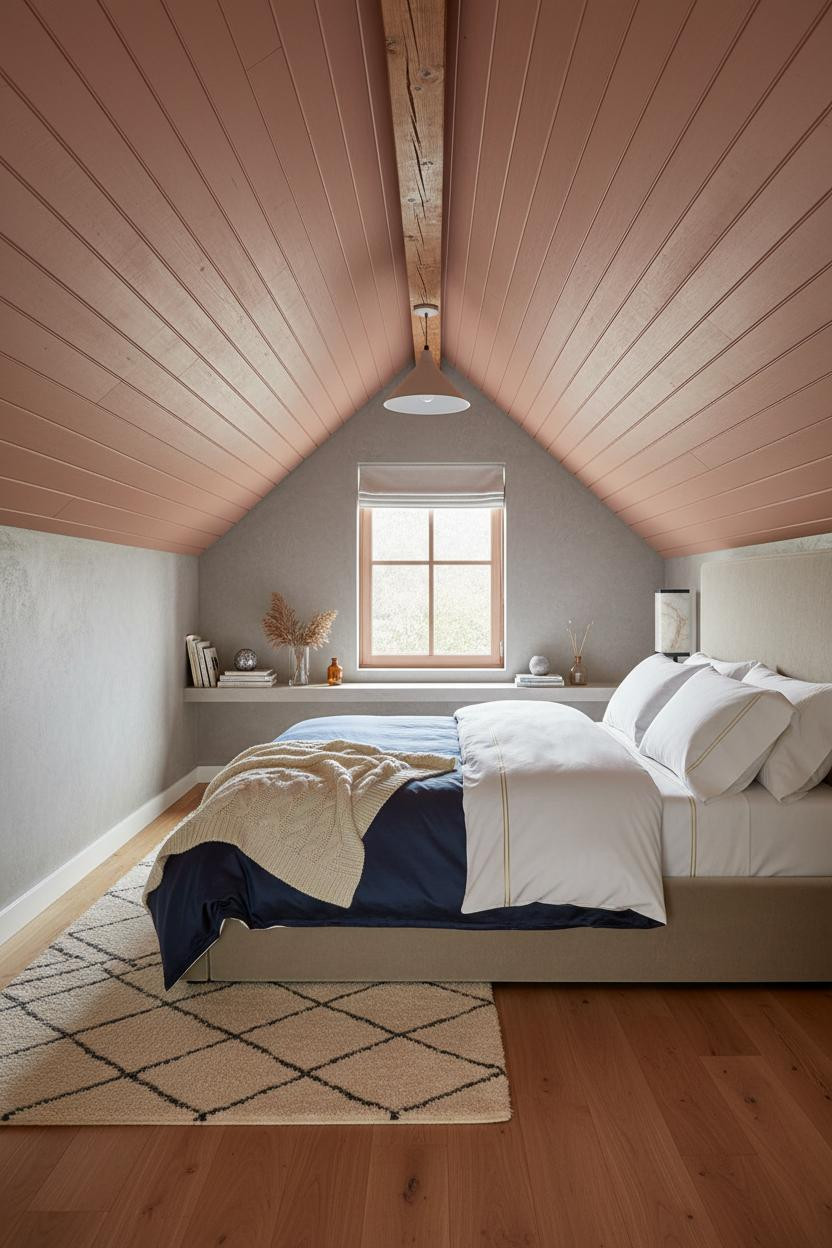

It shouldn't work. Pink tongue-and-groove on a sloped ceiling sounds like a lot. But it doesn't read that way in person.
Why it feels balanced: Dusty rose planks on the overhead planes are muted enough that stone grey walls below act as a reset, keeping the room warm without being heavy. The navy sateen duvet pulls the whole palette into something that reads as grown-up rather than girlish.
Don't ruin it with: Overhead lighting. The pendant centered under the ridge beam is enough. Let the sconces do the rest.
Sage Shiplap Is Having a Moment and This Room Earns It
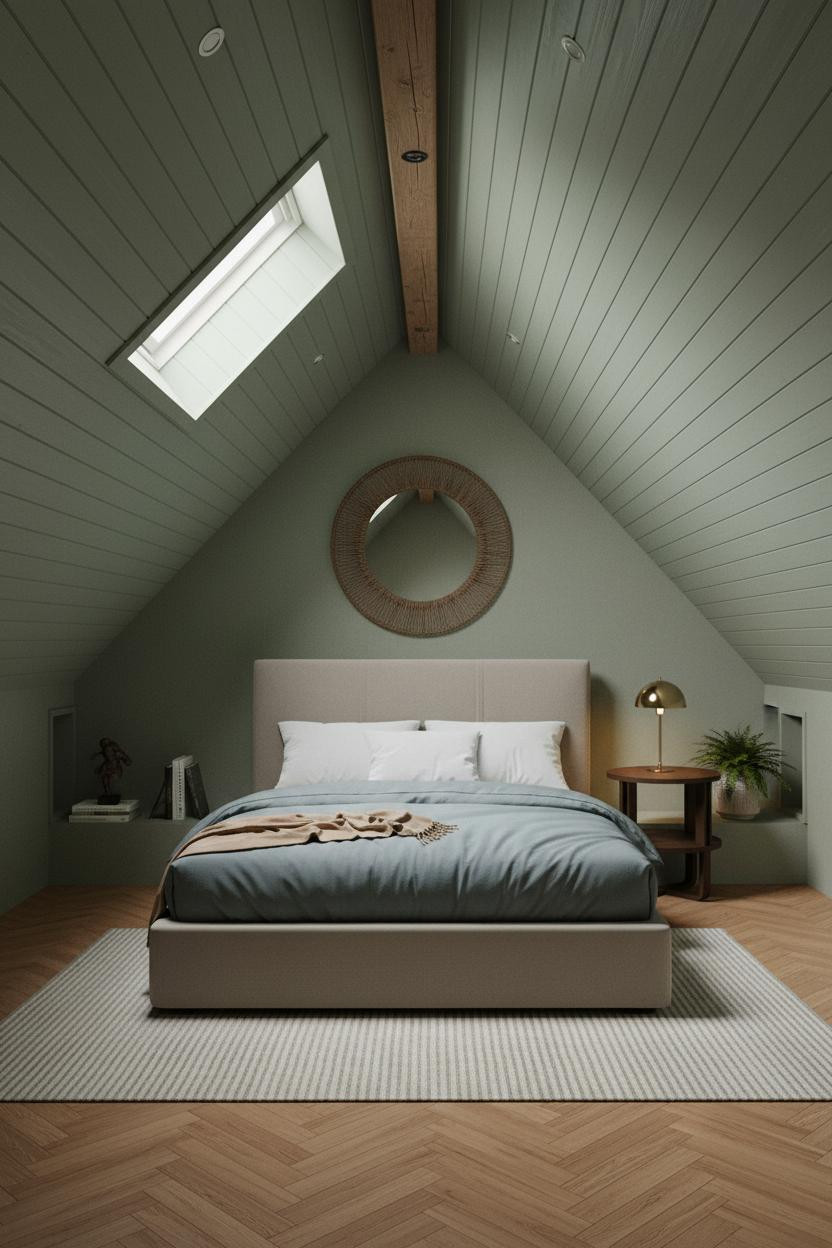

This one is divisive. Sage shiplap on an angled ceiling is a strong opinion.
What carries the look: The herringbone parquet floor in warm honey oak grounds the green above, so the whole room feels collected rather than trying too hard. Moss-toned plaster at the gable ends keeps the palette continuous, which helps balance the visual weight of the sloped planes. Admittedly, the round wicker mirror on the gable wall is doing a lot of quiet work here too.
Where to start: Paint the shiplap first. Everything else will follow from that decision.
Charcoal Tongue-and-Groove in a Japandi Attic Is Not a Safe Play
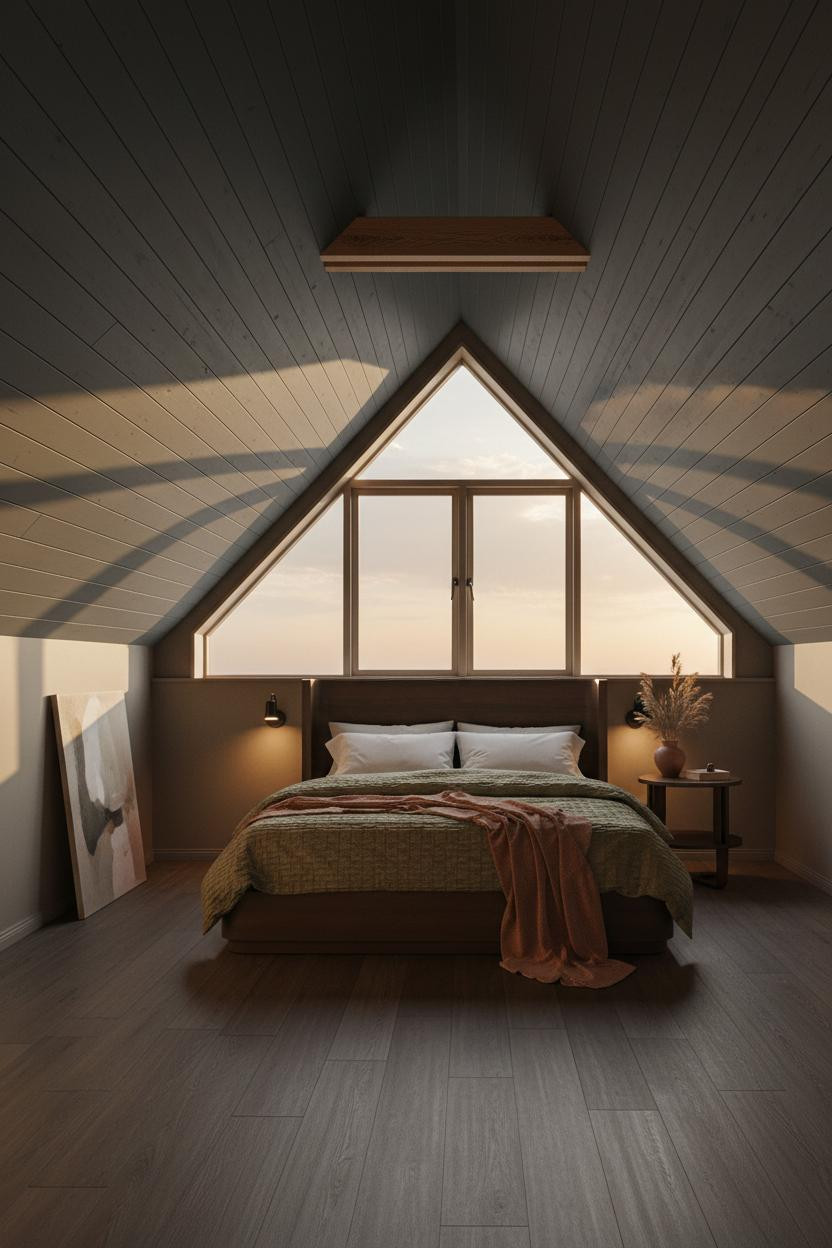

Painting your attic ceiling charcoal grey is the kind of move that makes people nervous before they see it done well.
The real strength: Charcoal tongue-and-groove boards on converging roof planes make the geometry razor-sharp, and the raw ridge beam catches side light in a way that warm pale ceilings simply can't. Mushroom plaster walls below keep it from tipping into oppressive. Dark walnut floors pull it together. And the olive waffle-weave duvet adds the one soft material the room needs to breathe.
Ideal if: You want a Japandi bedroom that actually feels like it has a point of view.
A Wooden Ladder Shelf Against a Sloped Wall Is Smarter Than It Looks
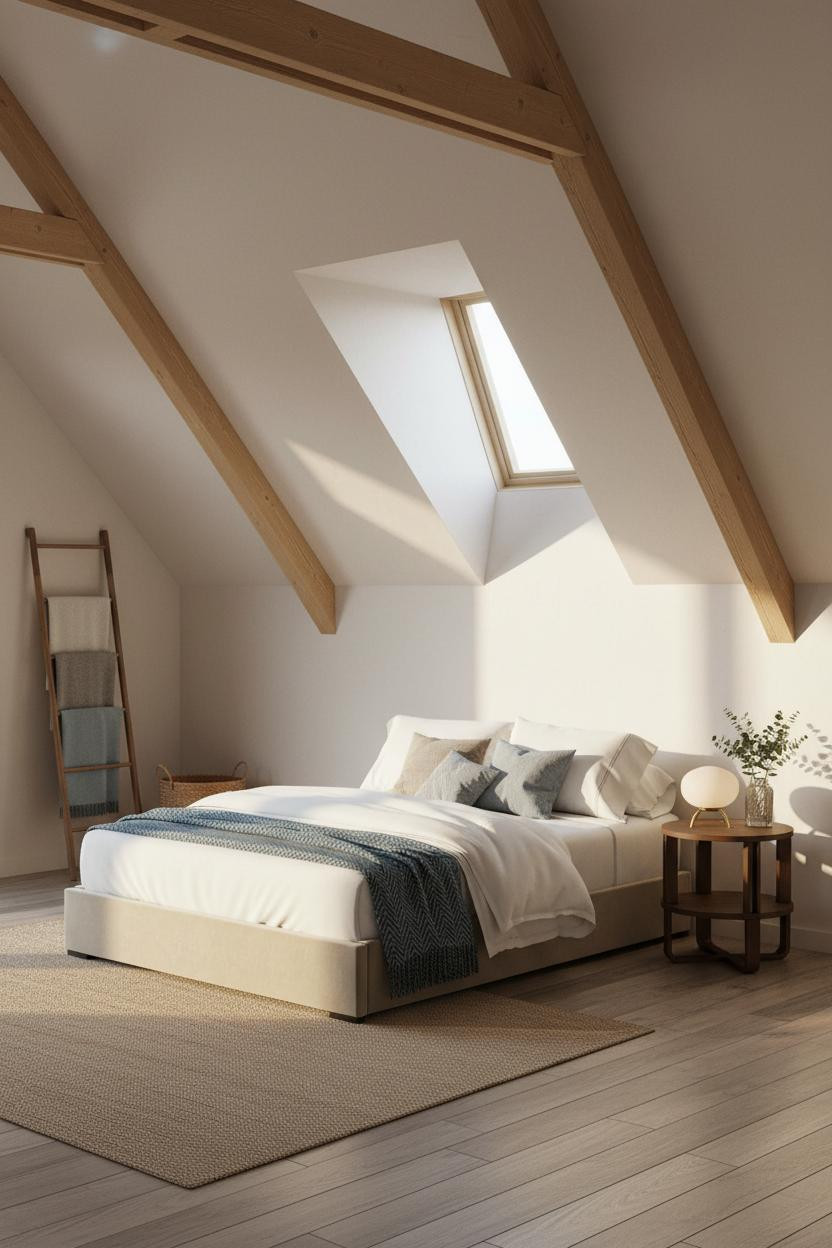
Having a wooden ladder shelf lean against the sloped wall changes how you actually use the room. It fills the zone where conventional shelving can't go.
What softens the room: Warm white plaster and bleached oak flooring keep the Scandi palette light in a way that feels genuine, not staged. The natural wood beams running ridge to eave add raw texture without darkening the space. And the natural jute rug grounds the bed zone so the concrete-pale floor doesn't feel cold. For a broader look at how this kind of layout works, see our guide to 14 attic loft bedrooms that feel bigger.
What to copy first: The ladder shelf. Freestanding, no installation, and it fits exactly where the slope starts to drop.

Our #1 Pick
Saatva Classic Mattress
America's best-selling online luxury innerspring. 365-night trial, lifetime warranty, free white glove delivery.
Shop Saatva Classic
The Foundation Of Every Beautiful Bedroom
Every room in this list gets the geometry right. But the walls get repainted. Linen gets swapped out. The mattress stays, and it should be worth keeping.
The Saatva Classic is what I'd put under any of these beds. Dual-coil support that holds its shape, a cotton cover that breathes through warm attic nights, and a Euro pillow top that's soft without losing structure. It's the kind of mattress that still feels right years from now.
Good design ages well because it's made well.

The attic rooms that stick with you are the ones where the angles were never the problem. They were always the point. Start with the bed. The rest figures itself out.
Frequently Asked Questions
How do I make a sloped ceiling bedroom feel intentional rather than awkward?
Create a focal point that embraces the angles, like a raw timber ridge beam or architectural feature. Keep your color palette cohesive so the slopes blend naturally with the rest of the room rather than fighting the geometry.
What's the best way to arrange a bed under sloped ceilings?
Position your bed in the lowest part of the room with your head against the slope so you can sit up comfortably. This typically means placing the headboard on the angled wall side rather than under the tallest point.
What furniture sizes work best in rooms with sloped ceilings?
Stick with low-profile furniture that won't crowd the angled walls. Consider platform beds with minimal height, and measure clearance carefully before buying tall dressers or armoires that could block pathways.
What colors help sloped ceiling bedrooms feel cohesive?
Use the same shade on both the sloped walls and flat ceilings to create visual continuity. Muted, earthy tones like greige or soft neutrals work particularly well because they don't compete with the room's natural geometry.