
 by
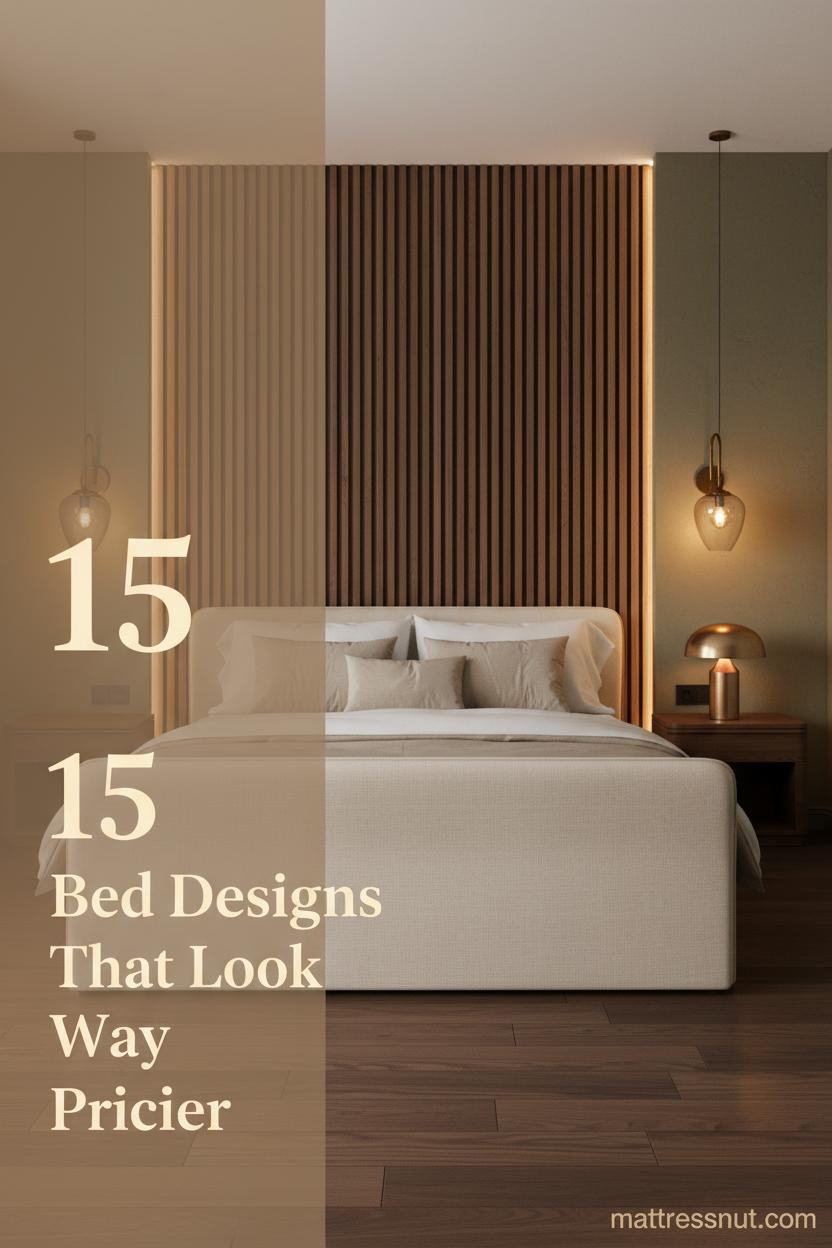
by Think your bedroom is too plain to pull off something this considered? The best new bed designs prove otherwise. It's rarely about budget. It's about knowing which one detail to commit to.
These 15 rooms each do one thing well, and that's enough to make the whole space feel finished.
The Slatted Walnut Wall That Does All the Work
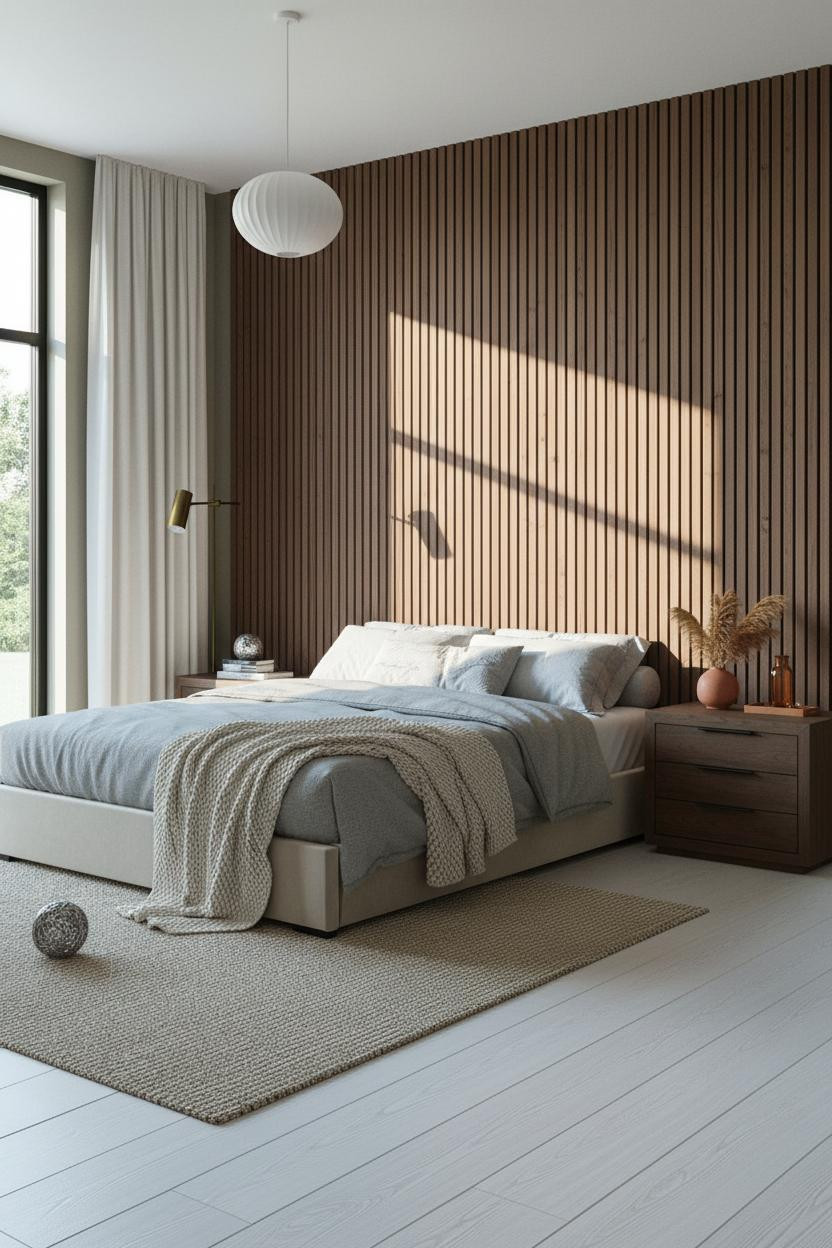

This is the kind of room that makes you want to slow down in the morning.
Why it works: The floor-to-ceiling walnut slat wall creates strong linear rhythm that flat paint or a hung headboard simply can't match. It turns the whole bed wall into architecture.
Steal this move: Keep the flanking walls in a muted olive matte so the wood stays the single focal point. One feature. Full commitment.
Morning Light Through Steel-Frame Windows
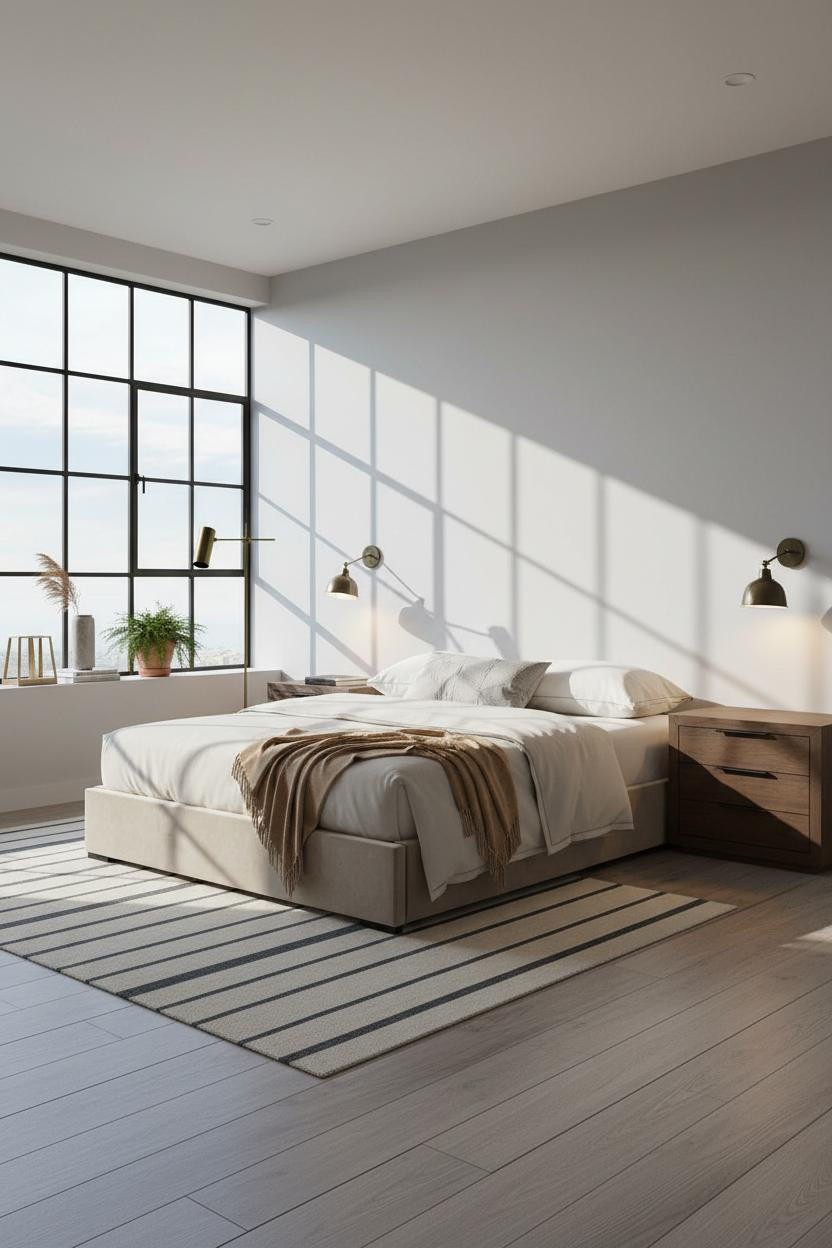
Not every room needs a statement wall. Sometimes the windows are enough.
But here, the Crittall-style steel-frame window wall does double duty: it floods the room with cool morning light while printing geometric shadow lines across dove grey plaster. That contrast is the whole design.
Pro move: Pair the hard grid lines of the window with a soft upholstered headboard and a camel wool throw to keep things from going too industrial.
Why Exposed Brick Still Works in a Modern Bedroom
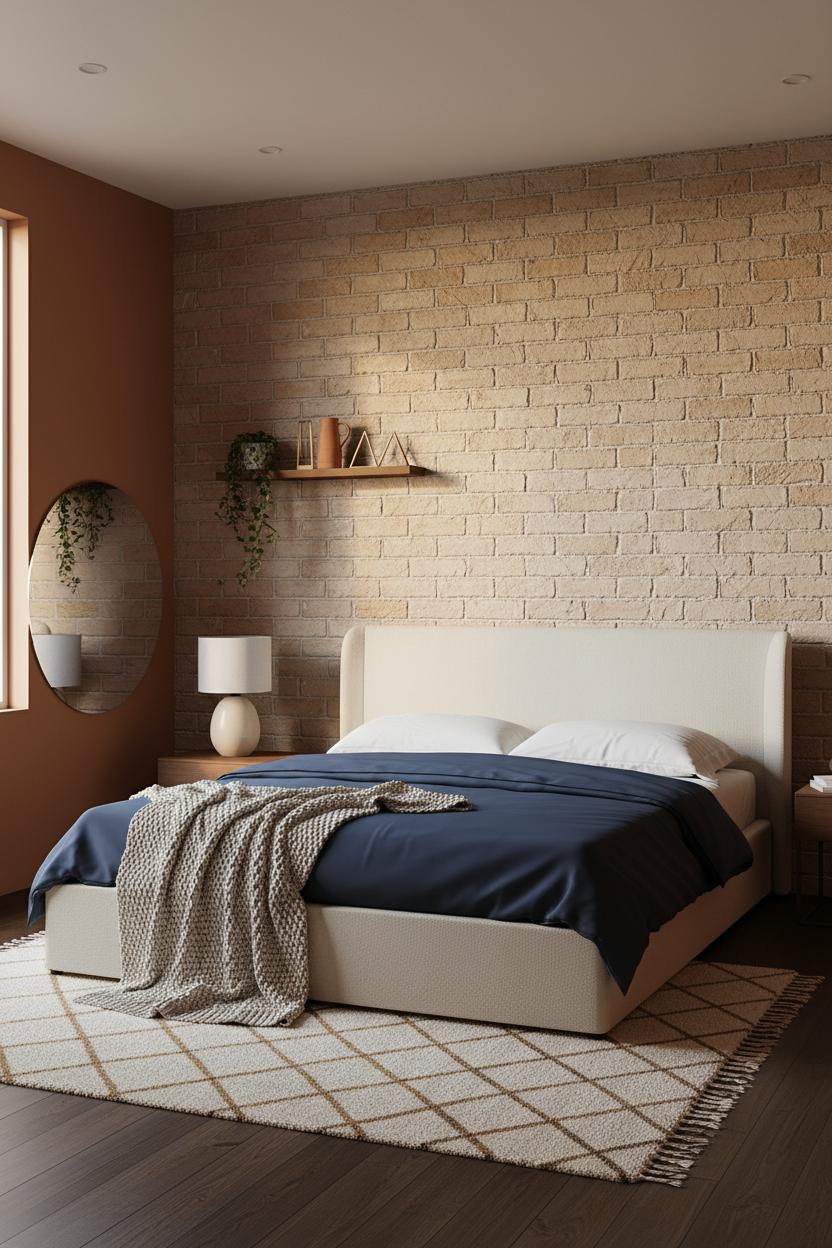


I keep coming back to this one. The brick shouldn't feel this calm, but it does.
What changes the room: Sand-washed brick in pale cream tones reads warm without feeling rustic, especially when the flanking walls stay in a deep rust-ochre matte that echoes the mortar lines.
Worth copying: Layer a navy sateen duvet against the pale brick for contrast. The cool against warm stops the room from feeling too heavy in the earth tones.
I Wasn't Sure About Indigo Until I Saw This
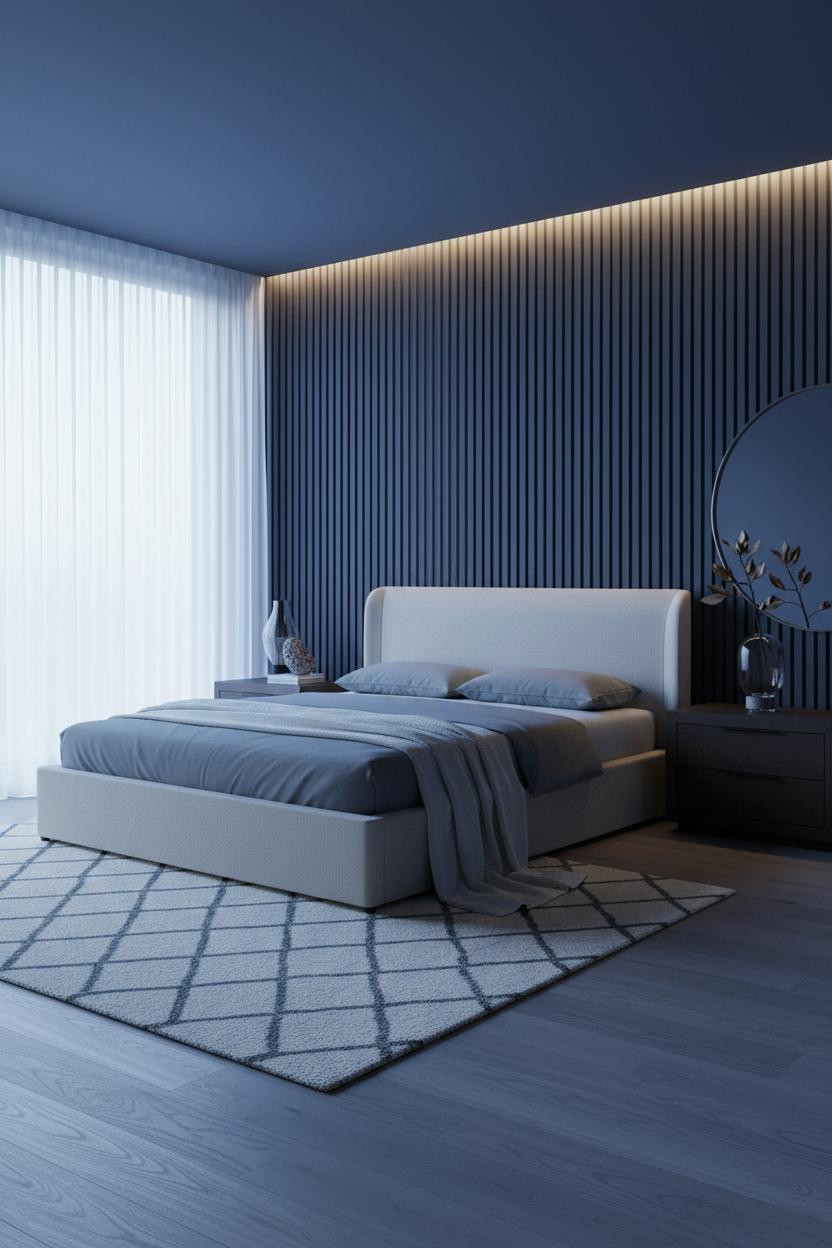
Fair warning. This one is not for the commitment-shy.
But the backlit grooved panel wall in deep indigo-lacquered MDF is the reason the room feels still and intentional rather than just dark. The hidden LED edge glow keeps it from swallowing the space whole.
In a dark room, the smarter choice is bleached oak floors and ivory bedding — not lighter walls. The contrast does more.
What a Coffered Ceiling Actually Does for Scale
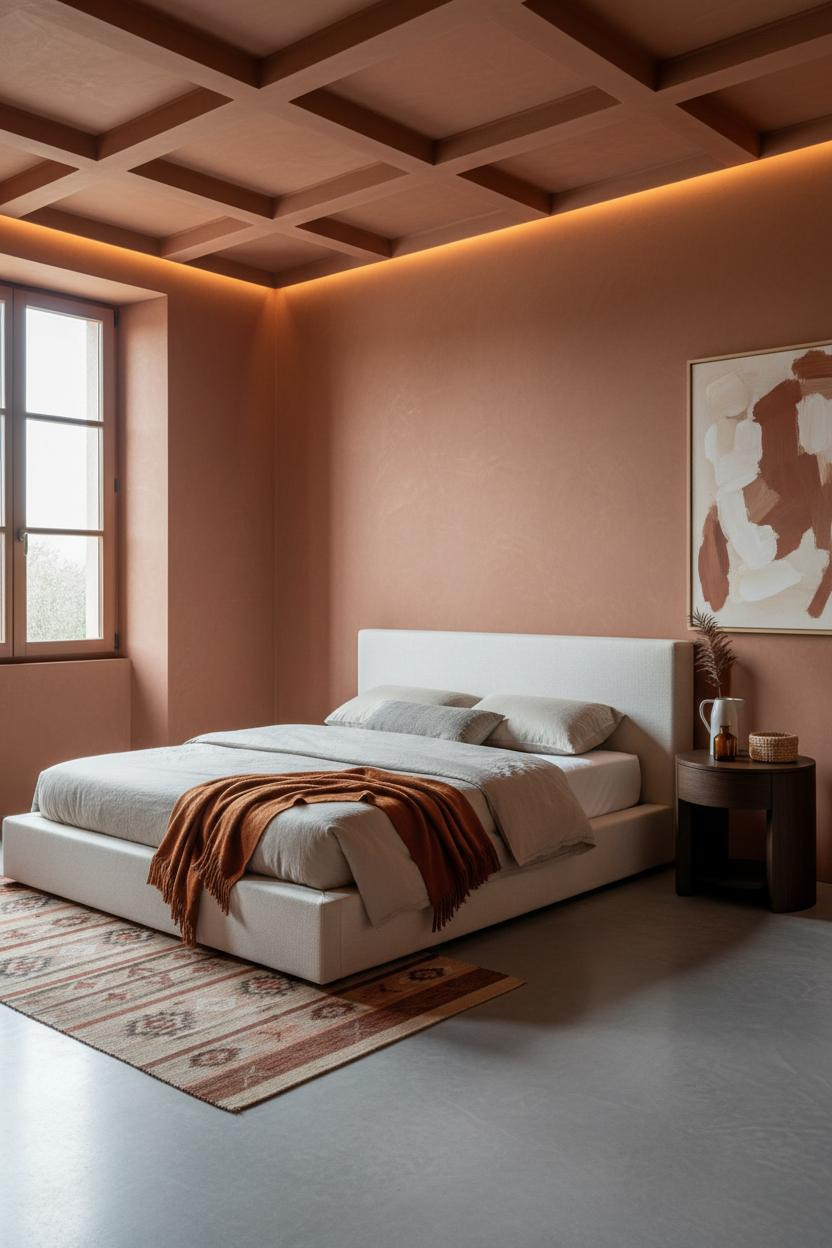
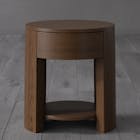
Most people work on the walls and forget to look up. That's the miss.
Where the luxury comes from: Deep recessed plaster coffers draw the eye upward and give the room vertical proportion that no paint color can replicate, especially against warm terracotta walls underneath.
The finishing layer: Cove LED at the ceiling edge warms the coffer panels at night. It shifts the room from Mediterranean daytime to something genuinely intimate after dark.
The Gallery Wall Move That Actually Holds Together
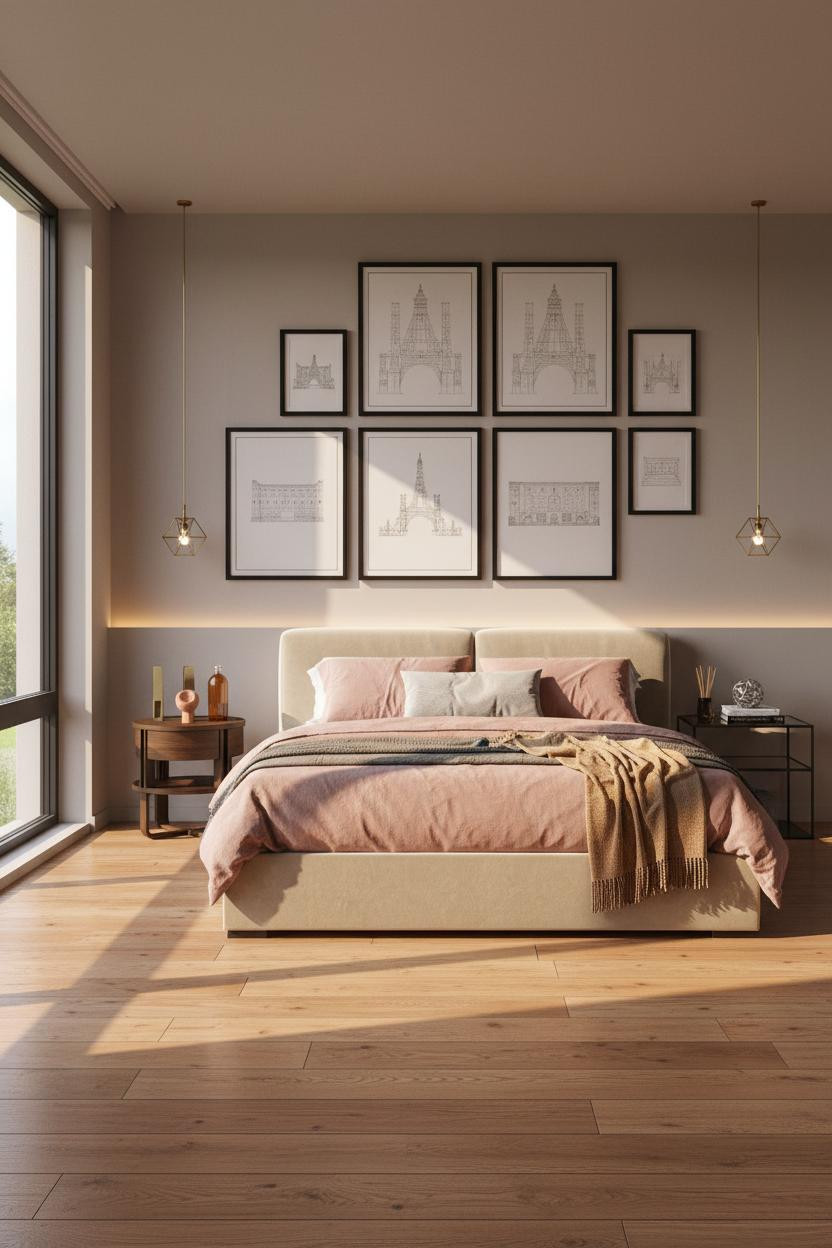

Gallery walls fail when the frames compete. This one works because it doesn't try to.
Why it holds together: Uniform matte black metal frames against soft taupe plaster create graphic rhythm without turning the wall into a collage. Same frame, varied prints. That's the formula.
Avoid this mistake: Don't mix frame finishes trying to add personality. The uniformity is what makes it feel considered rather than collected over time.
Paneled Wainscoting Is Having a Quiet Comeback
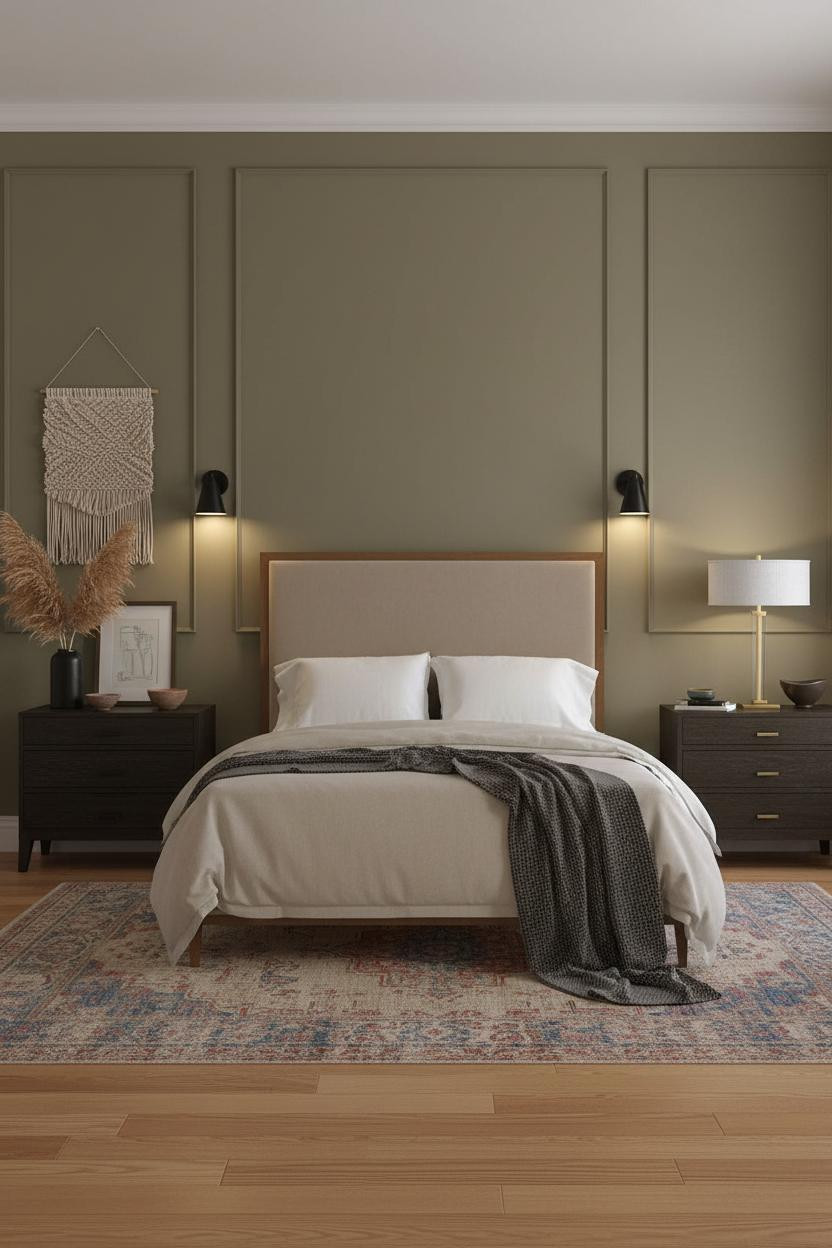

And honestly, it never really left. It just needed a better paint color.
What gives it presence: The deep khaki lower panel split by a crisp shadow-gap rail creates a horizontal anchor behind the bed, while the cream plaster above keeps the room from going too dark. Two tones, one wall, zero effort at night.
Pair it with a faded vintage Persian rug and warm sconces. Nothing too matchy. That's what keeps it from looking like a show home.
Curved Headboards: The Retro Shape Worth Revisiting
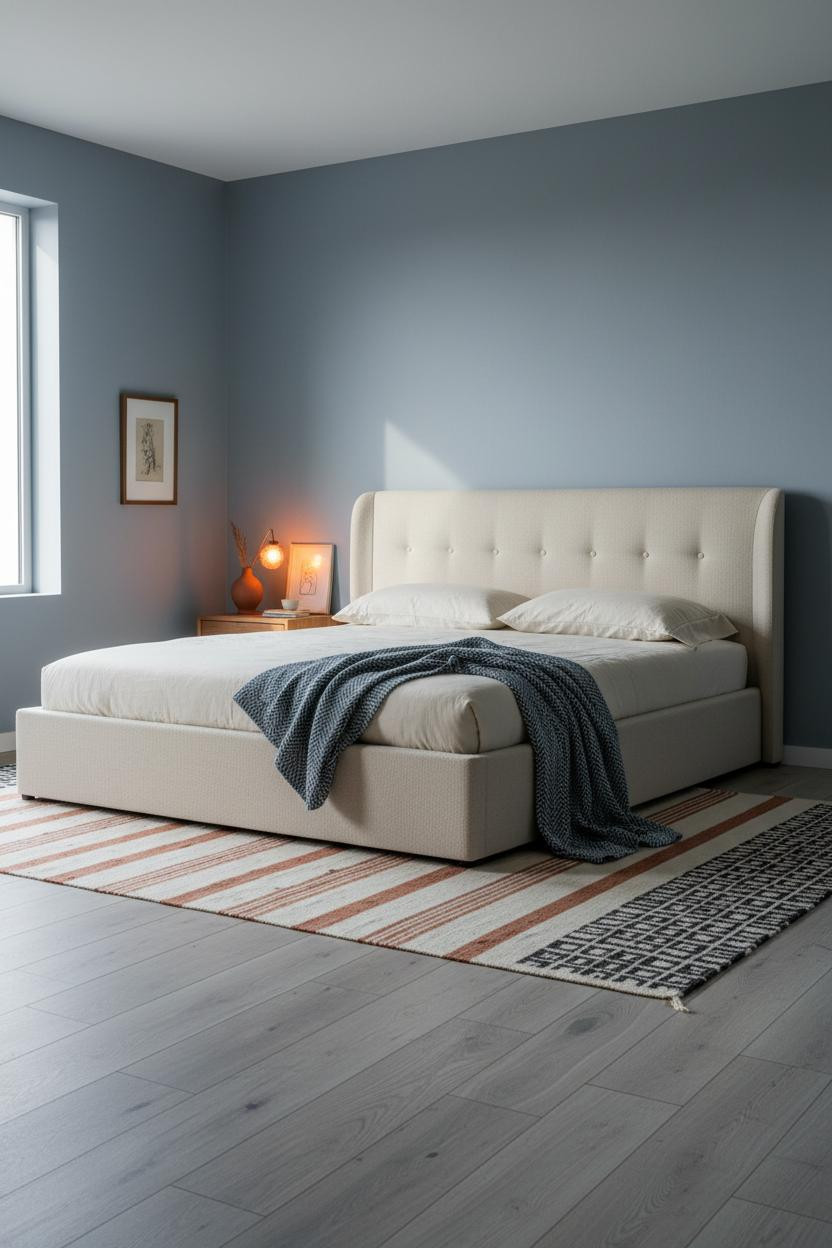
I almost scrolled past this. Glad I didn't.
A floor-to-ceiling arc in natural linen upholstery sounds like a lot, but the curve actually softens a boxy room in a way that flat paneling never does. It catches the side-rake daylight across every fold, which helps balance the dusty blue-grey walls without adding another color.
The easy win: Keep the headboard fabric neutral and let the throw do the color work. A steel blue herringbone against cream percale is enough.
Oak Slat Walls Look Even Better the Second Time Around
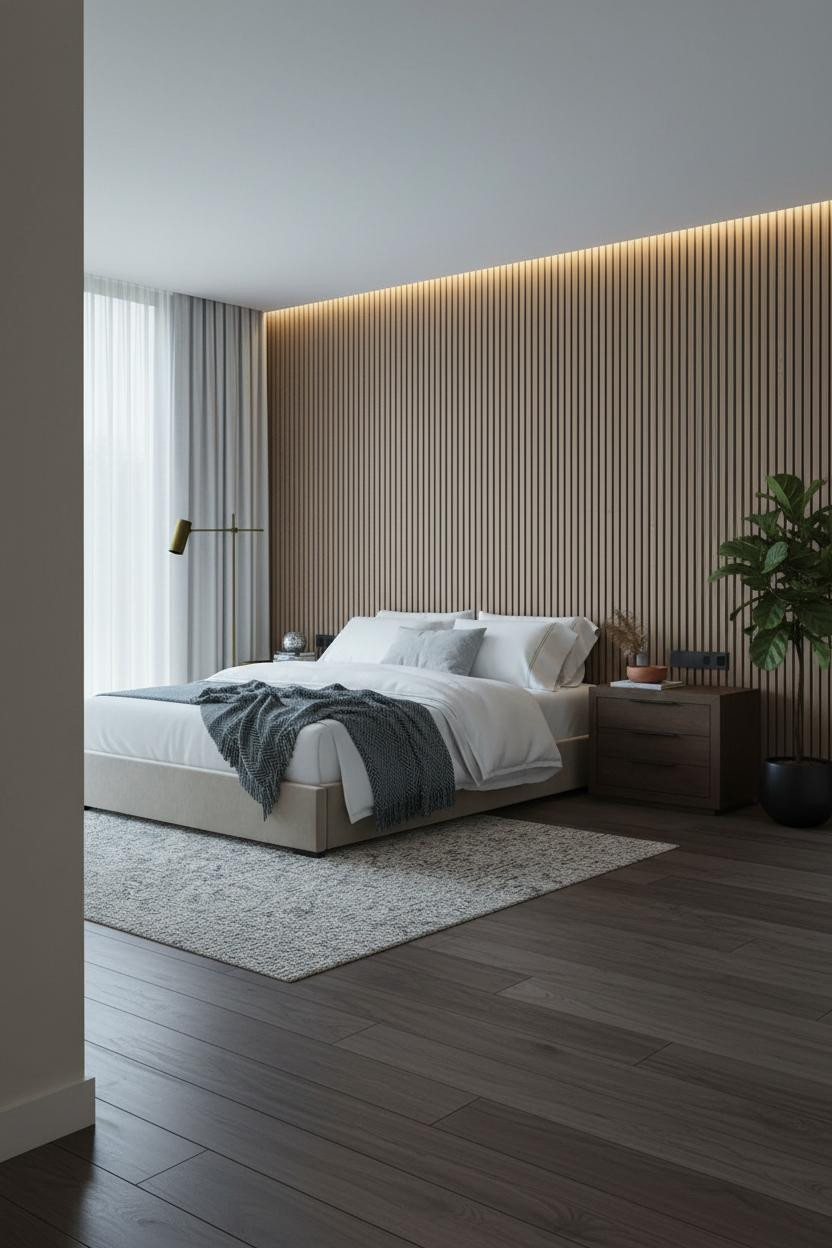
This is the kind of bed design that makes rooms click. Pale oak planks on a full-height wall, warm greige flanking walls, dark walnut floors underneath.
The LED strip tracing the slat wall edge is a small move that makes a big difference: it separates the feature wall from the ceiling plane at night, which keeps the room from feeling like one dark box.
What to copy first: The overdyed vintage rug at bed foot. It grounds everything and stops the walnut floor from visually expanding past the bed zone.
Forest Green Plaster Inside an Arched Niche
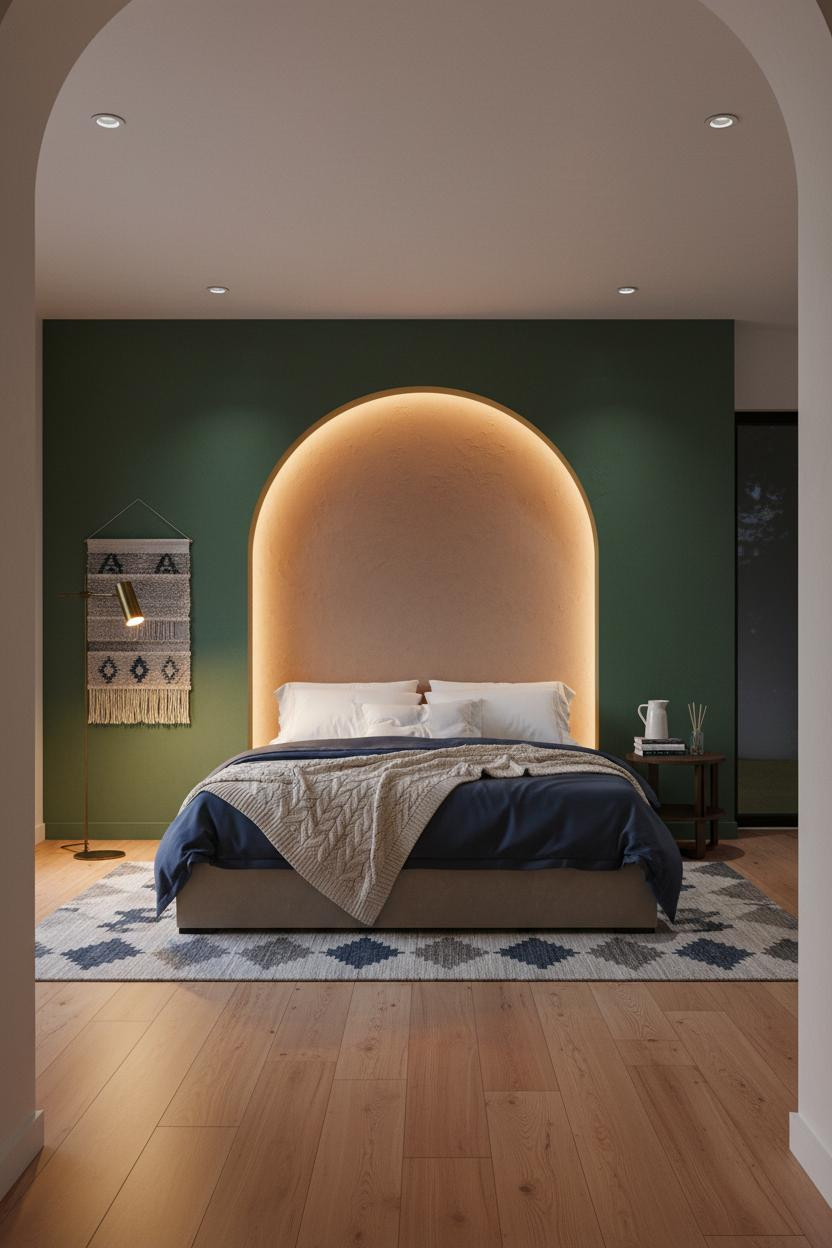
Bold choice. Not for everyone. But once you see a bed framed inside a proper arch, it's hard to go back to a flat wall.
What creates the mood: The curved plaster edges in deep forest green matte make the bed the undeniable focal point without a single piece of art.
The practical move: Center the bed exactly inside the arch. Even a few inches off and the whole composition falls apart.
Natural Oak Shiplap and a Sage Wall That Earns It
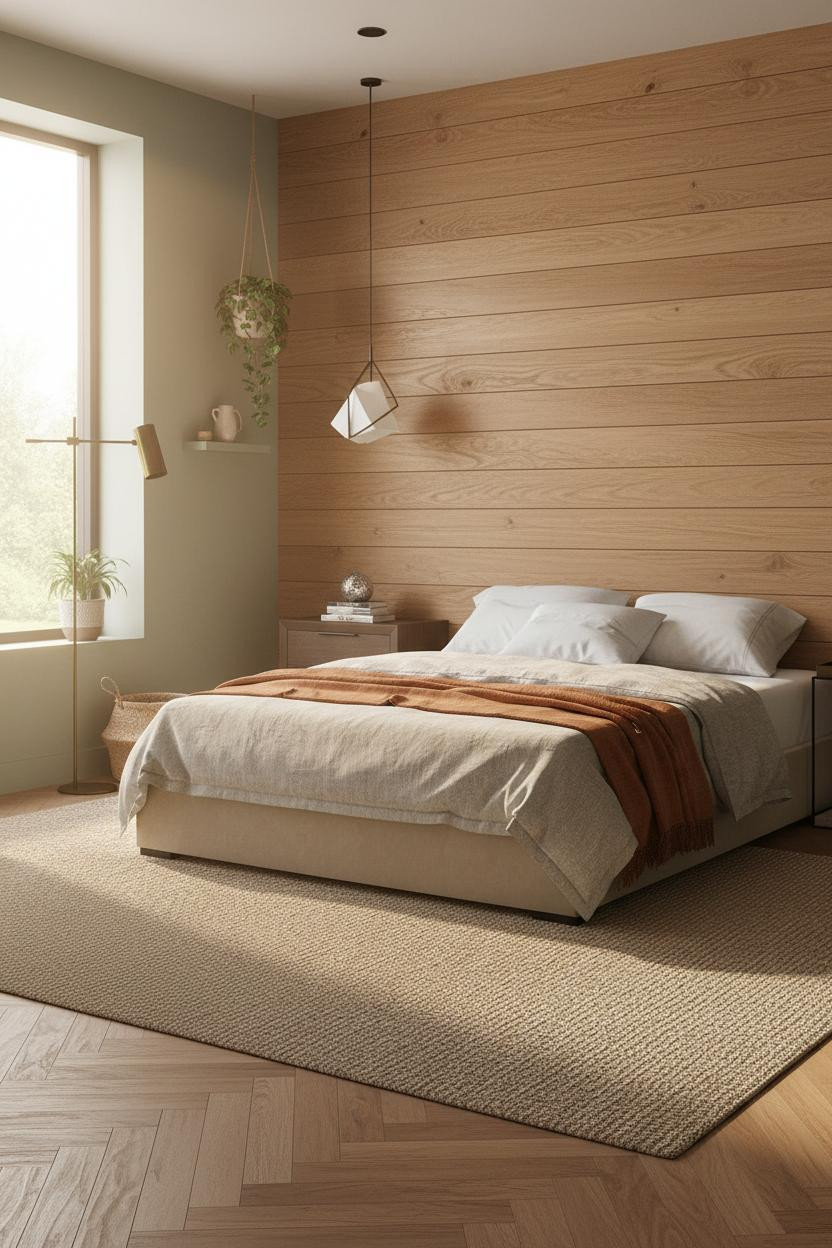
The room feels warm and lived-in without trying hard. That's the whole point of this combination.
Why the palette works: Horizontal oak shiplap catches raking daylight across each board edge, and the muted sage flanking walls pull the honey tones into something cohesive rather than rustic. The herringbone parquet underfoot ties it all together.
One smart swap: Trade any overhead pendant for something sculptural and asymmetric. The shiplap provides enough linear rhythm already. You want contrast, not more lines.
Board-and-Batten Done the Coastal Way
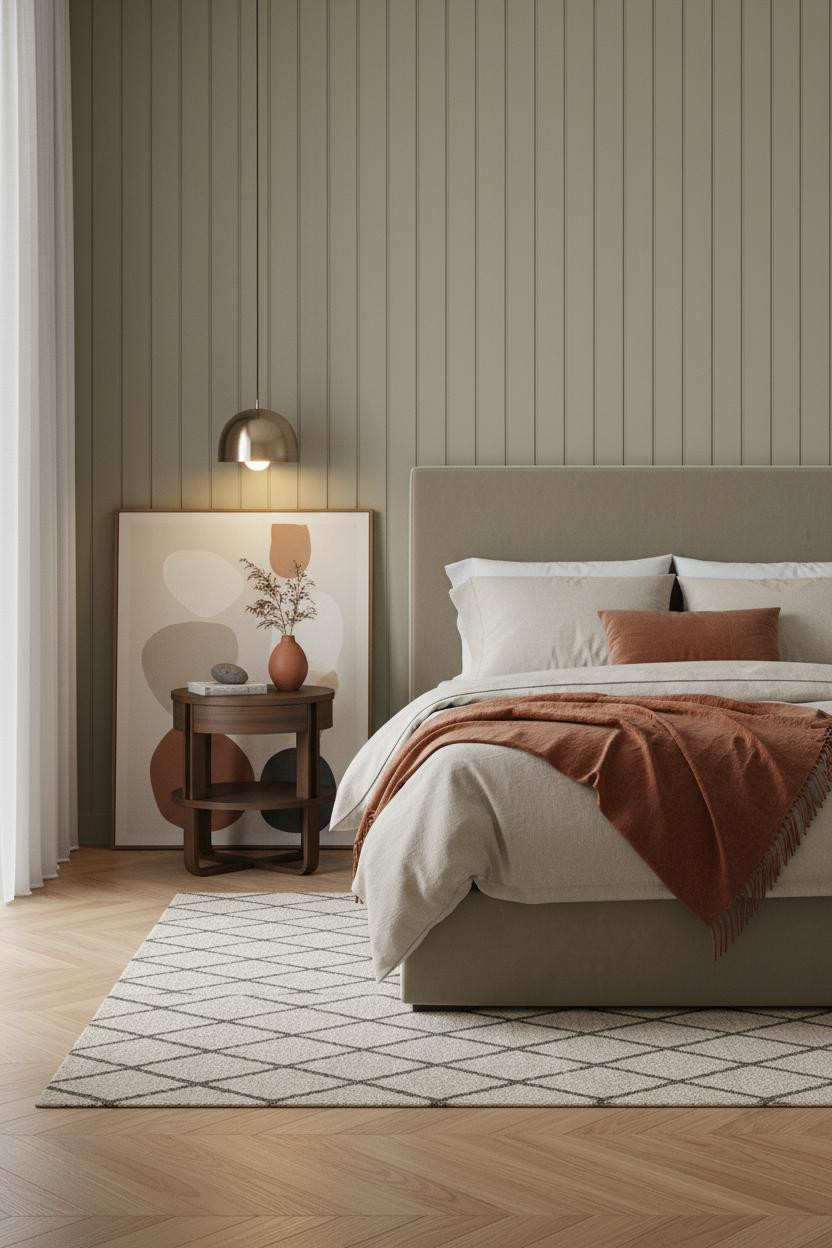

This one surprised me. The proportions are simpler than most board-and-batten rooms, but somehow it lands harder.
What softens the room: The warm clay paint on the battens (not sage, not white) gives the wall a quiet warmth that honey oak herringbone floors can actually respond to, while still feeling crisp at the edges.
Don't ruin it with a busy throw. A burnt sienna linen fold at the foot is exactly enough. The wall is already talking.
Textured Plaster and the Case for Doing Less
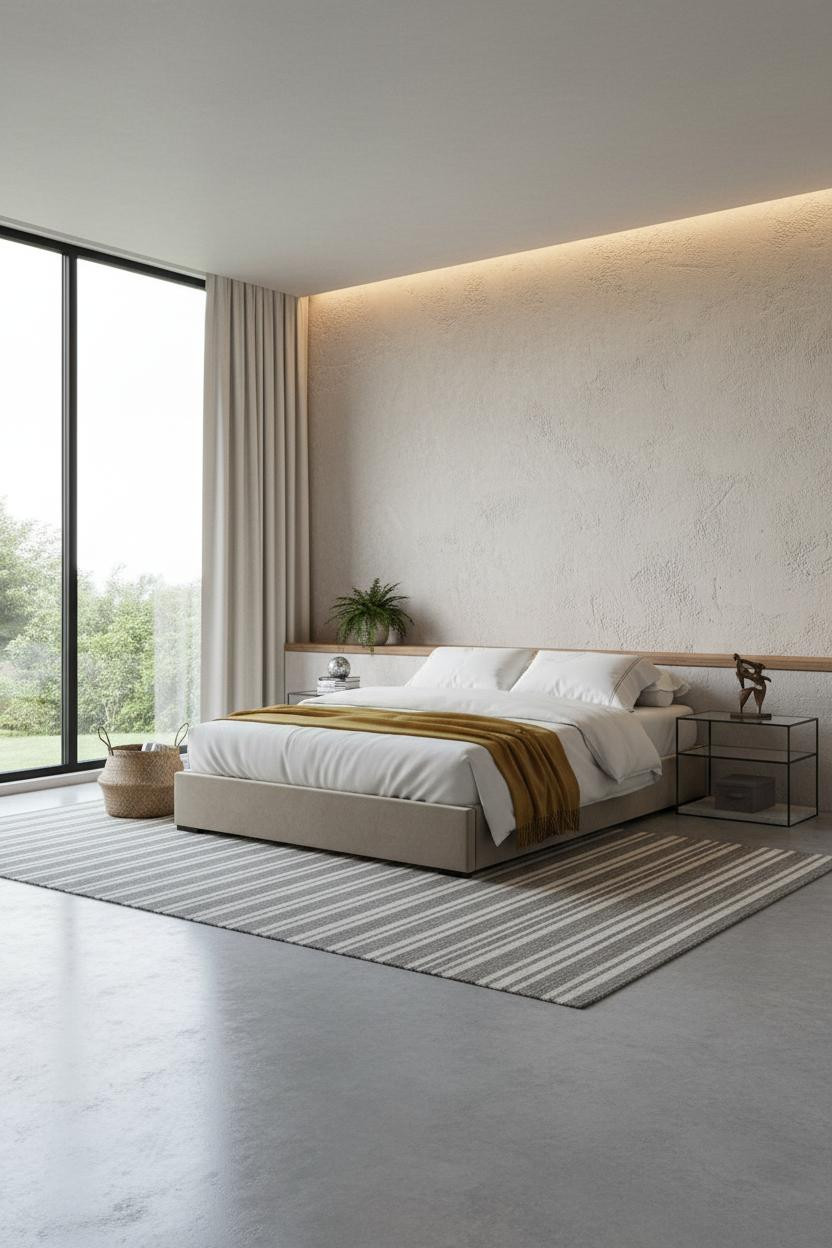
Nothing fancy. That's the point.
What makes this one different: A raw plaster wall in pale sand shifts between warm ivory and cool stone depending on where the light hits, which means it changes throughout the day without you touching anything. The polished concrete floor underneath amplifies that effect.
Best for rooms with strong natural light from one direction. Diffused overcast light catches the plaster texture best. Harsh direct sun flattens it out completely.
Japandi With a Walnut Slat Headboard That Anchors Everything
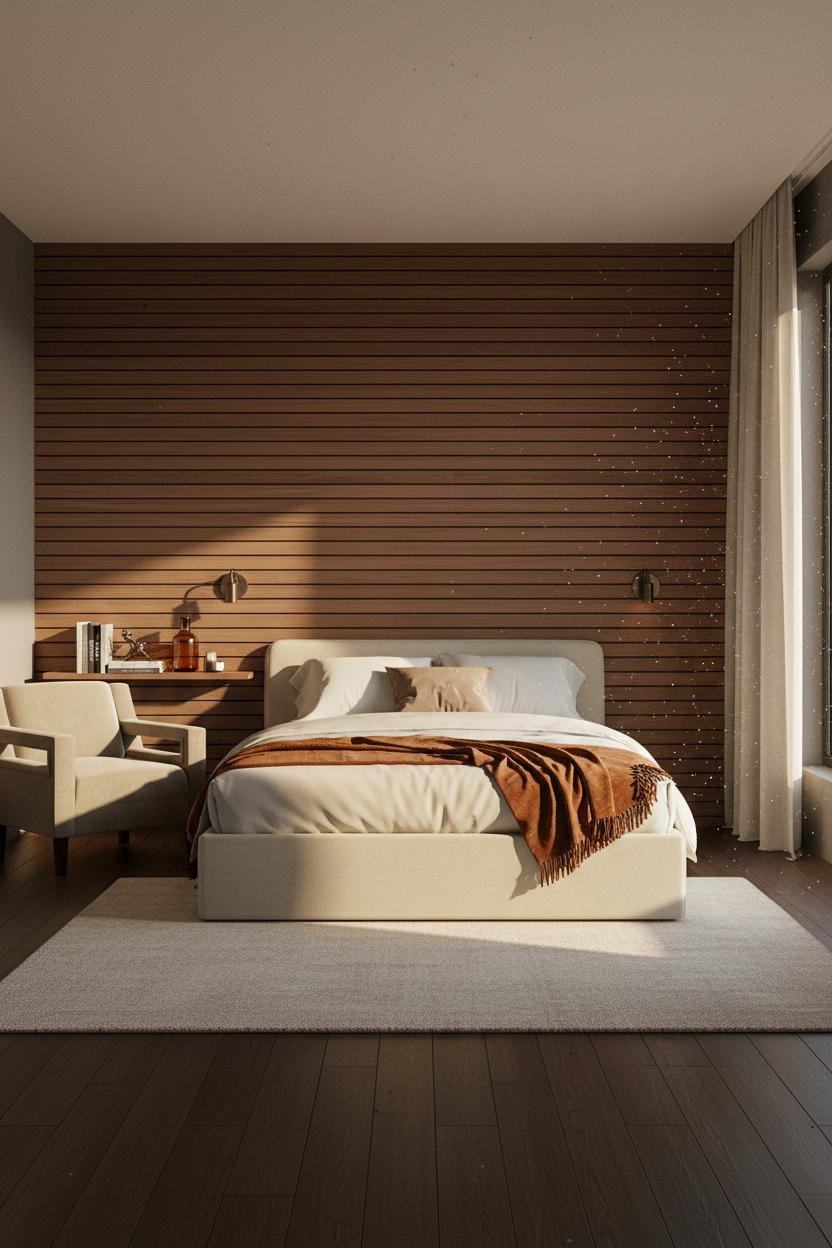


I've seen a lot of unique bedroom designs try the Japandi approach and miss. This isn't one of them.
Why it feels balanced: Horizontal walnut slat planks at floor-to-ceiling scale make the charcoal walls feel grounded rather than heavy. The warm amber sunset light catching each plank edge does the rest.
A burnt orange mohair throw at the foot is the one warm accent this room actually needs. Everything else stays neutral.
The Scandi Frame That Doesn't Disappear Into the Room
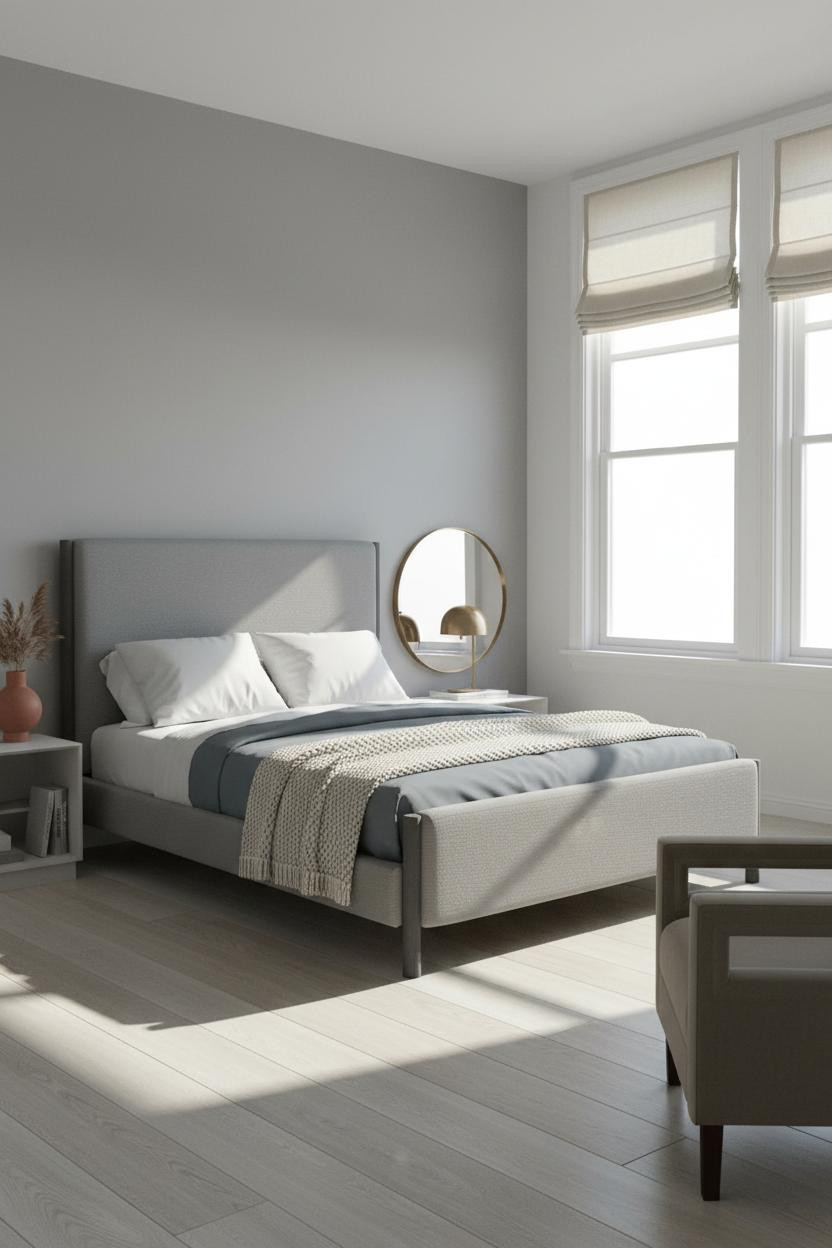

Admittedly, Scandi bedrooms can start to look identical. But this one pulls the room together in a way that feels resolved, not just minimal.
The real strength: Floor-to-ceiling cream linen Roman shades catch the backlit morning glow and diffuse it into the room, which is why the dove grey walls feel warm rather than cold. The round leaning mirror on the accent wall reflects that light back into the corners.
Where to start: Get the bedside lighting right first. A warm task lamp against cool morning daylight creates the contrast that makes this palette actually work.

Our #1 Pick
Saatva Classic Mattress
America's best-selling online luxury innerspring. 365-night trial, lifetime warranty, free white glove delivery.
Shop Saatva Classic
The Foundation Of Every Beautiful Bedroom
Every room in this list starts with the bed. And a beautiful bed design deserves a mattress that holds up to the same standard.
The Saatva Classic is what I'd put under any of these frames. Dual-coil support that doesn't transfer motion, an organic cotton cover that breathes through every season, and a Euro pillow top that's soft without losing structure underneath. It's the kind of mattress that still feels right years after you stop noticing it.
Walls get repainted. Linen gets swapped. The mattress stays. Start with the right one.

The rooms that get saved are the ones where nothing looks like an accident. Pick the frame, commit to the wall, and put something worth sleeping on underneath it. The rest figures itself out.