
 by
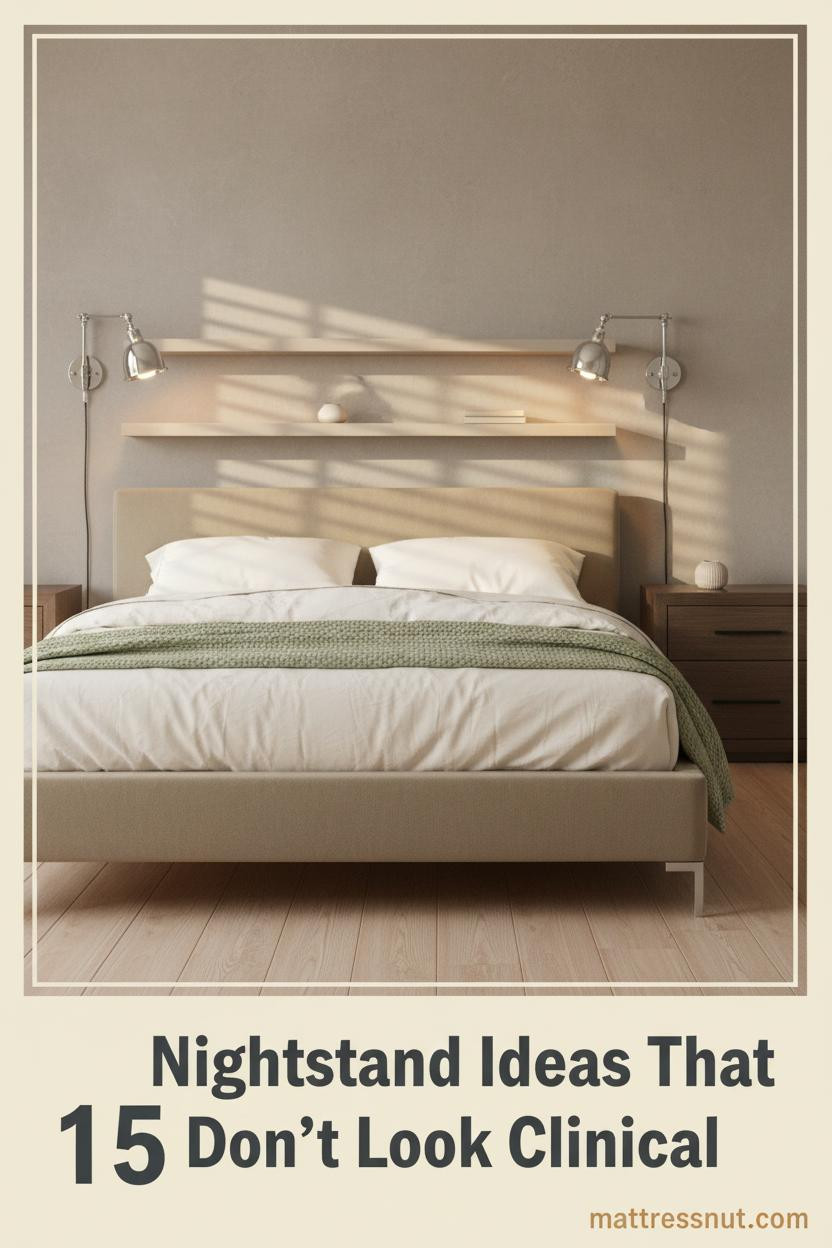
by Most CPAP nightstand ideas online look like they were designed by someone who's never actually had to live with the machine. The cord goes nowhere. The tubing loops across the table. The whole setup reads clinical the moment you walk in.
It doesn't have to. These 15 setups prove the machine can disappear into a bedside that looks genuinely considered.
The Recessed Oak Cabinet That Hides Everything
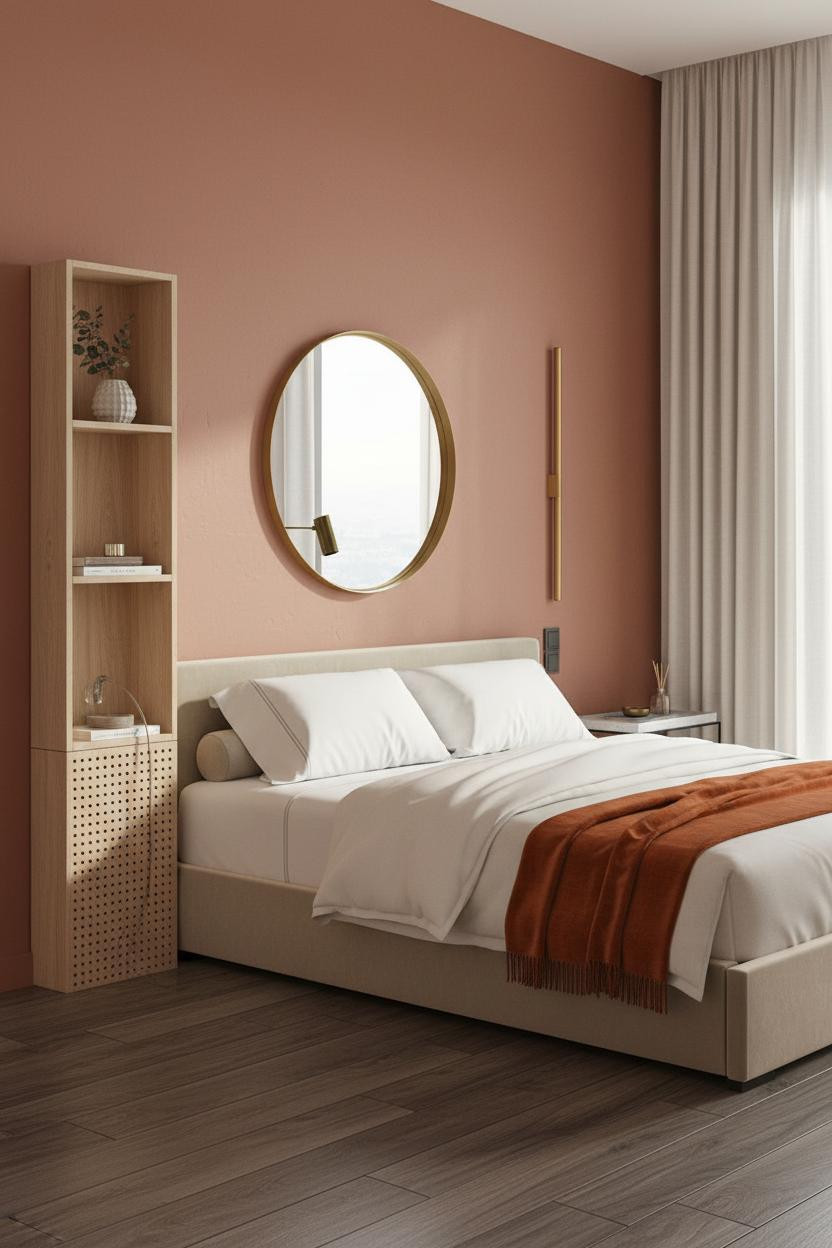

This is the one I keep coming back to. Built-in cabinetry energy, zero renovation required.
Why it works: A slender cabinet in pale natural oak with a perforated lower joinery panel routes tubing through the unit so cleanly it reads as intentional architecture. Not storage. Not medical equipment.
What to copy first: Keep the shelves styled but minimal. One ceramic, one dried stem. Let the woodwork do the work.
A Slim Wall-Mounted Cabinet That Earns Its Spot
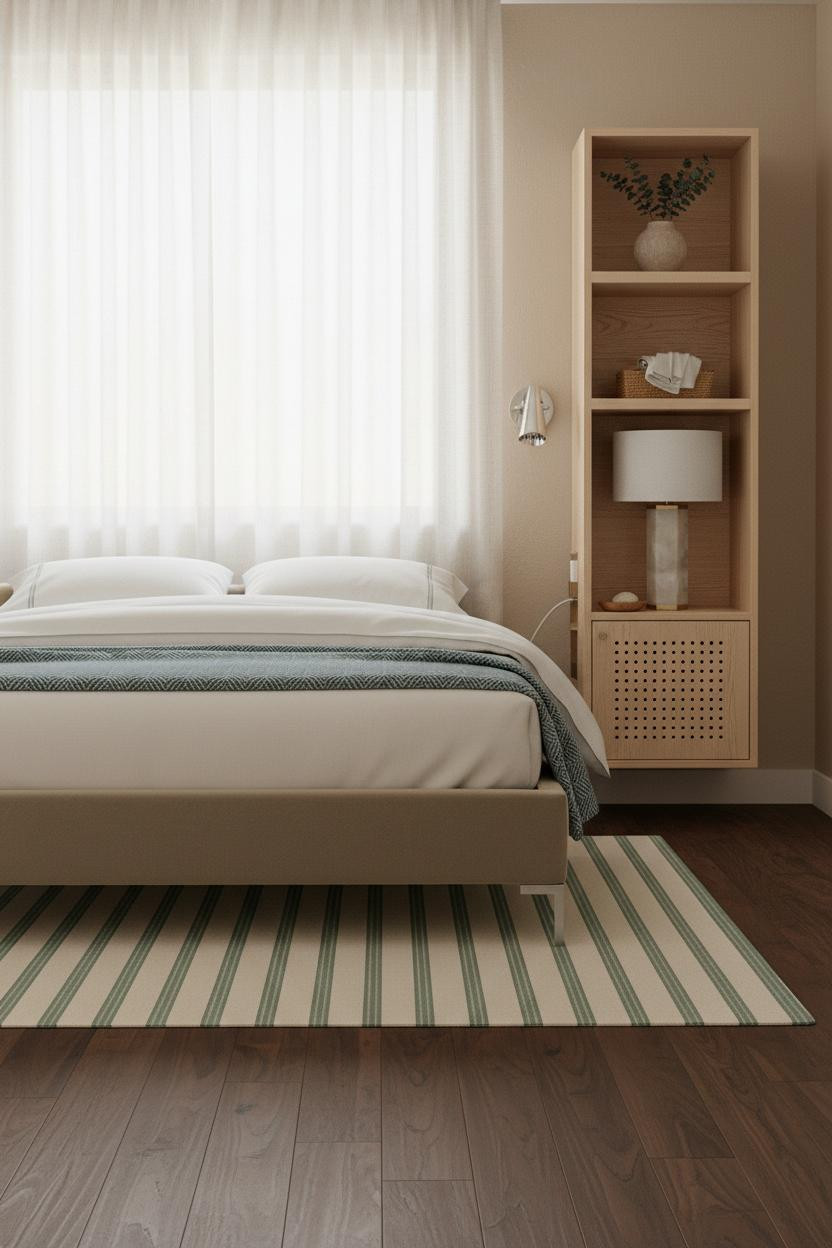
Wall-mounted storage works better than a nightstand in tight rooms because it frees up floor space while still giving you height.
What gives it depth: The natural pale ash shelves catch flat morning light in clean horizontal lines, which makes even simple objects look intentional. A woven palm-leaf basket on the middle shelf handles the practical stuff without looking utilitarian.
Steal this move: Use a stripe of warm light from a bedside lamp to separate the cabinet visually from the wall behind it. That gap makes the whole unit feel lighter.
The Recessed Niche That Looks Like It Was Always There
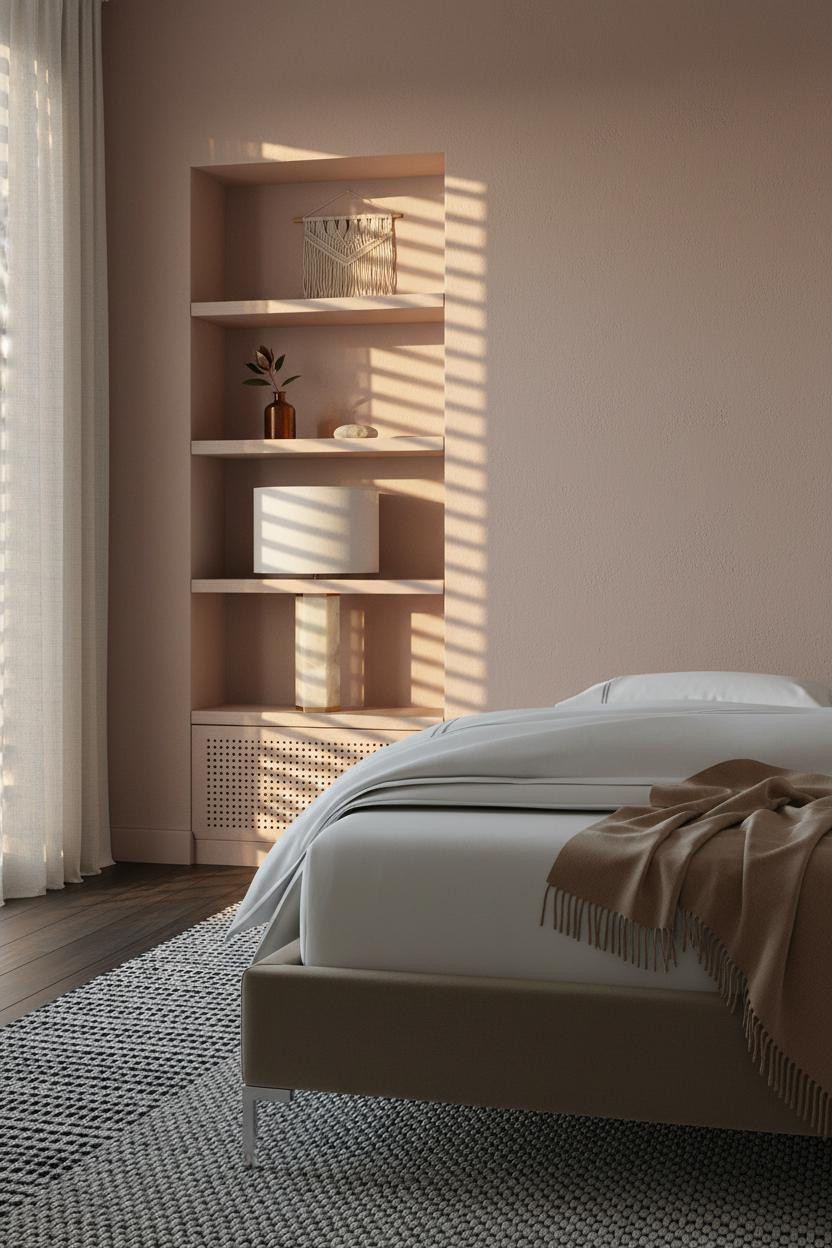
Honestly, this one surprised me. A niche cut into dusty rose-tinted plaster sounds like a renovation, but the shallow-depth version is more achievable than it looks.
The whitewashed oak shelf edges catch sidelight in a way that makes the whole unit feel crafted rather than installed. And the perforated lower panel routes tubing through the joinery so it genuinely disappears.
Avoid this mistake: Don't leave the niche interior the same color as the surrounding wall. A half-shade warmer inside reads as intentional shadow, not unfinished.
Dark Bamboo With Brass: When Storage Gets Decorative
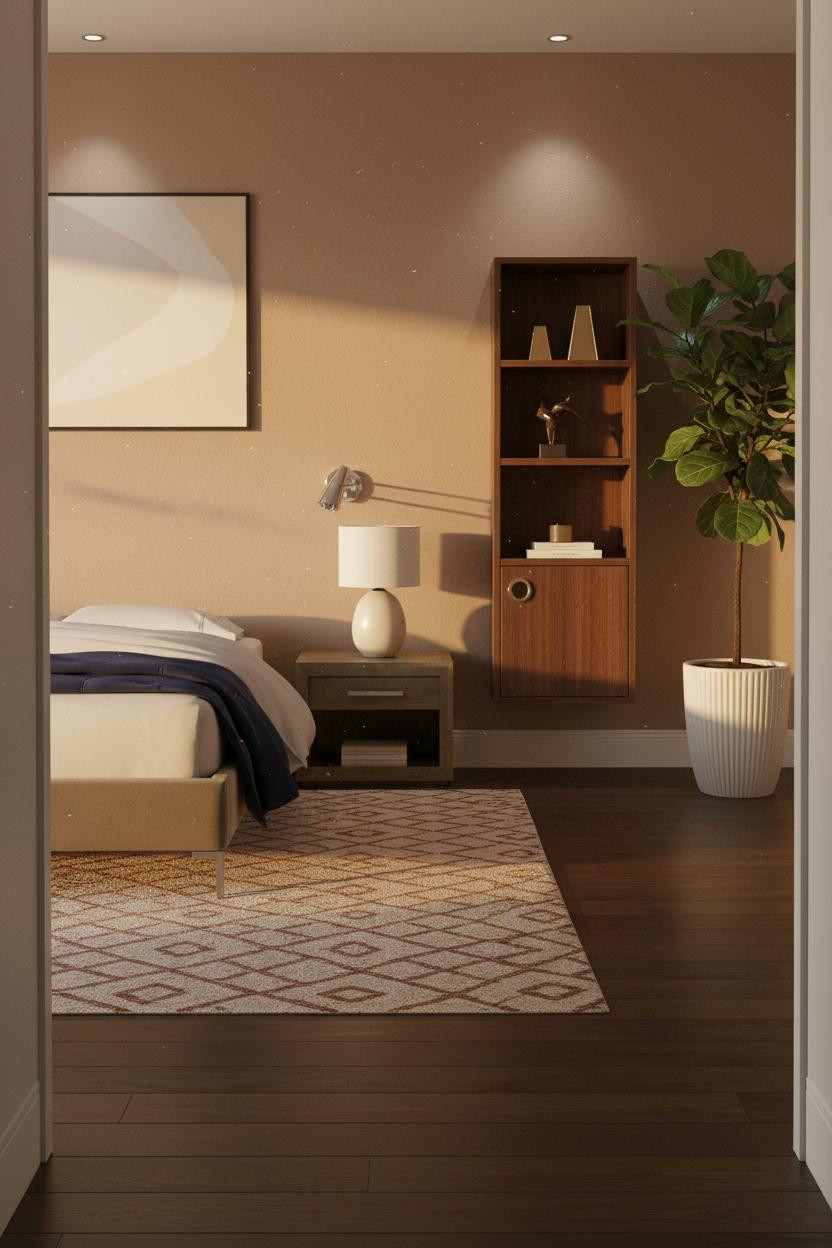
This one is divisive. But if your bedroom already leans warm and botanical, it fits perfectly.
The real strength: Dark-stained bamboo composite with chamfered shelf edges and a brushed brass grommet for tubing routing makes the whole unit feel like furniture you chose, in a way that feels genuinely intentional rather than medical.
Pro move: The fiddle-leaf fig beside the cabinet isn't styling fluff. A tall plant next to a dark vertical cabinet softens the weight of the piece against a warm clay wall.
The Whitewashed Wall Niche That Feels Organic
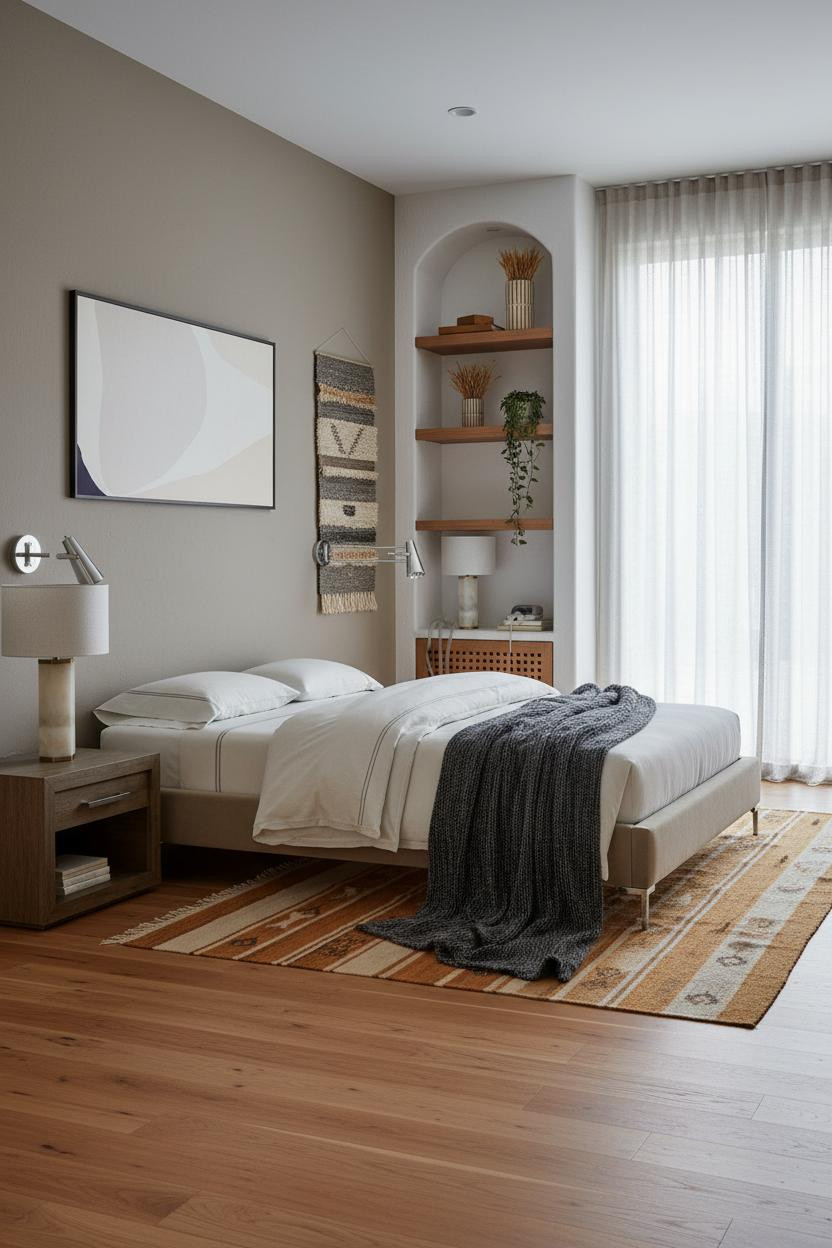
There's something about whitewashed plaster with linen-wrapped shelf edges that makes a room feel like it exhaled. The niche here reads as architecture, not afterthought.
Why it holds together: Warm caramel flooring and muted taupe walls keep the niche from floating. The amber kilim runner anchors the whole bedside zone so the storage doesn't look like it landed there by accident. Where to start: Style the upper shelf with texture, not color. A bronze tray and a dried grass bundle against whitewashed plaster is more than enough.
Pale Oak and Morning Light: the Minimal Route
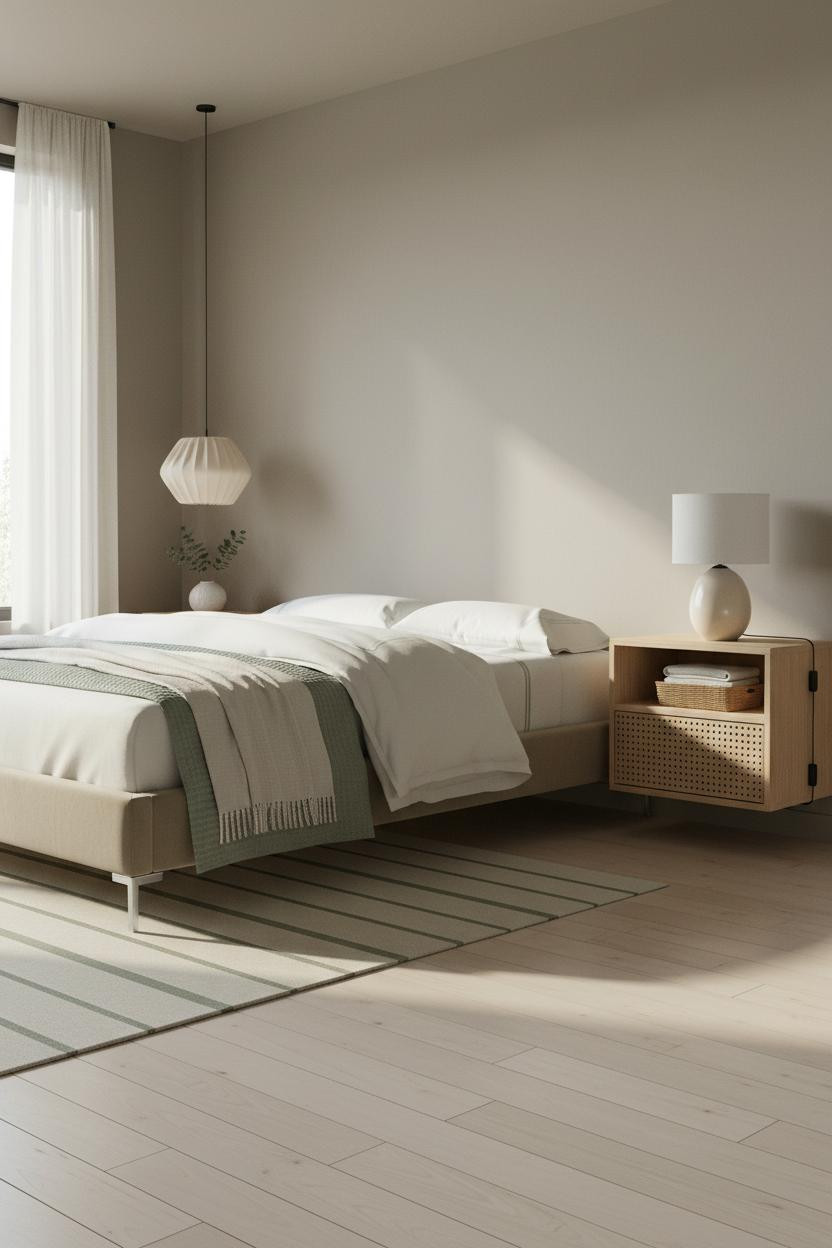
This is the version I'd recommend to anyone starting from scratch. Nothing precious about it, and that's the point.
Why it looks custom: A shallow pale oak cabinet mounted at the right height keeps the bedside zone compact while the two open shelves let you style around the equipment rather than hide everything.
Pair a sage waffle-weave throw with ivory percale here. The cool green pulls the oak warmer, which helps balance what could otherwise feel too bare. Good modern nightstand design works the same way: one warm material does most of the heavy lifting.
Whitewashed Pine at Pre-Dawn: Quiet and Precise
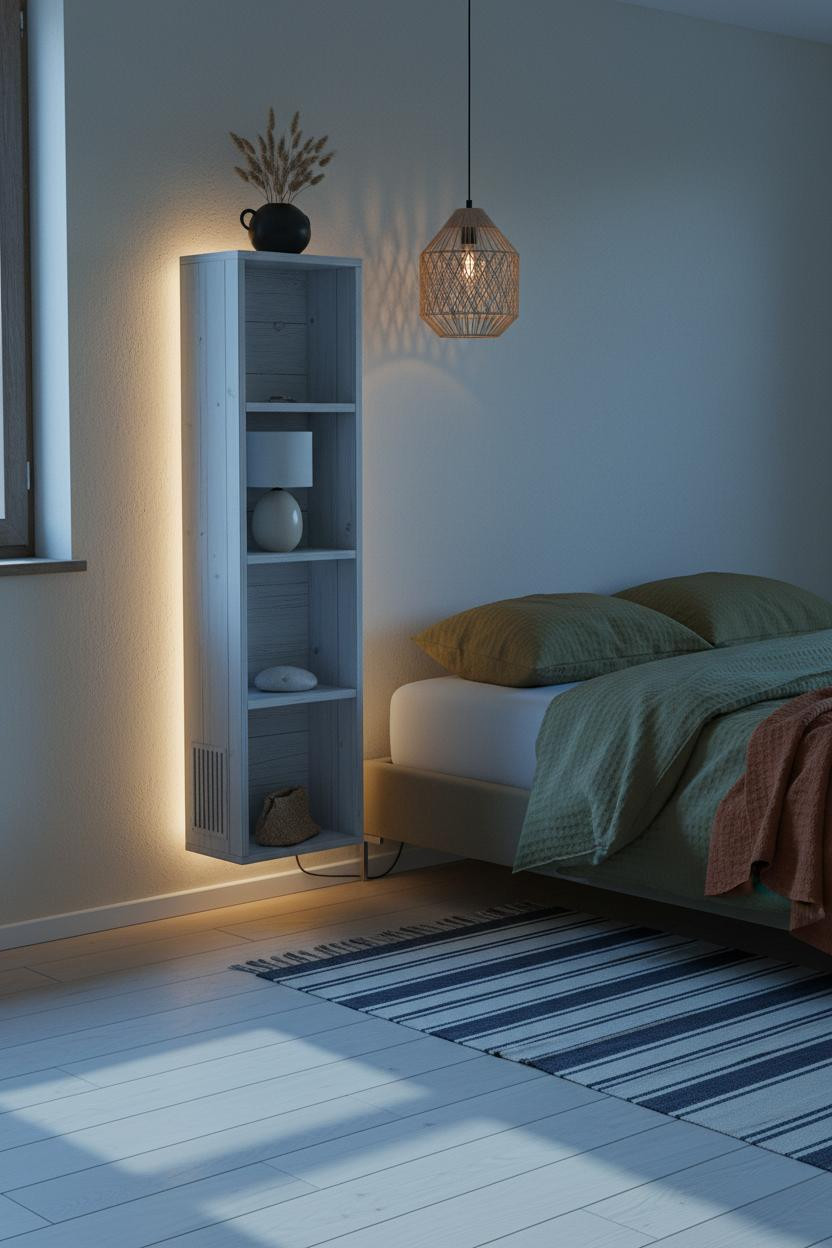
Nordic. Spare. The kind of room that feels still even when you're in it.
What makes this one different: A tall slender whitewashed pine cabinet with a slatted ventilation panel at the base creates a visual rhythm that's more like sculpture than storage. Three shelves stepping upward in pale grain. Quiet and precise.
The easy win: Add a geometric rattan pendant above the bedside zone. The warm woven texture softens the cool palette while still feeling spare.
Bamboo Plywood at Headboard Height: the Confident Choice
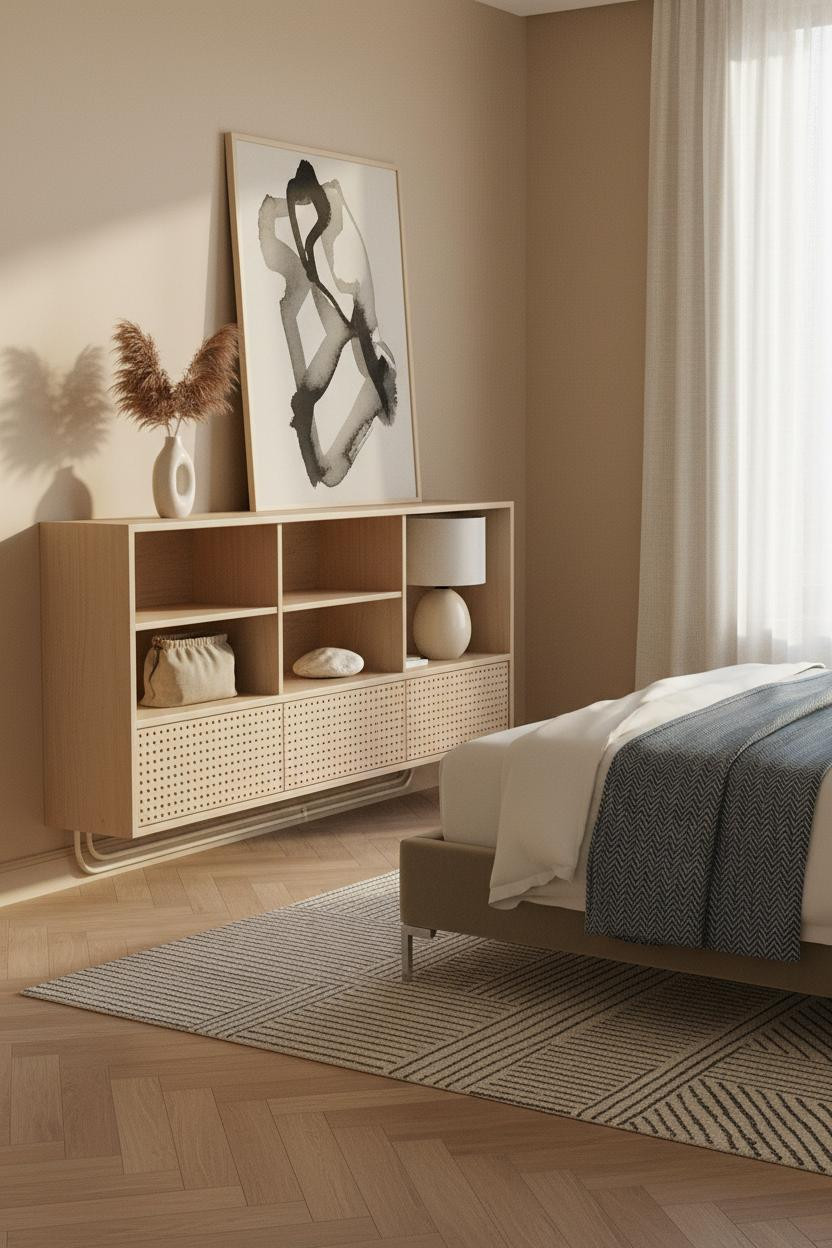
Mounting the cabinet flush at headboard height rather than above it changes the whole proportion of the bedside zone.
Design logic: The pale bamboo plywood surface reflects morning light evenly across all three shelves, which makes the perforated lower panel read as a textural detail rather than a utility cutout. The room feels calm and cohesive in a way that surprised me.
Worth copying: Lean an oversized abstract print against the wall above the unit instead of hanging art. It keeps things from looking too finished and lets you swap it out without a drill.
Ash Wood Shelving Paired With a Real Nightstand
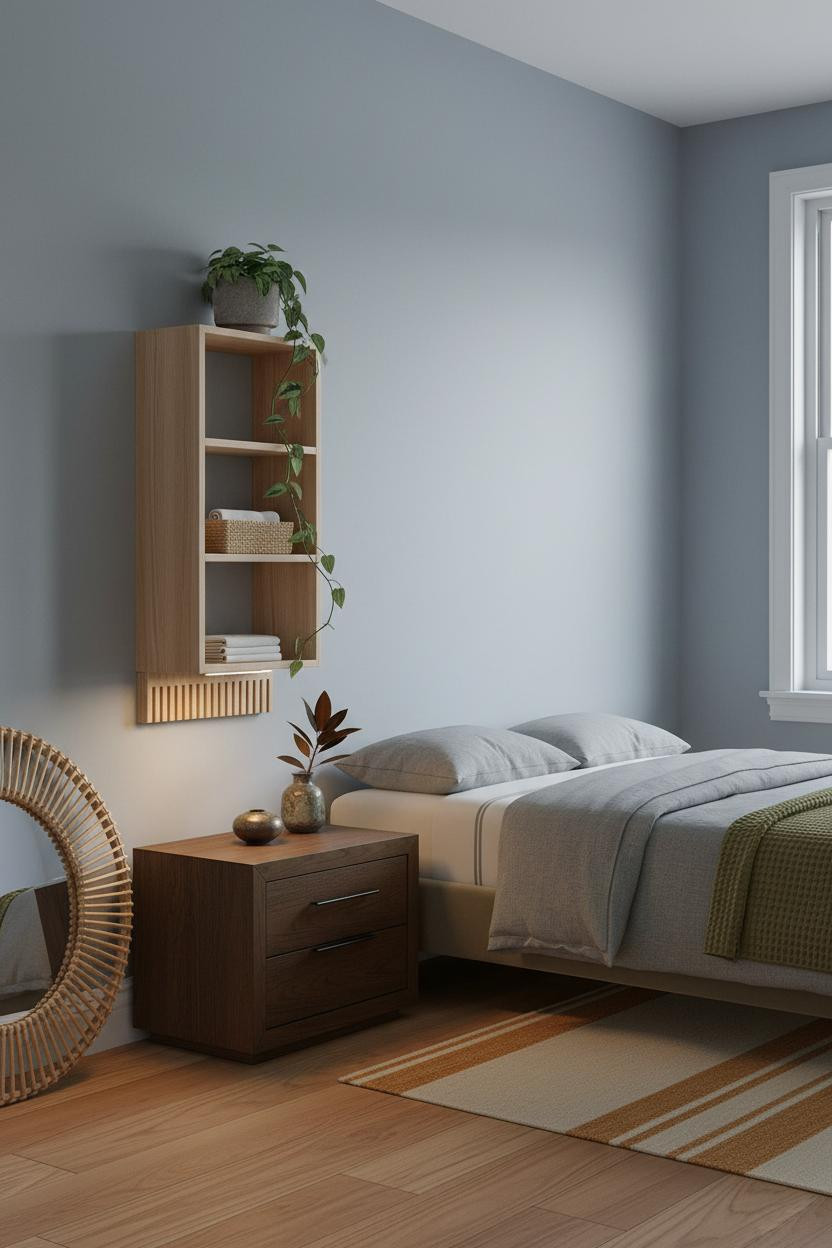
Pairing a wall-mounted shelving unit with a proper nightstand underneath is honestly the smartest CPAP machine storage setup in this whole list. You get height for the equipment and surface space for everything else.
What carries the look: Natural ash wood shelving with horizontal shadow lines keeps the stacked configuration from feeling heavy, while the slatted base panel hides tubing without any awkward rerouting. The stone blue-grey wall behind it does the rest. For more layouts that solve this small bedroom organization challenge, there are options that go further.
The smarter choice: Use the nightstand surface for lamp and water only. Move everything else up to the shelves.
Sage Walls Make Pale Birch Look Like a Design Decision
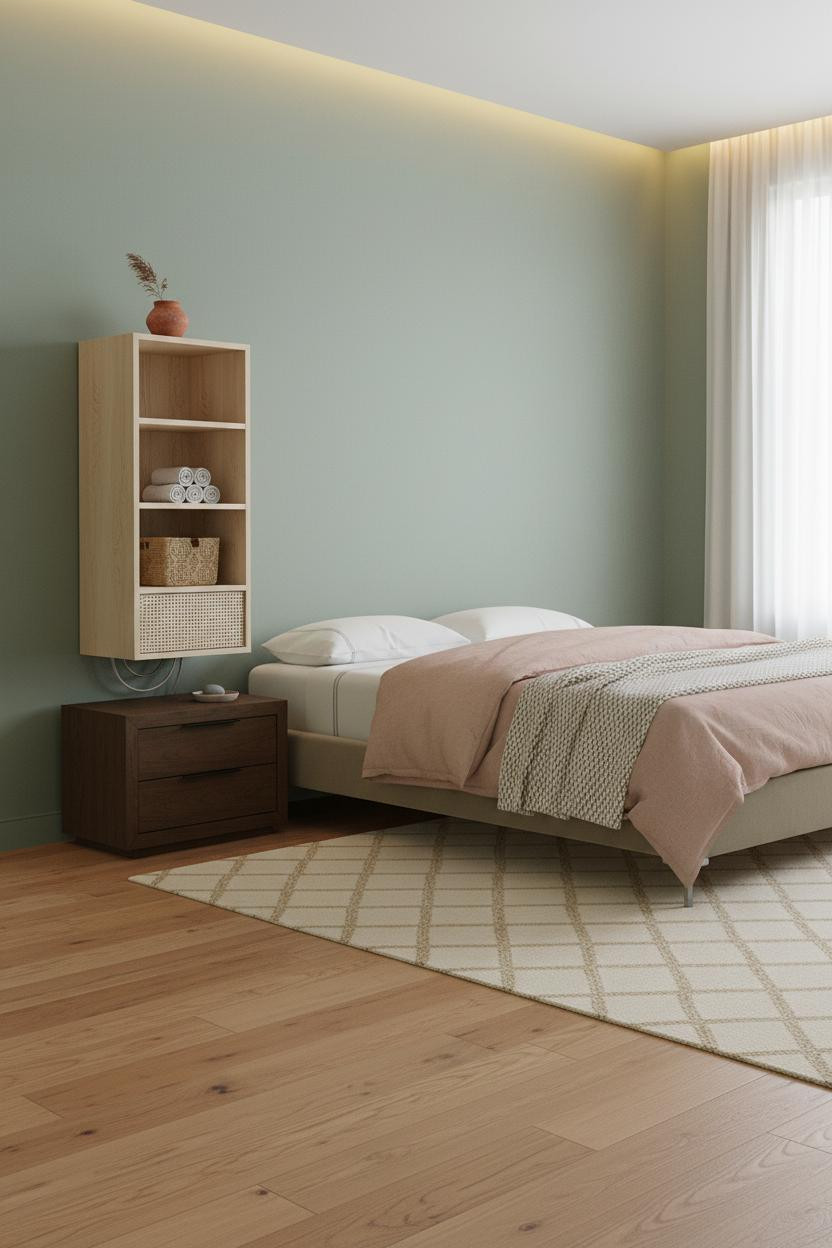
Fair warning. This setup only works if you commit to the wall color. Half-measures here look unfinished.
Why it feels balanced: Soft sage walls pull the pale birch cabinet forward visually, which makes three open shelves look purposeful rather than sparse. The perforated metal lower panel disappears entirely against the muted green. Dusty pink linen bedding brings warmth back without competing.
Don't ruin it with: Too many objects on the shelves. One terracotta pinch pot and a jute basket. That's the ceiling.
White Oak Shelving That's Honest About the Hose
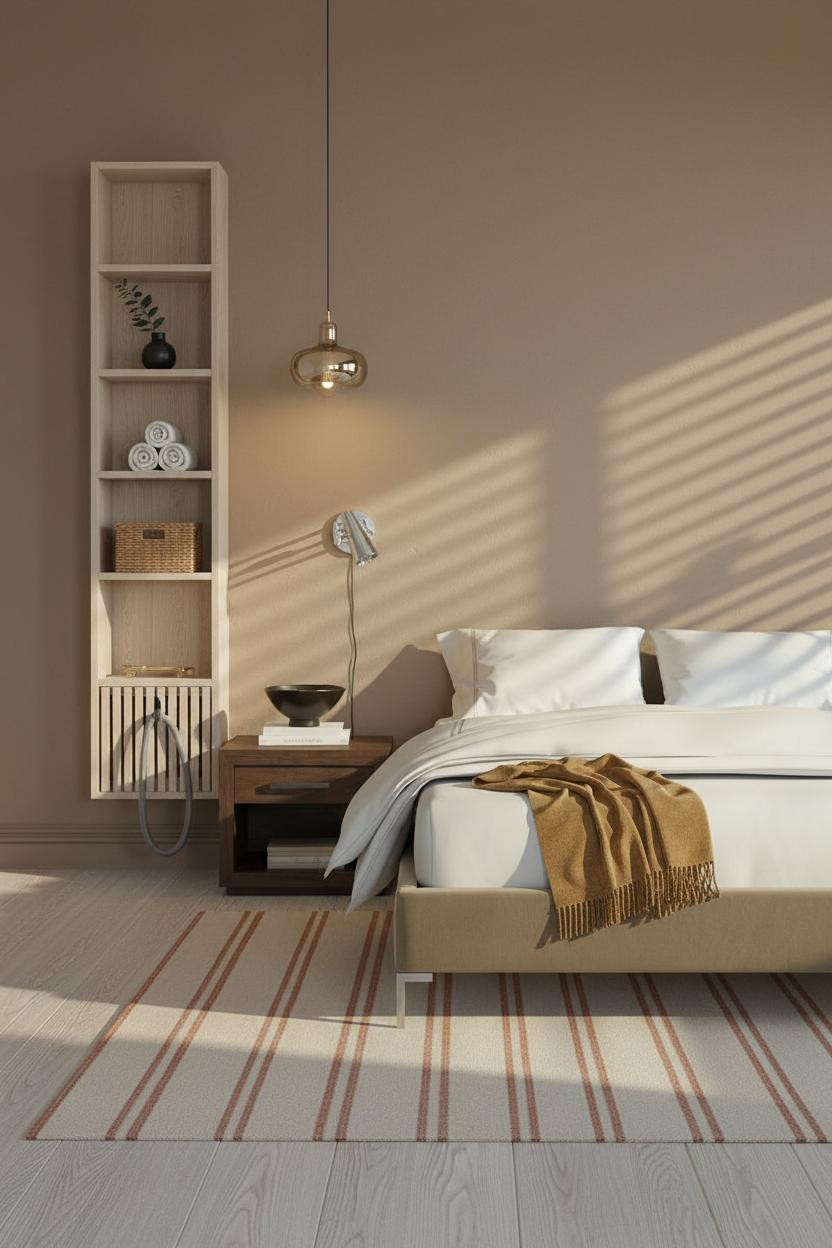
Not hiding it. Just integrating it. The hose rests casually at the slatted panel edge, visible and calm, and somehow that honesty reads better than a forced concealment.
Why it lands: Natural white oak in a warm mushroom-walled room pulls the whole bedside zone into one material story, which makes the slatted wood base panel feel like a design choice rather than a workaround. The key piece: A mustard wool blanket at the foot. It anchors the warm palette and keeps ivory percale from reading too cold.
Weathered Oak Against Clay Rose: the Warm Version
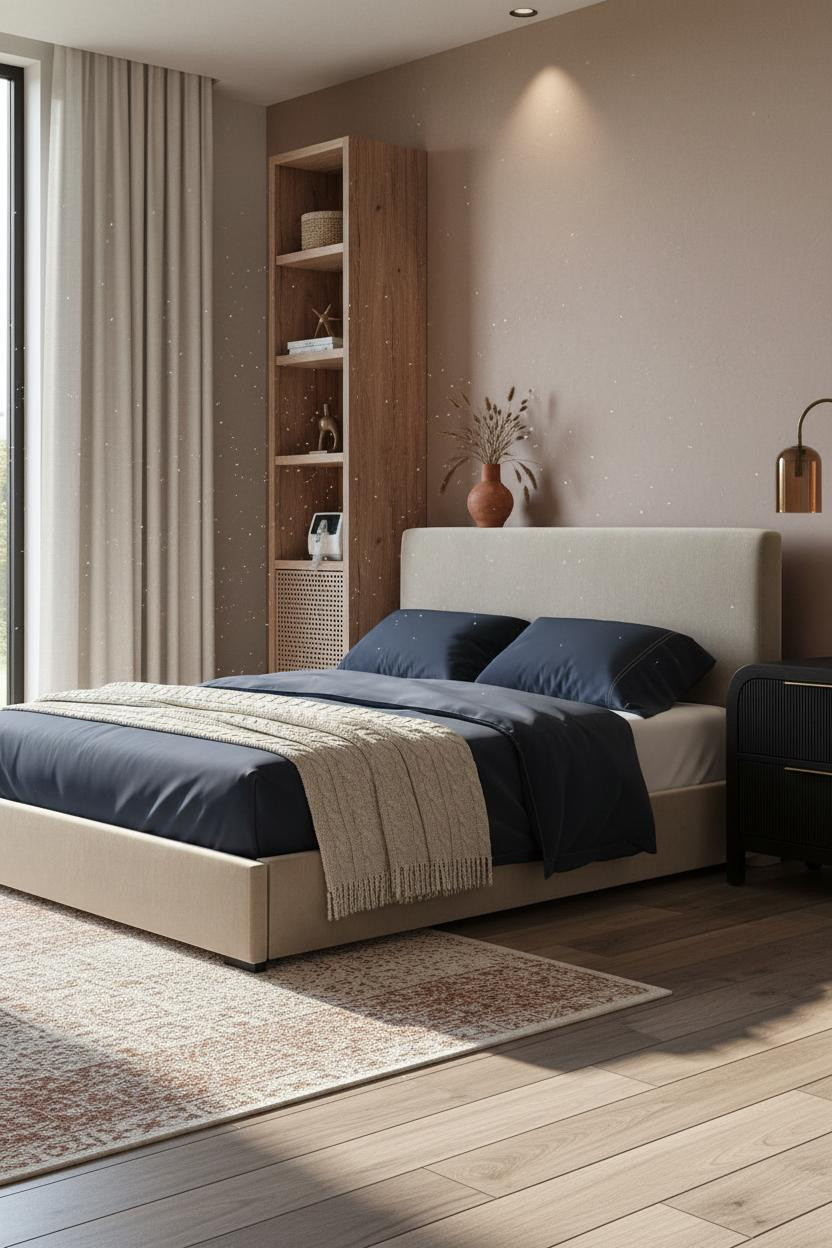
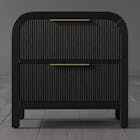
I keep coming back to this palette. Weathered oak glowing copper where direct light rakes across the grain is a detail that photographs well and looks even better in real life.
Where the luxury comes from: The clay-rose matte wall behind the cabinet is close enough in temperature to the wood that they blur at the edges, which makes the whole unit feel built-in while still feeling collected rather than decorated.
One smart swap: Floor-to-ceiling undyed linen curtains as the room's statement piece. They pull the warmth forward without adding another furniture piece. Check how nightstand ideas tie the whole bed together for more on this layering approach.
Japandi Shelving With a Slatted Panel: Calm by Design
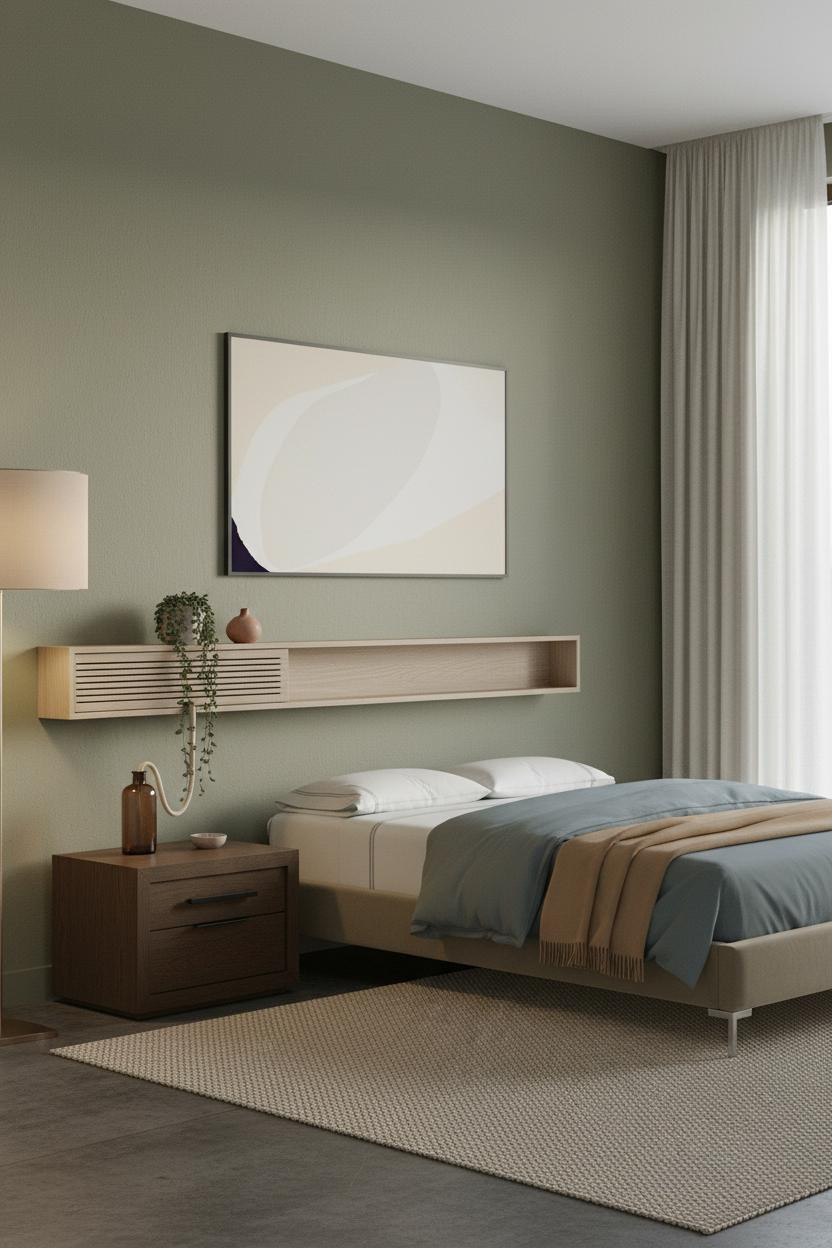
Olive-green walls plus pale ash shelving is a combination that shouldn't work as well as it does. But the matte finish on both surfaces is what makes them sit together without competing.
What keeps it elevated: A slatted ventilation panel at the lower cabinet lets the hose drape through naturally, hidden in plain sight, while the overcast-lit shelf face keeps the styling reading spare and deliberate. The room feels lived-in and intimate without any effort. This is one of the better bedside table solutions for people who want Japandi calm without a full renovation.
The practical move: Use floor-to-ceiling ecru linen curtains. They give the room vertical scale while the low-profile shelf keeps everything grounded.
Natural Walnut With a Ventilated Cabinet Door
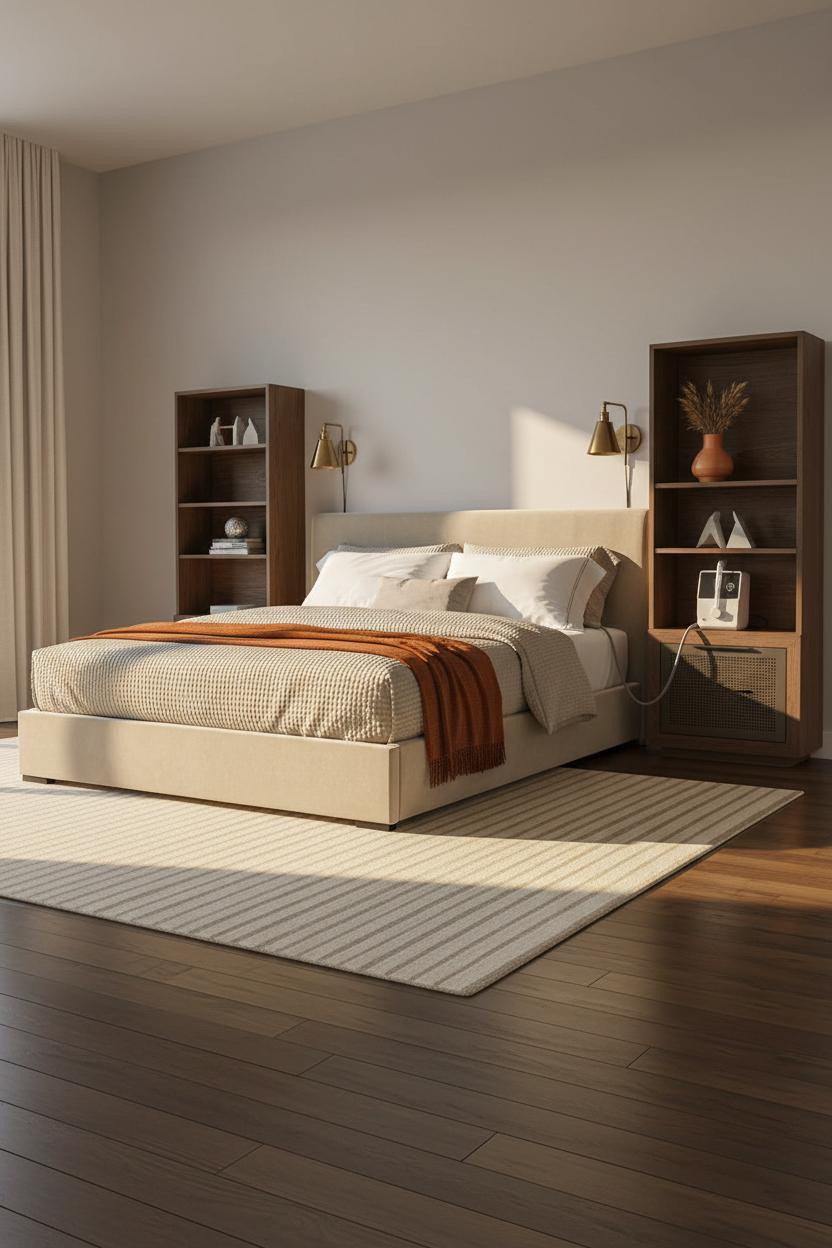
This one actually solves the problem. A recessed lower cabinet with a perforated metal door gives the machine a proper home, not just a shelf to sit on.
The natural walnut grain catches warm afternoon light in a way that makes the whole unit feel like it's been there for years. Paired sconces flank the shelf unit rather than a single overhead fixture, which gives the bedside a warmth and symmetry that keeps the room feeling calm and cohesive.
Avoid this mistake: Don't style the upper display shelves with too much contrast. A terracotta vase and dried grass bundle, nothing else. Let the walnut carry the room.
The Linen-Panel Cabinet Door: Texture Over Hardware
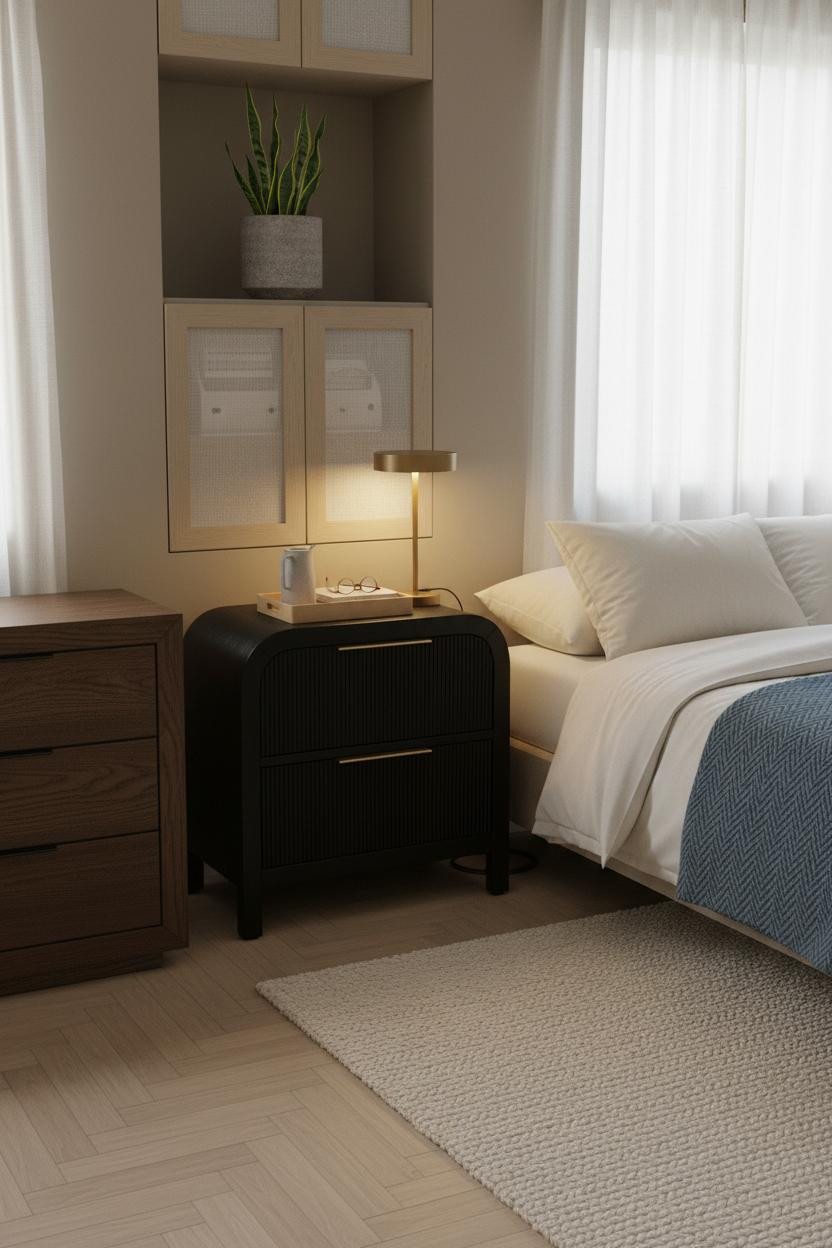
Cabinet doors with linen-panel insets and discreet ventilation slots are the most approachable version of hiding CPAP equipment because you don't need to route tubing through the wall. The fabric breathes, the machine stays cool, and the whole thing looks like a considered piece of bedroom furniture.
The finishing layer: A pale oak niche frame against warm greige walls keeps the cabinet from looking like an add-on. A wooden tray on the nightstand surface organizes the small stuff so the cabinet can stay closed and calm. This pairs well with ideas from small-space storage solutions if you're working with a tighter room.
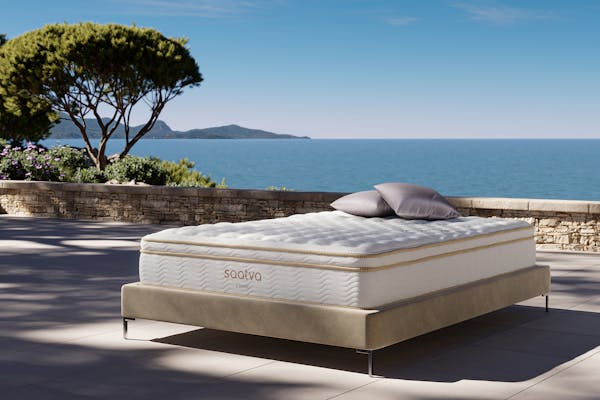
Our #1 Pick
Saatva Classic Mattress
America's best-selling online luxury innerspring. 365-night trial, lifetime warranty, free white glove delivery.
Shop Saatva Classic
Frequently Asked Questions
What is the trial period for this product?
Most major mattress brands offer a 100-night to 365-night trial period, allowing you to sleep on the mattress risk-free before committing. Saatva offers a 365-night trial. Check the specific product page for exact terms.
How long does this mattress typically last?
Quality mattresses last 7-10 years on average. Memory foam and hybrid mattresses typically last 8-10 years. Higher-density foams and premium innerspring coils tend to be more durable over time.
Is this mattress good for side sleepers?
Most modern mattresses accommodate side sleeping well, particularly those with memory foam or pillow-top layers. Look for a medium feel that cushions pressure points at the shoulders and hips while still supporting spinal alignment.
Does this mattress sleep hot?
Traditional memory foam tends to retain heat, but many newer models incorporate cooling gel, copper infusions, open-cell foams, or breathable coil systems to mitigate this. Check the cooling technology section of the full review for product-specific performance.
What warranty does this mattress come with?
Warranties typically range from 10 years (standard) to 25 years (premium brands). Full warranties cover manufacturing defects; prorated warranties may have diminishing coverage over time. Read the specific warranty terms before purchasing.
The Foundation Of Every Beautiful Bedroom
Walls get repainted. Shelving gets swapped out. The mattress stays. And if you're building a bedside this considered, it deserves something underneath it that actually holds up.
The Saatva Classic runs on dual-coil support that keeps you from feeling your partner's movements, a breathable organic cotton cover that doesn't trap heat, and a Euro pillow top that still feels right years in. Not soft-hotel-soft. Structured soft. The kind that works every night.

The rooms worth saving are the ones where nothing looks accidental. And that starts well before the styling does. Start with the bed. The rest figures itself out.