
 by
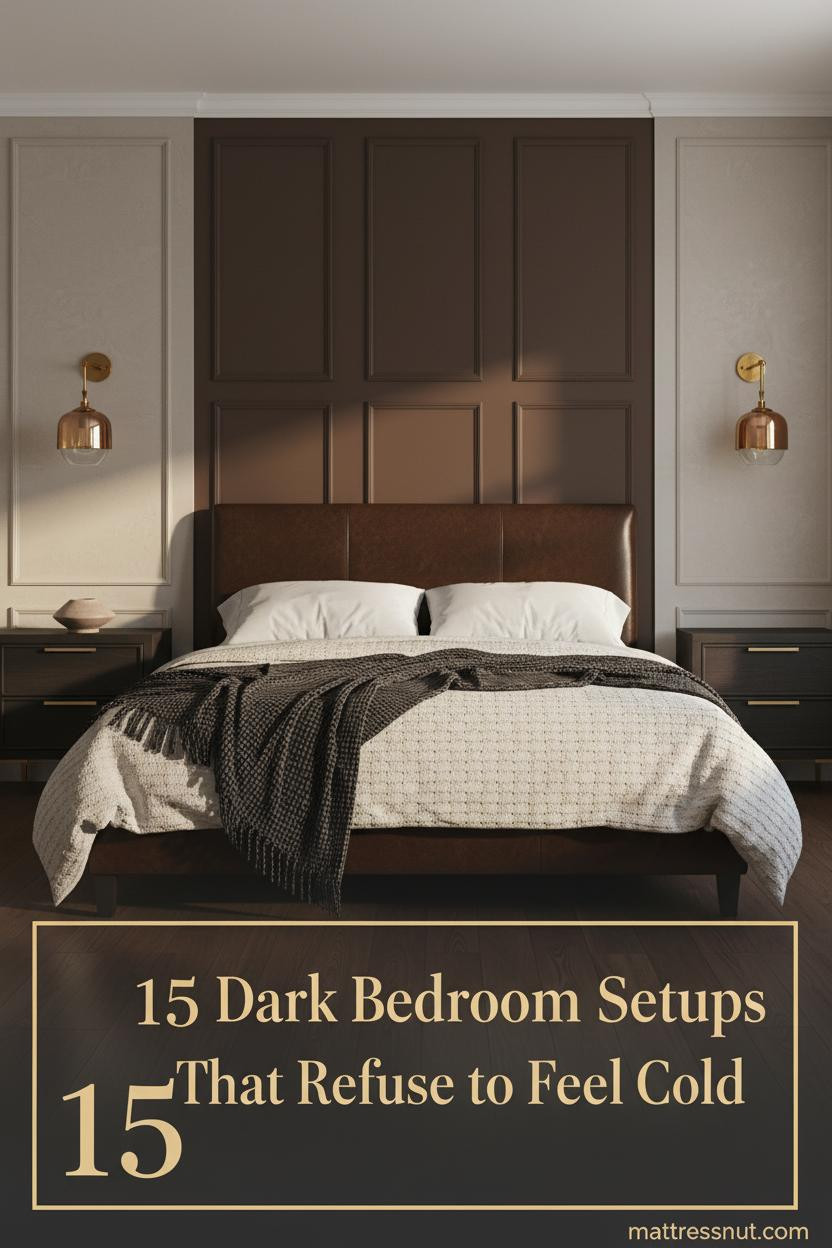
by The first thing you notice in a great dark bedframe bedroom is that it doesn't feel heavy. It feels settled. Like someone made a real decision and committed to it.
These 15 rooms prove that a dark frame is actually one of the most forgiving anchors in a bedroom palette. Get the wall and the materials right, and the whole thing holds together on its own.
The Japandi Room That Actually Feels Warm
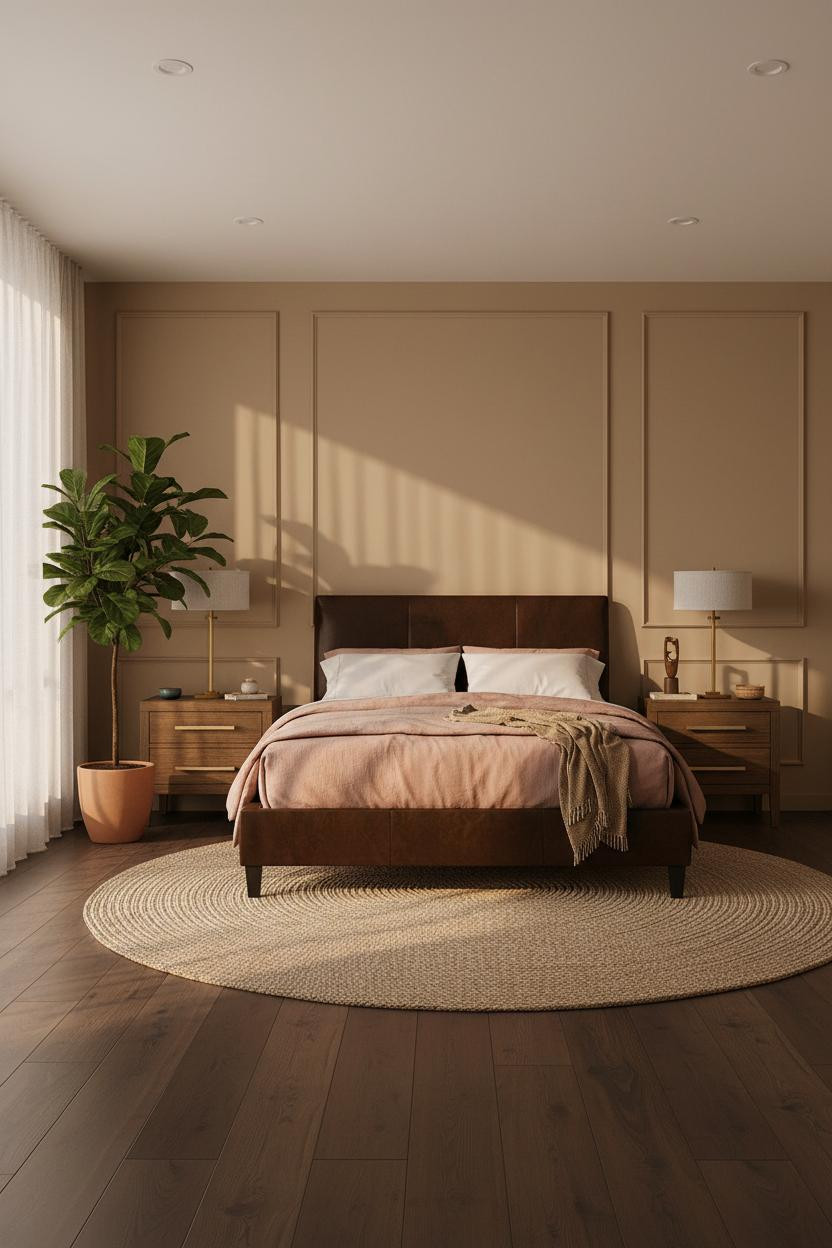


This is the Japandi version I keep coming back to. Somehow it pulls off warm without going rustic.
Why it works: The clay wainscoting does most of the heavy lifting. It gives the espresso frame something earthy to lean against, which keeps the room from reading too stark or too polished.
Steal this move: Pair dusty pink linen bedding with a camel throw. The contrast against a dark frame is immediate, and the room feels lived-in and intimate without any extra effort.
Dark Walls, Built-In Shelves, Still Not Claustrophobic
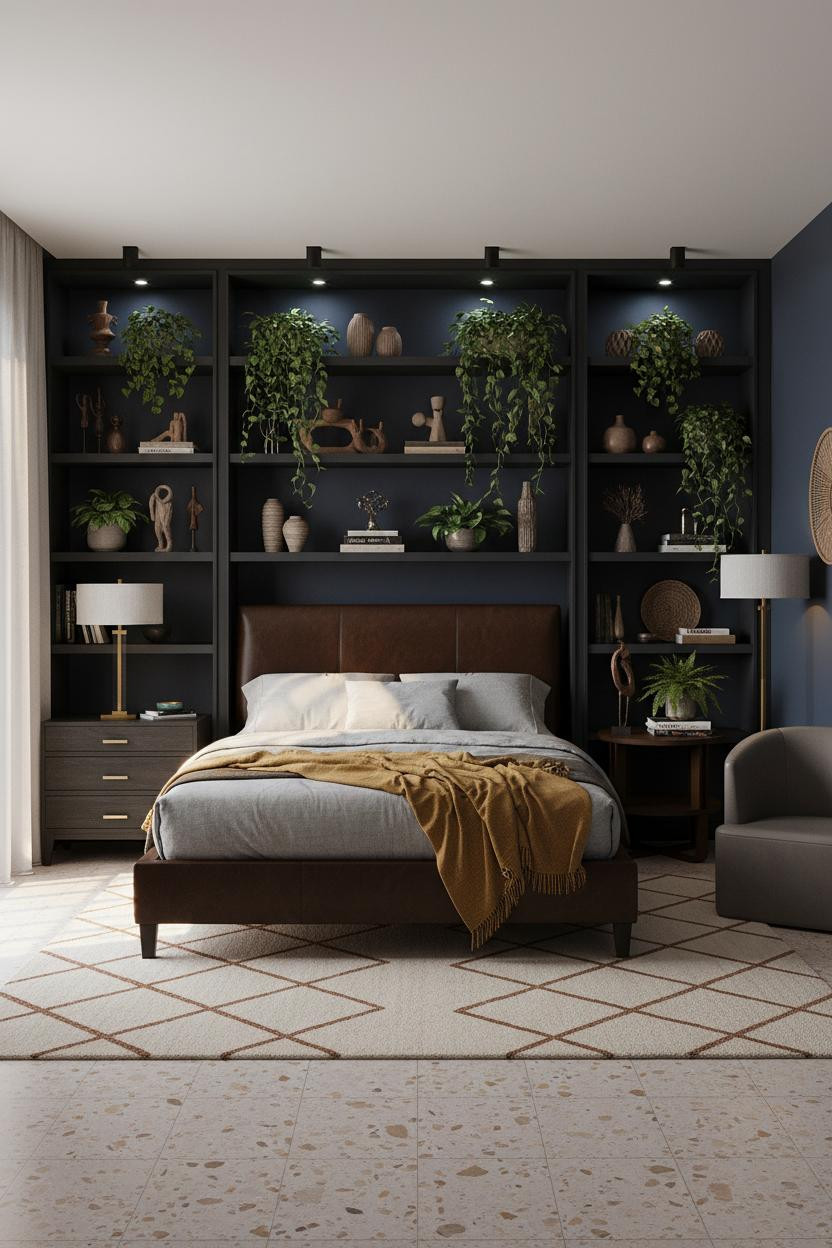

This one is divisive. Deep indigo walls plus matte black built-ins is a lot on paper.
But it works because the pale terrazzo flooring reflects enough light upward to stop the room from collapsing into itself. The cream and charcoal flecks in the stone actually echo both the dark frame and the lighter bedding, which ties the palette together without anything feeling forced.
The smarter choice: Style the shelves with trailing greenery, not books alone. Living texture breaks up the graphic weight of all that matte black.
How a Plaster Niche Makes a Black Frame Feel Calm
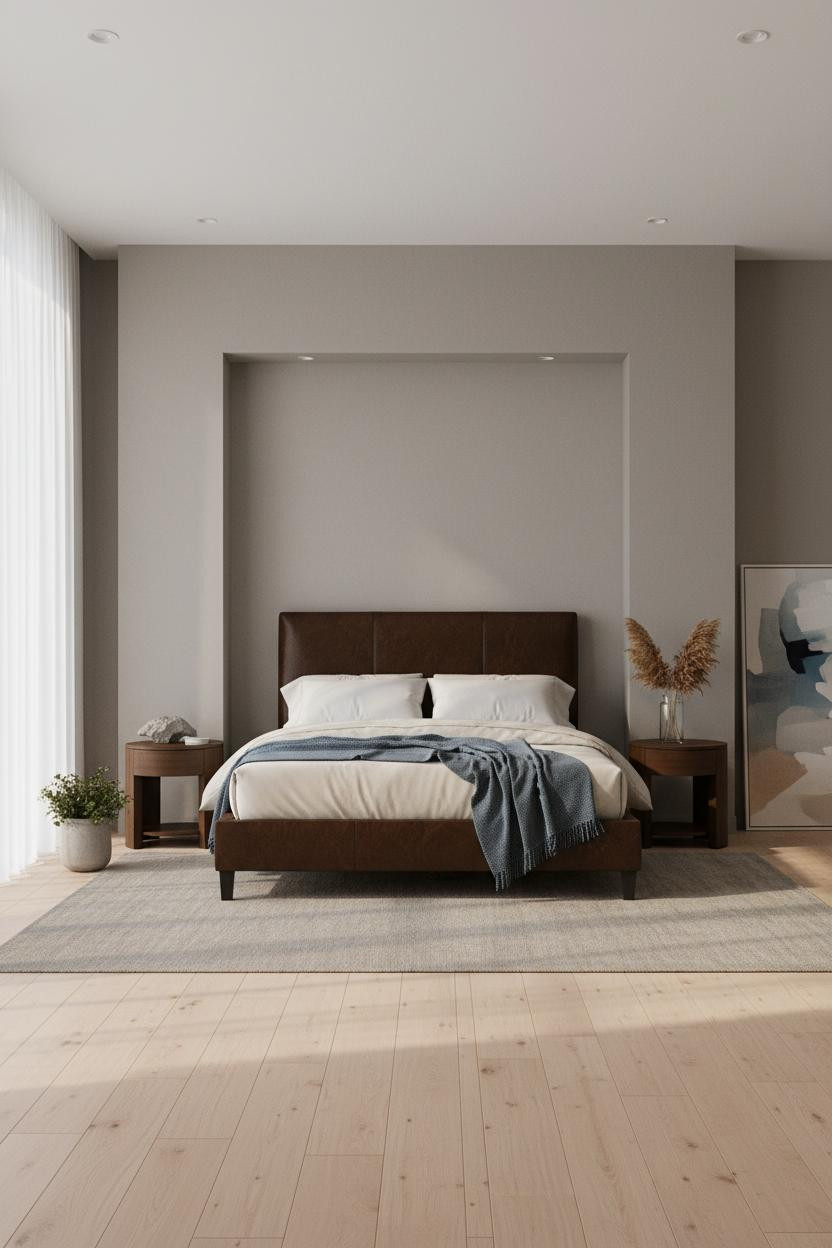
The room feels hushed. Architecturally still in a way that makes you slow down.
What makes this work: Recessing the headboard wall into a dove-grey matte plaster niche creates a built frame around the bed, so the dark frame reads as intentional rather than heavy. The architecture does the styling for you.
Pro move: Keep the flanking walls in warm greige. The contrast between the cool niche and the warmer sides is subtle, but you feel it the moment you walk in.
Deep Plum Paneling That Earns Its Place
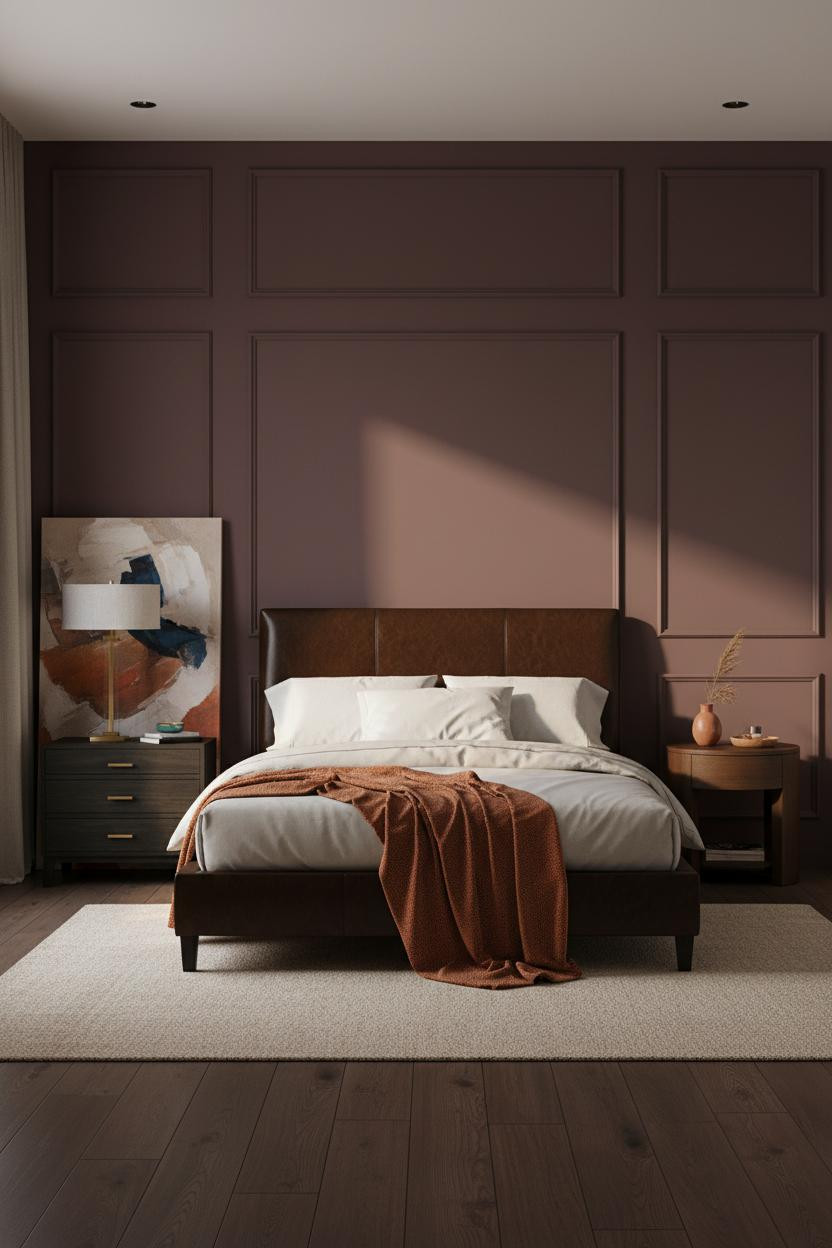
Bold choice. Not for everyone. But I think the people who commit to this never look back.
Why it looks custom: Full-height rectangular molding panels in deep burgundy-plum cast inset shadows that give the wall graphic structure. It's the geometry that keeps it from feeling like a paint job gone wrong.
Avoid this mistake: Don't soften the plum with too many competing colors. Oatmeal bedding, one burnt orange throw. That's enough. The wall is the statement.
Backlit Panels That Make Darkness Feel Intentional
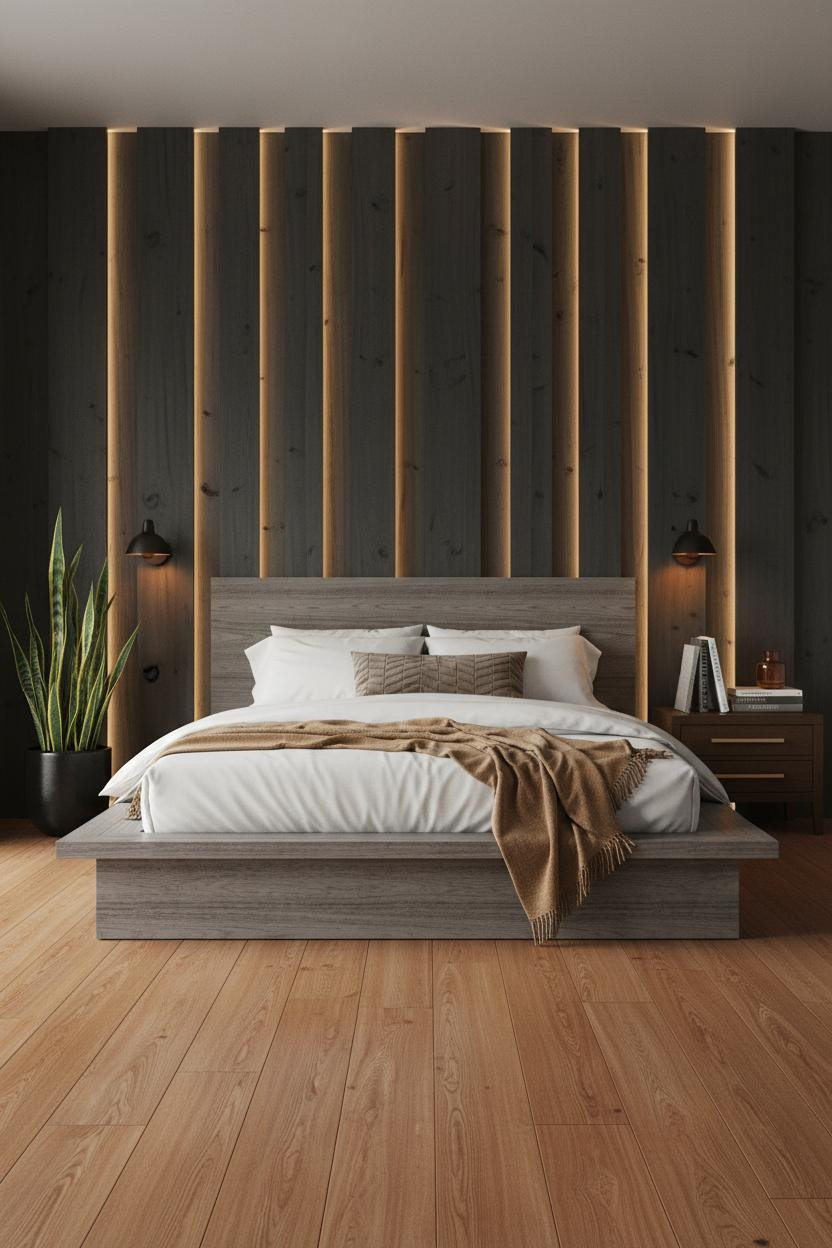

This is the room for people who want dark without apology. Unapologetically dark, honestly.
What makes it pull together is the backlighting. A strip behind forest-charcoal stained oak planks traces each vertical edge in warm glow, so the wall reads as architectural instead of just heavy. The honey maple floor does the rest, grounding the space while the amber sconces add intimacy at bedside level.
One smart swap: If you can't do the full backlit panel, just replace the overhead fixture with paired sconces flanking the bed. The low, directional light changes how the whole room feels after dark.
Board and Batten in Espresso Brown Still Feels Fresh
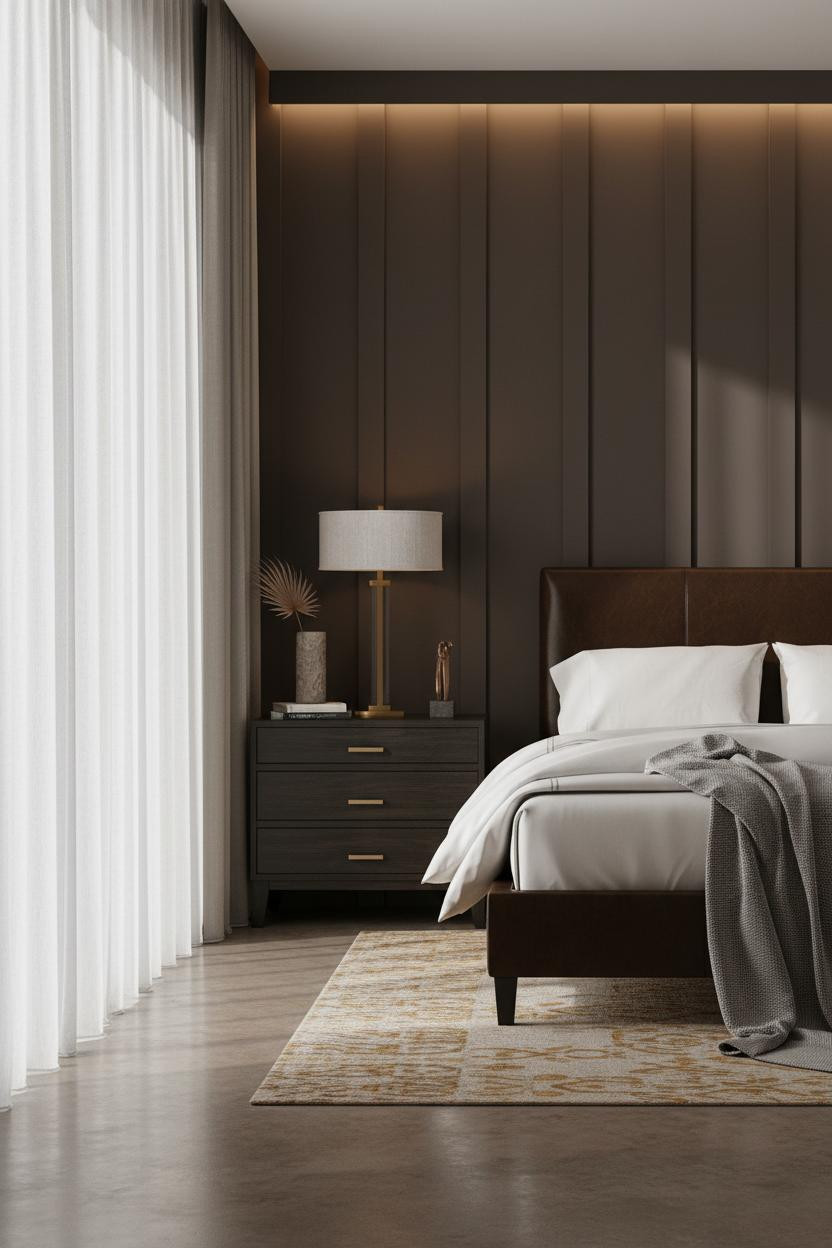
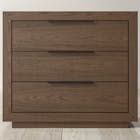
I keep seeing board-and-batten misused in bedrooms. Too short, too pale, too timid. This version gets it right.
The real strength: Running the deep espresso-brown planks from floor to ceiling is what gives this its weight. Stopping at chair rail height would halve the drama and lose the whole point.
The rust-terracotta flanking walls keep the dark from feeling cold, while still leaving the feature wall room to breathe. White linen bedding does the balancing work so the palette doesn't tip into oppressive. See more dark earthy bedroom ideas that use this same principle.
Walnut Herringbone Paneling and the MCM Bedroom Done Right
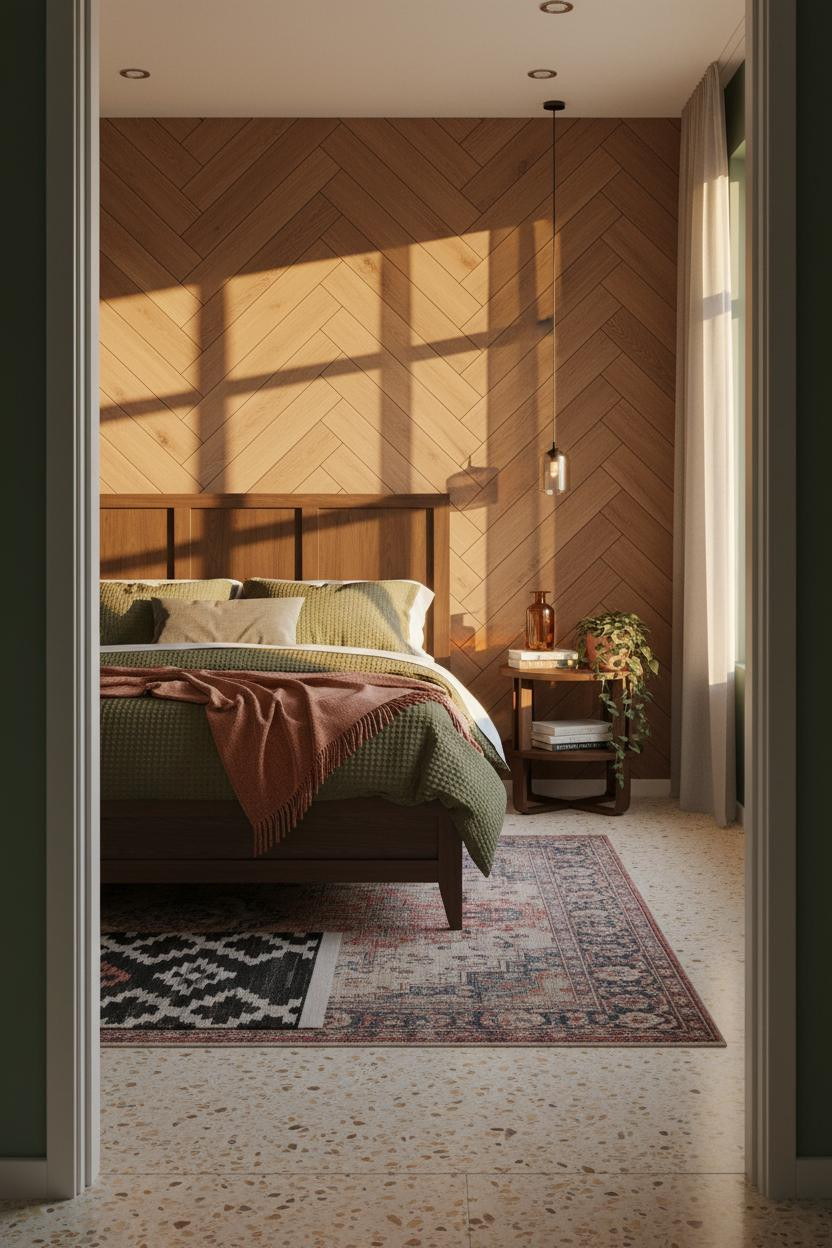

Nothing fancy. That's the point.
Why the materials matter: Herringbone walnut paneling catches raking afternoon light at the diagonal, which adds movement that a flat painted wall simply can't replicate. The warm grain against forest green flanking walls keeps it feeling grounded rather than retro-costume.
Worth copying: Lean into the terrazzo floor by keeping the rug vintage and faded. The worn pile softens the geometry without erasing it.
When Painted Brick Actually Works With a Dark Frame
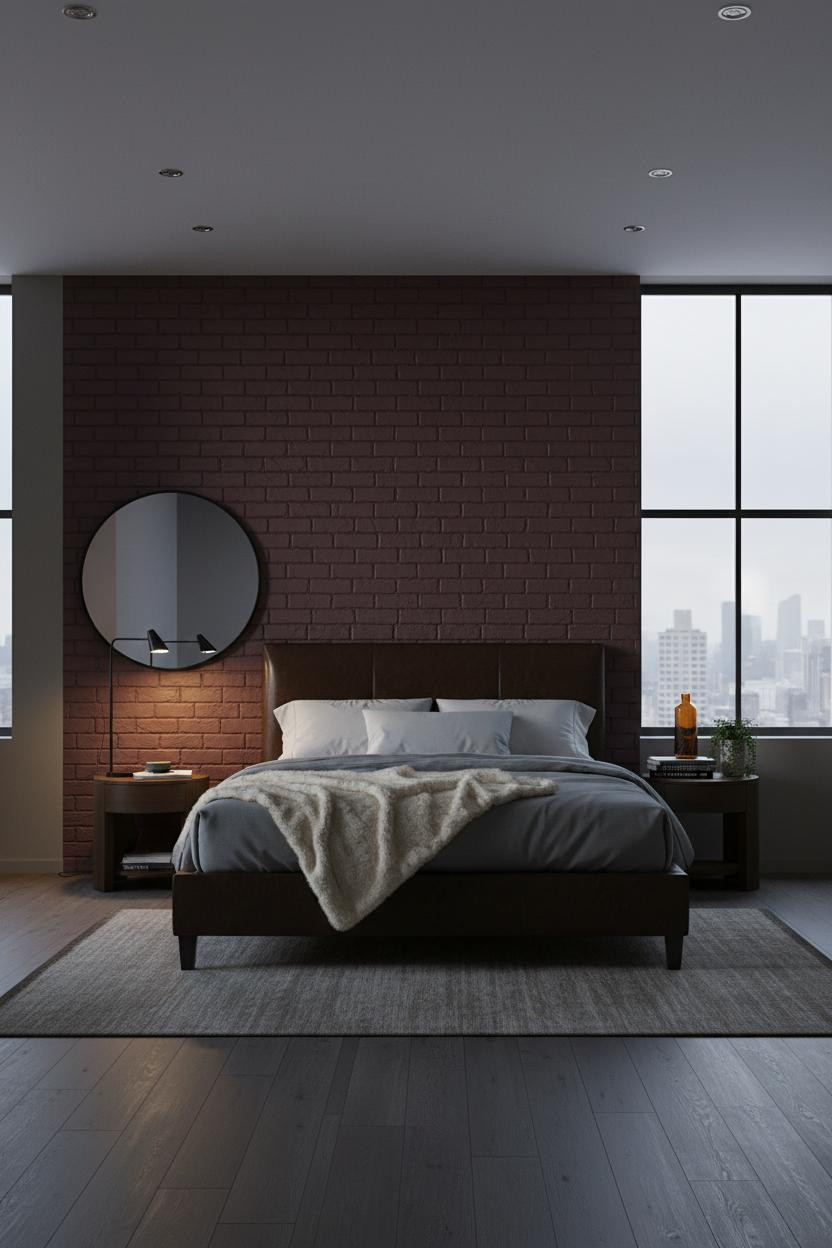
Fair warning. Burgundy-painted brick is a commitment. But the texture is what separates it from every flat-wall dark bedroom on Pinterest.
Design logic: The mortar lines in exposed plum-painted brick catch light in a way that makes the wall dimensional rather than flat, so the room feels raw and grounded at the same time. The stone grey flanking walls pull it back from feeling like a restaurant. Moody bedrooms in small spaces use this same strategy to add depth without square footage.
Where to start: A cream faux-fur throw draped diagonally across dark bedding breaks the hard surfaces without losing the urban edge.
Sage Shiplap Proves Green and Espresso Are Actually a Pair
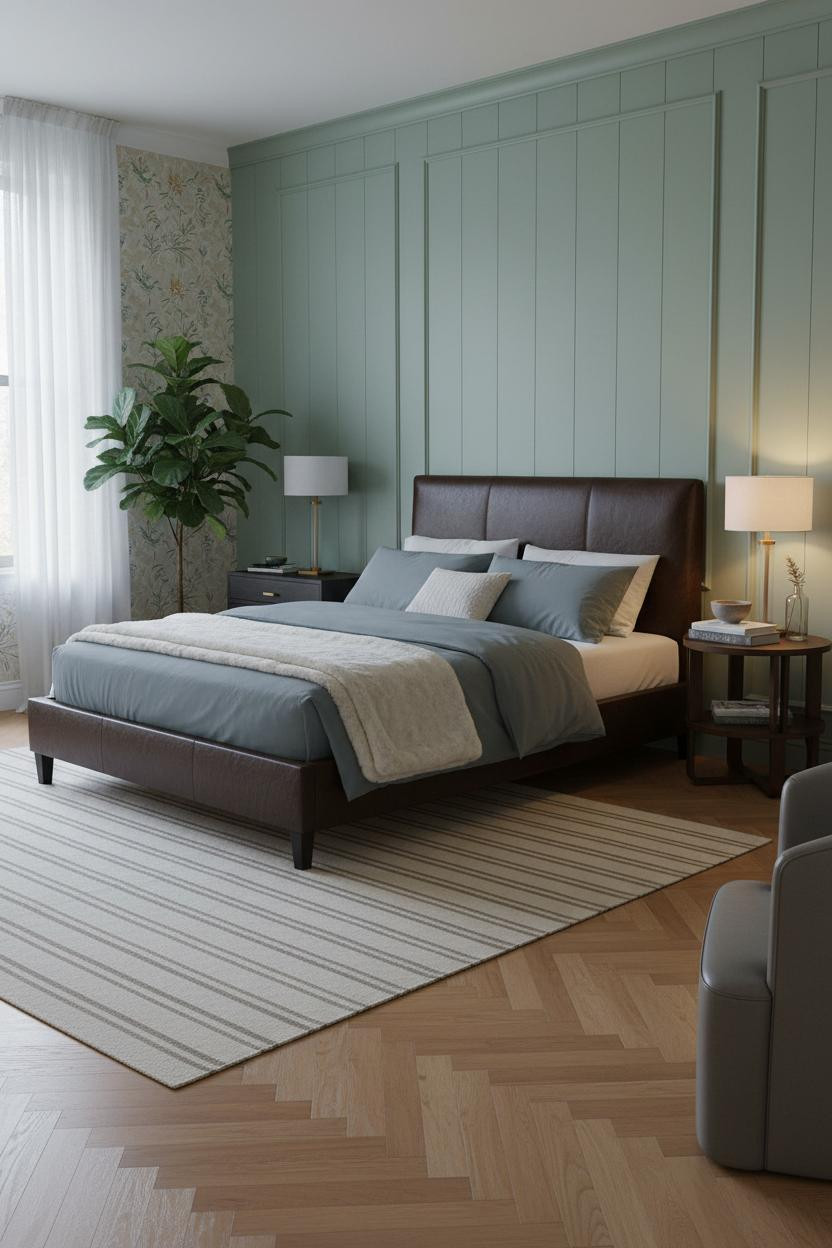
I'll be honest: I didn't expect sage to look this good against espresso leather. It shouldn't work. But it does.
The reason the room feels calm instead of busy is the vertical matte shiplap. Each narrow plank adds linear rhythm that draws the eye upward, making the frame feel anchored rather than dropped into a random green box. And the warm amber herringbone floor underneath ties the two materials together.
The easy win: Pair slate jersey bedding with a cream throw. The grey pulls out the cool in the sage, while the cream keeps the room feeling open.
A Clay Plaster Arch That Frames Everything Beautifully
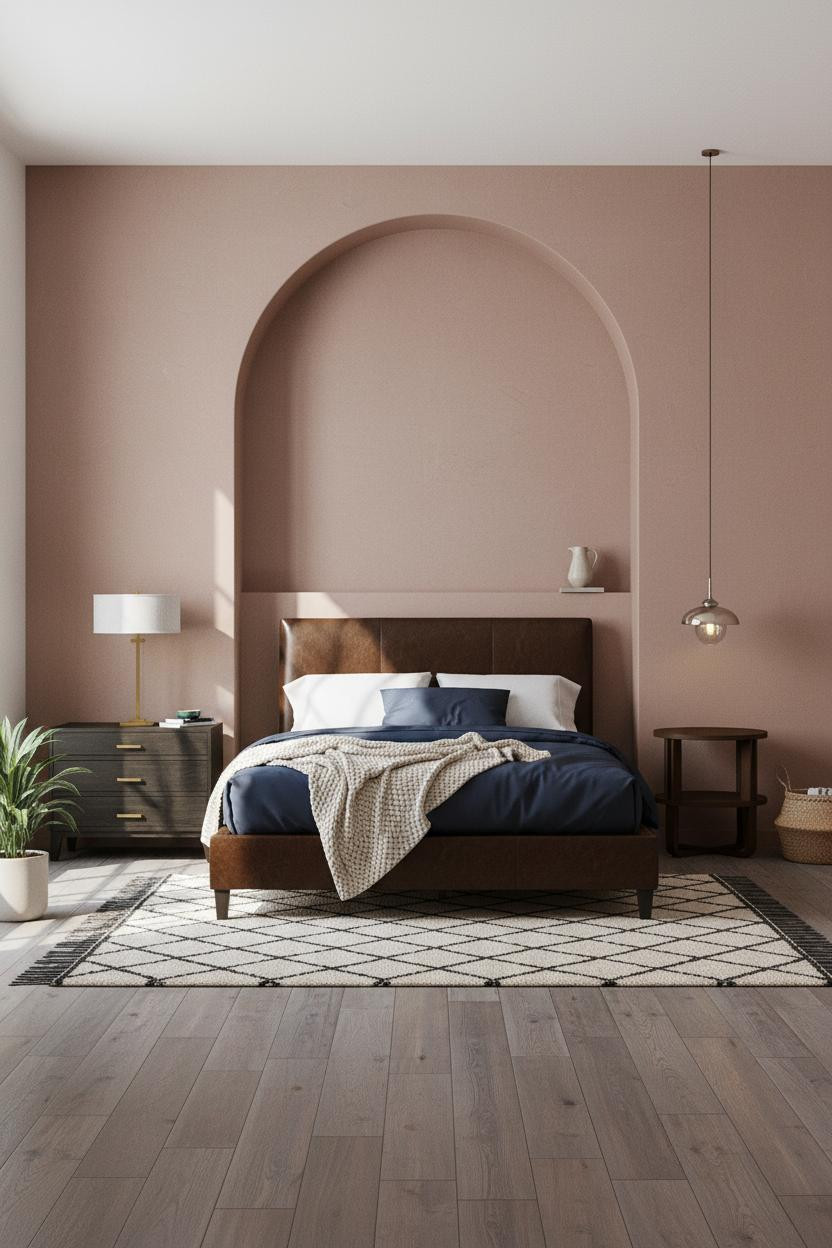
Having a curved architectural element behind the bed changes how you actually read the whole room. The arch becomes the focal point, and the frame becomes the furniture that lives inside it.
What gives it presence: Smooth warm clay plaster in a floor-to-ceiling arched niche deepens at the curve and catches morning light differently at every hour, which makes the wall feel alive without any decoration at all. The dusty rose flanking walls pick up the warm plaster tone, so the palette reads as cohesive.
The finishing layer: A Moroccan diamond rug keeps the floor from disappearing into the reclaimed wood grain. Pattern at floor level means you don't need pattern anywhere else.
Pale Birch Panels Make the Dark Frame Feel Grounded
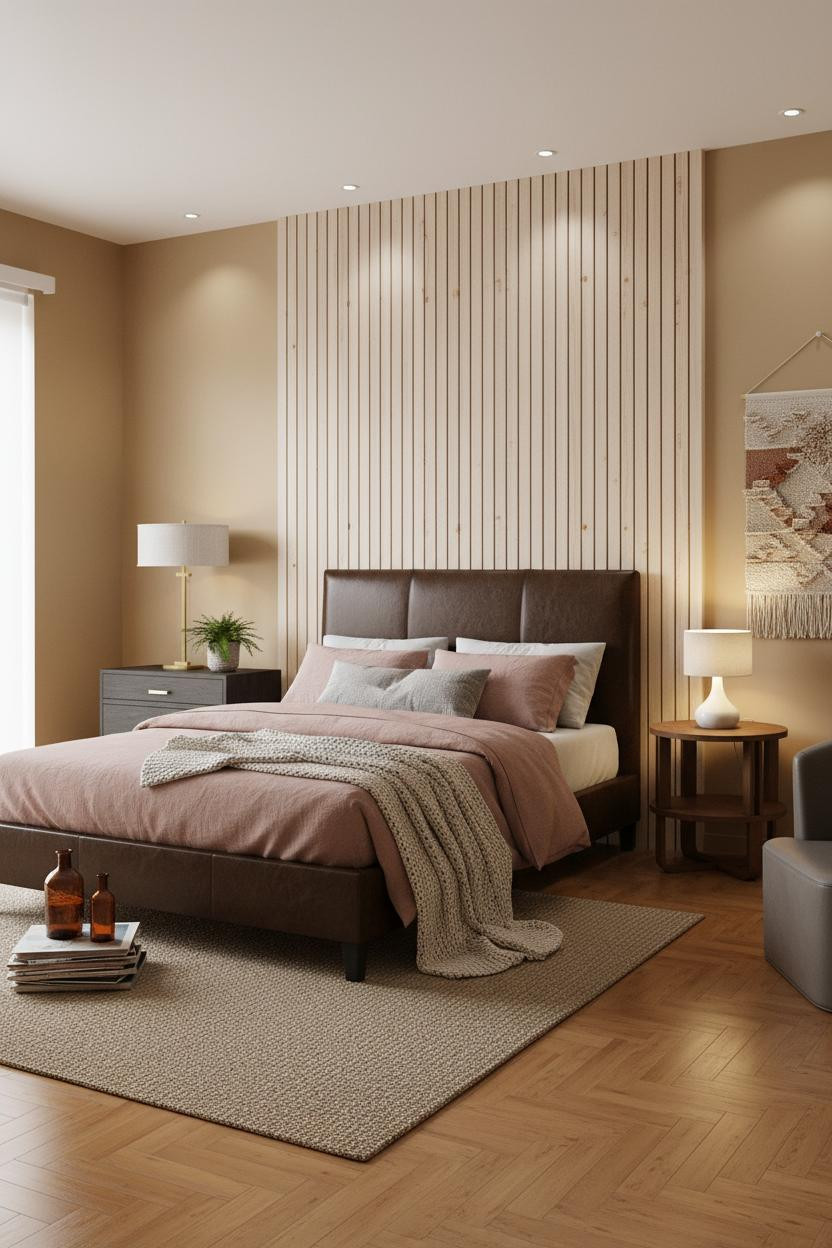
This is the farmhouse-modern combination I actually want to live in. Not the shiplap-and-galvanized-metal version.
Why it feels balanced: The pale birch slatted paneling is light enough to stop the dark frame from pulling the whole wall forward, while the fine vertical lines still give the composition structure. Honey herringbone parquet adds warmth underfoot that the birch alone couldn't.
Dusty pink washed linen bedding is the call here, not white. White would flatten the birch. Pink picks up its warmth instead. See unique bedroom designs for more pairings like this.
Slate Shiplap and Sconces That Actually Do Something
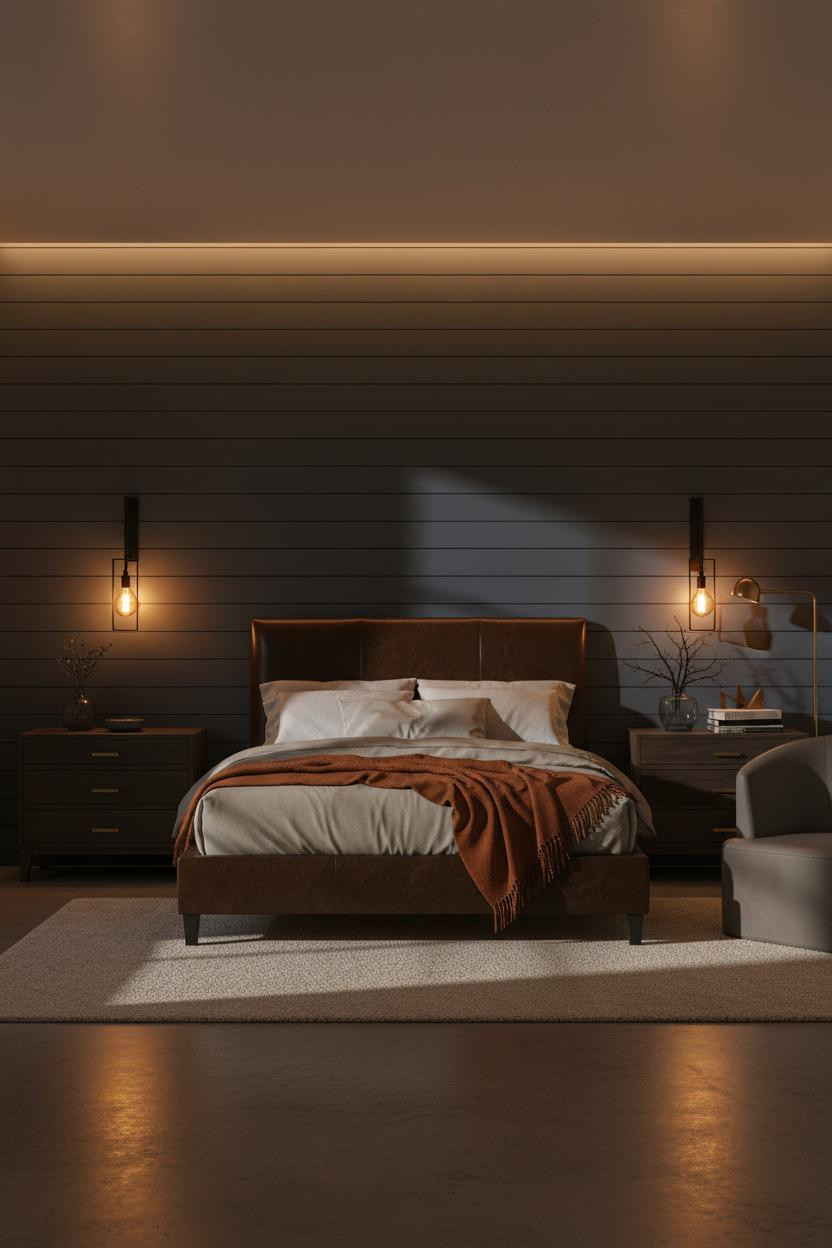
The room feels like raw calm. That's the only way I can describe it.
What creates the mood: Horizontal deep slate shiplap runs plank-edge-to-plank-edge across the entire back wall, and directional amber sconce light catches each edge to create shadow lines that read as texture. It's a small move, but it changes everything about how dark the room feels without being actually dark.
Don't ruin it with: An overhead pendant. Keep the light low and warm. Overhead light at this saturation level washes out the whole wall texture and leaves you with a flat, disappointing result.
When Hand-Troweled Plaster Replaces Every Other Texture
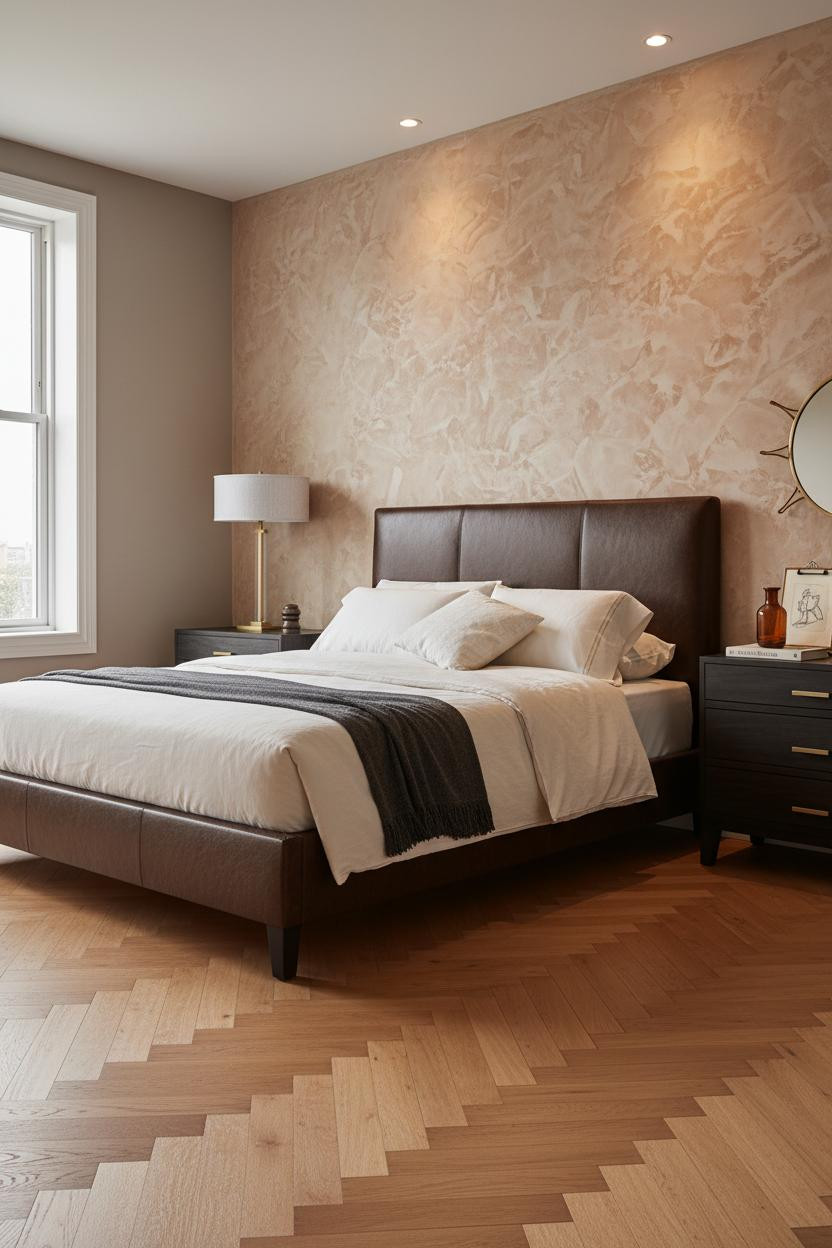
I almost scrolled past this one. Glad I didn't.
The part to get right: Hand-troweled mushroom plaster shifts between ivory and tan depending on where the light hits, which makes the wall look expensive without looking decorated. Paired with ivory bedding and a charcoal cashmere throw, the dark frame becomes an anchor rather than a dominant piece. Earthy moody bedroom ideas use this plaster technique consistently as the simplest way to add warmth to a dark scheme.
Deep Teal Board and Batten With Bleached Oak Floors
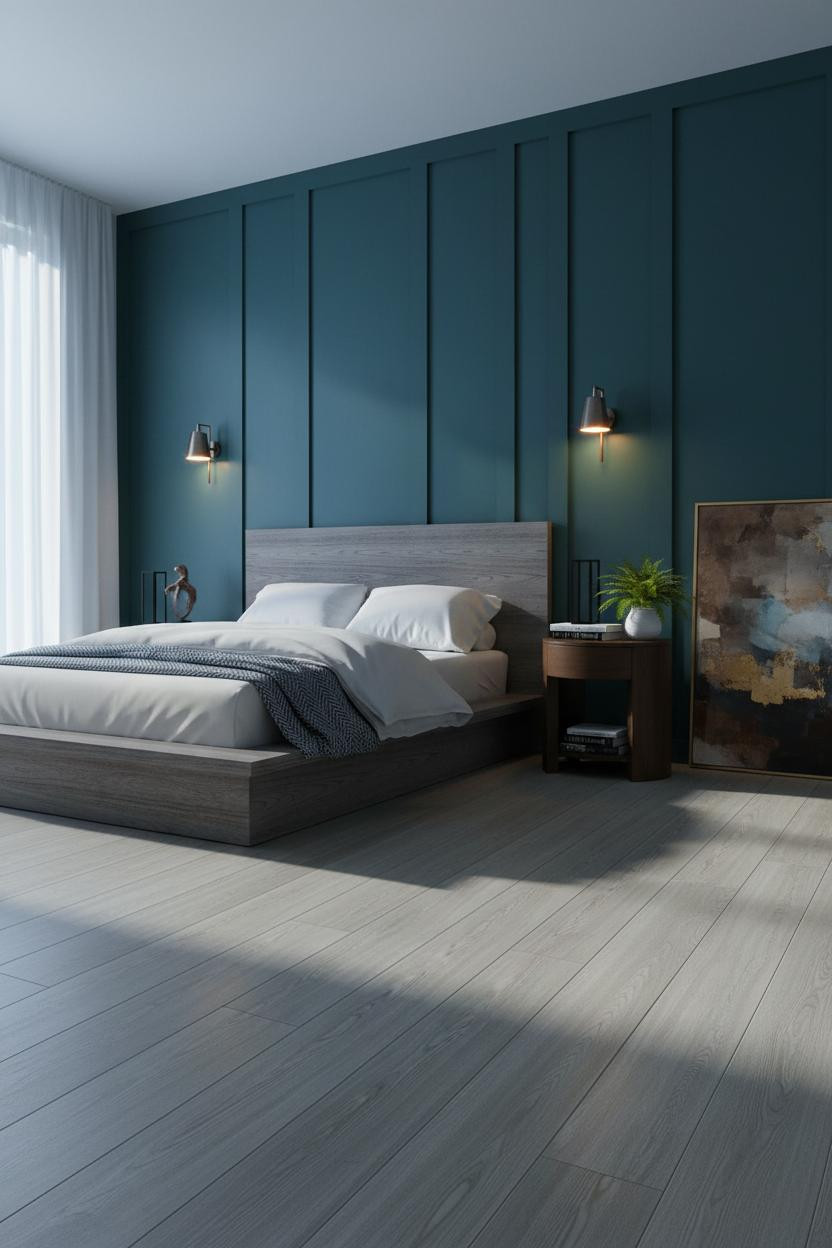
Teal is a trickier partner for a dark frame than most people expect. Too bright and it fights. Too grey and it disappears.
Why the palette works: Deep matte teal in a horizontal board-and-batten finish sits cool against dove grey flanking walls, while bleached oak flooring keeps the light from dropping out entirely. The paired sconces pool warm amber at headboard level, which creates enough contrast to feel intentional. Cream percale bedding and a steel blue herringbone throw keep the cool side of the palette without going cold.
What not to do: Don't add warm brass hardware here. Cool brushed nickel reads as more intentional against teal. Brass would pull the palette in two directions at once.
Charcoal Wall, Walnut Floor, Mustard Blanket
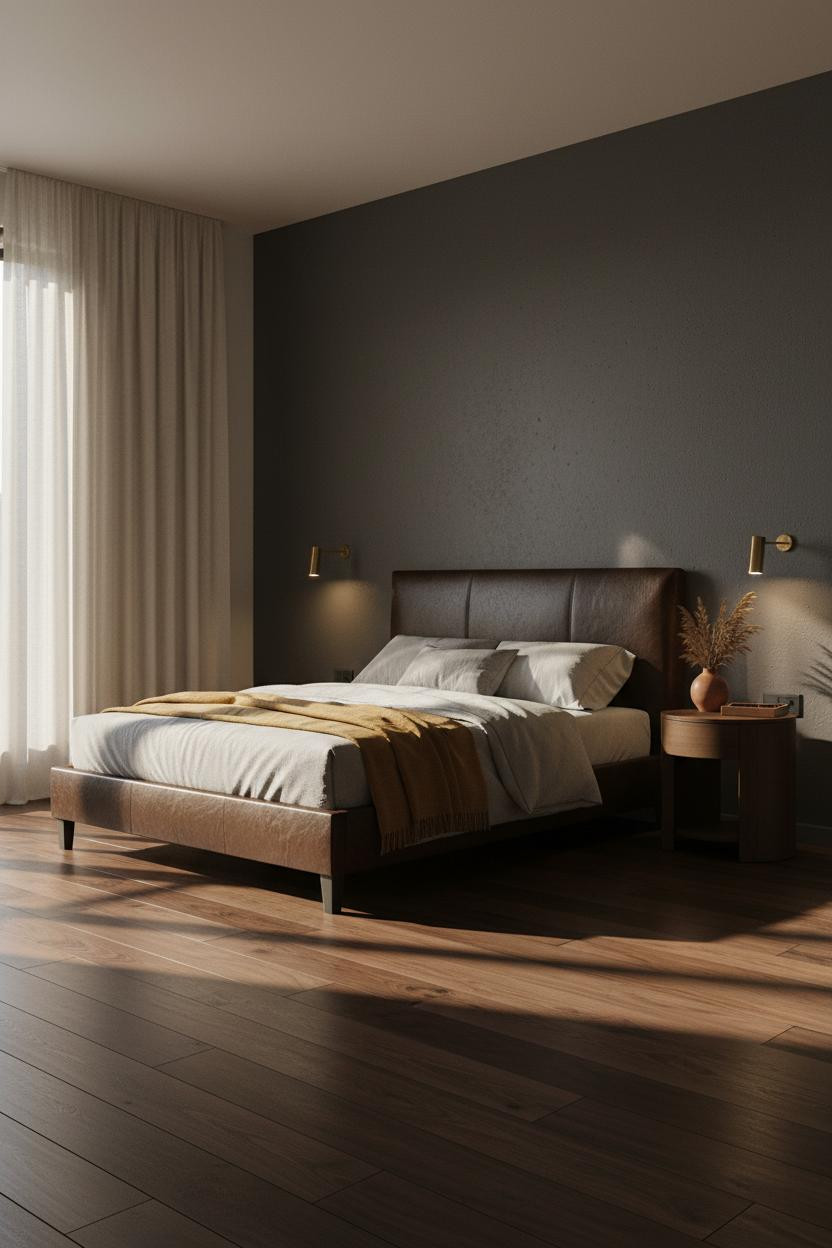
This is the version I'd actually live in. Three decisions. All correct.
Why it feels intentional: A floor-to-ceiling matte charcoal wall with aggregate texture absorbs light at center and softens toward the edges, so it never reads as a flat painted surface. The dark walnut flooring echoes the frame material in a way that makes the whole composition feel considered. Golden afternoon light through the left window does the warming work so you don't need extra layers of color to bring the room back from feeling cold.
A mustard wool blanket draped across stone-washed grey bedding. That's the whole contrast strategy. Nothing more needed. And honestly, adding more would just ruin it.

Our #1 Pick
Saatva Classic Mattress
America's best-selling online luxury innerspring. 365-night trial, lifetime warranty, free white glove delivery.
Shop Saatva Classic
Why Luxury Bedrooms Always Feel Better
Every bedroom in this list comes down to the same thing: the frame anchors the room, but the bed itself determines whether you actually want to be in it. Walls get repainted. Linen gets swapped out. The mattress stays.
The Saatva Classic is what goes under all of this. Dual-coil support that holds up over years, a breathable organic cotton cover that doesn't trap heat, and a Euro pillow top that still feels right the morning after the morning after. It's the kind of sleep that makes the room worth designing in the first place.

The rooms people save are the ones where nothing looks accidental. Start with the frame. Start with the floor. And start with a bed frame that actually fits the mattress under it. Start with the bed. The rest figures itself out.