
 by
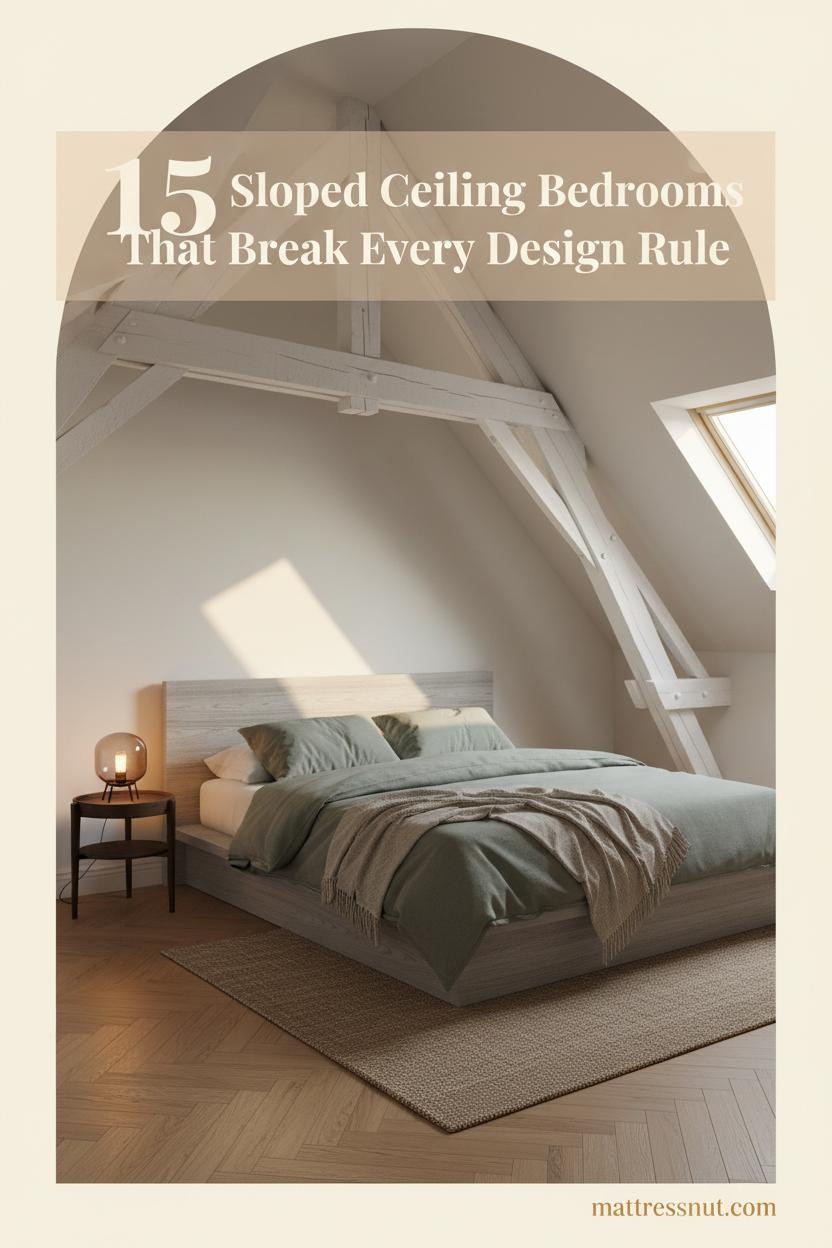
by Think your attic is a design problem to solve? The best sloped ceiling bedroom slanted walls rooms I've seen treat the angles as the whole point. Low rafters, tight eaves, geometry pressing in from every side. That's not a flaw. That's a feature.
These 15 rooms prove it. Each one leans into the pitch instead of fighting it.
Whitewashed Timber That Turns Geometry Into Architecture
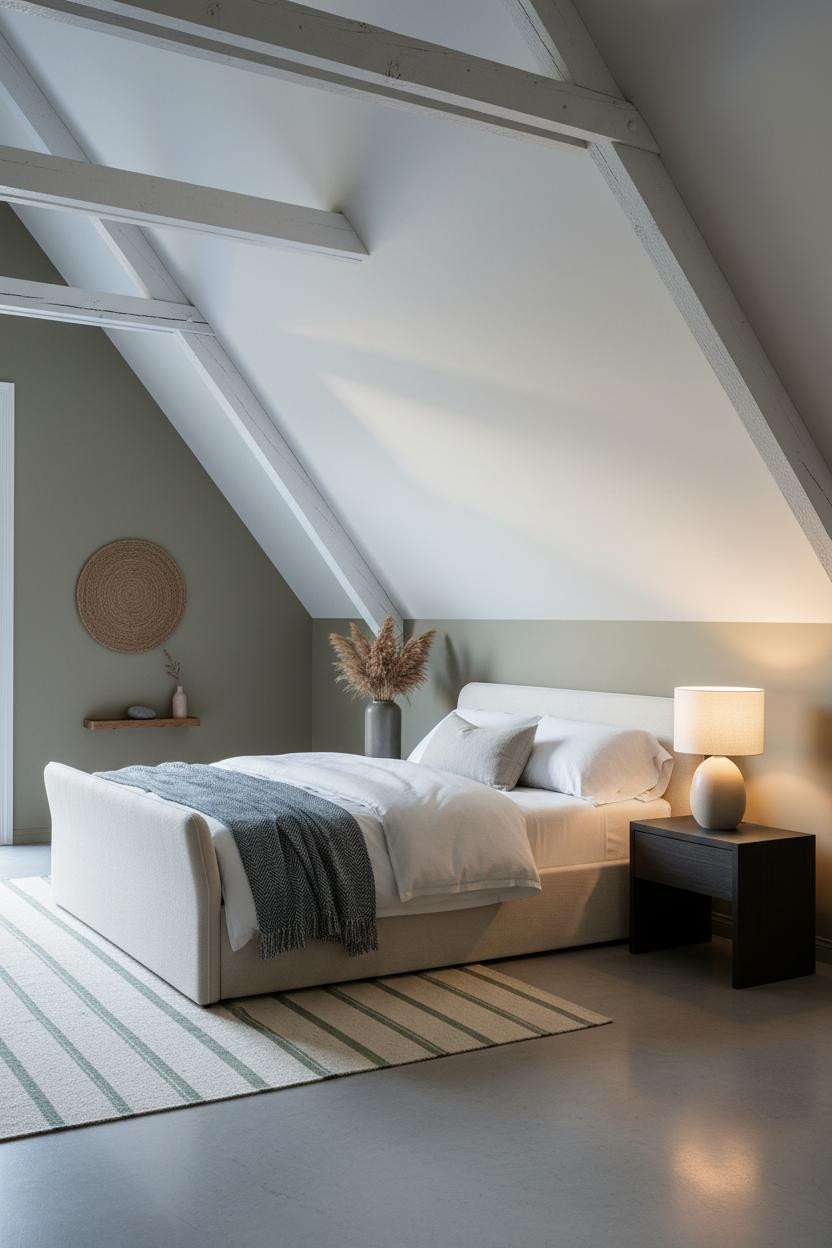


I keep coming back to this one. The ceiling does all the work.
Why it works: The whitewashed timber collar ties cast crisp diagonal shadow stripes across pale plaster, turning a structural necessity into bold graphic architecture that you'd actually choose if you could.
Steal this move: Lay a flat-weave linen runner under the bed footprint. It grounds the room while keeping the concrete floor visible on both sides.
When Honey Rafters Feel Like a Private Discovery
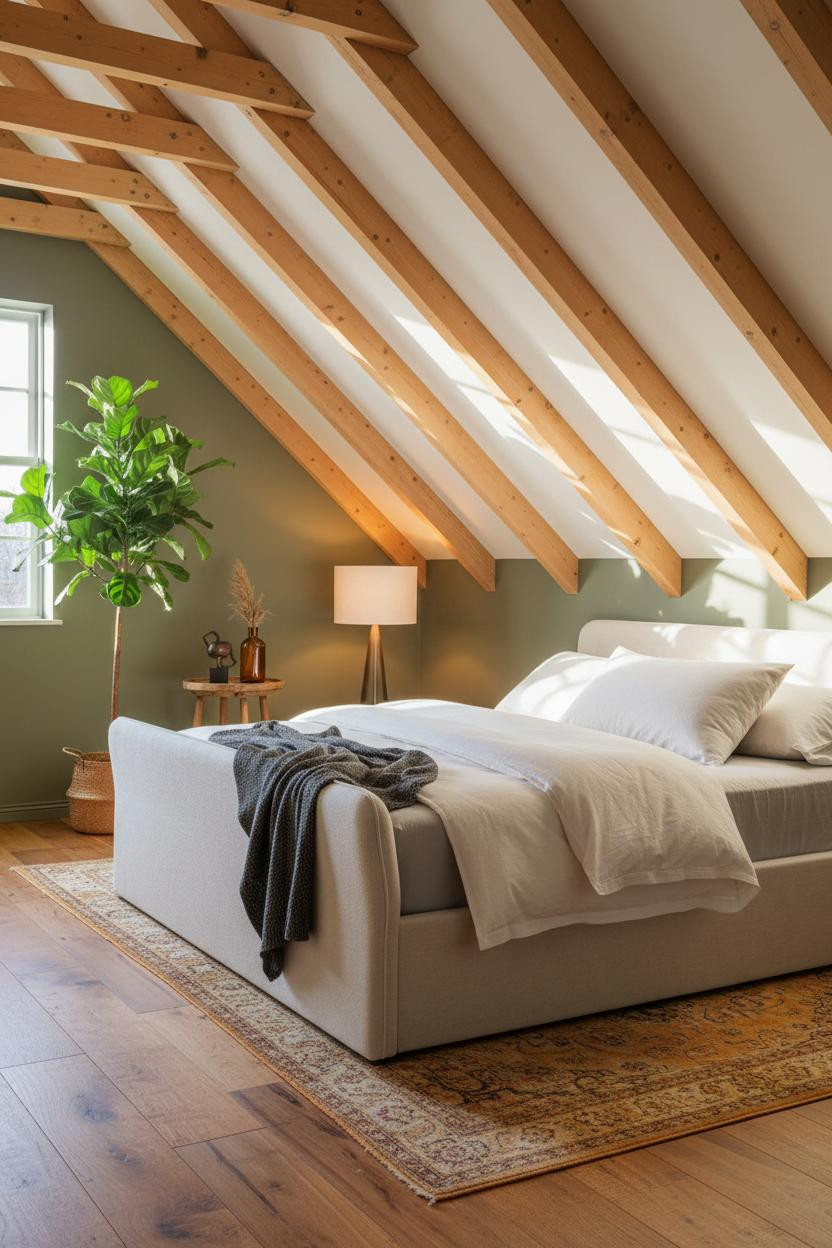
Low ceilings that press close and feel sheltering, not cramped. There's a real difference between the two, and this room gets it right.
The pale honey-stained rafters pull warmth into every corner, and the moss green knee-wall keeps the palette from going cold. What makes it work is that contrast: warm wood grain overhead, soft muted color below.
Worth copying: A faded Persian runner in ochre and burgundy adds the kind of pattern that looks collected, not purchased. Nothing too matchy.
White Shiplap With a Dormer Does a Lot of Heavy Lifting
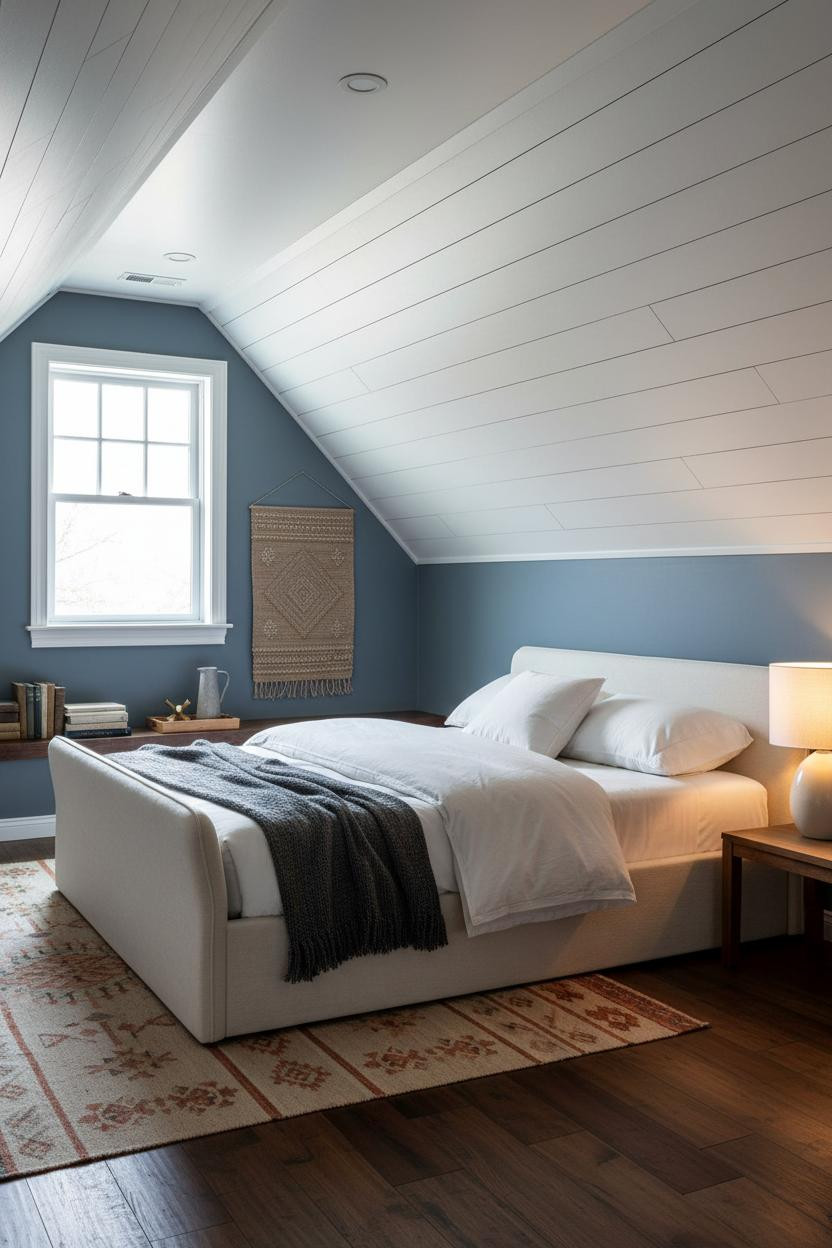
Honestly, white shiplap on a sloped ceiling is one of those combinations I assumed was overused. But this room changed my mind.
Why it lands: Each horizontal board catches light along its upper lip and drops a fine shadow stripe below, so the white-painted shiplap reads as graphic architecture rather than a paint-over.
The easy win: Denim blue on the knee-wall keeps the room from going clinical. That one color choice is what stops the white from feeling like a renovation in progress. See more rooms that handle angled ceilings with intention.
Scandi-Modern and a Round Mirror That Solves Everything
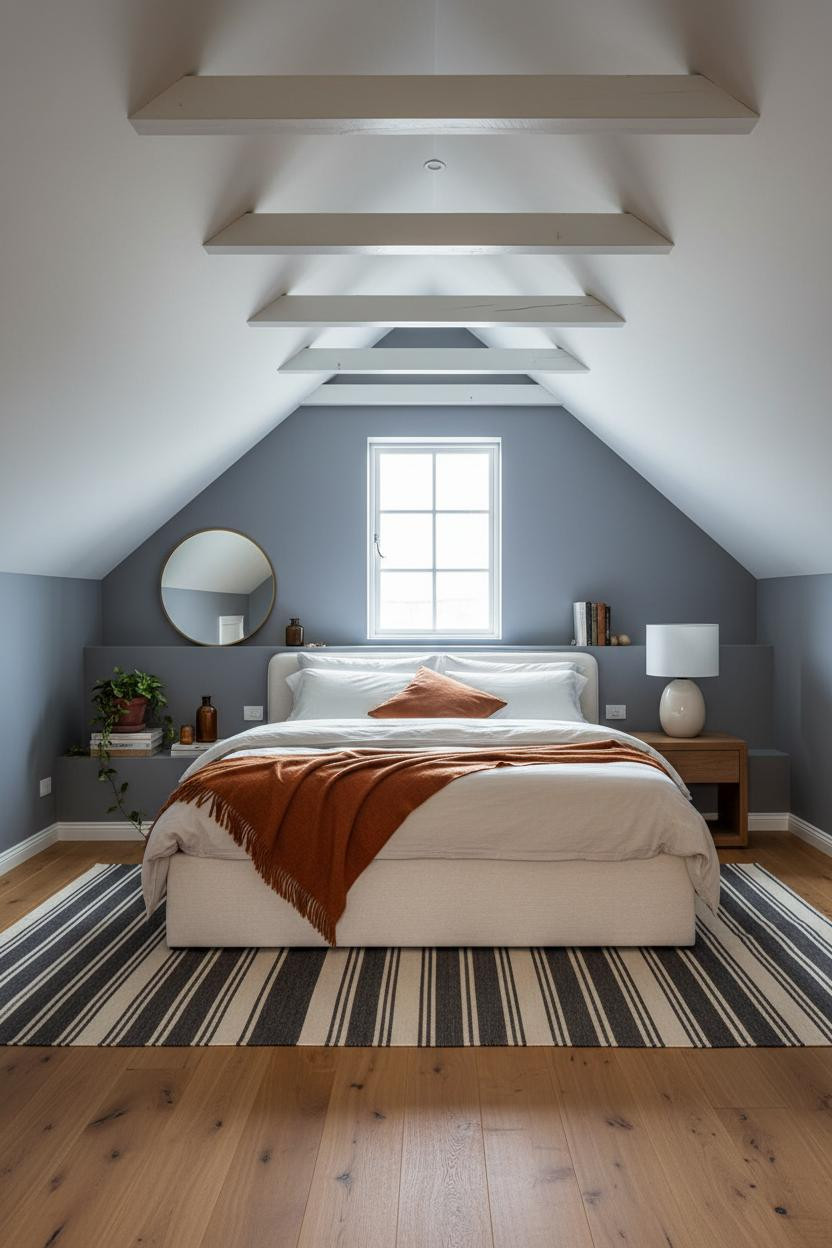
Bold choice. Dusty indigo walls under a pale rafter ceiling. But it works.
And the reason is proportion: the whitewashed collar ties are light enough overhead that the indigo plaster below reads as grounding, not heavy. The room feels calm and cohesive rather than closed in.
The smarter choice: An oversized round mirror leaning against the knee-wall opposite the bed reflects the ceiling geometry back into the room, which gives the space more depth than another piece of furniture would.
Dark Espresso Planks and Terracotta That Shouldn't Work Together
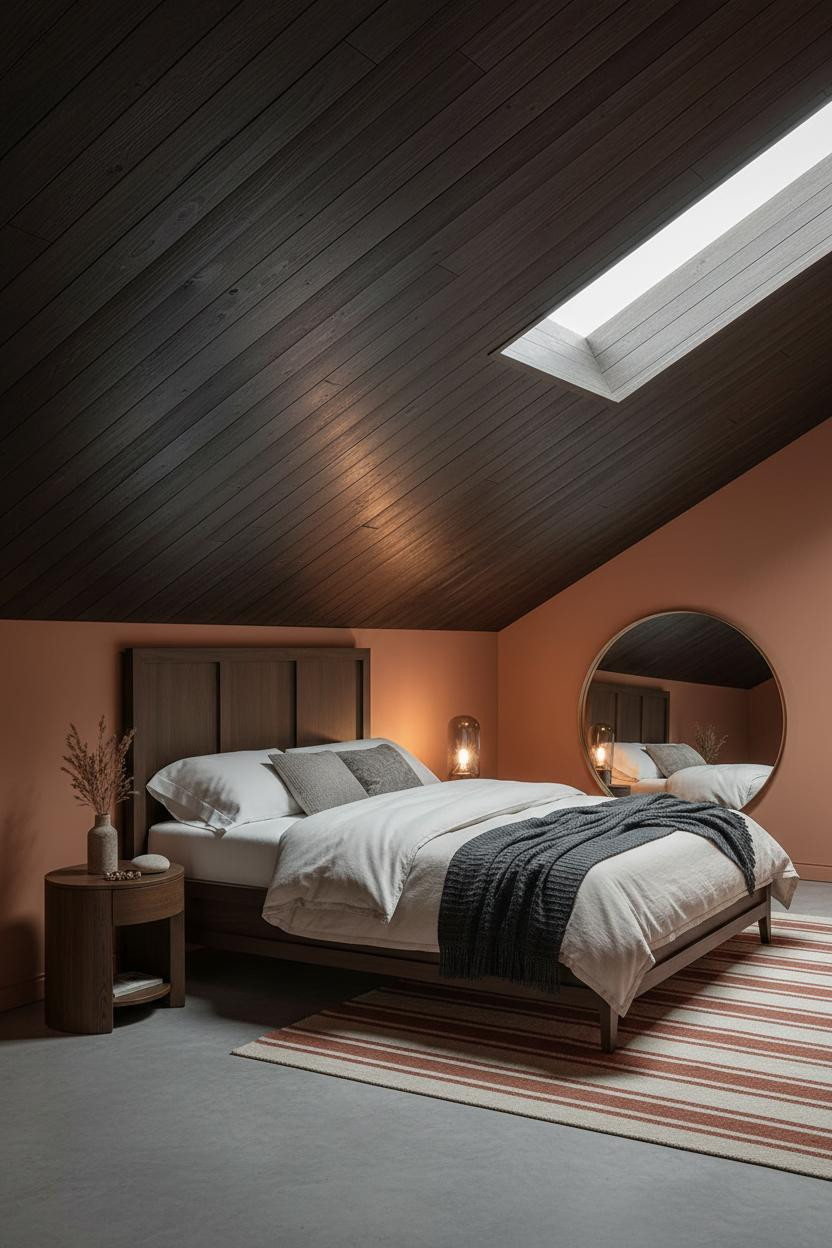


This is divisive. I get it. But I'd commit to it without hesitation.
What gives it depth: Dark espresso tongue-and-groove planks running diagonally from ridge to knee-wall make the ceiling feel intentional, and the terracotta knee-walls below pull warmth upward in a way that feels Mediterranean without being costumey.
A Moroccan-stripe rug in rust and cream keeps the floor from competing. Warm tones, one family. That's the only rule here.
Industrial Minimal Where the Steel Brackets Are the Decor
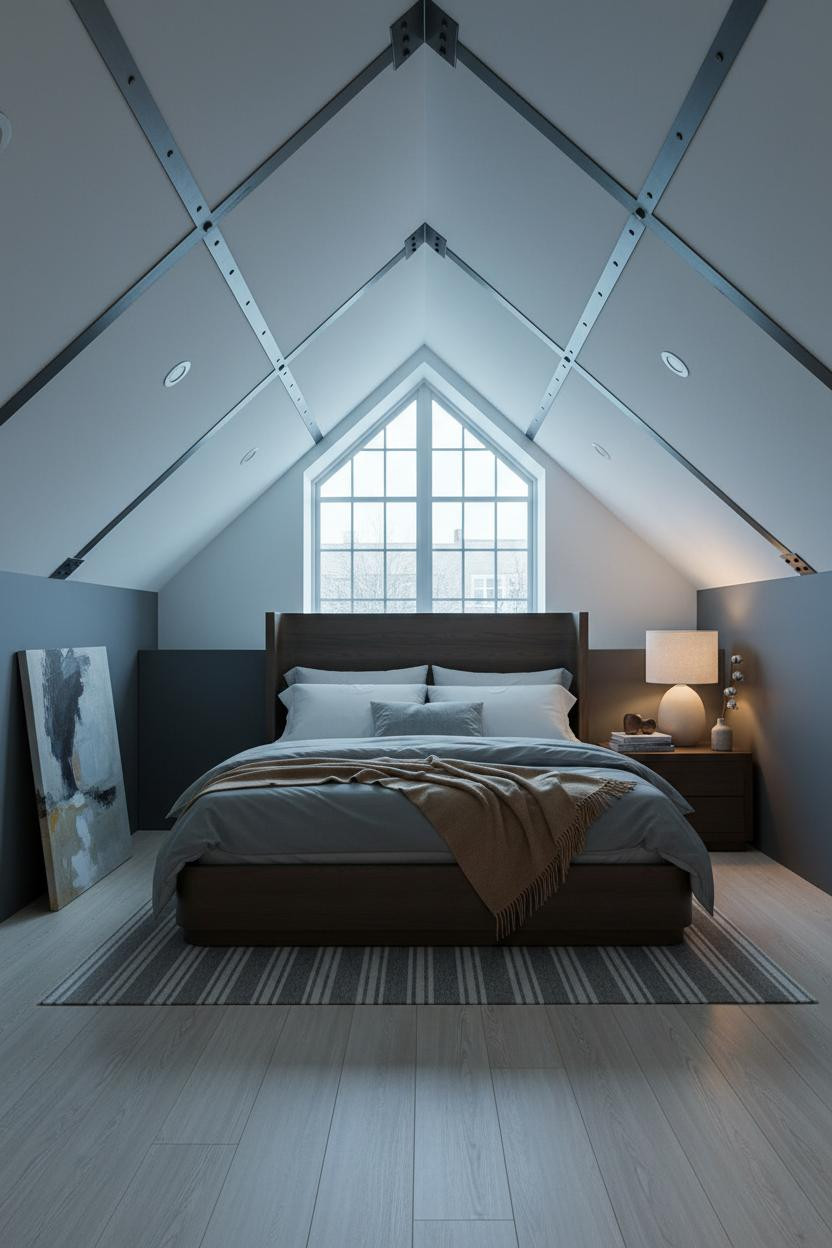

I almost scrolled past this one. The compressed geometry felt severe at first glance.
What makes this work: Raw steel angle brackets bolted into smooth whitewashed plaster slopes create the kind of contrast that reads as intentional hardware, not unfinished construction. The charcoal knee-wall grounds it without adding visual weight overhead.
Avoid this mistake: Don't soften an industrial room like this with too many textiles. Slate jersey bedding and one camel wool throw. That's the ceiling on warmth here.
Low Herringbone Floors That Ground a Rafter Ceiling
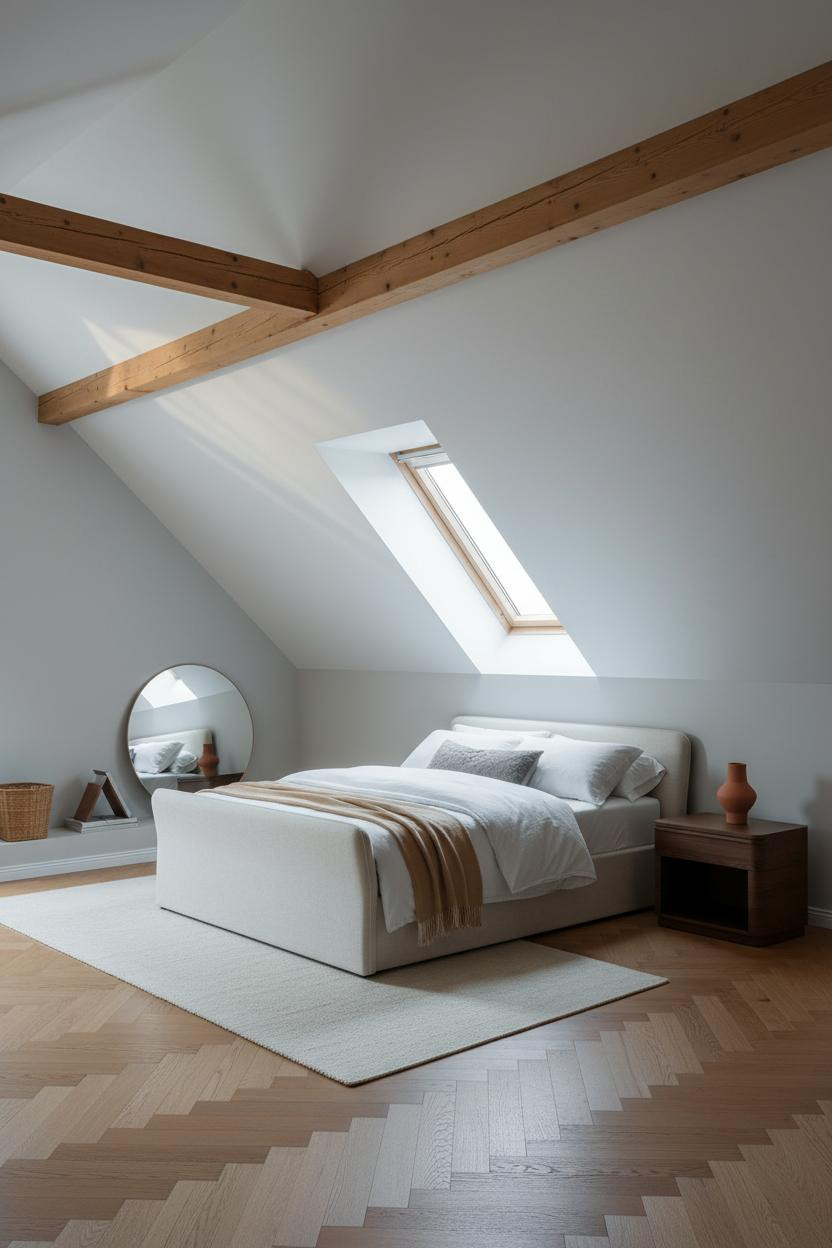

Having two strong geometric patterns in one room (diagonal rafters above, herringbone underfoot) sounds like a problem. It isn't.
Design logic: The amber oak herringbone parquet runs perpendicular to the rafter pitch, which means the two patterns play against each other rather than competing. Dove grey walls keep the room from tipping into noise.
Pro move: Tuck a woven jute basket into the lowest eave corner. It fills the dead zone where floor meets slope while still feeling relaxed. For more ideas on handling low attic layouts that work with the slant, this is worth a look.
Whitewashed Beams With Mushroom Walls: Warmer Than It Looks
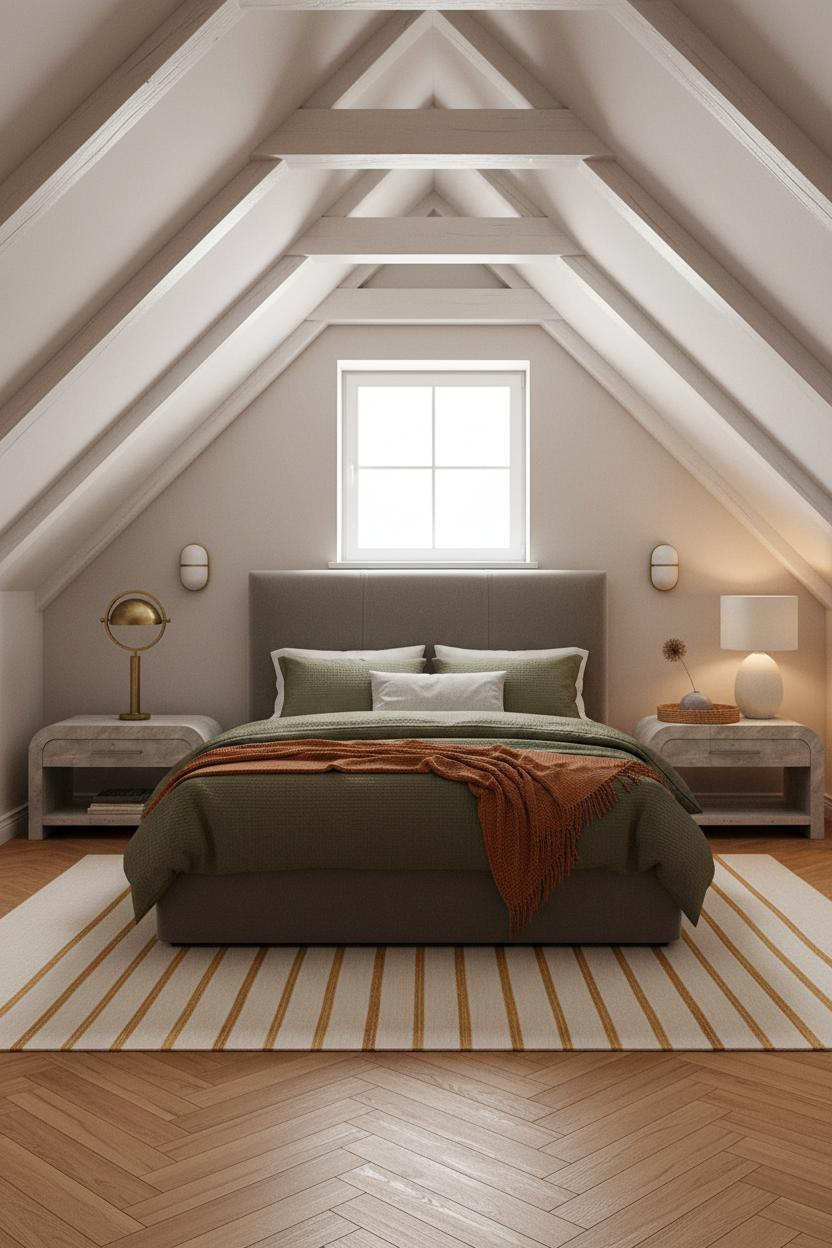

Nothing fancy. That's the whole point of this room.
What softens the room: Whitewashed rough-sawn beams against mushroom plaster walls keep the palette tonally close, so the ceiling geometry reads as texture rather than contrast. The room feels lived-in and intimate, not styled.
Olive waffle-weave bedding with a burnt orange throw at the foot. Two colors, warm family. Skip anything cooler and the mushroom walls go flat.
Board-and-Batten Slopes in a Modern Farmhouse Attic
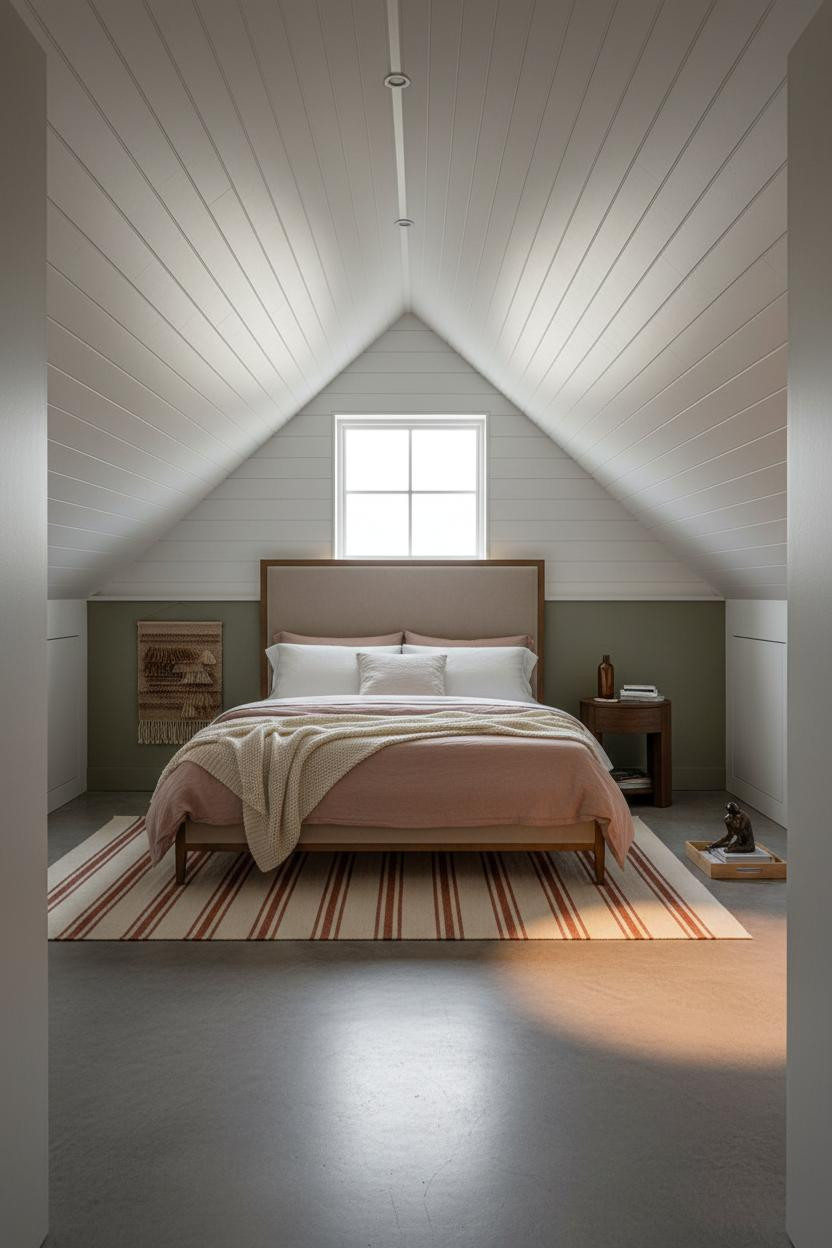

White board-and-batten on a sloped ceiling is one of those choices that looks simple but takes confidence.
Why it holds together: The flat batten strips throw crisp parallel shadow lines across the slope, so the white-painted surface reads as architectural rather than plain. Olive knee-walls push the palette toward something warmer than a typical farmhouse room.
What to borrow: Dusty pink linen bedding against olive walls. Admittedly, the combination sounds risky on paper. In practice, both colors are muted enough that the contrast is quiet rather than loud.
Dark Walnut Floors Make a White Plaster Slope Feel Expensive
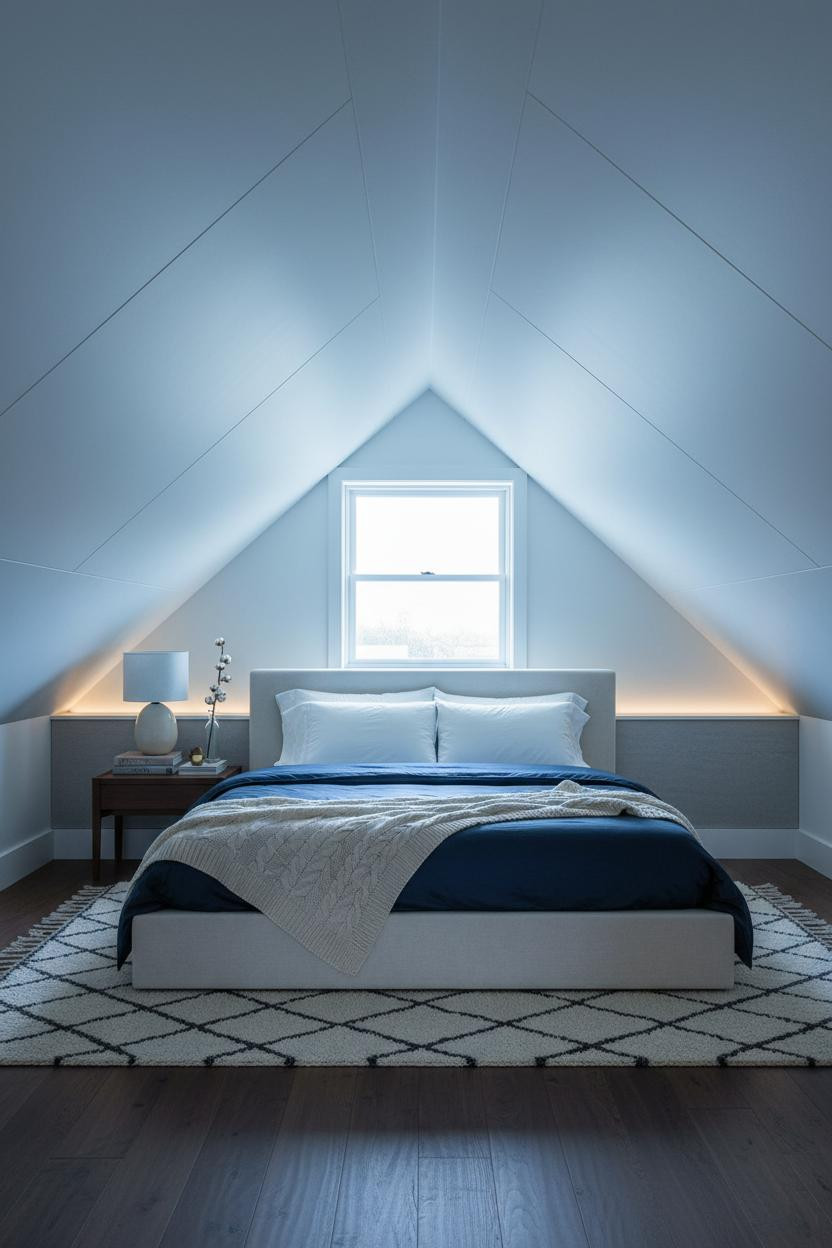

The palette here is almost aggressively simple. White plaster overhead. Stone grey walls. Dark walnut underfoot. And yet the room feels expensive rather than spare.
Where the luxury comes from: The contrast between smooth white-painted plaster slopes and dark walnut wide-plank floors creates a vertical range that pulls the eye up and down, making the low ceiling feel like a feature rather than a constraint.
The finishing layer: A Moroccan diamond-pattern wool rug in charcoal and cream anchors the bed while adding enough pattern to keep things interesting, in a way that feels collected rather than decorated.
Exposed Honey Rafters With a Rustic Canvas and a Kilim Runner
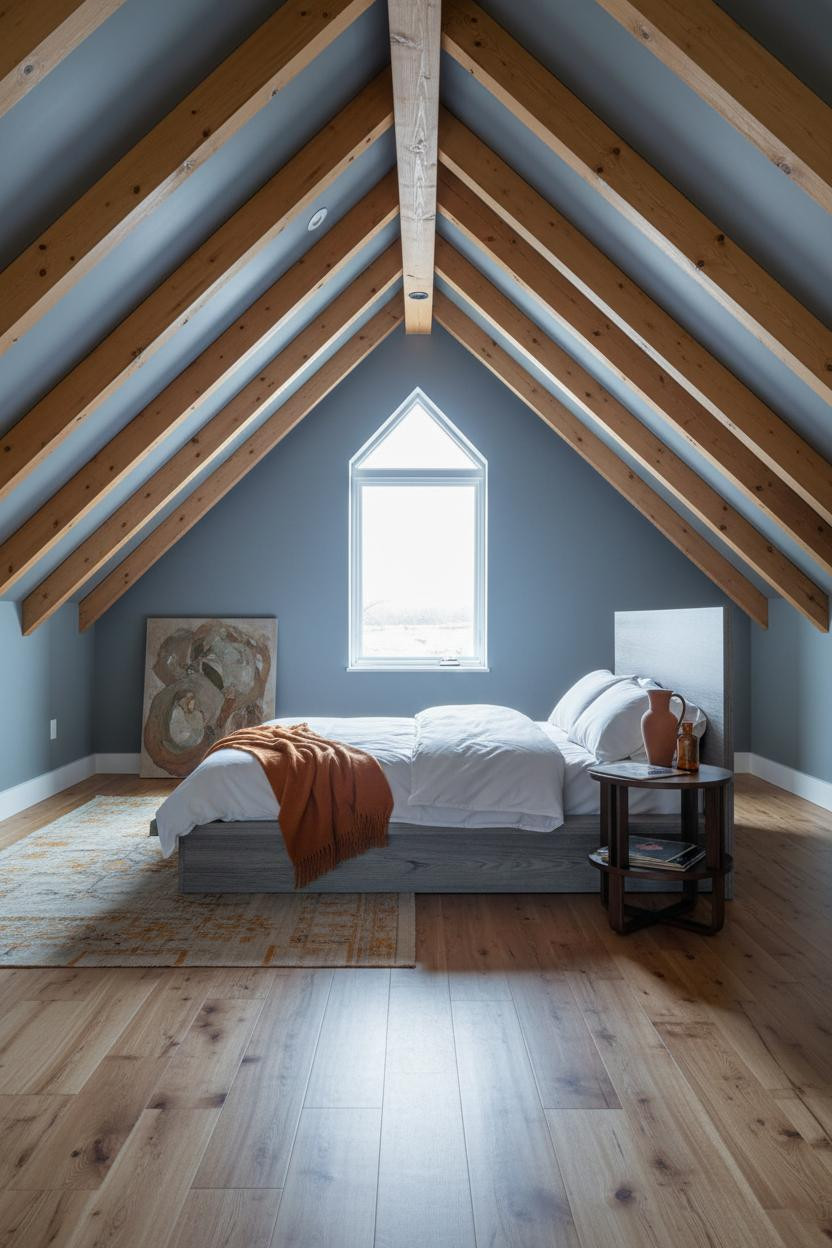


This is the kind of attic room people photograph and never quite explain why it works.
In a rustic room like this, the smarter choice is leaning into the imperfection: raw honey-stained timber rafters with visible grain, a blue-grey plaster knee-wall, and a faded kilim runner that looks like it came from somewhere specific. Warmth from age, not newness.
One smart swap: Prop a large abstract canvas against the knee-wall instead of hanging it. It fills the vertical space while still feeling casual. Check out loft conversion bedrooms that make sloped ceilings the best part for more of this approach.
Coastal Board-and-Batten With Bleached Herringbone Underfoot
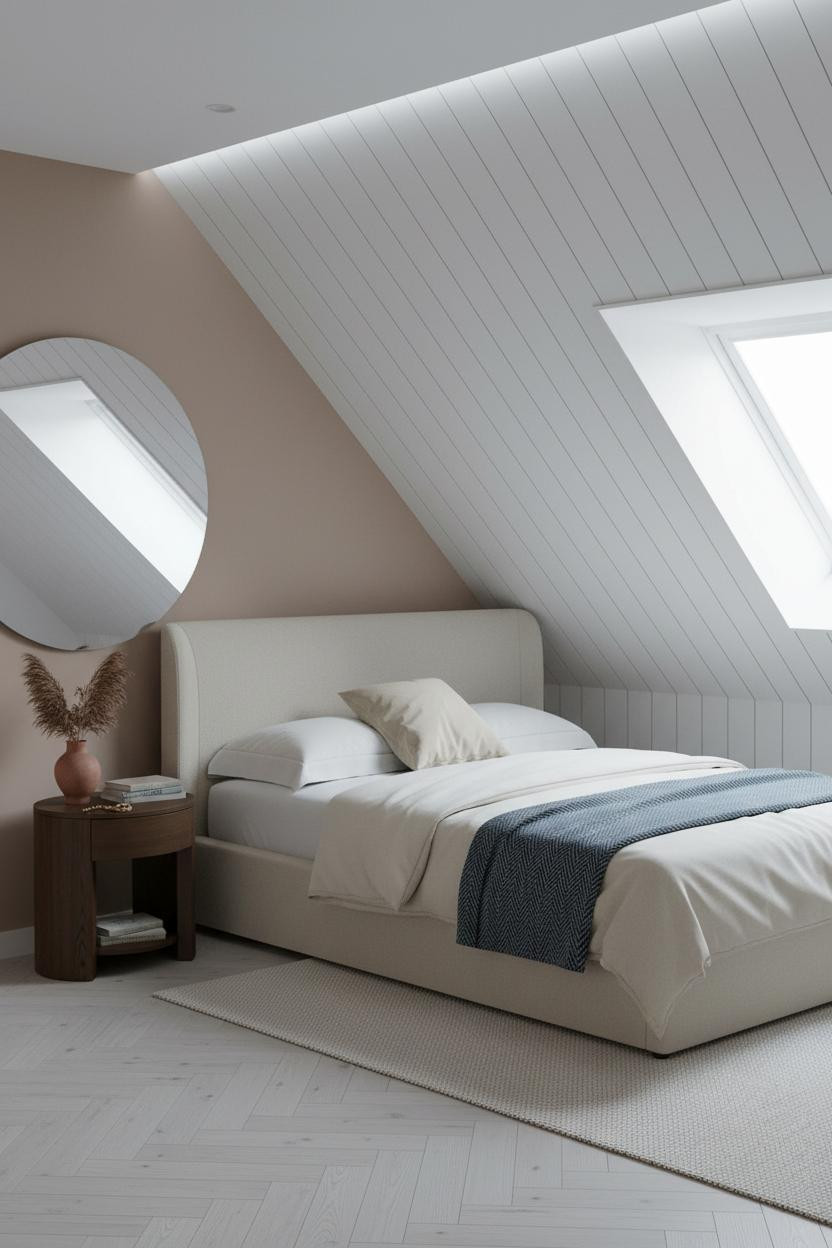

Fair warning: whitewashed board-and-batten on a 50-degree slope with bleached herringbone floors below is a lot of linear pattern. But the room somehow holds together.
Why it feels balanced: The whitewashed batten ridges run diagonal while the herringbone below runs on the oblique, so the two patterns cross rather than stack. Warm clay knee-walls prevent the whole room from going pale and flat.
What to copy first: A large round mirror leaning against the clay knee-wall. It's the one curved element in a very linear room, and that contrast is exactly why the space doesn't feel rigid.
White Rafters and Sage Walls: The Softest Version of This Look
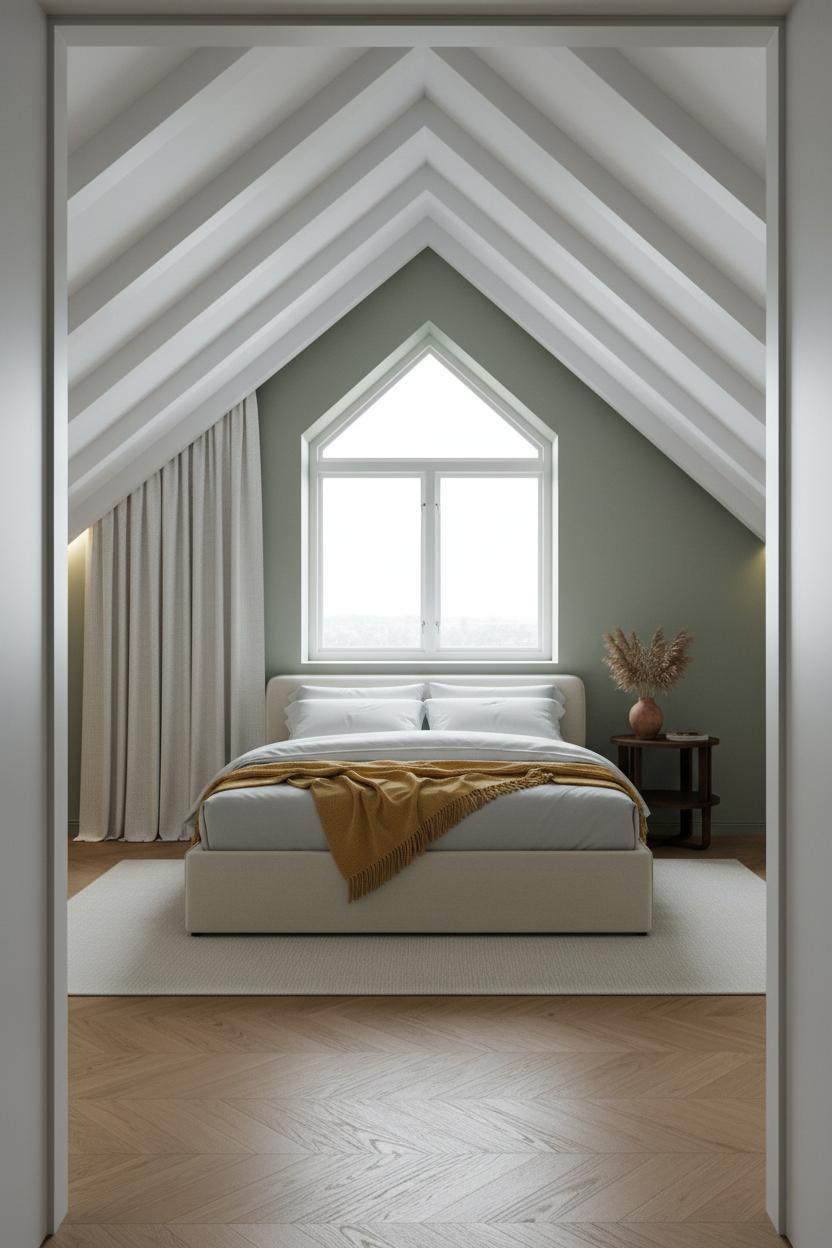
I'm a sucker for sage green paired with warm oak floors. But what I didn't expect was how well it plays under a white rafter ceiling.
Why the palette works: White-painted timber rafters catch flat grey daylight along their upper edges and drop into soft shadow at their base, which means the sage walls below glow rather than compete. The room feels warm without being heavy.
The detail to keep: A floor-to-ceiling cream linen curtain panel on one side of the gable window. Just one panel, not two. It adds softness while still letting the dormer geometry read clearly. See loft bedroom ideas that make low ceilings feel intentional for more in this vein.
Dusty Rose Walls Under Tongue-and-Groove at Dusk
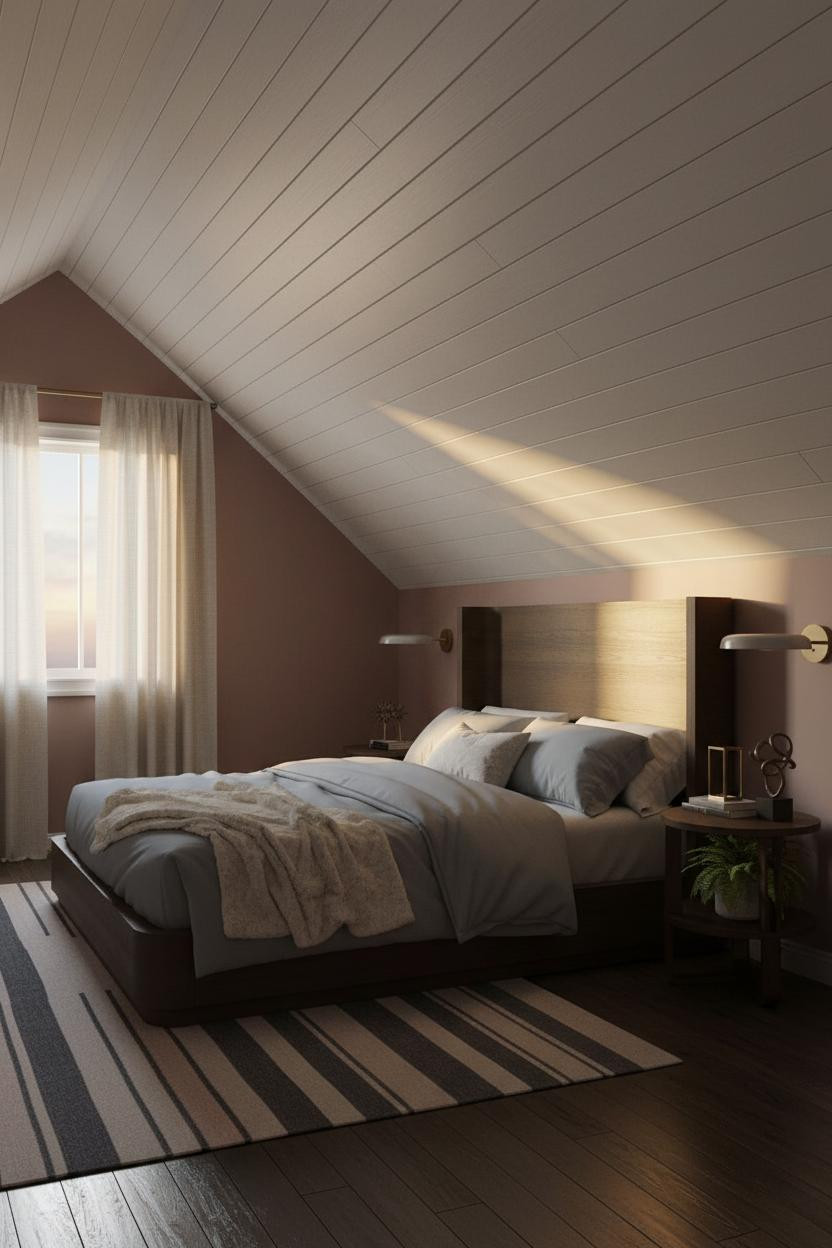
This one is moody. Not everyone's comfort zone. But if you commit to it, the payoff at dusk is real.
Late afternoon light catches each plank of the white tongue-and-groove ceiling differently, creating a ripple of pale gold and cool shadow across the slope. And the dusty rose walls below pick up that warmth in a way that feels genuinely atmospheric rather than pink-for-pink's-sake.
Where people go wrong: Paired sconces flanking the headboard are the right call here. Overhead pendants would fight the ceiling's own texture and light. Keep the fixtures low and close to the bed.
Japandi Beams With a Rattan Pendant at the Apex
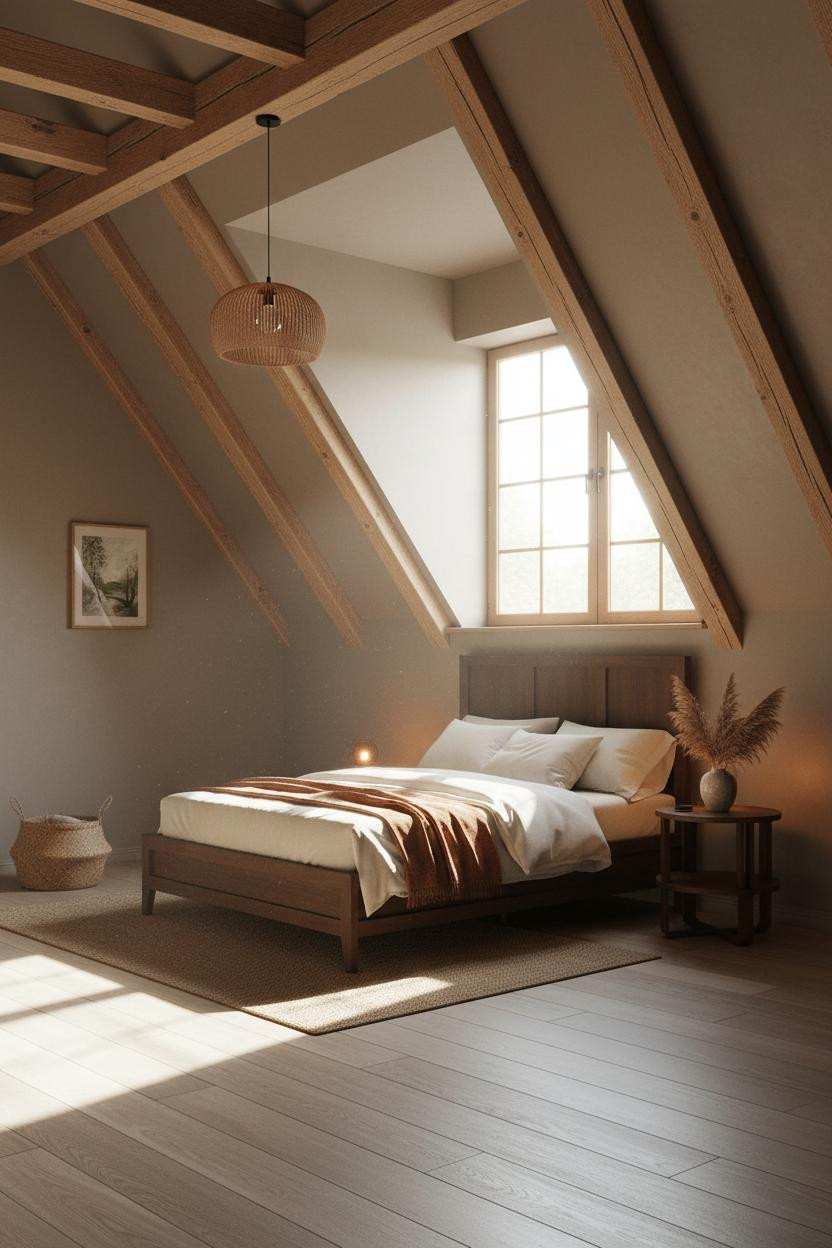
This is the version I'd actually build. Japandi restraint applied to a sloped attic room, and it works better here than it does in a flat-ceilinged space.
Why it feels intentional: Dark raw timber beams against cream plaster walls give the room its architectural spine, and a sculptural rattan pendant hung at the highest ceiling point draws the eye to the apex rather than letting it settle on the low eaves.
The practical move: A natural jute runner under the bed and a woven basket tucked into the lowest ceiling corner fill the awkward zones without adding visual weight. Just enough texture to keep things interesting. More ideas like this at 14 sloped ceiling bedrooms that make angles work.

Our #1 Pick
Saatva Classic Mattress
America's best-selling online luxury innerspring. 365-night trial, lifetime warranty, free white glove delivery.
Shop Saatva Classic
The Foundation Of Every Beautiful Bedroom
Walls get repainted. Rafters get whitewashed. The runner gets swapped out for something new. But the mattress stays, and in an attic bedroom especially, what you sleep on matters more than most people admit. The room might be perfect and the bed still wrong.
The Saatva Classic is the one I'd put in every room on this list. Dual-coil support that holds structure over years, a breathable organic cotton cover that doesn't trap heat under a low ceiling, and a Euro pillow top that feels genuinely considered rather than just soft. It's the kind of mattress that makes you stop noticing it, which is exactly right.

The rooms people save are the ones where nothing looks accidental. Start with the bed. The rest figures itself out.