
 by
by Our #1 Recommended Mattress
Saatva Classic. From $1,095
365-night trial · Lifetime warranty · Free white-glove delivery
We earn a commission if you make a purchase through our links, at no extra cost to you. Full disclosure.
Bathroom cabinets usually signal “contractor special” or “second mortgage.” But walk into the right setup and it’s just clean, grounded, done. The gap between basic builder-grade and editorial-worthy isn’t always about budget - it’s about knowing which details actually matter.
Wainscoting That Frames Instead of Fights
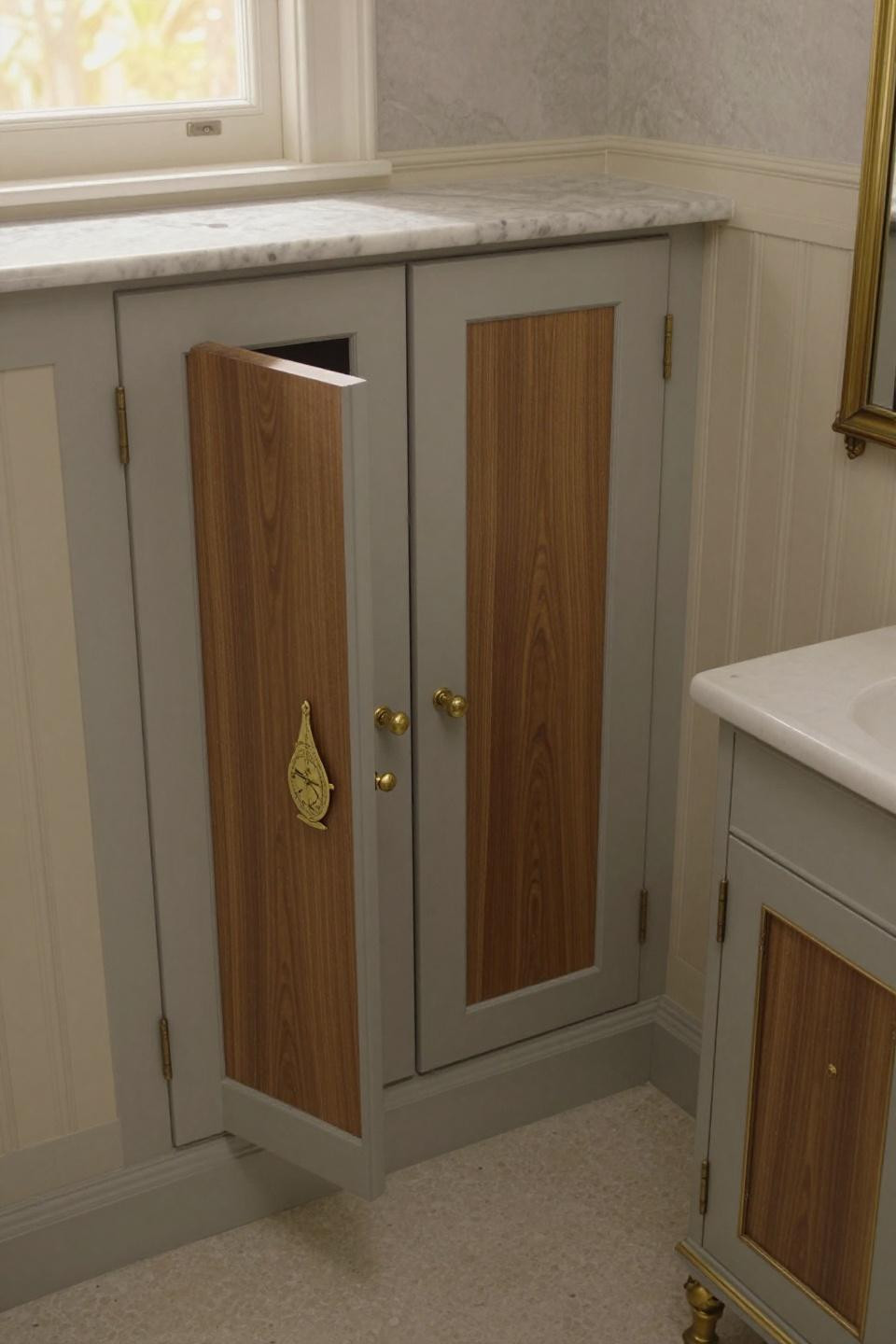
Greige shaker cabinets sitting above cream wainscoting. The paneling stops at chair rail height - doesn’t climb the whole wall. That restraint makes the cabinet doors the anchor. The brass pulls read as intentional hardware, not afterthought. Walnut grain on the doors catches afternoon light differently than painted surfaces. One cabinet door hangs slightly lower. Human install. The wainscoting acts like a frame instead of competing for attention.
White Oak That Doesn’t Try Too Hard
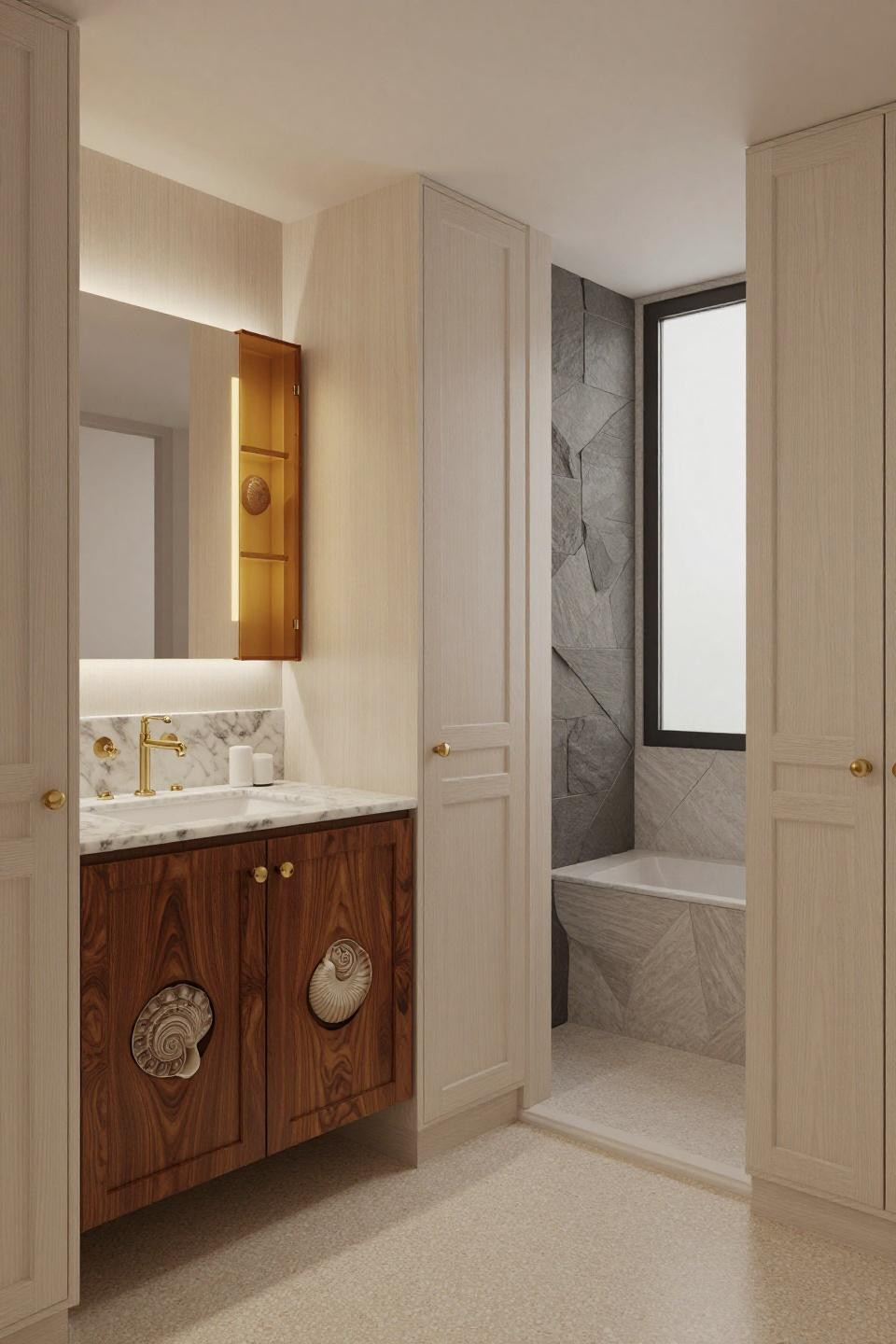
Floor-to-ceiling white oak cabinets against wainscoted walls. The marble vanity runs wide - doesn’t pinch at the edges. Unlacquered brass hardware developing patina. One cabinet door sits a millimeter higher than its neighbor. The grain alignment across doors feels deliberate but not sterile. Storm light through the high window keeps it from reading too warm. This works because the wood tone stays neutral enough to anchor without dominating. The terrazzo floor grounds everything.
Sage Green Without the Pinterest Cliché
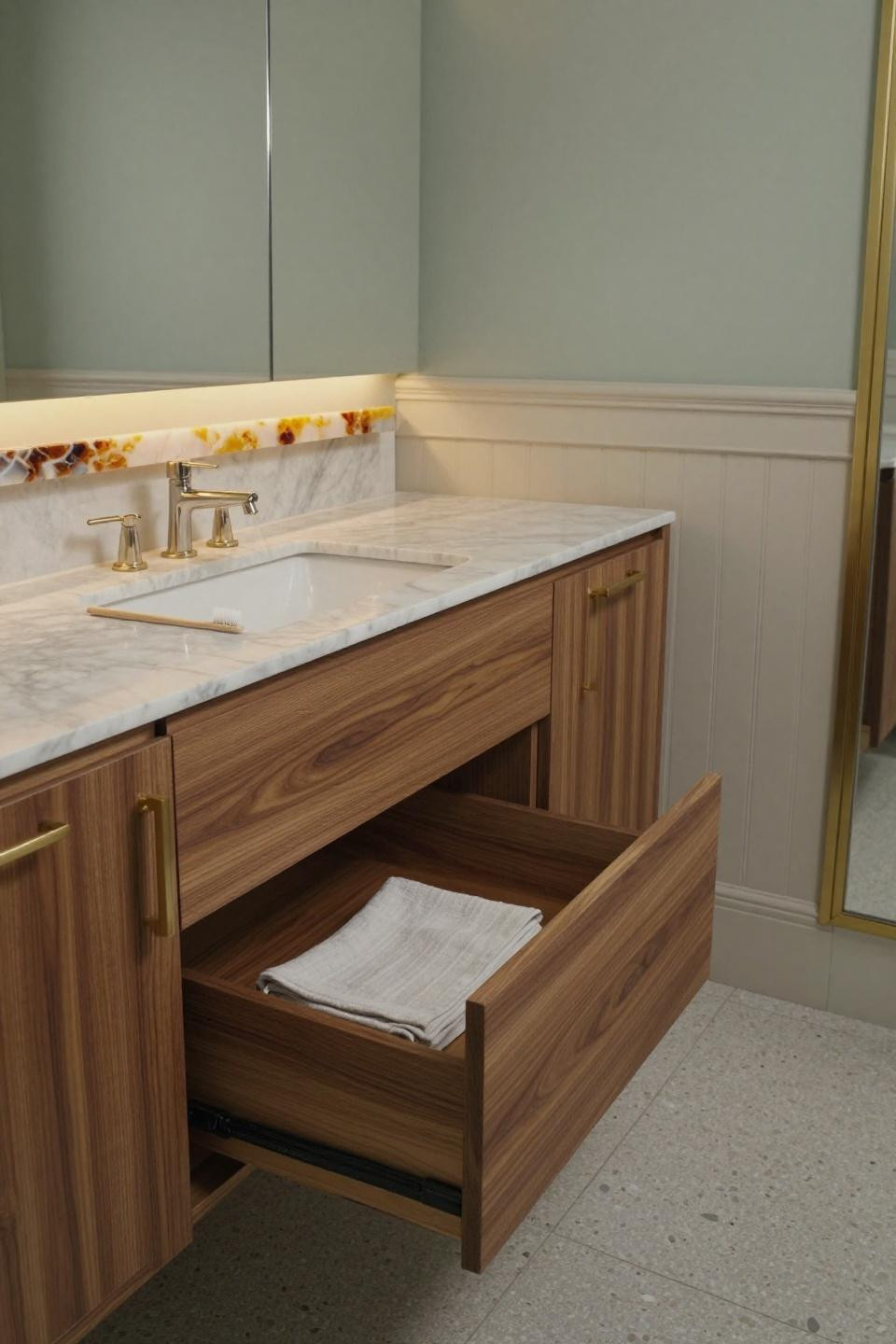
Soft sage cabinets paired with a floating walnut vanity. The color reads muted - not the aggressive sage that screamed 2019. Brass hardware catches morning light. The walnut grain aligns perfectly across cabinet doors, forming one continuous pattern. Backlit amber onyx shelf edges glow subtly. One drawer pulled open shows a folded linen washcloth, corner untucked. The setup works because the sage stays secondary to the walnut’s warmth. Terrazzo floor keeps it from feeling too precious.
Venetian Plaster That Actually Ages Well
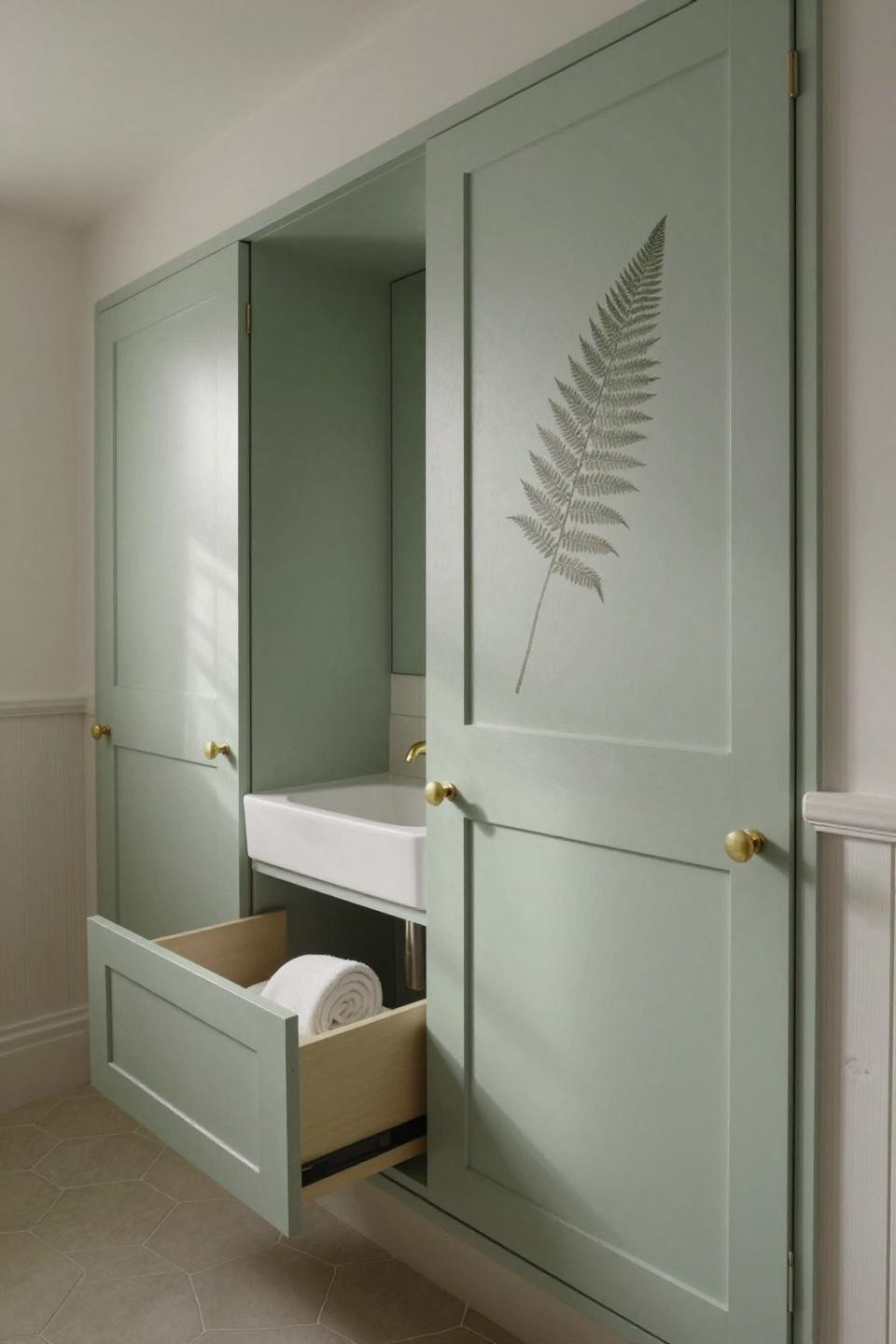
Twin floor-to-ceiling mirror-front cabinets in soft sage with hand-applied Venetian plaster. The plaster finish shows subtle texture under direct light - you can see a faint fossil impression of a prehistoric fern. Cerused white oak wainscoting below. Unlacquered brass hardware catching morning light. One drawer slightly open, rolled washcloth inside. The plaster develops character as it ages instead of just wearing down. Beige hexagon floor tiles anchor the palette without adding visual noise.
When White Wainscoting Carries the Room
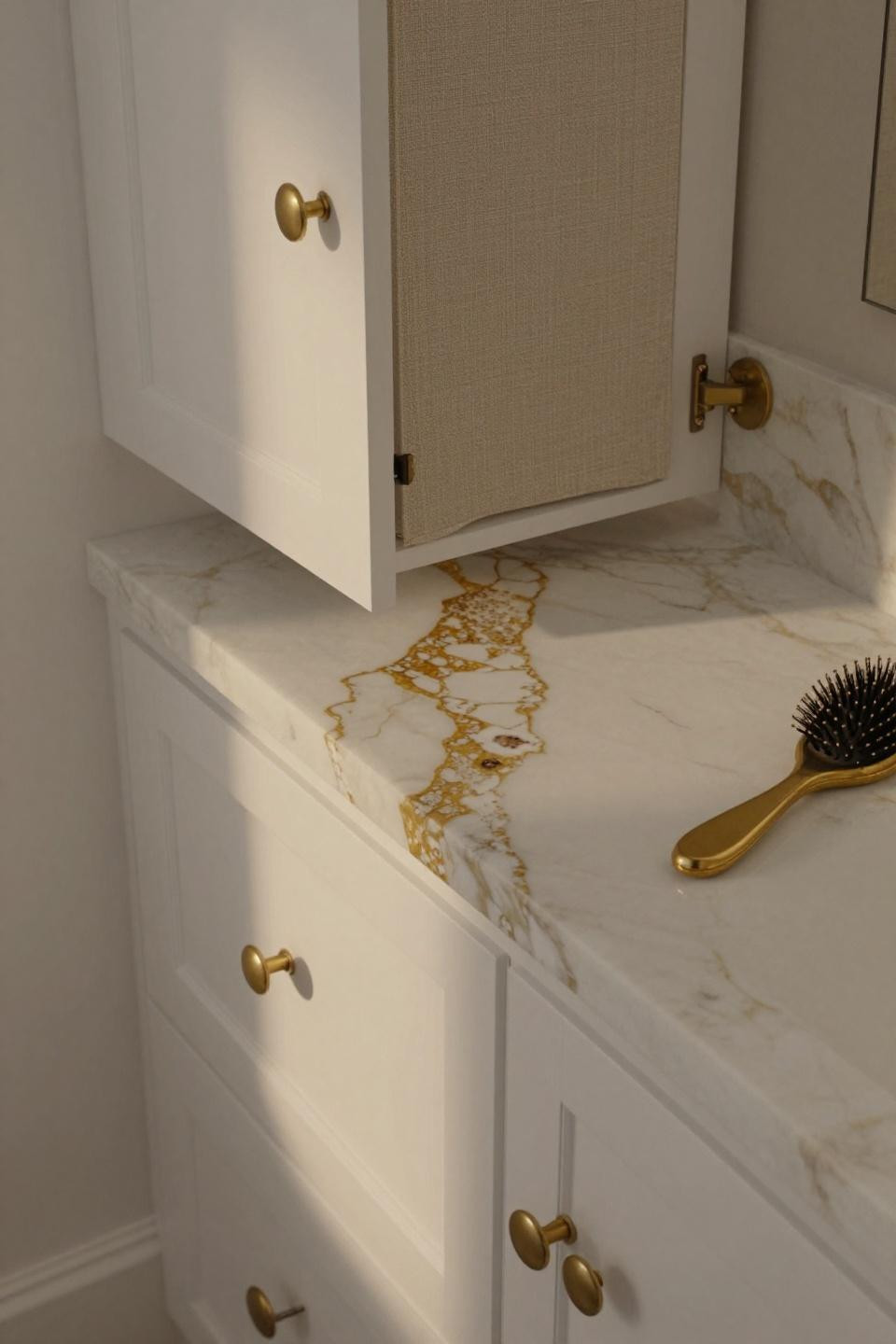
Overhead view of cabinets over Calacatta Gold marble with dramatic gold veining. White wainscoting panels below. Unlacquered brass pulls developing natural patina. The marble shows a delicate prehistoric fern fossil embedded in the stone - totally accidental, completely grounding. Cabinet doors slightly ajar, linen-textured interior visible. Single brass hairbrush on the marble surface. The wainscoting does the heavy lifting here, letting the cabinets stay minimal. Works because the marble provides the visual interest.
Walnut Cabinets That Don’t Read Corporate
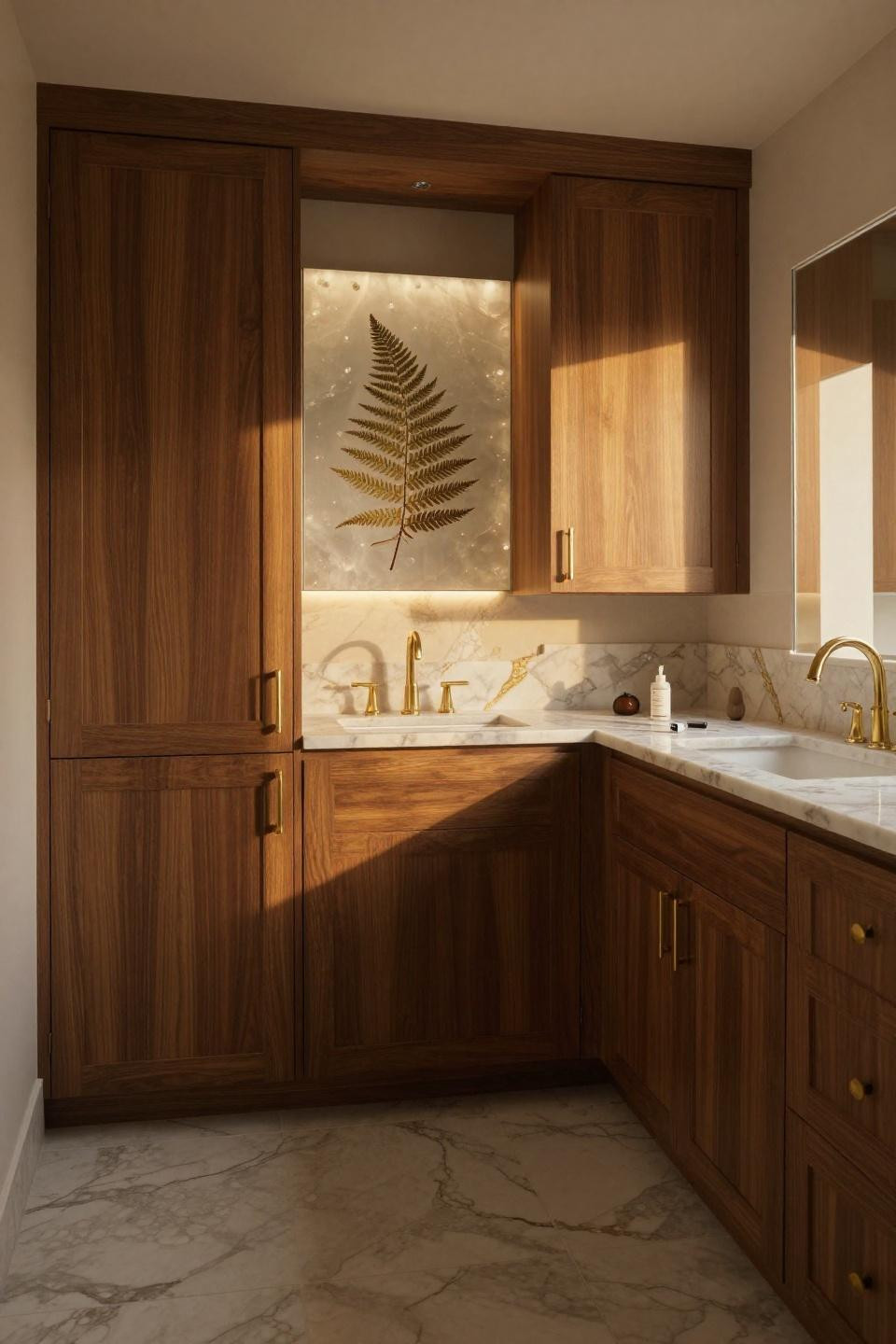
Floor-to-ceiling walnut cabinets with unlacquered brass hardware. Calacatta marble countertop shows gold veining and a perfectly preserved prehistoric fern fossil with visible fronds. Cream wainscoting frames the lower walls. Backlit translucent onyx glowing behind the mirrored medicine cabinet. One cosmetic bottle tipped over, cap unscrewed beside it. The walnut grain reads rich without feeling heavy. Golden afternoon light softens everything. This setup works in beige bathrooms because the walnut adds depth without competing.
Glacier Blue That Actually Stays Calm
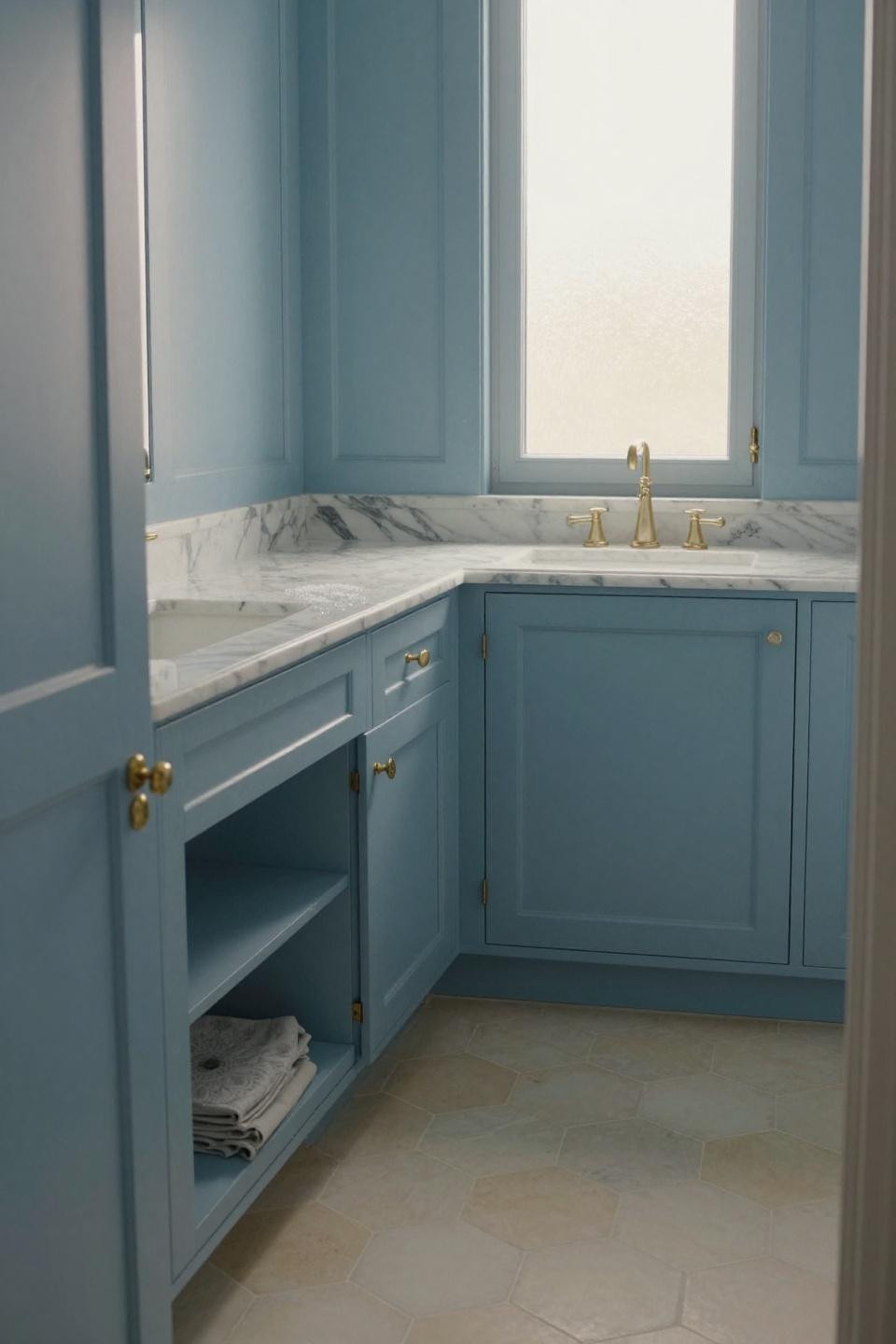
Glacier-water blue cabinets in Venetian plaster. Unlacquered brass hardware against soft Carrara marble. The marble shows an embedded ammonite fossil in natural veining. Golden hour light through frosted window hits warm cream hexagonal floor tiles. Condensation ring from overnight glass still visible on marble edge. One drawer slightly ajar, folded linen peeking out. The blue reads serene instead of cold because it’s muted. The brass warms it just enough. Honestly, this color holds up better than expected.
Pearl Lacquer with Zero Regret
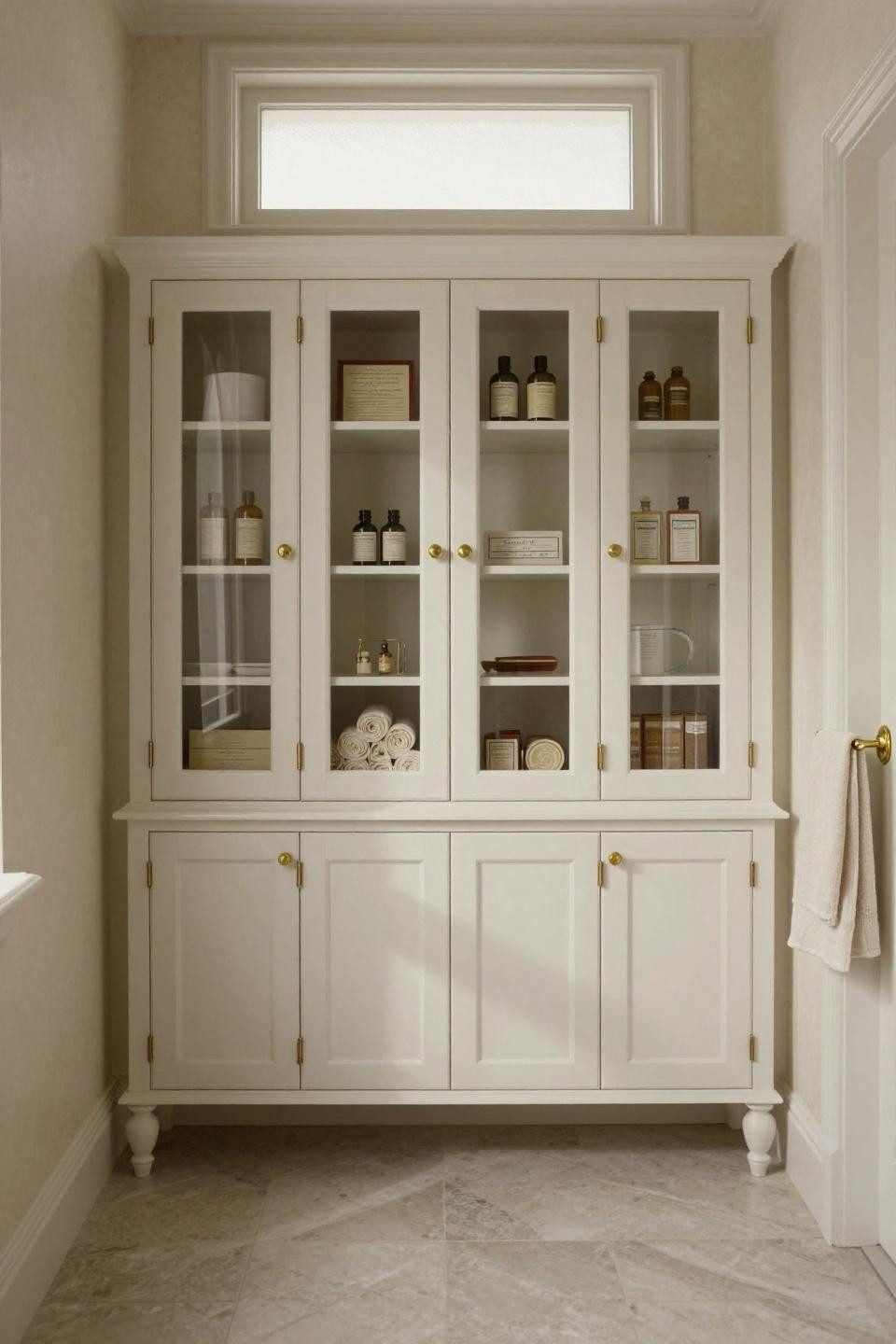
Soft pearl lacquer cabinets, floor-to-ceiling wainscoting framing shaker-style doors with glass inserts. Rolled linens visible through the glass. Unlacquered brass hardware catching afternoon light through frosted transom. Honed travertine floor meeting aged champagne Venetian plaster walls. Authentic 1920s pharmaceutical rack with hand-inked labels shows through cabinet glass. One door slightly ajar, ivory linen towel caught in brass hinge. The pearl finish reflects light without glaring. Works because it stays neutral enough to let the brass and linens do the talking.
Cream Shaker Cabinets Done Right
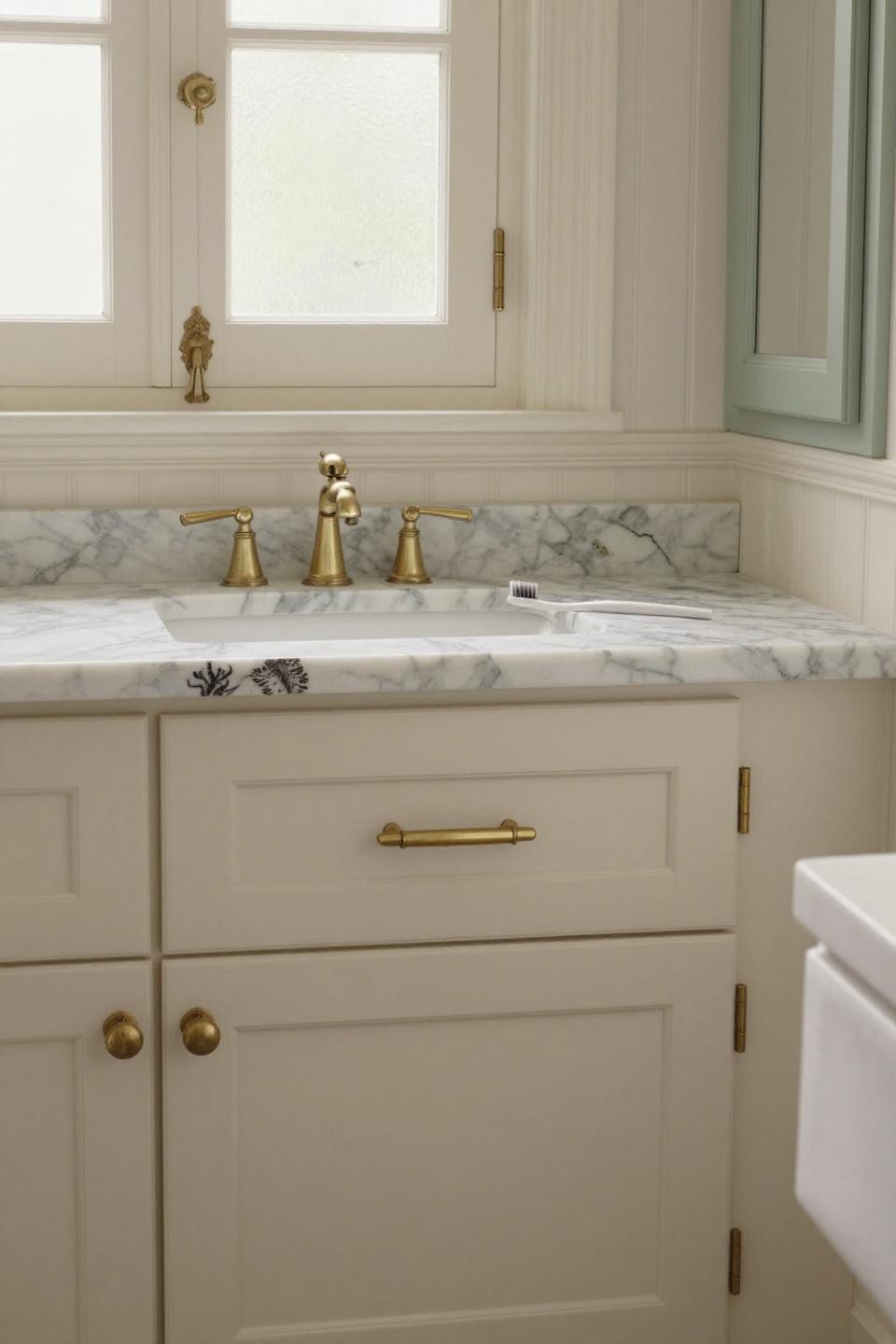
Soft cream shaker doors with wainscoting surround. Unlacquered brass hardware developing natural patina across Calacatta marble vanity. The marble shows a visible fossil impression of a prehistoric crinoid creature in white veining. Diffused north light through frosted window. Sage green trim framing mirror cabinet extending beyond frame edge. Single toothbrush lying on counter, bristles splayed. The cream reads warm instead of sterile because it’s not pure white. Sage trim adds just enough contrast without fighting the cabinets.
Sage-Cream Shaker in a 1920s Cottage
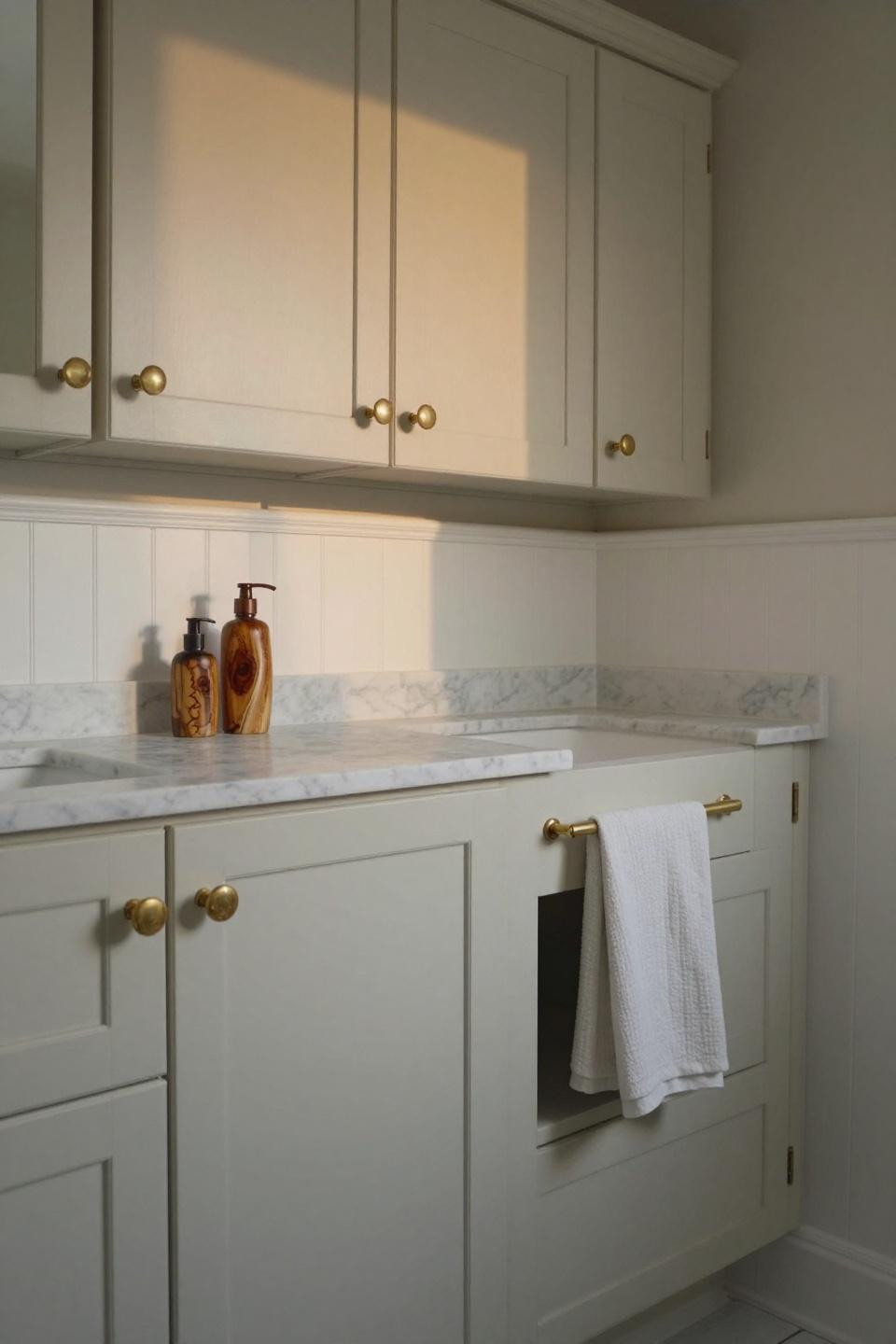
Soft sage-cream shaker cabinets in a 1920s Connecticut cottage ensuite. White wainscoting climbs to chair rail beneath floating mirror cabinet. Unlacquered brass hardware developing natural patina. Carrara marble countertop with faint water ring. Cabinet knobs carved from petrified wood - 40-million-year fossilized growth rings visible in mineral colorations. One cabinet door slightly ajar, Belgian linen towels folded inside. Amber late-afternoon winter light makes the sage read warmer. This works because the petrified wood knobs ground the whole setup in something real.
Cerused White Oak That Feels Spa-Like
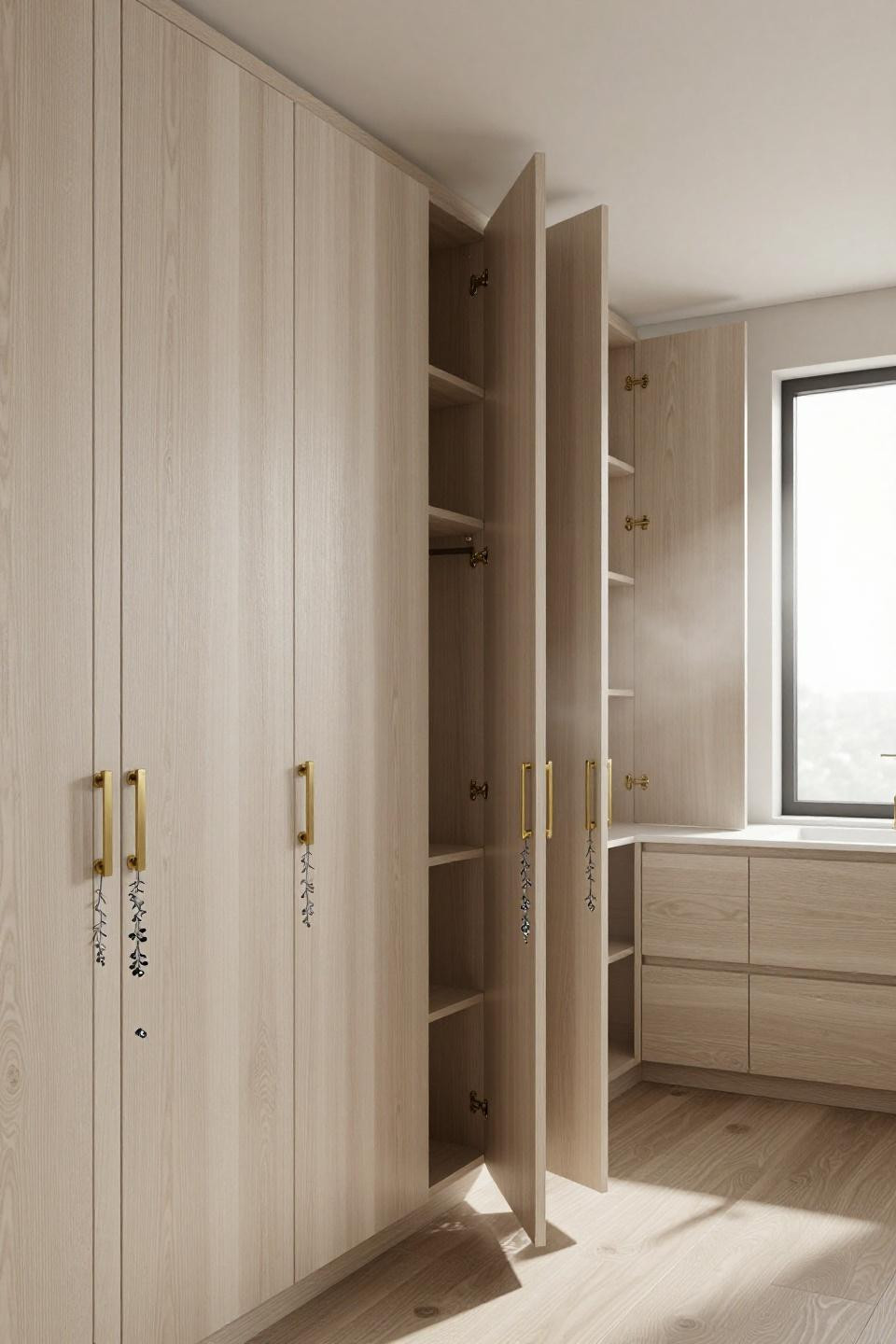
Floor-to-ceiling cerused white oak cabinets spanning the entire left wall. Soft-close doors slightly ajar showing organized shelving. Unlacquered brass hardware with crystalline oxidation forming fractal patterns that mirror the oak grain below. Afternoon light through frameless glass casting warm shadows across waist-high wainscoting. Single water droplet clinging to open cabinet door edge from morning steam. The cerusing process lightens the wood without stripping character. Works because the brass and oak share the same organic texture language.
White Oak with Mid-Century Brass
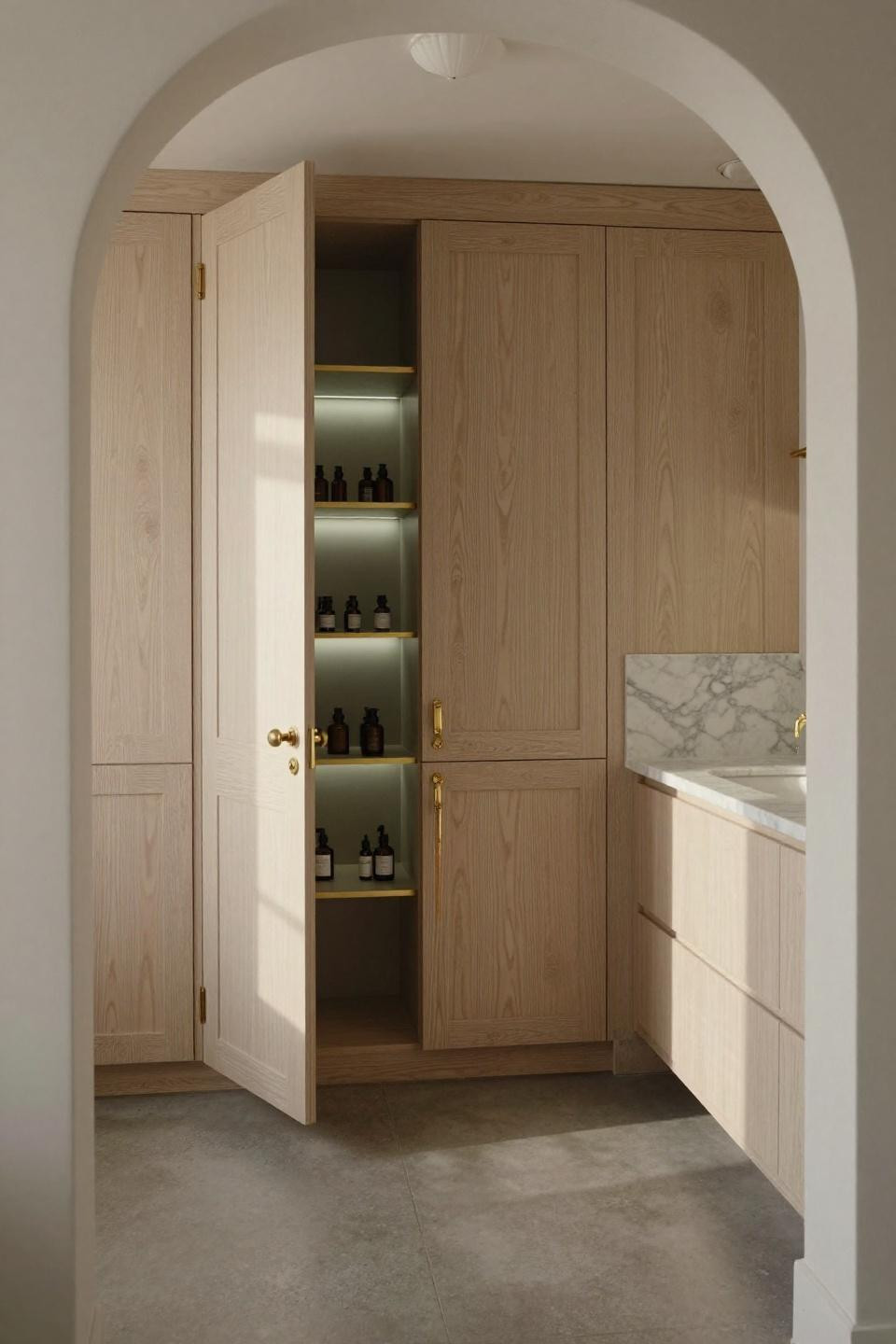
Floor-to-ceiling cerused white oak cabinets through arched doorway. Mid-century brass hardware. One door slightly ajar exposing organized apothecary shelving with brass rails glowing faintly. Carrara marble countertop with subtle grey veining and single water ring. One cabinet handle developing asymmetric patina from finger oils. Shell-shaped sconce cropped at top frame edge. Polished concrete floor grounds it. The white oak grain catches warm afternoon light. This setup works because the brass stays understated - no statement pieces, just functional hardware.
Carrara Marble Cabinets That Don’t Scream Luxury
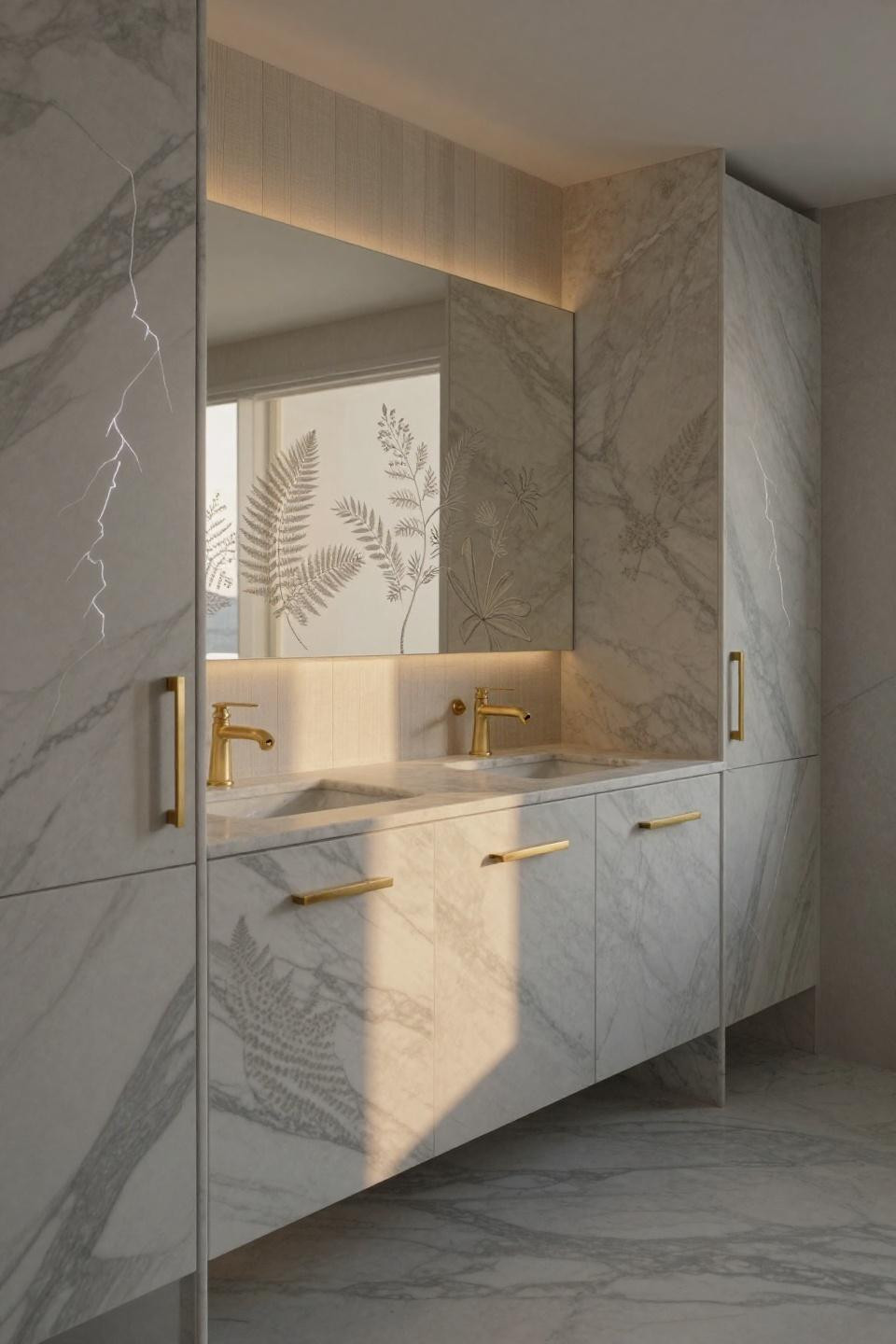
Floor-to-ceiling Carrara marble cabinets with dramatic grey veining resembling frozen lightning. Three-door vanity spanning full frame with unlacquered brass pulls catching golden afternoon light. Marble surface shows ancient fern fossil pattern at an angle. Cream linen wainscoting with hand-planed artisan tool marks. Backlit mirror cabinet with shifting botanical etchings. One brass handle slightly rotated from last use. The marble reads sophisticated without feeling cold because the cream wainscoting warms it. Works because it’s marble used as structure, not just accent.
Beige Glass-Front Cabinets with Iridescent Edge
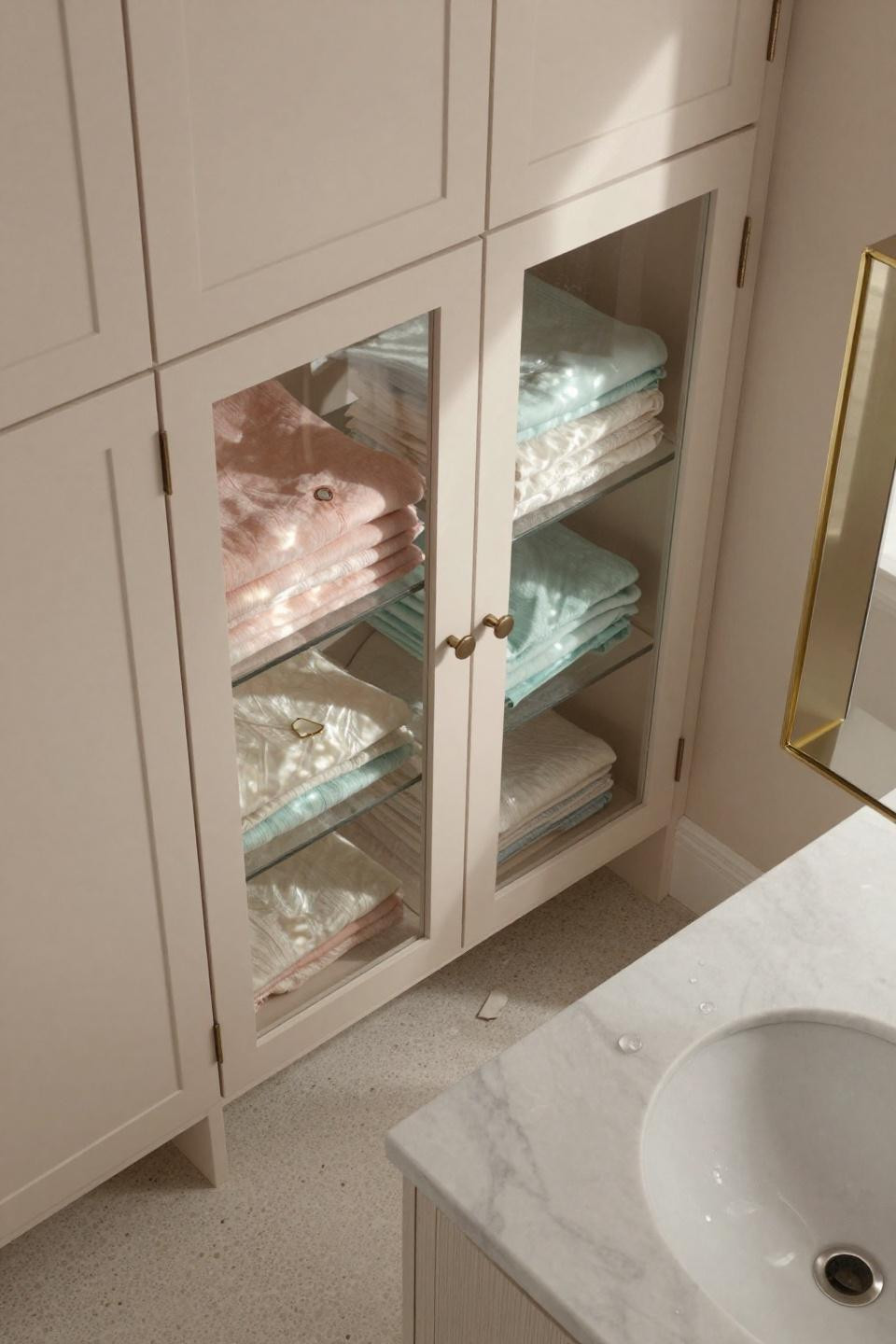
Soft beige cabinets spanning floor to ceiling, glass doors revealing stacked linen. Mother-of-pearl fragments shifting from rose to seafoam as afternoon light moves - bioluminescent effect. Cerused white oak wainscoting with hand-applied imperfect edges. Calacatta marble countertop with single water droplet still forming rim. Brass mirror cabinet cropped at right edge mid-reflection. Terrazzo floor with dropped bobby pin. The beige stays neutral enough to let the pearl fragments do the work. Works because the glass fronts add depth without visual clutter.
Book-Matched Walnut with Accidental Art
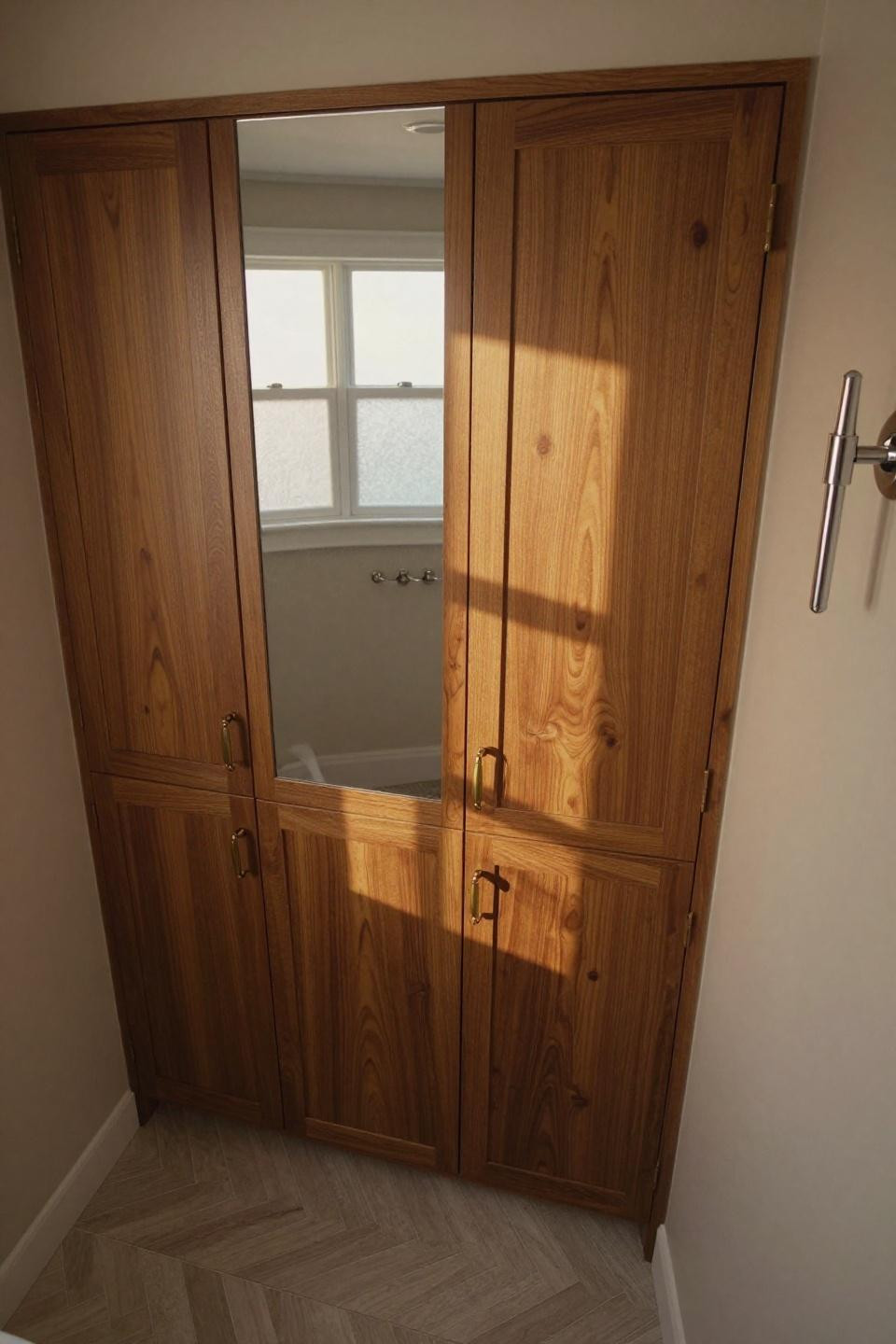
Floor-to-ceiling book-matched walnut veneer with antique brass pulls. Mirrored cabinet doors reflecting 4pm golden hour through frosted window. Herringbone tile floor. Walnut grain forming accidental portrait silhouette at 43-degree light angle. One brass pull slightly crooked from adjustment. Chrome sconce arm extending beyond right frame edge. The book-matching makes the walnut feel custom without the custom price. Works because the grain symmetry creates visual interest that paint can’t replicate. Beige wainscoting keeps it grounded.
Our Top Mattress Pick
| Saatva Classic | $1,395+ | Shop |
| Saatva Contour5 | $1,595+ | Shop |
| Saatva Zenhaven | $1,895+ | Shop |
Warm Walnut with Self-Healing Finish
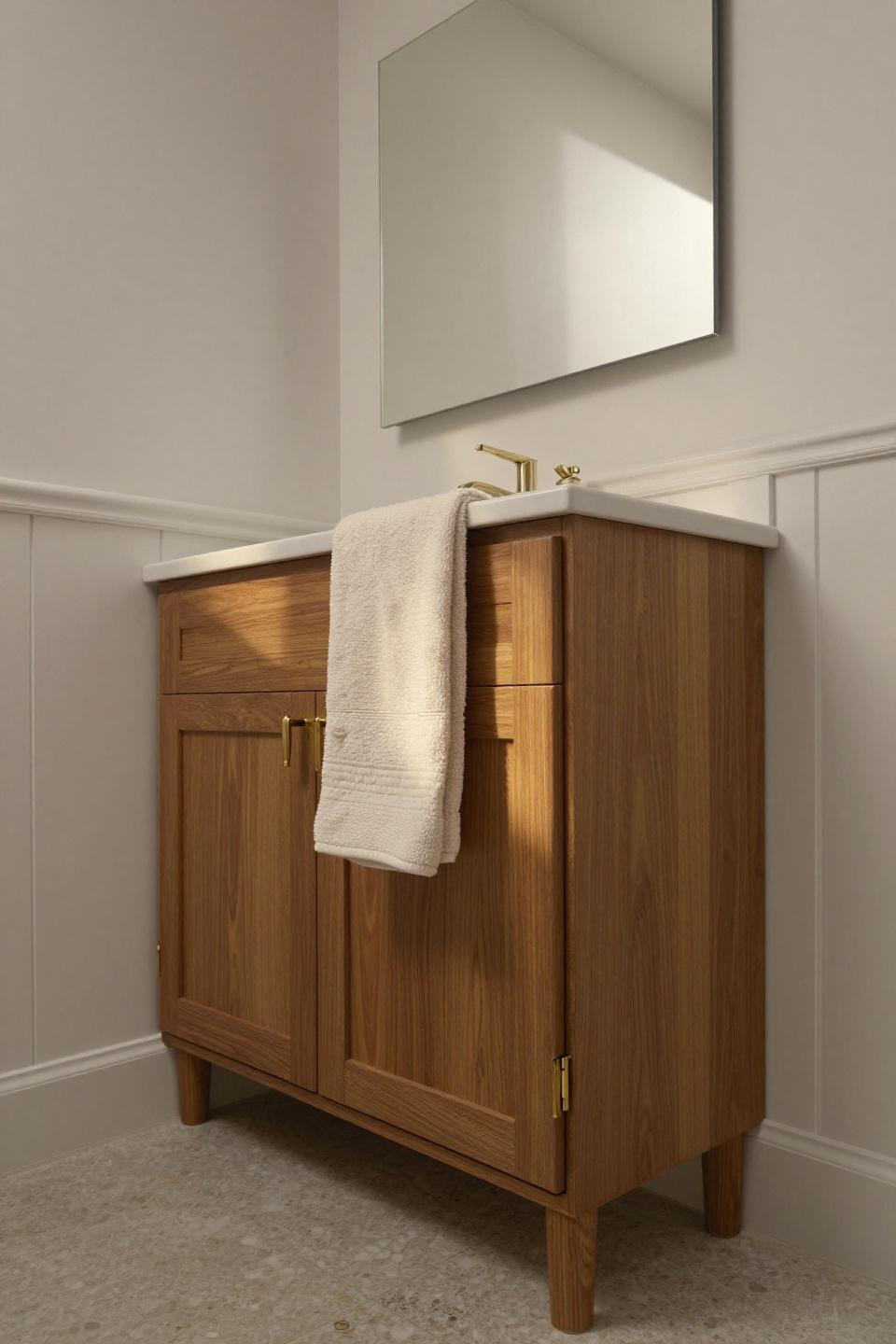
Warm-honey walnut cabinets with brushed brass hardware against floor-to-ceiling dove-white wainscoting. Polished travertine floor. Afternoon light through frosted transom casting amber glow across invisible fingerprint-resistant finish that self-heals micro-scratches. Mirrored medicine cabinet cropped at top by architectural soffit. One cream towel draped over cabinet edge, damp corner slightly curled inward. Single cabinet door imperceptibly ajar. The walnut reads high-end because the finish stays pristine. Works because the dove-white wainscoting keeps the warmth in check.
Cream Lacquer with Salvaged Grain
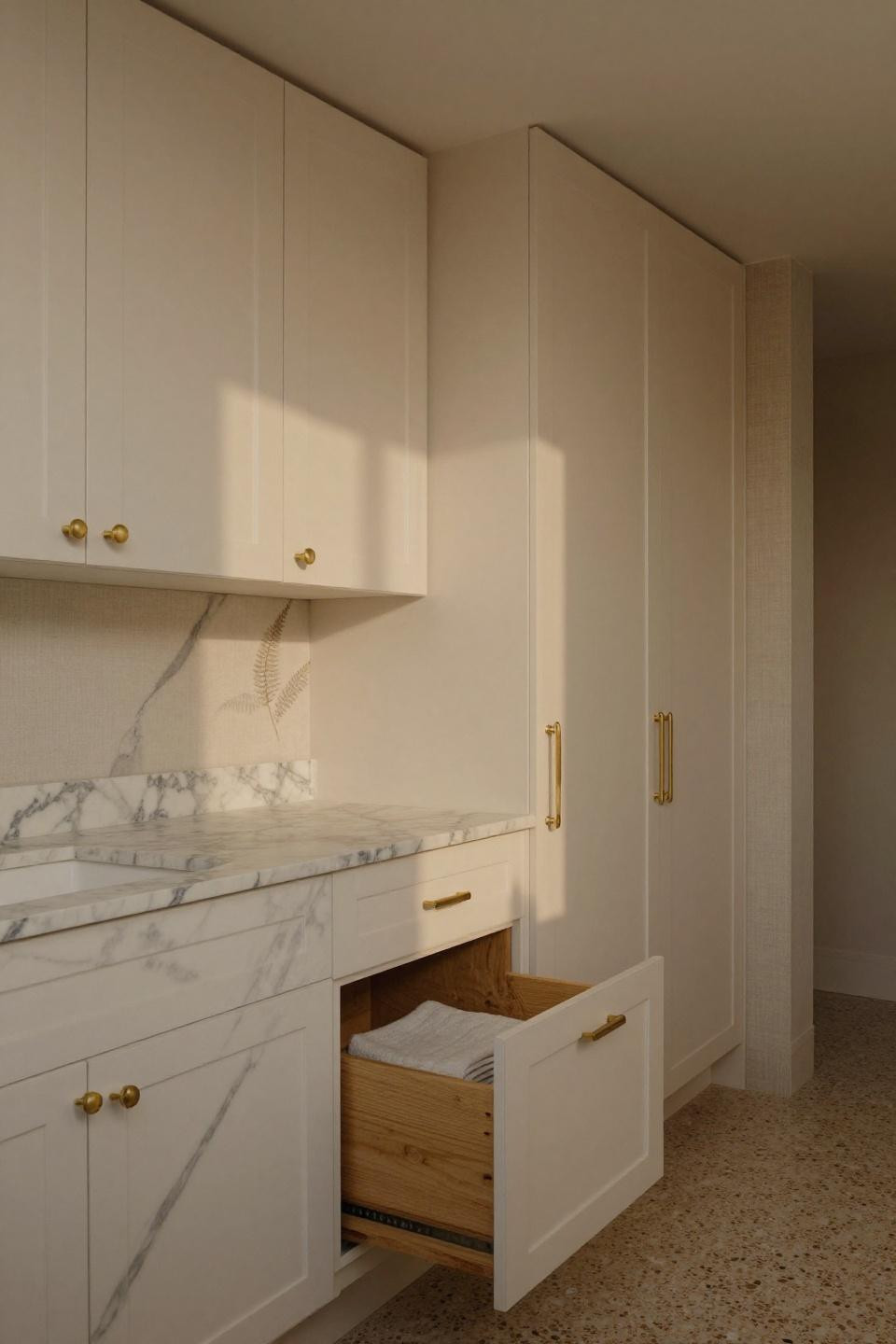
Floor-to-ceiling soft cream lacquer cabinets spanning entire ensuite wall. Calacatta marble countertop with dramatic gray veining catching 4pm amber light. Brass hardware against beige linen wainscoting extending to chair rail. Cabinet wood grain revealing fossilized prehistoric fern impression from 1920s demolition salvage - visible under angled light. One lower drawer pulled slightly open exposing folded linen towels. Brushed terrazzo flooring with warm ochre aggregate. The cream lacquer stays neutral enough to let the salvaged grain be the detail. Works because it’s minimal everywhere else.
If I had to pick one move, I’d start with the cerused white oak paired with unlacquered brass. The patina develops over time instead of looking dated, and the wood grain adds texture without demanding attention. Most of these setups work because they commit to one material decision and keep everything else quiet.
Try Saatva risk-free →