
 by
by I've spent too much money on outdoor furniture that looked right in the store and wrong the second it hit my patio. The real shift came when I stopped buying "sets" and started treating the backyard like a room, walls, lighting, layers, the whole thing. Most of these moves cost less than a dinner out, and a few of them don't cost anything at all. Here's what actually works.
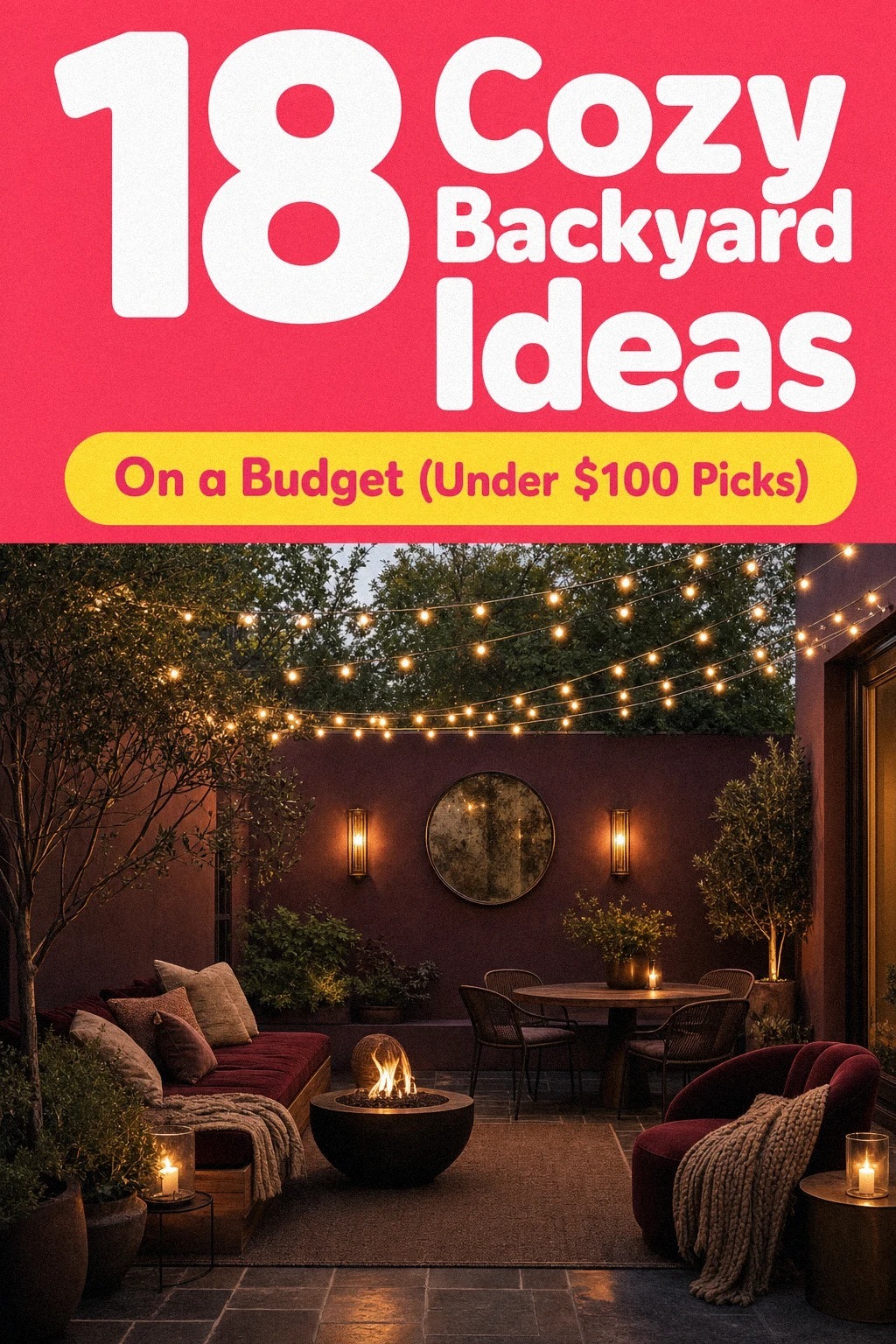
- Hang string lights in a canopy pattern overhead
- Layer an outdoor rug under the seating area
- Build a pallet daybed with overstuffed cushions
- Cluster potted herbs on a narrow ledge shelf
- Drape a weatherproof throw on every chair
- Paint a garden wall in warm terracotta
- Set up a galvanized tub as a drinks cooler
- Line a gravel path with solar mason jars
- Hang a macrame hammock between two trees
- Stack vintage crates as a tiered plant stand
- Run Edison bulbs along the fence line
- Prop a leaning mirror against the siding
- Fill a galvanized trough with ornamental grasses
- Tuck a bistro table into a forgotten corner
- Pile floor cushions around a low fire bowl
- Train ivy up a simple wire trellis screen
- Float candles in a galvanized basin pond
- Weave a rope swing from a sturdy branch
1Hang string lights in a canopy pattern overhead
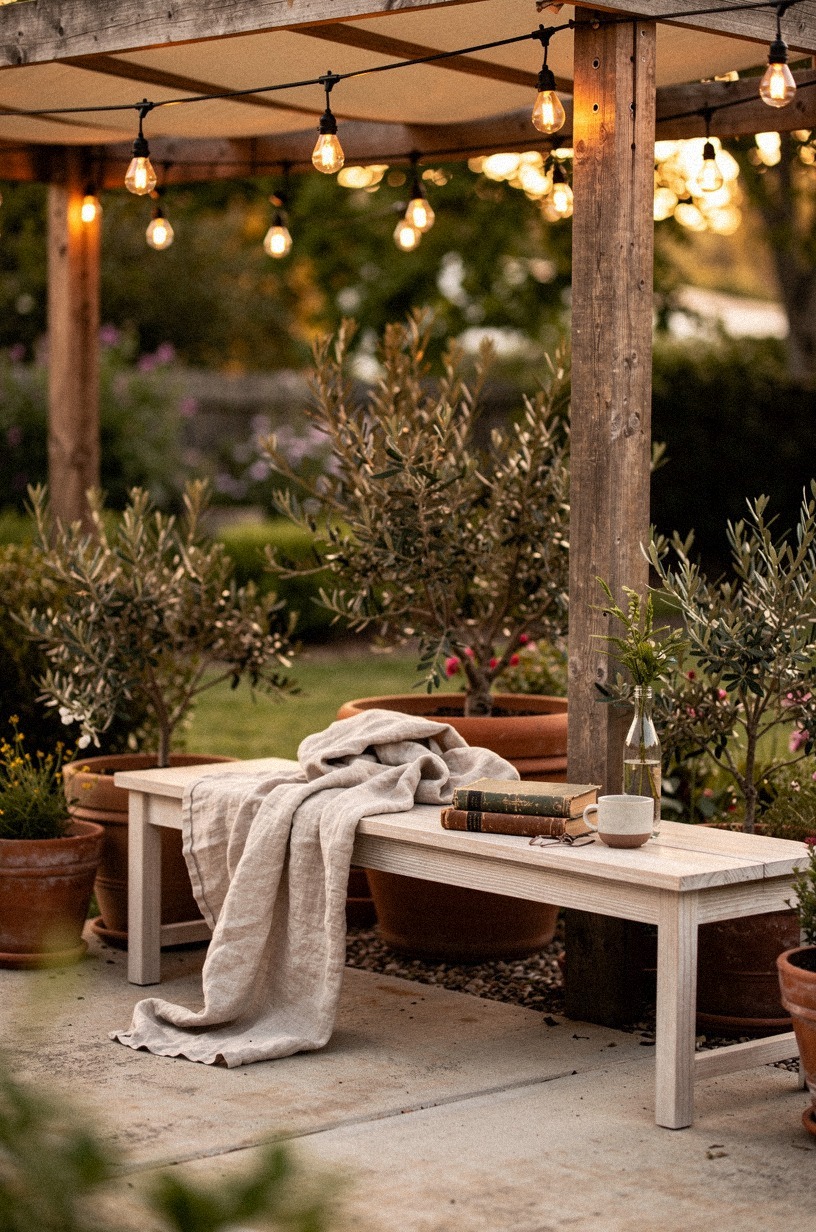
A canopy of warm string lights changes the shape of your yard entirely. You're not just adding light, you're building a ceiling where there wasn't one, and that instantly makes the space feel like a room instead of a leftover patch of grass.
Drape them between weathered wooden posts or existing fence corners. The warm white bulbs (2700K, not that icy blue) are the only ones that work.
I've tried the cheap solar versions and they die mid-season. A decent plug-in strand runs about $25 to $45 and lasts years if you store it dry.
The move is the drape. Too tight and it looks like a parking lot.
Let them sag in soft loops so the light pools instead of glaring. If your backyard is on the larger side, my guide on how to make a large backyard feel cozy not empty covers the spacing math that keeps it from looking like a carnival.
2Layer an outdoor rug under the seating area
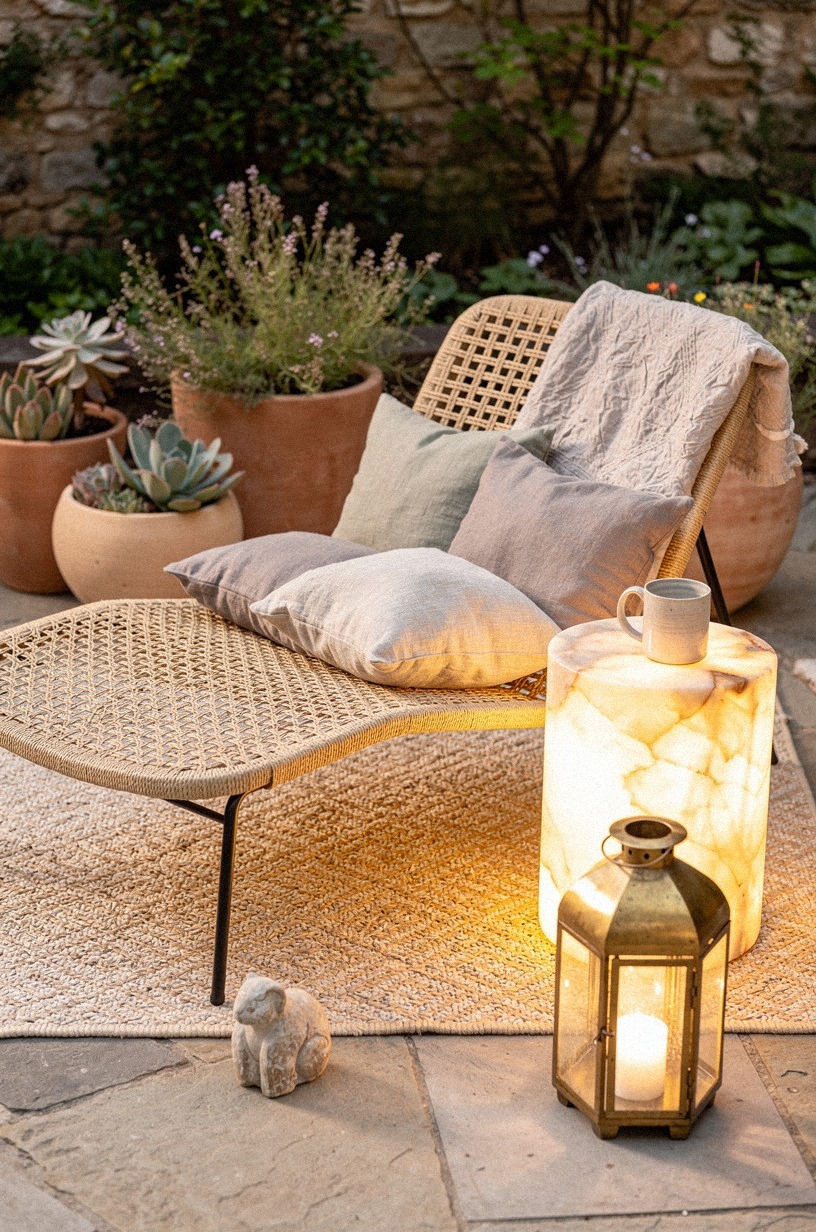
An outdoor rug is the fastest way to kill that "patio furniture floating in space" look.
3Build a pallet daybed with overstuffed cushions
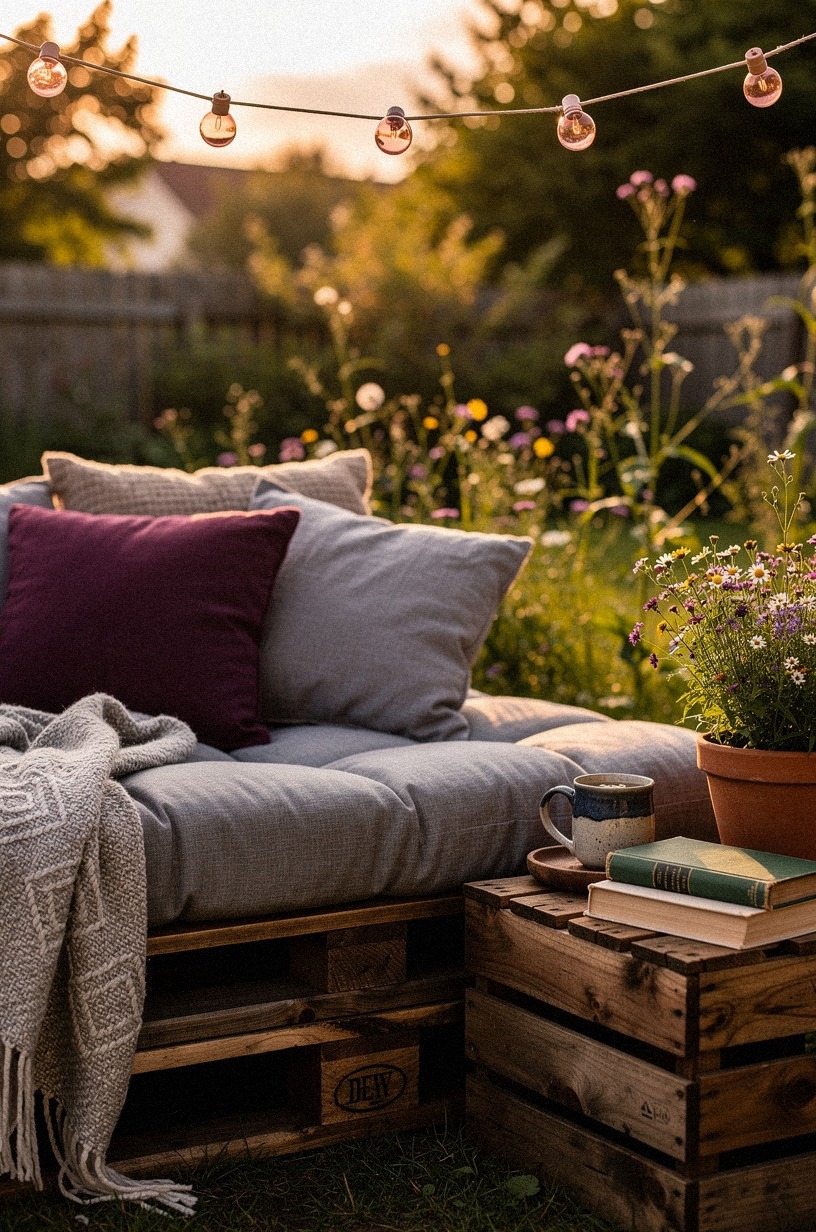
This is the move that gets the most use in my yard. A pallet daybed costs almost nothing if you know where to look, and it turns a forgotten corner into the best seat in the house.
Start with heat-treated pallets (marked HT, not MB, MB is chemically treated and not safe for lounging). Stack two for height, sand the edges, and seal with a clear exterior finish. The frame is free if you source locally.
The money goes into the cushions. Two 24×24 inch outdoor inserts plus a couple of plum and grey covers in a weatherproof fabric run about $60 to $80 total.
Pile them deep. The overstuffed look is the whole point.
A thin layer looks like a camping pad. A thick pile looks like a destination.
Add a throw and you've got a nap spot that competes with the living room sofa.
4Cluster potted herbs on a narrow ledge shelf
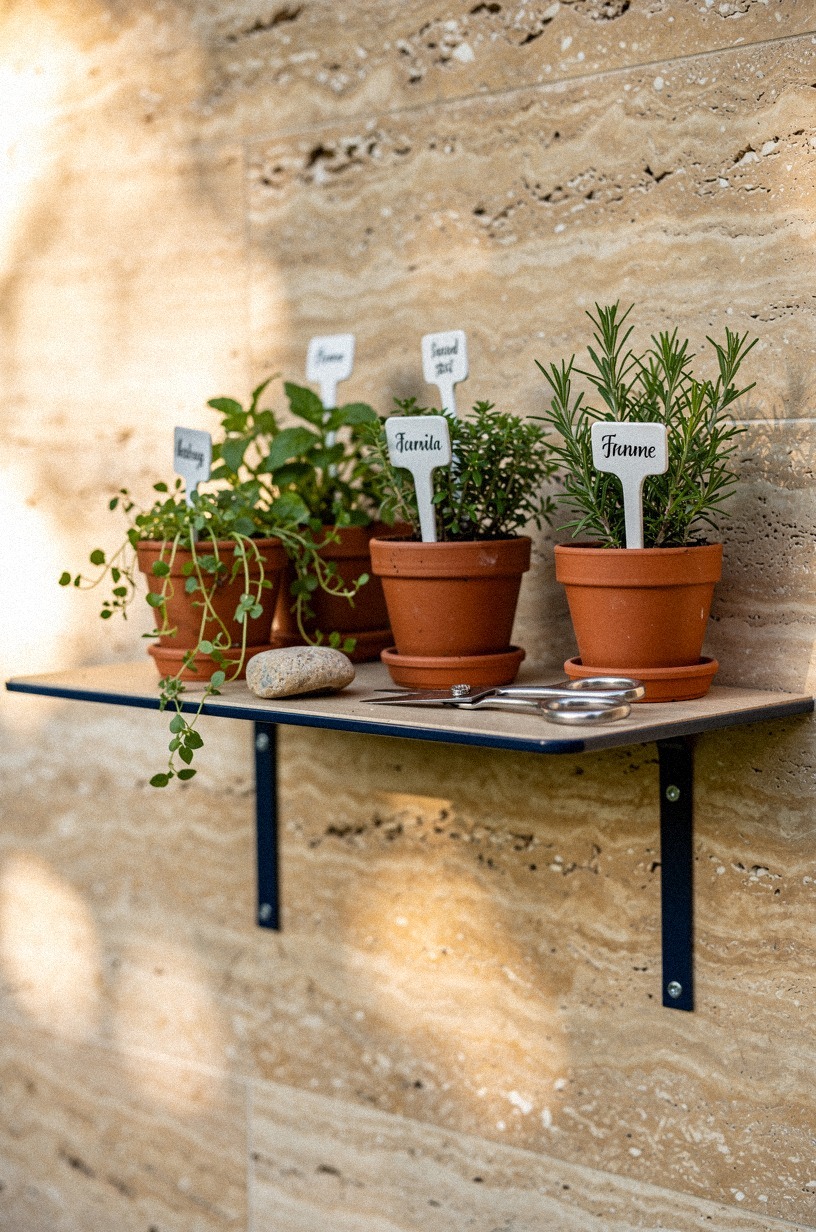
A narrow ledge shelf against a wall turns dead vertical space into something alive and useful.
5Drape a weatherproof throw on every chair
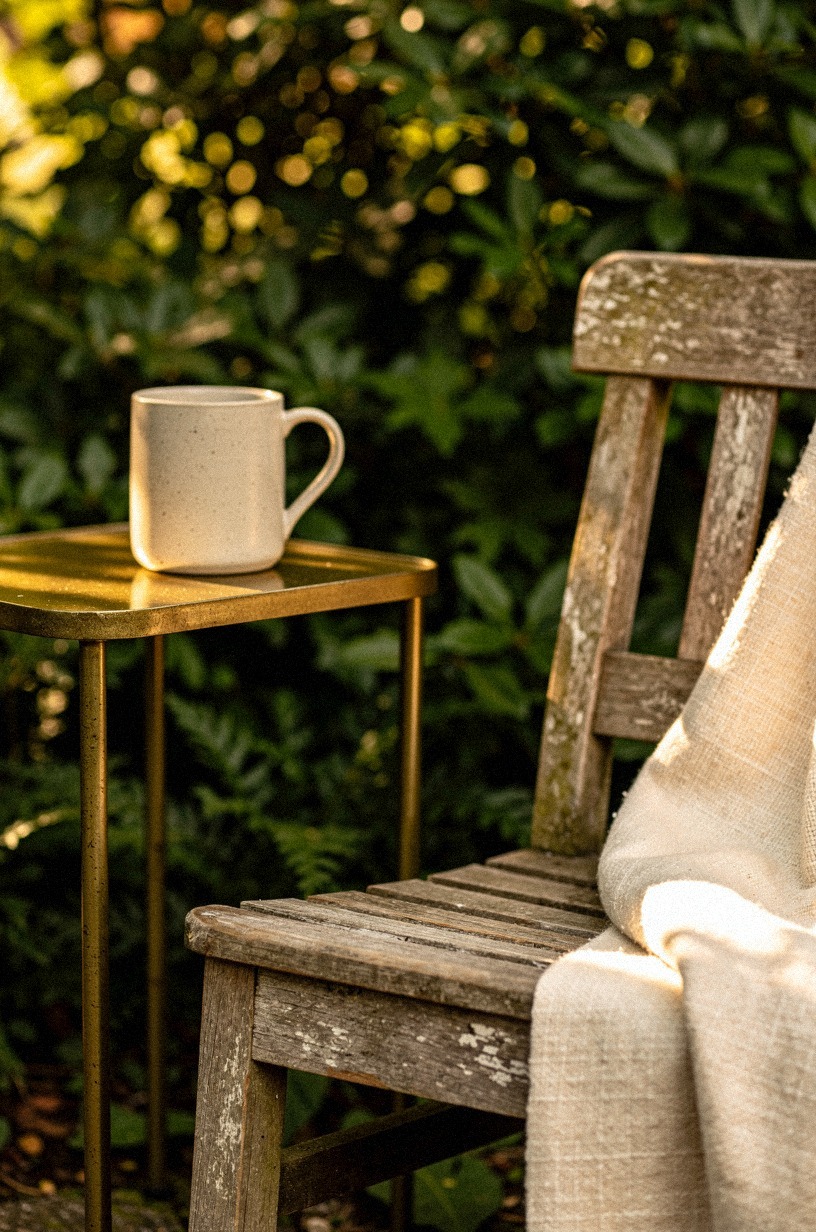
This sounds like styling advice, but it's really about temperature. A throw on every chair means people stay outside longer when the sun drops. It's the cheapest comfort upgrade you can make.
Look for 18 oz cotton or a chunky acrylic knit that handles moisture without turning stiff. Cream, oatmeal, or a soft sage work with almost any palette.
A good weatherproof throw runs $20 to $35, and you don't need more than two or three. Rotate them so one is always dry.
The drape matters. Fold it over the arm, not the back.
Let one corner trail toward the ground. It should look like someone was just there and will be back.
That's the lived-in signal that makes a backyard feel like a room people actually use.
6Paint a garden wall in warm terracotta
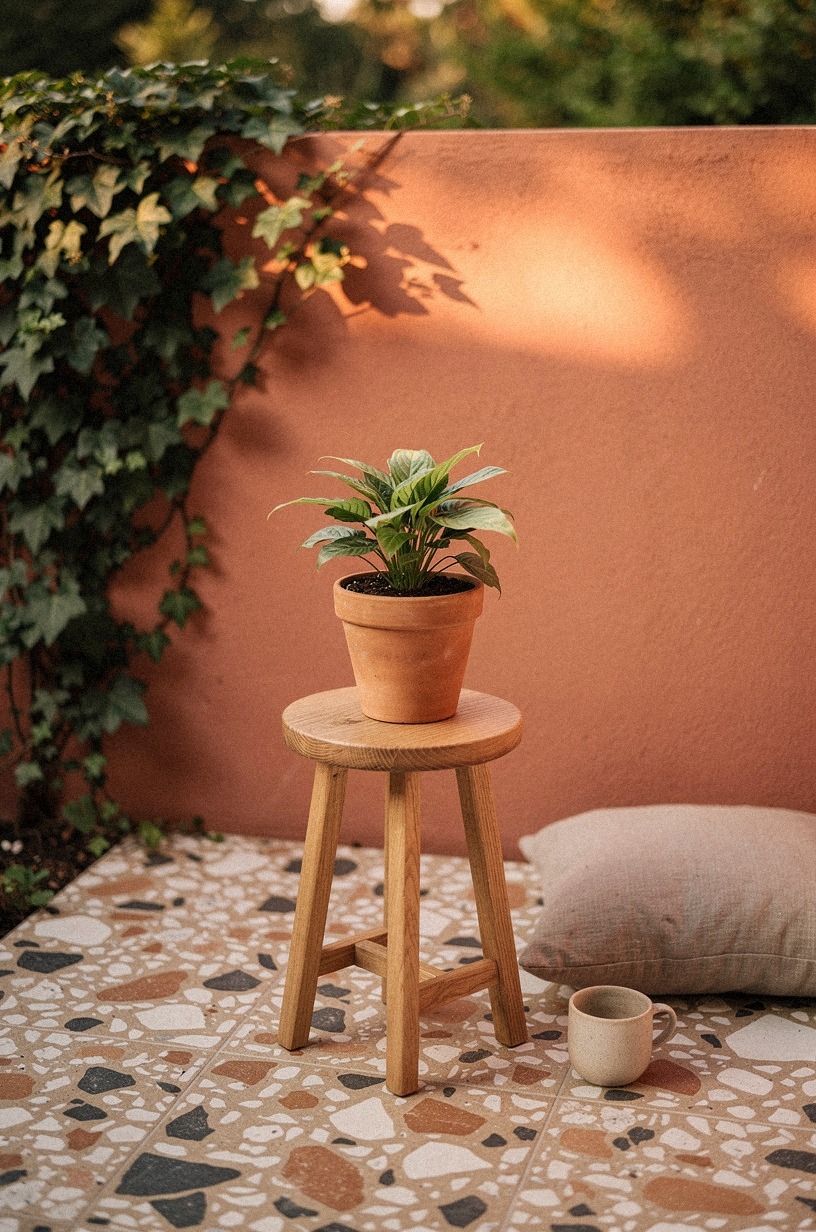
One painted wall changes the whole temperature of a backyard.
7Set up a galvanized tub as a drinks cooler
A galvanized tub full of ice and drinks is the kind of detail that makes people feel taken care of. It's also functional, no one wants to walk inside for a refill when the conversation is going.
A medium galvanized tub (about 16×12 inches) runs $20 to $35 at most hardware stores. Set it on a stone patio or a stable surface near the seating area. The hand-applied Venetian plaster wall behind it (or any textured backdrop) catches the light and makes the metal feel intentional rather than utilitarian.
Fill it with beer, sparkling water, and a few bottles of wine. The mix matters.
A tub full of only beer reads "college." A mix reads "host." Add a small brass pitcher nearby for anyone who wants to pour into a glass. That one detail elevates the whole setup without costing more.
8Line a gravel path with solar mason jars
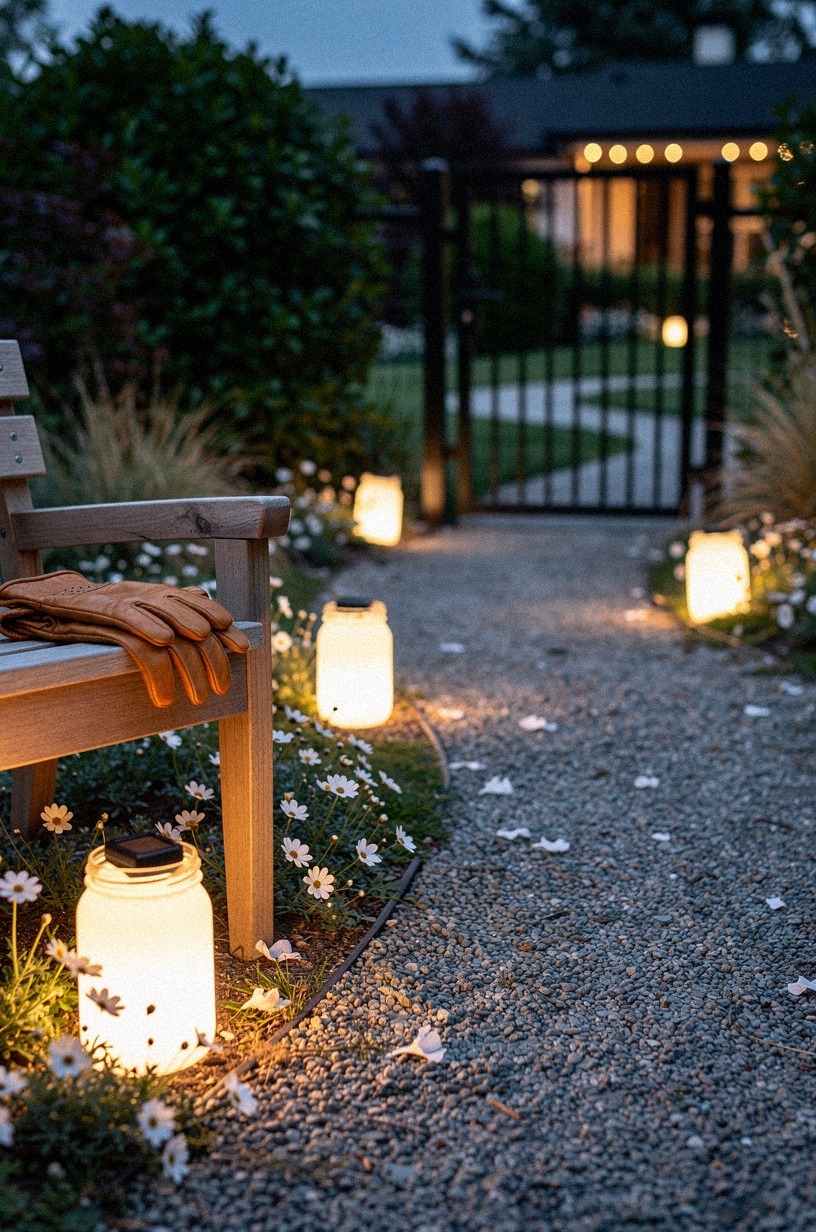
A winding gravel path with soft light at the edges turns a backyard into a destination. The solar mason jars do the work after dark, and they don't need wiring or an electrician.
Buy warm white solar lids (about $3 to $5 each) and screw them onto standard mason jars. Bury the jars up to their necks along the path edge, or set them on small stakes.
The glow is subtle, path lighting, not runway lighting. Space them about 3 to 4 feet apart for a continuous line without overdoing it.
The gravel itself matters. Pea gravel (about $4 to $6 per bag) is cheap and crunches satisfyingly underfoot.
Line the path with landscape fabric first or you'll be weeding between stones by July. A pair of camel leather garden gloves on a nearby bench is the kind of accidental detail that makes the whole thing feel real.
9Hang a macrame hammock between two trees
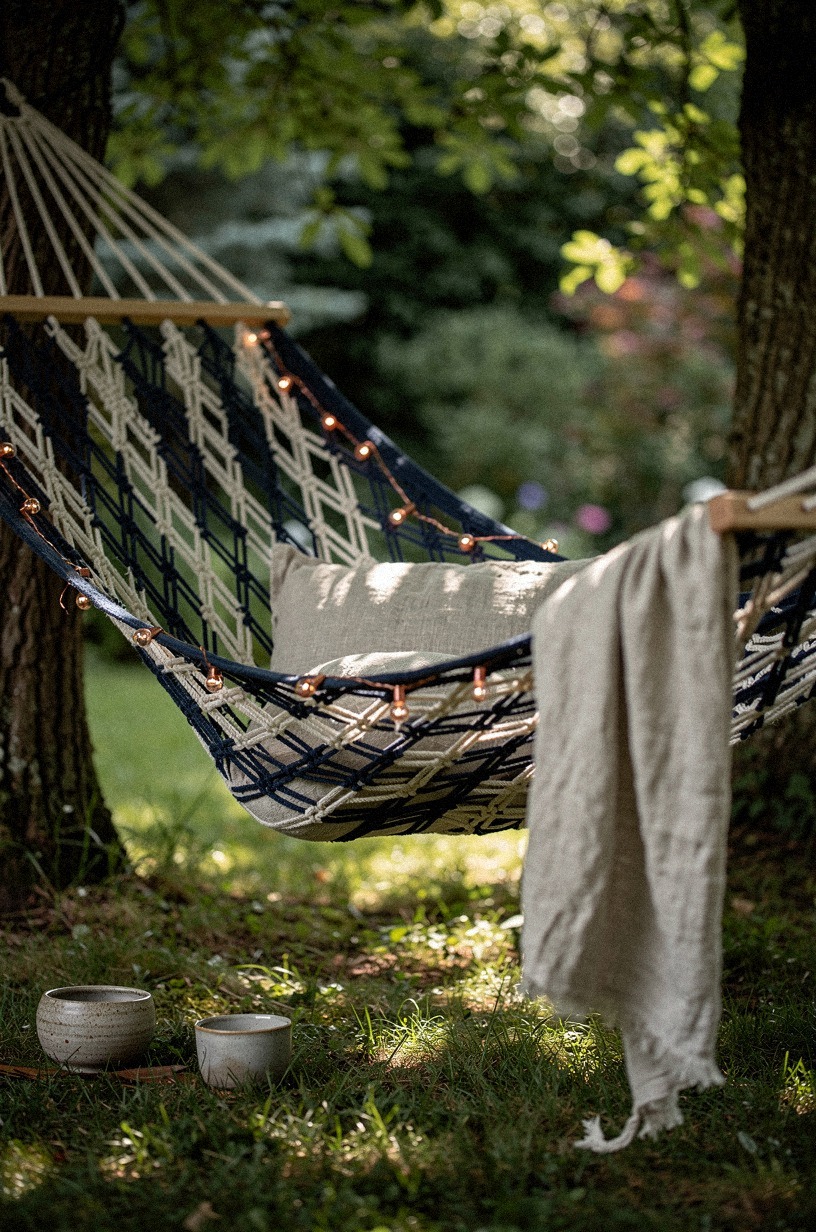
A macrame hammock is the single best use of two trees in a backyard. It creates a focal point, adds texture, and gives people a reason to stop walking and actually stay.
Look for a midnight blue and ivory woven pattern in cotton or a cotton-poly blend. Pure cotton softens over time but sags more.
The blend holds its shape. A decent macrame hammock runs $40 to $70.
Check the weight rating, 250 lbs minimum if you want two people to feel safe.
Hang it with copper fairy lights woven into the ropes for evening use. The light filters through the weave and creates a pattern on the ground that's almost as good as the hammock itself. Add a washed Belgian linen pillow in a warm neutral and you've got a reading spot that competes with any indoor corner.
10Stack vintage crates as a tiered plant stand
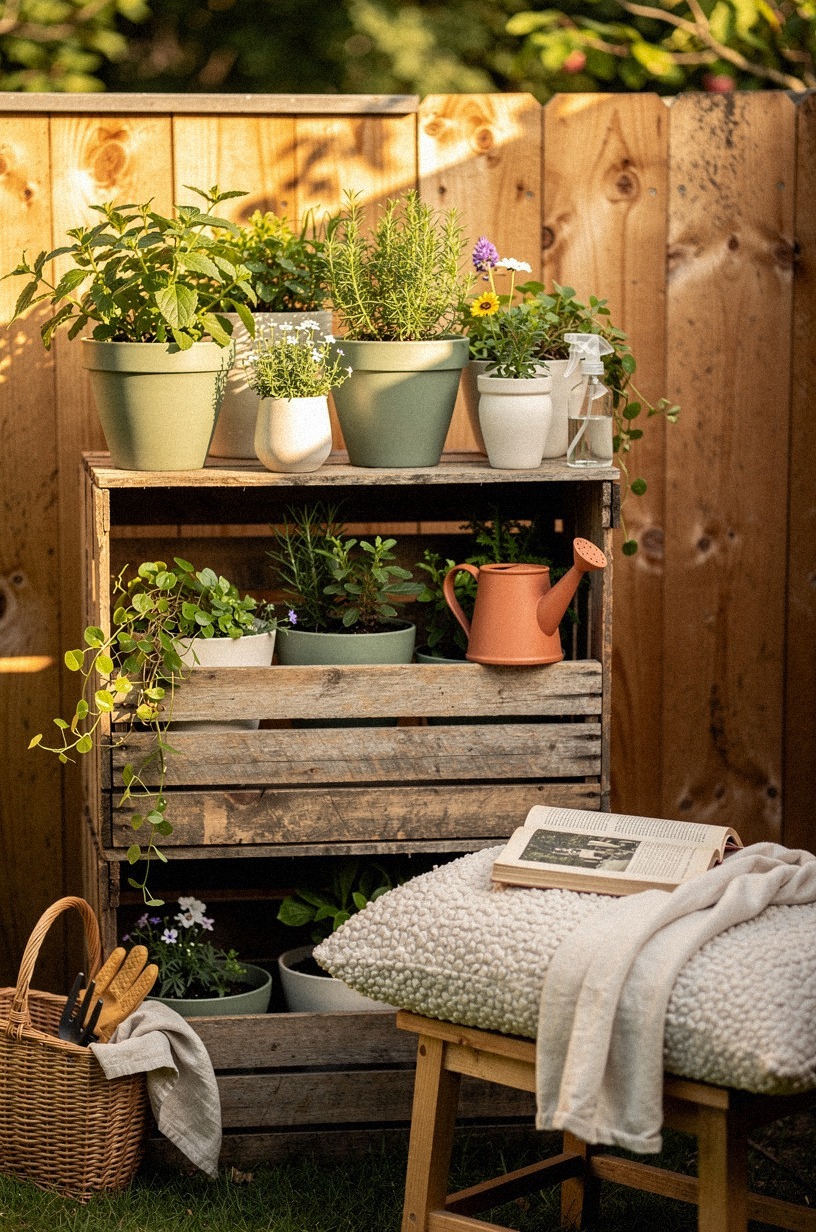
Vintage crates as a tiered plant stand is the kind of "found object" move that looks expensive and costs almost nothing. The key is the arrangement, asymmetrical, varied heights, not a perfect pyramid.
Source wooden crates from flea markets, Facebook Marketplace, or a local farm. Avoid anything with chemical staining or a strong smell.
Stack two on the bottom, one on top, offset so each level gets light. The sage green and cream ceramic pots at each level should vary in size.
A 4-inch succulent, a 6-inch fern, an 8-inch trailing pothos.
Add an organic bouclé textured cushion on a nearby stool so the plant stand feels like part of a sitting area, not a garden display. Total cost: $0 to $15 for the crates if you source well, plus plants. It's the cheapest vertical garden you'll build.
11Run Edison bulbs along the fence line
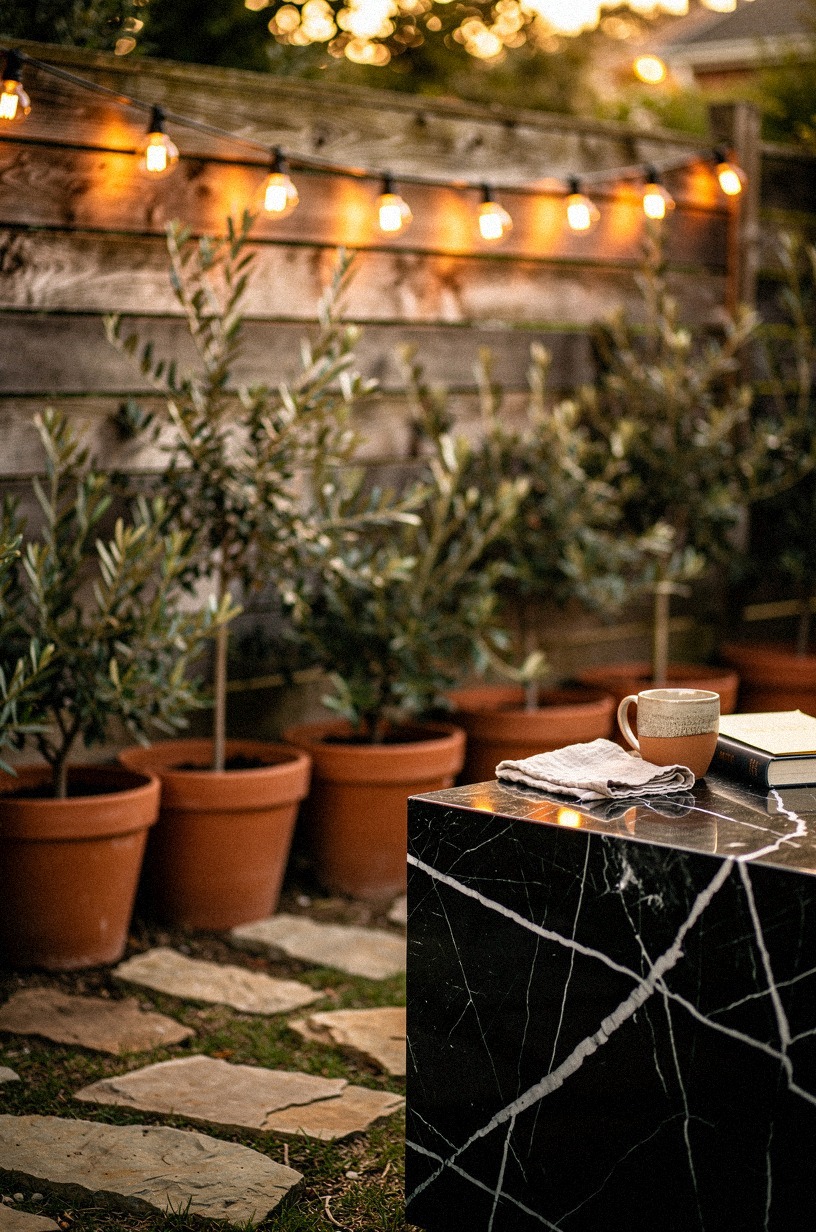
Edison bulbs along a fence line create a boundary of light that makes a backyard feel enclosed and intentional. It's the difference between "yard" and "room."
A 25-foot strand of Edison bulbs with 15 sockets runs about $30 to $50. The terracotta planters below with olive branches or trailing rosemary ground the light and give the eye something to rest on. The bulbs themselves should be warm amber (2200K), anything whiter kills the mood entirely.
The Nero Marquina black marble with white veins on a small accent table nearby is a heavy material choice that balances the rustic string lights. It's unexpected, and that's why it works. If your fence is ugly, this lighting setup draws attention to the glow instead of the boards.
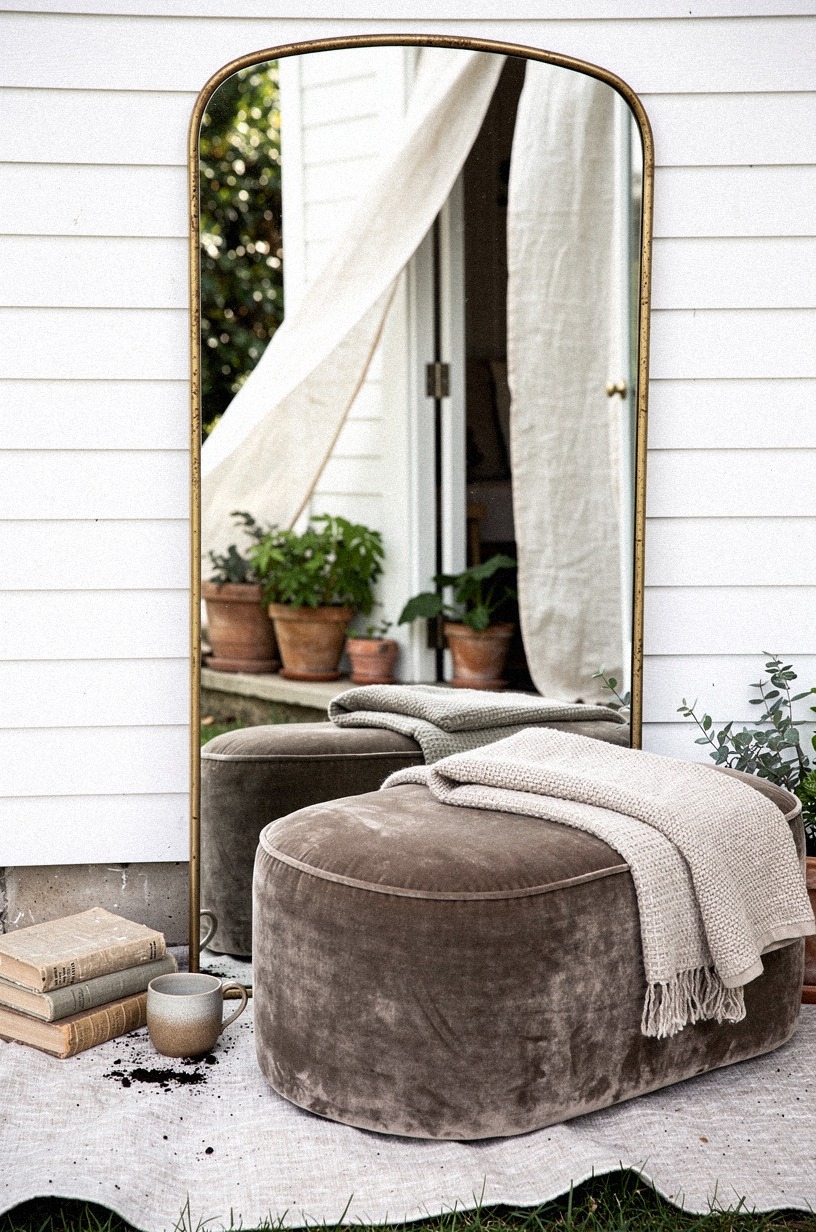
12Prop a leaning mirror against the siding
A large mirror outdoors sounds strange until you see it work.
13Fill a galvanized trough with ornamental grasses
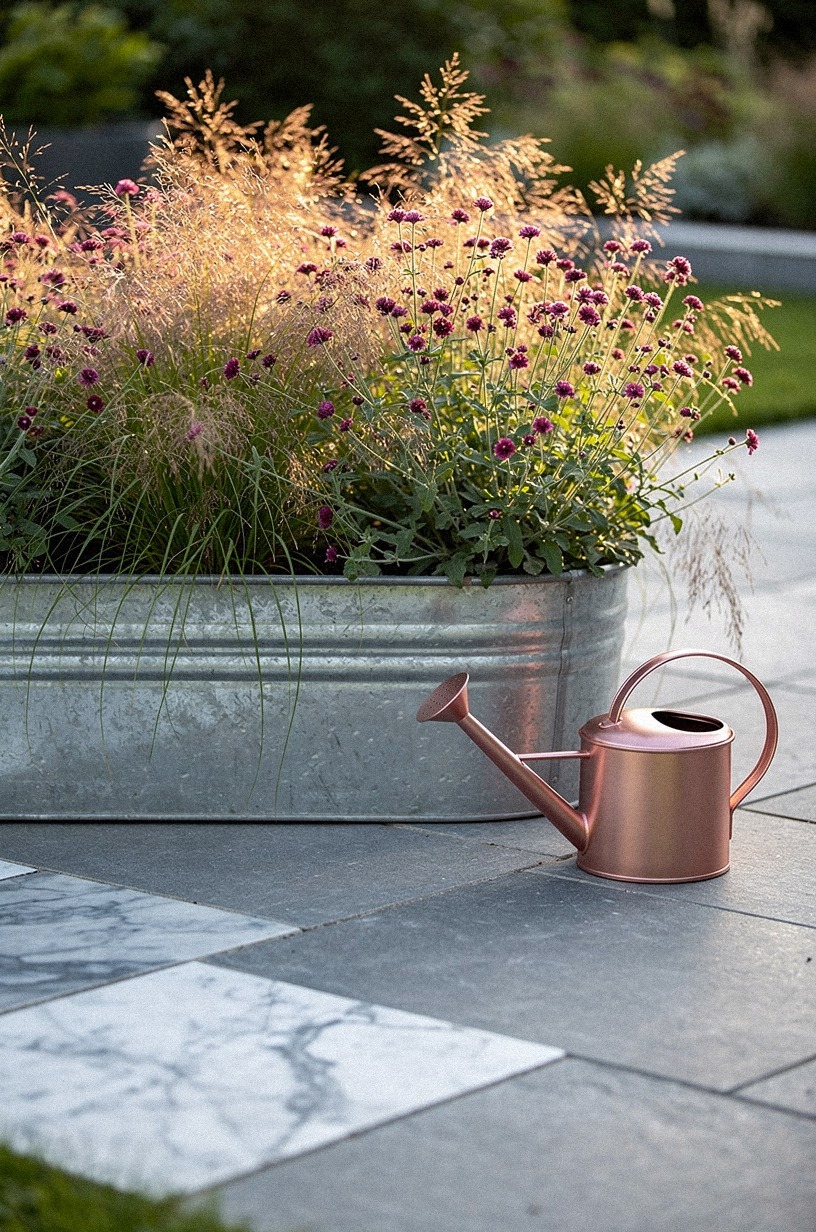
A galvanized trough as a planter is industrial meets organic, and it works in almost any backyard style. The metal gives structure.
The grasses give movement. Together they create a focal point that doesn't need flowers to look alive.
Use a galvanized metal trough about 24 to 36 inches long. Fill it with ornamental grasses like feather reed grass or blue fescue, plus a few plum flowers for color contrast. The grey stone patio surrounding it should be laid so the trough sits slightly recessed, integrated, not placed on top.
A rose gold watering can nearby is the kind of functional object that becomes decor if you choose the right one. The Carrara marble with subtle grey veining on a small side table next to the trough ties the metal and stone together. Total cost: $30 to $50 for the trough, $15 to $25 for grasses, and you've got a planter that looks like a design decision.
14Tuck a bistro table into a forgotten corner
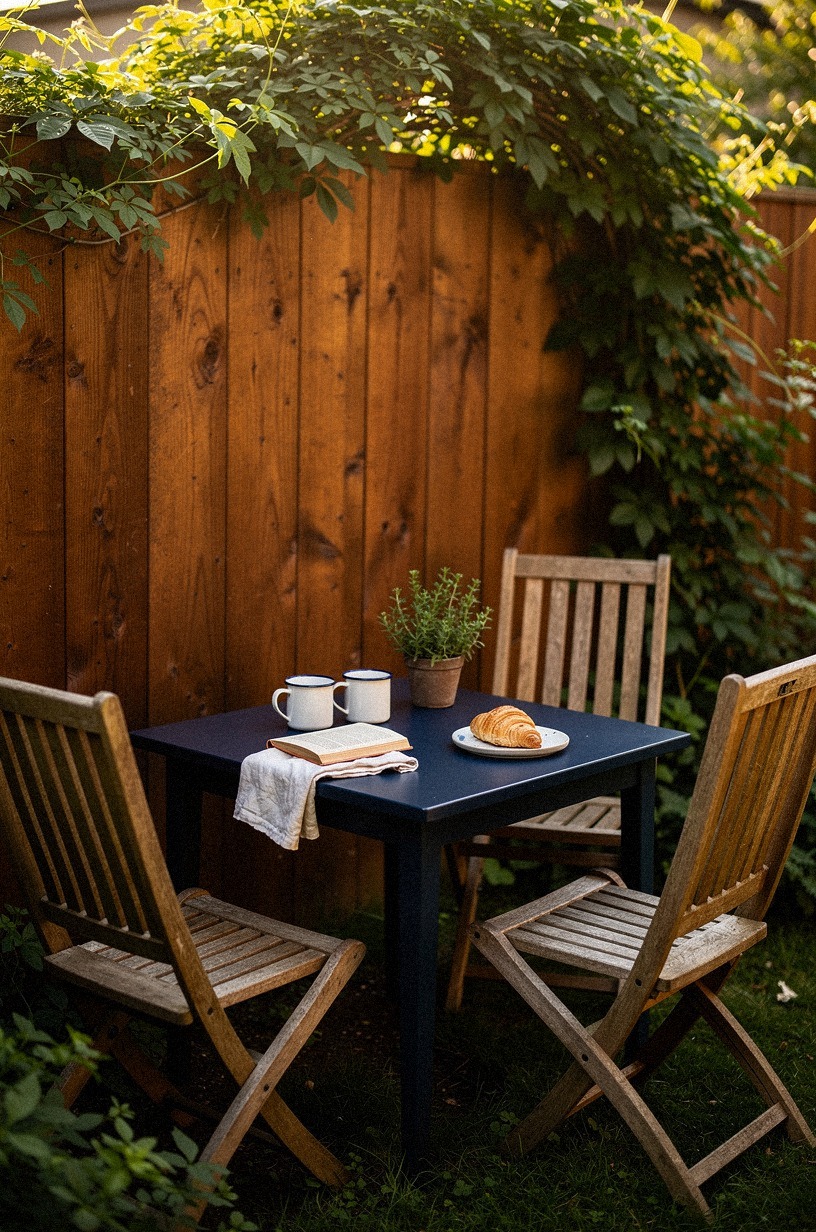
Every backyard has a dead corner, behind the garage, next to the shed, that awkward angle where nothing fits. A small bistro table turns it into the most private, most used spot in the yard.
A navy bistro table (about 24 inches round) runs $60 to $90 for a decent metal or folding wood version. Pair it with reclaimed weathered teak chairs if you can find them, or simple folding café chairs in a warm wood tone. The walnut stained fence behind it and a climbing vine on one edge create enclosure without building walls.
Set it with white enamel cups and a small carafe. The detail of actual tableware (not plastic) signals that this is a place to sit, not a place to pass through. Two people, coffee, morning light.
That's the whole point. If your corner is truly tight, my 23 cozy small backyard ideas has more spatial move for awkward footprints.
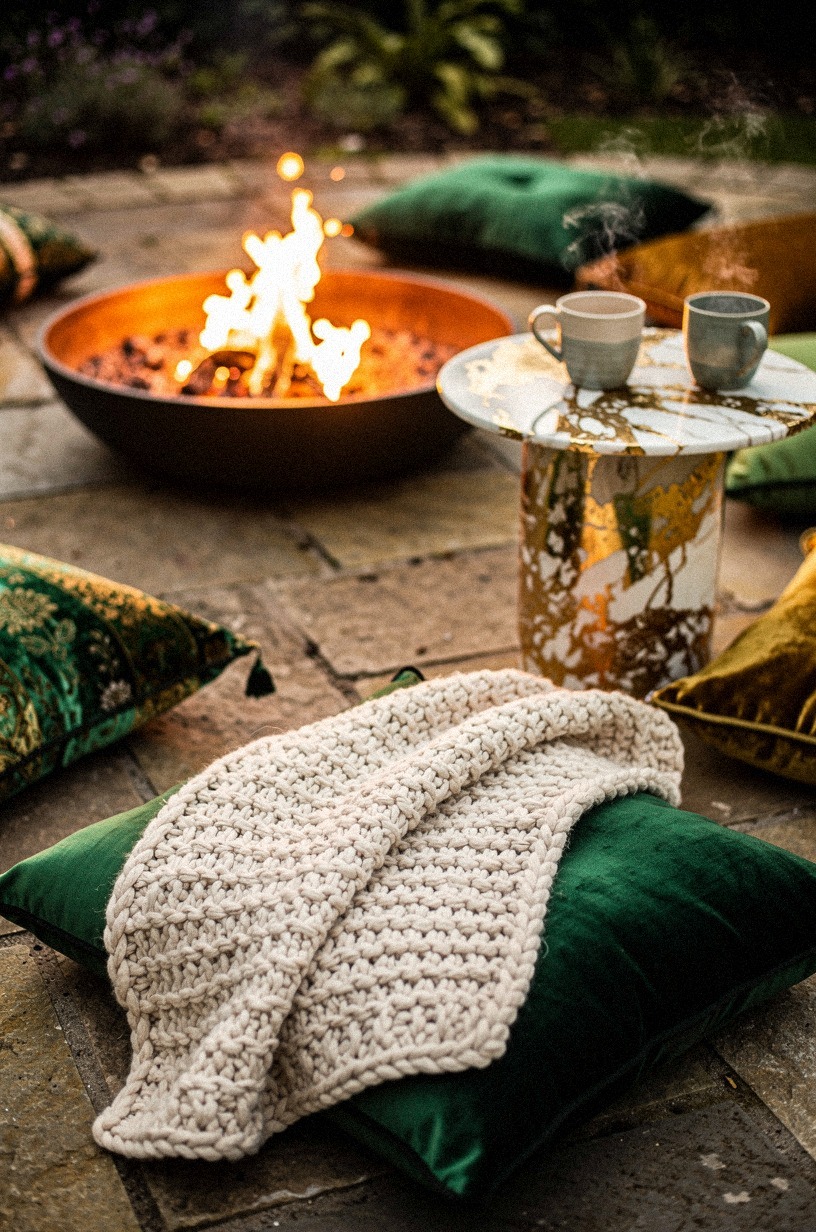
15Pile floor cushions around a low fire bowl
A low fire bowl with floor cushions is the most democratic seating arrangement you can create.
16Train ivy up a simple wire trellis screen
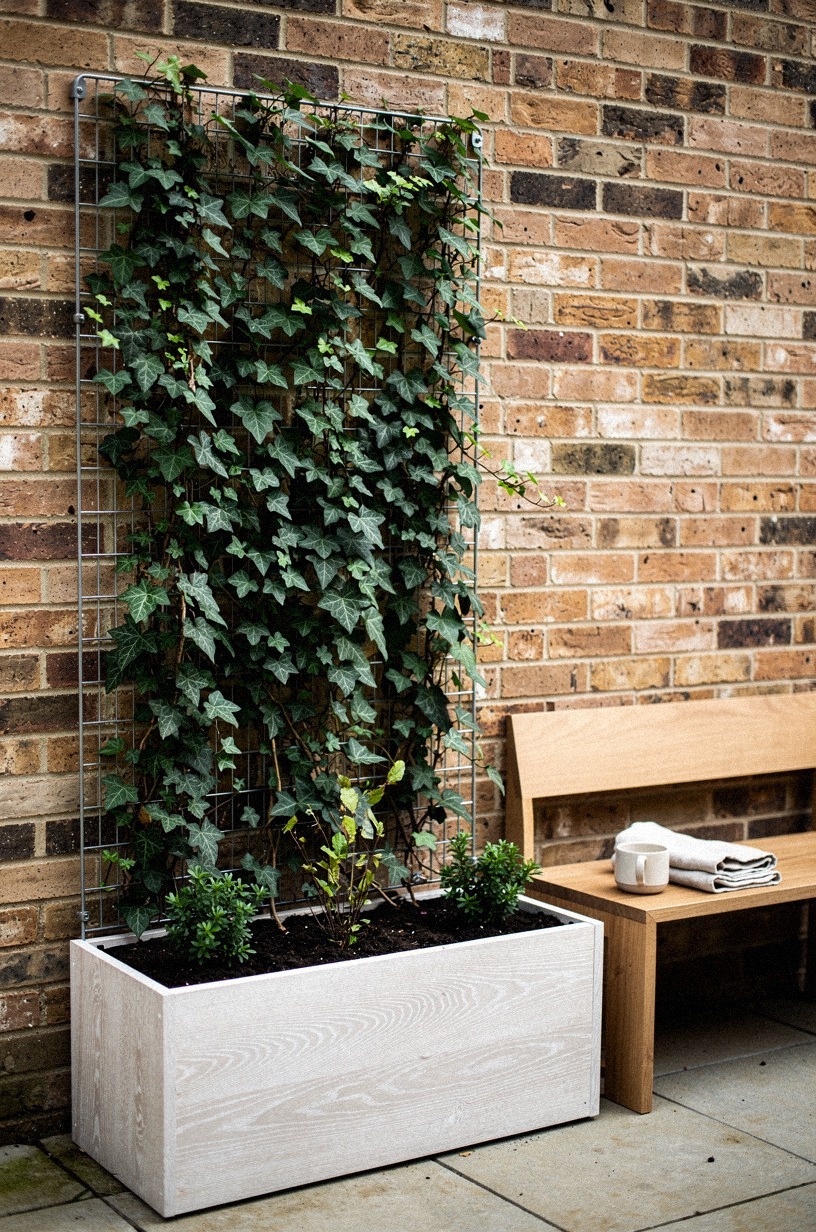
A wire trellis with climbing ivy is the cheapest privacy screen you'll build, and it gets better every year. The first season is sparse. By year three, it's a wall of green.
Use galvanized wire grid or cattle panel cut to size. Mount it 6 to 12 inches from the wall on navy painted brackets so air can circulate. Plant English ivy or Boston ivy at the base in a cerused white oak planter box.
The rust colored brick below adds warmth that keeps the green from feeling too cold.
The trellis itself costs about $20 to $40. The planter adds another $25 to $35.
The ivy is $10 to $15 per plant. Water regularly the first season, then let it do its thing.
By summer two, you'll have a privacy screen that no fence can match. If privacy is your main goal, my cozy fenced in backyard ideas has more structural solutions.
17Float candles in a galvanized basin pond
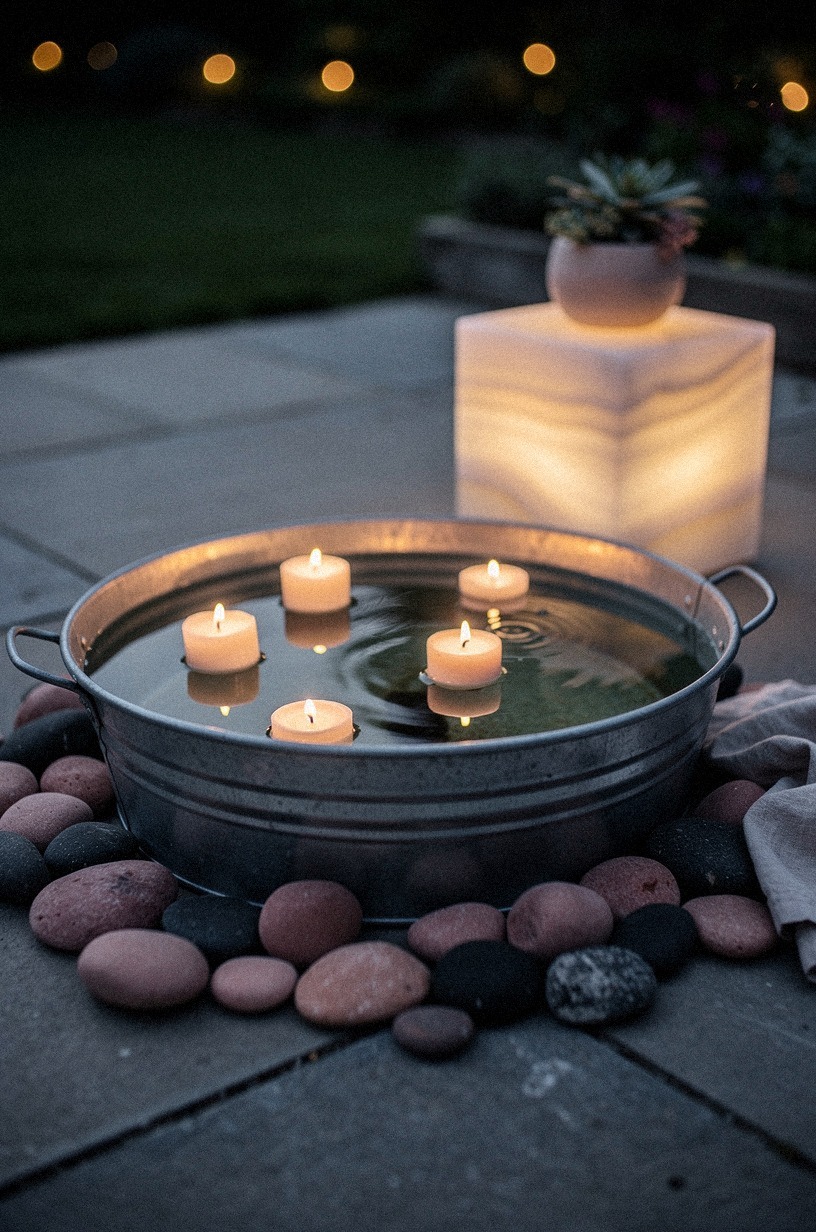
A small water feature changes the sound and feel of a backyard instantly. A galvanized basin as a pond is the budget version that doesn't look budget, if you style it right.
Use a galvanized metal basin about 18 to 24 inches wide. Fill it with water and float ivory candles on the surface. The dusty rose and charcoal stones around the edge create a color story that feels designed.
The backlit translucent onion grass behind it (or any tall grass) catches the candlelight and doubles the glow.
The candles should be unscented, you're outside, you don't need fragrance competing with the air. Light them at dusk and the whole basin becomes a lantern.
Total cost: $20 to $35 for the basin, $5 to $10 for candles, $10 to $15 for stones. Less than a dinner out, and it works every single night.
18Weave a rope swing from a sturdy branch
A rope swing is the most nostalgic, most used, most photographed thing you can add to a backyard. Adults use it more than kids if you hang it right.
Use polypropylene rope (about 3/4 inch diameter, 200 lbs rating minimum) or natural manila if you don't mind replacing it every few seasons. The seat should be a thick wooden plank (about 18×8 inches) wrapped with a warm white and camel woven cushion for comfort. The black accent metal hardware (carabiners, eye bolts) is the one place not to skimp, safety first.
Hang it from a branch at least 8 inches in diameter, tested for deadwood first. The swing should sit about 18 to 24 inches off the ground at rest.
Too high and it's hard to mount. Too low and it drags.
Total cost: $15 to $30 for rope, $10 to $20 for a plank, $10 to $15 for hardware. The memories are free.
What a Backyard Refresh Actually Costs
People always ask whether a backyard makeover is worth it. The short answer is yes, but only if you spend on the right things.
Paint and lighting give you more return than furniture ever will. A $40 paint job changes the whole space.
A $400 sofa just sits there.
Here's what typical US homeowners spend, broken down by ambition level:
And here's the material breakdown for the most common outdoor upgrades:
The budget tier is where most of these ideas live. A polypropylene rug at $80, LED string lights at $30, a few Sunbrella cushions at $40 each, you're at $200 and you've transformed the space.
The mid-tier is where you start buying furniture. The high-tier is where you stop calling it a backyard and start calling it an outdoor room.
My rule: start with light and texture. Add furniture last. You'll be surprised how little you actually need once the lighting and ground plane are right.
The Mistake I Made (And the Rule That Fixed Everything)
I used to buy outdoor furniture the way I bought indoor furniture, matchy, planned, everything from one store. The result looked like a catalog spread and felt like a waiting room.
No one sat in it. No one lingered.
It was too perfect to use.
The shift came when I started treating the backyard like a collage instead of a set. Mix the wood tones. Layer the textures.
Let the cushions be slightly mismatched. The cerused white oak bench next to the walnut crate next to the reclaimed teak chair, that's the combination that makes people ask where you got everything. (And the answer is always "here and there," which is the whole point.)
The rule I use now: every backyard needs three wood tones, two metal finishes, and one thing that doesn't belong. The outlier is what makes the rest look intentional.
A Nero Marquina marble table next to a pallet daybed. A brass mirror against white siding. The contrast is the design.
The other mistake was buying too big. A 9×12 ft rug in a 10×12 ft space overwhelms.
A 24-inch bistro table in a forgotten corner gets used every morning. Scale to the moment, not the room.
The best backyards feel like a collection of small situations, coffee here, fire there, hammock in the shade, not one big staged scene.
And here's the part nobody tells you: the cheapest thing you can add is time. A backyard that looks finished in March looks lived-in by August.
The ivy climbs. The brass patinas.
The cushions fade in a way that looks earned. Don't rush to complete it.
Let it become.
What People Always Want to Know
What is the best backyard idea for a small backyard?
The leaning mirror and the bistro table corner are the two biggest-impact moves for tight spaces. The mirror doubles the visual depth.
The bistro table turns a dead corner into a destination. Both cost under $100 and take up almost no room.
I'd add the polypropylene rug at 5×7 ft, it's the smallest size that still anchors a seating area.
Where can I buy backyard pieces on a budget?
IKEA has solid outdoor basics, the Applaro line in acacia is a workhorse. Target Threshold and Studio McGee collections hit the trend notes without the markup.
Wayfair is unpredictable but deep, search by material (teak, acacia, eucalyptus) rather than style. And don't skip Facebook Marketplace or estate sales. The best aged brass mirror or reclaimed teak chair I own came from a garage sale for $15.
How much does a backyard makeover cost?
A light refresh, paint, lights, rug, cushions, runs about $200 to $600. A mid-level redo with furniture and structural lighting lands around $1,500 to $4,000.
A full outdoor kitchen and hardscaping starts at $10,000 and climbs fast. Most of the ideas in this article sit in the $20 to $80 range each.
Stack three or four and you've got a completely different yard.
Can I create a cozy backyard on a budget?
Yes, and the budget is actually an advantage. Constraints force you to be creative.
The pallet daybed is free if you source pallets. The string light canopy is $30.
The galvanized tub cooler is $25. The vintage crate plant stand is $0 if you already have crates.
The best backyards I've seen were built for under $500, total. The money doesn't make it cozy, the layering does.
Is a backyard refresh worth it in a small space?
Absolutely. Small backyards are easier to make feel complete because you can address the whole thing at once.
A large yard has dead zones no matter what you do. A small yard with a bistro table, a hammock, and a fire bowl feels like every inch was considered. The density is the luxury. (And "worth it" is exactly the right question, it's the wording that signals you're thinking like a homeowner, not a decorator.)
Is a backyard makeover a good idea for a rental?
Yes, if you stick to no-damage moves. The string lights hang on existing posts or fence.
The outdoor rug lays flat, no adhesive. The pallet daybed sits on the ground, no anchors.
The galvanized trough and basin pond are freestanding. The leaning mirror props, no mounting.
The only thing to avoid is painting walls without permission, everything else moves out with you. My cozy backyard play area ideas has more rental-friendly setups that translate well to adult spaces.
If I Had to Pick One, I'd Start With the String Lights
You can't layer warmth on top of a dark yard, the furniture, the cushions, the fire bowl all fight the shadows instead of building on them. Get the light right first.
Everything else lands. Pin the canopy idea for later and check out my cozy backyard hot tub ideas if you're planning to add water to the mix.