
 by
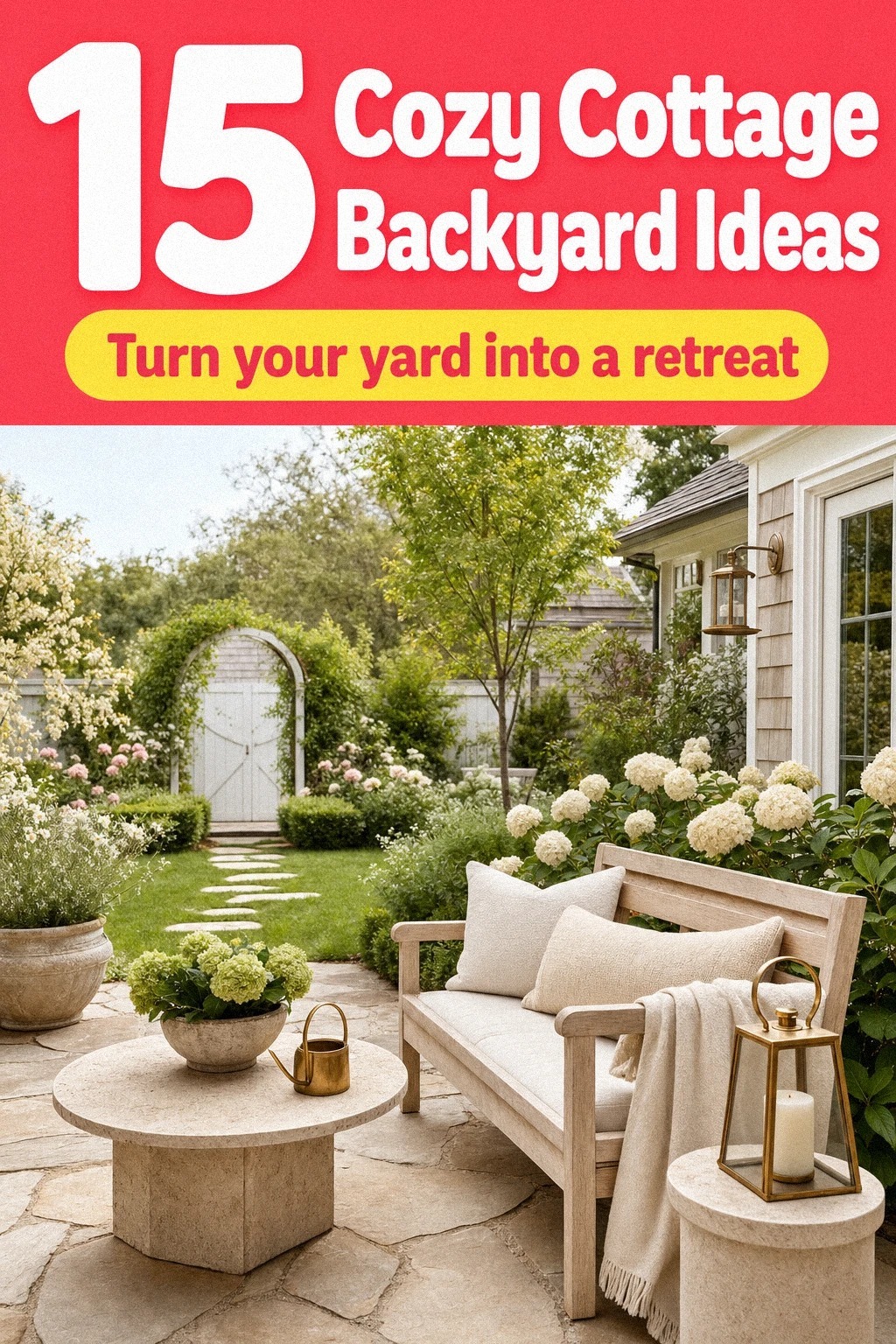
by When we bought our house four years ago, the backyard was the saddest part of it. A cracked concrete slab, one dead hydrangea, and a chain-link fence that made the whole thing feel like a dog run. We lived with it for two summers because I didn't know where to start. Then I stopped trying to renovate it and started styling around it, and the whole space changed. These are the 15 ideas that took our cold, neglected yard to the coziest corner of the house, most of them for very little money.
Here's what it looked like before
The full 2005 starter-home package. A poured concrete patio that had settled unevenly, so water pooled in the corner every time it rained. The fence was chain-link with a green plastic privacy slat that was half-fallen out. One sad hydrangea in a plastic pot.
No lighting. No seating. Just a grill on a rusted stand and a feeling that the backyard was a place you passed through, not a place you stayed. I kept telling myself we'd redo it properly someday.
But "someday" is how you live with ugly for five years. I decided to stop waiting and start layering.
- Start with a weathered stone patio and a cerused oak bench
- Why a climbing rose against the fence changes everything
- Drape café lights between two birch trees for evening glow
- Set a wrought iron bistro table in the deepest shade
- Lay a curving pea gravel path past the herb beds
- Prop an old ladder against the wall for potted ivy
- Hang a galvanized bucket as a planter from the porch beam
- The Adirondack chair in lavender: a quiet corner that outperforms the patio
- Line the walkway with mismatched terracotta pots
- Stretch a faded striped hammock between two apple trees
- Farrow & Ball Green Smoke on the garden gate: worth the splurge
- Stack weathered bricks for a low fire pit circle
- Place a galvanized trough near the door for rainwater
- Weave a willow branch trellis over the stone patio
- Scatter wildflower seeds along the back border for effortless color
1Start with a weathered stone patio and a cerused oak bench
The first thing I did was pull up the cracked concrete. I didn't replace it with new pavers.
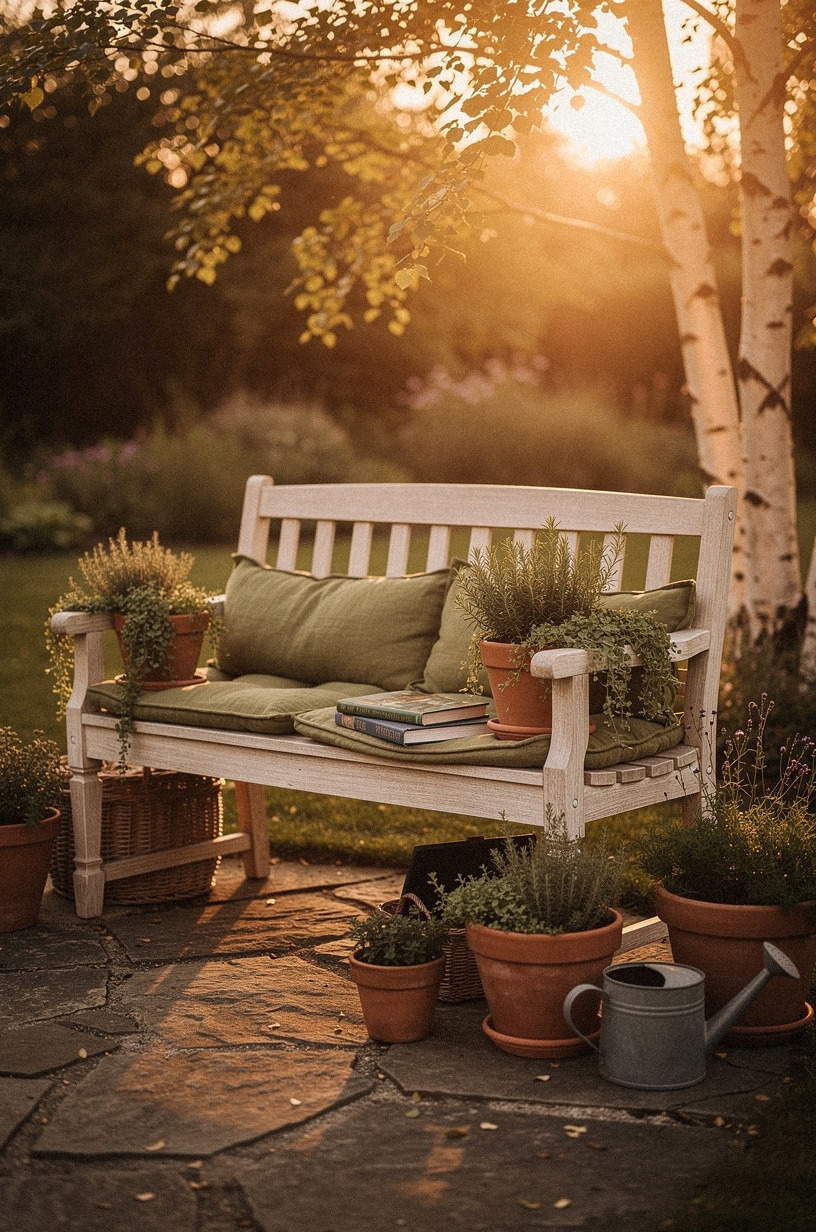
I found reclaimed limestone from a local demolition yard, stones with uneven edges and soft grey tones that already looked like they'd been there for decades. The cost was about $400 for enough to cover a 10-by-12-foot area. I laid them myself over a weekend, leaving half-inch gaps filled with polymeric sand in a warm buff color.
Against the new stone, I placed a bench I'd built from cerused white oak, the finish that lets the grain show through a white wash. It's the kind of wood treatment you see in English country gardens, and it catches the late sun in a way that makes the whole patio feel golden.
I added cushions in olive-green Sunbrella canvas and set out terracotta pots with trailing thyme and rosemary. The bench cost me about $180 in lumber and a Saturday.
The pots were $12 each at a nursery end-of-season sale. And honestly? That one corner became the place I drink my coffee every morning. The stone stays cool underfoot even when the sun is high, and the herbs smell like something real when you brush against them.
If you're starting from scratch, our cottage garden layout guide has the same layering philosophy for planting beds.
2Why a climbing rose against the fence changes everything
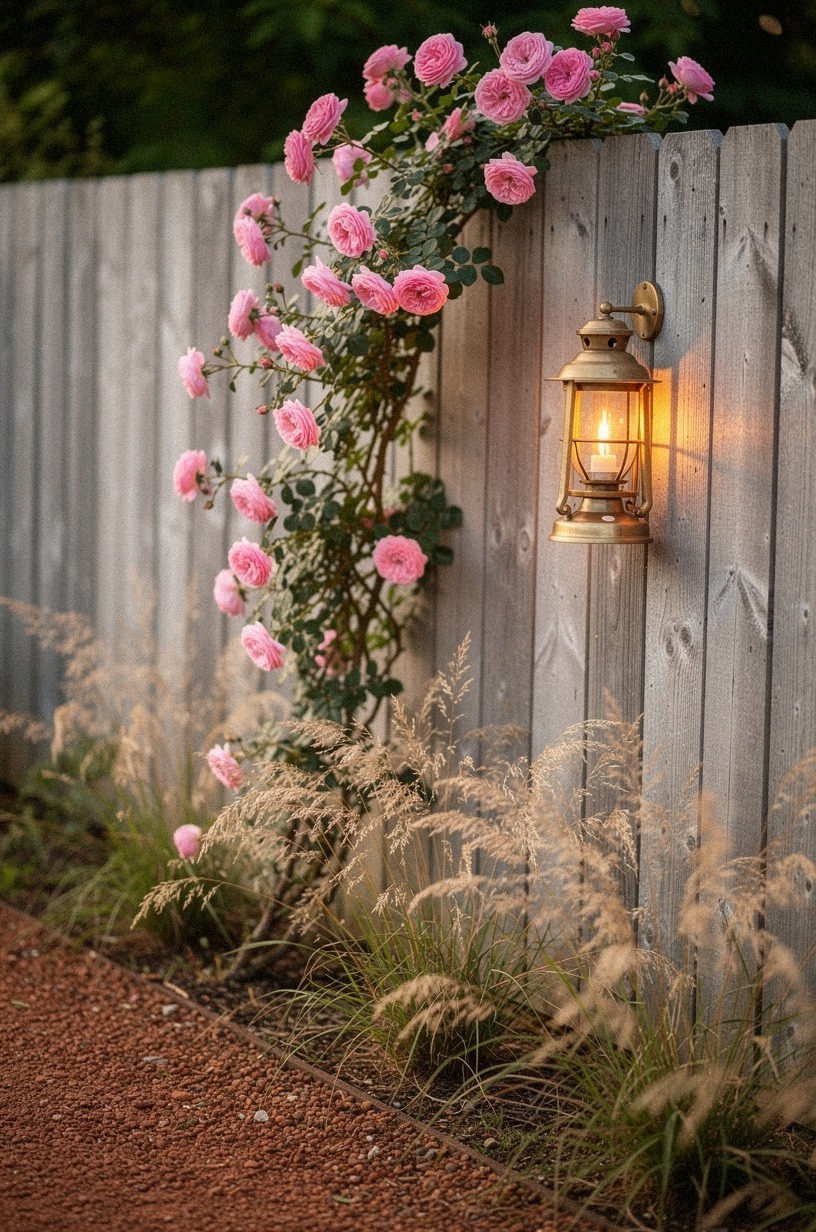
I swapped the chain-link for a weathered cedar fence I found on Facebook Marketplace, already silvered from two years of sun.
3Drape café lights between two birch trees for evening glow
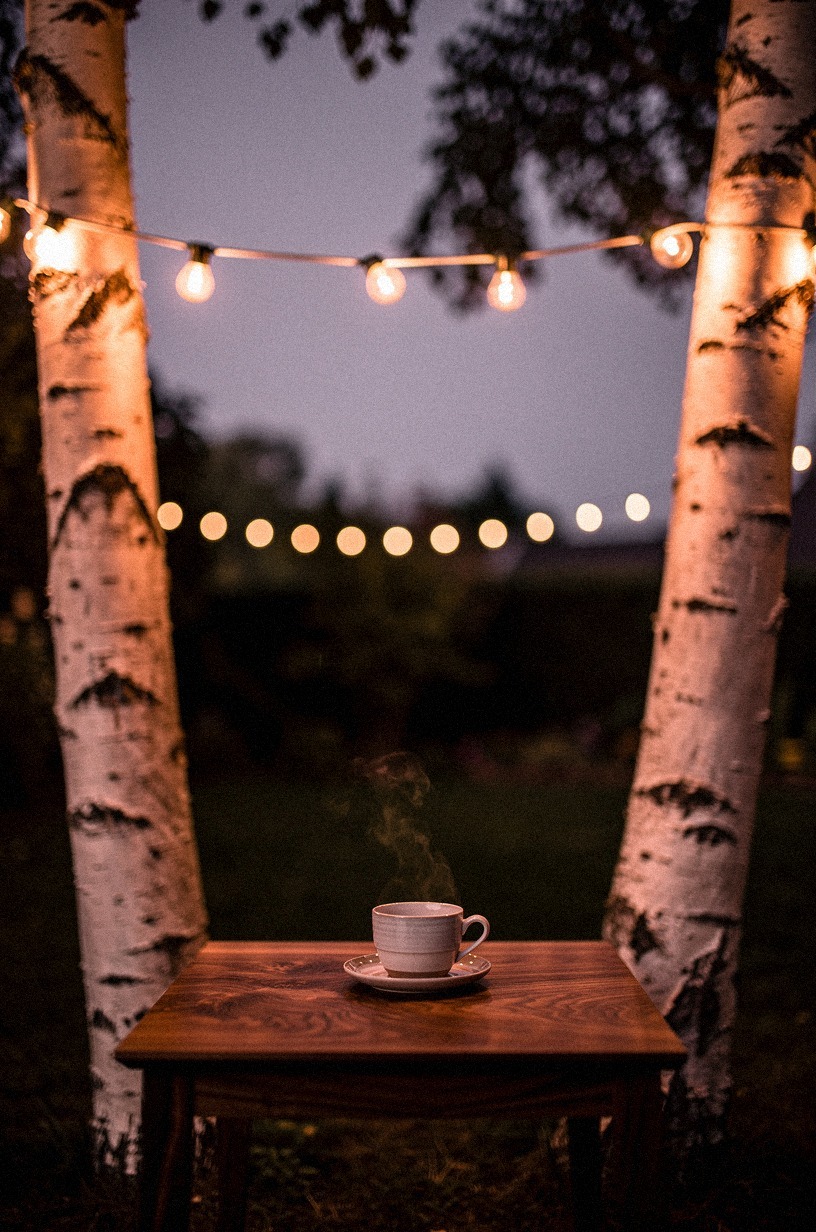
I planted two clump birch trees (Betula utilis 'Jacquemontii') at the edge of the patio the first spring. They're the white-barked kind that glow even at dusk.
By year two, they were tall enough to string lights between. I used 48-foot strands of warm amber LED café lights, the kind with heavy glass bulbs, not plastic. They cost about $35 per strand and I needed two.
The wiring runs from the porch beam to the first birch, then across to the second, then back. I hung them with black cable clips that blend into the bark.
Beneath the lights, I placed a book-matched walnut side table I'd refinished from a thrift find. It holds a single teacup most evenings. The light they cast is warm, not blue-white.
It makes the whole yard feel like a restaurant patio at 9 p.m. And the birch trunks catch the glow from below, so the trees themselves seem to light up.
If you're wiring anything permanent, check out our cozy backyard hot tub ideas for a spa like retreat for outdoor electrical safety tips.
4Set a wrought iron bistro table in the deepest shade
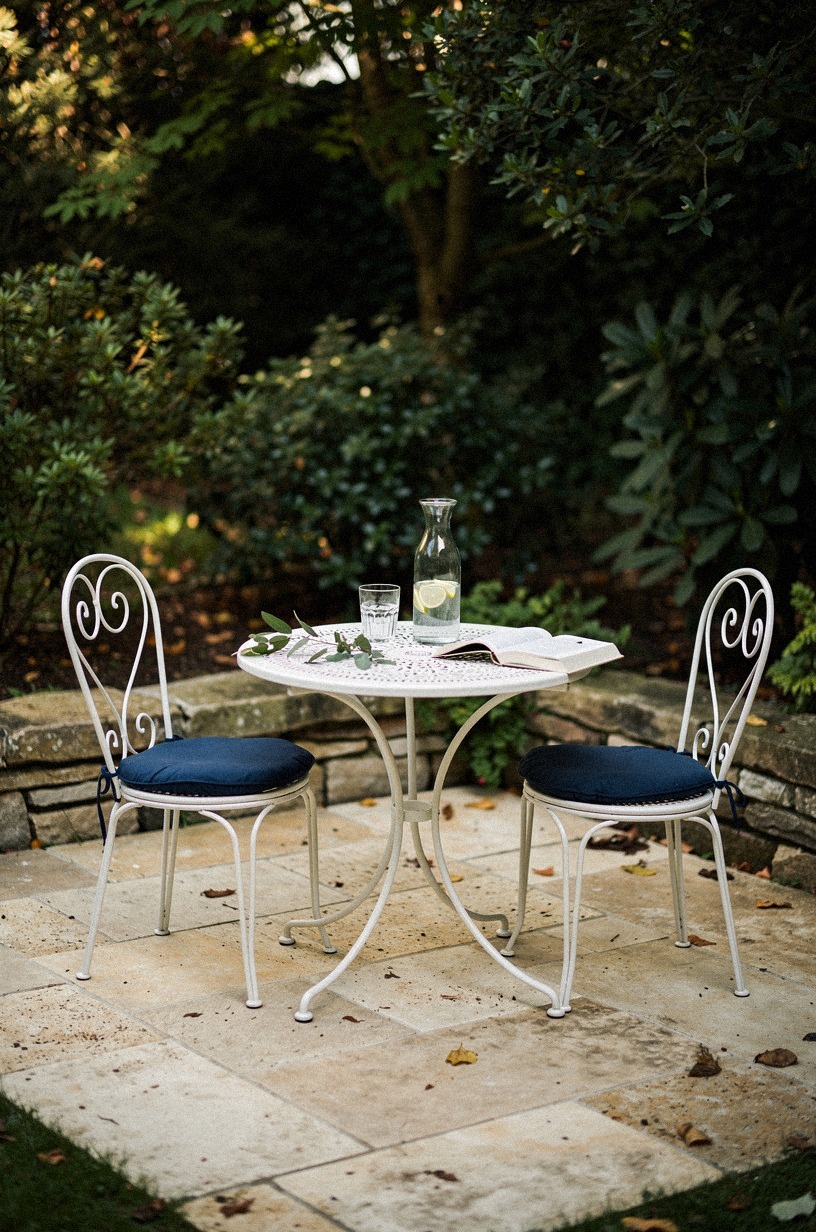
The back corner of our yard is shaded by a mature maple most of the afternoon.
5Lay a curving pea gravel path past the herb beds
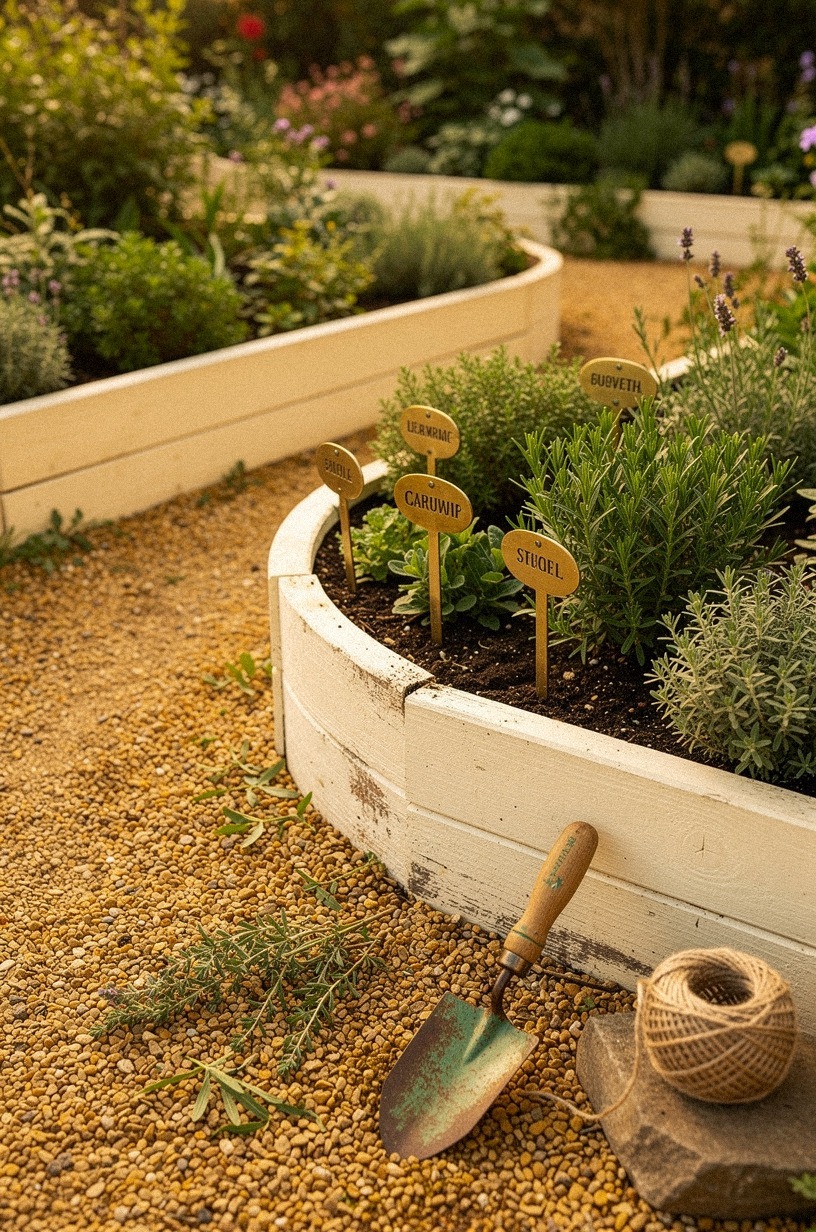
I wanted a path that felt like it had always been there, not something installed. I dug a shallow trench, about 3 inches deep, and lined it with landscape fabric. Then I filled it with gold-toned pea gravel, the kind with rounded stones that crunch softly underfoot.
The gravel cost about $90 for a cubic yard, delivered.
The path curves past raised beds I built from cream-painted cedar, about 18 inches high and 4 feet wide. Inside, I grow emerald basil, parsley, and chives.
The edging is simple 1-by-4 cedar, painted the same cream as the beds. I marked each herb with unlacquered brass garden markers that I ordered from a small maker on Etsy, about $8 each. They're already developing a soft patina from the rain.
The path doesn't lead anywhere dramatic. It just invites you to walk slowly and look at what's growing.
That's the whole point.
6Prop an old ladder against the wall for potted ivy
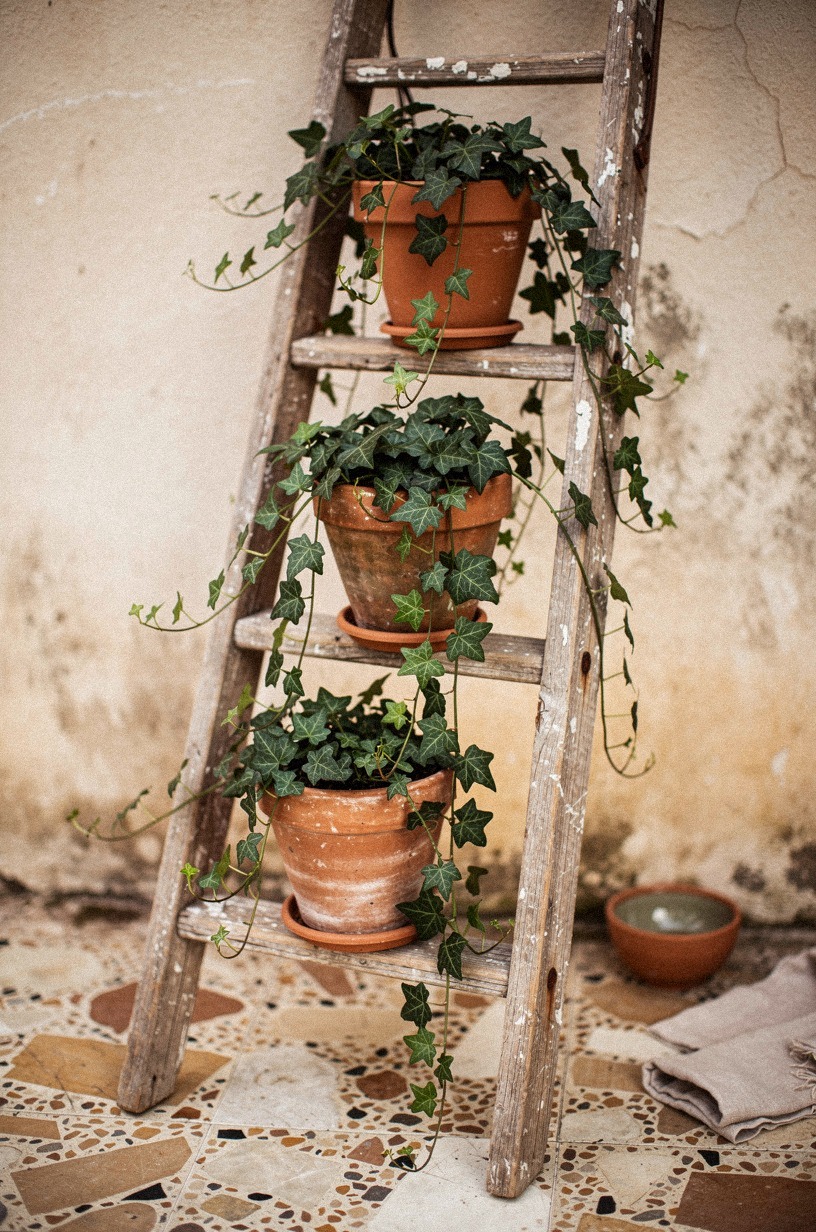
I found a wooden orchard ladder at a barn sale, the kind with wide, flat rungs and a weathered grey finish.
7Hang a galvanized bucket as a planter from the porch beam
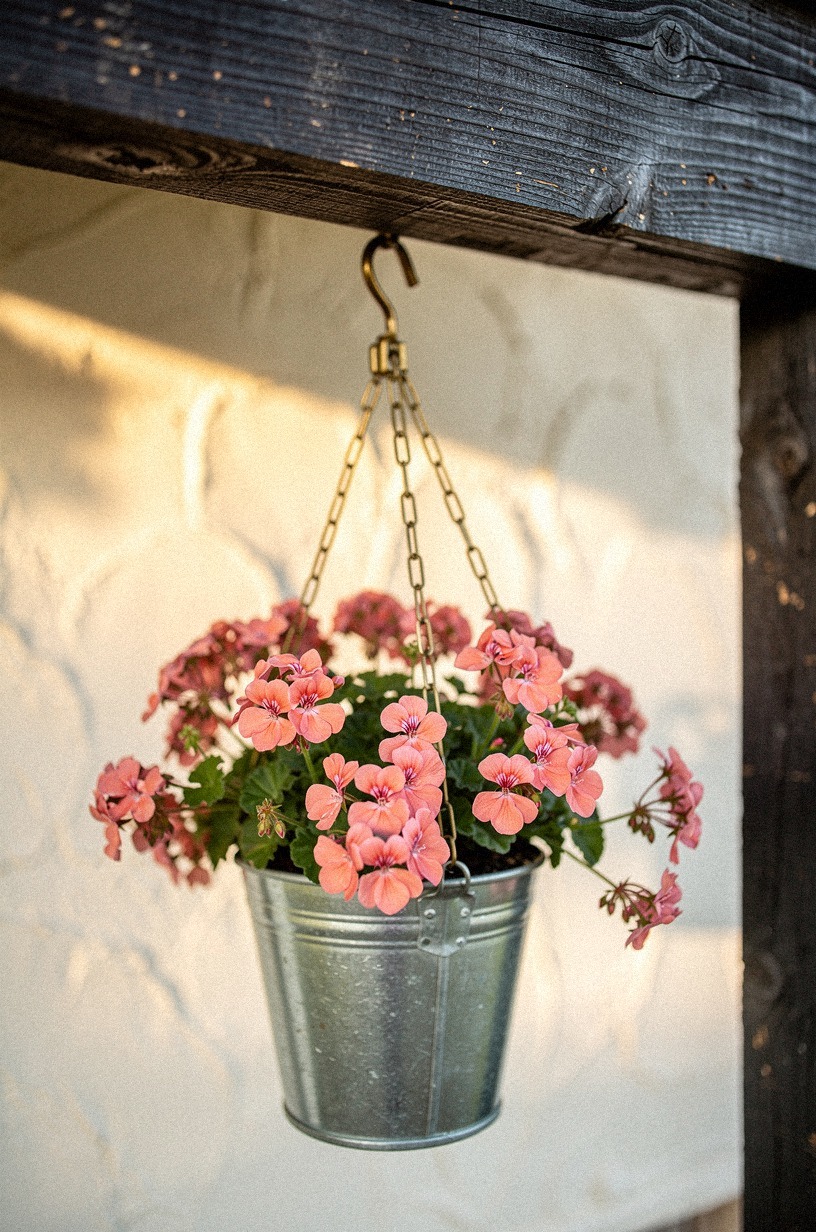
Our porch has a rough charcoal-stained beam that I left exposed when we painted the house. I hung a galvanized metal bucket from it with a brass chain I found at a hardware store, about $15 for the chain and $12 for the bucket. The bucket is planted with trailing dusty rose geraniums, the kind with soft, almost fuzzy leaves and pale pink blooms.
The galvanizing catches the afternoon light and throws it back in a way that makes the whole porch feel brighter. The geraniums trail down about 18 inches, and I trim them back when they get too long.
The chain is attached to a black iron hook screwed into the beam, rated for 50 pounds, so I'm not worried about it coming down. This is the kind of detail that costs almost nothing but makes the whole porch feel intentional. If you want more small-space porch inspiration, our cozy fenced in backyard ideas for total privacy has similar moves for vertical planting.
8The Adirondack chair in lavender: a quiet corner that outperforms the patio
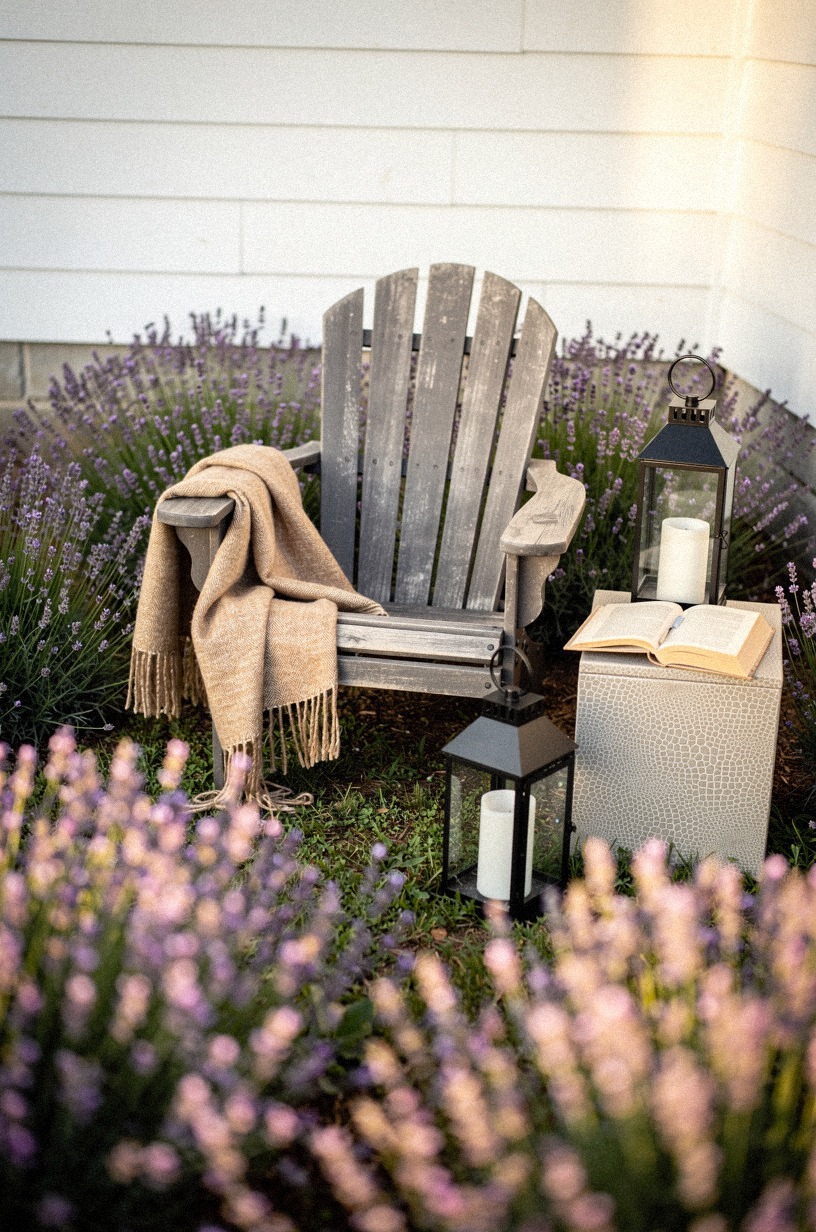
I built an Adirondack chair from a kit I found online, about $80 in cedar. I didn't paint it.
I let it weather naturally for one summer, then rubbed it with a grey wood stain to push it toward that faded, driftwood look. I placed it deep into a bed of English lavender I'd planted from 4-inch starts, about $4 each.
The chair sits against the warm white clapboard of the house, and I draped a camel-toned wool throw over one arm. The throw is from IKEA, the TILLVARA line, and it cost about $35.
Next to the chair, I placed a black iron lantern with a battery-operated candle that flickers at dusk. The lavender blooms from June to August, and when you sit in the chair, the scent rises up around you.
It's the most peaceful spot in the whole yard. The chair is slightly angled away from the house, so you look out at the garden, not the wall. That angle matters more than you'd think!
9Line the walkway with mismatched terracotta pots
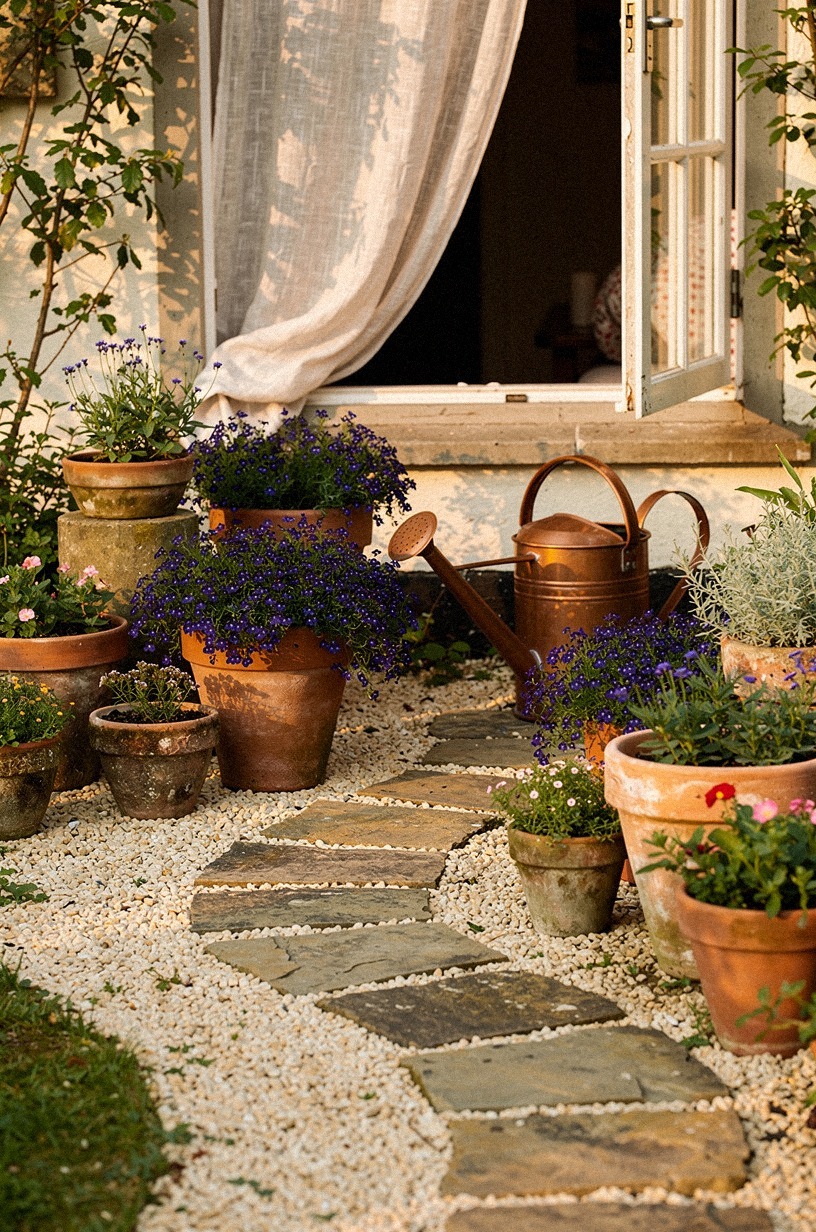
The walkway from the patio to the garden gate is about 12 feet long. I lined both sides with mismatched terracotta pots I'd collected over two years, from estate sales, garden centers, and friends who were decluttering.
Some are 6 inches tall, some 14 inches. The sizes don't match, and that's the point.
Each pot is planted with midnight blue lobelia, the trailing kind that spills over the edges like water. The pots cost between $5 and $20 each, depending on size.
I placed a copper watering can at the midpoint of the walk, the kind with a long spout and a patina that's turning green at the base. The walkway itself is ivory gravel, the same tone as the pea gravel path but finer, almost like sand.
The whole thing feels like a garden in Provence, not a suburban backyard in Ohio. And the lobelia blooms from May to October with almost no care.
If you're into cottage aesthetics throughout your home, our 25 charming cottage kitchen ideas to inspire you uses the same collected-over-time philosophy indoors.
10Stretch a faded striped hammock between two apple trees
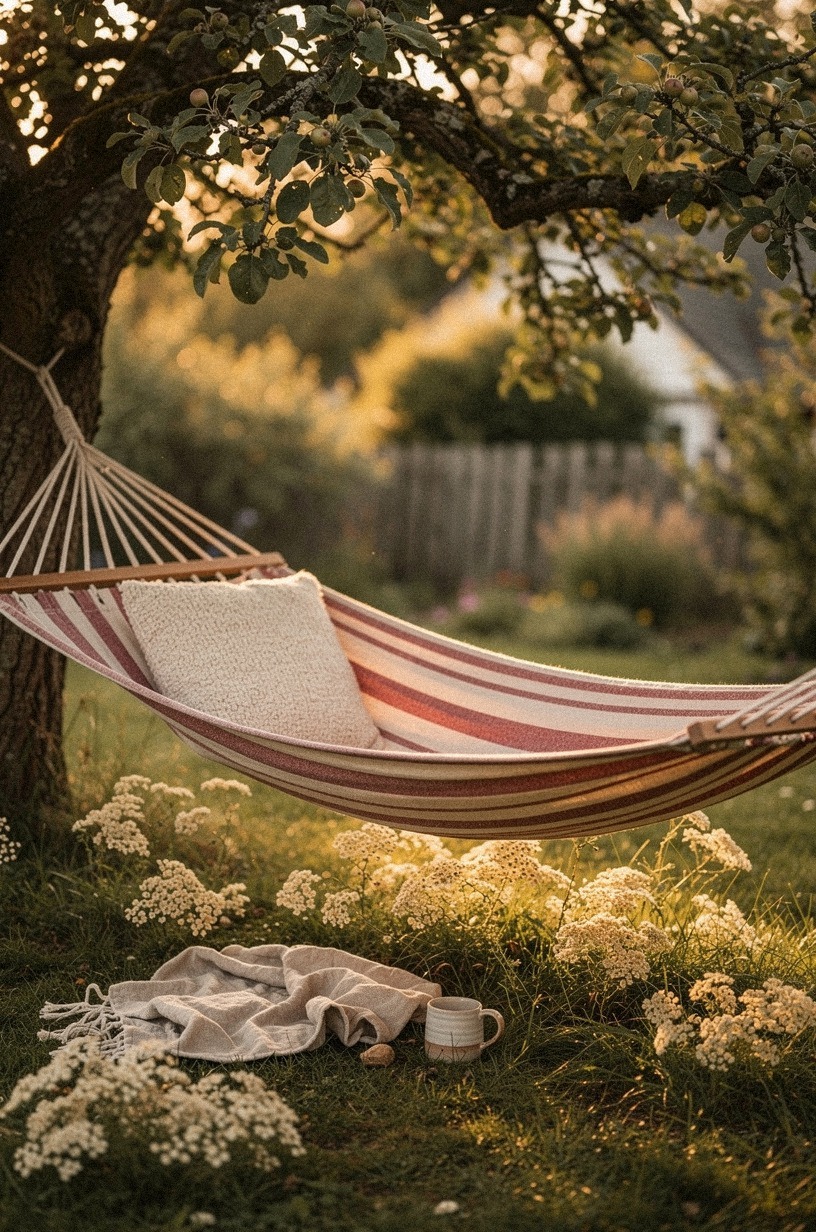
We have two old Granny Smith apple trees at the back of the yard, planted by the previous owners. They're gnarled and not very productive, but they're strong. I stretched a red-and-cream striped cotton hammock between them, the kind with a wooden spreader bar at each end.
The hammock was $65 from a Target Threshold summer collection, and I replaced the original ropes with hemp cord rated for 300 pounds.
The stripes are faded now, almost pink in places, and the cotton has softened to something that feels like linen. Beneath it, I let wildflowers seed, cream yarrow and white clover, so the ground is soft if you step out.
I added an organic bouclé throw pillow in sage green, about $40 from Article, for neck support. The hammock is where I nap on Sunday afternoons. The apple leaves dapple the light, and the whole thing sways just enough to feel like you're on a porch swing, but slower.
If you have a larger yard and want to make it feel intimate, our how to make a large backyard feel cozy not empty guide has the layout principles I used.
11Farrow & Ball Green Smoke on the garden gate: worth the splurge
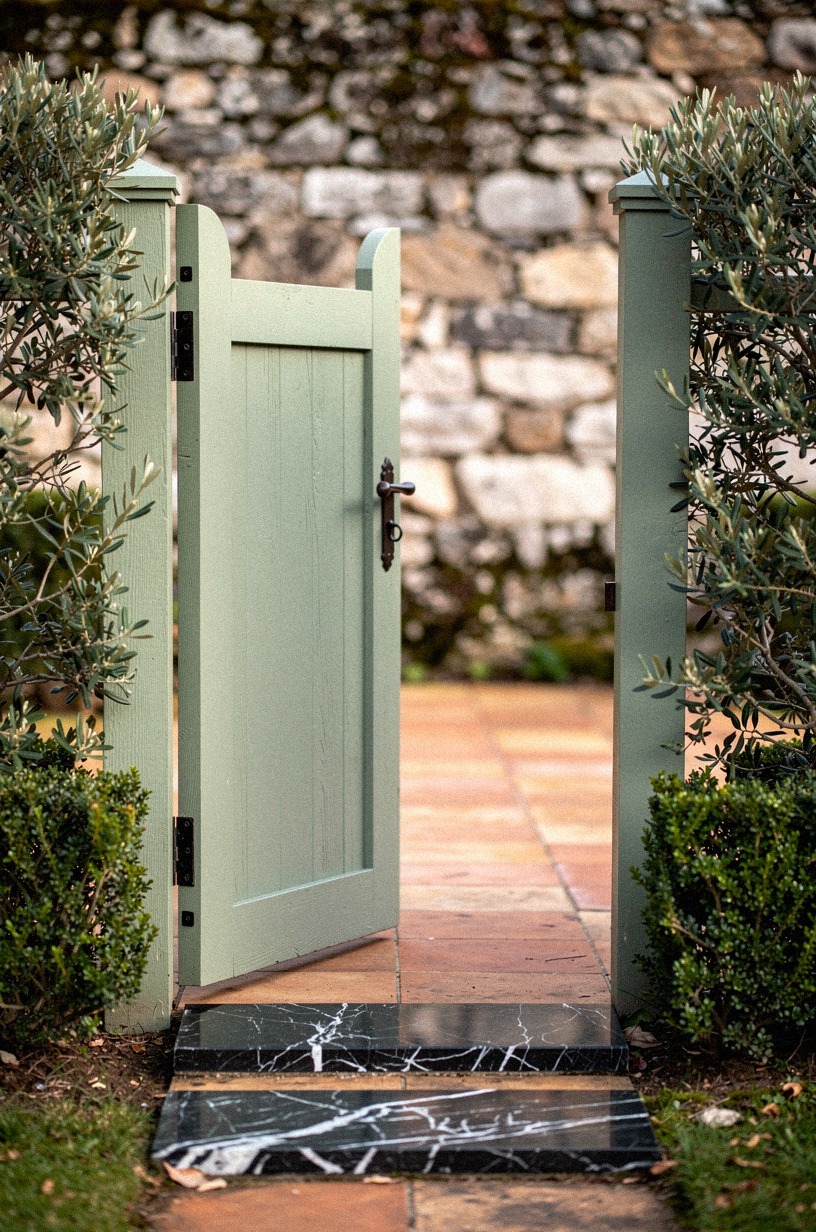
The garden gate was pressure-treated pine, greenish from the factory treatment, and it looked like a hardware store mistake.
12Stack weathered bricks for a low fire pit circle
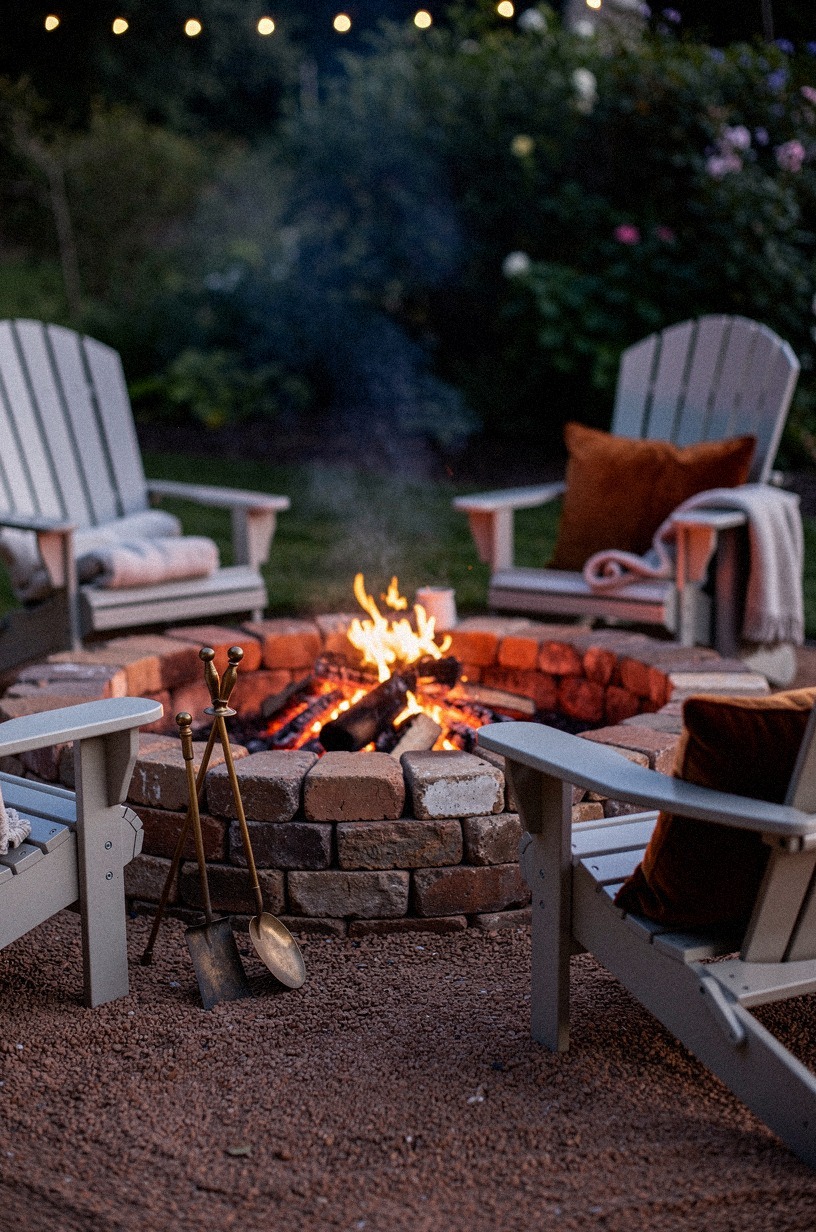
I wanted a fire pit, but I didn't want a metal bowl on legs. I found reclaimed Chicago common bricks at a salvage yard, the kind with soft, rounded edges from a century of freeze-thaw.
They cost about $0.75 each, and I needed 48 for a 4-foot circle. The total was $36.
I laid them dry, no mortar, in a circle two bricks wide. The center is filled with clay-toned gravel that matches the path. Around it, I placed linen-colored Adirondack chairs that I built from the same kit as the first one, painted with a white wash instead of grey.
The fire tools are aged brass, a set I found at an estate sale for $20. The first fire we lit was in October, and we sat out until midnight, wrapped in blankets, watching the embers. The bricks hold heat after the fire dies, so the circle stays warm for an hour.
It's the most used "room" in our yard from October to April. For more gathering spaces, our 20 tablescapes that made me want to host an outdoor dinner party this spring has the entertaining angle covered.
13Place a galvanized trough near the door for rainwater
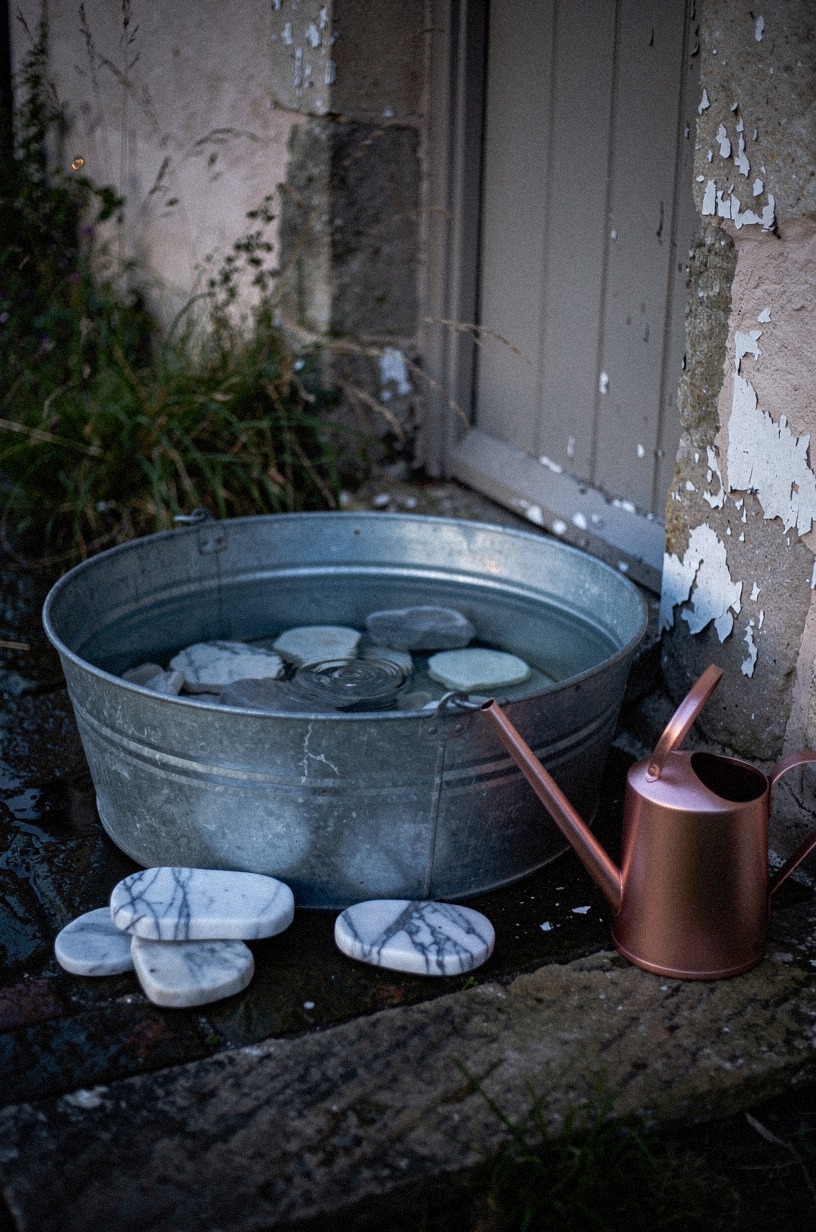
I found a galvanized metal trough at a farm supply store, the kind meant for livestock water. It was $45 for a 3-foot length. I placed it near the back door, where the roof overhang drips during rain.
The trough fills naturally, and I use the water for the potted plants.
Inside the trough, I placed Carrara marble splash stones with subtle grey veining, remnants from a bathroom project, about $30 worth. They keep the water from looking like a stock tank and make it feel like a designed water feature.
The trough reflects the plum-grey dusk sky on summer evenings, and the sound of rain hitting the metal is better than any white noise app. I empty it before frost and store it in the garage, but from April to October, it's the first thing I see when I step out the door.
If you're into practical garden setups, our how to build a cozy backyard chicken setup that looks cute has similar farm-to-garden aesthetic ideas.
14Weave a willow branch trellis over the stone patio
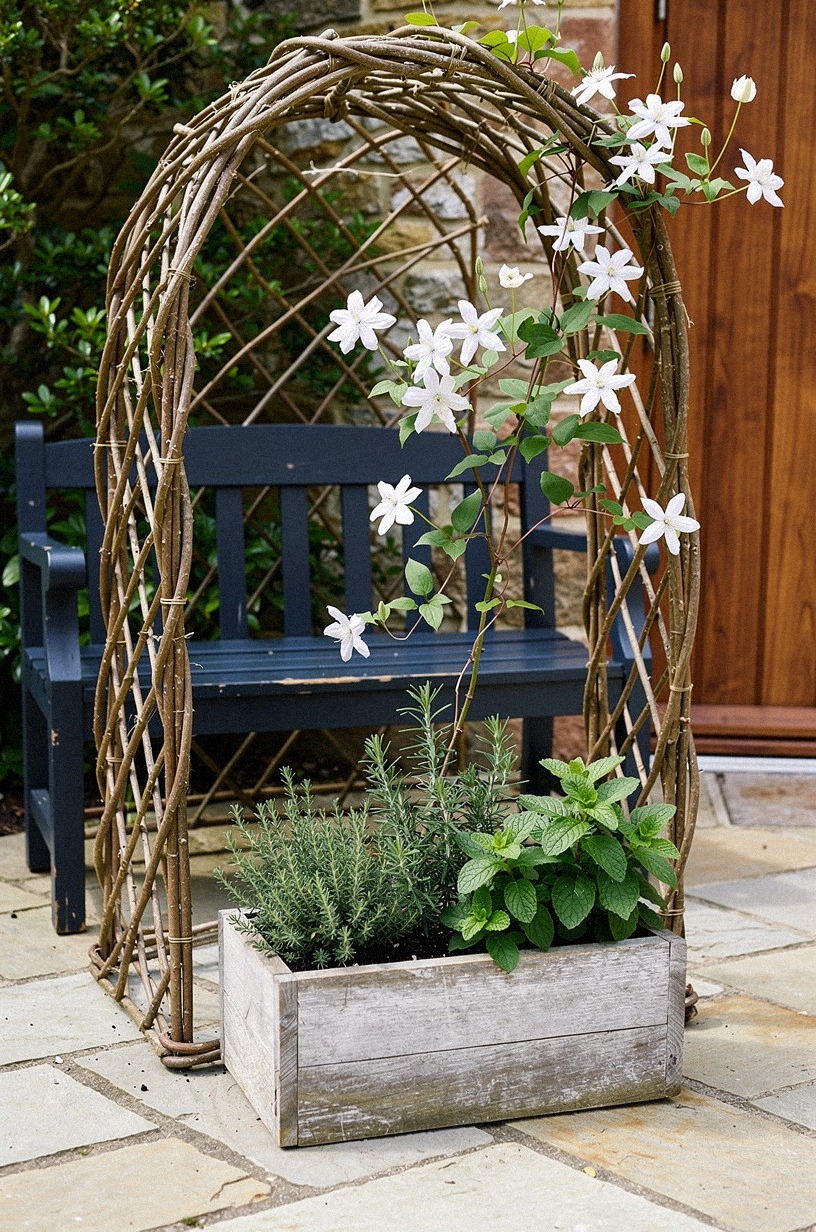
I wanted shade over the patio without a permanent structure.
15Scatter wildflower seeds along the back border for effortless color
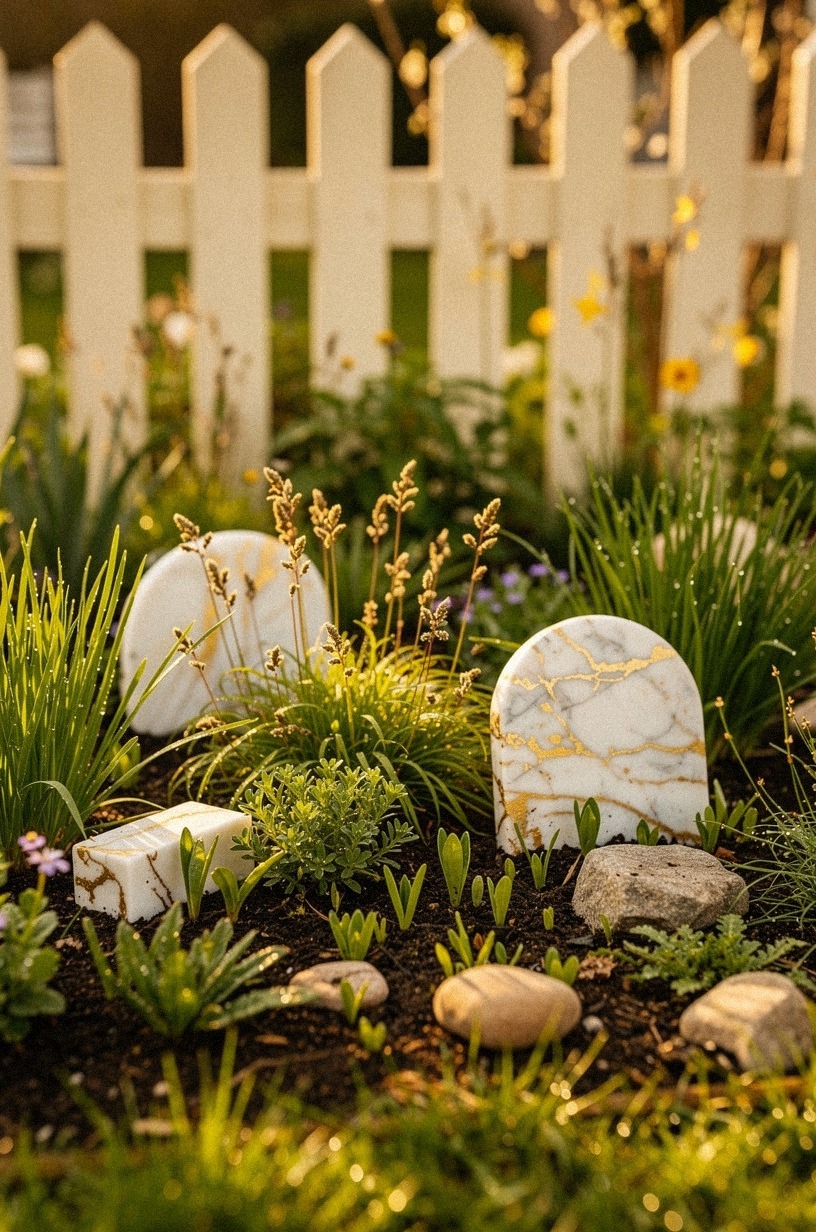
The back border of our yard was a strip of grass that never grew well because of shade from the neighbor's maple. I stopped fighting it. In late fall, I scattered a mixed wildflower seed blend designed for partial shade, about $15 from a local nursery.
The mix included cream yarrow, white clover, purple aster, and gold-tipped rudbeckia.
By June, the strip was a meadow. The seed heads catch the morning light, and the cream-painted picket edging I added keeps it from looking overgrown. The edging is 4-inch cedar, painted to match the herb beds, and it cost about $60 in materials. I mow a 2-foot path through the middle of the meadow so you can walk through it.
The bees love it. The butterflies love it. And I love that it's the lowest-maintenance part of the whole yard.
I don't water it, I don't fertilize it, and it comes back thicker every year. Zero effort, maximum payoff!
If privacy is your priority, our 15 cozy private backyard ideas to block out the neighbors has border solutions that look natural.
How much it cost
I kept a running list because I wanted to know if the transformation was worth the money. Here's the honest breakdown:
That's $2,847 spread over four years, or about $60 a month if you think of it that way. The most expensive single item was the patio stone.
The cheapest was the willow whips. Everything else was under $200.
I did all the labor myself, which saved thousands. If I'd hired contractors, the patio alone would have been $3,000. The fire pit would have been $1,500.
The lesson is: do what you can yourself, and spend on materials that age well.
The Cottage Backyard Philosophy: Why Layered Beats Finished
I used to think a backyard was something you designed once and then lived with. Pick the furniture, plant the beds, done. That's the approach that gave me the dead hydrangea and the rusted grill.
The real shift came when I stopped treating the yard like a room to decorate and started treating it like a garden to grow into.
A cottage backyard isn't finished. It's accumulated.
The ladder with ivy wasn't planned. I saw the ladder at a barn sale and thought, "That looks like it belongs in a garden." The willow arch wasn't designed.
I planted the whips on a whim and bent them because I was curious. The best parts of our yard are the ones that happened slowly, with mistakes and dead ends and things that didn't work.
I killed the first lavender. I planted it in clay soil without amending, and it rotted. The second batch went into raised beds with gritty compost, and now it's a hedge.
I bought the wrong hammock the first time, a synthetic one that felt like a pool float. The cotton one faded and softened into something real. The first climbing rose was a failure too.
I planted it in full shade and wondered why it didn't bloom. The second one went against the fence where it gets six hours of sun, and now it's the star of the yard.
The philosophy is this: a cottage backyard should feel like it was found, not installed. The materials should age. The plants should self-seed.
The furniture should weather. If everything looks new, it feels like a showroom.
If everything looks slightly worn, it feels like a story. And the story is what makes people want to stay.
I also learned that the small details carry more weight than the big ones. The $8 brass garden marker matters more than the $400 patio. The $12 iron latch on the gate matters more than the $90 paint.
These are the things you touch, the things that patina, the things that prove someone was paying attention. A backyard without these details is just a yard.
A backyard with them is a cottage.
The other lesson? Start before you're ready. I didn't know how to lay stone.
I watched three YouTube videos and made mistakes. The first few bricks in the fire pit are crooked.
The pea gravel path is slightly too narrow in one spot. The hammock hangs a little lower on one side. These imperfections are the evidence that a person did this, not a crew. And that evidence is what makes the space feel warm.
What People Always Want to Know
What is the best cozy cottage backyard idea for a small backyard?
The pea gravel path with raised herb beds is the best small-space move. It adds structure without taking up room, and the vertical beds give you planting space without a lawn.
If you're tight on square footage, skip the fire pit and focus on the hammock or the bistro table. Both create a destination without requiring much ground area.
Our 23 cozy small backyard ideas that feel bigger than they are has more layouts for tight spaces.
Where can I buy cozy cottage backyard pieces on a budget?
IKEA has the TILLVARA throws and simple outdoor furniture that weather well. Target Threshold does seasonal outdoor collections with cottage-friendly colors.
Wayfair has a huge range of galvanized planters and wrought iron sets. But the real budget tip is Facebook Marketplace and estate sales. Most of my best pieces, the walnut table, the orchard ladder, the brass tools, came from people clearing out old stuff.
The cottage look is literally built on things that look old. If you want more budget inspiration, our 25 tiny cottage kitchens that feel like a magazine spread has the same thrifted approach indoors.
How much does a cozy cottage backyard makeover cost?
A basic refresh with paint, plants, string lights, and thrifted furniture runs about $200 to $900. A mid-range redo with a patio set, outdoor rug, and new lighting lands around $1,500 to $6,000. A full outdoor kitchen, pergola, and professional paving starts near $10,000 and climbs.
My total was $2,847 over four years, doing all labor myself. Start at the bottom.
You'll be surprised how far it goes!
Can I create a cozy cottage backyard on a budget?
Yes, and the free moves are the most important ones. Scatter wildflower seeds in a border.
Prop a found ladder against a wall. Hang a galvanized bucket from a beam. Paint a gate with a single quart of good paint.
These four things cost under $100 total and transform the feel of the whole yard. The cottage aesthetic is about layering, not buying.
If you want more no-spend ideas, our 15 cozy private backyard ideas to block out the neighbors has privacy-focused moves that cost almost nothing.
Is a cozy cottage backyard worth it in a small space?
Worth it. The cottage style actually works better in small spaces because it's dense and layered.
A large yard can feel empty with cottage pieces. A small yard feels like a detail garden. The key is vertical elements, the ladder, the climbing rose, the willow arch, that draw the eye up and make the space feel larger.
A 9-by-12-foot patio with the right furniture and lighting feels like a room. A 20-by-20-foot patio with the same setup feels like a stage set.
Is a cozy cottage backyard a good idea for a rental?
Yes, with swaps that don't damage anything. Use peel-and-stick wallpaper on a fence for pattern. Hang lights with command hooks rated for outdoor use.
Use tension rods between posts for hanging planters. Place furniture instead of installing it.
The galvanized bucket planter and old ladder are perfect for rentals because they move with you. Skip the painted gate and the fire pit unless you have permission.
Our cozy backyard play area ideas kids adults both love has more no-damage outdoor setups.
Where I'd Start First
If I had to pick one, I'd start with the weathered stone patio and the cerused oak bench. You can't layer warmth on top of a cold surface.
Everything else, the lights, the plants, the furniture, needs a ground that feels grounded. The stone gives you that. Pin the bench idea for later and build from the ground up.
Everything else lands.