
 by
by Our #1 Recommended Mattress
Saatva Classic. From $1,095
365-night trial · Lifetime warranty · Free white-glove delivery
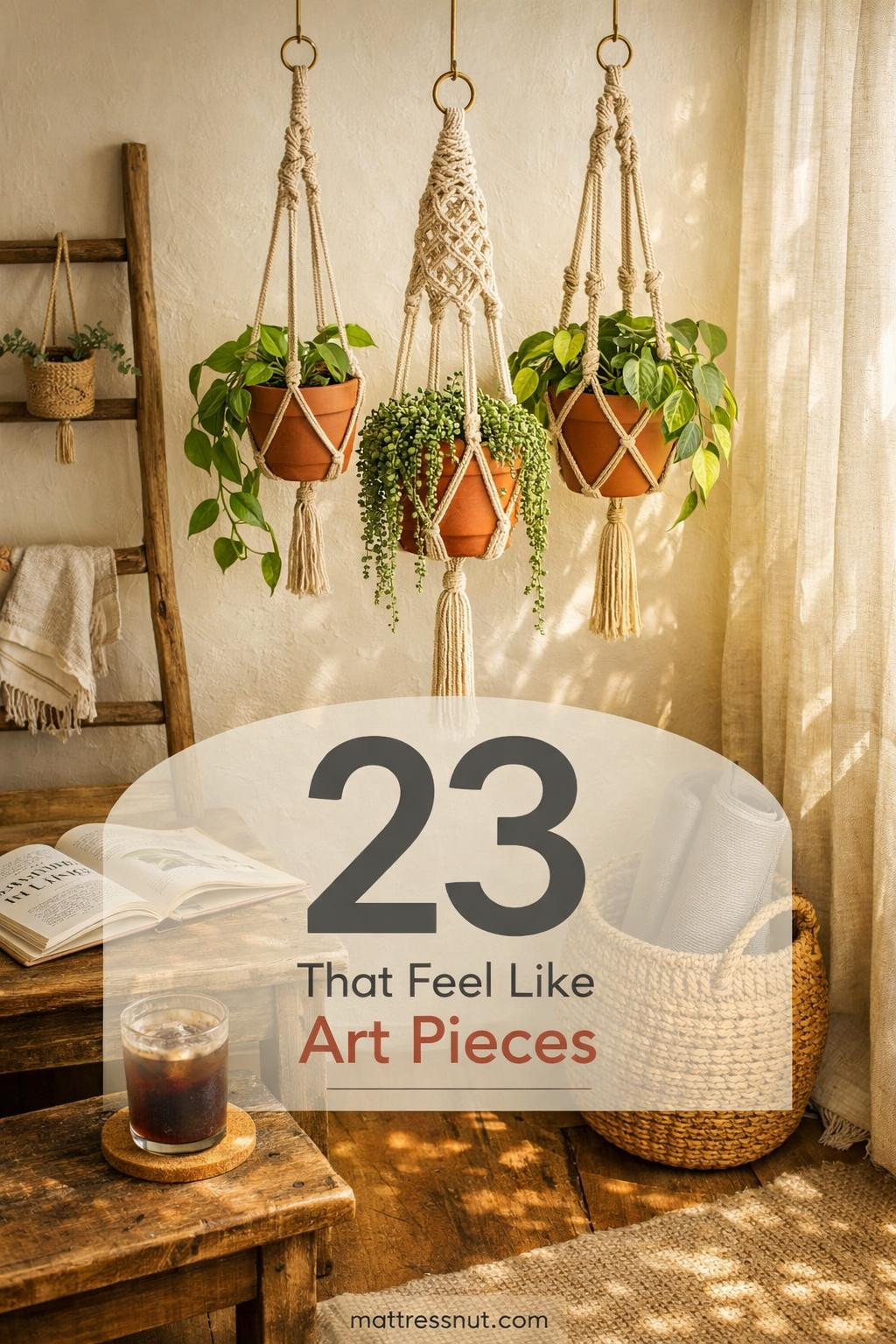
Macrame plant hangers are having a moment that honestly isn't going anywhere. The handmade texture, the way they make a room feel intentional without trying too hard - there's a reason I see them in every design I'm drawn to lately.
Windowsill Herbs Meet Copenhagen Light
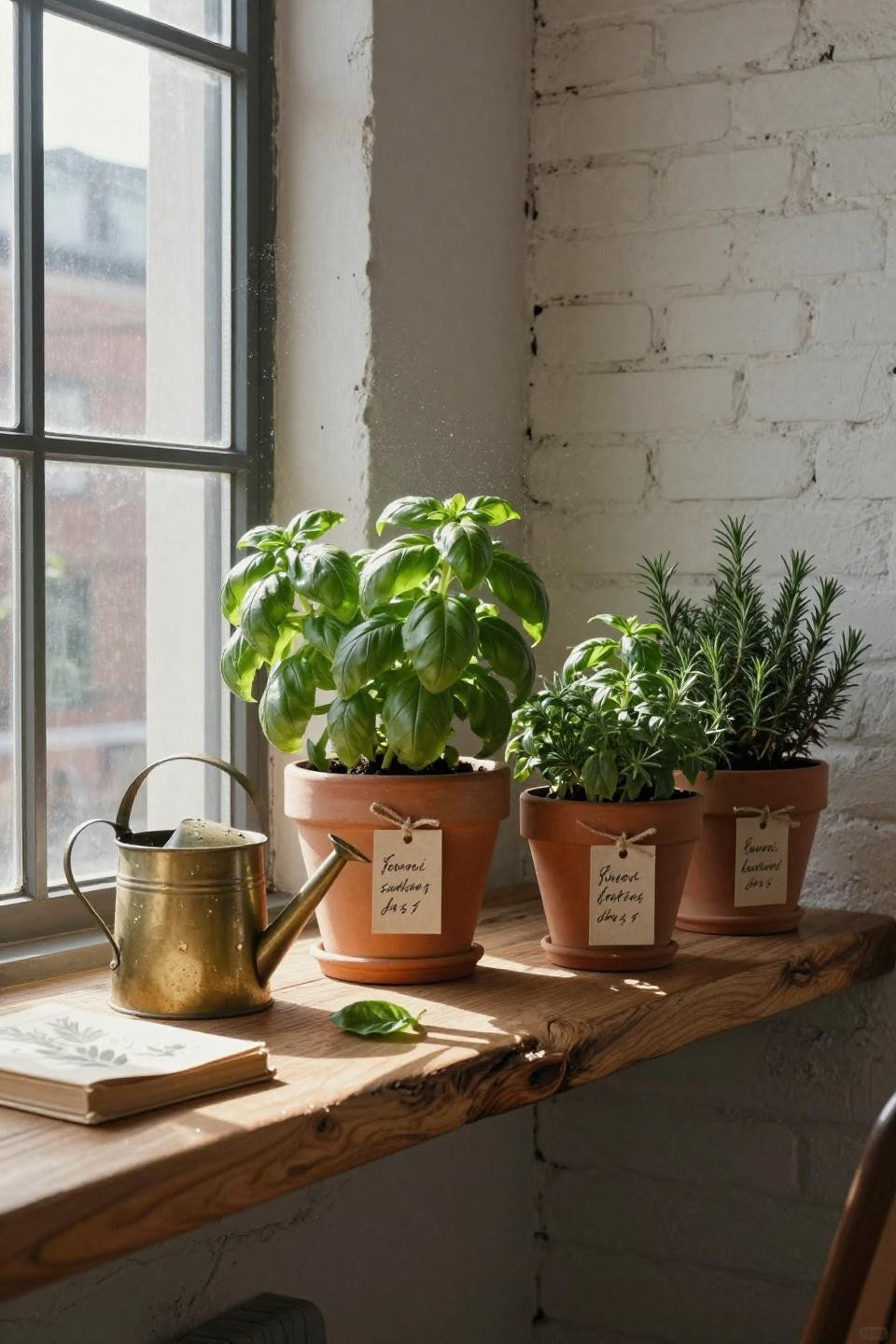
Morning light through industrial windows transforms this herb setup. Three terracotta pots sit on honey oak with that perfect raw edge. The basil leaves glow when backlit - that's the move. Brass watering can adds warmth without being obvious. Works because the setup feels collected over time, not staged in one trip to the garden center.
French Iron Plant Stand Catches Afternoon Rays
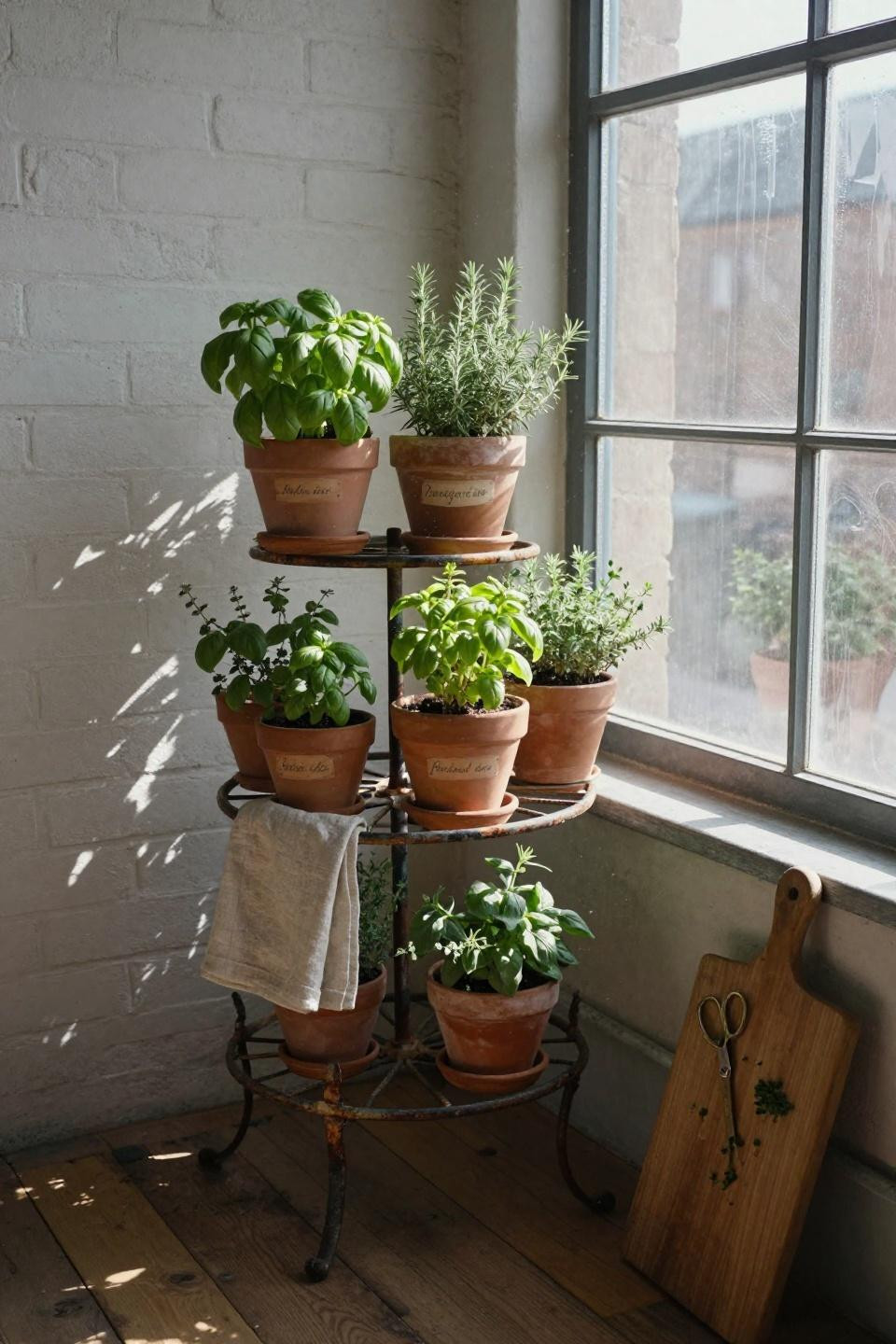
That three-tier wrought iron stand. Been eyeing versions at World Market but honestly, the vintage ones have better patina. The way afternoon light hits those hand-painted botanical labels - chef's kiss. Thyme cascading over the edge is doing all the work here. The tea towel draped casually makes it feel lived-in, which is the whole point.
Breakfast Nook Gets the Macrame Treatment
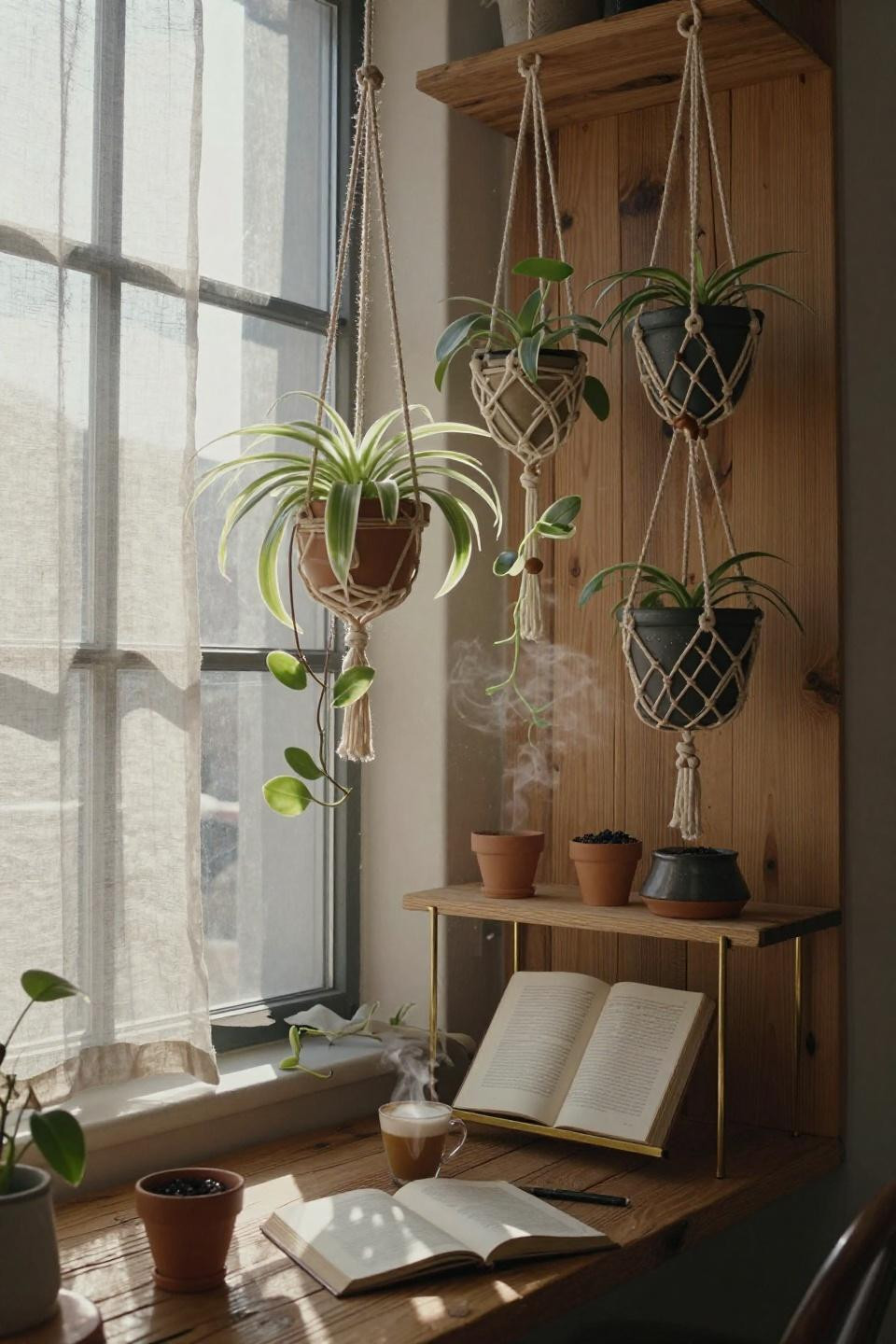
Spider plant babies everywhere. The square-knot patterns on this natural jute hanger catch afternoon side-lighting in a way that makes the whole corner glow. Charcoal ceramic pot grounds it. Plus the propagation vessels on the brass étagère below - this is what botanically selected actually looks like. That half-drunk cappuccino? Real life, not styling.
Snake Plants on Graduated Macrame Lengths
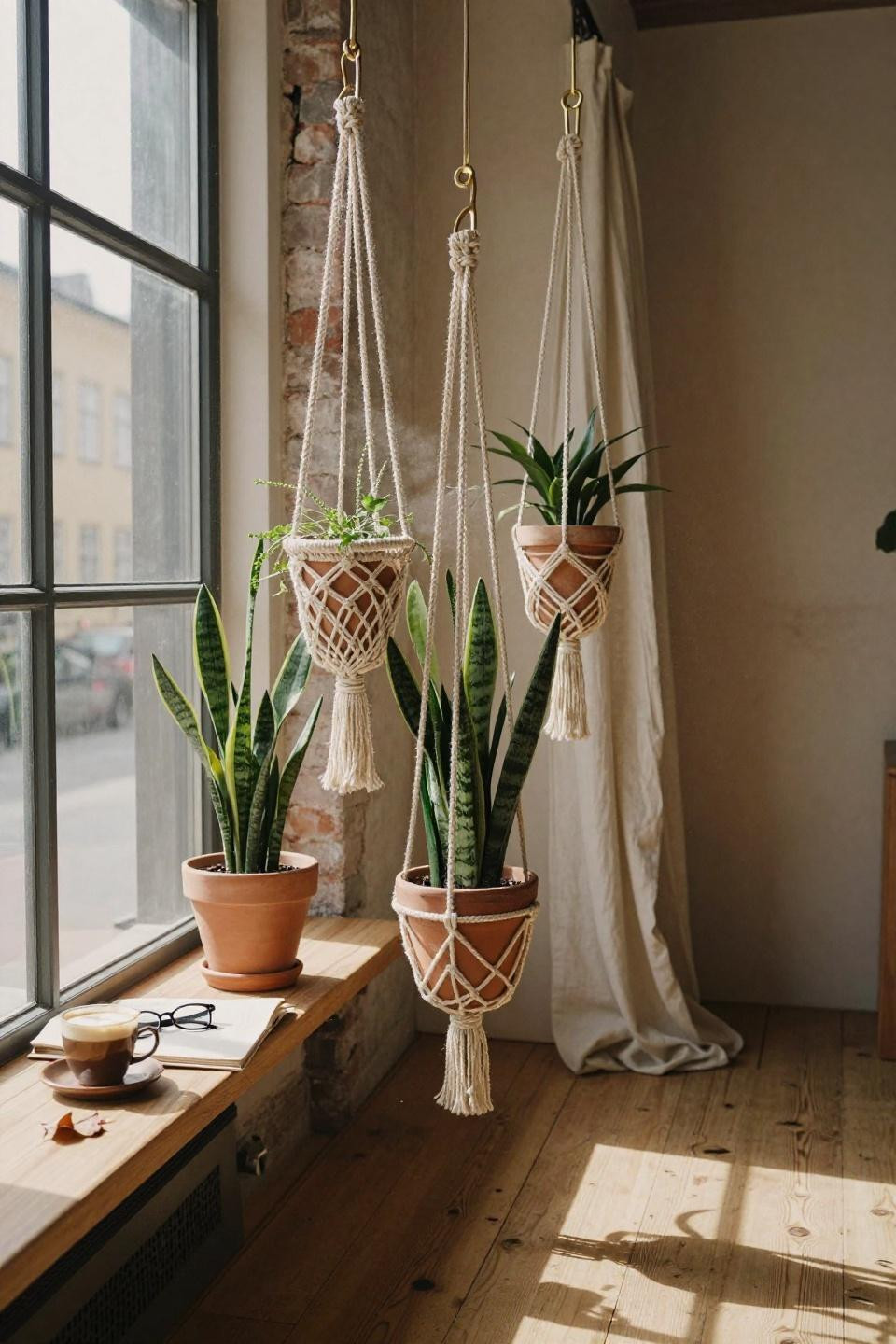
Three lengths, three plants, perfect asymmetry. The spiral knotwork casts these incredible lace shadows on white brick when morning light hits. Unlacquered brass hooks age beautifully over time - don't polish them. Snake plants are the MVP here because they tolerate the variable light by those tall windows. One dried leaf on the sill keeps it honest.
Air Plants in Geometric Brass Holders
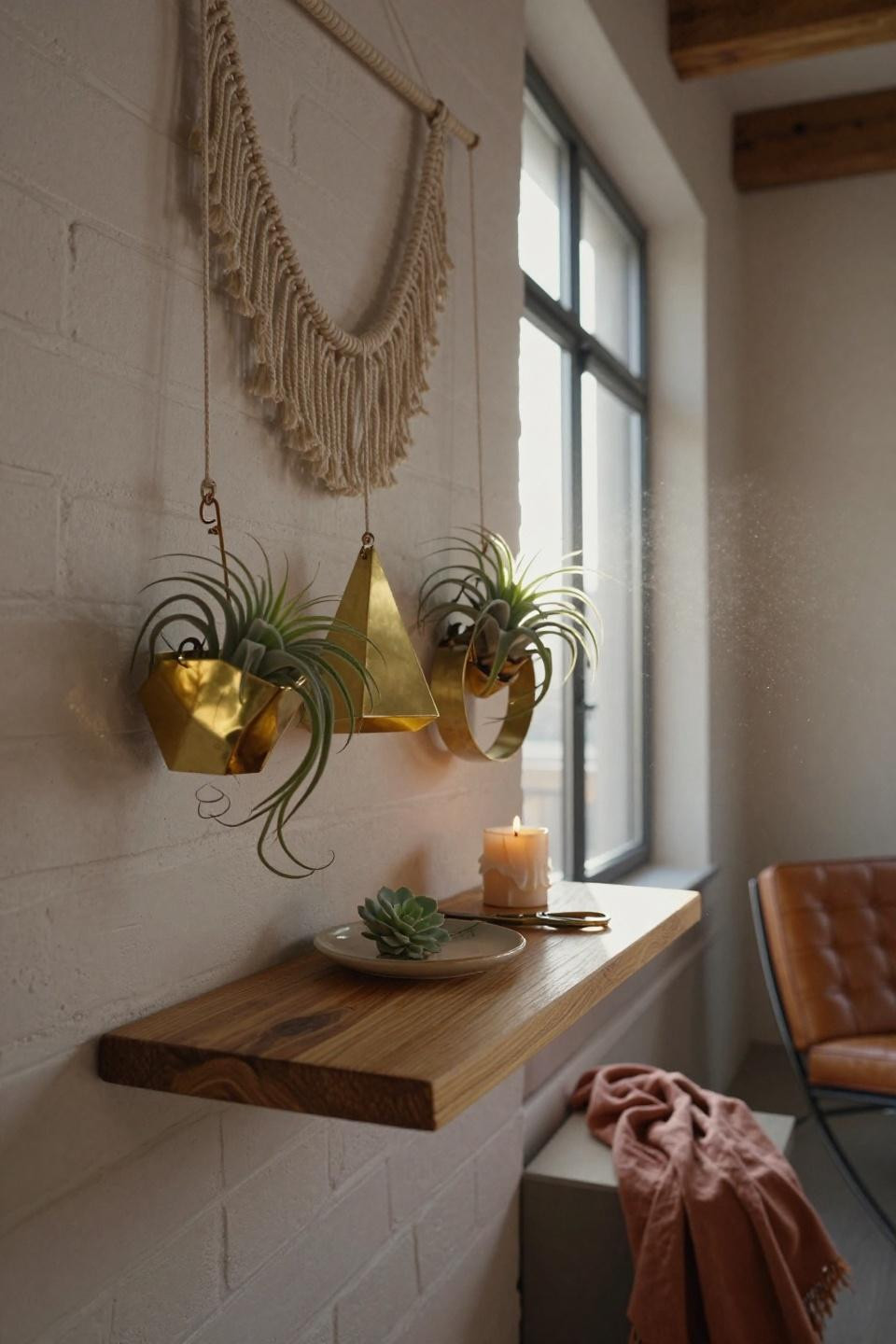
Okay but the brass holders. Hexagonal, triangular, circular - hand-forged with that natural patina and verdigris blooms. Tillandsia xerographica looks sculptural without trying. The single strand of cotton macrame draped behind adds softness against all that metal. This setup works in small spaces because air plants don't need pots taking up real estate on the shelf.
Prayer Plant in Celadon on Walnut Stand
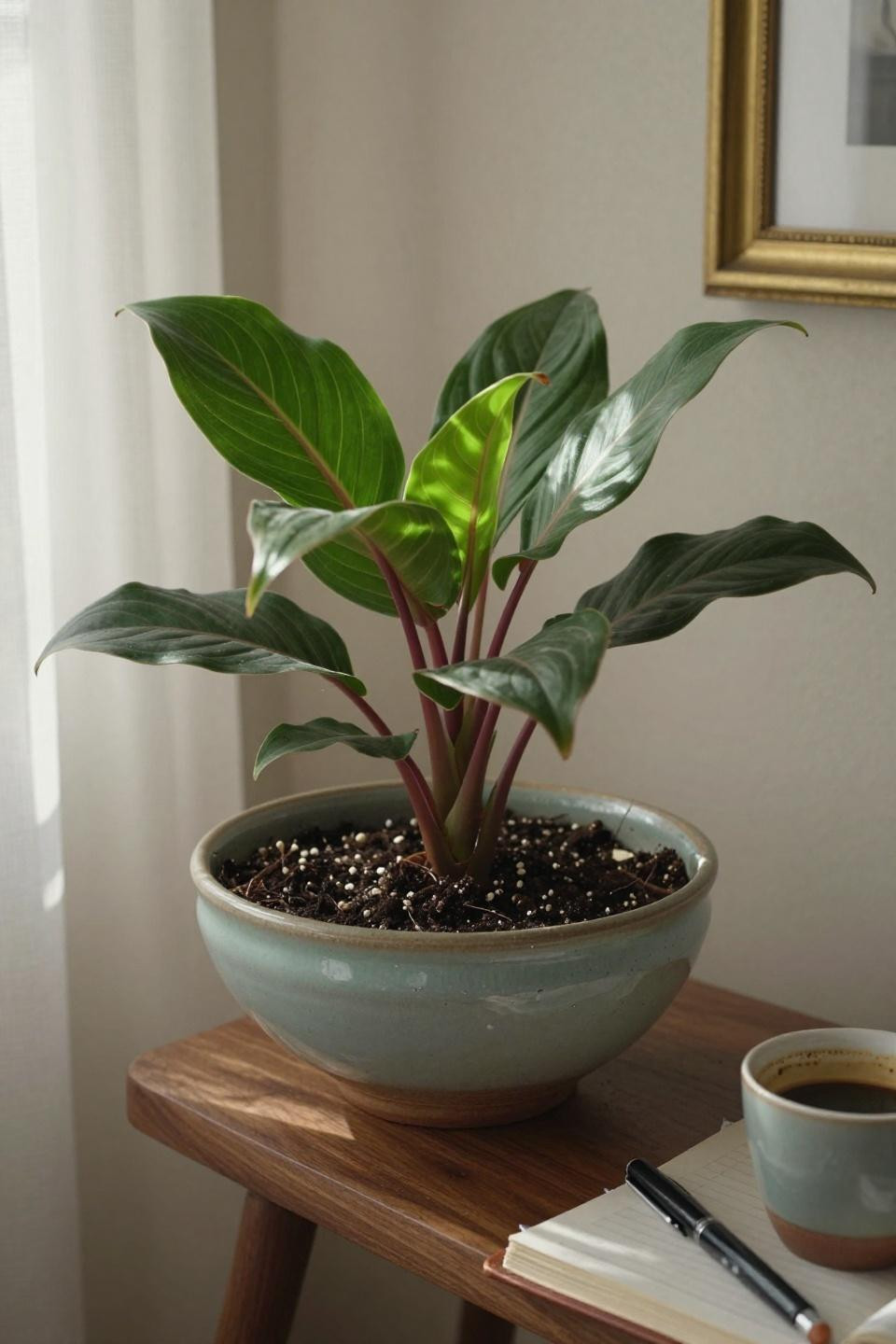
Maranta in that celadon glaze. The finger marks in the clay, the slightly asymmetric bowl - that's what makes it. Mid-century walnut stand improves it (literally) so those burgundy leaf undersides catch light. Been using this exact setup for months and the compliments haven't stopped. The prayer position at dusk is honestly worth it alone.
Boston Fern Meets Vintage Brass Patina
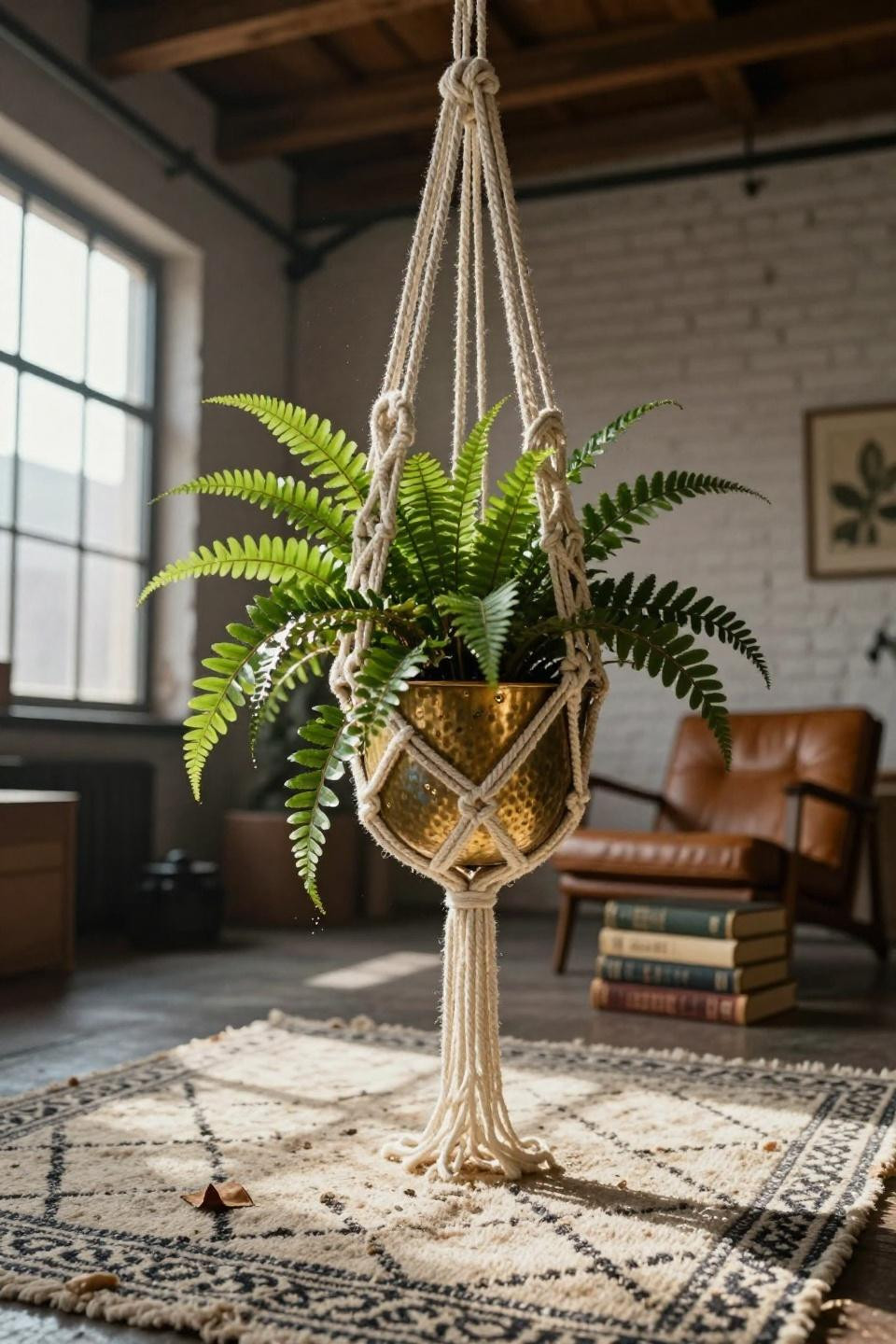
That hammered brass planter with water droplets still on it. The verdigris accents developed naturally over time - you can't fake that depth. Diamond knotwork in cream cotton creates these shadow patterns on the wall that change throughout the day. Fern frond curling imperfectly downward? That's real growth, not florist styling. Pair it with a Beni Ourain rug for maximum texture contrast.
Monstera Gets the Jute Rope Treatment
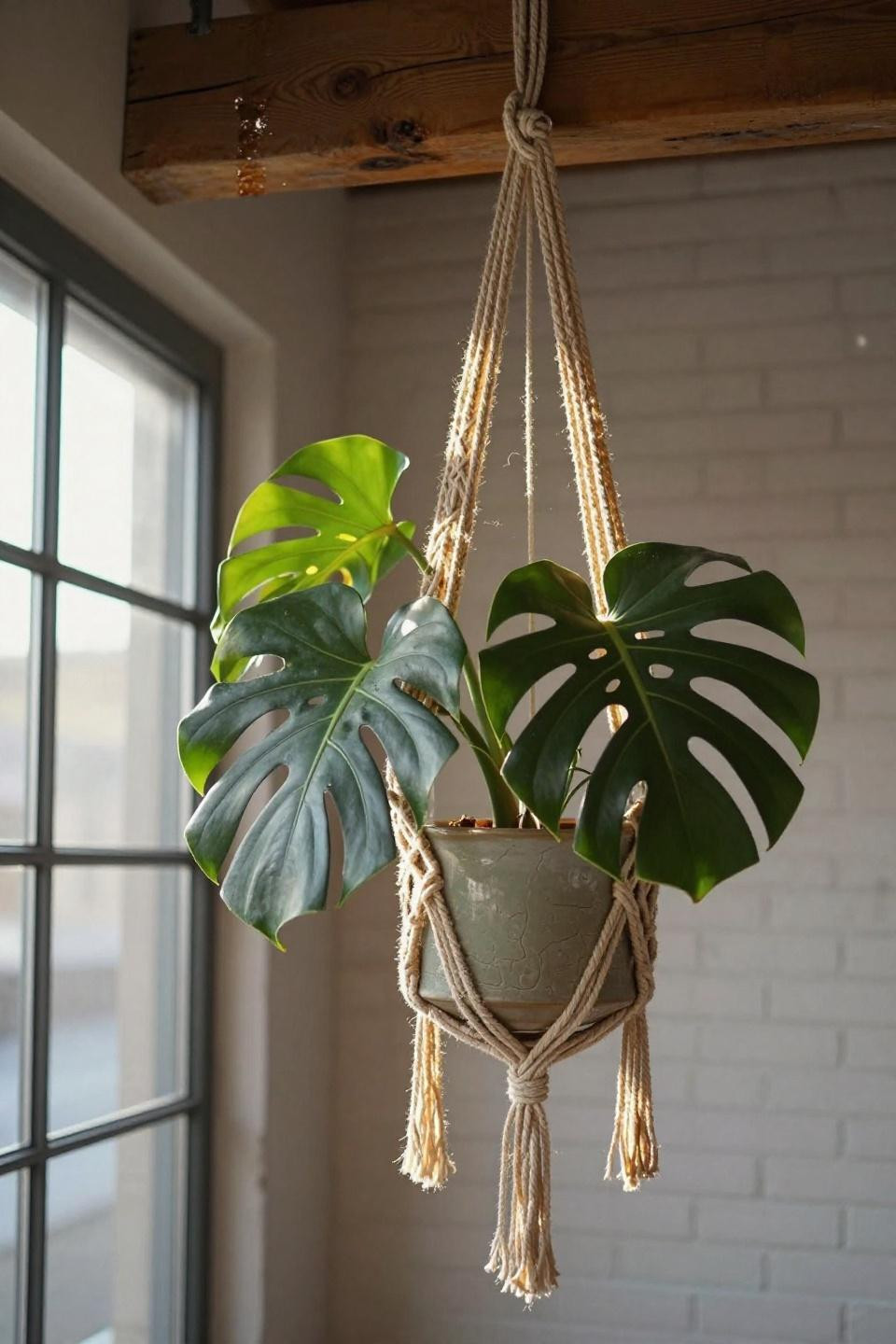
Thick jute rope shows every fiber in afternoon side-lighting. The geometric diamond patterns plus long cascading fringe - this is what proper macrame looks like, not the thin stuff everyone defaults to. Monstera's fenestrated leaves cast incredible shadows. Matte sage ceramic keeps it grounded. One loose knot at the bottom adds that handmade irregularity that signals "I actually made this."
Prayer Plant Shadows on Oak Beams
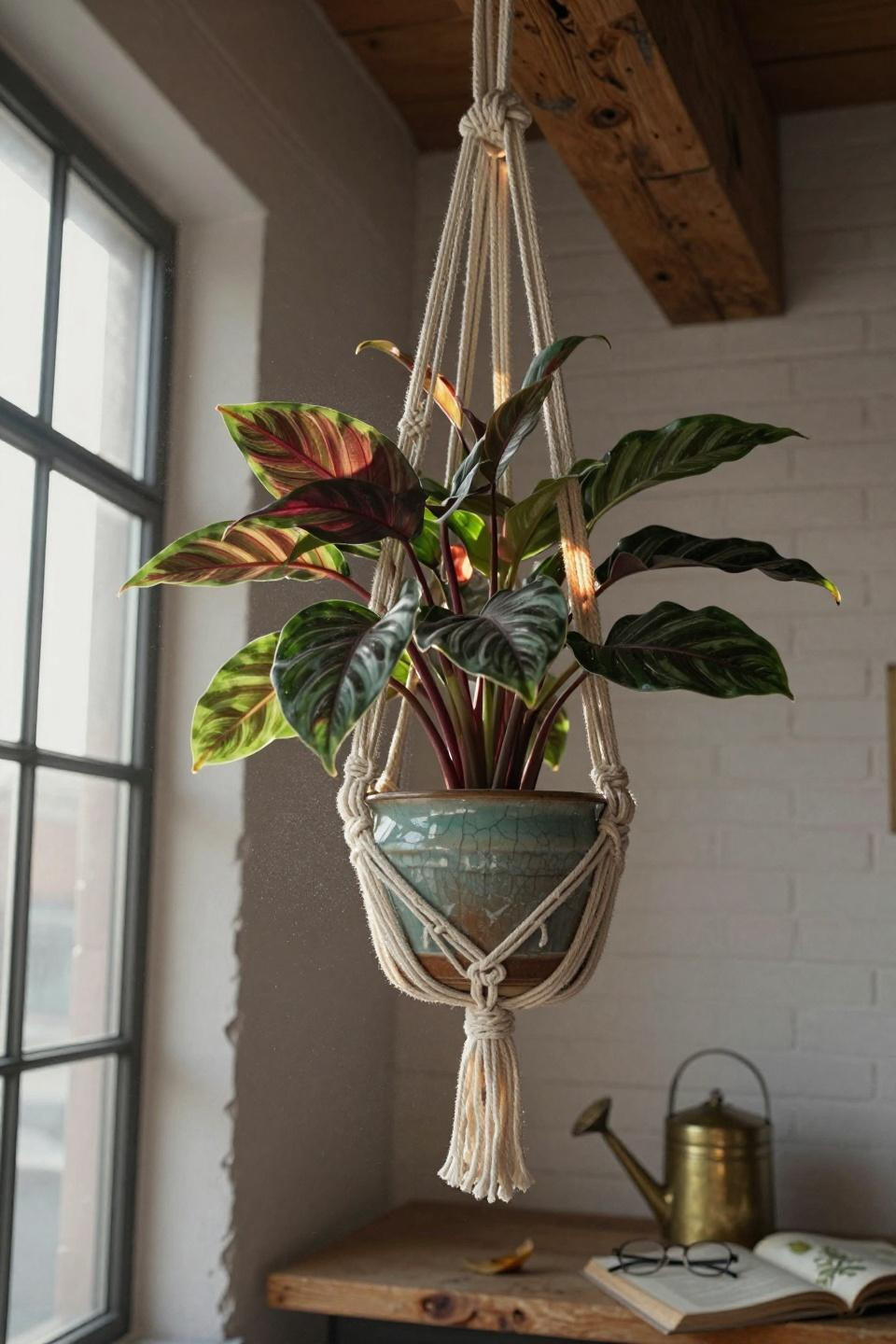
Natural cotton with intricate diamond knotwork. The prayer plant's burgundy undersides glow when backlit - that subsurface scattering is doing the work. Celadon glaze with crackling adds age. Vintage brass watering can on the reclaimed wood shelf below ties it together. This setup gets asked about every single time someone walks in.
Cactus Collection on Blackened Steel Tiers
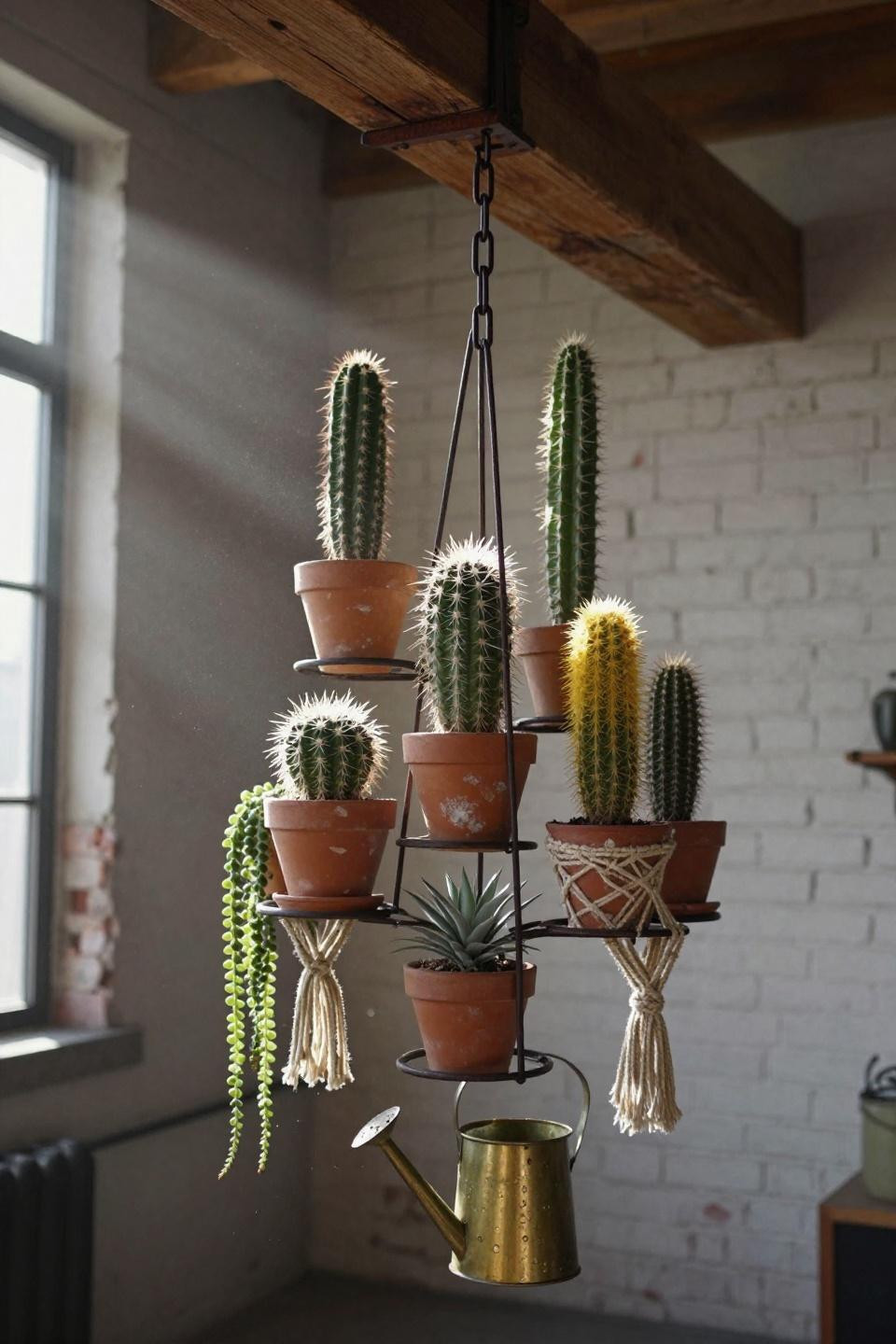
Hand-welded blackened steel. Seven cacti in graduated heights - barrel, prickly pear, golden torch. The terracotta shows mineral deposits because real plants leave marks. Three jute macrame hangers with asymmetric fringe add softness beside all that metal. The 8-foot industrial chain with rust patina anchoring the beam? That's the detail everyone notices first.
Boston Fern in Unlacquered Brass Glory
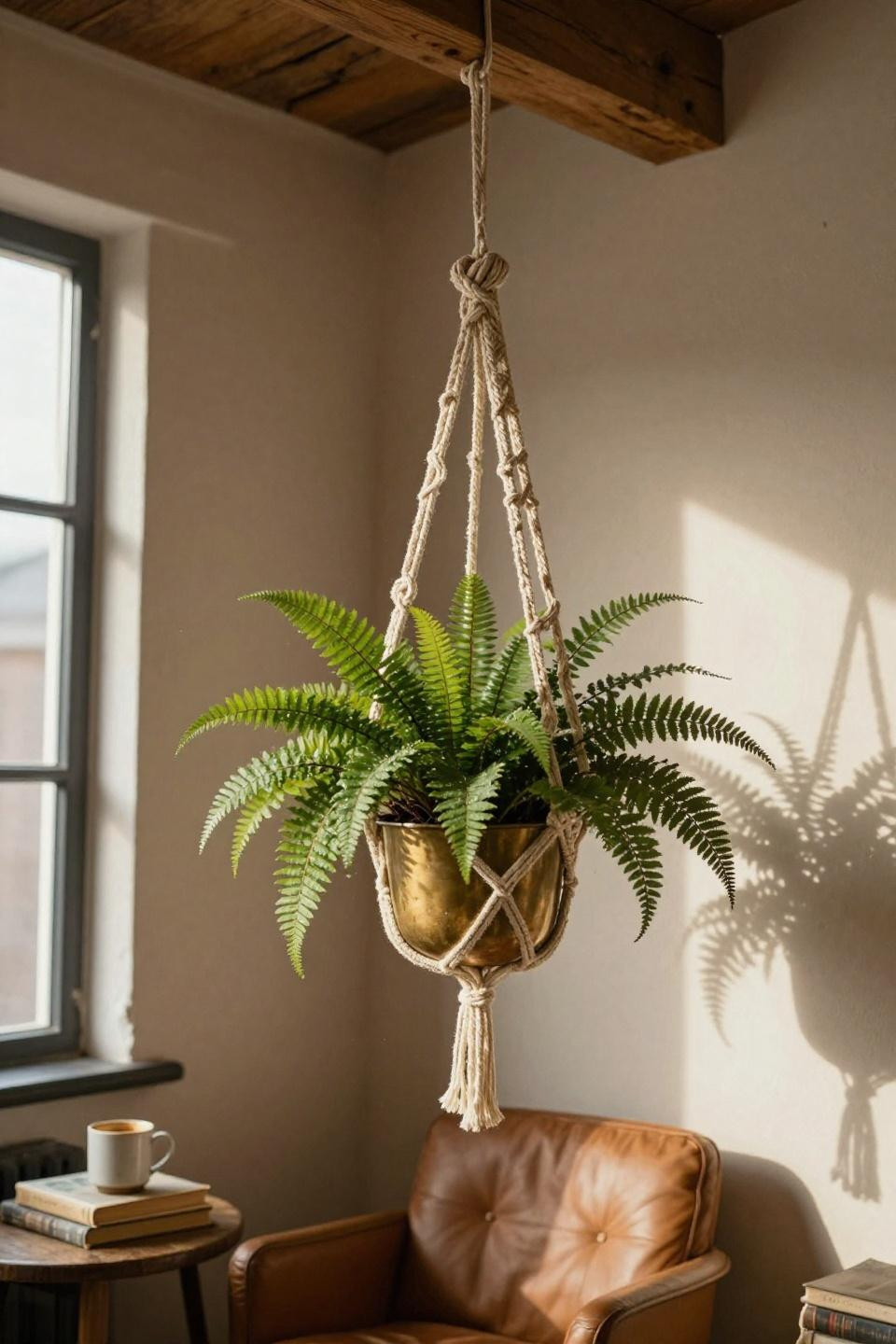
Ivory macrame with complex geometric knotwork. The unlacquered brass develops this warm patina with verdigris that changes seasonally. Fern fronds casting dappled shadows in afternoon light - this is why natural materials matter. Cognac leather chair barely visible in soft bokeh adds warmth without competing. The sculptural macrame itself becomes wall art.
Pothos Trails Through Subway Tile Corner
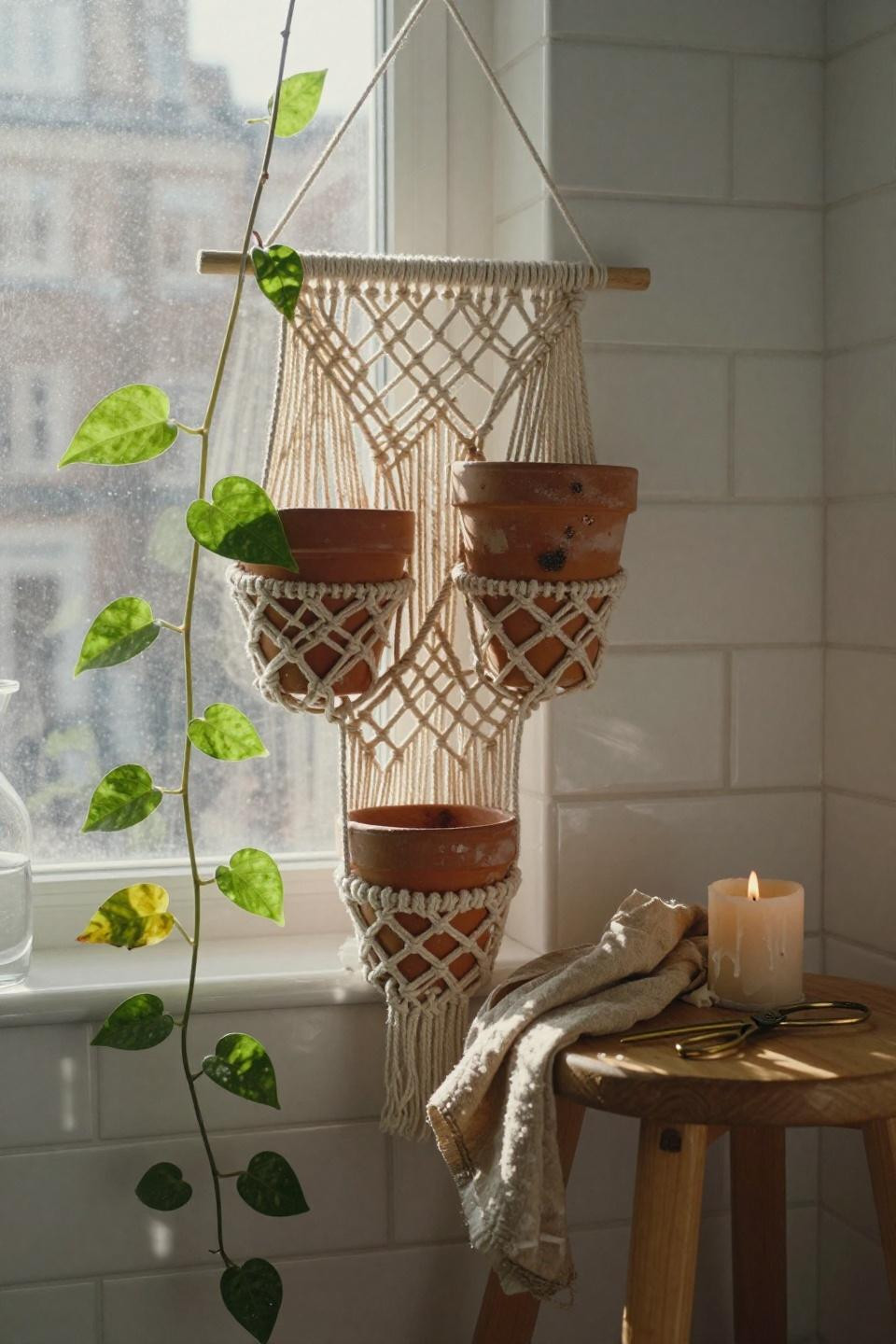
Natural undyed cotton rope with square knots and diamond patterns. Morning light through frosted glass creates volumetric rays through those jade-green leaves. Three terracotta pots at staggered heights show water stains - that's what actual plant care looks like. Works in bathrooms because the humidity keeps pothos thriving. Wooden stool with crumpled oatmeal linen adds warmth against cool white tile.
String of Pearls in Hand-Knotted Cotton
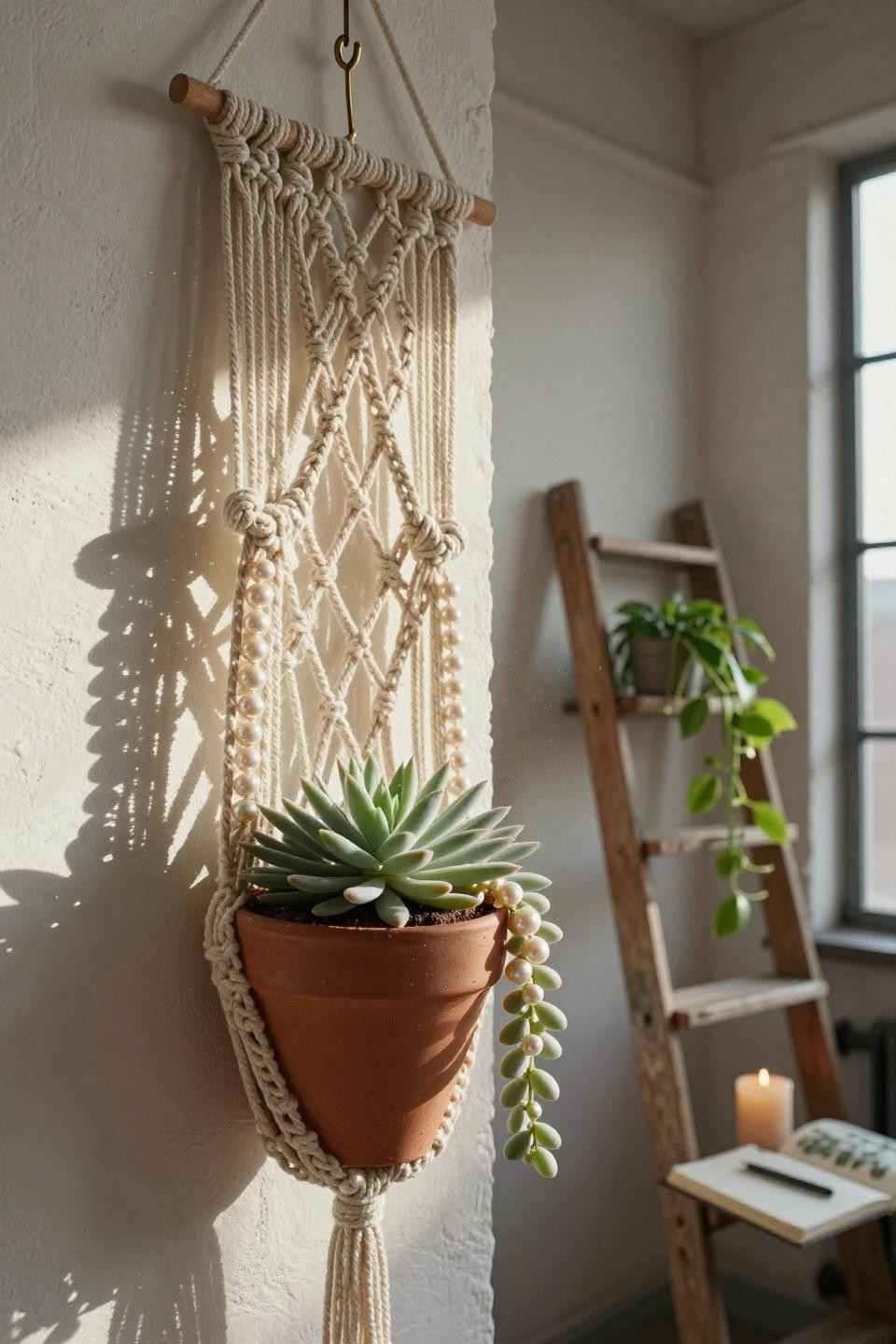
Diamond patterns in buttery-soft 5mm cotton cord. Each knot casts these micro-shadows that shift throughout the day. String of pearls' silvery-green beads catch rim light like tiny prisms. Terracotta with that rough-hewn texture grounds it. One pearl strand draped asymmetrically over the macrame edge - that natural imperfection makes it work. The hand-crafted detail is museum-quality.
Philodendron Brasil on the Ladder Lean
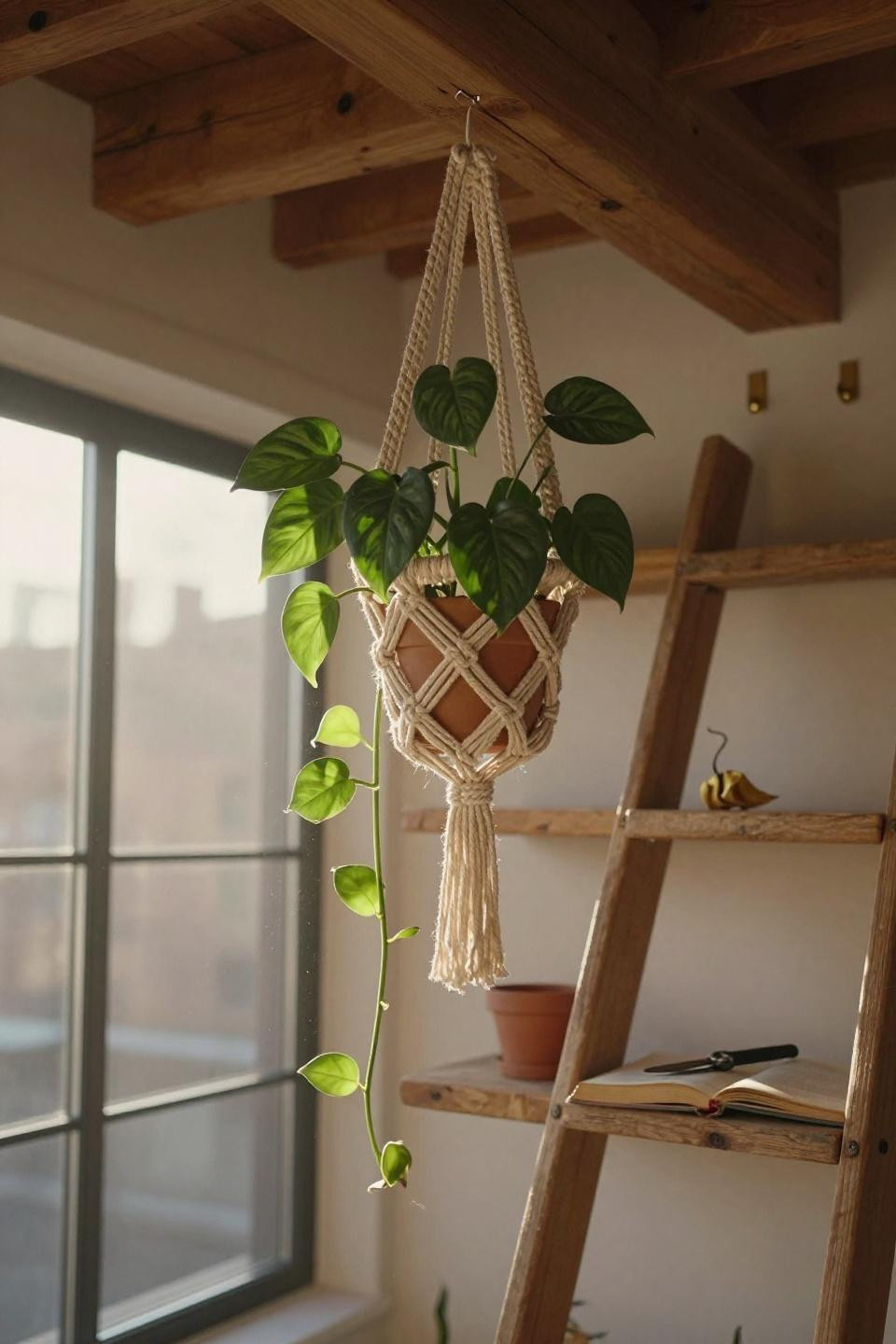
Three-tier macrame in natural undyed jute. The diamond and spiral knotwork is complex without being fussy. Heart-leaf philodendron vines cascade 4 feet down against that reclaimed oak ladder leaning at 65 degrees. Unlacquered brass wall hooks show honest aging. One dried leaf curled beside the terracotta pot keeps it real. This is botanical styling that doesn't scream "I tried too hard."
Morning Light Hits Linen and Brass
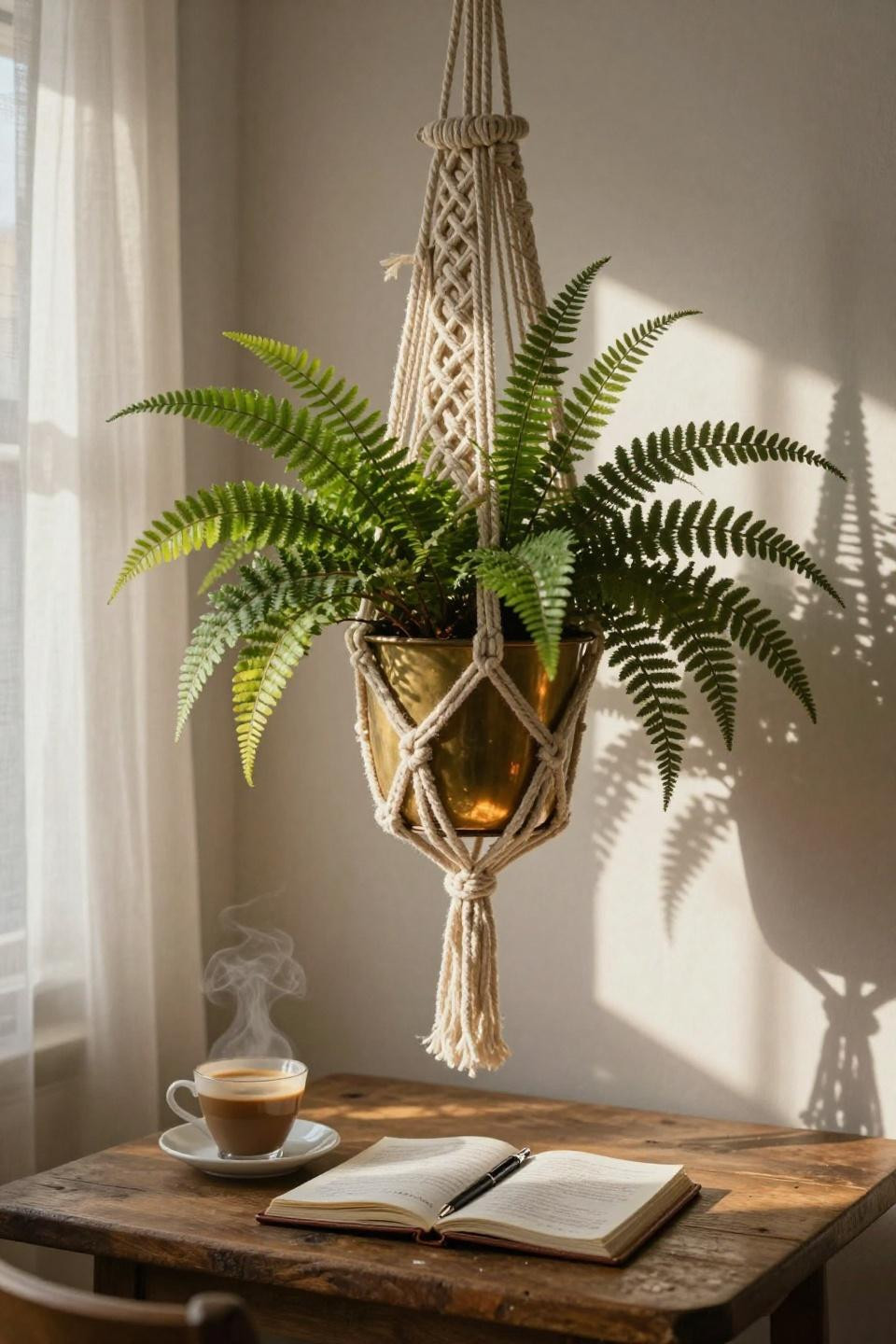
Square knots and spiral patterns in natural undyed cotton. The brass planter with honey patina reflects morning light with soft caustics. Boston fern fronds catching rim lighting create glowing edges. Sheer Belgian linen curtains diffuse the light just enough. Half-drunk café au lait with steam still rising - this is what lived-in luxury actually looks like. Worth every knot.
Philodendron Brasil by Steel-Framed Windows
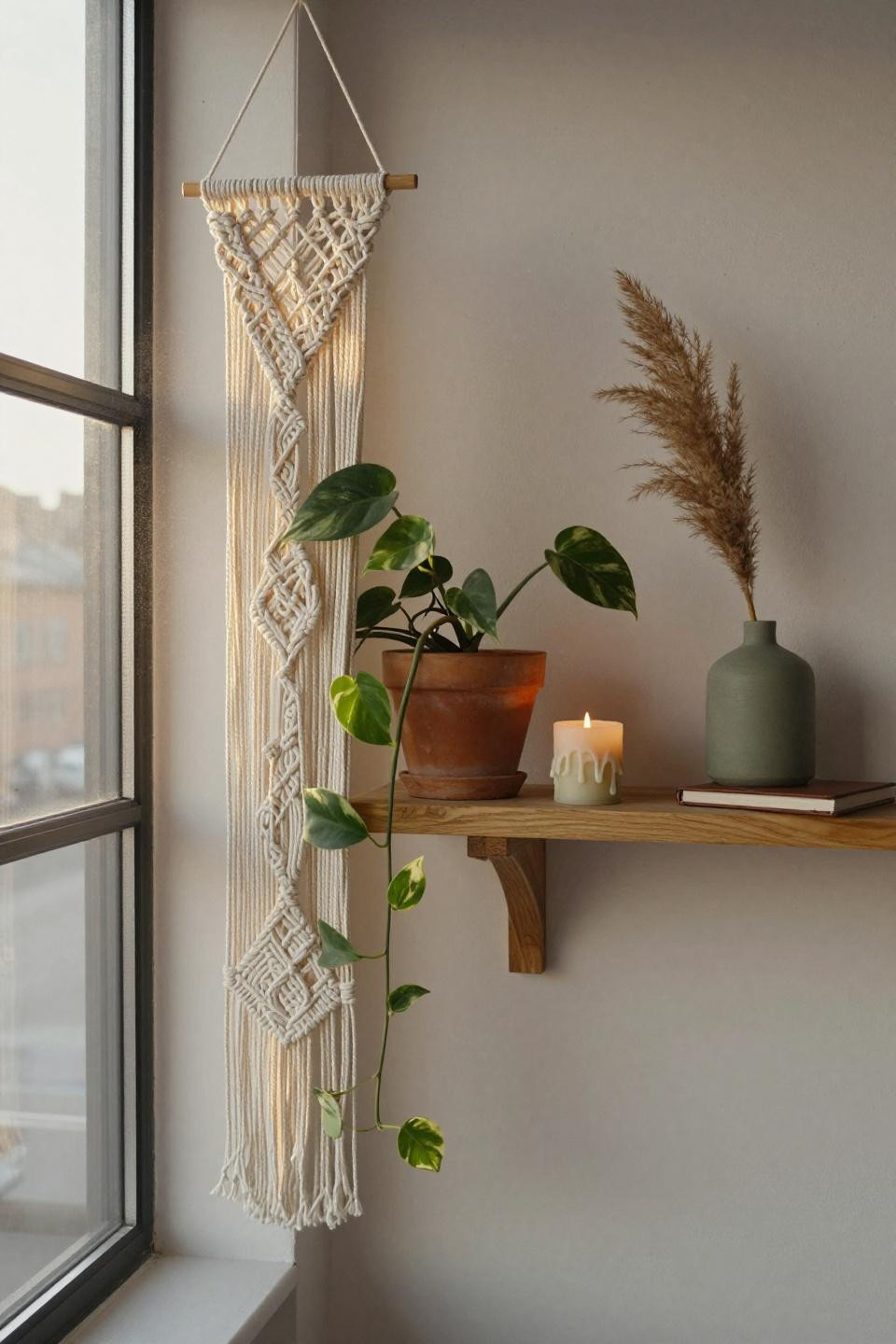
Ivory macrame with intricate square knots and spiral patterns. The natural fringe ends add movement when air circulates. Philodendron brasil's variegated leaves trail toward a minimal honey oak floating shelf. Matte sage ceramic vase with dried pampas adds texture contrast. The textured plaster wall with subtle trowel marks is doing quiet work behind everything. This corner gets compliments every time.
String of Pearls Meets Wrought Iron
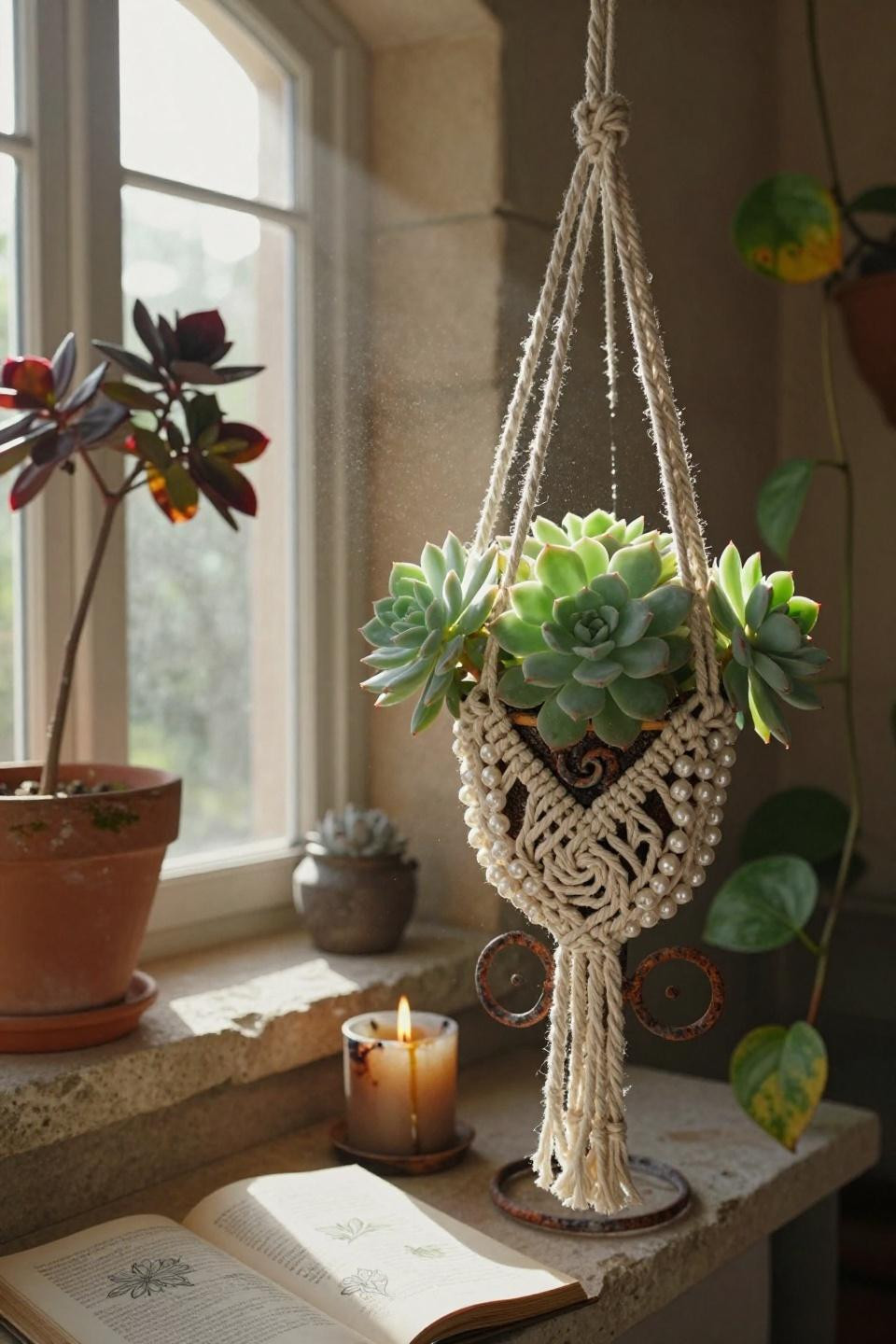
Natural undyed cotton cord with square knots and spiral patterns. The string of pearls' jade-green beads glow when backlit - subsurface scattering at work. Vintage wrought iron stand shows authentic rust bloom and unlacquered patina. Weathered terracotta with moss patina sits on rough-hewn limestone. One yellowed leaf adds honest imperfection. This is tactile, organic, lived-in luxury done right.
Pothos Cascades Down Honey Oak Shelves
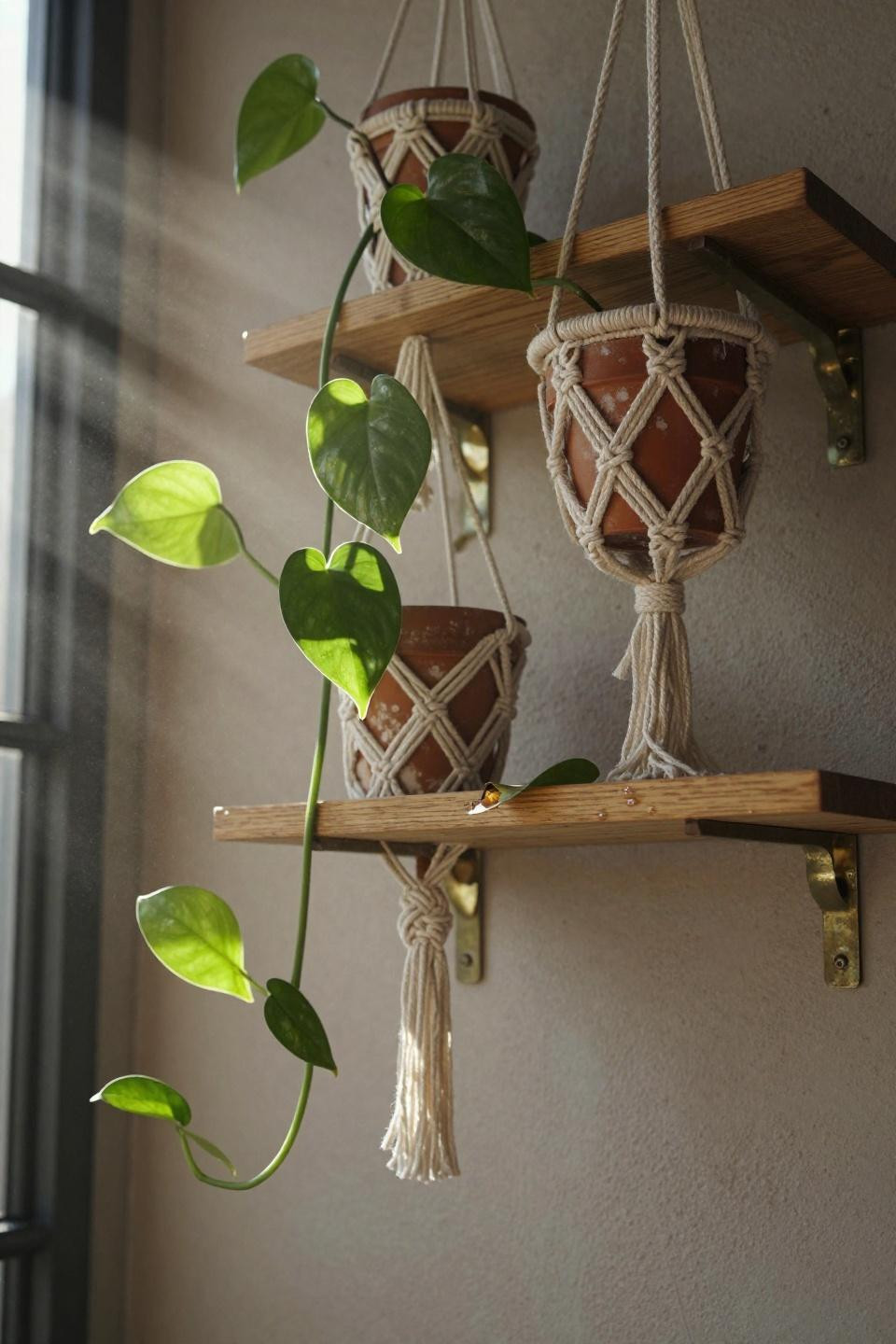
Three-tier asymmetric floating shelves in warm honey oak. Ivory cotton macrame with bohemian knot patterns - square knots, spiral twists, diamond weaves. Philodendron vines cascade 36 inches in organic curves. Some leaves catching direct sunlight with rim lighting, others in soft shadow. One macrame fringe slightly tangled, a fallen leaf on the middle shelf. That's what real plant care looks like, not magazine perfect.
Boston Fern in Chunky Jute Rope
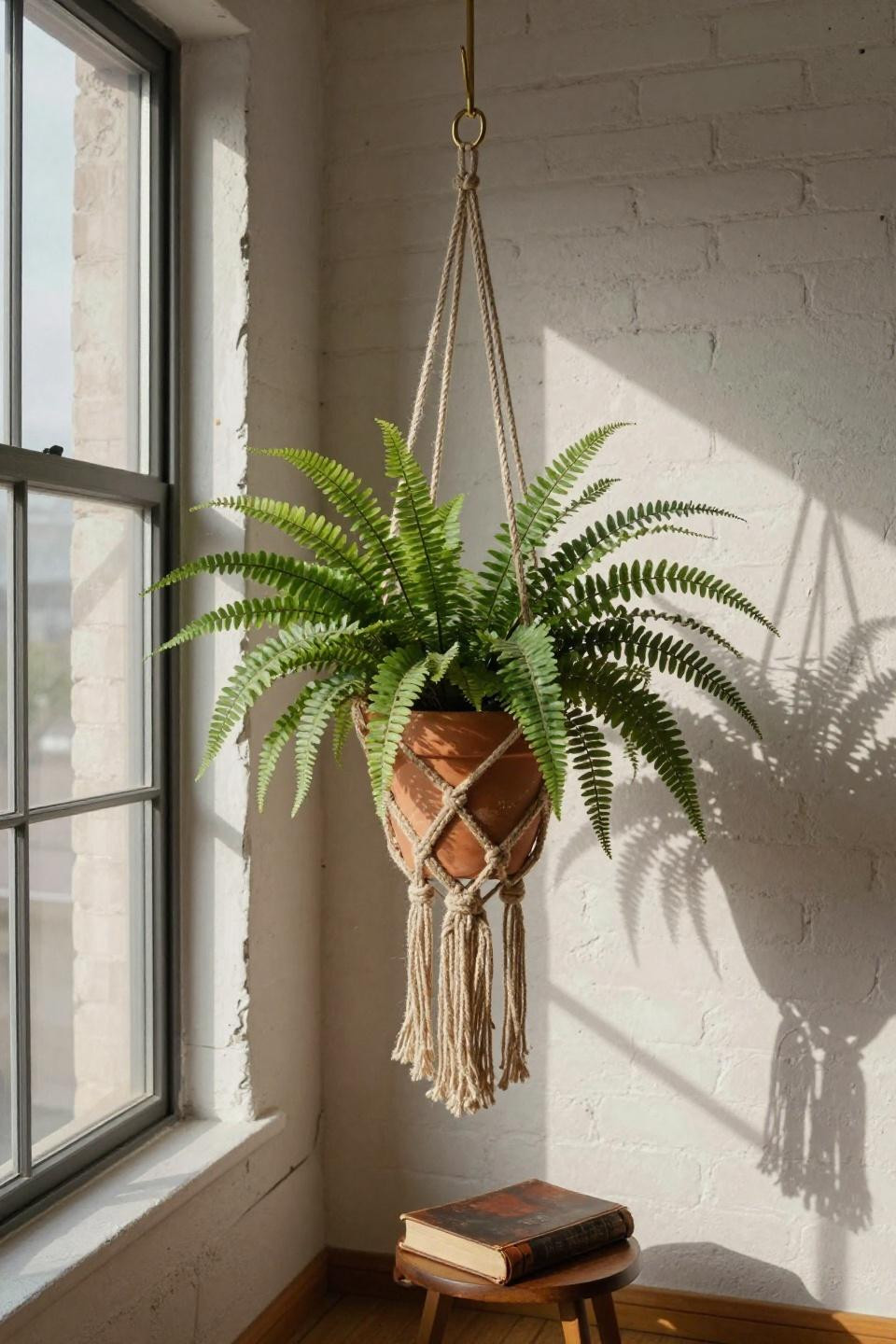
Chunky natural jute rope with asymmetrical diamond knots and loose fringe ends. The fern's verdant leaves catch rim lighting, creating soft translucent glow with subsurface scattering. Rough-hewn terracotta with mineral deposits adds texture. Aged brass ceiling hook catches golden light. One fern frond drapes naturally over the pot edge. This is tactilely rough and organic in the best way - 100% recommend.
Philodendron on Walnut Shelf With Black Iron
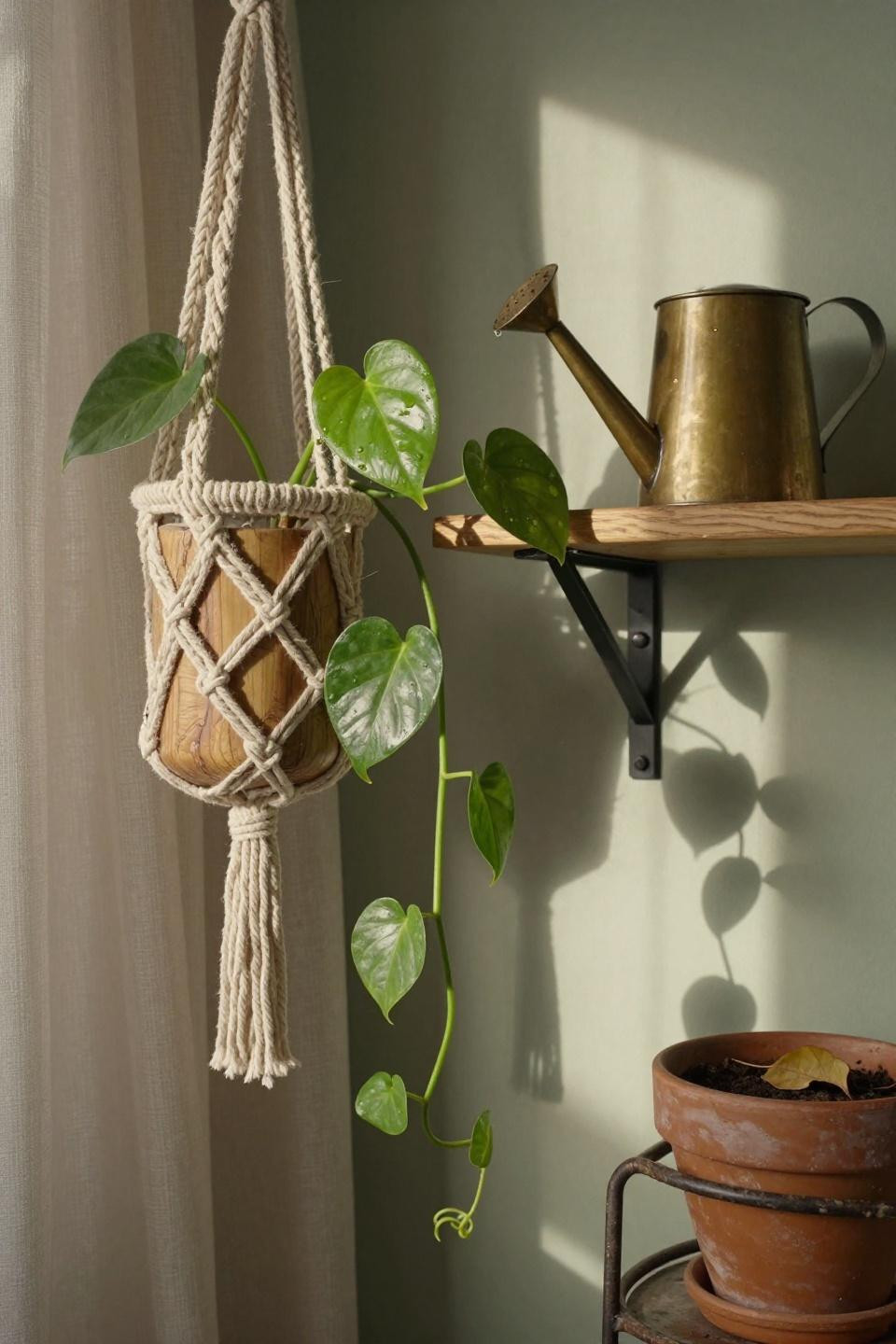
Natural undyed cotton rope with intricate square knots and spiral patterns. The philodendron's heart-shaped leaves catch rim light, revealing translucent veins. Vintage patinated brass watering can with water droplets still visible on the spout sits on the walnut shelf. Matte black iron brackets contrast against warm honey walnut. One fallen leaf resting asymmetrically keeps it honest. This setup works because every material has visible texture.
Pothos in Charcoal Ceramic Gets Complex Knotwork
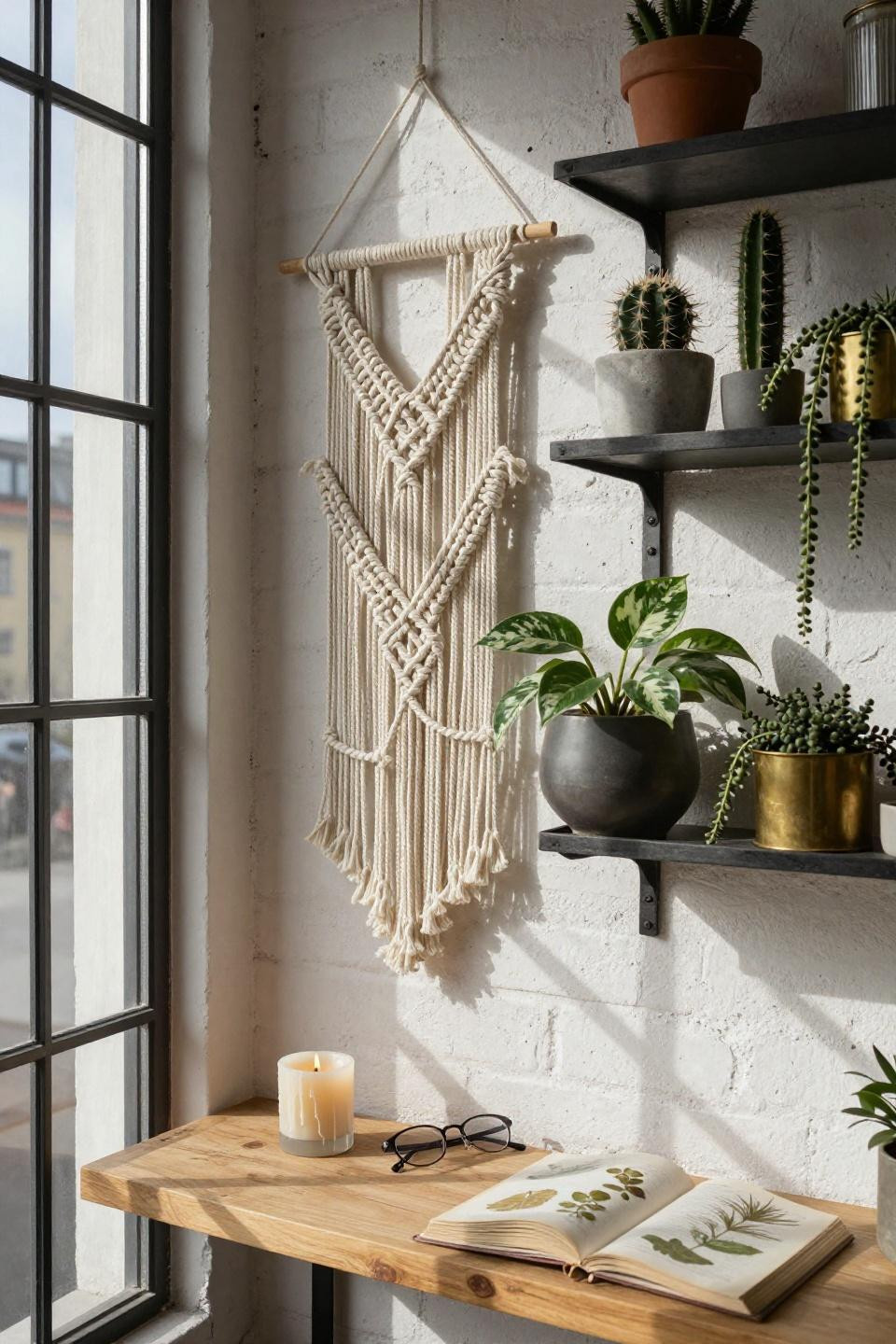
Complex boho-luxe knotwork in undyed cream cotton with subtle fraying at edges. The variegated pothos' glossy leaves catch morning volumetric rays. Matte charcoal glaze on the ceramic pot provides perfect contrast. Tiered industrial black iron wall shelves hold a selected cactus collection - prickly pear in terracotta, moon cactus in concrete, string-of-pearls in aged brass. The nubby macrame texture in afternoon side-lighting creates soft bloom around fibers.
Our Top Mattress Pick
| Saatva Classic | $1,395+ | Shop |
| Saatva Contour5 | $1,595+ | Shop |
| Saatva Zenhaven | $1,895+ | Shop |
Rubber Plant Corner With Jute Diamond Patterns
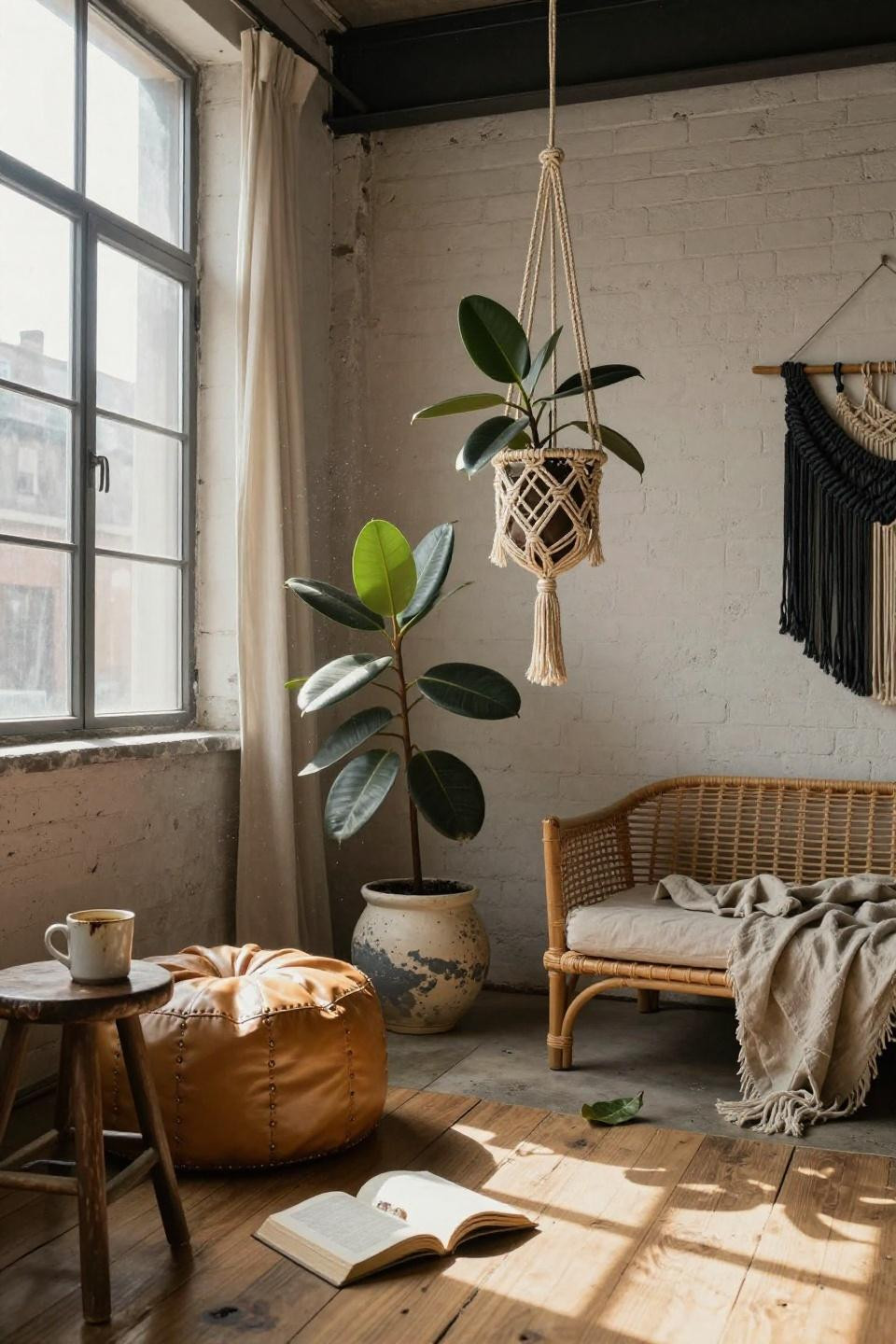
Natural jute with geometric diamond patterns and 18-inch fringe tassels. The rubber plant's glossy deep-green leaves cascade from speckled cream-and-charcoal stoneware with visible hand-thrown texture. Volumetric light beams illuminate floating dust motes, creating subsurface scattering through the macrame's woven texture. Camel leather pouf with brass studs, oatmeal linen throw draped over rattan daybed - this is refined bohemian done right. One fallen leaf on the floor makes it livable.
Pothos Trails Four Feet Down Oak Breakfast Table
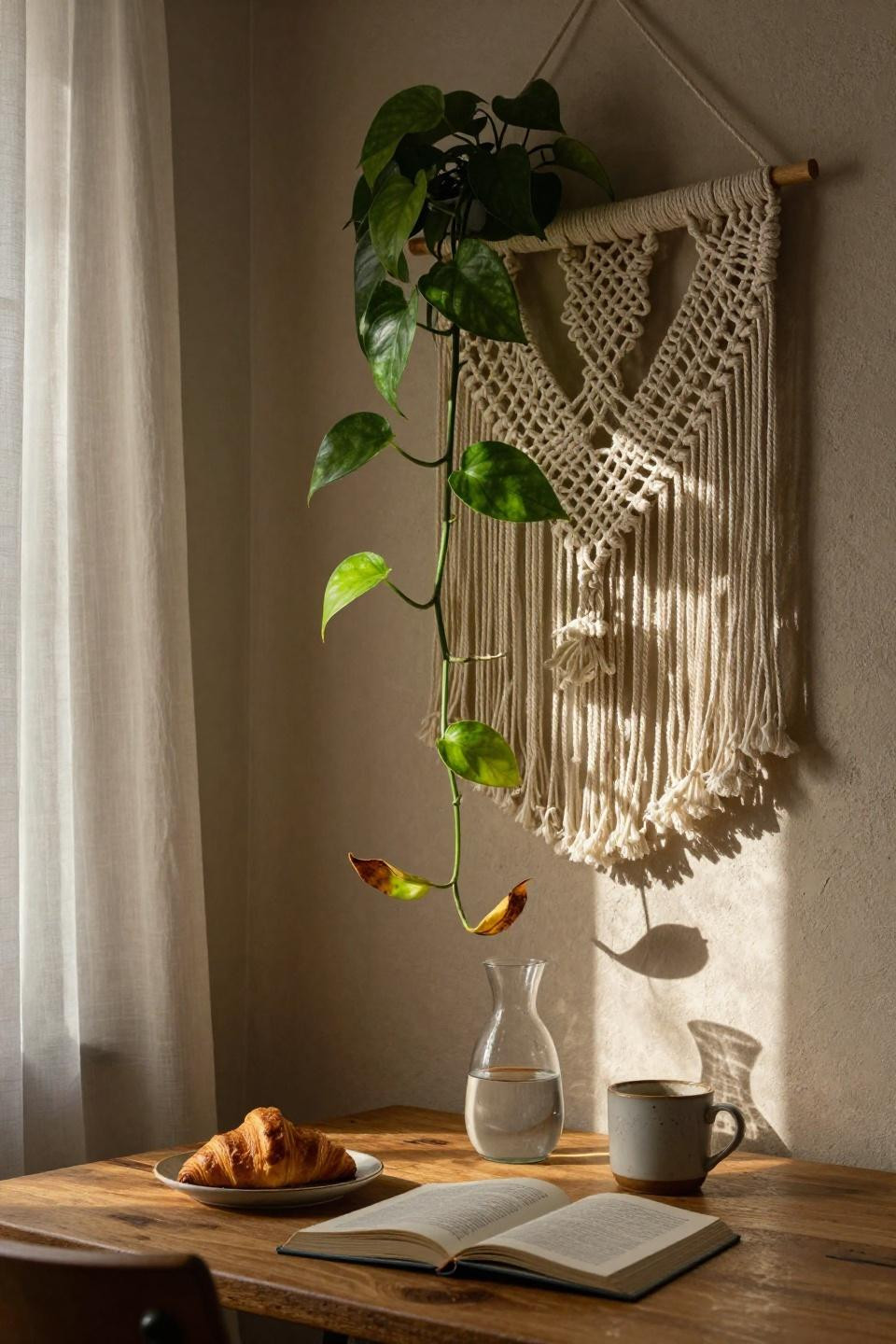
Ivory macrame with intricate diamond patterns. Natural cotton rope, frayed ends left deliberately unfinished. The pothos vines trail 4 feet in organic asymmetry - some leaves curling slightly, one yellowed leaf mid-fall. Morning light creates subsurface scattering making leaves glow translucent jade and chartreuse. Reclaimed oak breakfast table with half-eaten croissant, open gardening book, ceramic mug with faint coffee ring. This is what botanically intentional living looks like.
If I had to pick one move, start with a simple diamond-knot pattern in natural jute. The texture alone changes how a corner feels. And honestly? The IKEA EKTORP sofa looks twice as expensive when a hand-knotted macrame hanger is doing the heavy lifting nearby.