
 by
by Our #1 Recommended Mattress
Saatva Classic. From $1,449
Twin at $1,449, Queen at $1,895 in Luxury Firm on 2026-09-22. 365-night home trial, $99 processing fee if you return it, lifetime warranty, free white-glove delivery and setup.
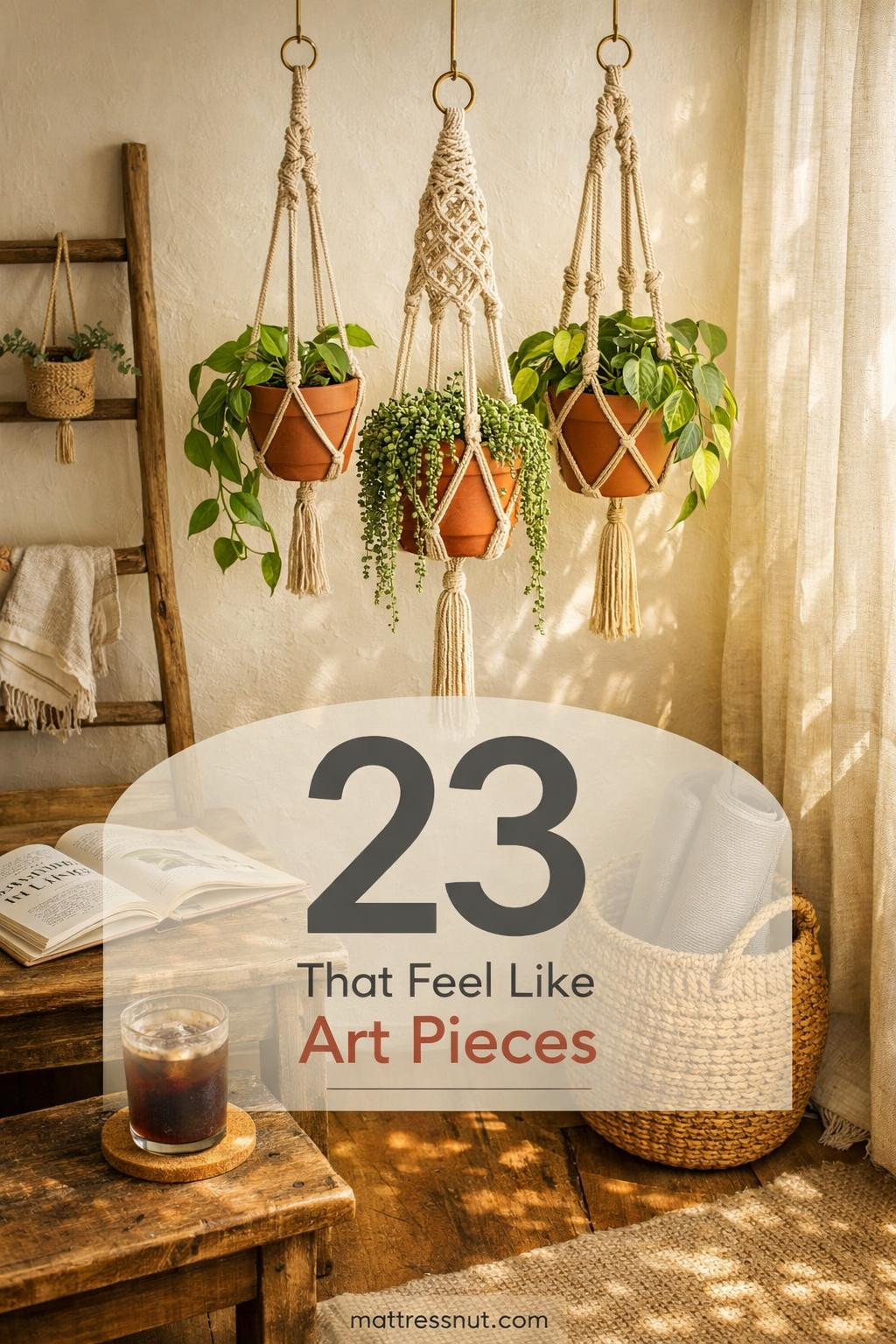
Macrame plant hangers pull a plant off the windowsill and into the air, which is the whole point in a small room: vertical space is free. What follows is 23 setups, each with the cord, the knot and the plant named, so you can copy the one that fits your light and your ceiling rather than guess from a photo.
Two practical notes before the pictures. Cotton cord in the 3 to 5 mm range knots easily and stays soft; jute is stiffer, hairier and holds a geometric pattern better. And weigh the whole load, not the plant: a 10-inch terracotta pot with wet soil runs roughly 15 to 20 pounds, which is at the limit of a cheap drywall anchor. A swag hook driven into a ceiling joist, or a toggle bolt rated well above your load, is the difference between a hanging plant and a hole in the ceiling.
Windowsill Herbs Meet Copenhagen Light
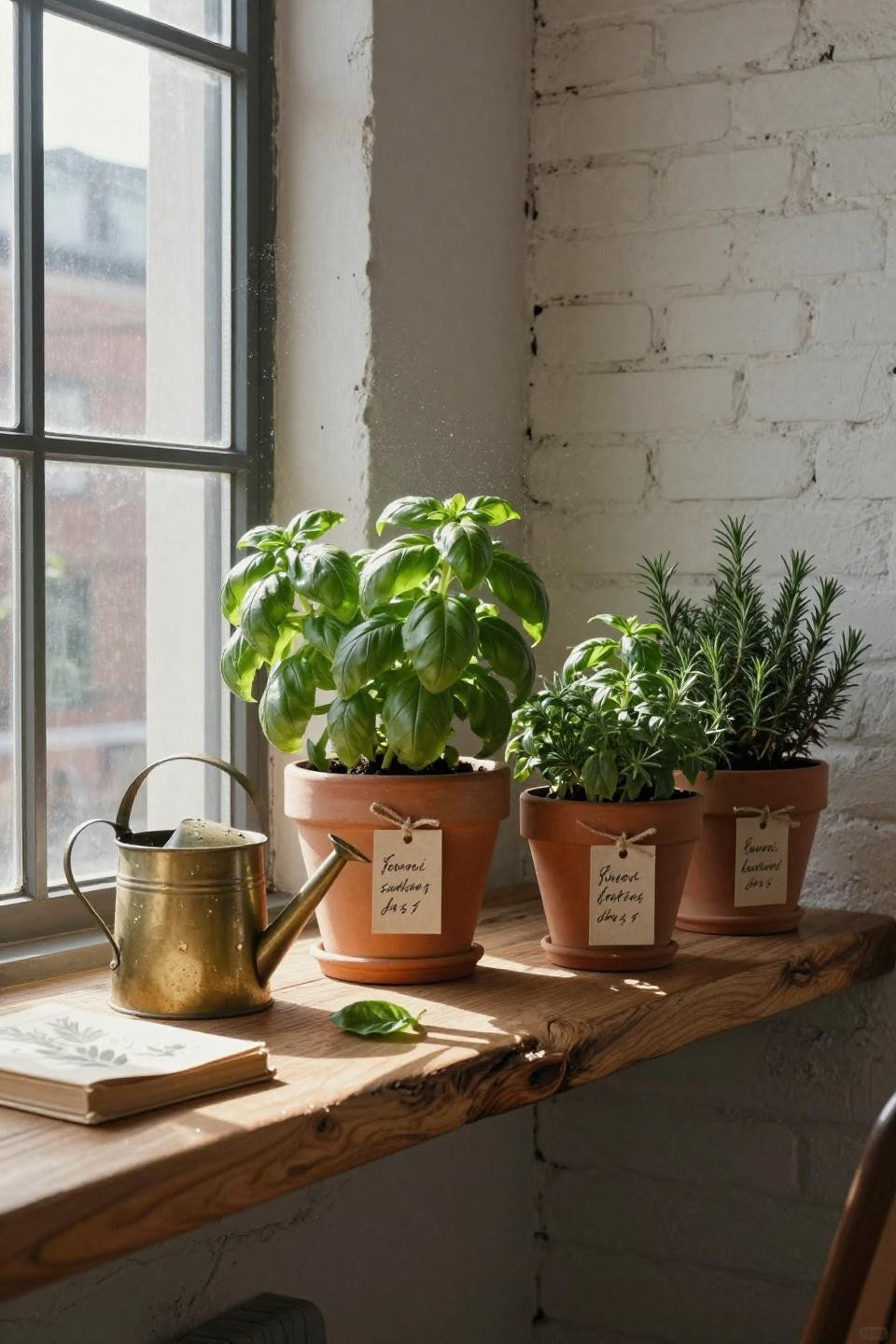
Three terracotta pots on a raw-edge oak sill, with a brass watering can for warmth. Terracotta is the right pot for herbs because it is porous and dries out between waterings, which is what basil, thyme and oregano want. The catch is that an east-facing window gives roughly four hours of direct sun, and most culinary herbs want six or more, so expect leggy growth unless you rotate the pots weekly.
French Iron Plant Stand Catches Afternoon Rays
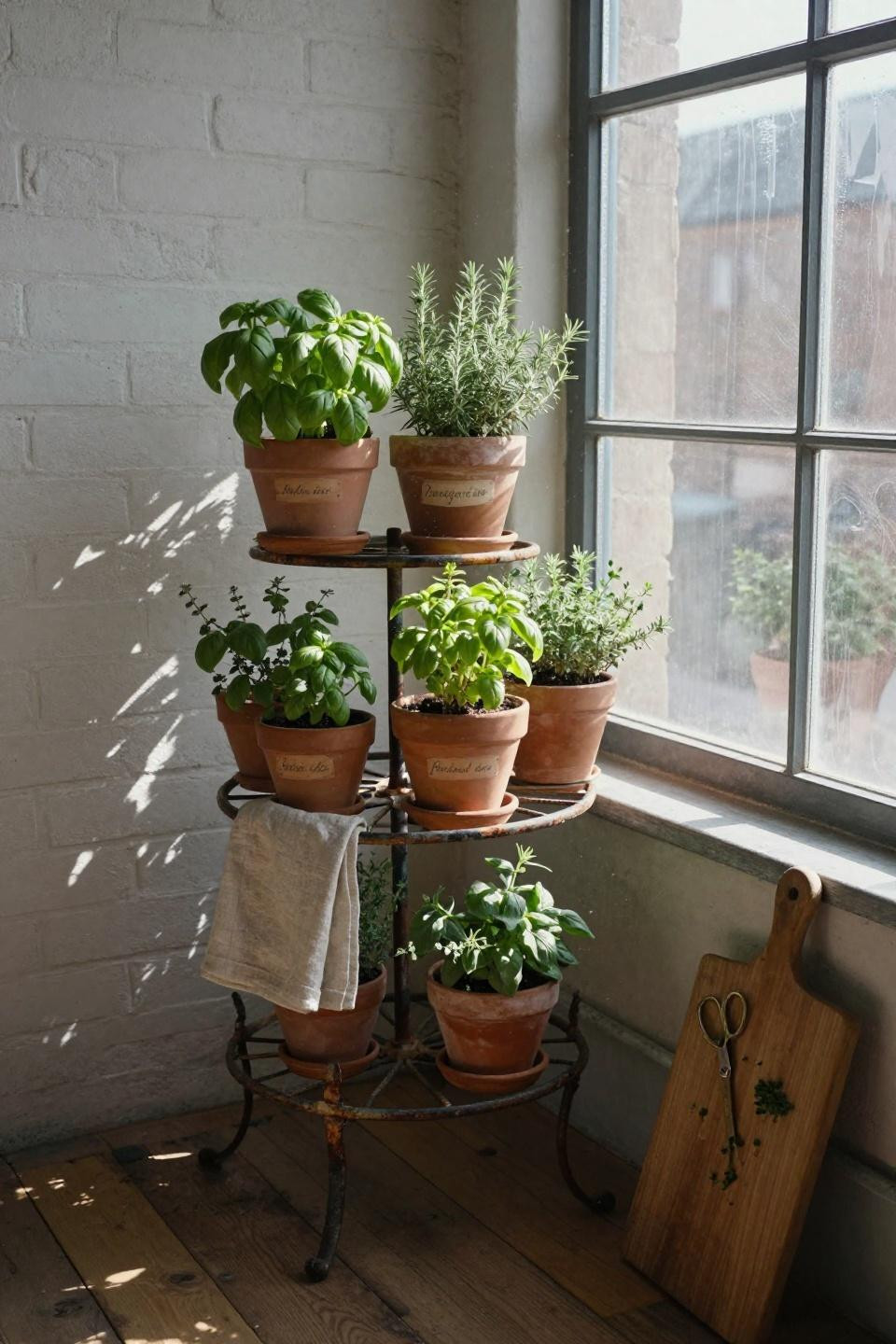
A three-tier wrought iron stand with hand-painted botanical labels and thyme spilling over the edge. Tiered stands solve a real problem: they put three pots in one square foot of floor and they let you sort plants by how much light each one needs, sun-lovers on top, shade-tolerant underneath. New reproductions are easy to find; old stands have the deeper patina, and the rust is cosmetic as long as the welds are sound.
Breakfast Nook Gets the Macrame Treatment
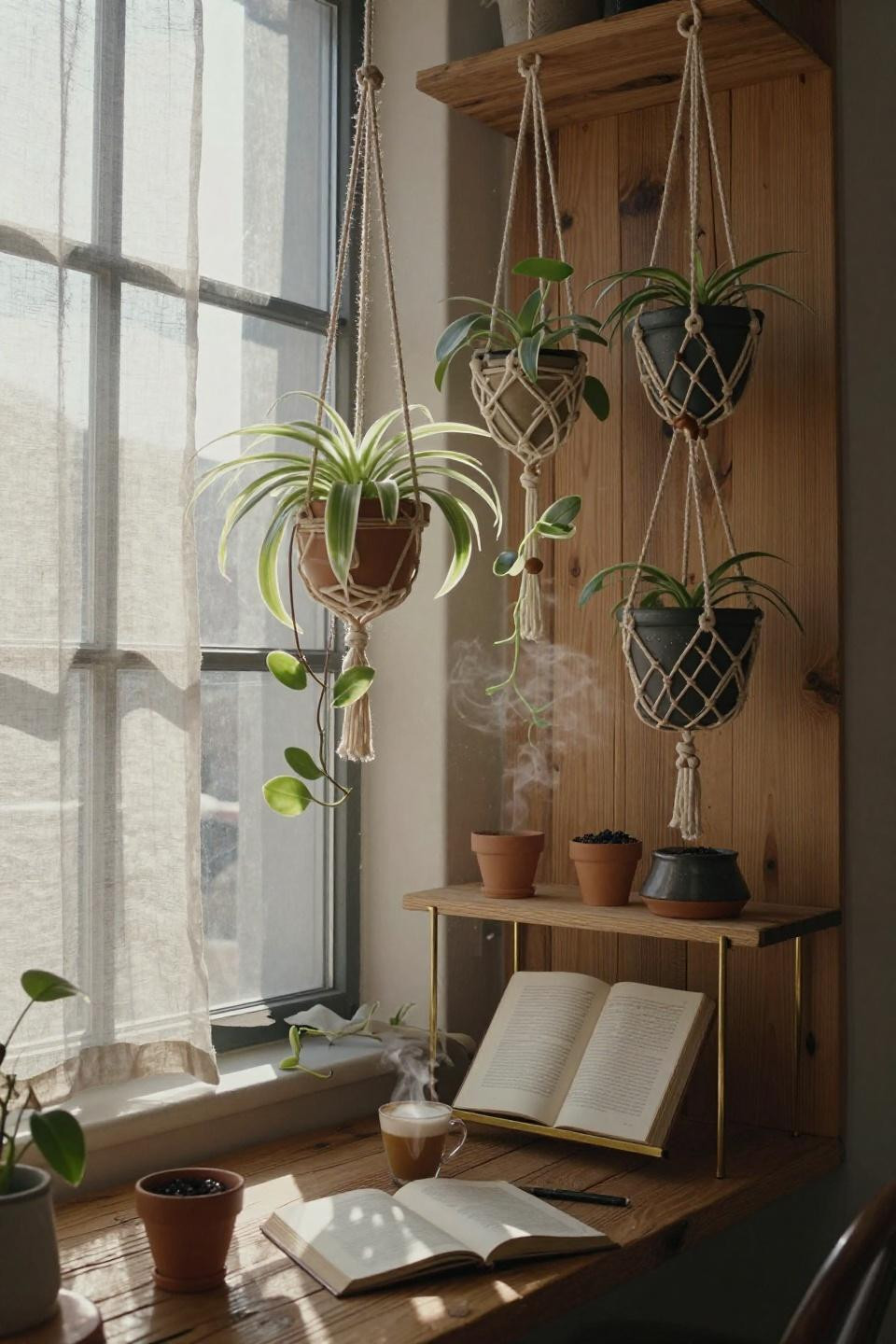
A spider plant throwing off plantlets in a charcoal ceramic pot, on a natural jute hanger knotted in square knots. Spider plants (Chlorophytum comosum) earn their place in a breakfast nook for a specific reason: the ASPCA lists them as non-toxic to cats and dogs, and the plantlets root in a glass of water in about two weeks, which is what the propagation vessels on the shelf below are for.
Snake Plants on Graduated Macrame Lengths
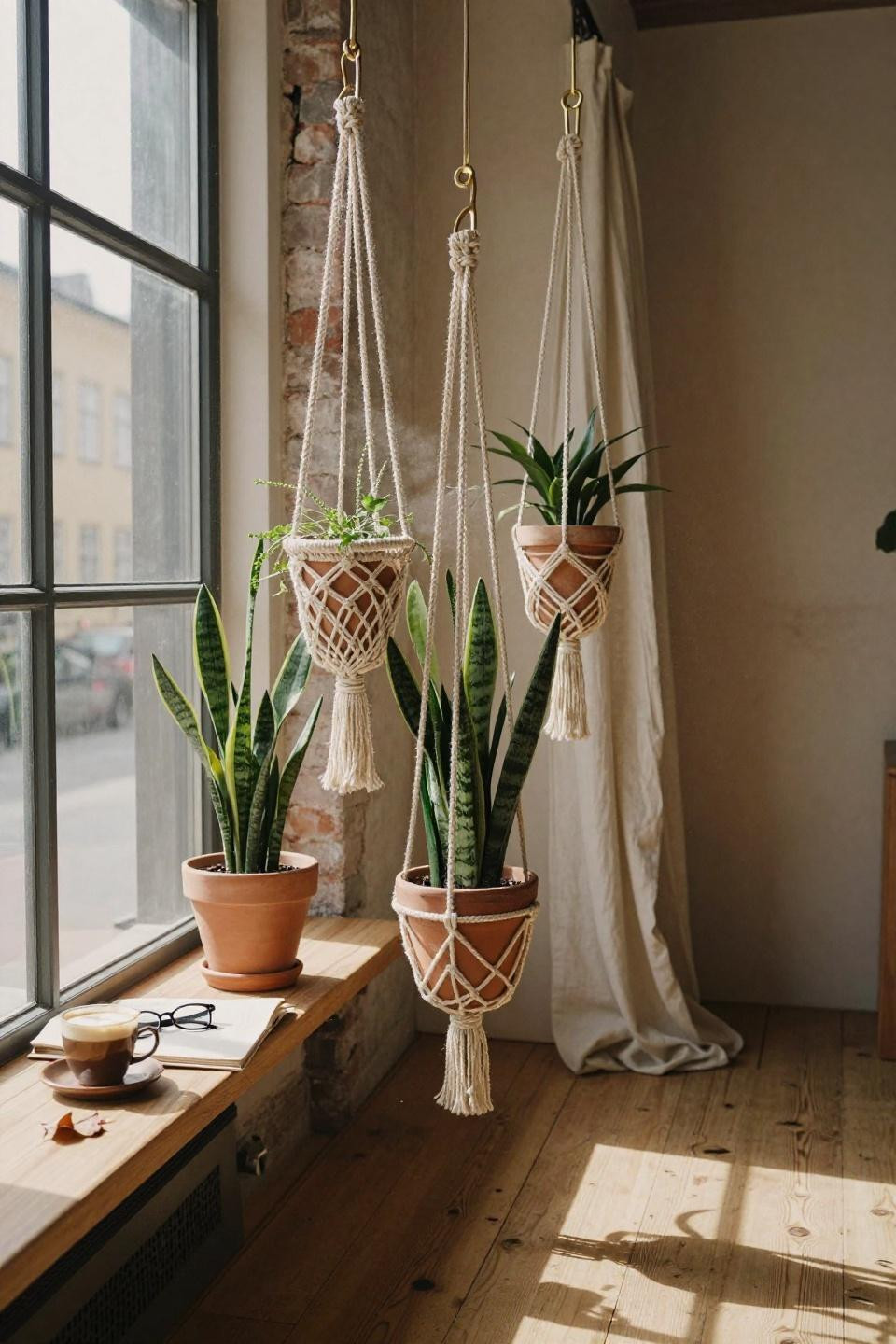
Three hangers cut to three lengths, spiral knotwork casting lace shadows on white brick. Snake plant (Dracaena trifasciata) is the forgiving choice by tall windows because it handles both bright and low light and wants water only every two to six weeks. Unlacquered brass hooks will darken over time; leave them alone if you want the patina, polish them if you do not.
Air Plants in Geometric Brass Holders
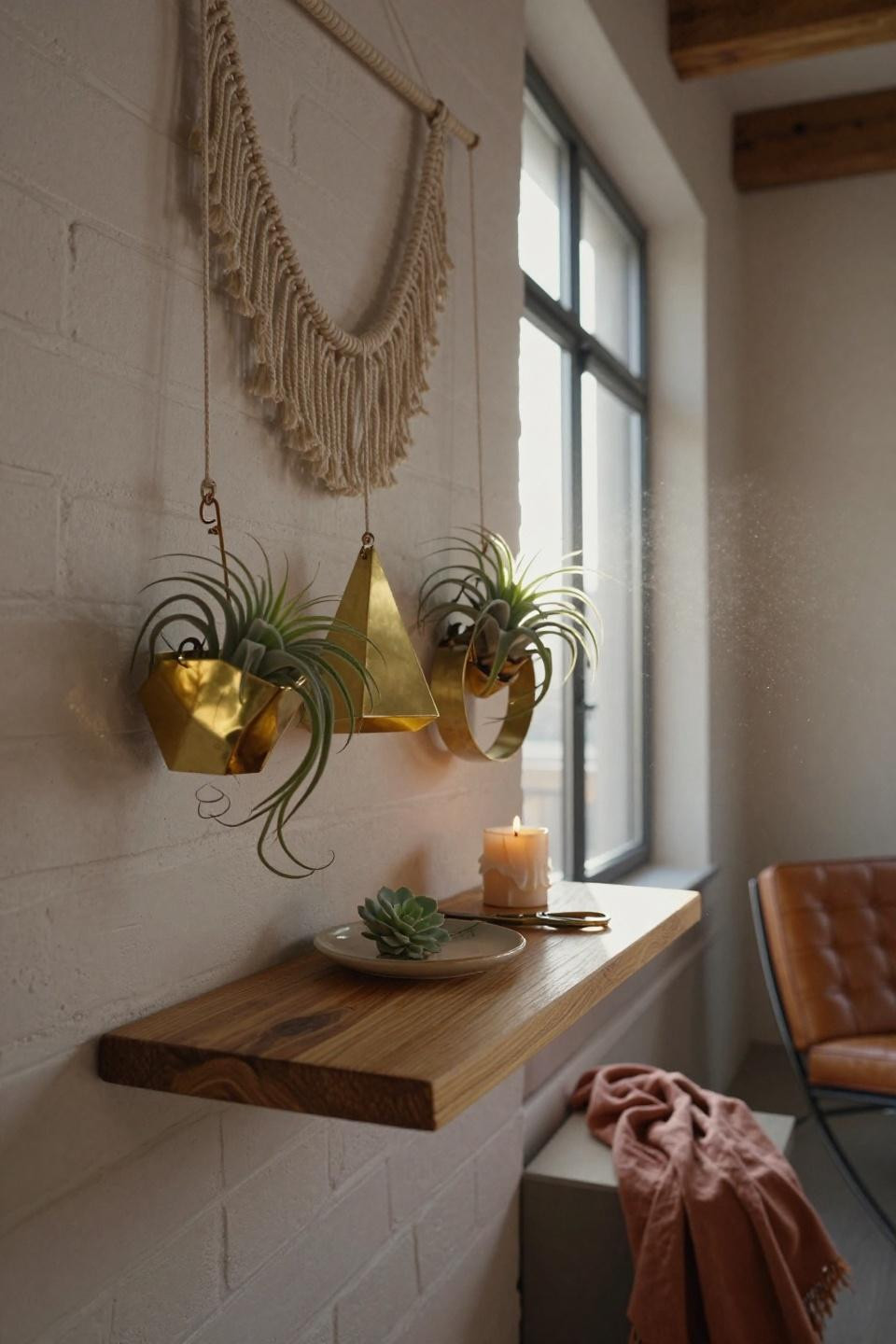
Hexagonal, triangular and circular brass holders with a Tillandsia xerographica in each. Air plants take no soil and no pot, which is why they work on a shelf with no depth: they feed through their leaves and want a 20 to 30 minute soak in room-temperature water every one to two weeks, then a shake-out so water does not sit in the crown and rot it. A single strand of cotton macrame behind them softens the metal.
Prayer Plant in Celadon on Walnut Stand
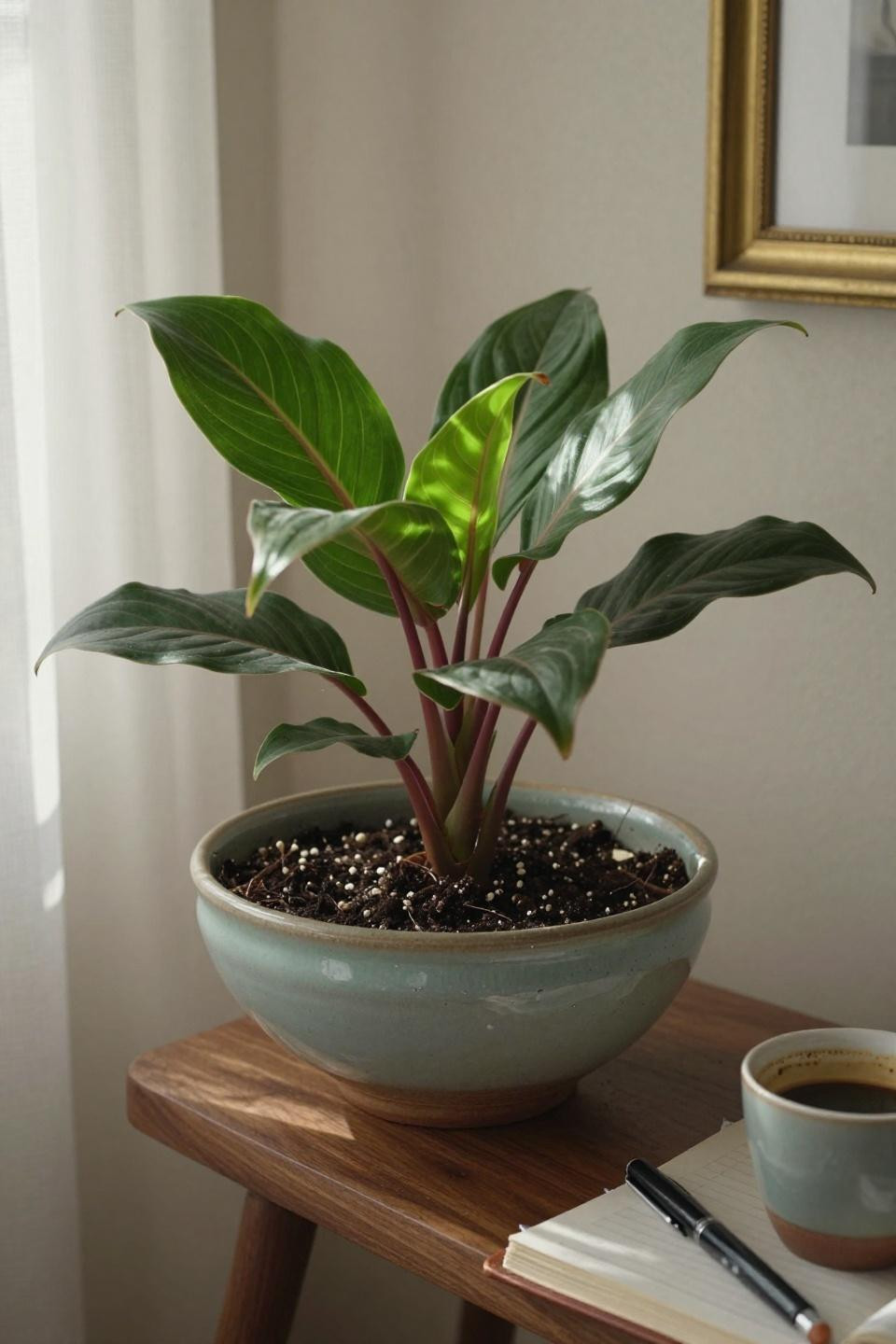
A Maranta in a hand-thrown celadon bowl, finger marks and all, raised on a mid-century walnut stand so the burgundy leaf undersides catch light. The plant is called a prayer plant because it folds its leaves upward at night, a daily movement called nyctinasty, and the raised stand is what makes that visible from a chair. Maranta leuconeura is on the ASPCA non-toxic list and wants humidity above 50 percent.
Boston Fern Meets Vintage Brass Patina
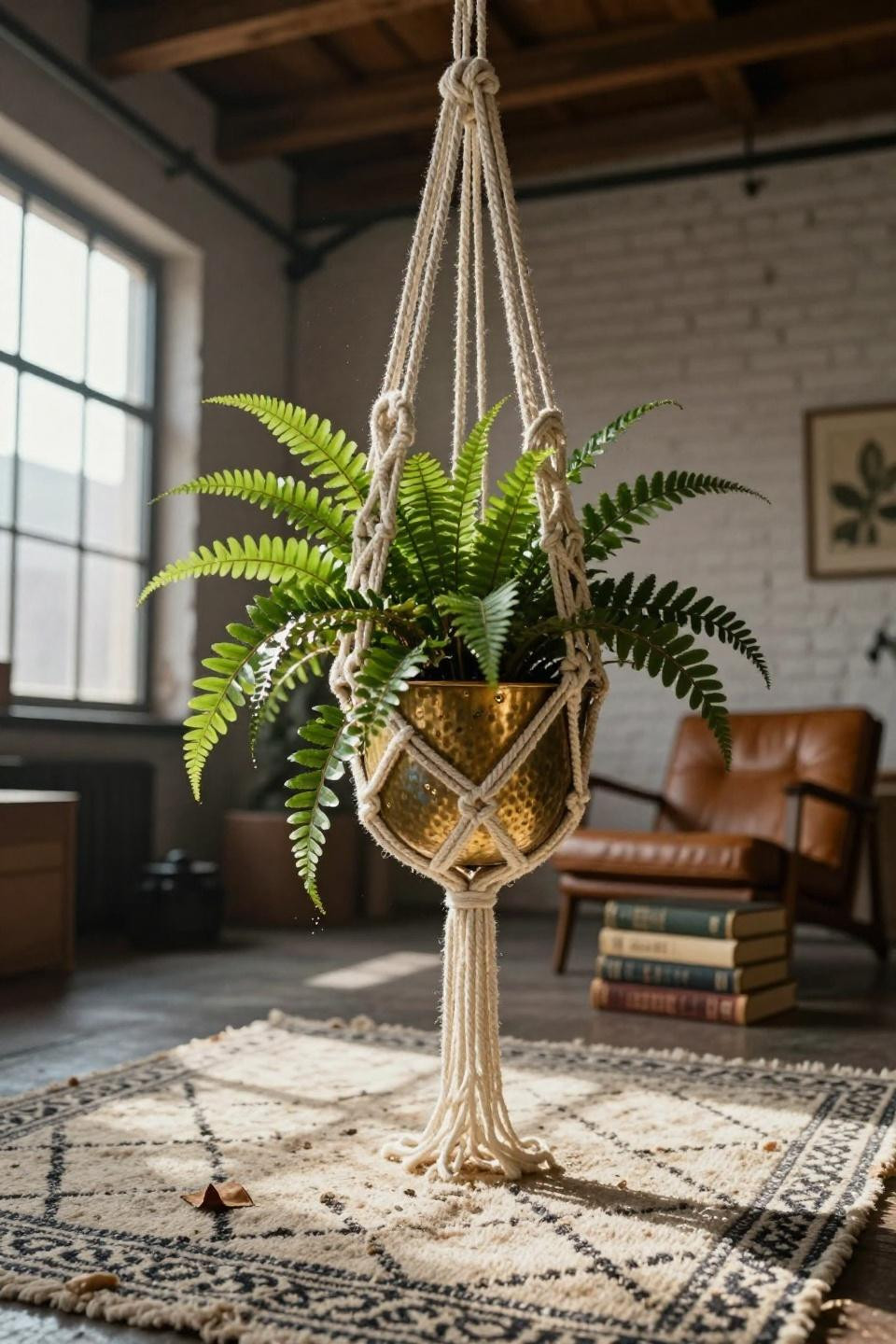
A hammered brass planter with verdigris on it, hung in cream cotton knotted in diamonds. Check the planter before you hang it: brass without a liner has no drainage hole, so either drill one or drop a plastic nursery pot inside it. Boston fern (Nephrolepis exaltata) is the fussiest plant in this list, wanting evenly moist soil and 40 to 50 percent humidity, which is why it does better in a bathroom than in a dry living room.
Monstera Gets the Jute Rope Treatment
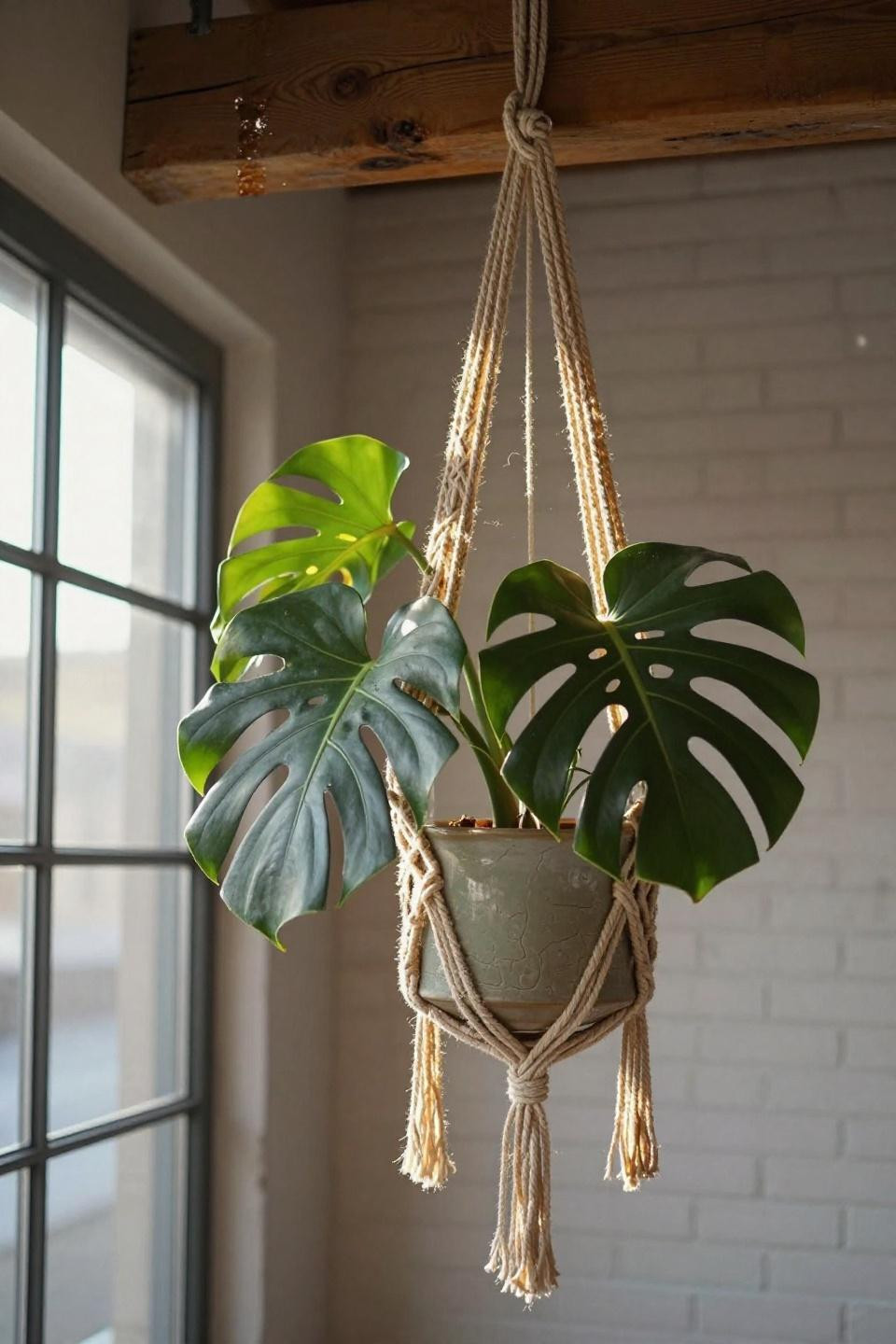
Thick jute, geometric diamonds, long fringe, matte sage ceramic. Thick cord is not only a style choice here: a mature Monstera deliciosa in a 10-inch pot is one of the heaviest plants people hang, so the cord diameter and the ceiling fixing both have to be sized for it. The split leaves, called fenestrations, only appear on mature growth in bright indirect light, so a young plant in a dim corner will stay solid-leaved.
Prayer Plant Shadows on Oak Beams
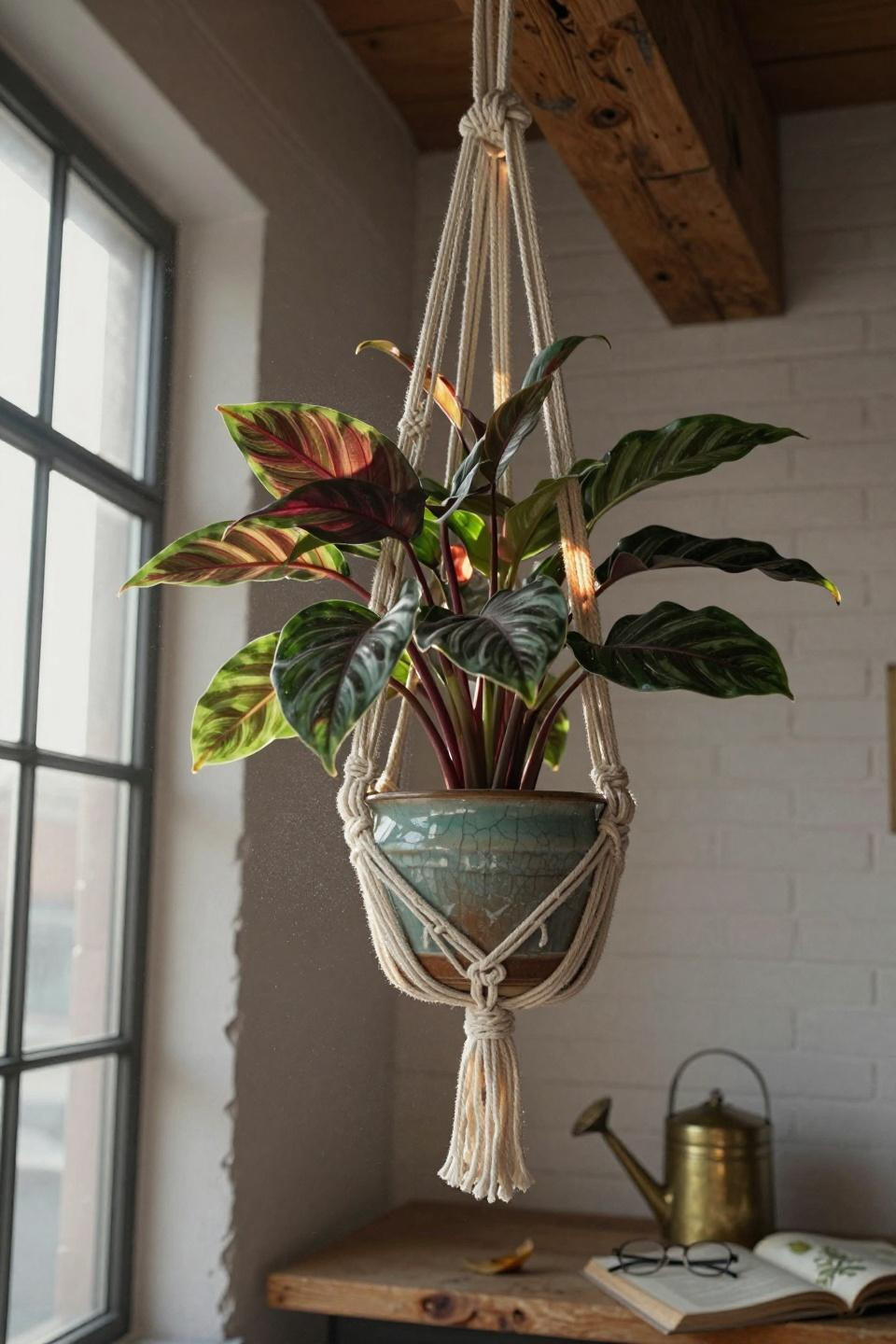
Natural cotton, intricate diamond knotwork, a crackle-glazed celadon pot and a brass watering can on the shelf below. Hanging a Maranta from an exposed beam is the easy case for the fixing: a screw hook into solid timber holds far more than any drywall anchor. Backlighting is what makes this one work, since the burgundy undersides only read as burgundy when light passes through the leaf.
Cactus Collection on Blackened Steel Tiers
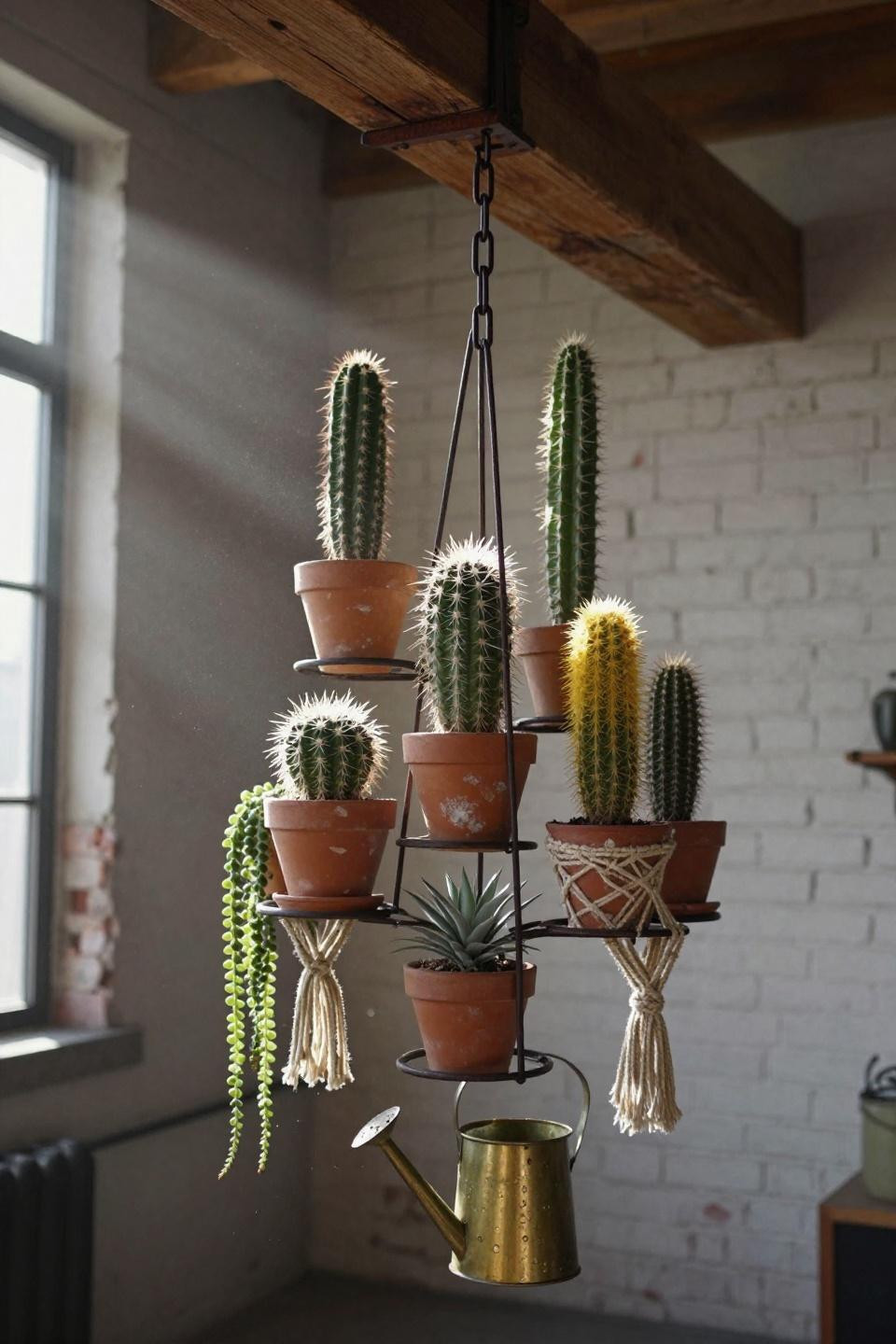
Seven cacti in graduated heights on hand-welded blackened steel: barrel, prickly pear, golden torch. Three jute hangers with asymmetric fringe soften the metal. Cacti belong on the stand rather than in the hangers because they want the brightest spot in the room and almost no water in winter, and white mineral crust on terracotta is normal hard-water residue, not a problem.
Boston Fern in Unlacquered Brass Glory
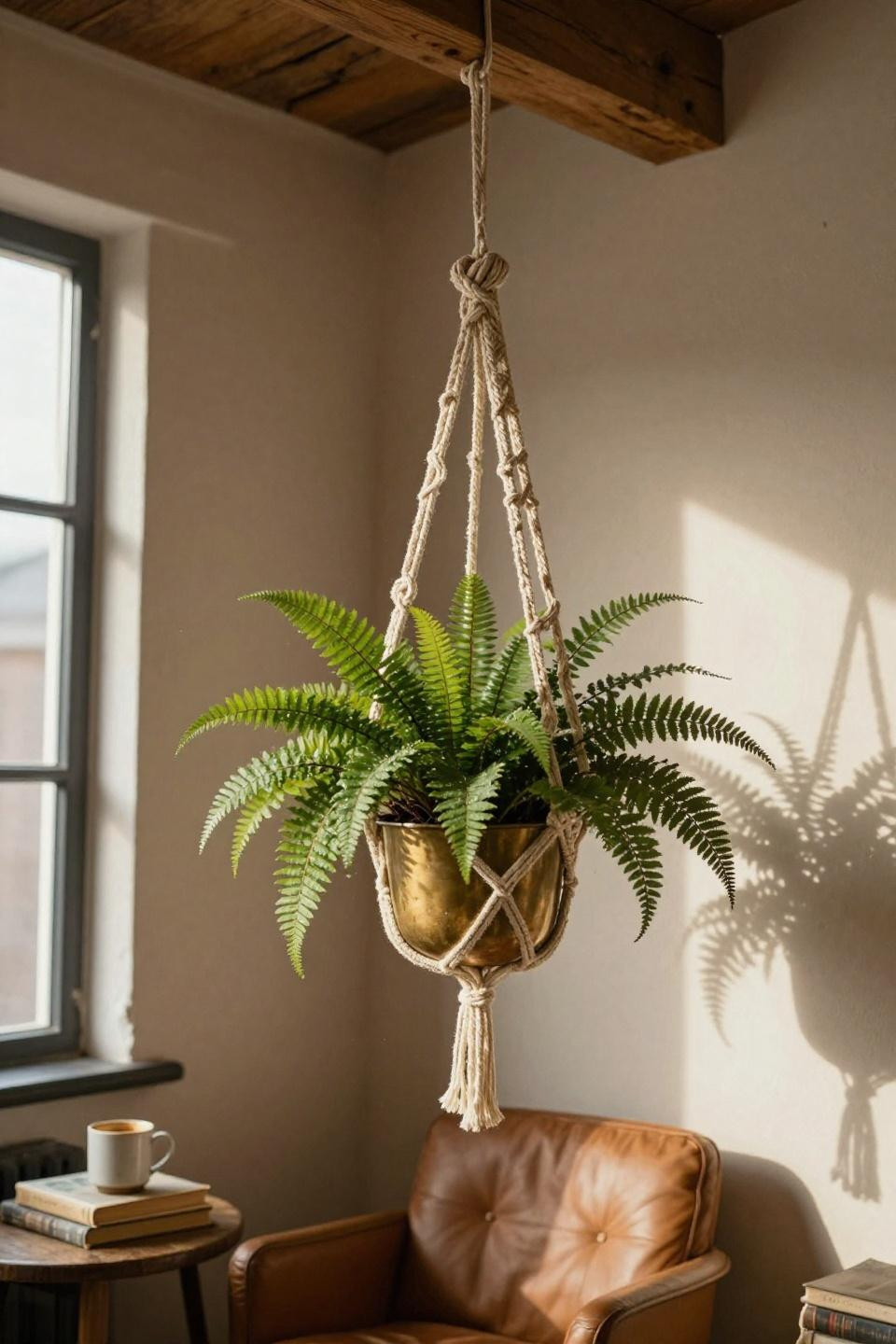
Ivory macrame with complex geometric knotwork against unlacquered brass. Unlacquered means uncoated, so the metal oxidises and keeps changing colour instead of staying bright; that is the look people buy it for, and it cannot be undone halfway. A cognac leather chair in soft focus behind it supplies the warm tone the ivory cord needs, and the hanger reads as wall art in its own right.
Pothos Trails Through Subway Tile Corner
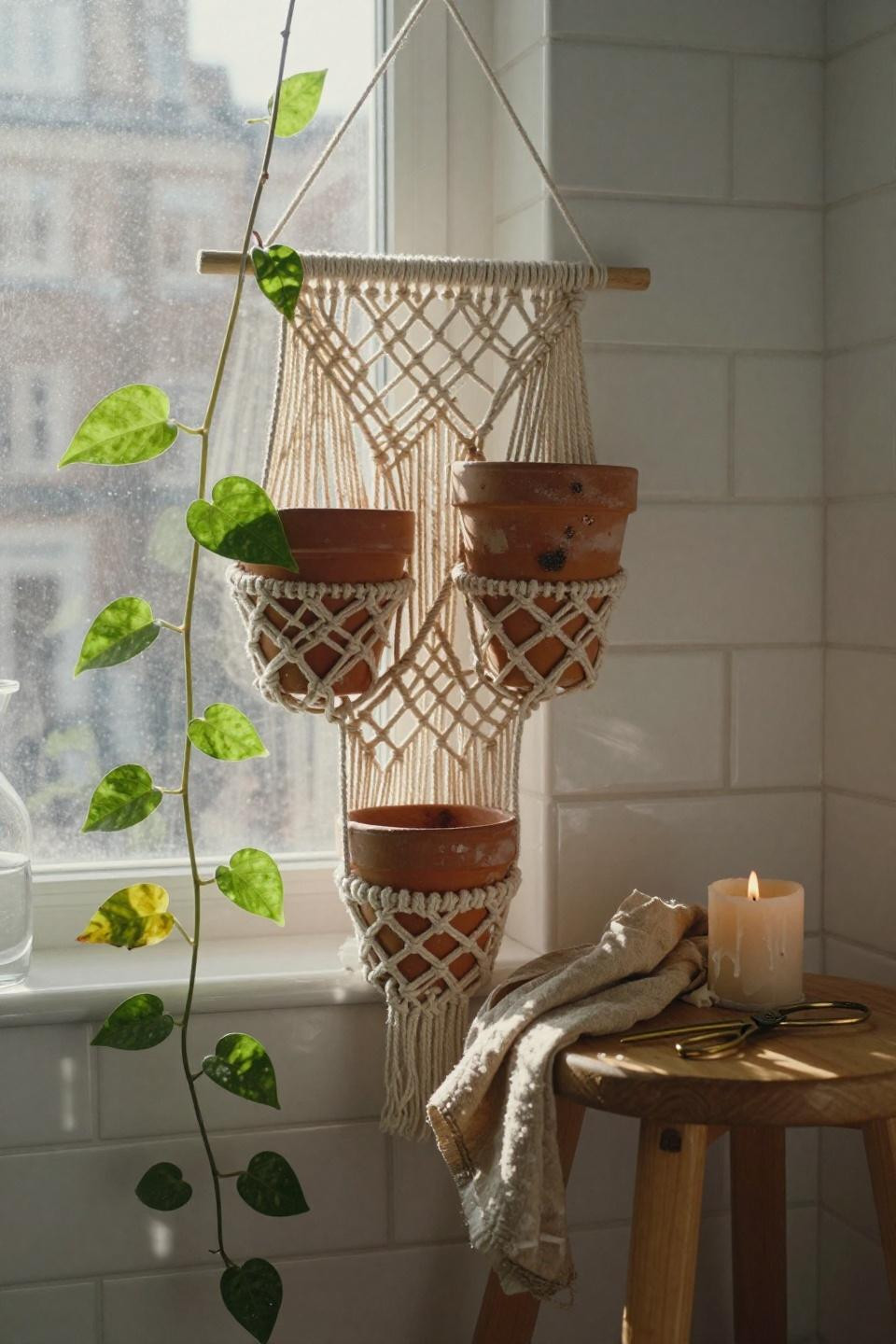
Undyed cotton rope, square knots and diamond patterns, three terracotta pots at staggered heights. A bathroom suits pothos (Epipremnum aureum) because the steam keeps humidity up and the plant tolerates low light better than almost anything else you can hang. One caution worth naming: the ASPCA lists pothos as toxic to cats and dogs, so keep the trailing vines above jumping height.
String of Pearls in Hand-Knotted Cotton
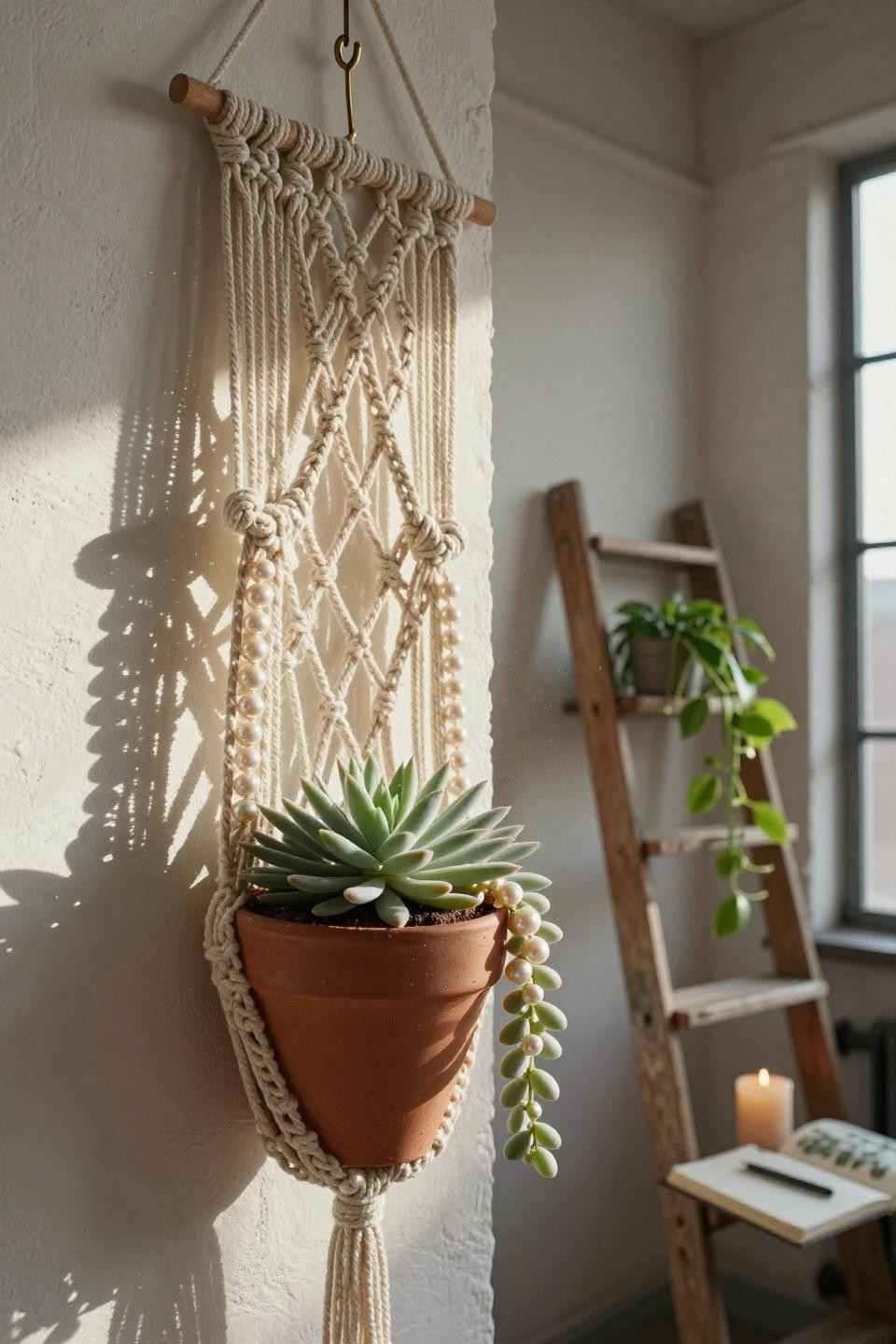
Diamond patterns in soft 5 mm cotton cord against whitewashed brick. String of pearls (Curio rowleyanus) is a succulent, not a vine, and it is the plant on this list most often killed by kindness: it wants bright light and water roughly every two to three weeks, and it rots fast in a pot with no drainage. The ASPCA lists it as toxic, which matters more than usual for a plant that dangles at cat height.
Philodendron Brasil on the Ladder Lean
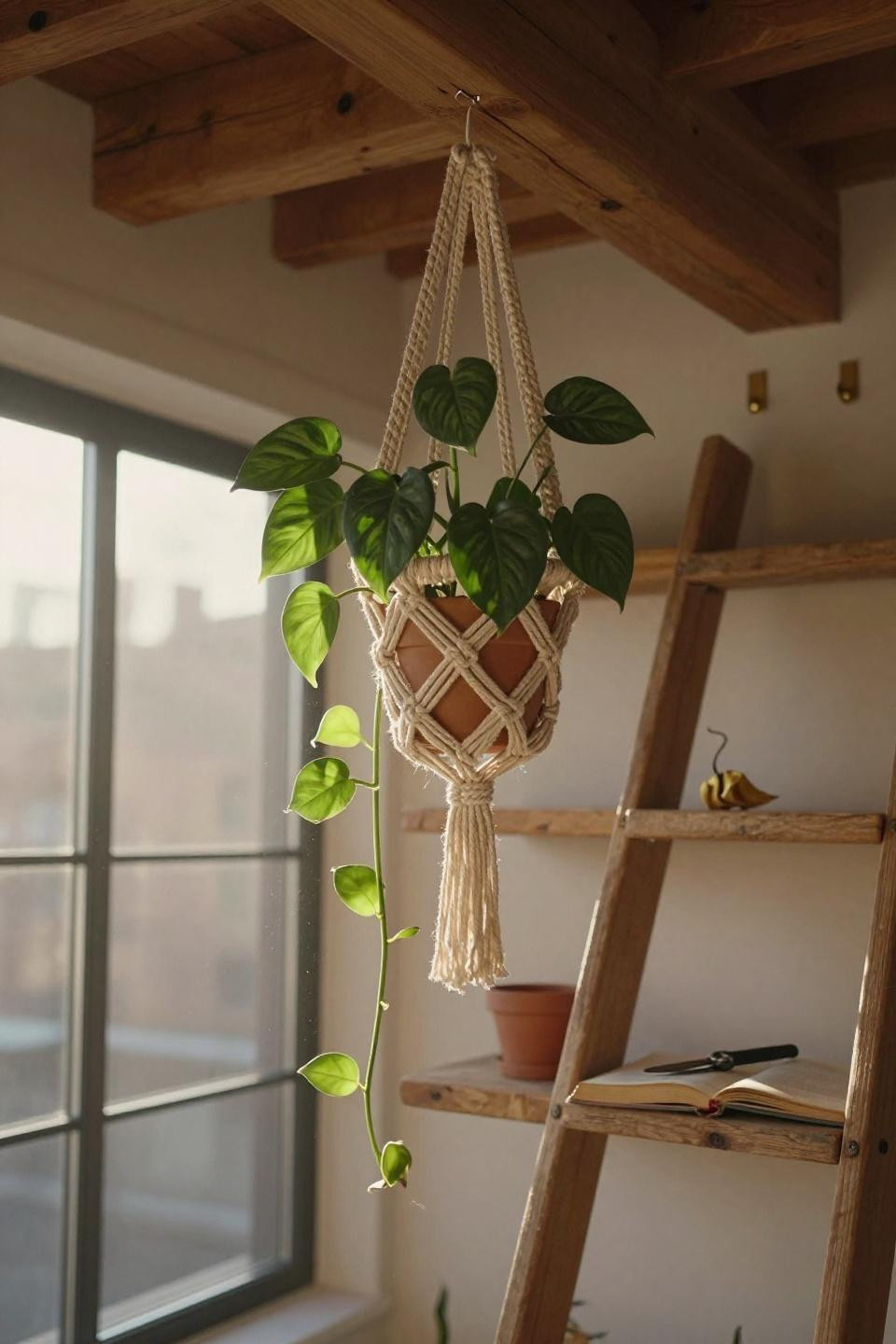
A three-tier jute hanger against a reclaimed oak ladder, with heart-leaf philodendron trailing about four feet. Philodendron hederaceum Brasil holds its yellow variegation only in decent light; in a dark corner the new leaves revert to plain green, and cutting back to a variegated node is the fix. Brass wall hooks age honestly here, and the ladder lean means the fixing carries far less load than a ceiling mount would.
Morning Light Hits Linen and Brass
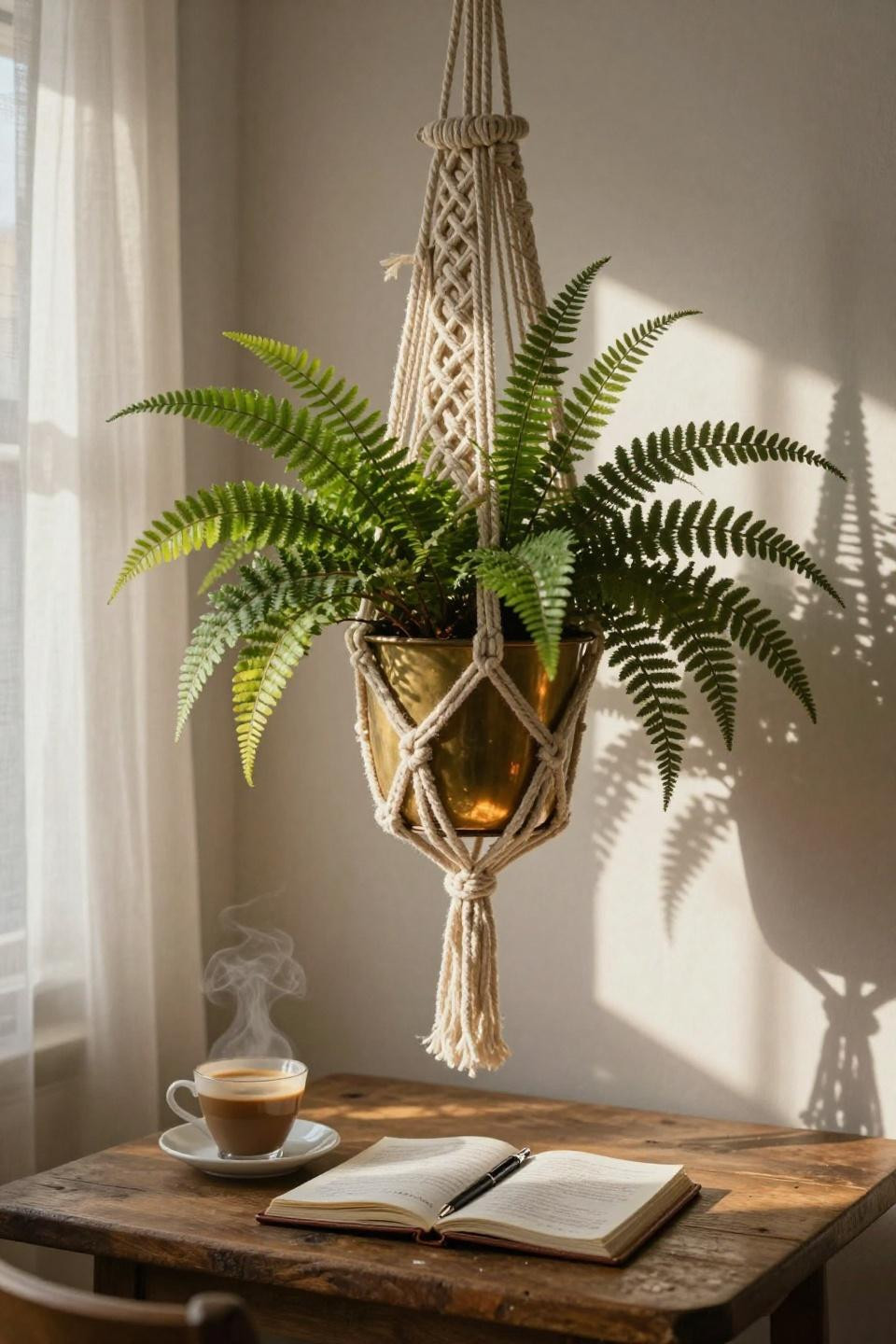
Square knots and spiral twists in undyed cotton, a honey-patina brass planter, sheer Belgian linen diffusing the window. The linen is doing structural work rather than decorative work: sheer curtains turn direct sun into bright indirect light, which is exactly what a Boston fern needs and what an unfiltered south window will scorch. Everything else in the frame is warm tone on warm tone.
Philodendron Brasil by Steel-Framed Windows
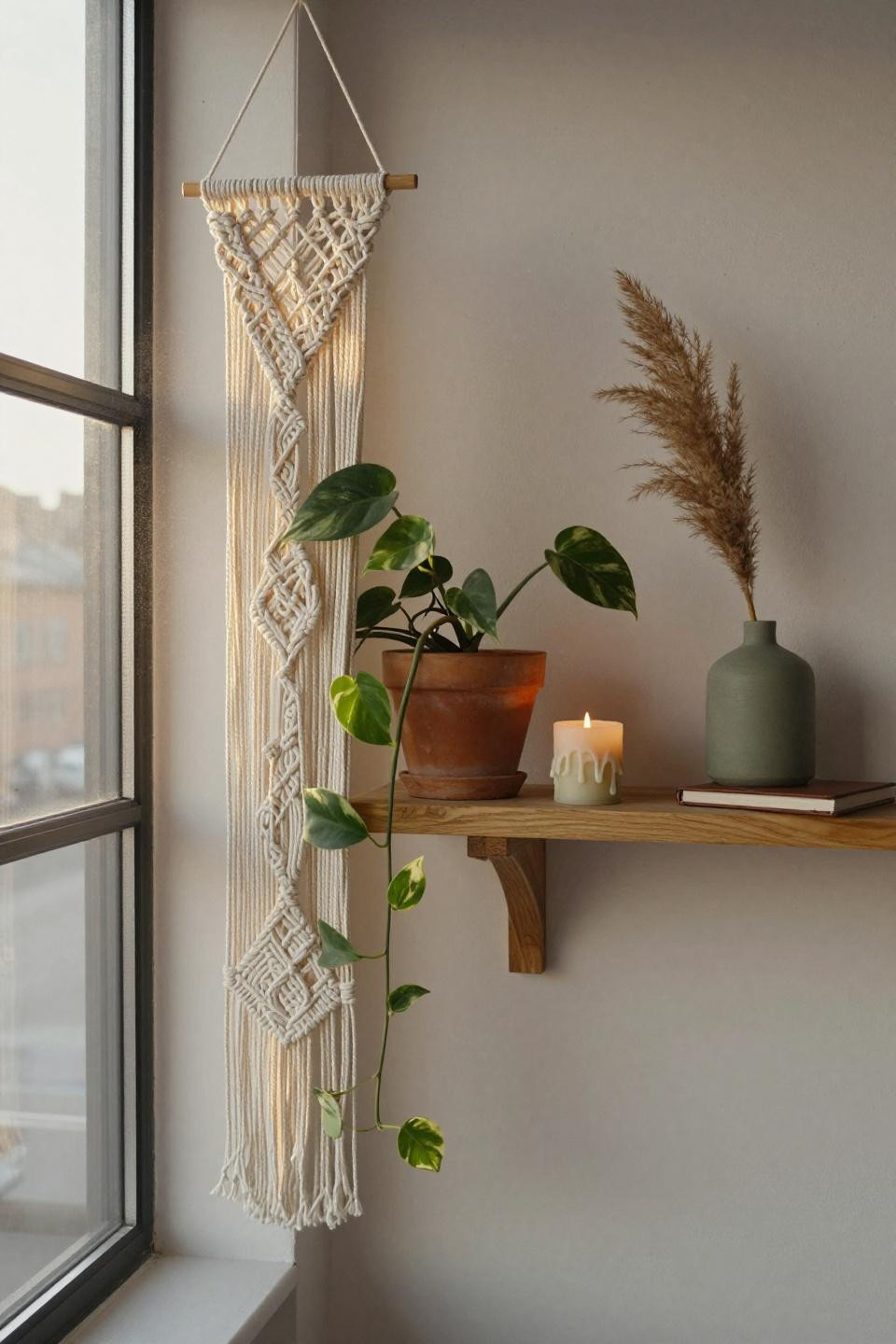
Ivory macrame with square knots and spiral patterns, natural fringe ends that move when the air does, and variegated philodendron trailing toward a honey oak floating shelf. Dried pampas in a matte sage vase supplies texture without needing light or water. The textured plaster wall behind it, with its trowel marks left visible, is what keeps a pale palette from going flat.
String of Pearls Meets Wrought Iron
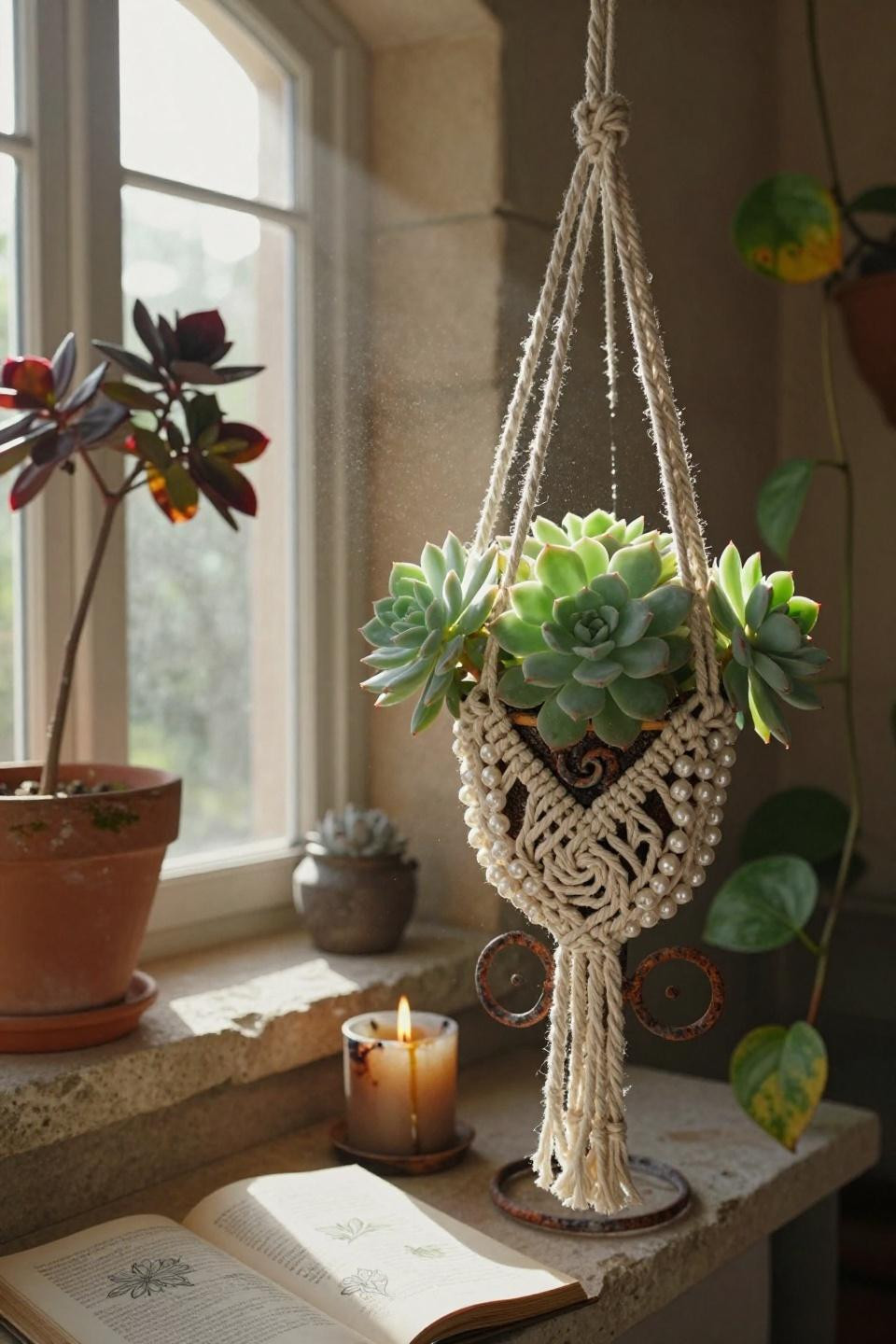
Undyed cotton cord on a vintage wrought iron stand, with weathered terracotta on rough limestone. Hanging a string of pearls from a floor stand rather than the ceiling has a practical advantage: you can move the whole thing to follow the light through the seasons, and this is a plant that sulks in a dim winter corner. A yellowed strand or two is normal; a mushy stem at the soil line is not.
Pothos Cascades Down Honey Oak Shelves
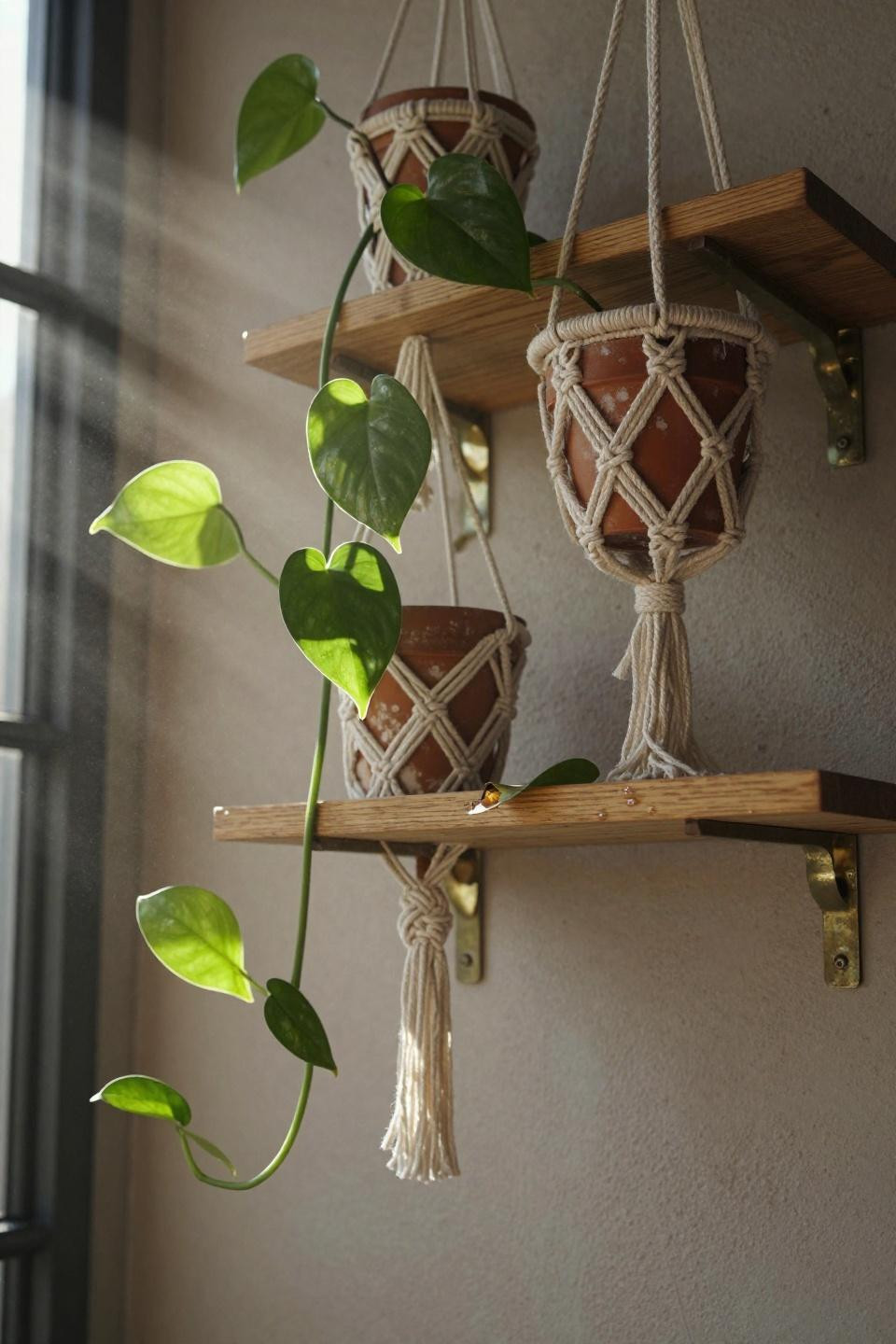
Three asymmetric floating shelves in honey oak, ivory cotton macrame mixing square knots, spiral twists and diamond weaves, vines cascading about 36 inches. Floating shelves have a stated load rating on the bracket, usually between 25 and 50 pounds, and a wet pot plus a plant eats into it faster than people expect. Stagger the shelf heights so the trailing growth on one does not sit in the shadow of the next.
Boston Fern in Chunky Jute Rope
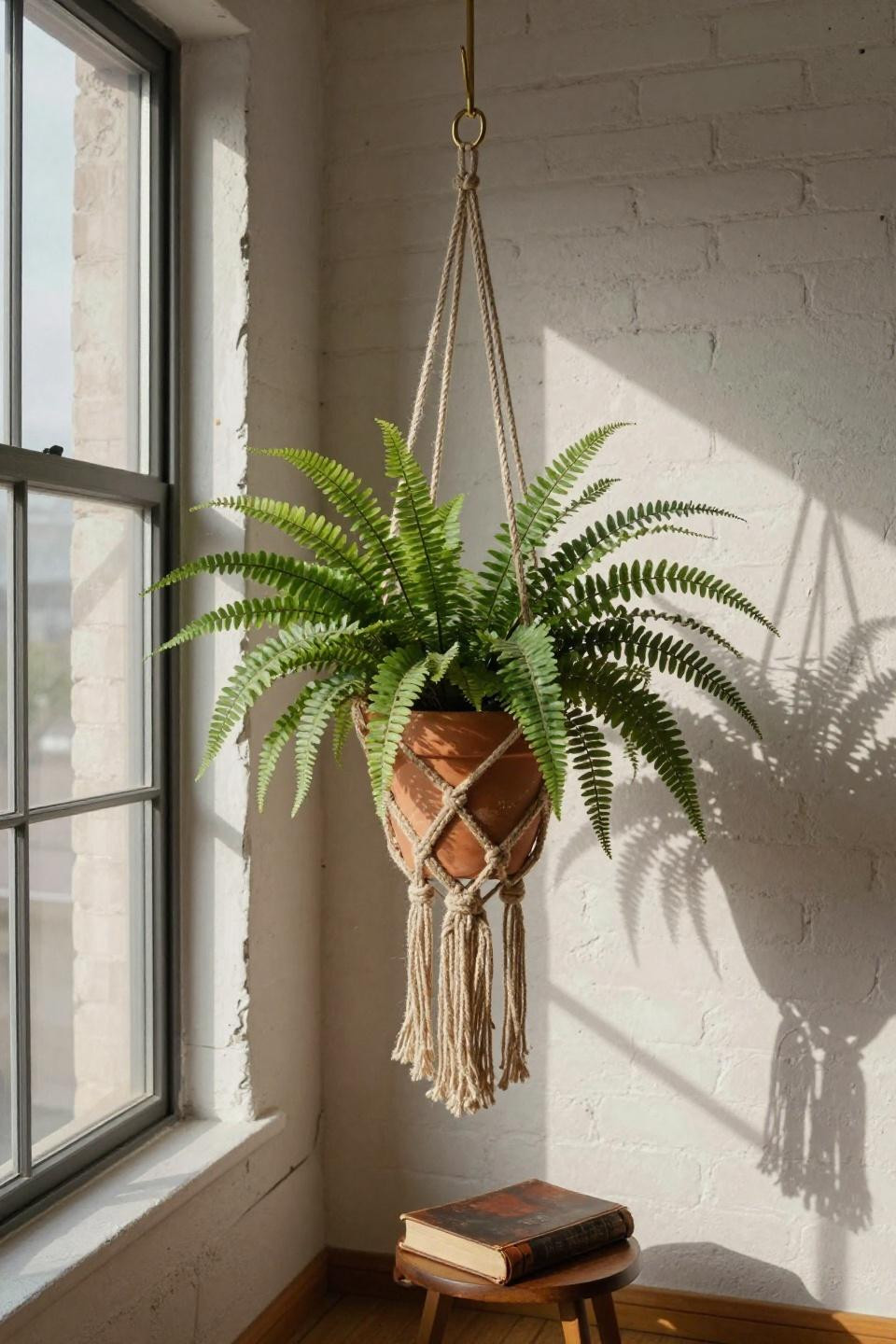
Chunky jute with asymmetrical diamond knots and loose fringe, holding a rough terracotta pot. Jute is the honest choice for a heavy fern in a clay pot, since it is stronger and less stretchy than soft cotton cord of the same diameter. The trade-off is that jute sheds fibres and takes badly to damp, so a fern you mist often will shorten the life of its own hanger.
Philodendron on Walnut Shelf With Black Iron
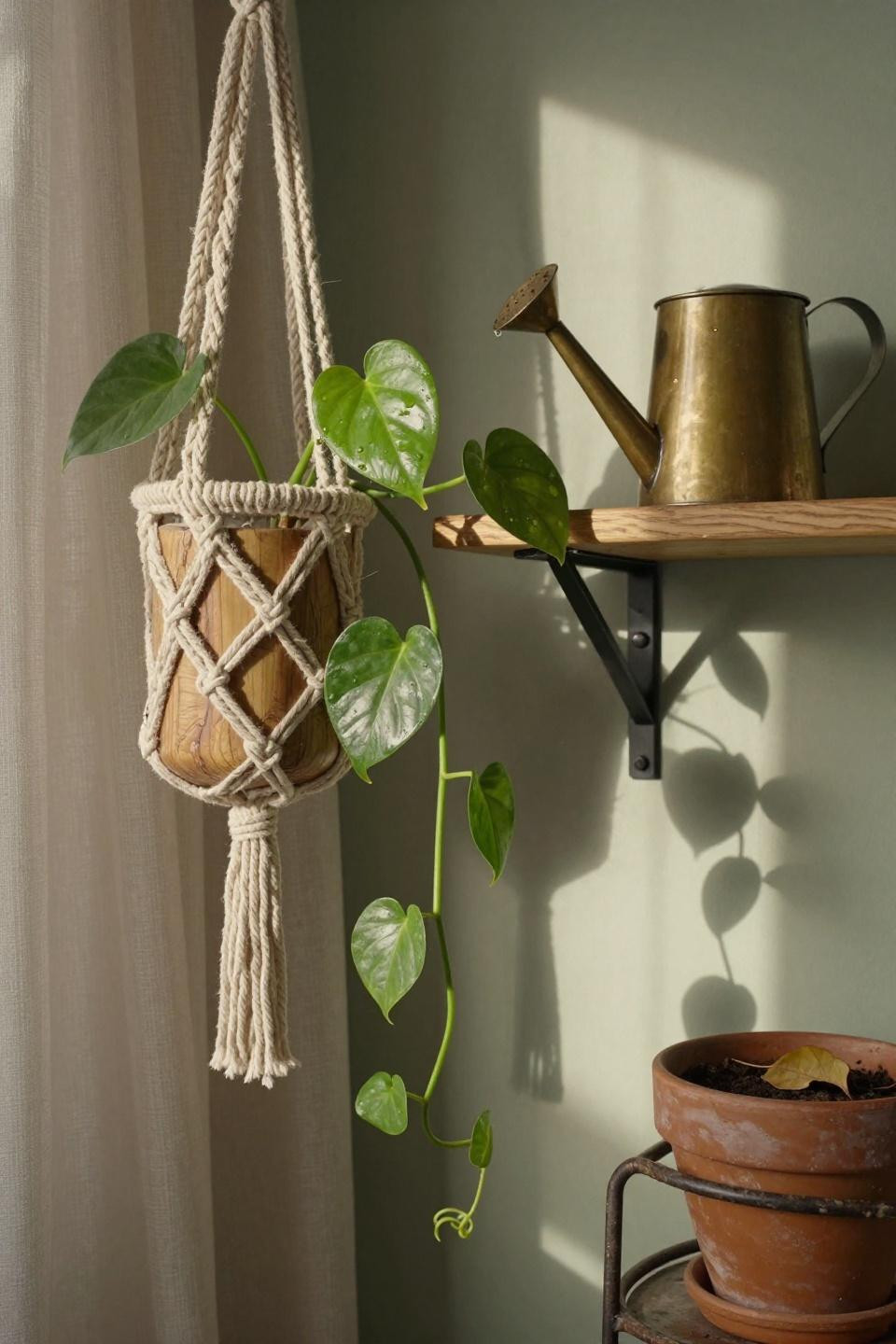
Undyed cotton rope with square knots and spiral patterns beside a walnut shelf on matte black iron brackets. Heart-shaped philodendron leaves show their veins when light passes through them, which is the argument for hanging this plant at eye level rather than above head height. A patinated brass watering can on the shelf earns its spot: this is a plant that wants the top inch of soil to dry out before the next drink.
Pothos in Charcoal Ceramic Gets Complex Knotwork
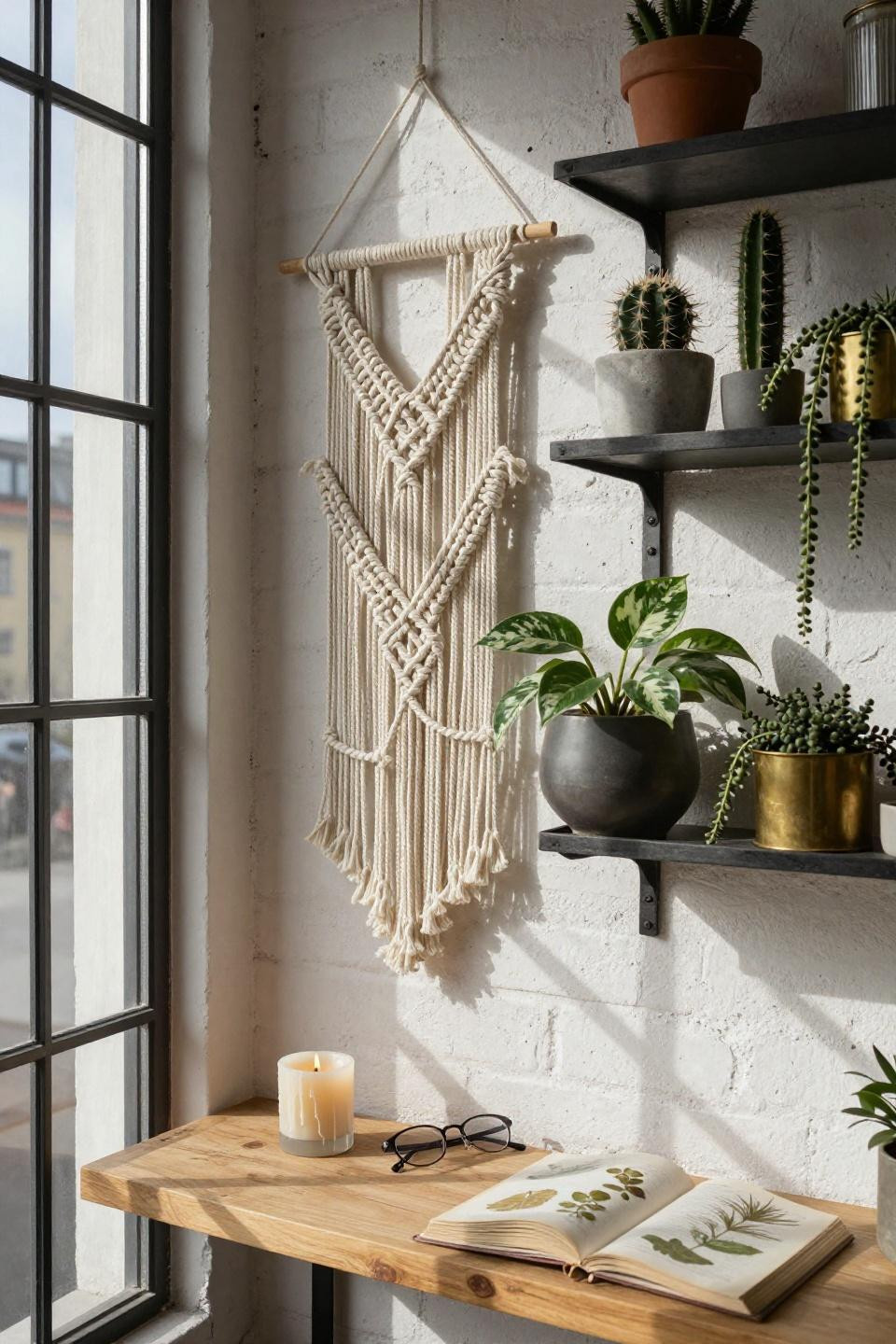
Complex knotwork in undyed cream cotton with frayed edges, holding variegated pothos in matte charcoal glaze. Dark glaze against pale cord is the contrast that carries the picture. Below it, black iron wall shelves hold prickly pear in terracotta, moon cactus in concrete and string of pearls in aged brass, three plants that share one requirement, bright light, so they can share one wall.
Rubber Plant Corner With Jute Diamond Patterns
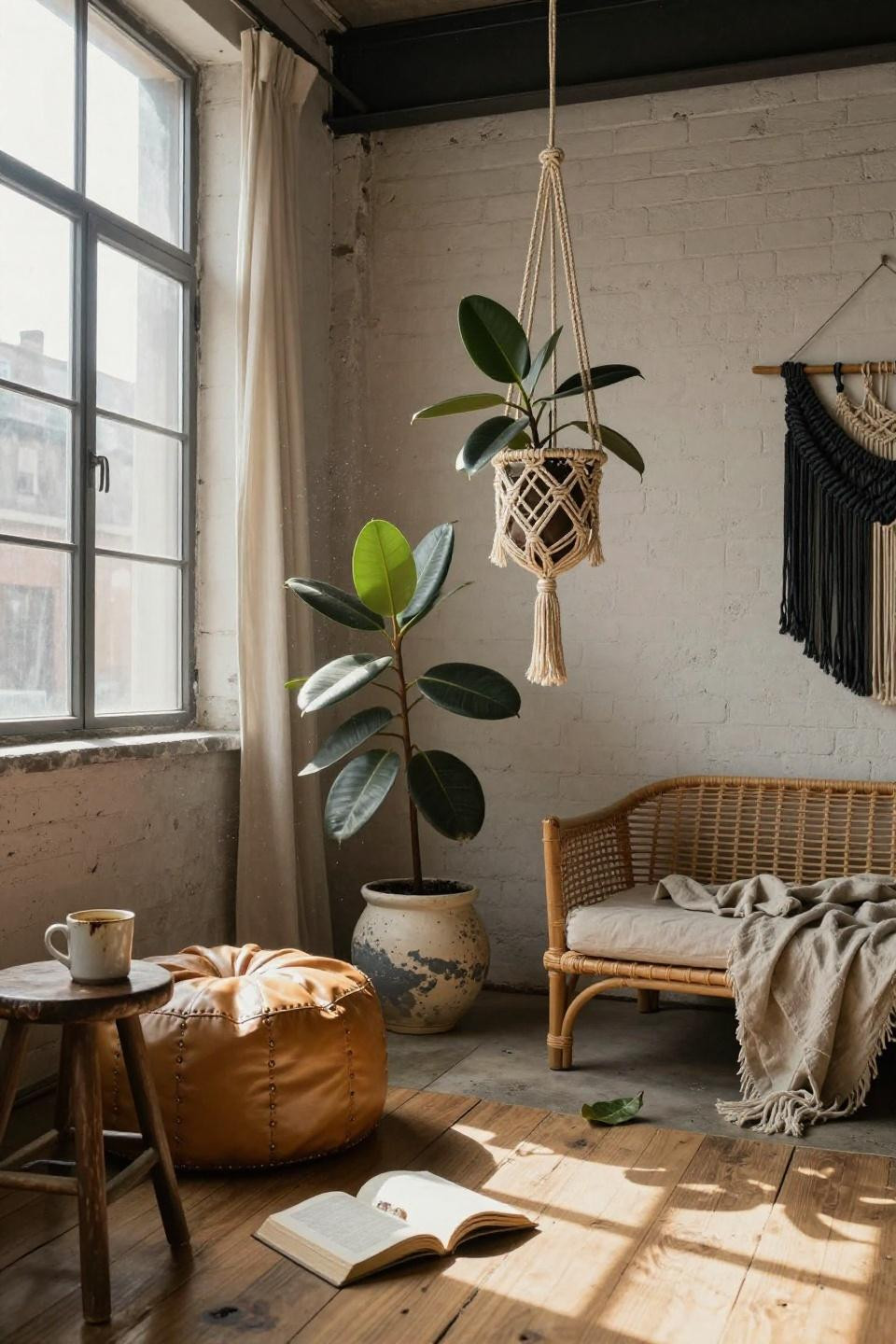
Jute with geometric diamonds and 18-inch fringe tassels, holding a rubber plant in speckled cream-and-charcoal stoneware. Ficus elastica leaks a milky latex sap when a leaf or stem breaks, which irritates skin and stains fabric, so it is worth pruning over a bin rather than over the camel leather pouf. Wipe the leaves every few weeks; the glossy look in the picture is dust management, not luck.
Pothos Trails Four Feet Down Oak Breakfast Table
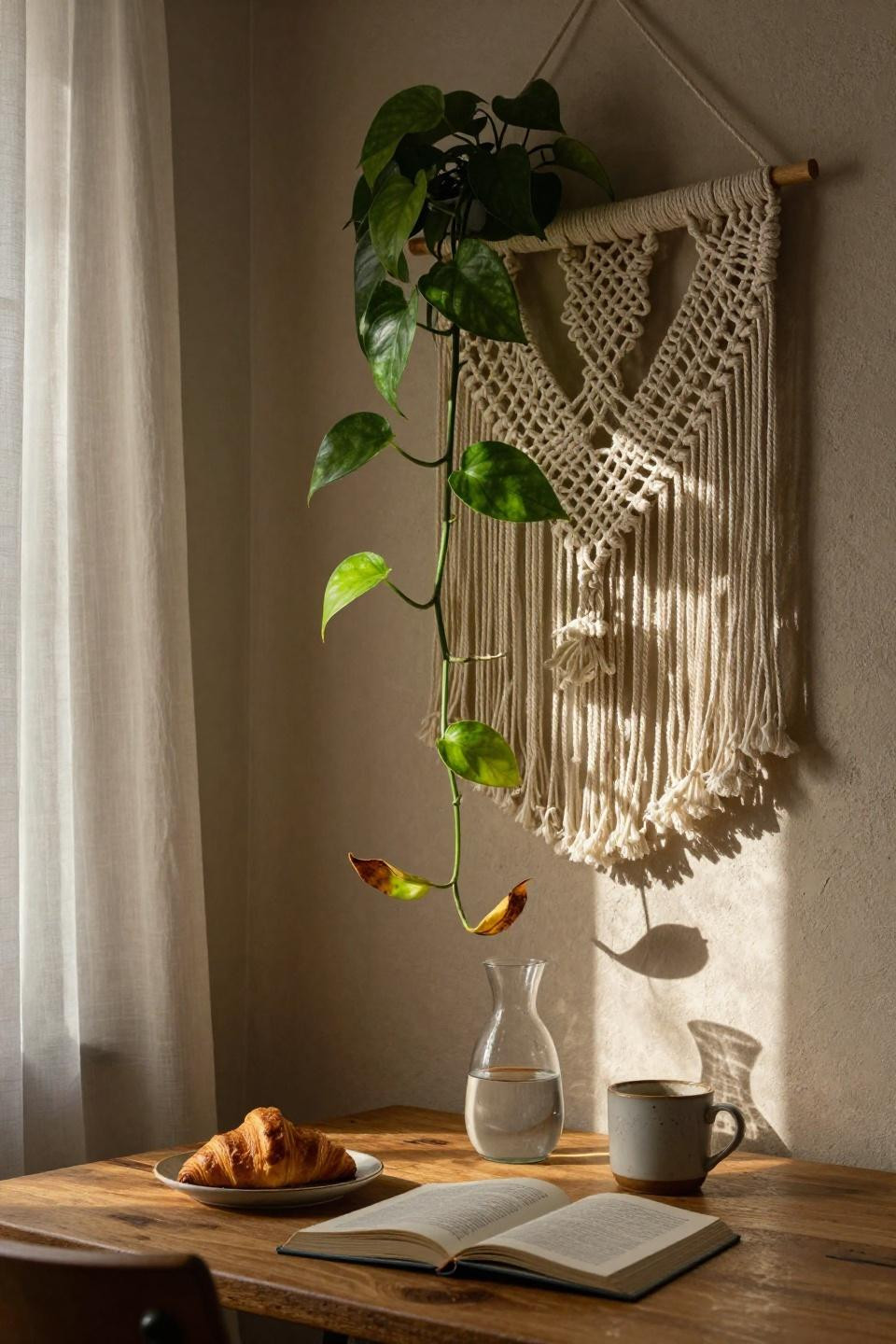
Ivory macrame in diamond patterns, cotton rope with the ends deliberately left frayed, pothos trailing about four feet beside a reclaimed oak table. A vine that long is the plant telling you it has outgrown its pot: cut it back by a third and put the cuttings in water, and each one roots into a new plant in two to three weeks. That is how one pothos becomes the three staggered pots earlier in this list.
If you are starting from nothing, start with the simplest version: a square-knot hanger in 4 mm cotton cord, a pothos or a spider plant, and a hook rated for double the wet weight of the pot. Those three choices cover the two ways this goes wrong, a plant that dies in the light it was given and a fixing that lets go, and everything after that is pattern and taste.